Alabama List of Evidence
What is this form?
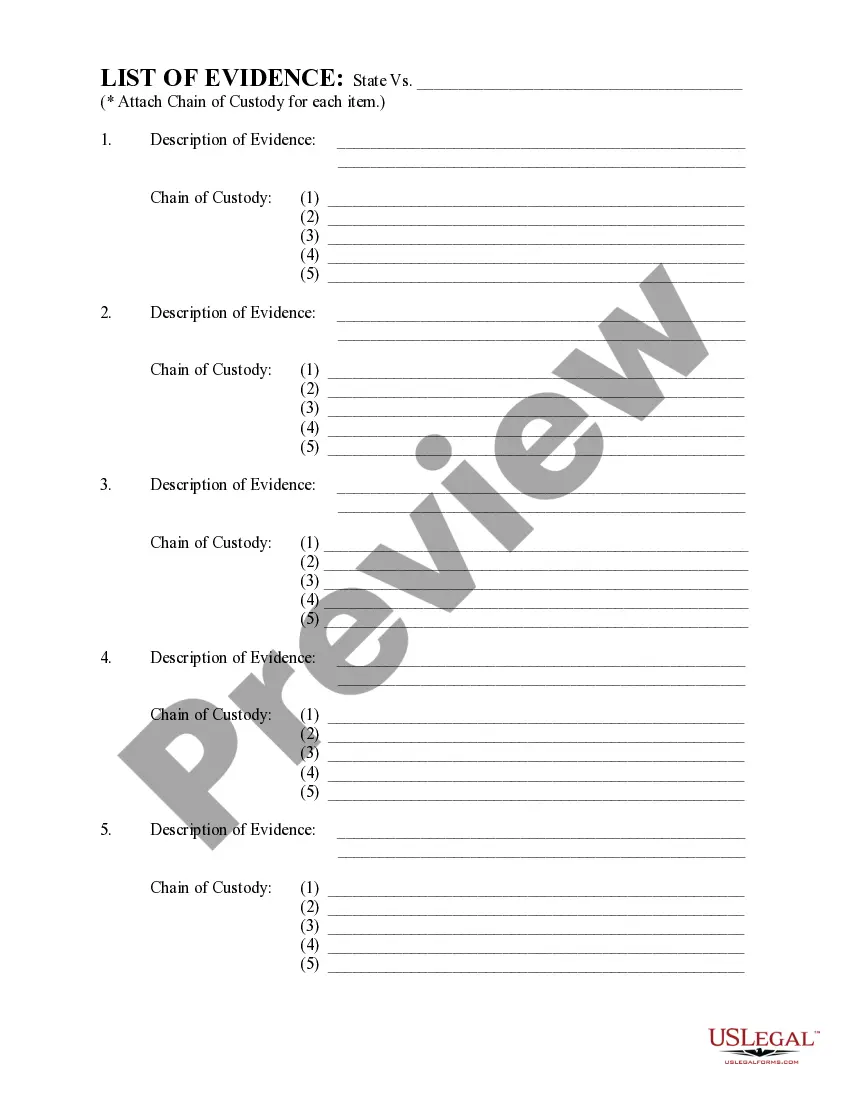
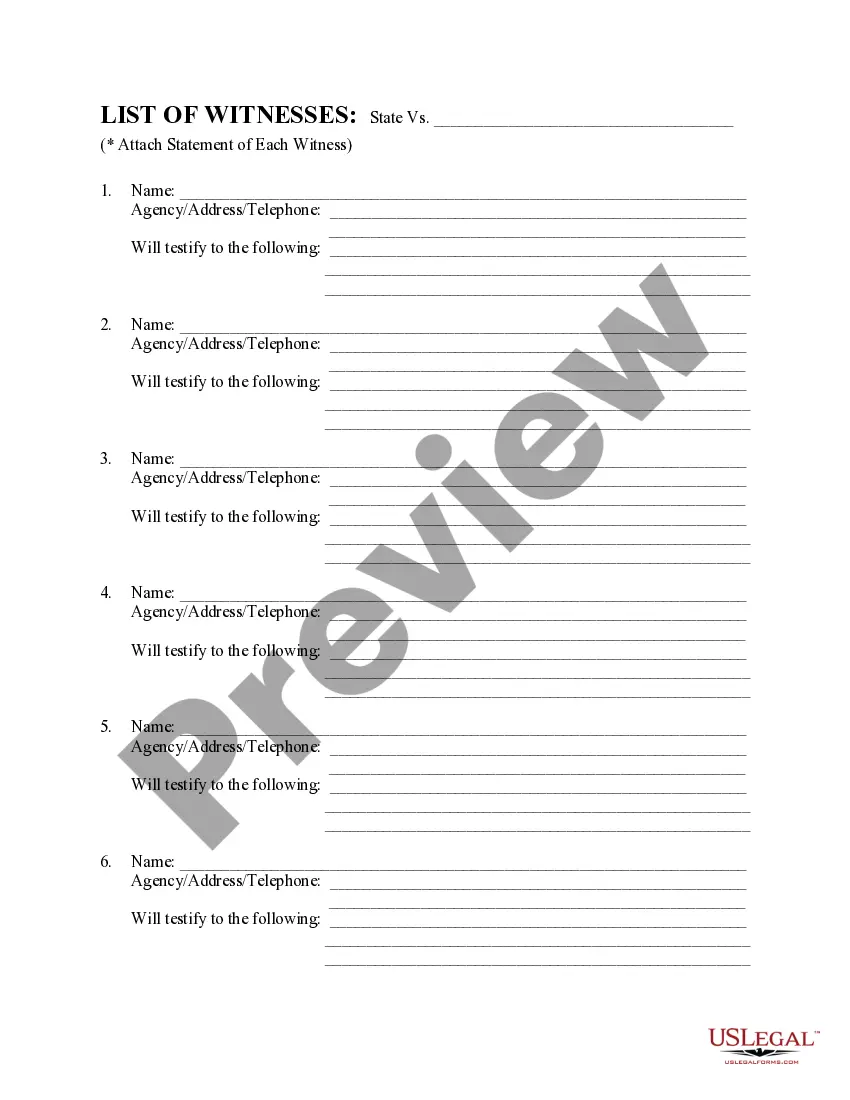
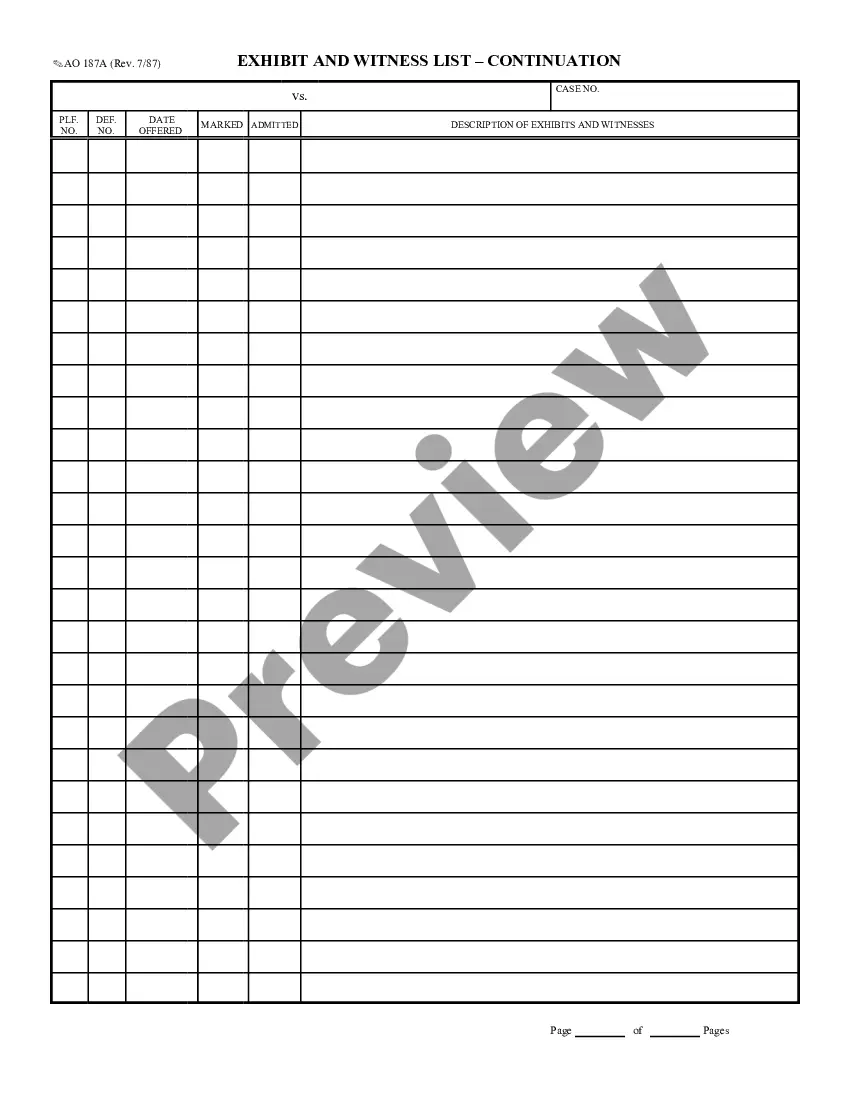
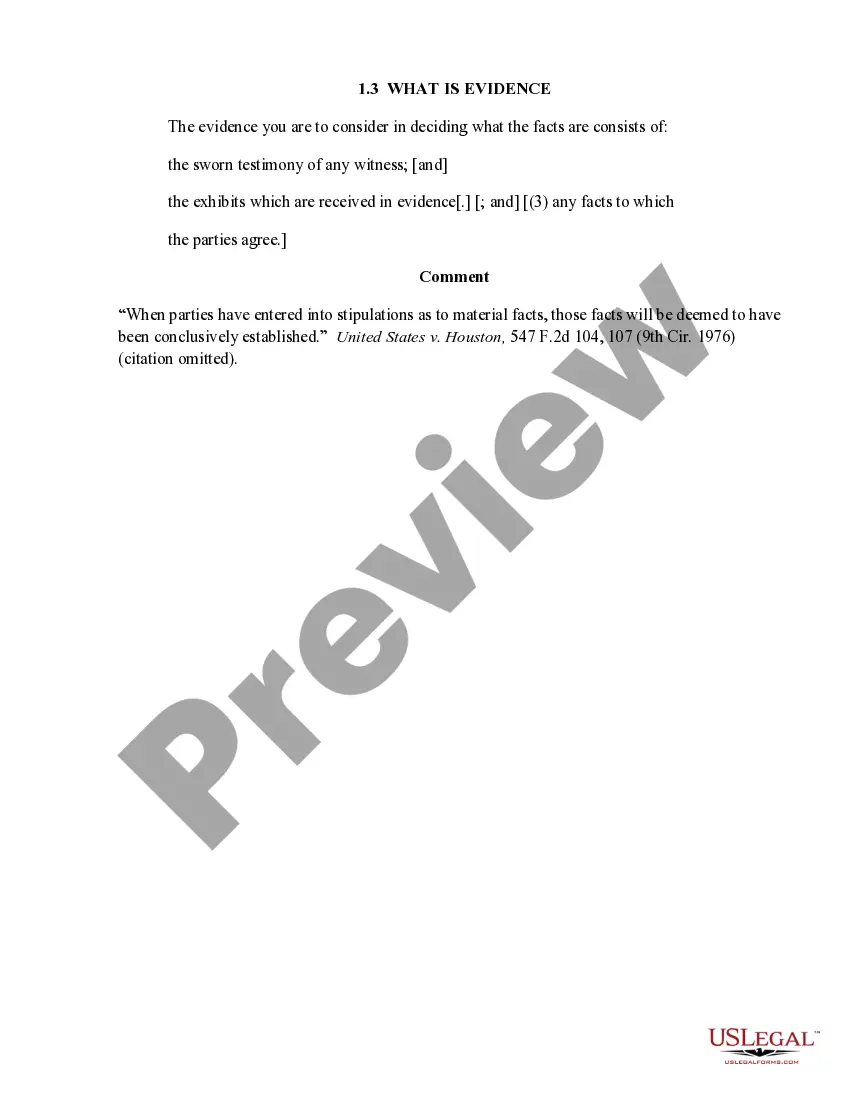
The List of Evidence is a legal form used to document and organize all evidence that will be presented during a trial. This form is essential for maintaining the integrity and chain of custody of each piece of evidence, differentiating it from other legal forms focused on broader legal documentation. To ensure proper handling, a chain of custody form must accompany each evidence item listed.
Main sections of this form
- Description of Evidence: Space to provide details about each piece of evidence.
- Chain of Custody: Fields to track the handling of each item of evidence.
- Multiple Entries: Sections prepared for listing up to five pieces of evidence.
When to use this document
You should use the List of Evidence when preparing for a trial where you need to present physical or documentary evidence. It helps in systematically recording each item for review and ensuring that you have the proper chain of custody documentation to support the credibility of your evidence in court.
Who this form is for
- Attorneys preparing cases for trial.
- Individuals involved in legal proceedings who need to present evidence.
- Legal assistants and paralegals assisting in trial preparations.
How to complete this form
- Gather all pieces of evidence you intend to present at trial.
- For each item, provide a detailed description in the designated fields.
- Attach a chain of custody form for every item listed to document its handling.
- Ensure that all entries are clear and consistent to avoid confusion during trial.
- Review the completed form for accuracy before submission.
Does this form need to be notarized?
This form does not typically require notarization to be legally valid. However, some jurisdictions or document types may still require it. US Legal Forms provides secure online notarization powered by Notarize, available 24/7 for added convenience.
Get your form ready online
Our built-in tools help you complete, sign, share, and store your documents in one place.
Make edits, fill in missing information, and update formatting in US Legal Forms—just like you would in MS Word.
Download a copy, print it, send it by email, or mail it via USPS—whatever works best for your next step.
Sign and collect signatures with our SignNow integration. Send to multiple recipients, set reminders, and more. Go Premium to unlock E-Sign.
If this form requires notarization, complete it online through a secure video call—no need to meet a notary in person or wait for an appointment.
We protect your documents and personal data by following strict security and privacy standards.

Make edits, fill in missing information, and update formatting in US Legal Forms—just like you would in MS Word.

Download a copy, print it, send it by email, or mail it via USPS—whatever works best for your next step.

Sign and collect signatures with our SignNow integration. Send to multiple recipients, set reminders, and more. Go Premium to unlock E-Sign.

If this form requires notarization, complete it online through a secure video call—no need to meet a notary in person or wait for an appointment.

We protect your documents and personal data by following strict security and privacy standards.
Avoid these common issues
- Failing to attach chain of custody forms for each piece of evidence.
- Providing vague or incomplete descriptions of the evidence.
- Not reviewing the completed form for errors or missing information.
Benefits of using this form online
- Easy access to download and fill out the form in preferred formats (Word or WordPerfect).
- Ability to edit the form as needed before finalizing.
- Convenience of completing the form from anywhere at any time.
Looking for another form?
Form popularity
FAQ
These five rules areadmissible, authentic, complete, reliable, and believable.
Admissible evidence may be heard and considered by the magistrate, judge or jury deciding the case. If evidence is judged (by the judge or magistrate) to be outside the rules, it is held to be 'inadmissible', and so cannot be used to prove any issue.
Basically, if evidence is to be admitted at court, it must be relevant, material, and competent. To be considered relevant, it must have some reasonable tendency to help prove or disprove some fact.
Admissible evidence, in a court of law, is any testimonial, documentary, or tangible evidence that may be introduced to a factfinderusually a judge or juryto establish or to bolster a point put forth by a party to the proceeding.
To be admissible in court, the evidence must be relevant (i.e., material and having probative value) and not outweighed by countervailing considerations (e.g., the evidence is unfairly prejudicial, confusing, a waste of time, privileged, or based on hearsay).
Demonstrative. Documentary. Real. Testimonial.
In most cases, evidence is provided by witnesses who can tell the court what they saw or heard (or in some cases, smelt or touched). Witnesses may also introduce physical evidence such as weapons, drugs, fingerprints and so on.
It held that the secondary data found in CD's, DVD's, and Pendrive are not admissible in the Court proceedings without a proper authentic certificate according to Section 65B(4) of the Indian Evidence Act, 1872.
A party shall not propound more than forty (40) interrogatories to any other party without leave of court. Upon motion, and for good cause shown, the court may increase the number of interrogatories that a party may serve upon another party.