Code of Conduct for Directors of Non-Profit Corporation
Understanding this form
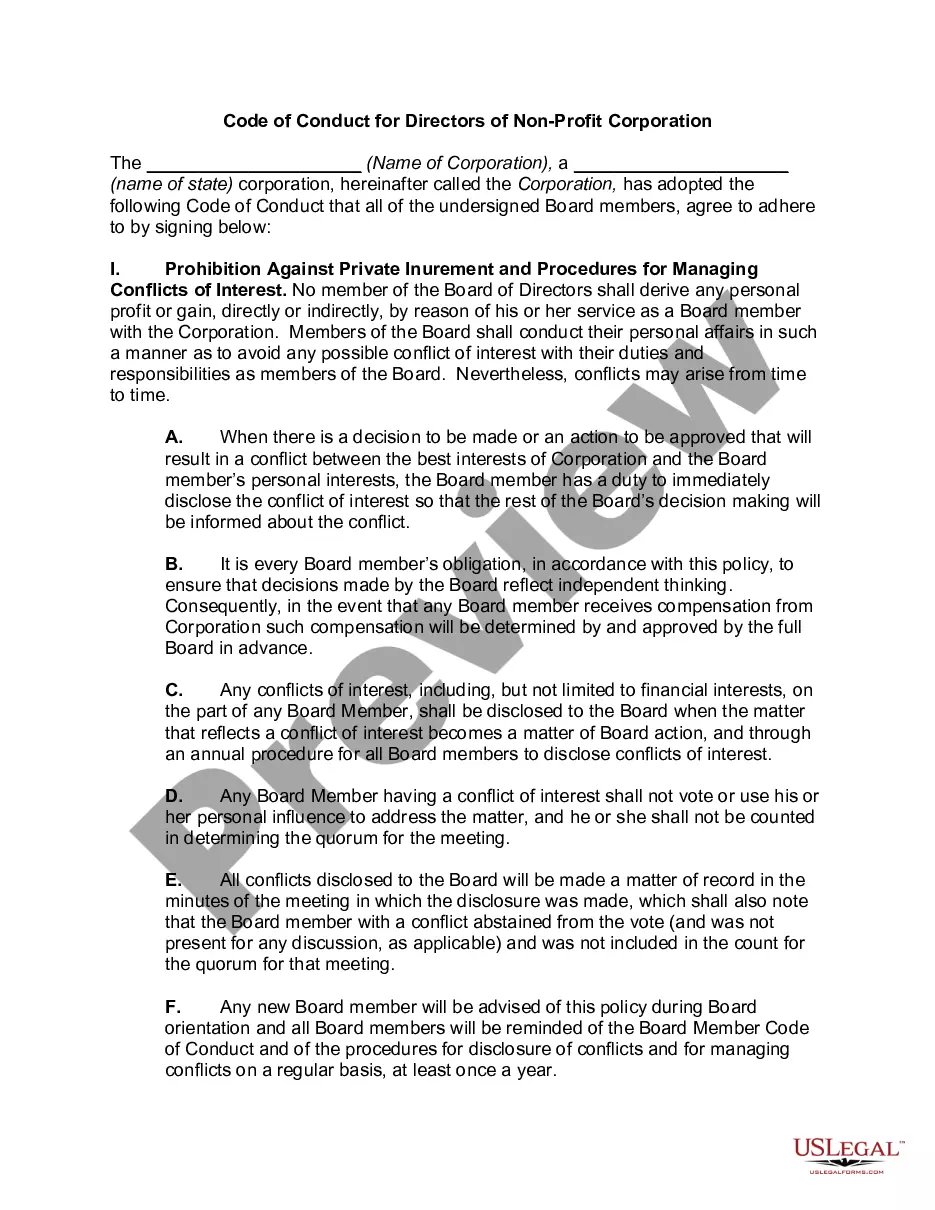
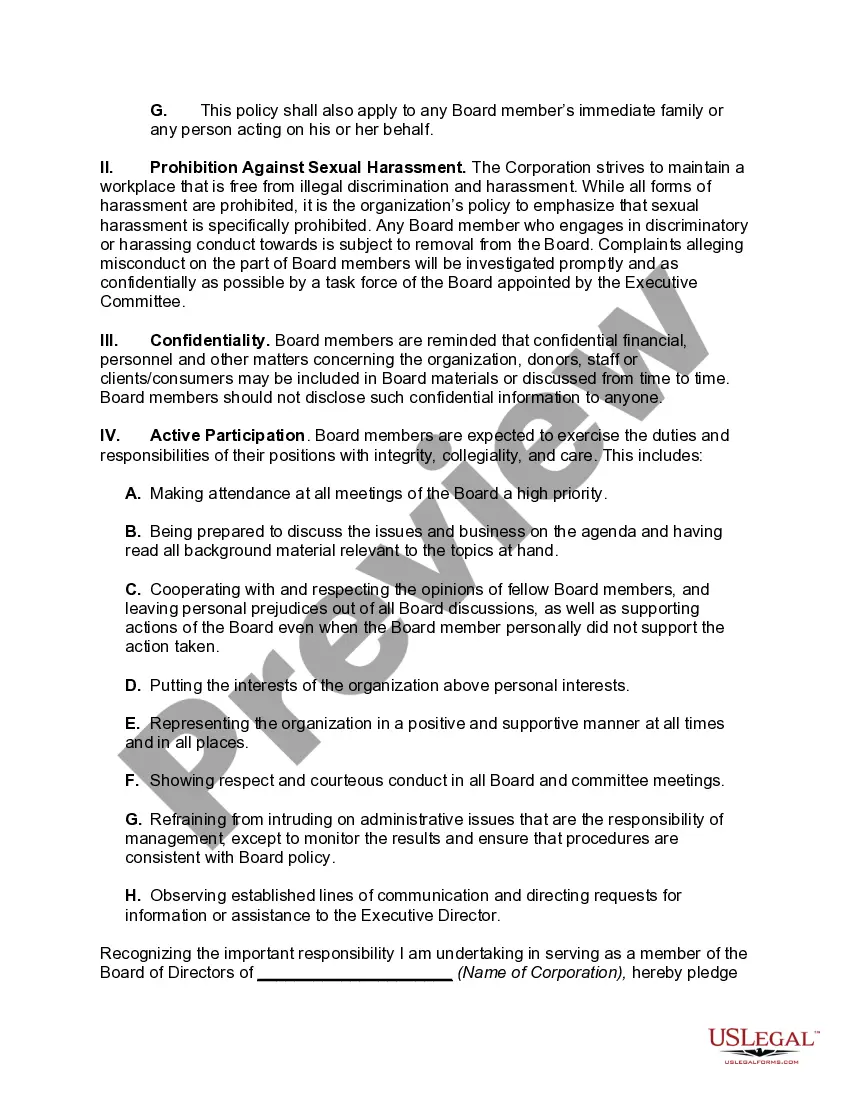
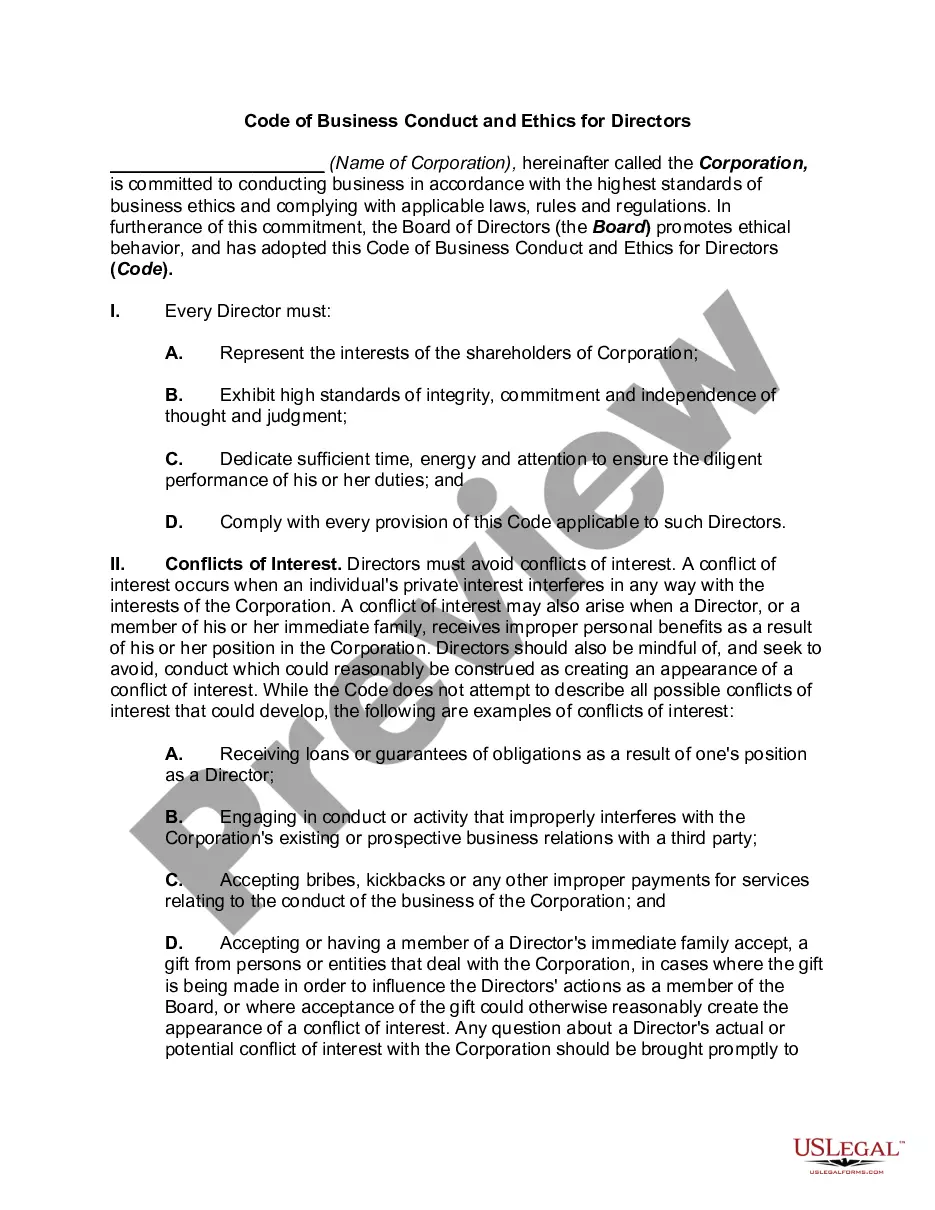
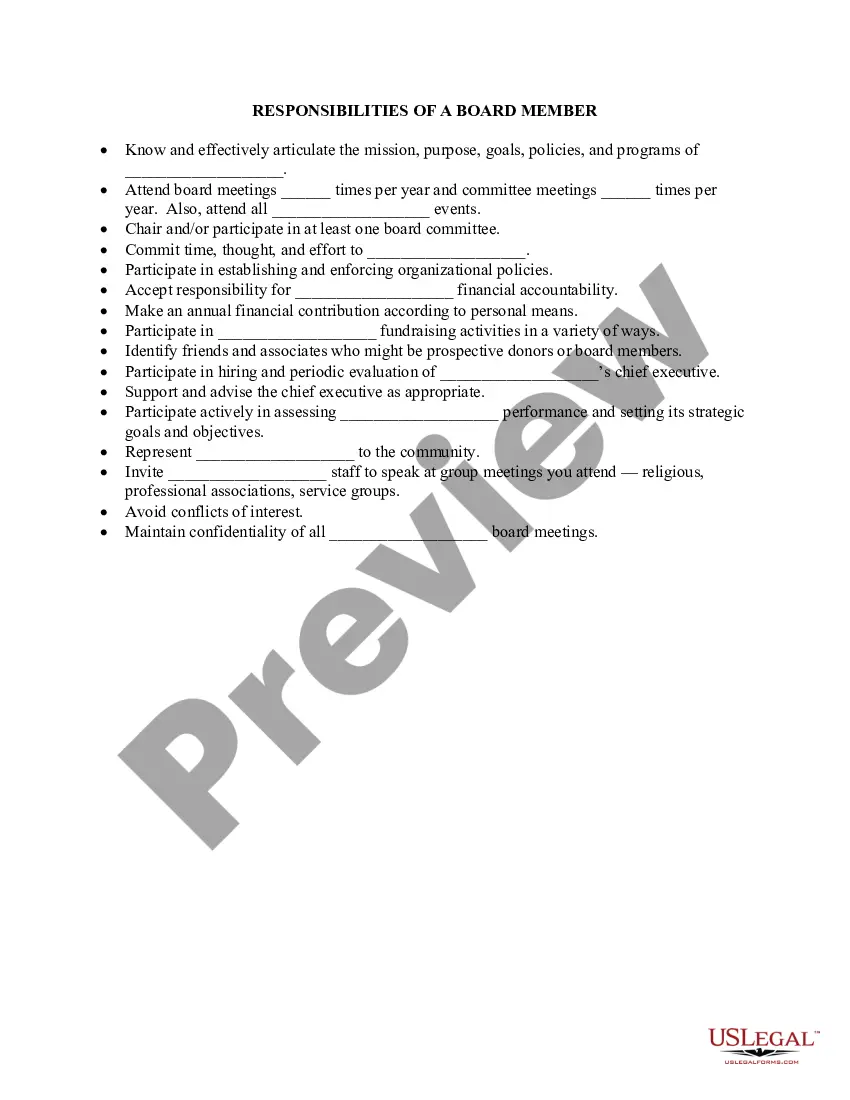
The Code of Conduct for Directors of Non-Profit Corporation is a formal document that outlines the ethical standards and responsibilities expected of board members in a non-profit organization. Unlike other agreements, this document specifically addresses the unique needs of non-profits, focusing on issues such as conflicts of interest, confidentiality, and active participation in governance. This code ensures that board members are held accountable for their conduct, fostering a culture of integrity and transparency within the organization.
What’s included in this form
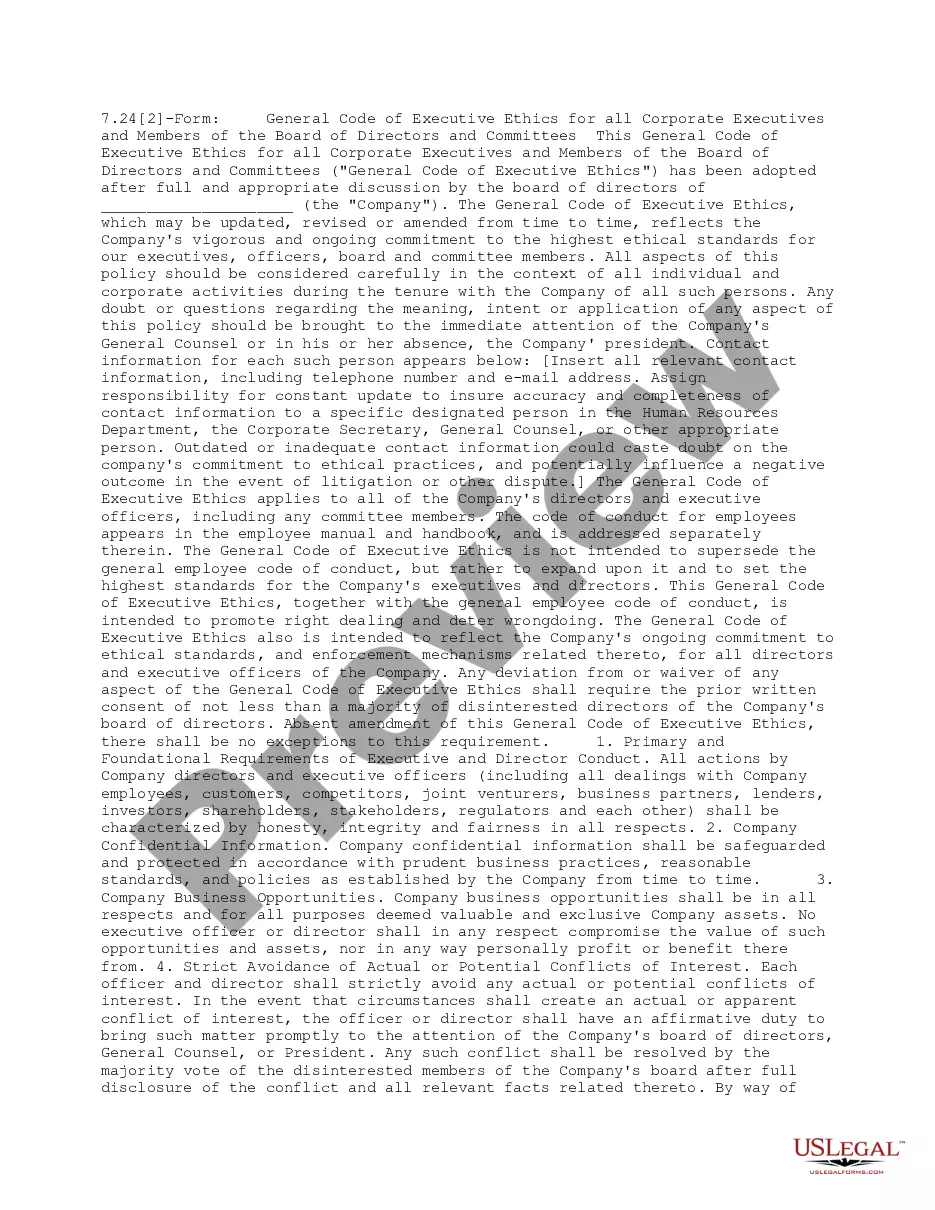
- Prohibition Against Private Inurement and Procedures for Managing Conflicts of Interest
- Prohibition Against Sexual Harassment
- Confidentiality Obligations for Board Members
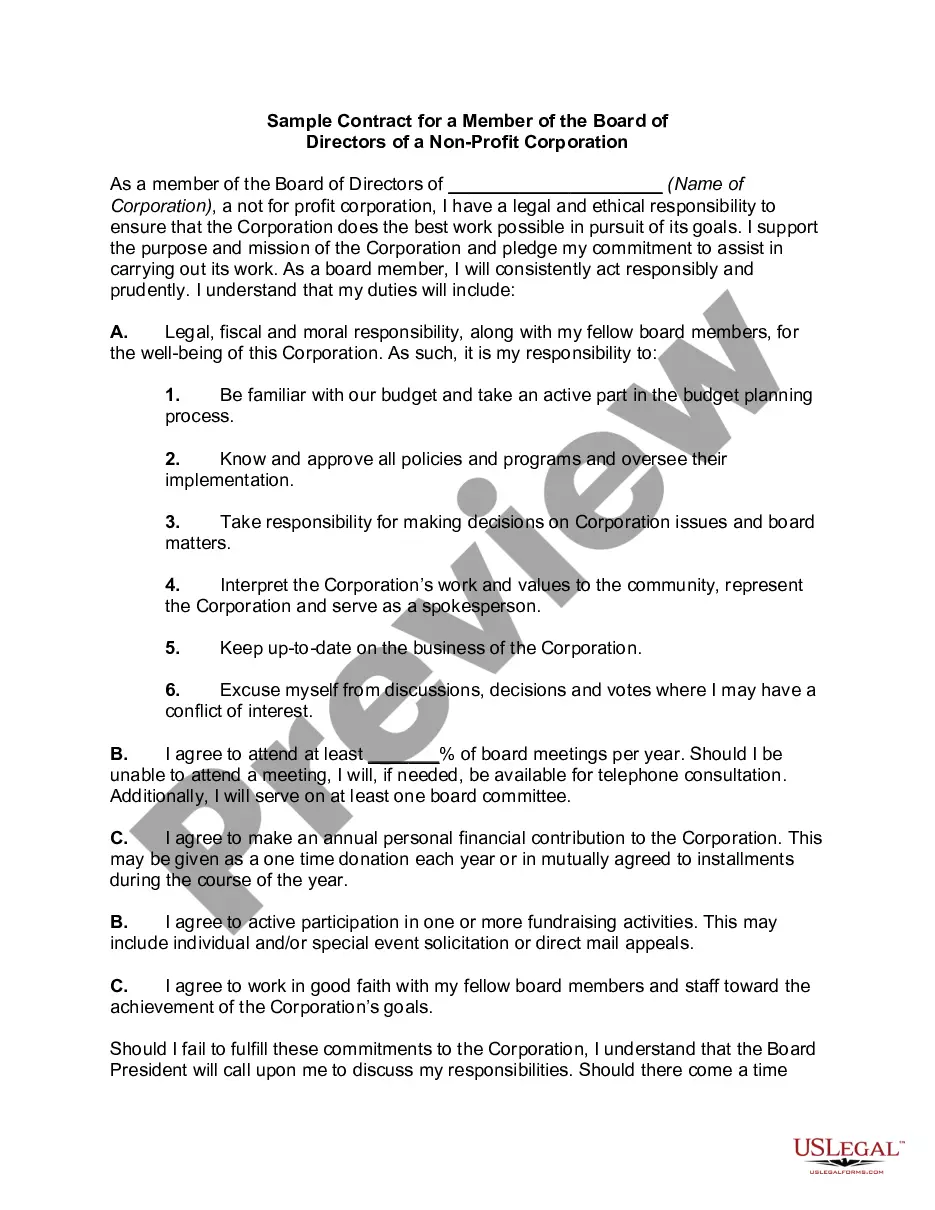
- Expectations for Active Participation and Attendance
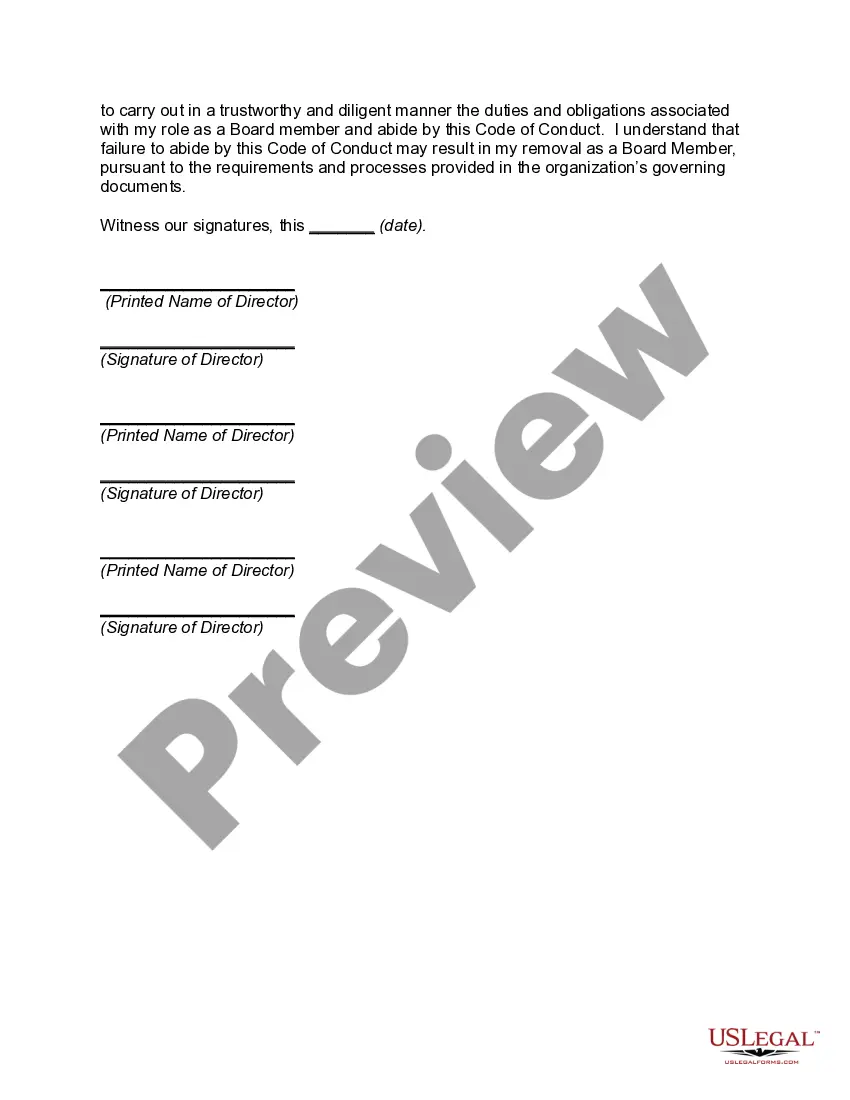
- Pledge to Uphold Duties with Integrity
- Signatures of Board Members for Acknowledgment
When this form is needed
This form should be used when establishing or revising the governance framework for a non-profit organization. It is essential when onboarding new board members or when existing members need to reaffirm their commitment to ethical standards. The code of conduct is also vital during times of organizational change, such as merging with another non-profit or encountering issues related to board member conduct.
Who this form is for
- Non-profit organizations looking to establish clear governance practices.
- Board members of non-profits needing to agree on ethical guidelines.
- Executive committees tasked with overseeing board conduct.
- Organizations preparing for legal compliance and transparency in governance.
How to complete this form
- Begin by filling in the name of the corporation and the state of incorporation.
- Review each section of the code to ensure understanding and agreement.
- Obtain signatures from all board members to acknowledge their commitment to the code.
- Keep a copy of the signed document in the organization's records for future reference.
- Schedule annual reviews of the code to ensure continued relevance and compliance.
Notarization guidance
This form usually doesn’t need to be notarized. However, local laws or specific transactions may require it. Our online notarization service, powered by Notarize, lets you complete it remotely through a secure video session, available 24/7.
Get your form ready online
Our built-in tools help you complete, sign, share, and store your documents in one place.
Make edits, fill in missing information, and update formatting in US Legal Forms—just like you would in MS Word.
Download a copy, print it, send it by email, or mail it via USPS—whatever works best for your next step.
Sign and collect signatures with our SignNow integration. Send to multiple recipients, set reminders, and more. Go Premium to unlock E-Sign.
If this form requires notarization, complete it online through a secure video call—no need to meet a notary in person or wait for an appointment.
We protect your documents and personal data by following strict security and privacy standards.
Make edits, fill in missing information, and update formatting in US Legal Forms—just like you would in MS Word.
Download a copy, print it, send it by email, or mail it via USPS—whatever works best for your next step.
Sign and collect signatures with our SignNow integration. Send to multiple recipients, set reminders, and more. Go Premium to unlock E-Sign.
If this form requires notarization, complete it online through a secure video call—no need to meet a notary in person or wait for an appointment.
We protect your documents and personal data by following strict security and privacy standards.
Common mistakes to avoid
- Failing to ensure all board members sign the document.
- Neglecting to regularly review and update the code of conduct.
- Overlooking the importance of training new members on the code.
- Not addressing conflicts of interest as outlined in the policy.
Benefits of using this form online
- Easy access for board members to download and review the document at their convenience.
- Editable format allows organizations to customize the code of conduct to meet their specific needs.
- Efficient storage and retrieval of forms ensures proper compliance with governance practices.
Legal use & context
- This code of conduct is essential for ensuring ethical practices within non-profit organizations.
- It acts as a legal safeguard against potential conflicts of interest and misconduct.
- By adhering to this code, organizations enhance their transparency and accountability, which are vital for maintaining donor trust and public support.
Summary of main points
- The form establishes essential ethical standards for board members of non-profits.
- It should be signed by all board members to ensure commitment.
- Regular updates and reviews are crucial for maintaining relevance and effectiveness.
Looking for another form?
Form popularity
FAQ
Honesty, integrity, transparency, confidentiality, and equity are each examples of values that are typically expressed in a charitable nonprofit's code of ethics - but there may be other values that are very important to your nonprofit - and you may wish to spell those out so that the donating public, prospective
Stay focused and act efficiently during public meetings. Serve as a model of leadership and civility to the community. Demonstrate honesty and integrity in every action and statement. Participate in scheduled activities to increase team effectiveness and review Board procedures, such as this Code of Conduct.
Here are a few types of people who should avoid serving on Boards: Those Who Lack Objectivity.People Who Are All Talk And No Action.Those Who Are Conflict-Averse.People Who Don't Play Well With Others.Those Who Are Greedy.People Who Are Resistant To Change.People Who Are Not Team Players.
Failure to Meet Fiduciary Duties Reviewing financial statements. Travel and expense reimbursement policies. Whistleblower policies. Overseeing audits. Overseeing investments. Failure to set reasonable compensation for the executive director and to review their performance.
Table of contents Failing to Understand Fiduciary Duties. Failing to Provide Effective Oversight. Deference to the Executive Committee, Board Chair, or the Organization's Founder. Micro-managing Staff. Avoiding The Hard Questions. Insufficient Conflict Management. Lack of Awareness of Laws Governing Tax-Exempts.
Conduct fair business transactions and ensure that personal interest does not bias Board decisions, nor would the position be used to seek an undue advantage for yourself, family members and associates. Where possible, avoid situations that would compromise his impartiality or give rise to a conflict of interest.