5.08 (B) CONSPIRACY-NO OVERT ACT REQUIRED
Overview of this form
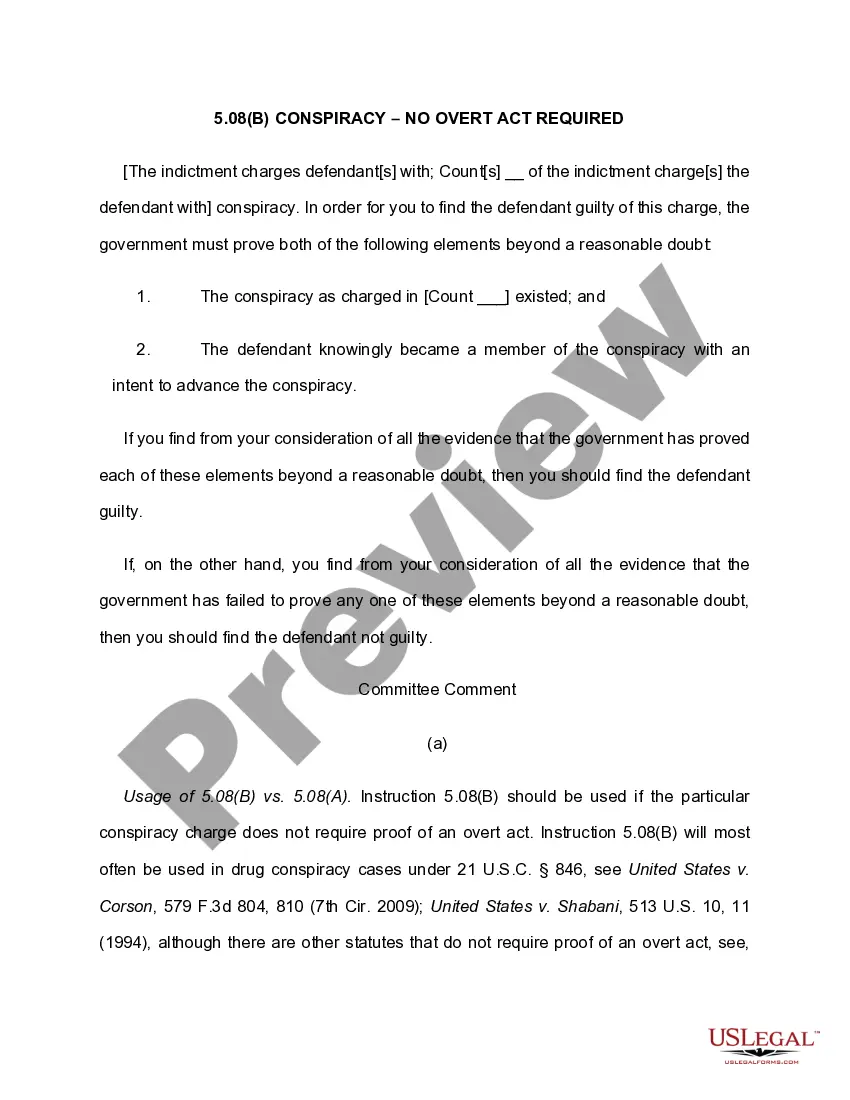
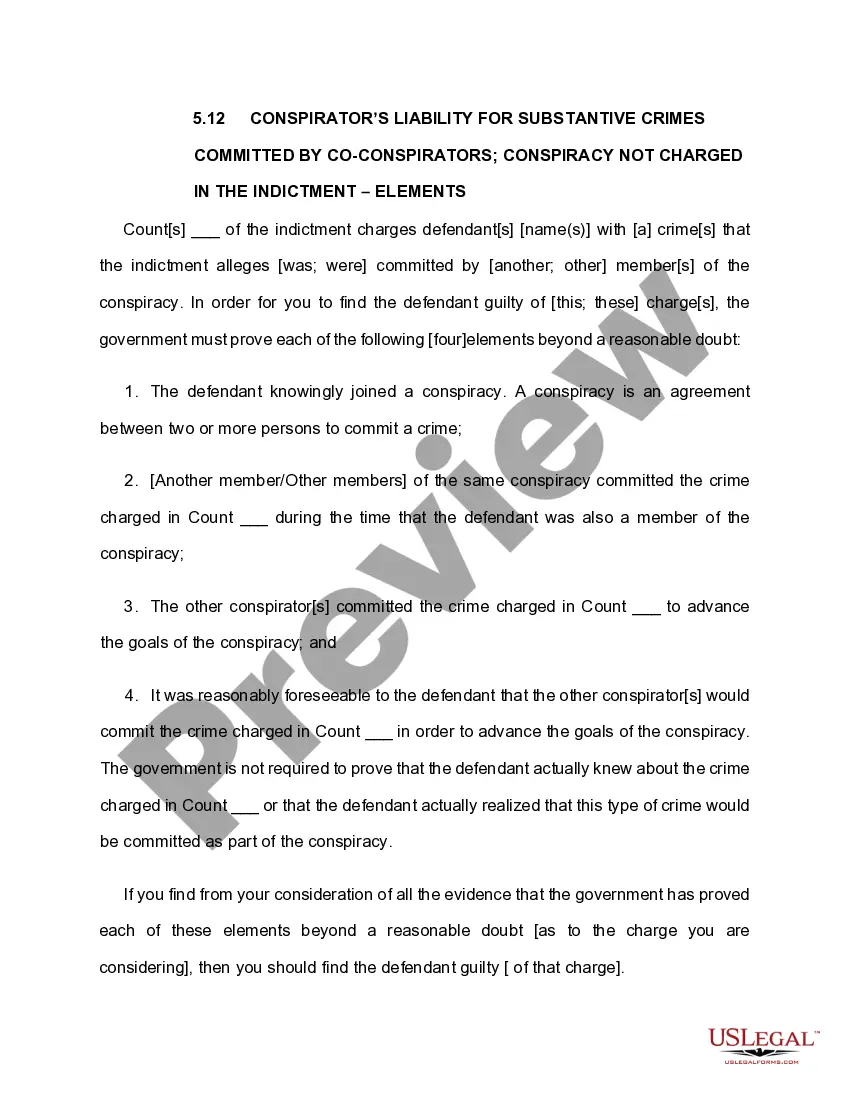
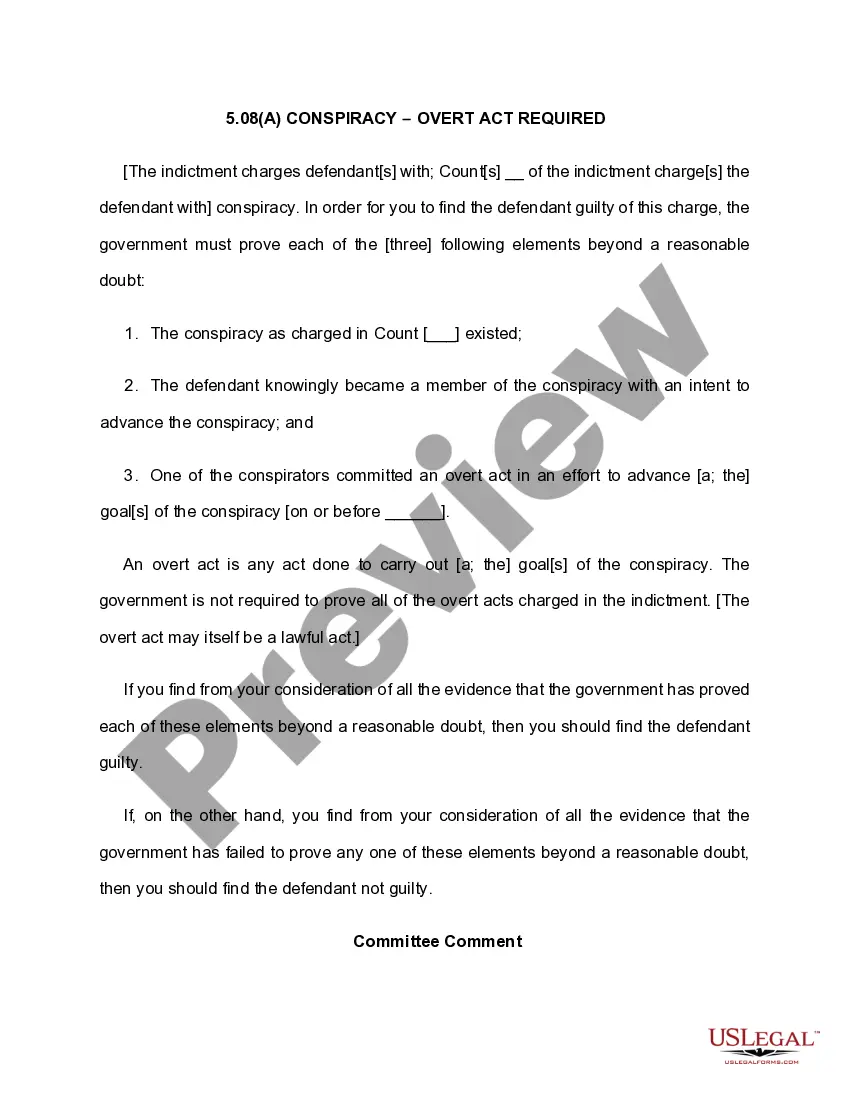
The 5.08 (B) Conspiracy - No Overt Act Required form is an official jury instruction used in federal court cases within the Seventh Circuit. This form guides jurors in determining whether a defendant is guilty of conspiracy without requiring proof of an overt act. Unlike similar forms that may necessitate evidence of such acts, this instruction is often applied in cases involving drug conspiracies, as well as other specific statutes, effectively simplifying the prosecution's burden of proof in certain scenarios.
Main sections of this form
- The indictment charging the defendant(s) with conspiracy.
- Elements that the government must prove beyond a reasonable doubt.
- The requirement of the defendant's knowledge and intent to advance the conspiracy.
- Instructions regarding the verdict based on the evidence presented.
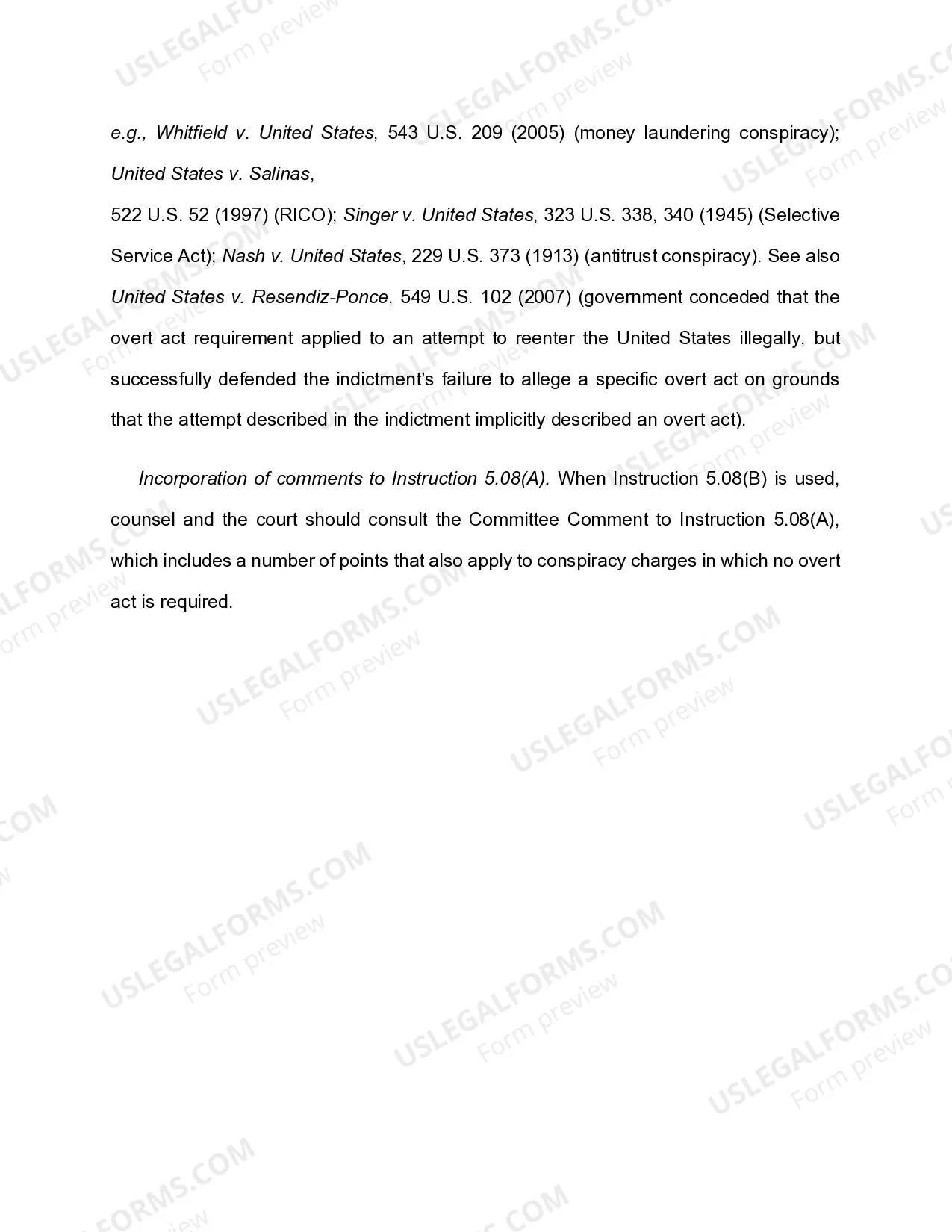
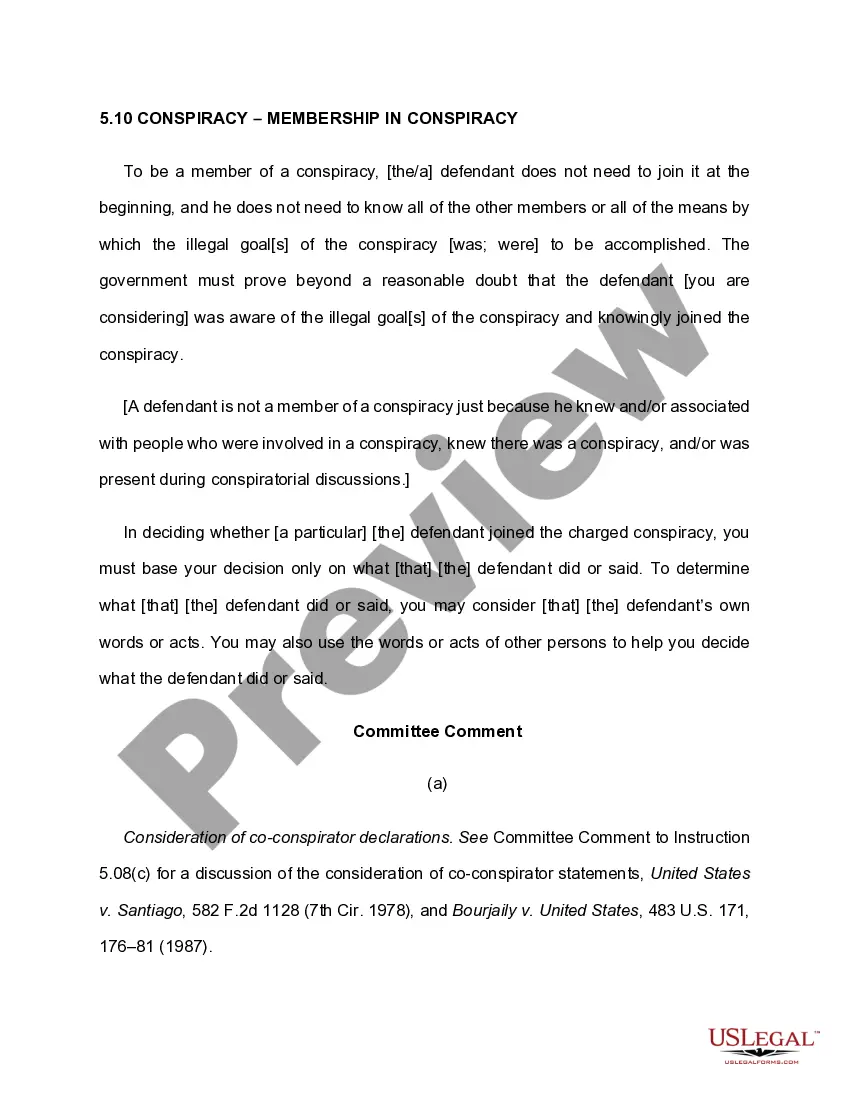
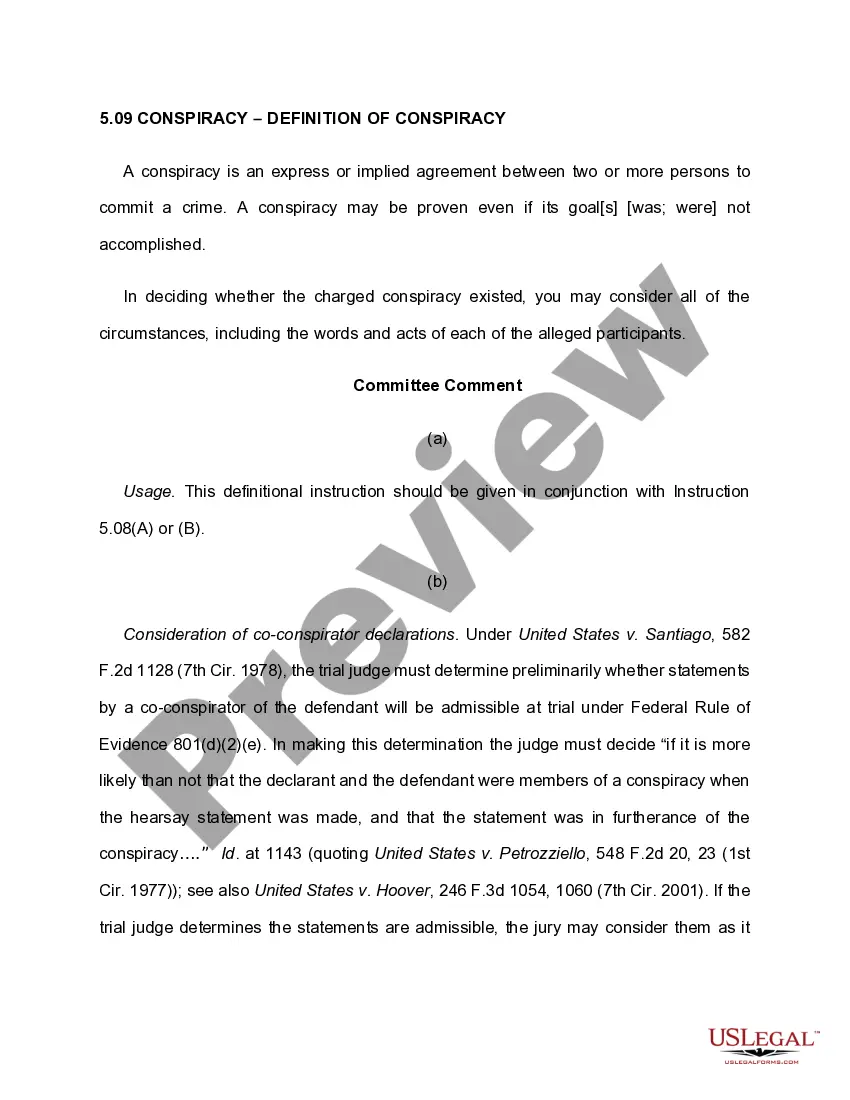
- Committee comments providing context for use in specific cases.
When to use this form
This form is necessary when a defendant is charged with conspiracy without the requirement of proving an overt act. Common scenarios include drug-related conspiracies or other offenses where conspiracy can be established through agreement without explicit actions. It helps jurors understand their responsibilities and the necessary criteria for a guilty verdict.
Intended users of this form
- Judges presiding over conspiracy trials in federal cases.
- Jurors tasked with deliberating on conspiracy charges.
- Attorneys representing clients involved in conspiracy cases.
How to complete this form
- Identify the specific count of conspiracy charged against the defendant.
- Consider all evidence presented at trial to evaluate the existence of a conspiracy.
- Determine if the defendant knowingly participated in the conspiracy with intent to advance it.
- Make a decision based on whether each element has been proven beyond a reasonable doubt.
- Deliver a verdict of guilty or not guilty according to your findings.
Notarization guidance
This form does not typically require notarization to be legally valid. However, some jurisdictions or document types may still require it. US Legal Forms provides secure online notarization powered by Notarize, available 24/7 for added convenience.
Get your form ready online
Our built-in tools help you complete, sign, share, and store your documents in one place.
Make edits, fill in missing information, and update formatting in US Legal Forms—just like you would in MS Word.
Download a copy, print it, send it by email, or mail it via USPS—whatever works best for your next step.
Sign and collect signatures with our SignNow integration. Send to multiple recipients, set reminders, and more. Go Premium to unlock E-Sign.
If this form requires notarization, complete it online through a secure video call—no need to meet a notary in person or wait for an appointment.
We protect your documents and personal data by following strict security and privacy standards.

Make edits, fill in missing information, and update formatting in US Legal Forms—just like you would in MS Word.

Download a copy, print it, send it by email, or mail it via USPS—whatever works best for your next step.

Sign and collect signatures with our SignNow integration. Send to multiple recipients, set reminders, and more. Go Premium to unlock E-Sign.

If this form requires notarization, complete it online through a secure video call—no need to meet a notary in person or wait for an appointment.

We protect your documents and personal data by following strict security and privacy standards.
Mistakes to watch out for
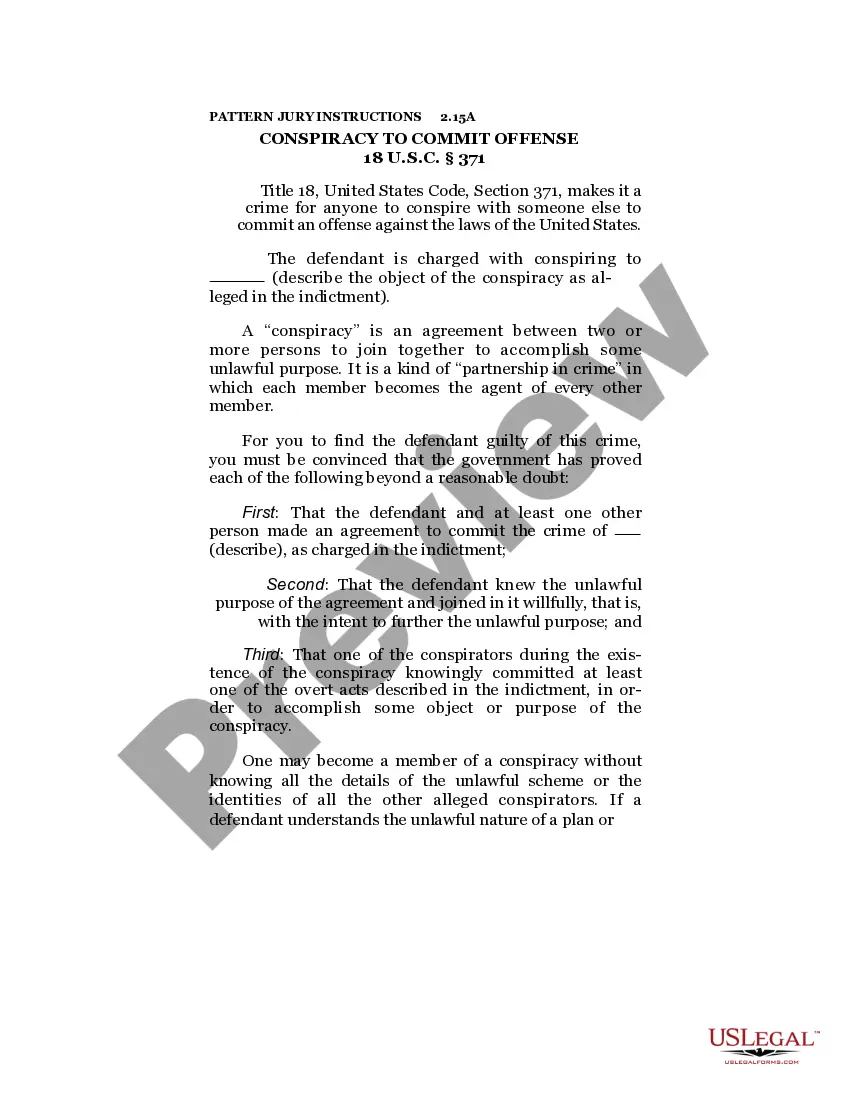
- Failing to understand that no overt act is required for conviction in certain conspiracy cases.
- Misinterpreting the elements required for establishing intent.
- Relying too heavily on circumstantial evidence without corroborating information.
Benefits of using this form online
- Convenience of accessing required legal language easily.
- Editable format that allows for customization to fit specific case needs.
- Reliable template drafted by licensed attorneys, ensuring legal accuracy.
Legal use & context
- This form reflects the legal standards within federal conspiracy cases.
- It is specifically applicable when the statutory context does not mandate proof of an overt act.
- Jurors must be clear on the elements necessary to render a verdict in these cases.
Looking for another form?

Form popularity
FAQ
The overt act required for conspiracy can be preparatory activity; the criminal act element required for attempt must be more than mere preparation. The criminal intent element required for conspiracy is specific intent or purposely to agree to commit the offense that is the conspiracy's object.
The purpose of the overt act is to verify the firmness of the agreement. An overt act shows sincere agreement to commit a crime.
Many federal conspiracy charges carry a 5, 10 or 20-year mandatory minimum prison sentence. However, the important thing to remember is that these sentences can be negotiated based on the information you have to give.
The Overt Act is some affirmative act done by one or more of the co- conspirators. The Overt Act, done in furtherance of the Agreement demonstrates that Agreement has advanced from merely talk to action.
The conspirators must have the intent to actually commit the crime. The punishment for being convicted of conspiracy will be based on the severity of the crime the conspirators intended to commit.
An overt act is essential to establish an attempt to commit a crime. It is also a key element in the crime of treason and has become a component of federal and some state criminal conspiracy laws. It also plays a role in the right of self-defense.