Louisiana Joint Custody Plan
Understanding this form
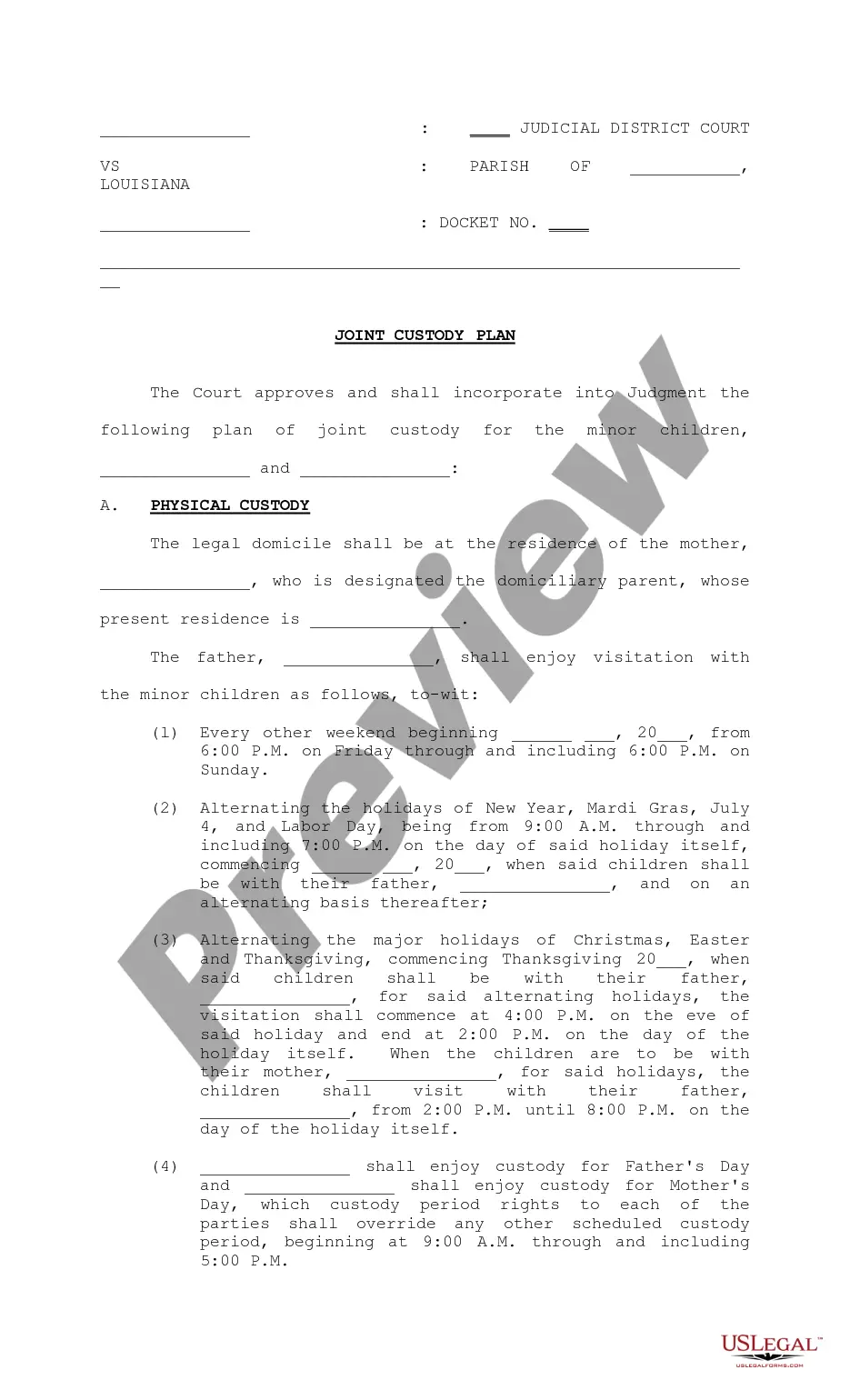
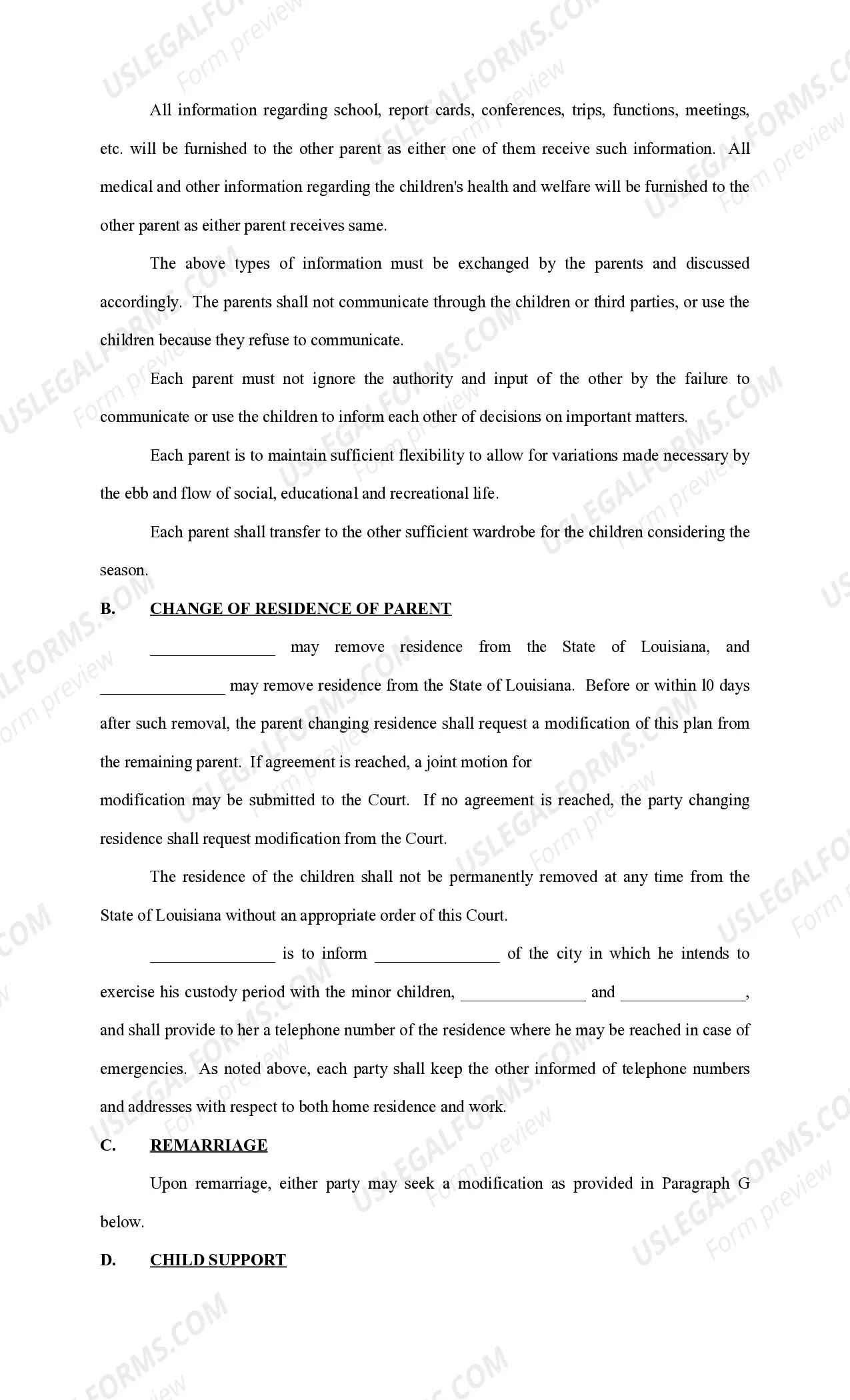
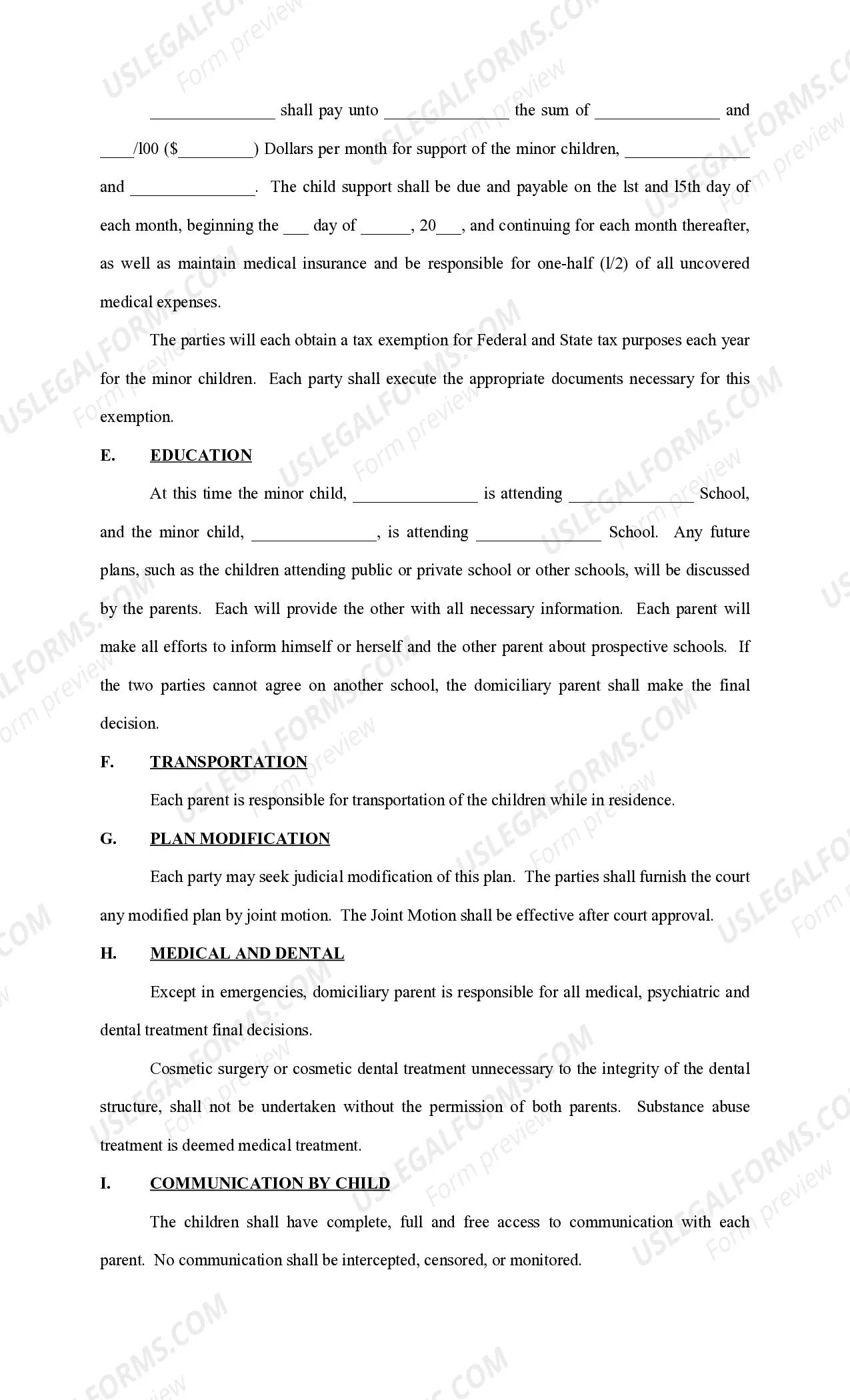
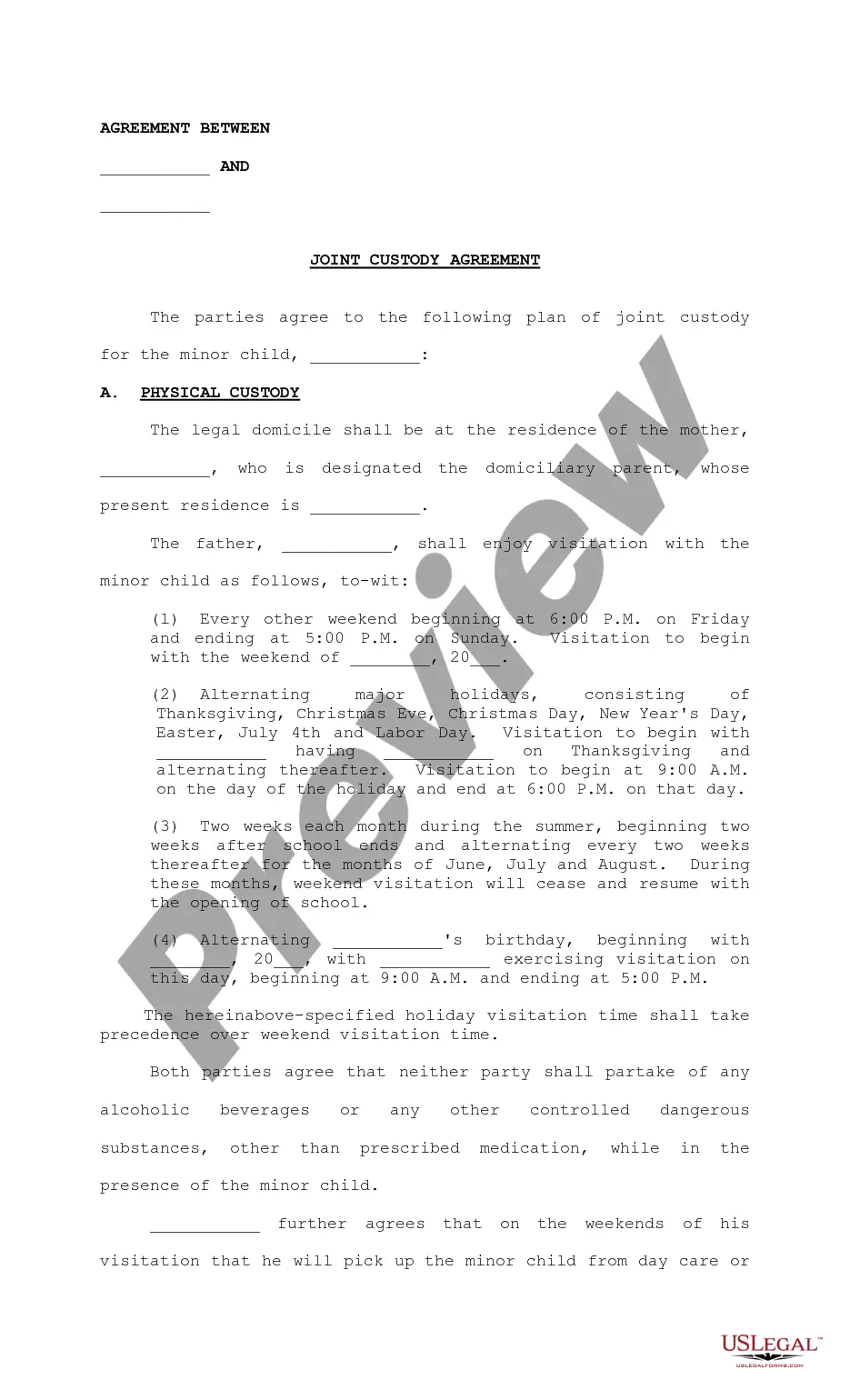
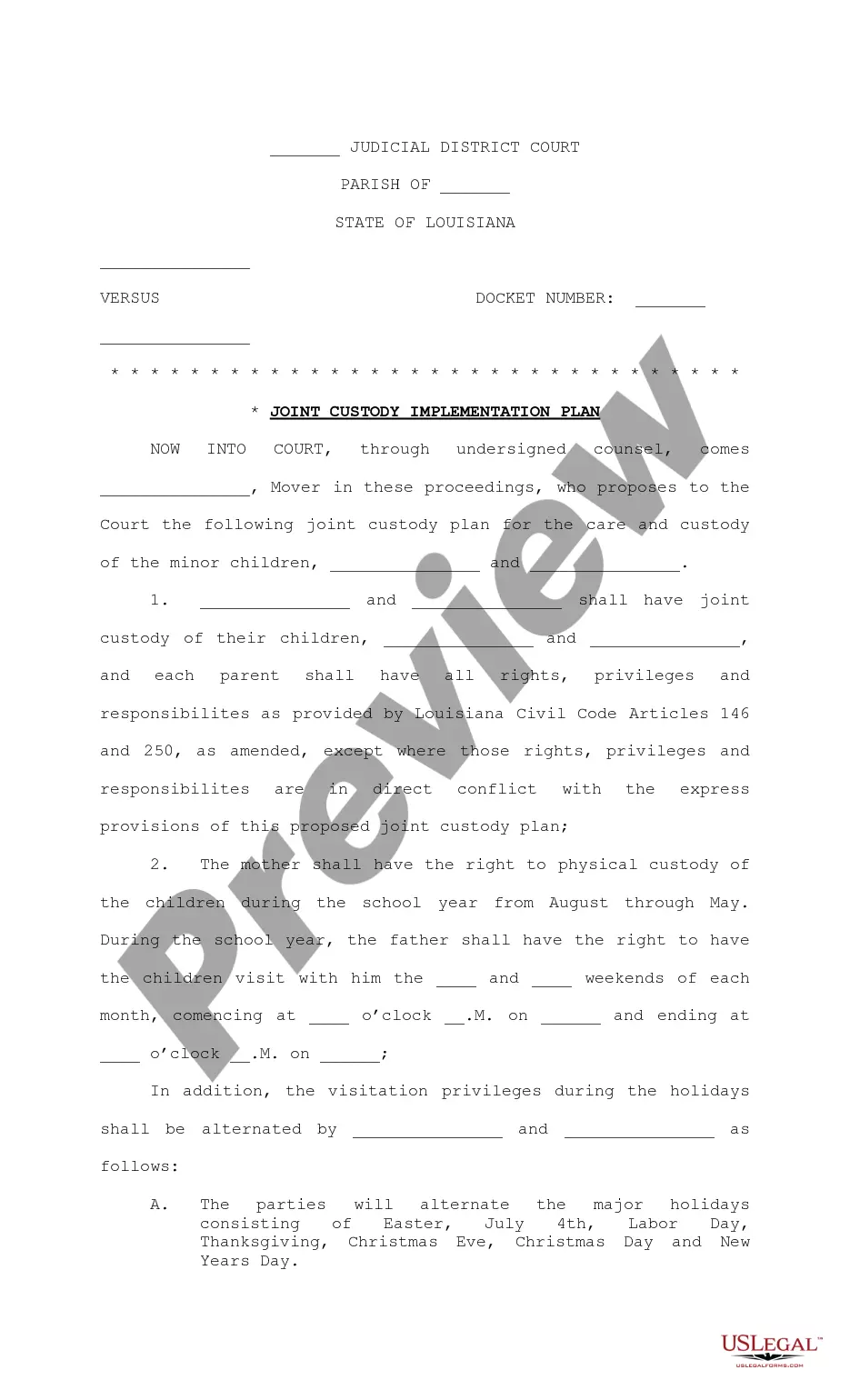
The Joint Custody Plan is a legal document that outlines the arrangements for shared custody of minor children following a divorce. This form specifies details such as visitation schedules, child support obligations, and decision-making responsibilities between parents. Unlike basic custody agreements, this plan is typically approved by a court, making it legally enforceable and providing a clear framework for co-parenting and communication after a divorce.
What’s included in this form
- Physical custody arrangements, including the designation of a domiciliary parent.
- Detailed visitation schedules for holidays, weekends, and special occasions.
- Agreements on child support payments and responsibilities for medical expenses.
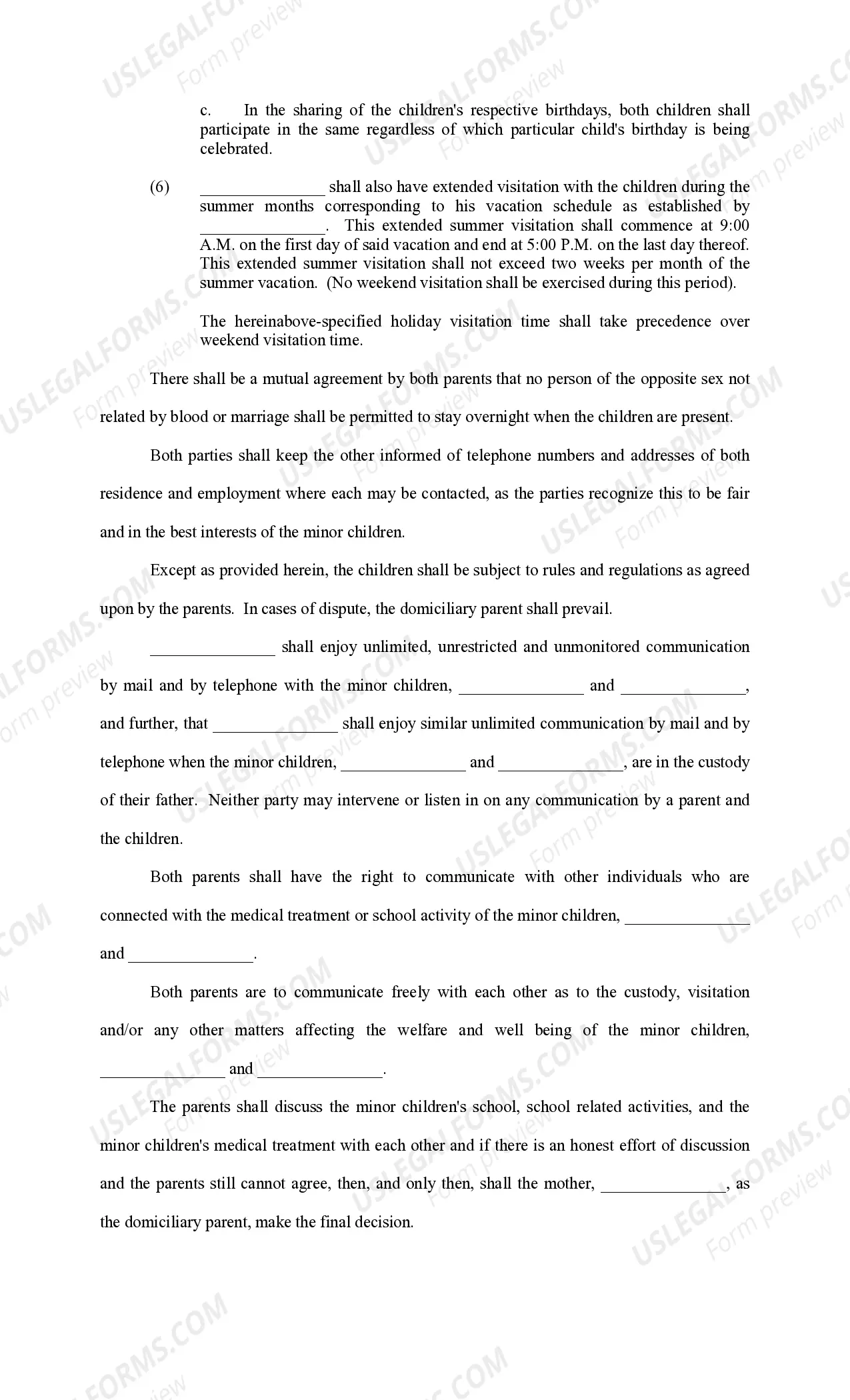
- Provisions related to education, healthcare, and communication between parents.
- Terms for modifying the custody plan if either parent changes residence.
- Guidelines for transportation and visitation during the summer months.
Common use cases
This form is essential in various scenarios, including when parents are going through a divorce and need to establish a formal custody arrangement. It is also useful when parents want to ensure clarity and consistency in visitation rights and child support agreements. Additionally, this form serves as a reference for future adjustments related to residency changes, remarriage, and other significant life events affecting parenting.
Who should use this form
- Divorced or separated parents seeking a formal joint custody arrangement.
- Parents planning to co-parent effectively and ensuring the welfare of their minor children.
- Individuals who want to establish clear communication and legal guidelines related to child custody.
- Parents looking to protect their rights and responsibilities through a court-approved plan.
Completing this form step by step
- Identify the partiesâenter the names of both parents and their respective residences.
- Specify physical custody details, designating the domiciliary parent and outlining visitation schedules.
- Enter financial obligationsâcomplete the child support section, including amounts and payment schedule.
- Detail educational and medical decisions, ensuring both parents agree on schools and health care.
- Review and sign the document in accordance with the state's legal requirements before submitting it to the court.
Does this document require notarization?
This form does not typically require notarization unless specified by local law. However, to ensure legal validity and recognition by the court, it is advisable to consult local requirements or an attorney regarding proper execution.
Get your form ready online
Our built-in tools help you complete, sign, share, and store your documents in one place.
Make edits, fill in missing information, and update formatting in US Legal Forms—just like you would in MS Word.
Download a copy, print it, send it by email, or mail it via USPS—whatever works best for your next step.
Sign and collect signatures with our SignNow integration. Send to multiple recipients, set reminders, and more. Go Premium to unlock E-Sign.
If this form requires notarization, complete it online through a secure video call—no need to meet a notary in person or wait for an appointment.
We protect your documents and personal data by following strict security and privacy standards.

Make edits, fill in missing information, and update formatting in US Legal Forms—just like you would in MS Word.

Download a copy, print it, send it by email, or mail it via USPS—whatever works best for your next step.

Sign and collect signatures with our SignNow integration. Send to multiple recipients, set reminders, and more. Go Premium to unlock E-Sign.

If this form requires notarization, complete it online through a secure video call—no need to meet a notary in person or wait for an appointment.

We protect your documents and personal data by following strict security and privacy standards.
Mistakes to watch out for
- Failing to include detailed visitation schedules, which can lead to disputes later.
- Not specifying child support amounts clearly, leading to confusion about financial responsibilities.
- Overlooking the need for mutual agreement in decision-making about education and healthcare.
- Neglecting to update the plan if circumstances change, such as relocations or remarriages.
Benefits of completing this form online
- Convenience: Download the Joint Custody Plan at any time from anywhere.
- Editability: Customize the form easily to fit your familyâs specific needs.
- Reliability: Forms are drafted by licensed attorneys, ensuring legal compliance.
- Time-saving: Avoid lengthy consultations by accessing a comprehensive template directly.
Main things to remember
- The Joint Custody Plan is essential for legally establishing custody arrangements post-divorce.
- It includes detailed guidelines on visitation, child support, and parenting responsibilities.
- Cooperation between parents is crucial for the plan's successful implementation and modification over time.
Looking for another form?
Form popularity
FAQ
Both mothers and fathers have equal rights to child custody. Custody arrangements can vary, and include joint or sole custody depending on the specifics of your situation.
50/50 schedules work best when: The parents live fairly close to each other, so exchanges are easier. The parents are able to communicate with each other about the child without fighting. The child is able to handle switching between parents' homes.
Common joint physical custody schedules Two weeks each schedule when the child lives with one parent for two weeks and the other parent the next two weeks. 2-2-3 schedule where the child lives with one parent for two days, the other parent for two days and the parents alternate a three day weekend.
A standard custody agreement provides parents with basic rights and the accepted minimum amount of time with their child. A standard agreement typically gives one parent custody and the other parent visitation.Custody X Change is software that creates parenting plans and custody agreements.
The most common arrangement is one in which one parent has sole physical custody, both parents have legal custody, and the noncustodial parent is granted visitation time.
Joint custody arrangements can help parents learn to co-parent and reduce friction in their relationship. Also, a joint custody relationship takes the burden off of one parent. With joint custody, both parents have less stress and responsibility.
In a joint custody arrangement, both parents are awarded legal custody of their child but not equal physical custody. Essentially, both parents have the rights and responsibilities of joint custodians (responsibility to confer, right to visitation, etc.) but they do not equally share the physical custody of the child.
Yes, because the law requires a non-custodial parent (that is, a parent who does not live with the child) pay a minimum amount of child support. That minimum amount is $100.00 a month for any number of children. But if your custody arrangement is shared or split custody, then there is no requirement.
Louisiana child custody laws encourage co-parents to create their own joint custody agreement. They can then submit their proposal to the court for approval. Most of the time, the court will approve any reasonable custody agreement that is in the best interest of the child.