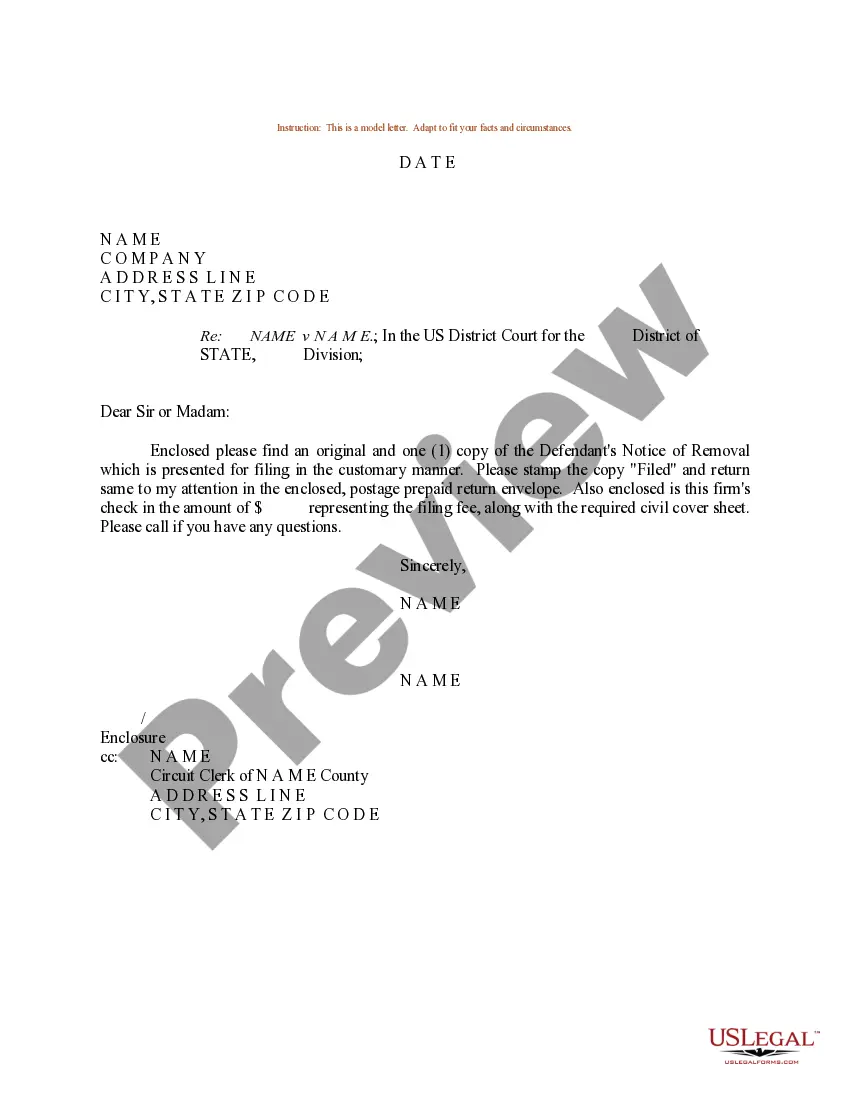
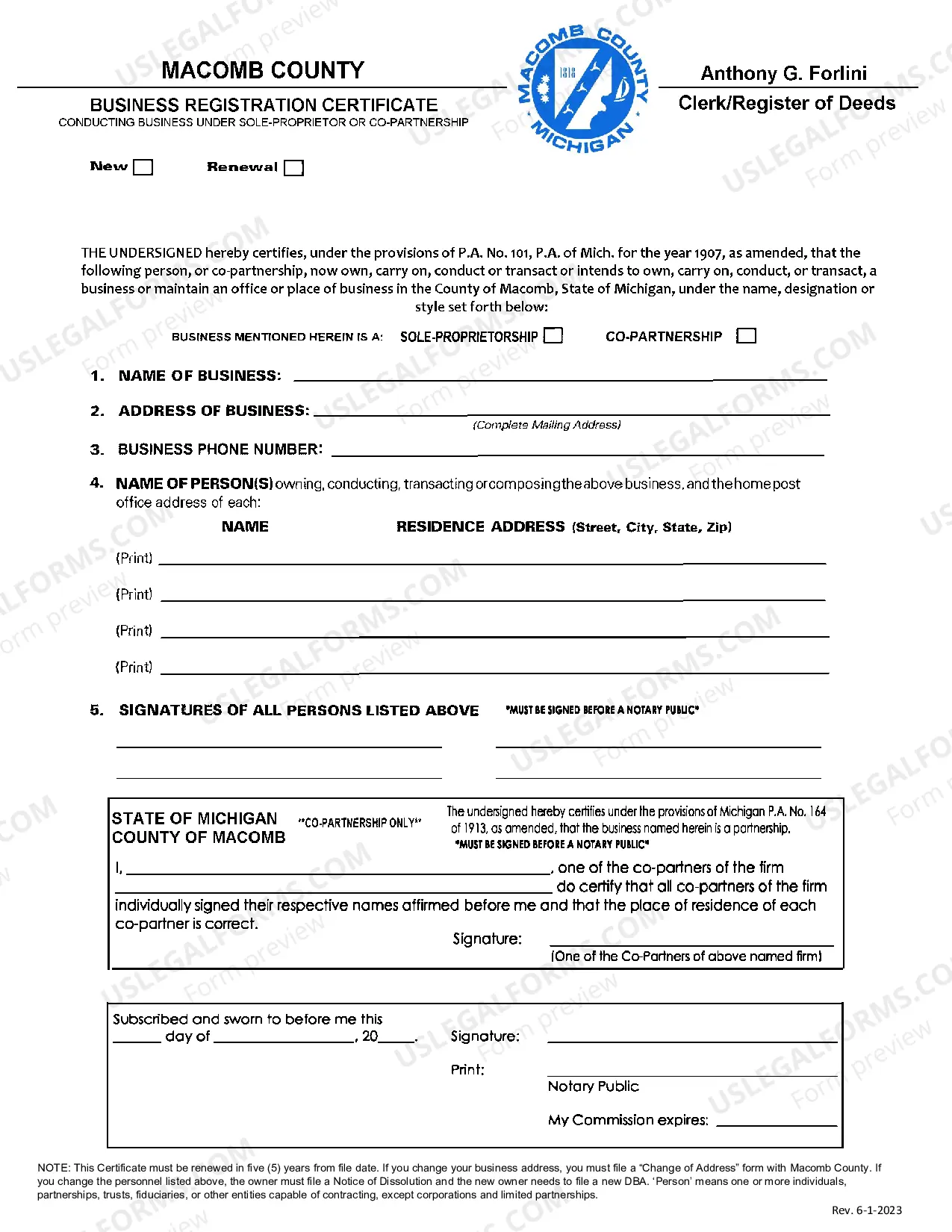
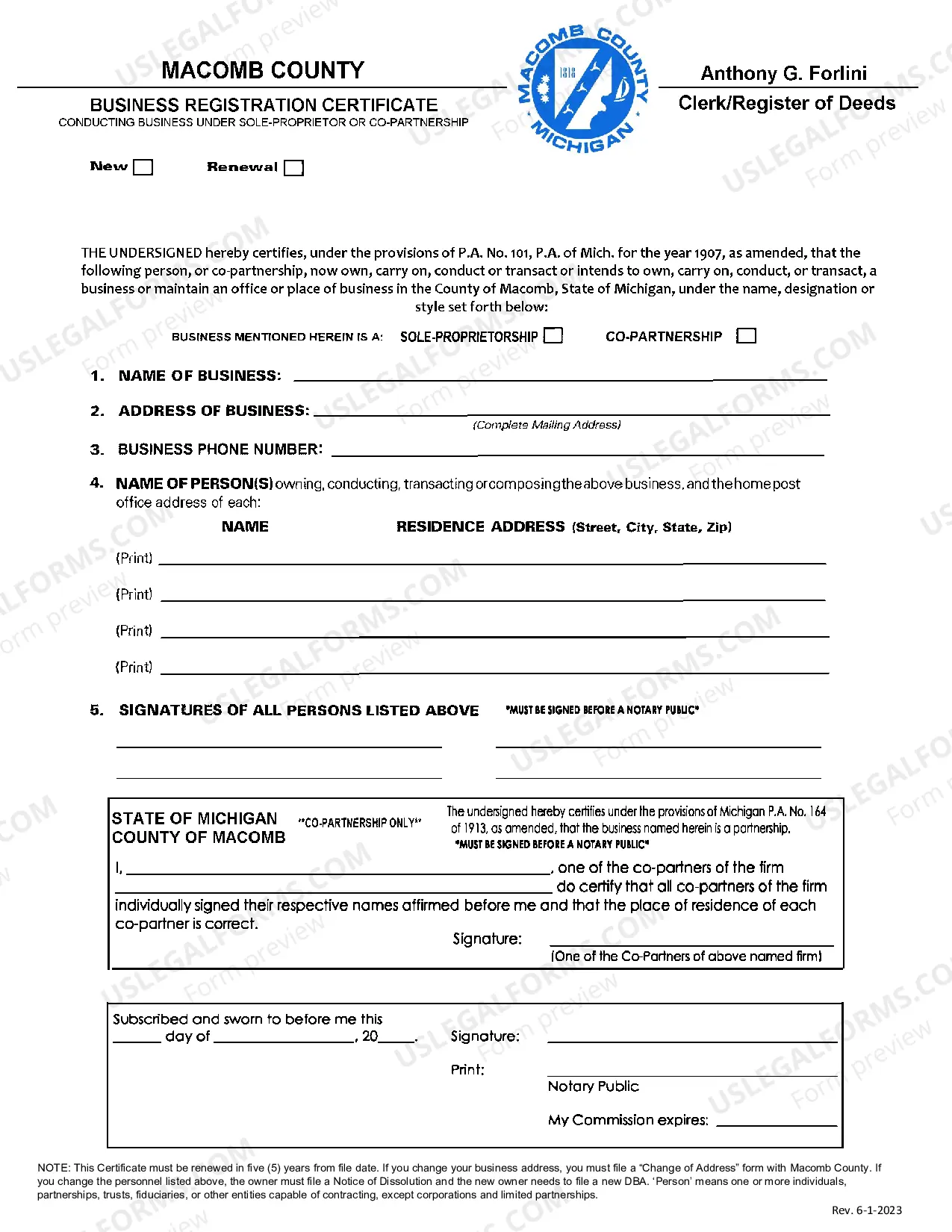
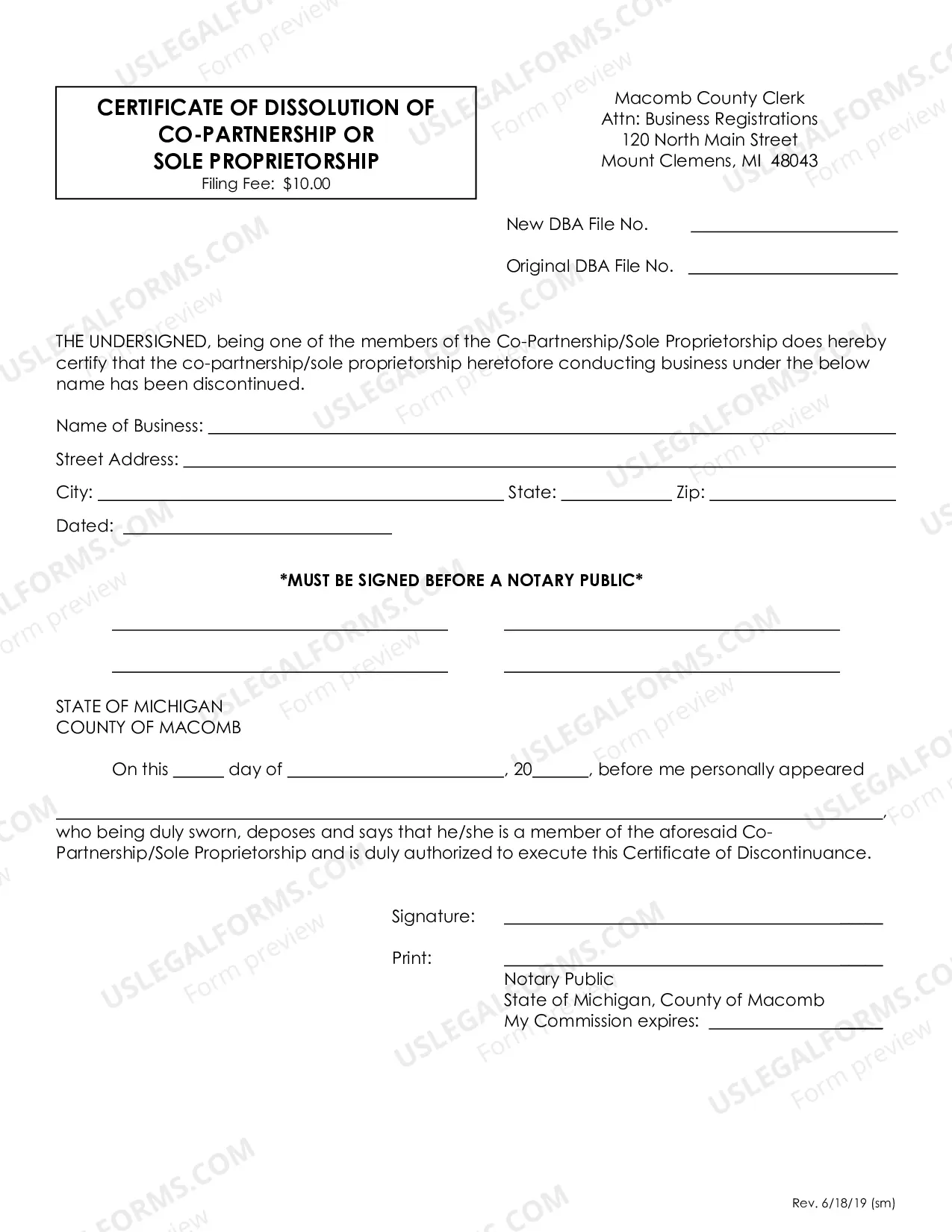
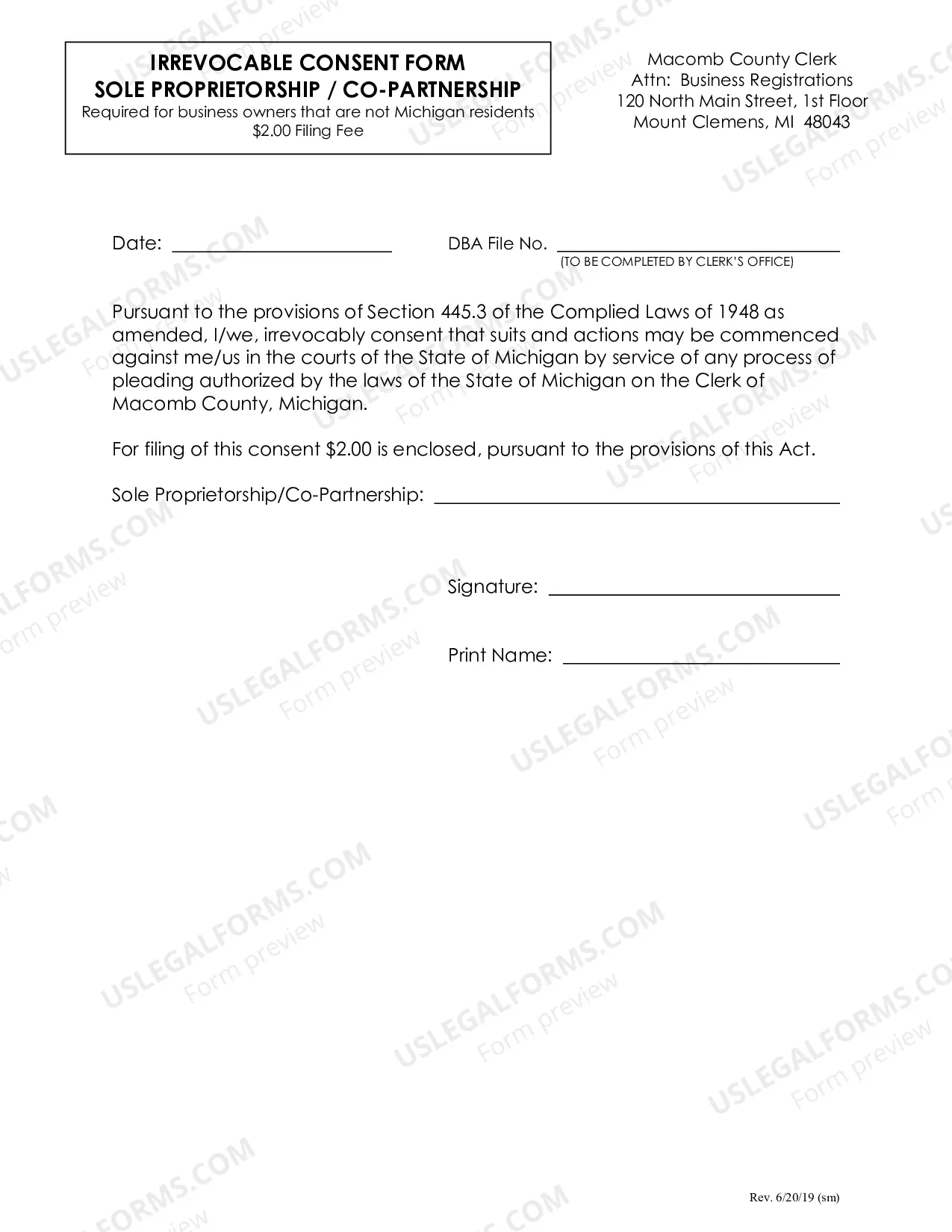
Michigan Business Registration — Sole Proprietorship (effective January 1, 2007) is a registration process for businesses in the state of Michigan that are owned and operated by a single person. This registration process includes filing an application with the Michigan Department of Licensing and Regulatory Affairs (LARA) and paying the necessary fees. Once the application is approved, the sole proprietor is allowed to conduct business within the state of Michigan. The registration also provides protection from personal liability for business debts and other obligations. The sole proprietorship registration is available for any type of business enterprise, including retail, service, manufacturing, wholesale, and professional. There are two types of Michigan Business Registration — Sole Proprietorship (effective January 1, 2007): Standard Registration and Enhanced Registration. The Standard Registration requires minimal information and is more affordable, while the Enhanced Registration requires additional information and is more expensive but provides additional benefits.
Michigan Business Registration - Sole Proprietorship
Description
Get your form ready online
Our built-in tools help you complete, sign, share, and store your documents in one place.
Make edits, fill in missing information, and update formatting in US Legal Forms—just like you would in MS Word.
Download a copy, print it, send it by email, or mail it via USPS—whatever works best for your next step.
Sign and collect signatures with our SignNow integration. Send to multiple recipients, set reminders, and more. Go Premium to unlock E-Sign.
If this form requires notarization, complete it online through a secure video call—no need to meet a notary in person or wait for an appointment.
We protect your documents and personal data by following strict security and privacy standards.

Make edits, fill in missing information, and update formatting in US Legal Forms—just like you would in MS Word.

Download a copy, print it, send it by email, or mail it via USPS—whatever works best for your next step.

Sign and collect signatures with our SignNow integration. Send to multiple recipients, set reminders, and more. Go Premium to unlock E-Sign.

If this form requires notarization, complete it online through a secure video call—no need to meet a notary in person or wait for an appointment.

We protect your documents and personal data by following strict security and privacy standards.
Looking for another form?


How to fill out Michigan Business Registration - Sole Proprietorship?
How much duration and resources do you typically allocate for creating official documentation.
There’s a better alternative to acquiring such forms than engaging legal professionals or spending hours looking for a suitable template.
Establish an account and pay for your subscription. You can make a payment using your credit card or via PayPal - our service is completely secure for that.
Download your Michigan Business Registration - Sole Proprietorship (effective January 1, 2007) onto your device and complete it on a printed hard copy or electronically.
- US Legal Forms is the top online repository that offers professionally crafted and validated state-specific legal documents for any purpose, such as the Michigan Business Registration - Sole Proprietorship (effective January 1, 2007).
- To obtain and fill out an appropriate Michigan Business Registration - Sole Proprietorship (effective January 1, 2007) template, follow these simple steps.
- Browse through the form content to verify it complies with your state laws. To do so, review the form description or utilize the Preview option.
- If your legal template doesn’t fulfill your needs, find another one using the search bar located at the top of the page.
- If you are already registered with our service, Log In and download the Michigan Business Registration - Sole Proprietorship (effective January 1, 2007). If not, continue to the next steps.
- Click Buy now once you discover the right blank. Choose the subscription plan that suits you best to access our library’s complete offerings.
Form popularity
FAQ
In Michigan, you do not need to register a sole proprietorship at the state level if you use your own name. However, if you choose a business name that differs from your legal name, you must register that name with the state. Additionally, you may require local permits or licenses depending on your business type. Proper Michigan Business Registration - Sole Proprietorship helps ensure compliance and supports your business efforts.
No, a Michigan tax ID is not the same as an Employer Identification Number (EIN). The Michigan tax ID is used for state tax purposes, while an EIN is a federal tax identification number required by the IRS. If you are planning on hiring employees or operating as a sole proprietorship with certain tax obligations, you will need an EIN. Understanding these distinctions is crucial for smooth Michigan Business Registration - Sole Proprietorship.
The biggest disadvantage of a sole proprietor is personal liability. As a sole proprietor, you are personally responsible for any debts or legal issues that arise from your business activities. This means that your personal assets, such as your home or savings, could be at risk. When considering Michigan Business Registration - Sole Proprietorship, it's vital to weigh this risk and decide if it aligns with your comfort level.
To register a sole proprietorship in Michigan, you need to start by choosing a unique business name that complies with state naming requirements. Next, you can file a Certificate of Assumed Name with your local county clerk's office if you plan to use a name other than your own. Additionally, obtain any necessary licenses or permits depending on your business activities. Finally, while not required, consider using US Legal Forms to streamline your Michigan Business Registration - Sole Proprietorship process.
To start a sole proprietorship in Michigan online, you begin by choosing your business name and ensuring it is not already in use. Next, you will complete the Michigan Business Registration - Sole Proprietorship process, which typically involves filing your DBA (Doing Business As) with your local county clerk. Platforms like uslegalforms provide step-by-step guidance and necessary forms to help streamline your registration process and make it easy for you.
As a sole proprietor in Michigan, you typically do not need a formal business license at the state level. However, you are required to obtain any local business licenses or permits depending on your specific location and the nature of your business. Additionally, registering your Michigan Business Registration - Sole Proprietorship is necessary for tax purposes and to ensure compliance with local regulations.
Michigan income tax must be paid on income earned, received, or accrued while living in Michigan. Nonresidents: A person whose permanent home for the entire year was in another state is a nonresident. Michigan income tax must be paid on income earned from Michigan sources.
Michigan's Corporate Income Tax (CIT) is at a flat rate of 6%. The tax applies to C Corporations and any entity that elects to be taxed as a C corporation. Income is apportioned based 100% on the sales factor.
In Michigan, a UBG with standard members must file Form 4567. A Designated Member (DM) must file the return on behalf of the standard members of the group. In a parent- subsidiary controlled group, the controlling member must serve as DM if it has nexus with Michigan.
The Michigan Business Tax (MBT), which was signed into law by Governor Jennifer M. Granholm July 12, 2007, imposes a 4.95% business income tax and a modified gross receipts tax at the rate of 0.8%. Insurance companies and financial institutions pay alternate taxes (see below).