Self-Employed Independent Contractor Agreement Between an Owner / Operator Truck Driver and Common Carrier
What is this form?
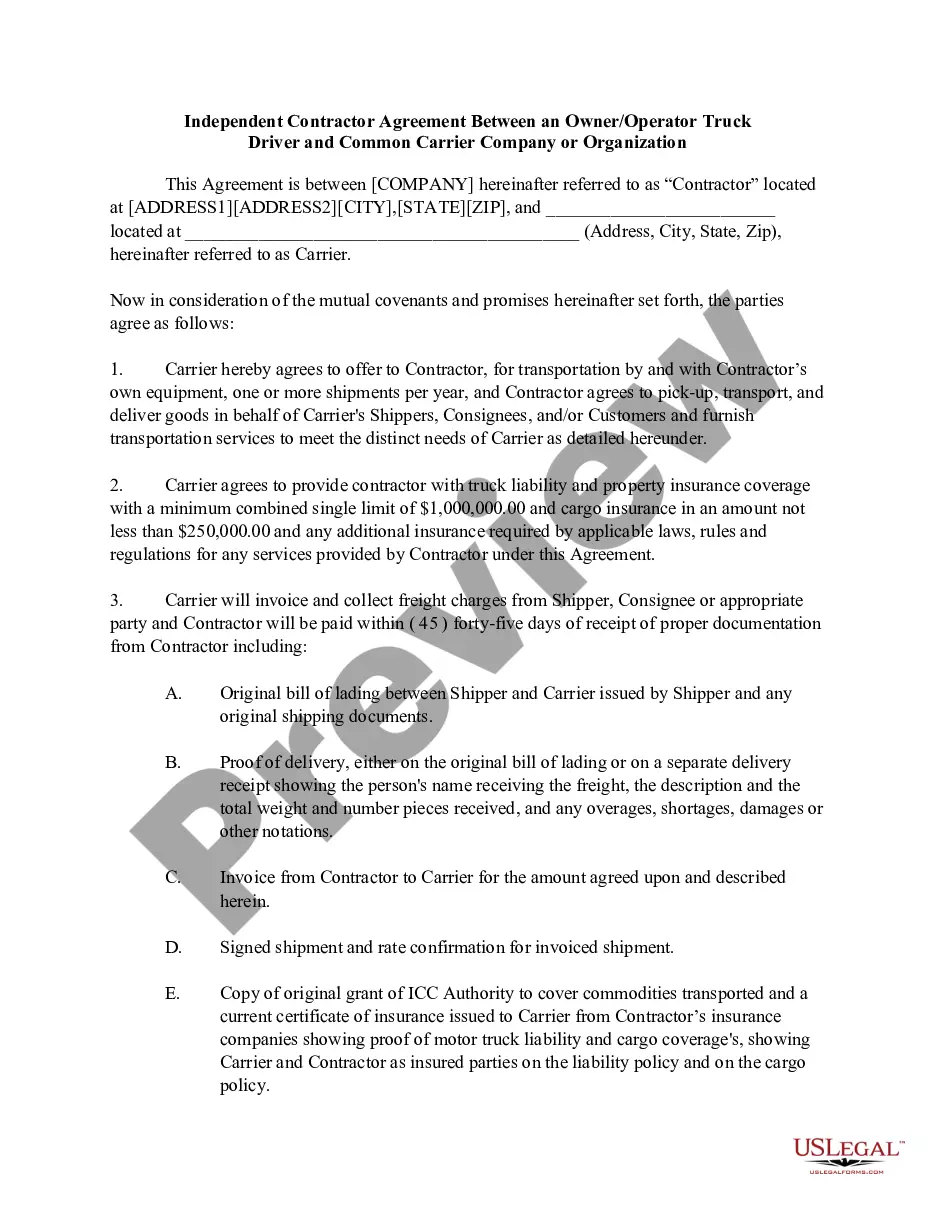
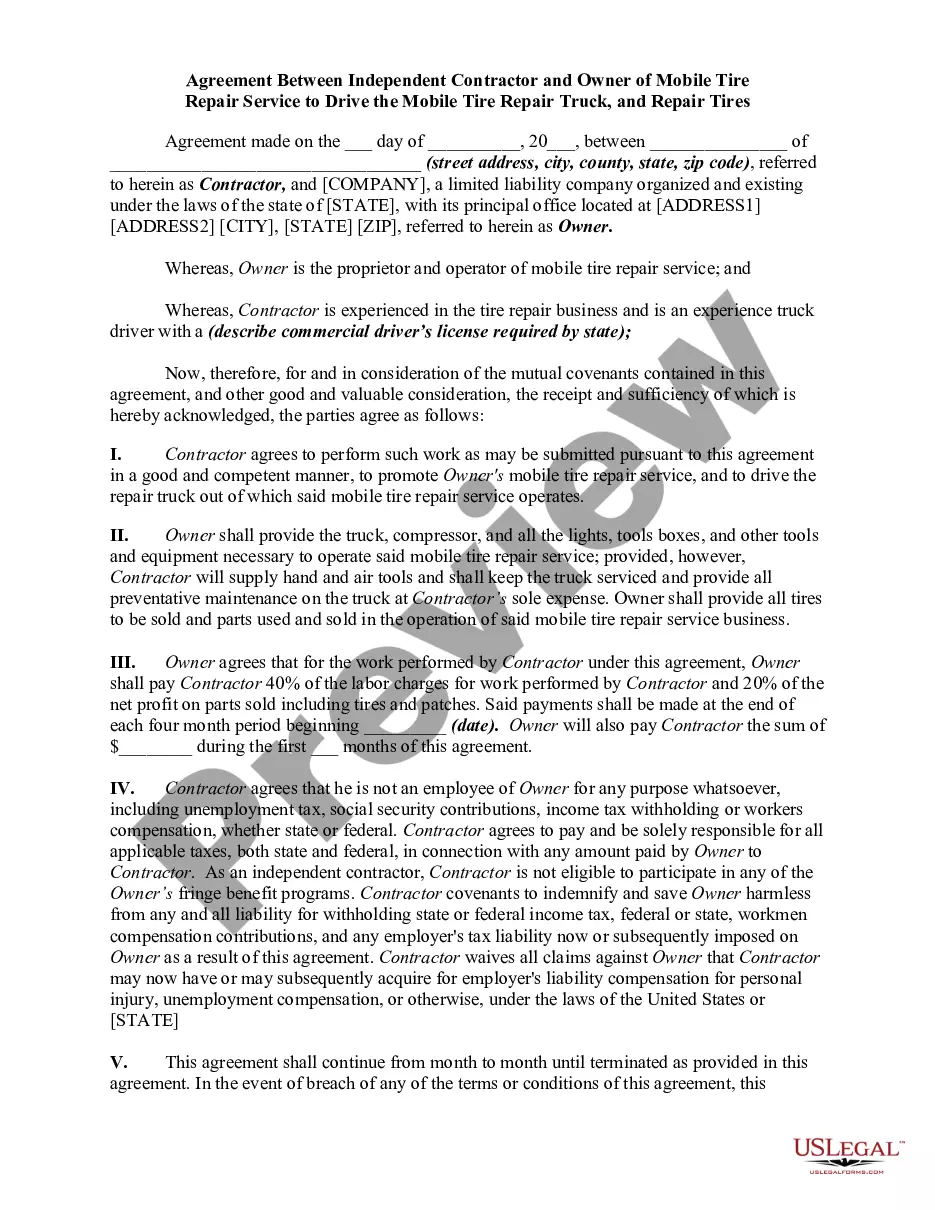
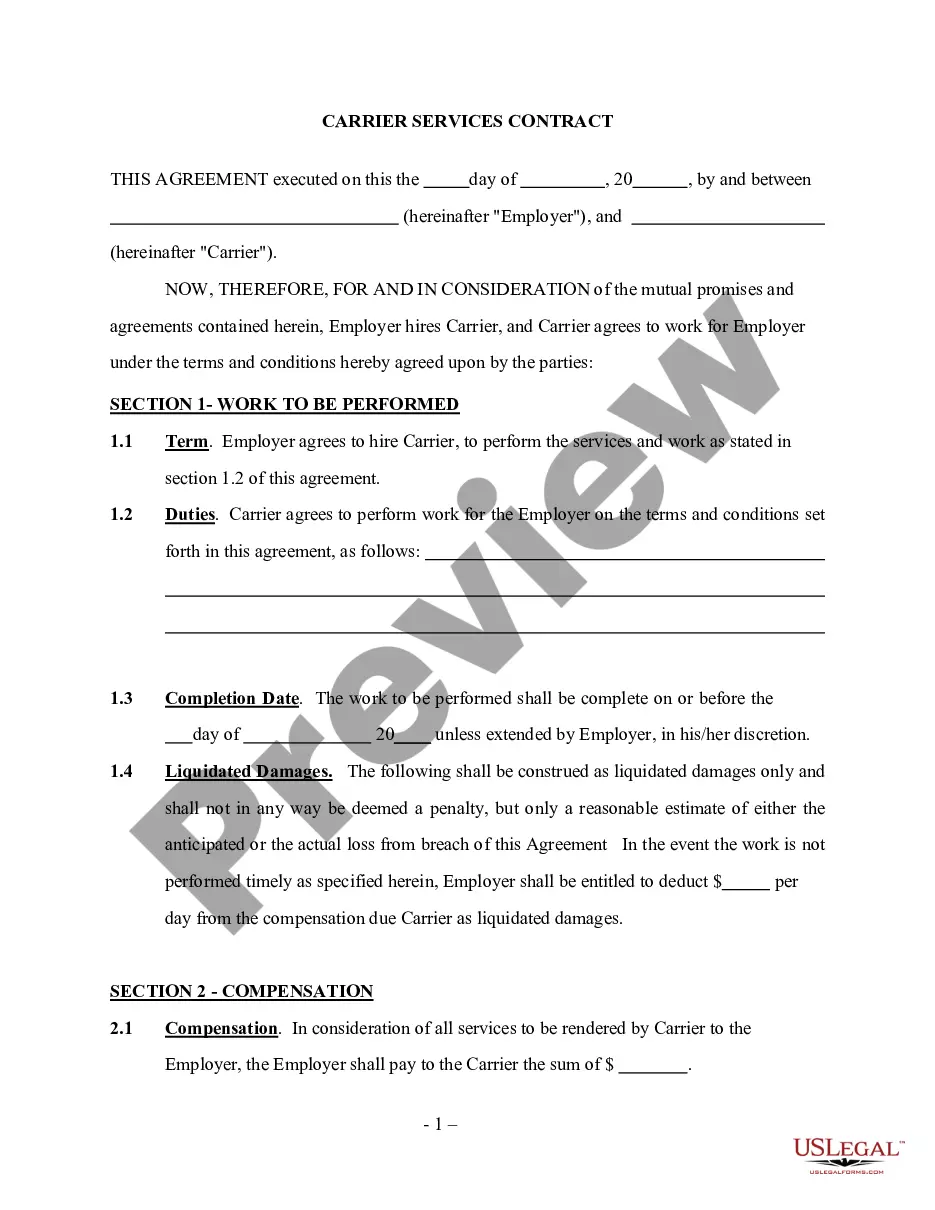
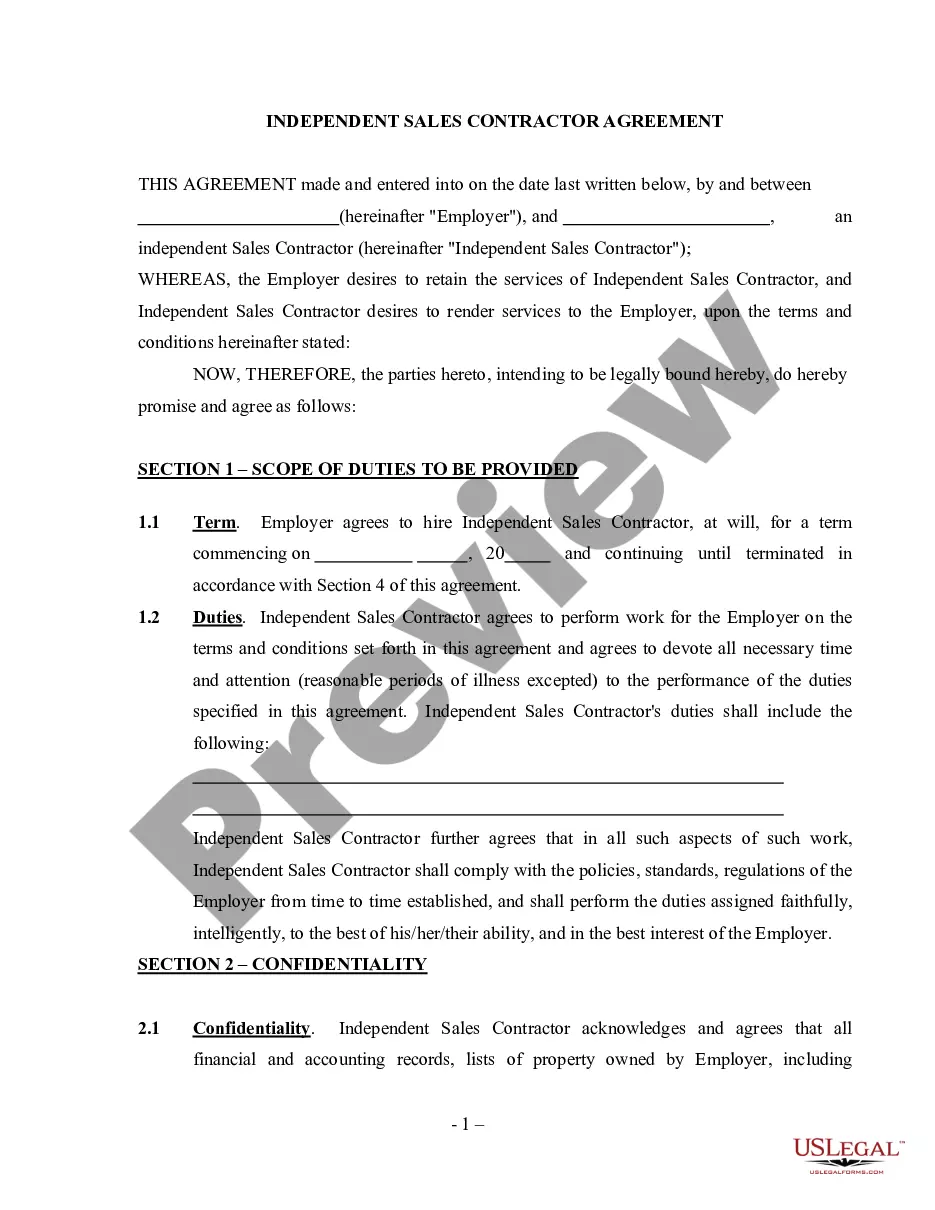
This Self-Employed Independent Contractor Agreement is a legal document that formalizes the relationship between an owner/operator truck driver (Contractor) and a common carrier (Carrier). It establishes the terms under which the Contractor will provide transportation services using their own equipment. Unlike other agreements, this document specifically addresses the independent contractor relationship within the trucking industry, ensuring compliance with relevant laws and protecting both parties' rights and responsibilities.
Key parts of this document
- Identification of parties: Establishes the Contractor's and Carrier's identities and contact information.
- Scope of services: Outlines the Contractor's obligations regarding pick-up, transportation, and delivery of goods.
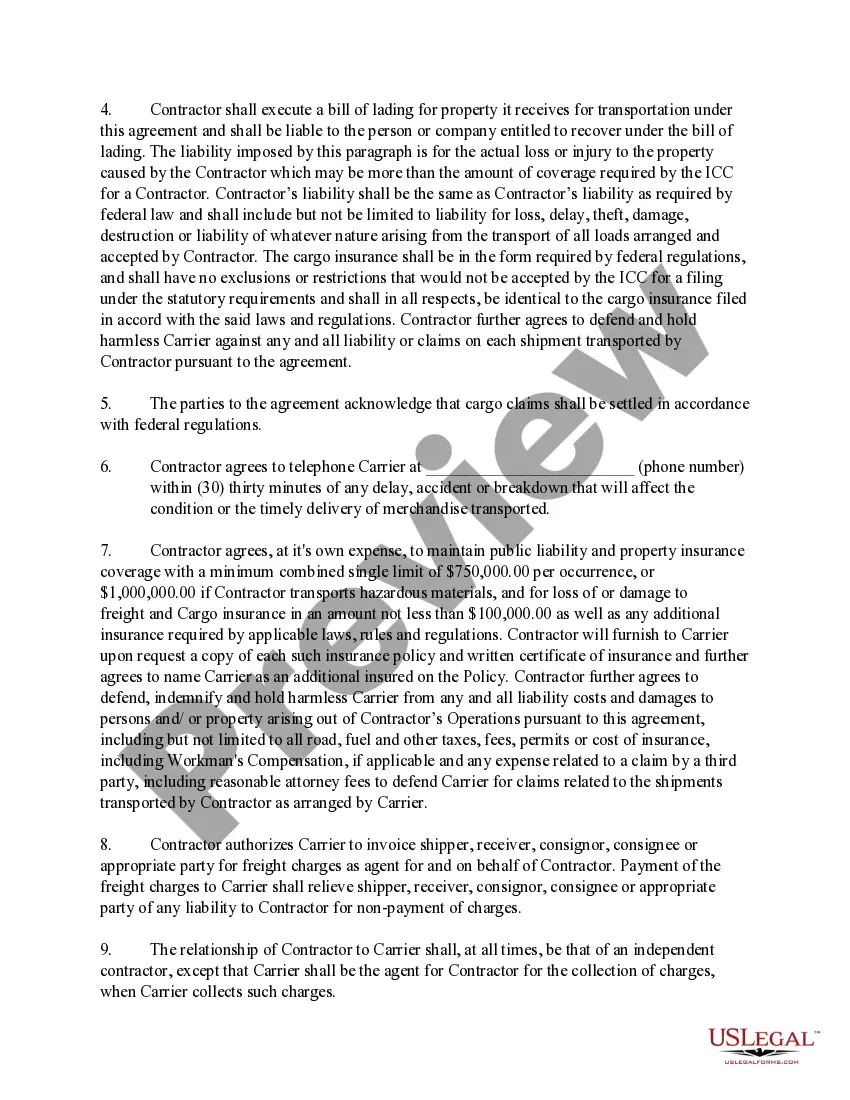
- Insurance requirements: Specifies the minimum insurance coverage the Contractor must maintain.
- Payment terms: Details how the Contractor will be compensated for their services, including invoicing procedures.
- Liability clauses: Defines the liability of the Contractor concerning loss or damage during transportation.
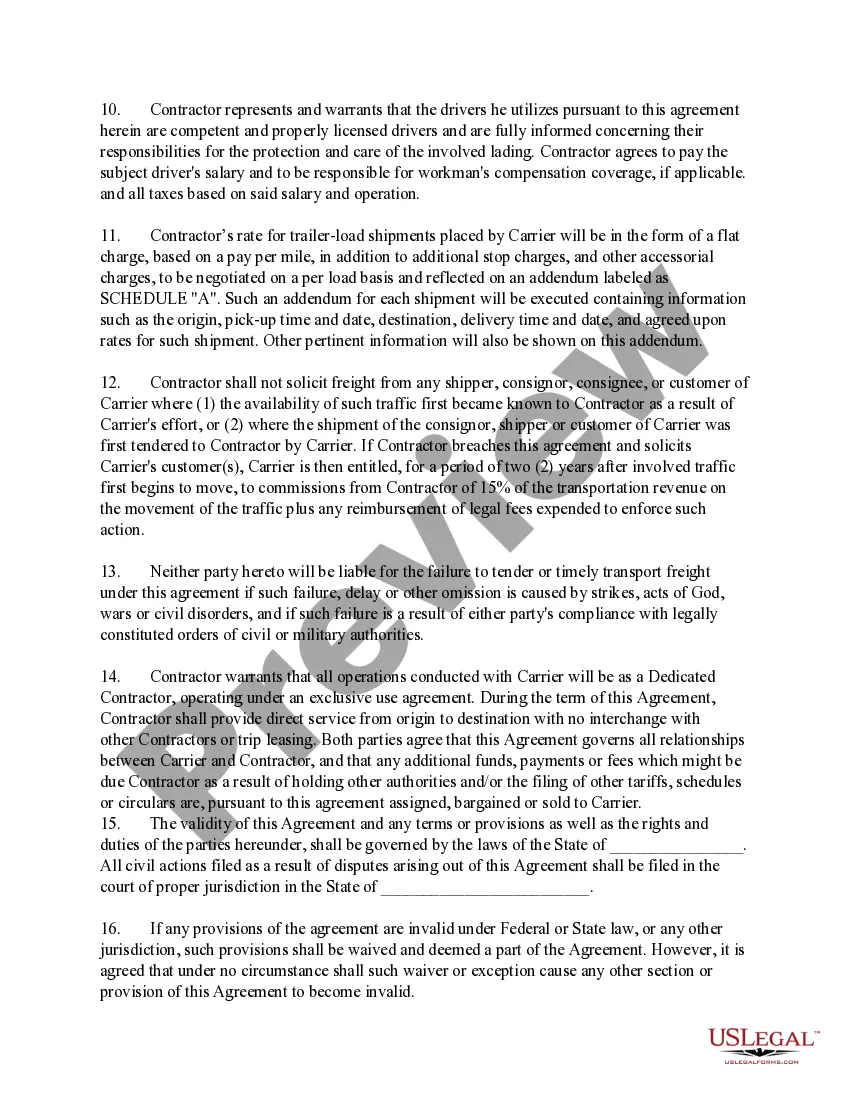
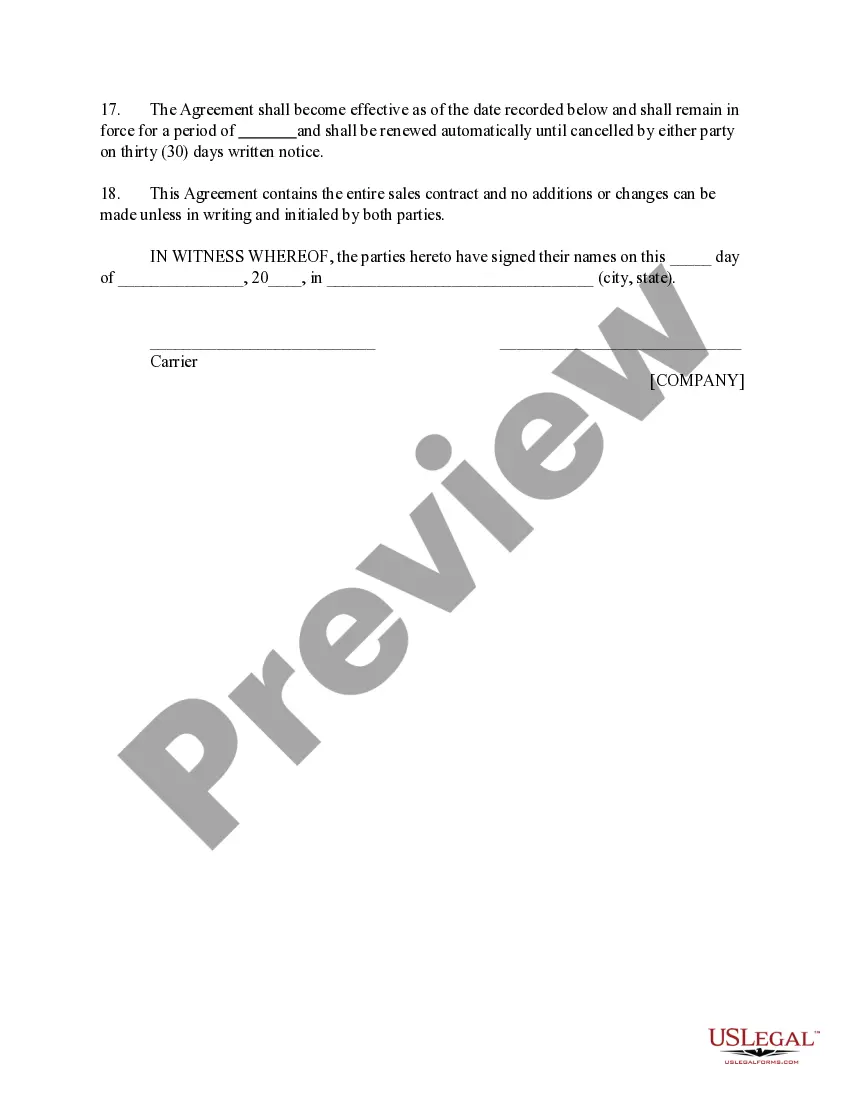
- Duration and termination: Indicates the agreement's effective date, duration, and cancellation terms.

When to use this form
This form should be used when a self-employed truck driver enters into an agreement with a common carrier to provide transportation services. It is essential in situations where trucking operations involve transporting goods on behalf of others, ensuring that both parties are clear about their obligations, compensation, and liability issues.
Who should use this form
- Independent truck drivers looking to formalize their work with common carriers.
- Common carriers seeking to establish a clear contractual relationship with independent contractors.
- Business owners in the transportation industry needing a legally binding agreement for freight services.
Instructions for completing this form
- Identify the Contractor and Carrier: Fill in their legal names and addresses.
- Specify the scope of services: Detail the responsibilities regarding transportation and delivery of goods.
- Enter the insurance details: Include the types and minimum coverage amounts required.
- Outline payment terms: Set forth how and when the Contractor will be compensated for services rendered.
- Sign and date the agreement: Ensure both parties sign and date the contract to make it binding.
Is notarization required?
This form does not typically require notarization unless specified by local law. Always verify local regulations to ensure compliance.
Get your form ready online
Our built-in tools help you complete, sign, share, and store your documents in one place.
Make edits, fill in missing information, and update formatting in US Legal Forms—just like you would in MS Word.
Download a copy, print it, send it by email, or mail it via USPS—whatever works best for your next step.
Sign and collect signatures with our SignNow integration. Send to multiple recipients, set reminders, and more. Go Premium to unlock E-Sign.
If this form requires notarization, complete it online through a secure video call—no need to meet a notary in person or wait for an appointment.
We protect your documents and personal data by following strict security and privacy standards.

Make edits, fill in missing information, and update formatting in US Legal Forms—just like you would in MS Word.

Download a copy, print it, send it by email, or mail it via USPS—whatever works best for your next step.

Sign and collect signatures with our SignNow integration. Send to multiple recipients, set reminders, and more. Go Premium to unlock E-Sign.

If this form requires notarization, complete it online through a secure video call—no need to meet a notary in person or wait for an appointment.

We protect your documents and personal data by following strict security and privacy standards.
Typical mistakes to avoid
- Failing to specify the insurance coverage required can lead to compliance issues.
- Not including all relevant parties' information can cause disputes later.
- Overlooking the payment terms may result in delayed compensation.
Benefits of using this form online
- Convenience: Easily download and complete the form at your own pace.
- Editability: Customize the agreement to fit your specific needs.
- Reliability: Utilize a form drafted by licensed attorneys to ensure legal validity.
Legal use & context
- This agreement serves as a legally binding contract between the independent contractor and the common carrier.
- It is enforceable in a court of law, provided it complies with applicable federal and state regulations.
- Properly executed agreements help prevent misunderstandings and outline legal rights and responsibilities.
Main things to remember
- The agreement clarifies the roles of the independent contractor and the common carrier.
- It outlines essential insurance and liability provisions necessary for transport.
- Clear terms on payment and invoicing are vital to avoid future disputes.
- Understanding local regulations can enhance the contractâs effectiveness and legality.
Looking for another form?
Form popularity
FAQ
If you have been misclassified as an independent contractor, this means your employer is withholding your rights as an employee. If you are involved in an accident while on the job, for example, you will not have the workers' compensation benefits to pay for your medical bills and lost wages.
Some independent contractors may lease to own, but they lose what they've paid into their vehicle if they exit the contract with the carrier. In contrast, an owner-operator has complete ownership of their vehicle or is financing their vehicle for ownership.
As an owner/operator, you also have the operating authority to legally deliver freight throughout the United States without a contract through a carrier. As an independent contractor, on the other hand, you can only operate a truck under the operating authority provided by the carrier you contract for.
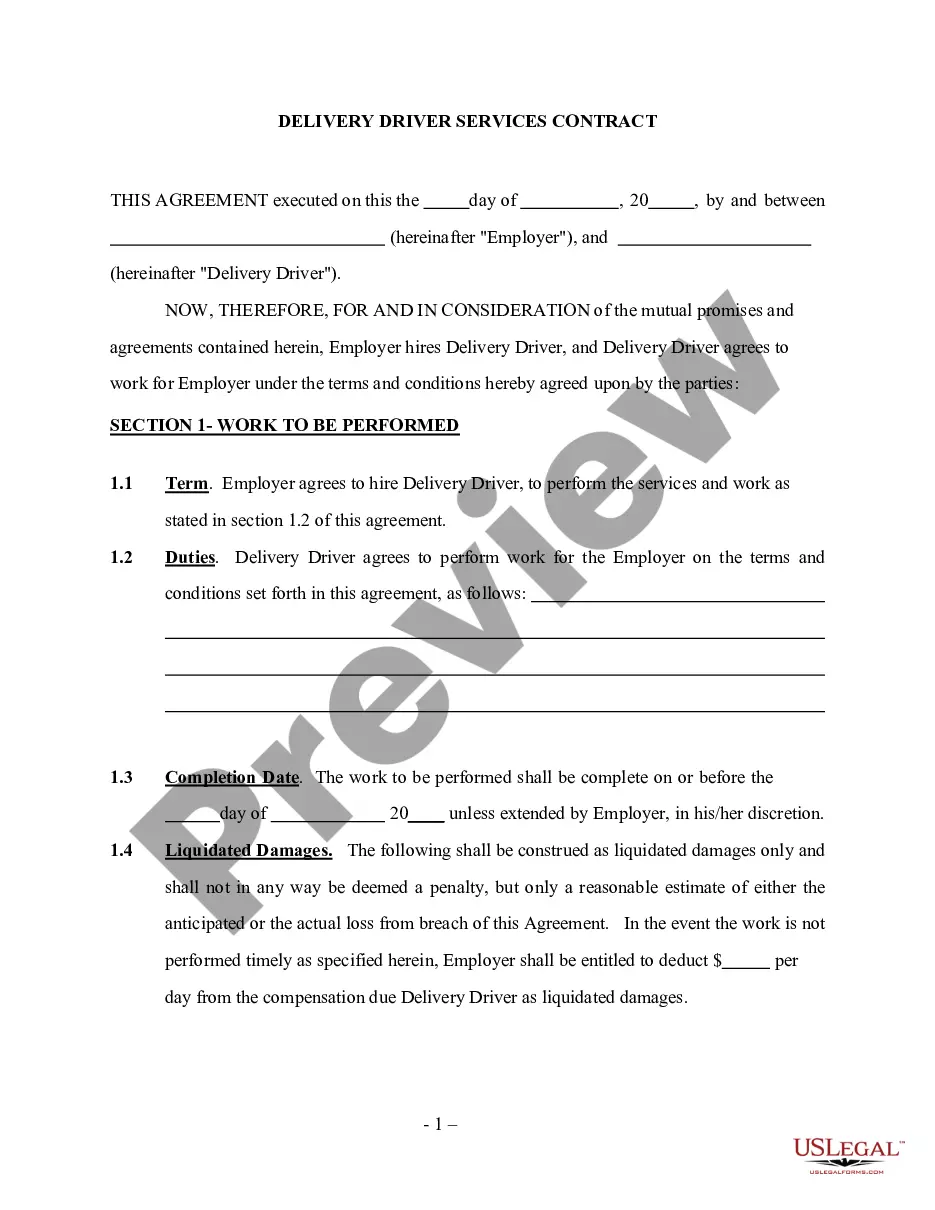
Owner driver contracts are agreements made between truck drivers and businesses, or truck drivers and individuals who contract their services, in which the driver agrees to transport materials for the contracting party in exchange for compensation.
What is a Trucking Contract? Trucking carriers and their clients often use Trucking Contracts as a means of laying out the scope and payment terms for their business relationship with a manufacturer or distributor of goods. As a result of this agreement, all signers will know what to expect from the trucking services.
Owner driver contracts are agreements made between truck drivers and businesses, or truck drivers and individuals who contract their services, in which the driver agrees to transport materials for the contracting party in exchange for compensation.
As an owner/operator, you also have the operating authority to legally deliver freight throughout the United States without a contract through a carrier. As an independent contractor, on the other hand, you can only operate a truck under the operating authority provided by the carrier you contract for.
Trucking companies typically classify their drivers as independent contractors, but often they are misclassified as such. The reason companies use independent contractor status is so that they can avoid liability in an accident. However, classifying a driver as a contractor is not enough.