Idaho Declaration of Easement
About this form
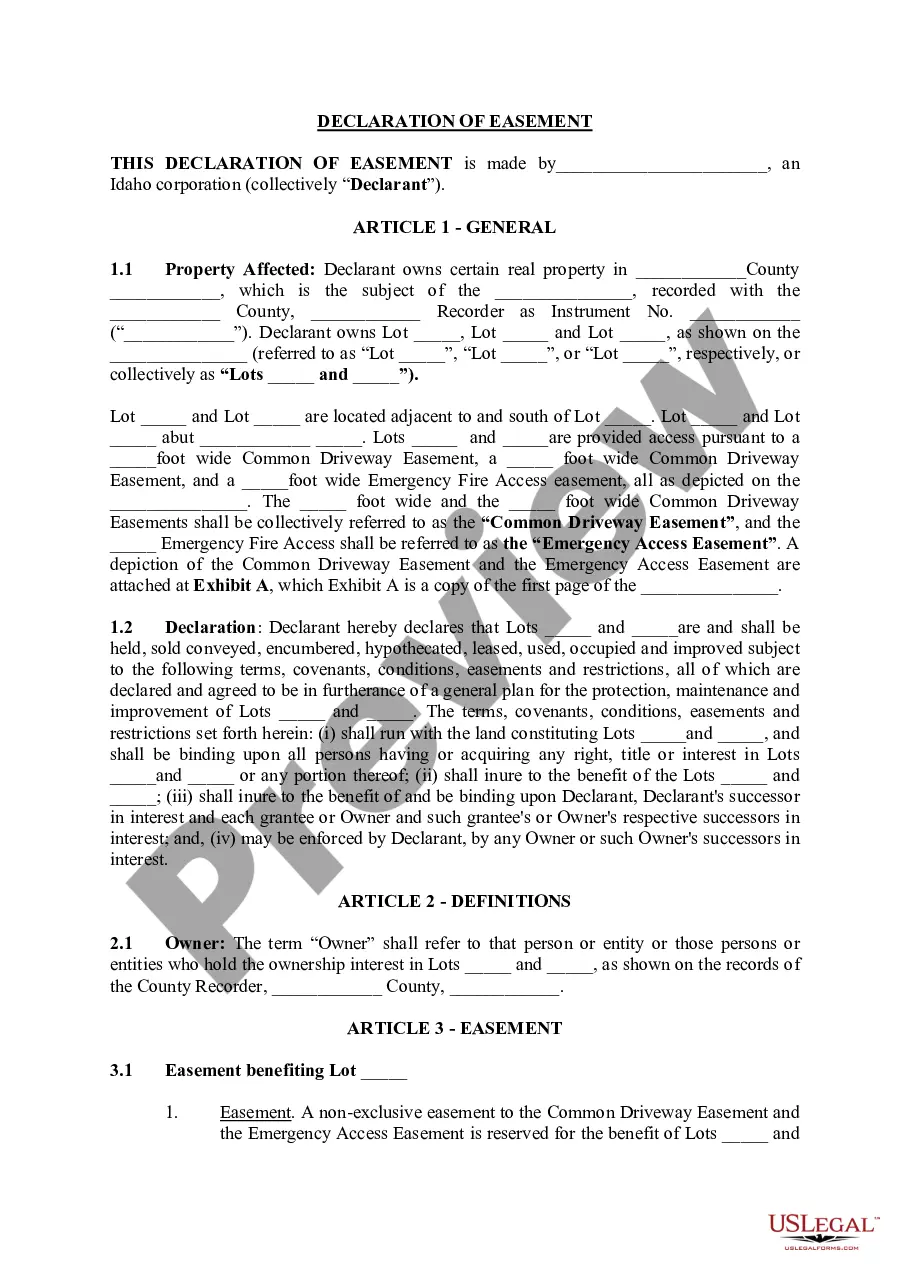
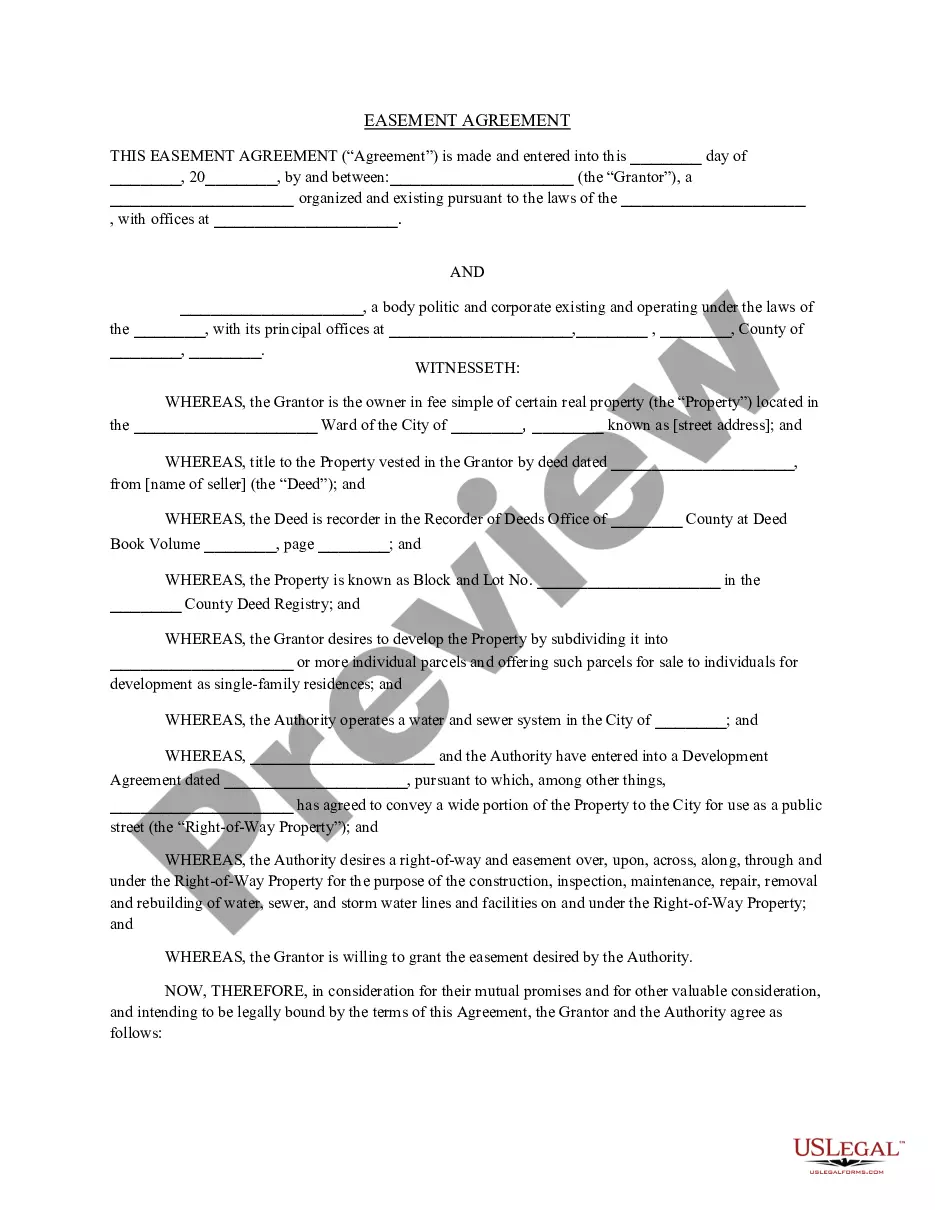
The Declaration of Easement is a legal document that establishes the rights of property owners to share access and utility connections over a designated area. This form sets forth the terms under which the easement will operate, ensuring that property owners have adequate access to their land while defining responsibilities related to maintenance and repair. Unlike other property agreements, it specifically focuses on easement rights which are crucial when dealing with shared access roads or utilities.
Key parts of this document
- Identification of the Declarant and the properties affected.
- Definitions of key terms, particularly what constitutes an "Owner."
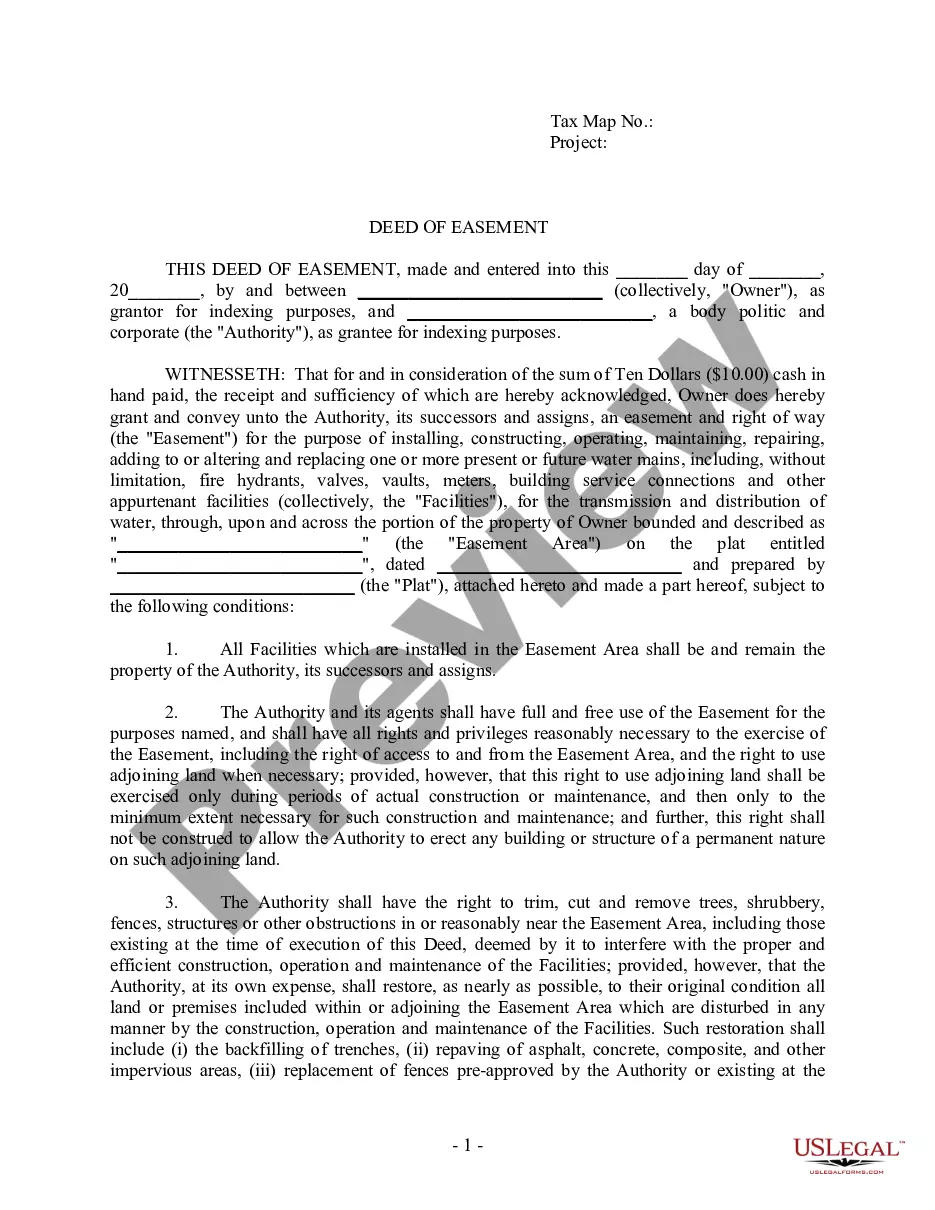
- Detailed description of the easement rights granted to various Lots.
- Conditions for the use and maintenance of the common driveway and emergency access easements.
- Non-waiver provisions ensuring that failure to enforce does not invalidate the declaration.
- Details regarding legal fees in case of disputes over the Declaration.


When this form is needed
This form is typically used when property owners wish to formalize shared access and utility connections across their properties. Situations that necessitate the Declaration of Easement include new developments where multiple properties must share access roads, or existing properties needing to clarify rights and responsibilities regarding joint use of driveways or utilities.
Intended users of this form
- Property developers establishing easements in new housing projects.
- Homeowners in a subdivision or community where shared access is necessary.
- Real estate professionals facilitating easement agreements between property owners.
- Any individual or entity owning land that requires cooperative access with adjacent lots.
Instructions for completing this form
- Identify the Declarant by entering the full legal name of the corporation or individual.
- Specify the properties involved, including Lot numbers and the detailed legal description.
- Detail the easement dimensions and specify which Lots benefit from the easement.
- Include signatures from all parties involved as witnesses to the agreement.
- Ensure notarization of the document to validate the Declaration of Easement.
Notarization guidance
Yes, this form must be notarized to be legally valid. Notarization ensures that the signatures are authentic and the document is properly executed. US Legal Forms offers integrated online notarization, allowing you to have your documents notarized anytime, securely via video call.
Get your form ready online
Our built-in tools help you complete, sign, share, and store your documents in one place.
Make edits, fill in missing information, and update formatting in US Legal Forms—just like you would in MS Word.
Download a copy, print it, send it by email, or mail it via USPS—whatever works best for your next step.
Sign and collect signatures with our SignNow integration. Send to multiple recipients, set reminders, and more. Go Premium to unlock E-Sign.
If this form requires notarization, complete it online through a secure video call—no need to meet a notary in person or wait for an appointment.
We protect your documents and personal data by following strict security and privacy standards.

Make edits, fill in missing information, and update formatting in US Legal Forms—just like you would in MS Word.

Download a copy, print it, send it by email, or mail it via USPS—whatever works best for your next step.

Sign and collect signatures with our SignNow integration. Send to multiple recipients, set reminders, and more. Go Premium to unlock E-Sign.

If this form requires notarization, complete it online through a secure video call—no need to meet a notary in person or wait for an appointment.

We protect your documents and personal data by following strict security and privacy standards.
Mistakes to watch out for
- Failing to properly identify all properties involved in the easement.
- Not clearly defining the responsibilities for maintenance and repairs.
- Omitting signatures or notarization, which may invalidate the agreement.
- Using vague language that can lead to disputes later on.
Why use this form online
- Convenience of accessing and completing the form from any device.
- Editability allows for tailored solutions specific to your property needs.
- Reliability of professionally drafted material by licensed attorneys.
- Quick download for immediate use, saving time compared to traditional methods.
Looking for another form?
Form popularity
FAQ
Generally speaking, an easement is a more serious property right; it is the legal right to use someone else's land for a particular purpose. Easements are often recorded at the county clerk's office and encumber your property's title.Here, however, you probably do not need to take the step of granting an easement.
The legal term easement refers to the legal right to use another person's real property, for a specific purpose and a specific amount of time. An easement gives a person the legal right to go through another person's land, as long as the usage is consistent with the specified easement restrictions.
In order to acquire a prescriptive easement, a claimant must establish (1) that the use was continuous for five years; (2) the use was open, notorious and clearly visible to the owner of the property; and (3) the use was hostile and adverse to the owner.
Easements are usually created by a transfer in a deed or some other written document such as a will or contract. Creating an easement requires the same formalities as the transferring or creating of other interests in land.
There must be both a dominant and servient tenement, The easement must accommodate the dominant tenement, The dominant and servient tenements must be owned by different persons, and. The right claimed must be capable of forming the subject matter of a grant.
The party gaining the benefit of the easement is the dominant estate (or dominant tenement), while the party granting the benefit or suffering the burden is the servient estate (or servient tenement). For example, the owner of parcel A holds an easement to use a driveway on parcel B to gain access to A's house.
Easement deeds provide a valuable tool to grant or restrict land use by a non-owner. They are legal contracts enforceable by law.
Ask him to grant you a formal easement by deed. Your neighbor the servient, or burdened landowner can give the easement of his own accord, but he is not obligated to do this. The chances are, you will have to negotiate a price; an easement is, after all, an interest in land, which has a value attached to it.
A property easement is generally written and recorded with the local assessor's office.