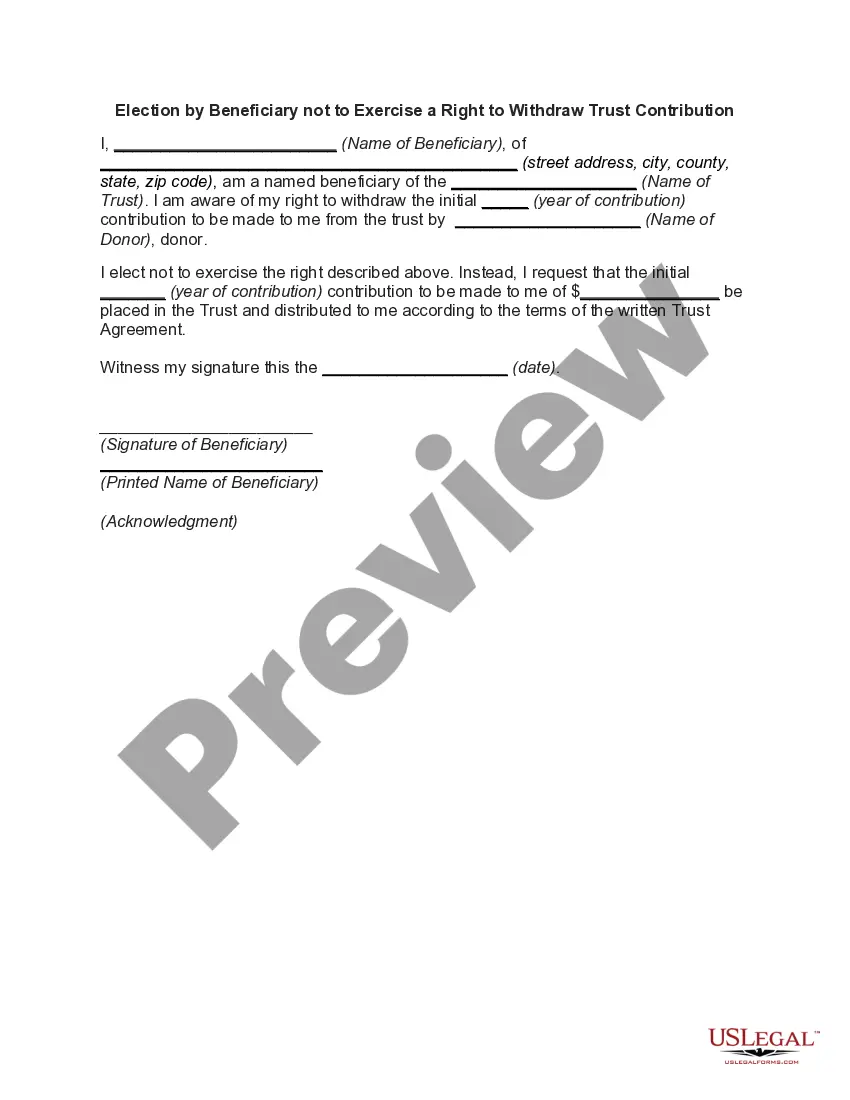
Election by Beneficiary not to Exercise a Right to Withdraw Trust Contribution
About this form
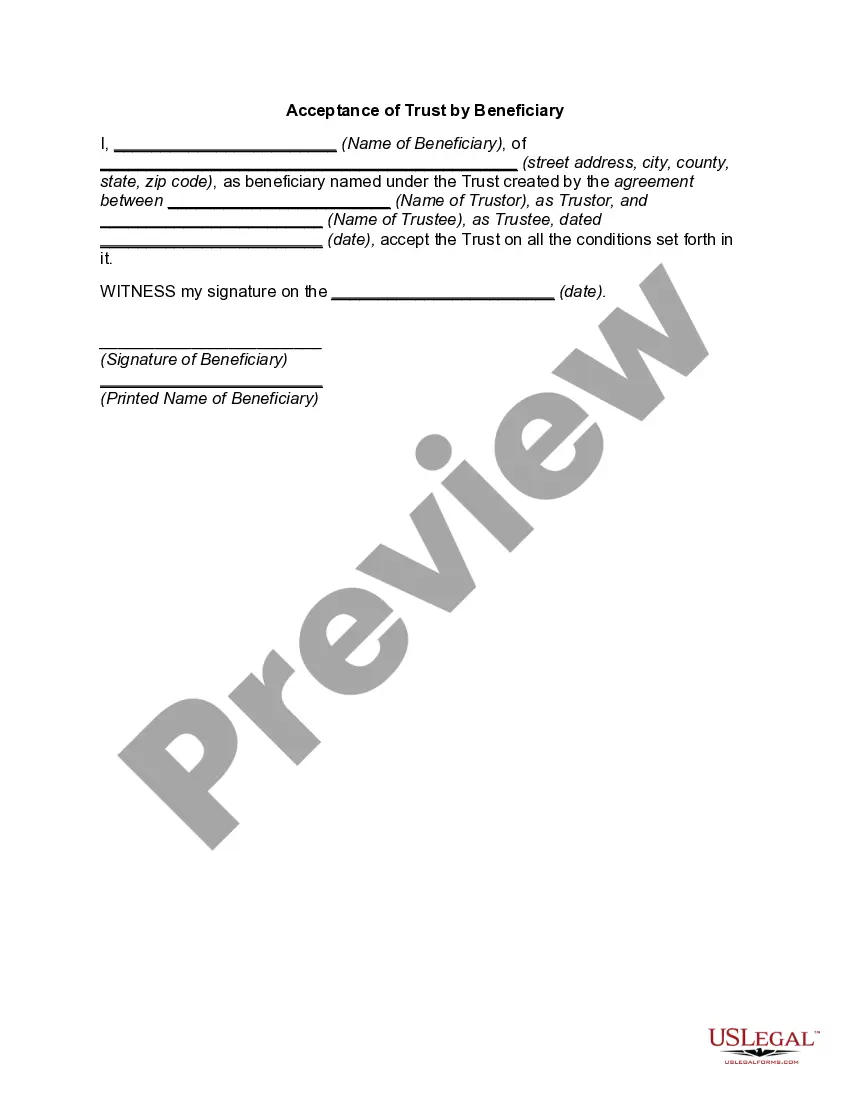
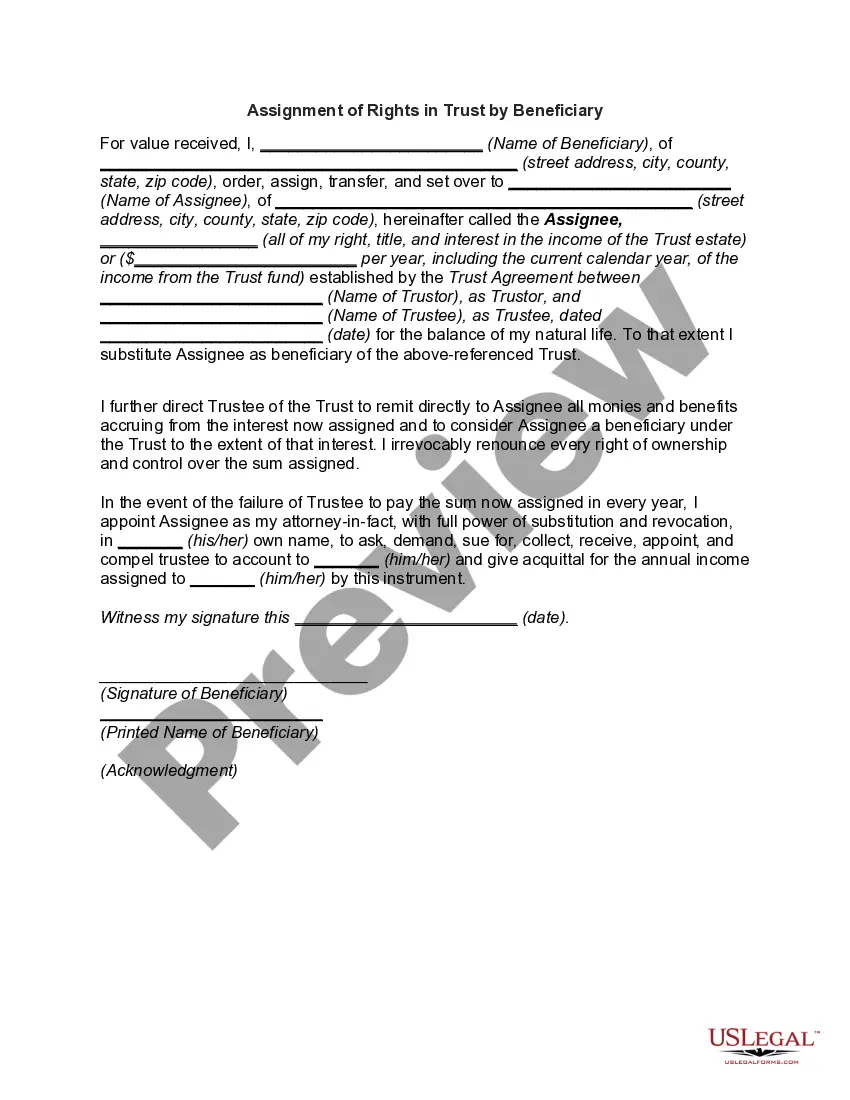
This form, known as the Election by Beneficiary not to Exercise a Right to Withdraw Trust Contribution, allows a trust beneficiary to formally decline their right to withdraw a contribution from a trust. By using this form, beneficiaries can choose to keep their designated funds within the trust, ensuring that the contributions will be managed according to the trust's terms. This is distinct from other forms that might facilitate withdrawals or distributions from a trust, highlighting an important decision point for beneficiaries.
Main sections of this form
- Name and address of the beneficiary.
- Name of the trust involved.
- Year of the contribution to be withdrawn.
- Name of the donor making the contribution.
- The specific contribution amount being placed in the trust.
- Signature and date for acknowledgement.
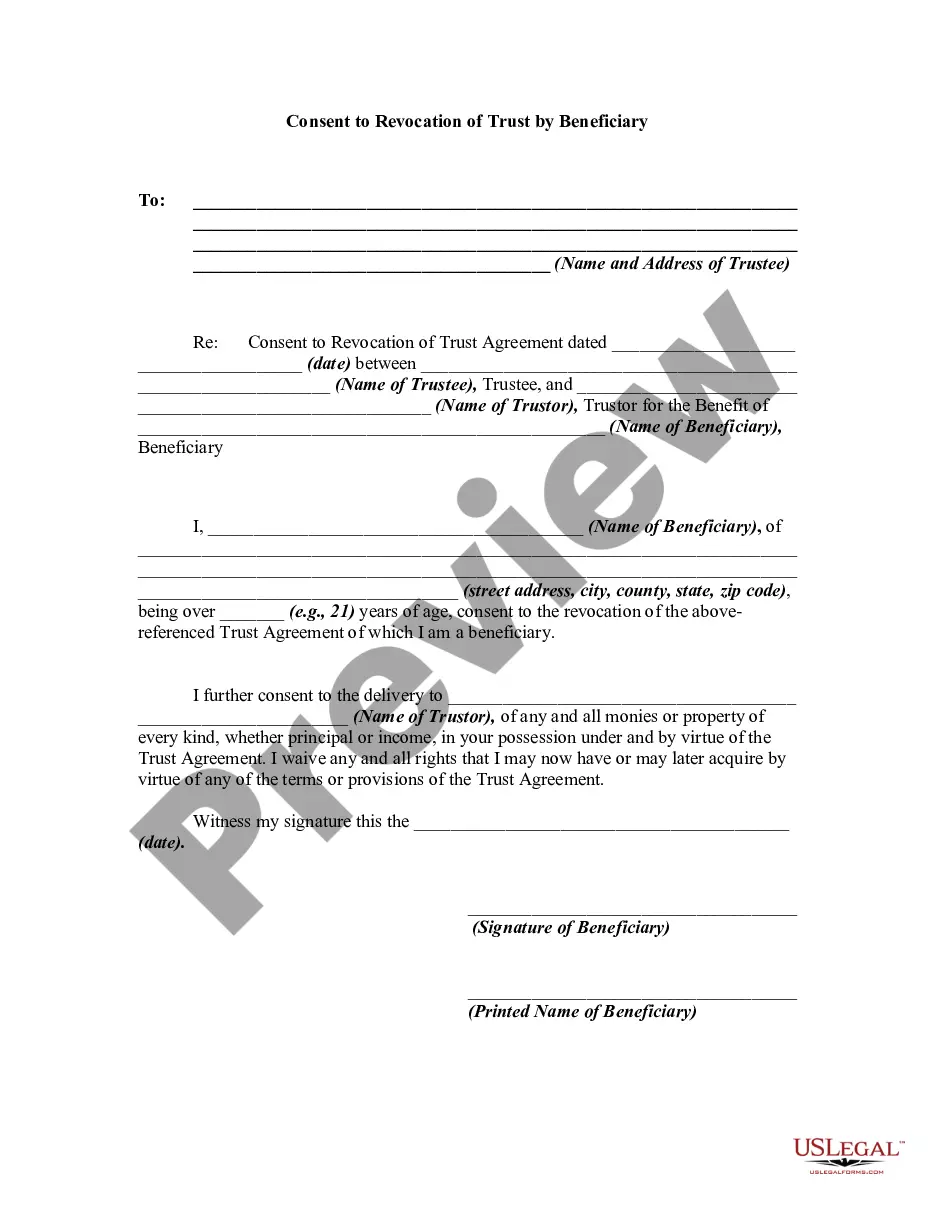
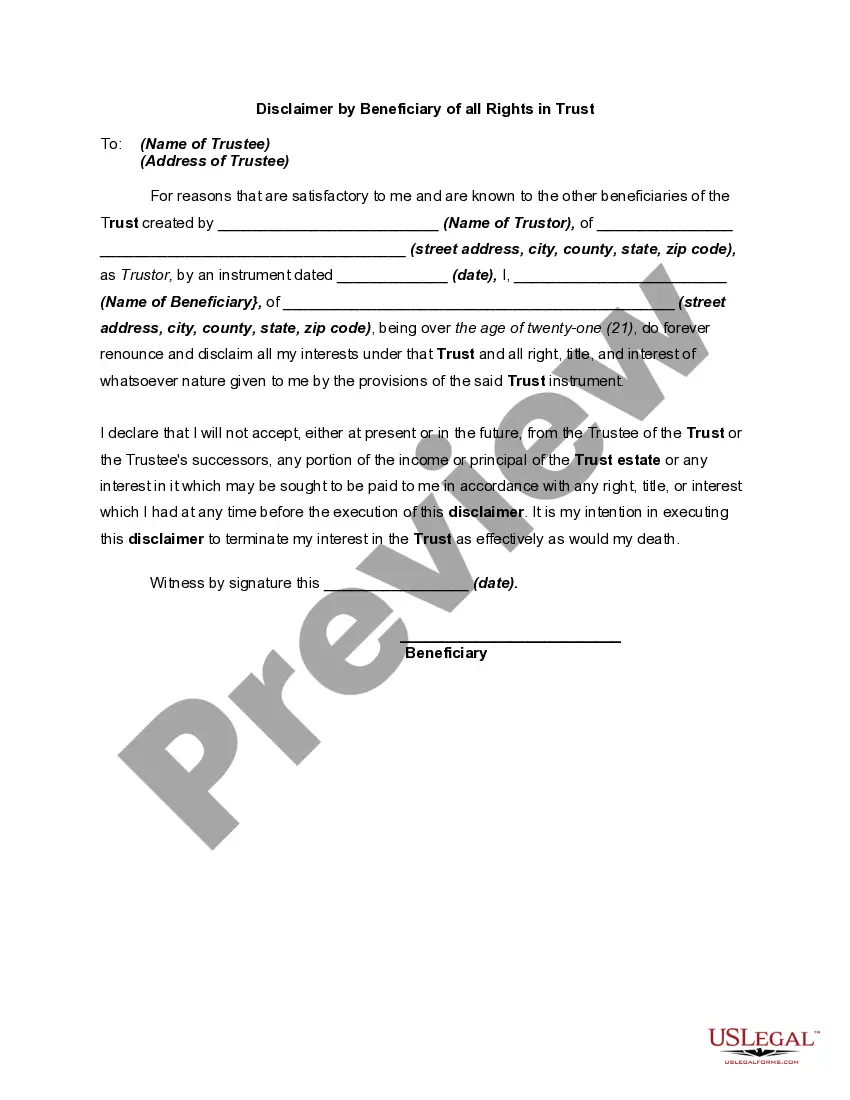
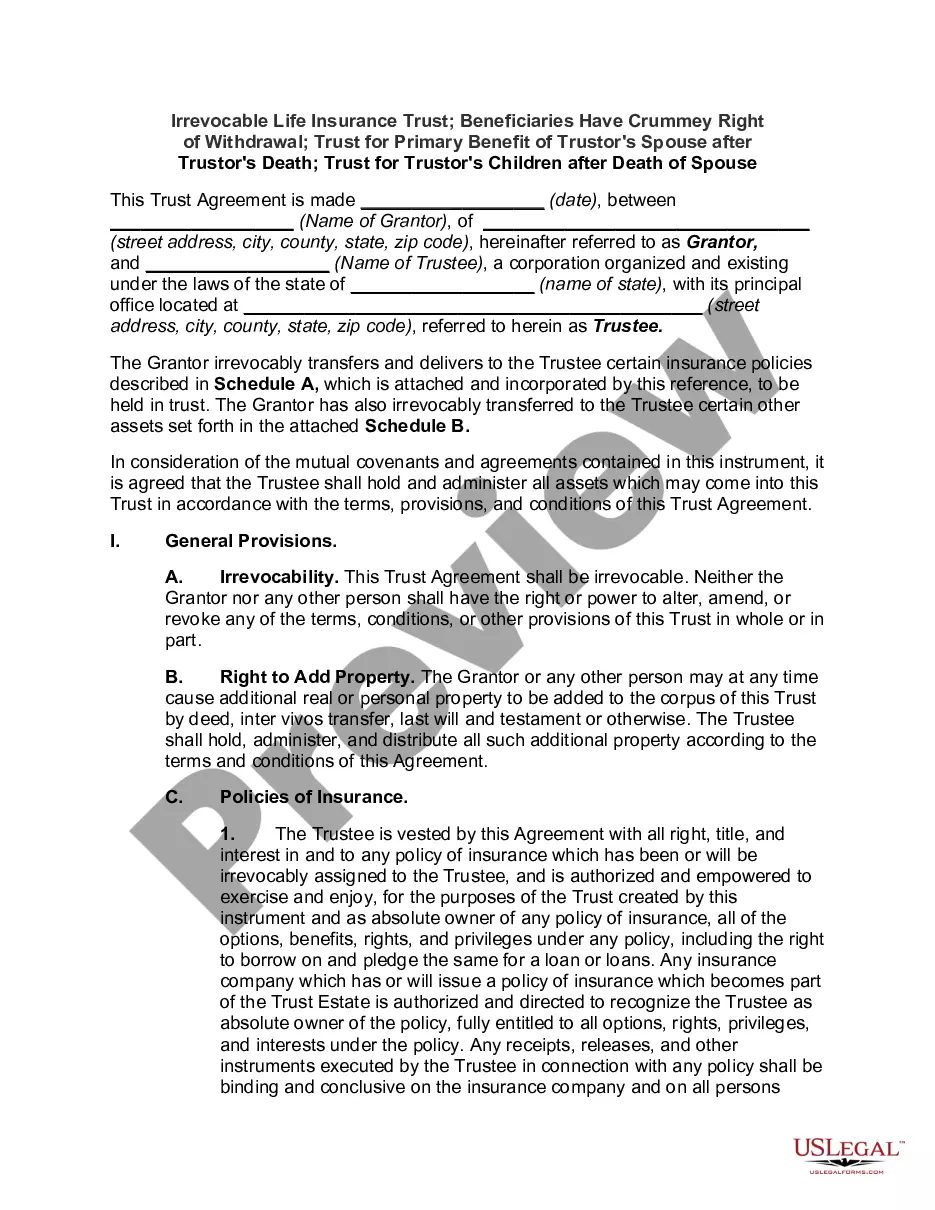
When this form is needed
This form is used when a named beneficiary decides they do not want to exercise their right to withdraw a contribution made to them from a trust. Situations may include a desire to allow the funds to grow within the trust for future distributions or to adhere to the stipulations of the trust agreement that may benefit the beneficiary in the long term.
Who this form is for
This form is intended for:
- Beneficiaries of a trust who have been granted the right to withdraw a contribution.
- Individuals who prefer to keep their funds within the trust for future benefits.
- Beneficiaries seeking to formally document their decision not to withdraw their trust contribution.
Completing this form step by step
- Enter your name and address as the beneficiary.
- Fill in the name of the trust.
- Specify the year of the intended contribution withdrawal.
- Identify the donor who made the trust contribution.
- State the contribution amount you are electing not to withdraw.
- Sign and date the form to formalize your decision.
Is notarization required?
This form usually doesn’t need to be notarized. However, local laws or specific transactions may require it. Our online notarization service, powered by Notarize, lets you complete it remotely through a secure video session, available 24/7.
Get your form ready online
Our built-in tools help you complete, sign, share, and store your documents in one place.
Make edits, fill in missing information, and update formatting in US Legal Forms—just like you would in MS Word.
Download a copy, print it, send it by email, or mail it via USPS—whatever works best for your next step.
Sign and collect signatures with our SignNow integration. Send to multiple recipients, set reminders, and more. Go Premium to unlock E-Sign.
If this form requires notarization, complete it online through a secure video call—no need to meet a notary in person or wait for an appointment.
We protect your documents and personal data by following strict security and privacy standards.

Make edits, fill in missing information, and update formatting in US Legal Forms—just like you would in MS Word.

Download a copy, print it, send it by email, or mail it via USPS—whatever works best for your next step.

Sign and collect signatures with our SignNow integration. Send to multiple recipients, set reminders, and more. Go Premium to unlock E-Sign.

If this form requires notarization, complete it online through a secure video call—no need to meet a notary in person or wait for an appointment.

We protect your documents and personal data by following strict security and privacy standards.
Mistakes to watch out for
- Failing to include the correct name of the trust.
- Not entering the full contribution amount accurately.
- Omitting signatures or dates, which can render the form invalid.
- Not reviewing the trust agreement to ensure alignment with this decision.
Advantages of online completion
- Convenience of immediate download and access.
- Easy customization to include specific details relevant to your trust.
- Secure and reliable, providing peace of mind for managing your legal documents.
- Accessible anytime, removing the need to travel or schedule appointments with legal professionals.
Looking for another form?



Form popularity
FAQ
It is an action taken by the beneficiary of an estate or trust to formally give up their right to receive or take a beneficial interest in an asset (or assets) to which they would otherwise be entitled from an estate or trust. A beneficiary can disclaim all or a portion of anything they are earmarked to receive.
A withdrawal right is the right, given to the beneficiary of a trust, to withdraw all or a portion of each gift made to the trust. For example, if a $1,000 gift is made to a trust and a beneficiary of the trust has a withdrawal right over that gift, he or she can withdraw up to $1,000 from the trust.
Under Internal Revenue Service (IRS) rules, to refuse an inheritance, you must execute a written disclaimer that clearly expresses your "irrevocable and unqualified" intent to refuse the bequest.
With an irrevocable trust, the transfer of assets is permanent. So once the trust is created and assets are transferred, they generally can't be taken out again.
A beneficiary is always free to refuse to accept benefits under a trust or a will. You should ask the beneficiary to execute what is called a disclaimer.
There isn't a standard way of distributing trust assets to beneficiaries, but rather the grantor, the person who creates the trust (also known as the settlor or trustor), determines how the trust assets should be disbursed.
Spendthrift provision: a clause in a trust that prevents a beneficiary from withdrawing more than the greater of $5,000 or 5% of the corpus.
The short answer is yes. Trust beneficiaries may bring a claim against a trustee so long as they have a valid reason.