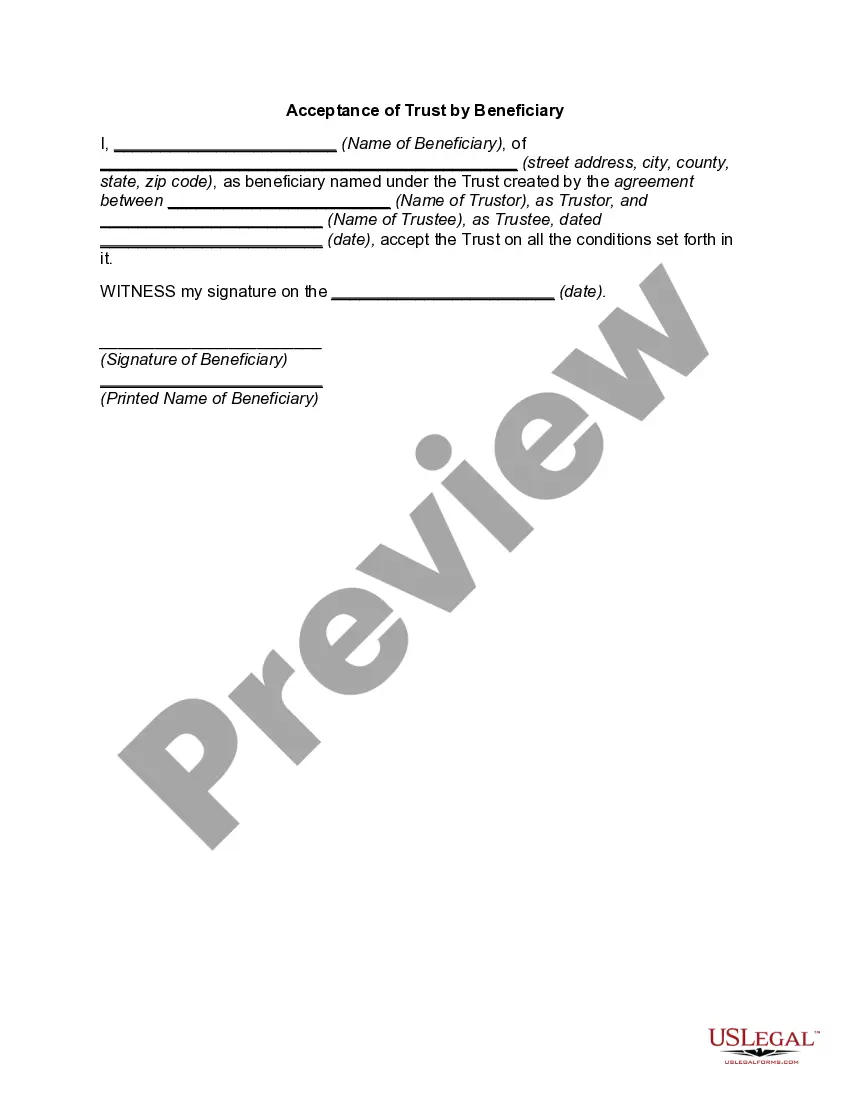
Acceptance of Trust by Beneficiary
What this document covers
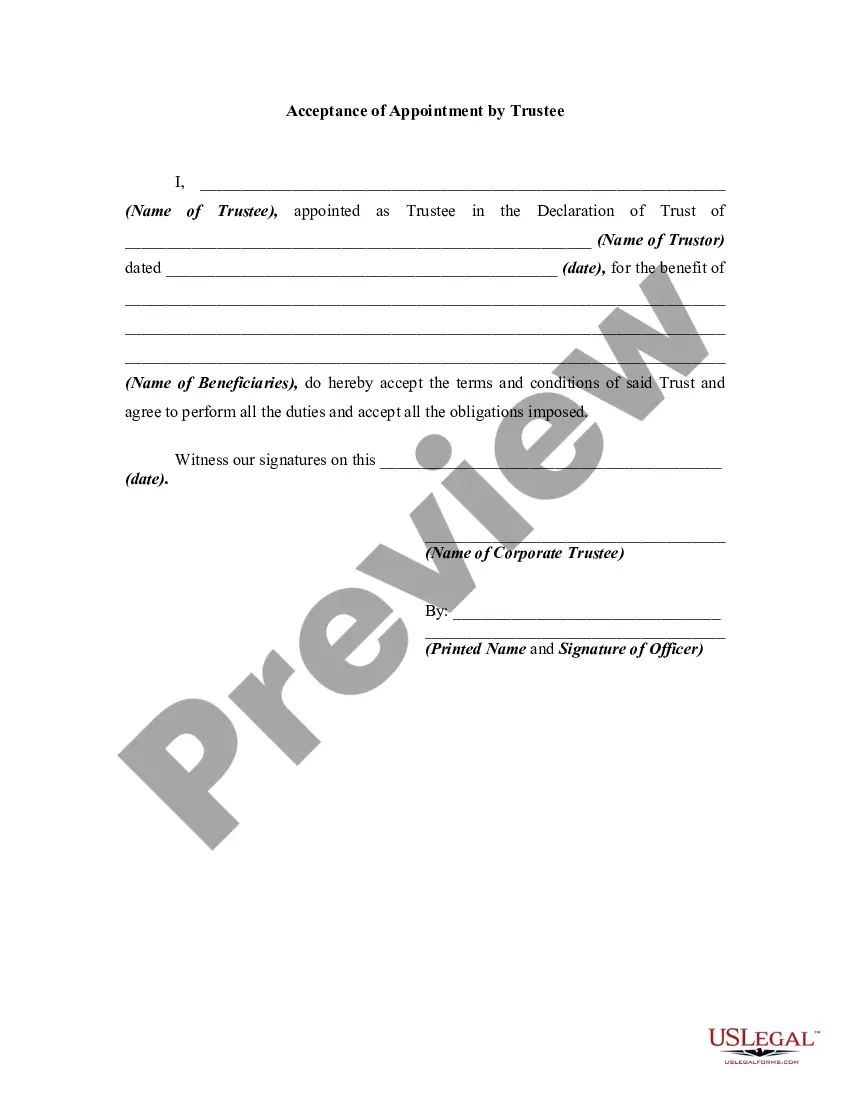
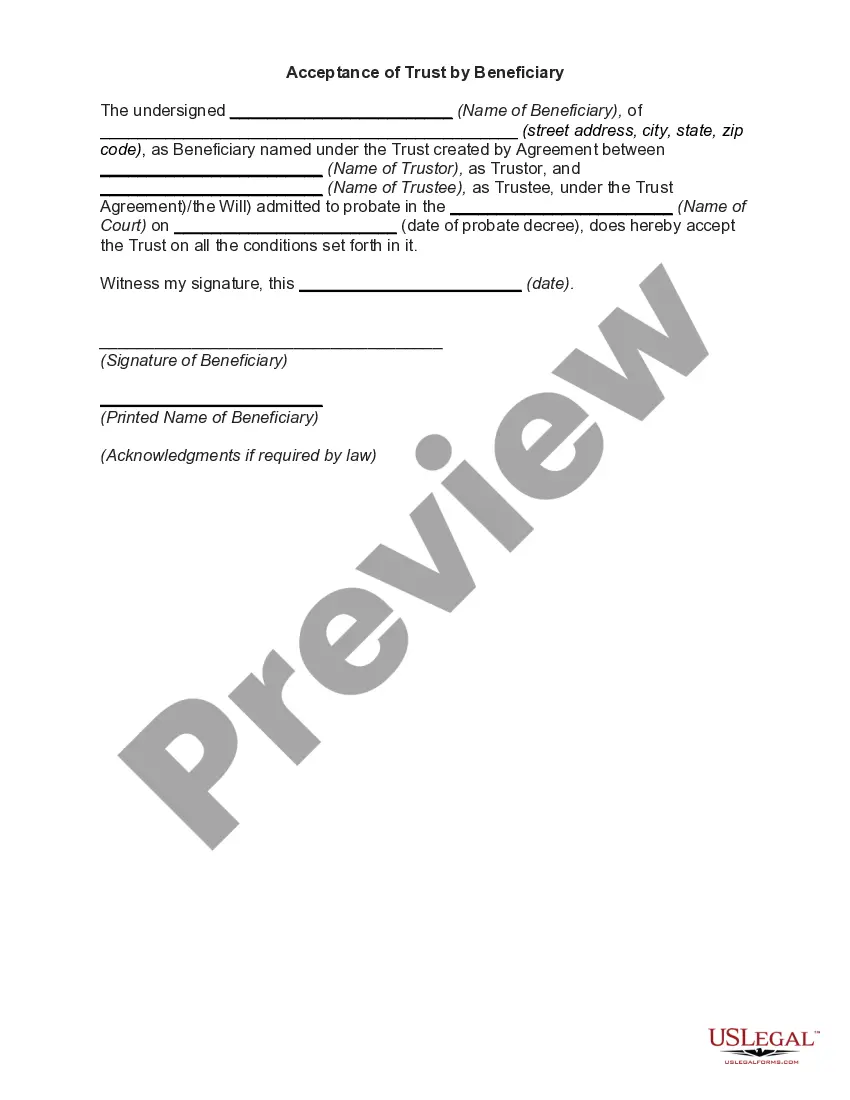
The Acceptance of Trust by Beneficiary is a legal document that formalizes a beneficiary's agreement to accept the terms and conditions of a trust established by a Trustor. This form ensures that the beneficiary acknowledges their rights and responsibilities under the trust, distinguishing it from other trust-related documents.
Main sections of this form
- Name of the beneficiary
- Address of the beneficiary
- Name of the Trustor
- Name of the Trustee
- Date of the trust agreement
- Signature of the beneficiary
When to use this document
This form is used when a beneficiary agrees to accept a trust established by a Trustor. It is essential in circumstances where the beneficiary needs to formally acknowledge their acceptance of the trust, especially for inheritance, asset management, or property distribution purposes.
Who this form is for
- Beneficiaries of a trust who have been named in the trust agreement
- Trustors who wish to ensure their beneficiaries accept the terms of the trust
- Trustees who need confirmation of a beneficiary's acceptance
Instructions for completing this form
- Identify the beneficiary's name and complete address.
- Enter the names of the Trustor and Trustee.
- Fill in the date of the trust agreement.
- Have the beneficiary sign and print their name.
- Include the date on which the acceptance is made.
Does this document require notarization?
Notarization is generally not required for this form. However, certain states or situations might demand it. You can complete notarization online through US Legal Forms, powered by Notarize, using a verified video call available anytime.
Get your form ready online
Our built-in tools help you complete, sign, share, and store your documents in one place.
Make edits, fill in missing information, and update formatting in US Legal Forms—just like you would in MS Word.
Download a copy, print it, send it by email, or mail it via USPS—whatever works best for your next step.
Sign and collect signatures with our SignNow integration. Send to multiple recipients, set reminders, and more. Go Premium to unlock E-Sign.
If this form requires notarization, complete it online through a secure video call—no need to meet a notary in person or wait for an appointment.
We protect your documents and personal data by following strict security and privacy standards.

Make edits, fill in missing information, and update formatting in US Legal Forms—just like you would in MS Word.

Download a copy, print it, send it by email, or mail it via USPS—whatever works best for your next step.

Sign and collect signatures with our SignNow integration. Send to multiple recipients, set reminders, and more. Go Premium to unlock E-Sign.

If this form requires notarization, complete it online through a secure video call—no need to meet a notary in person or wait for an appointment.

We protect your documents and personal data by following strict security and privacy standards.
Common mistakes
- Not providing the full name and address of the beneficiary.
- Missing the date on which the acceptance is made.
- Failing to include the signature of the beneficiary.
- Not verifying the names of the Trustor and Trustee for accuracy.
Benefits of completing this form online
- Instant access to a legally drafted document.
- Ability to edit and fill out the form at your convenience.
- Secure storage of your legal documents for future reference.
- Guidance through the completion process, ensuring accuracy.
Legal use & context
- The Acceptance of Trust by Beneficiary is essential to validate the beneficiary's role in the trust agreement.
- Ensures that the beneficiary fully understands and agrees to adhere to the terms of the trust.
- Provides legal evidence of acceptance, which may be necessary for tax or estate planning purposes.
Quick recap
- This form is crucial for beneficiaries to formally accept a trust.
- It includes basic information about the trust and the parties involved.
- Common mistakes can be easily avoided with careful review.
Looking for another form?
Form popularity
FAQ
Trusts are not considered individuals; therefore, life insurance proceeds paid to trusts are generally subjected to estate tax. Also, the proceeds payable to a trust may not qualify for the inheritance tax exemption provided by some states for insurance payable to a named beneficiary.
Spouse, partner, children, parents, brothers and sisters, business partner, key employee, trust and charitable organization.
You can name a trust as a direct beneficiary of an account. Upon your death, your assets transfer to the trust and distributions are made from the trust to its beneficiaries ing to your wishes.
To leave property to your living trust, name your trust as beneficiary for that property, using the trustee's name and the name of the trust. For example: John Doe as trustee of the John Doe Living Trust, dated January 1, 20xx.
Name a Trust Provide the following information on the beneficiary designation: The full name of the trust as it shows on the trust document. The date the trust was created. The name of the trustee, followed by the word ?trustee,? or if you cannot provide a trustee, ETF may accept another contact person.
Some of your financial assets need to be owned by your trust and others need to name your trust as the beneficiary. With your day-to-day checking and savings accounts, I always recommend that you own those accounts in the name of your trust.
You can name a trust as a direct beneficiary of an account. Upon your death, your assets transfer to the trust and distributions are made from the trust to its beneficiaries ing to your wishes.
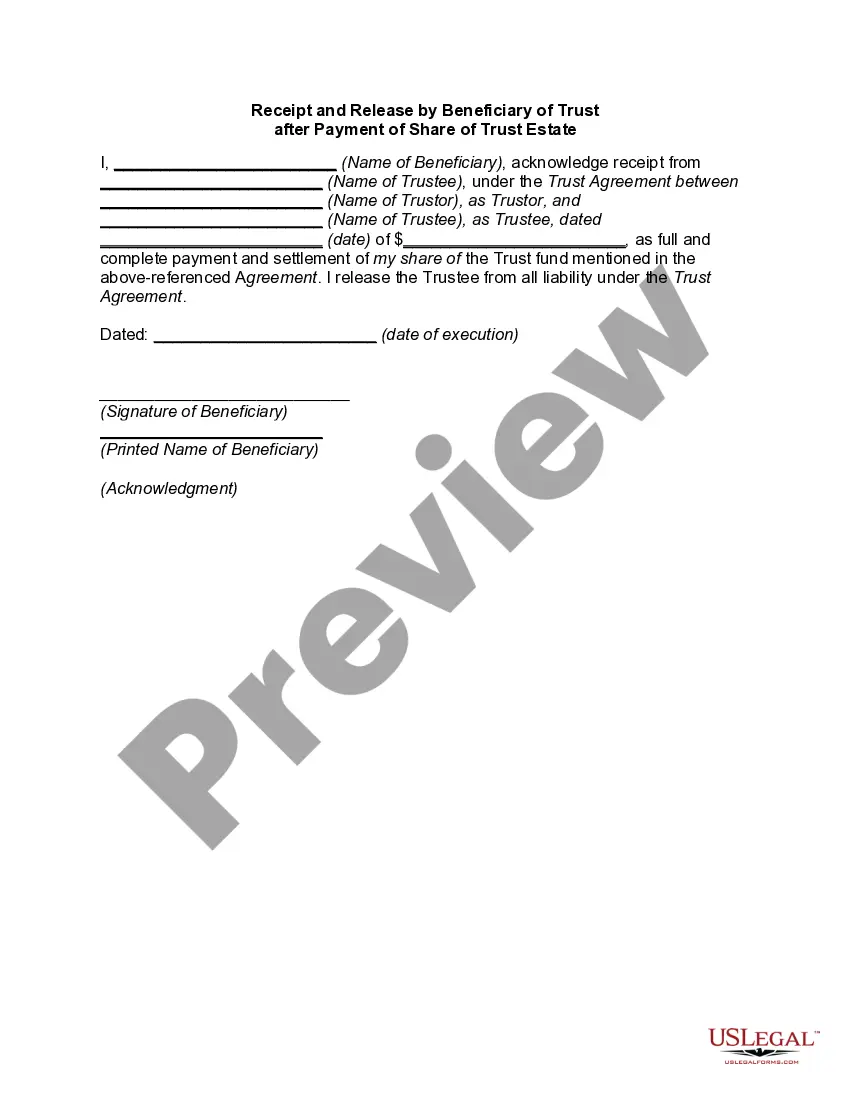
Executors want you to sign a release to ensure that they are protected from personal liability for the work they have done executing the estate. It also ensures they won't have to claw back any assets or distribute them in some new way after they've already distributed everything there is to be distributed.