Irrevocable Life Insurance Trust - Beneficiaries Have Crummey Right of Withdrawal
What this document covers
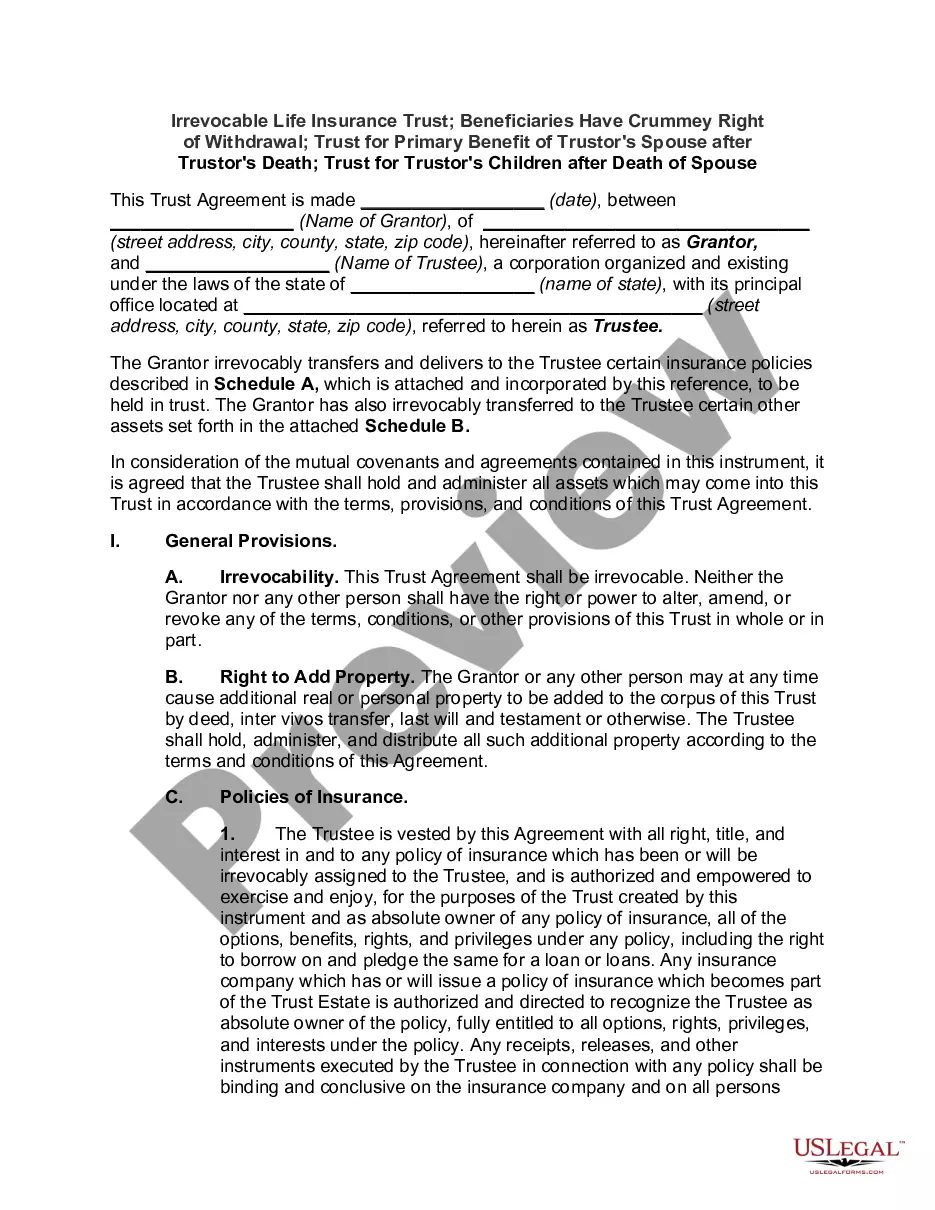
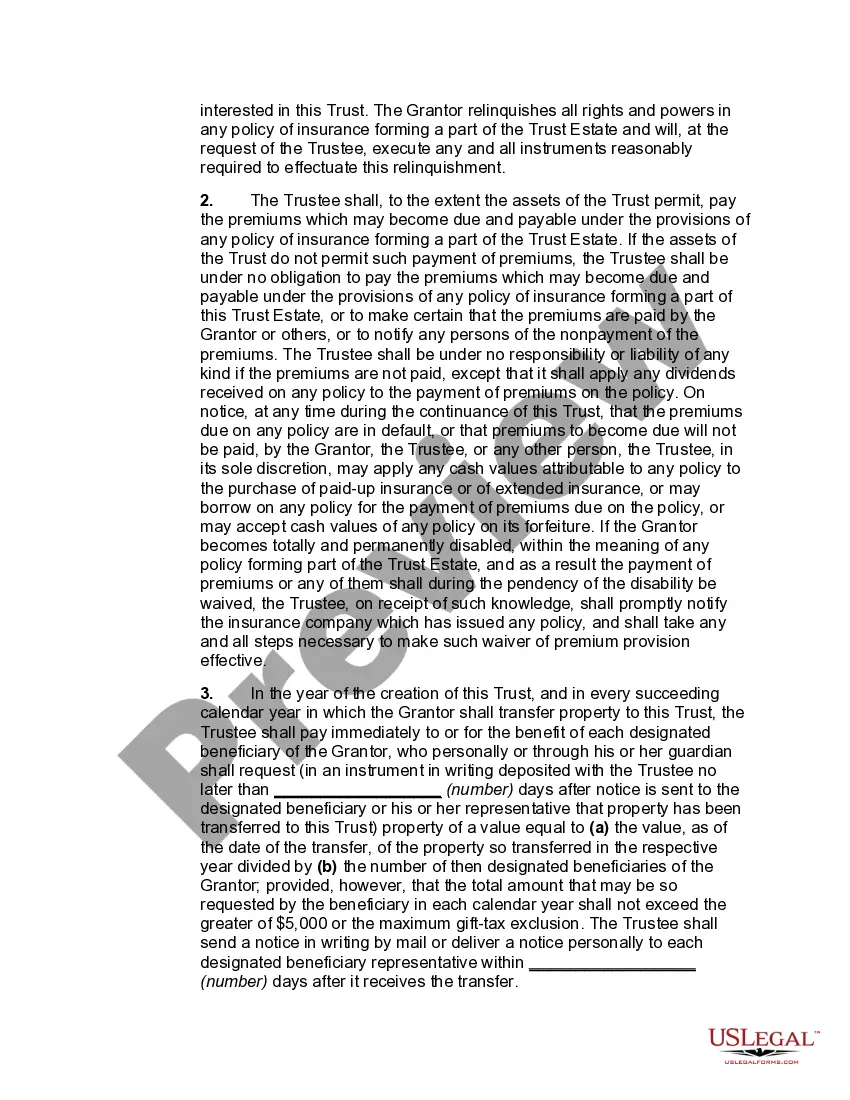
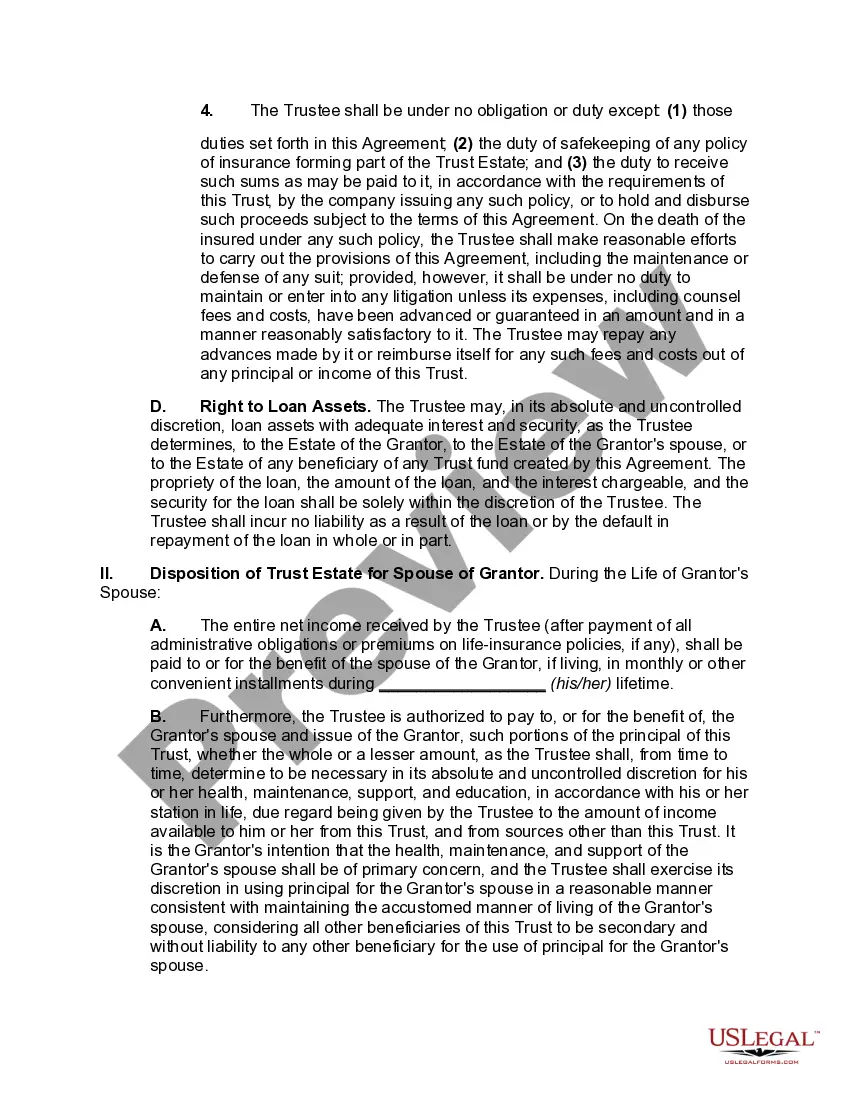
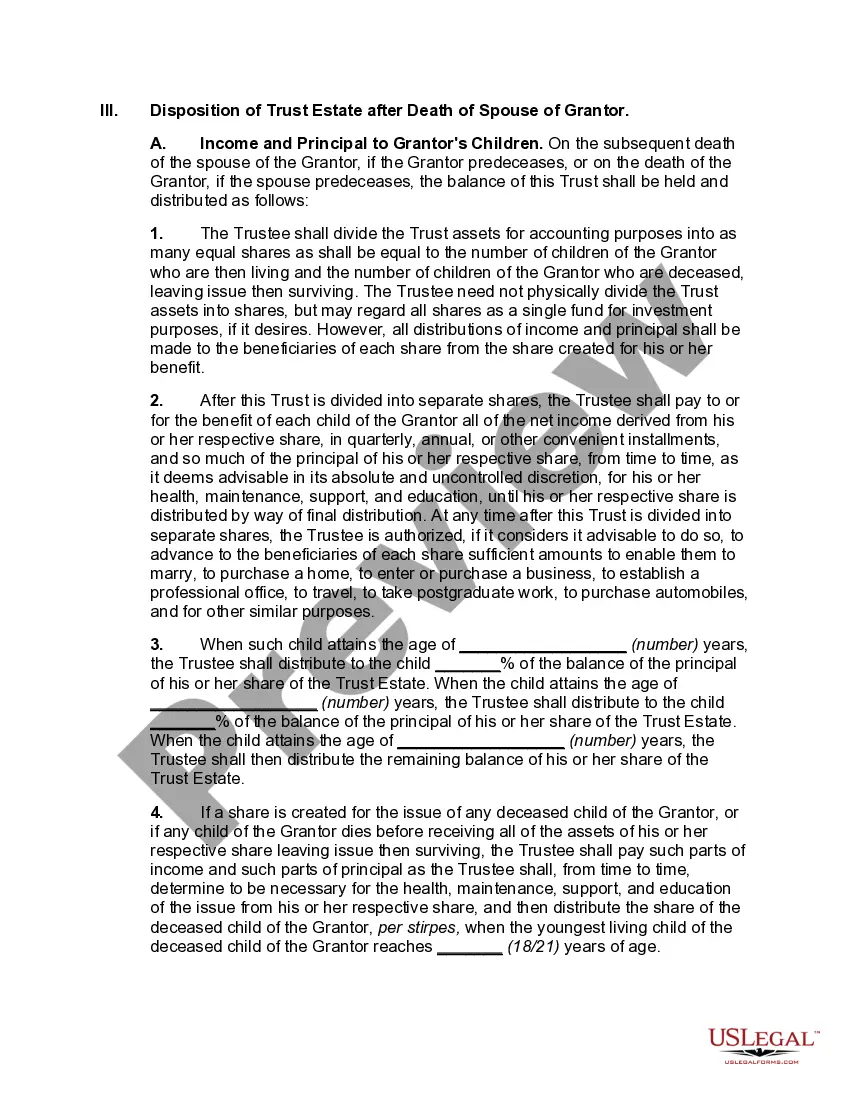
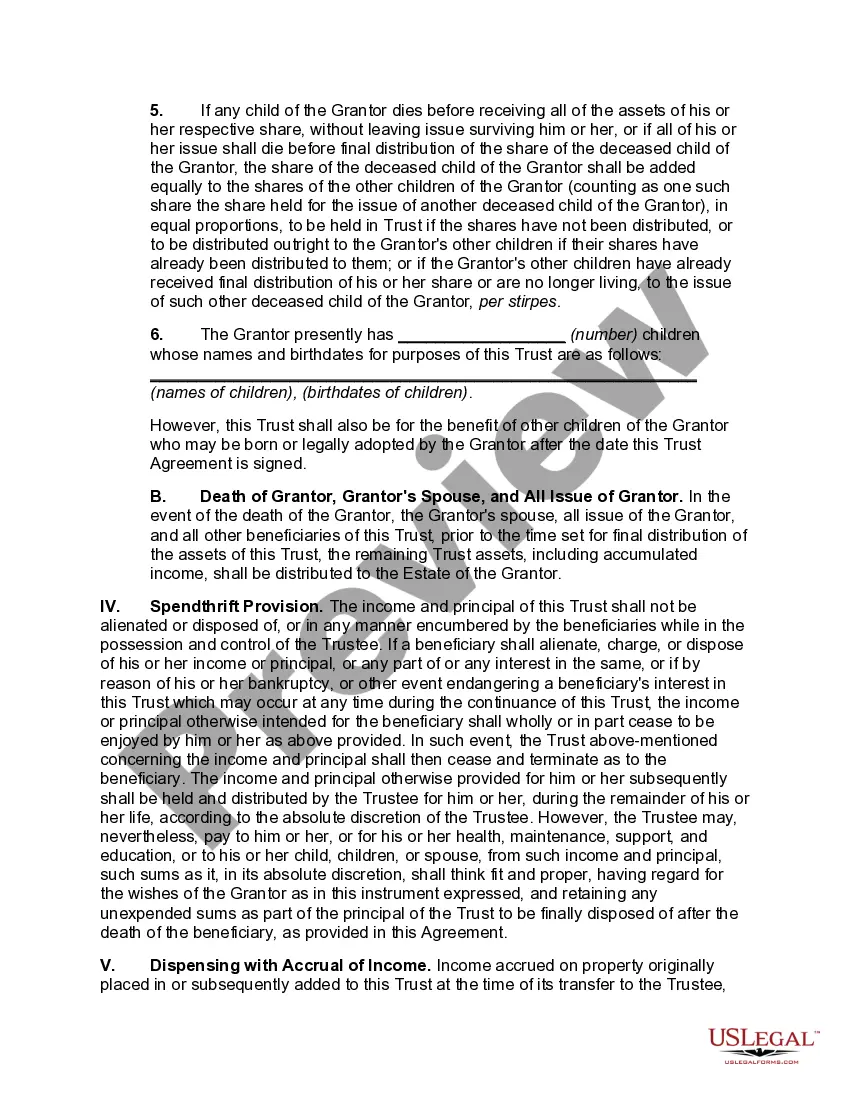
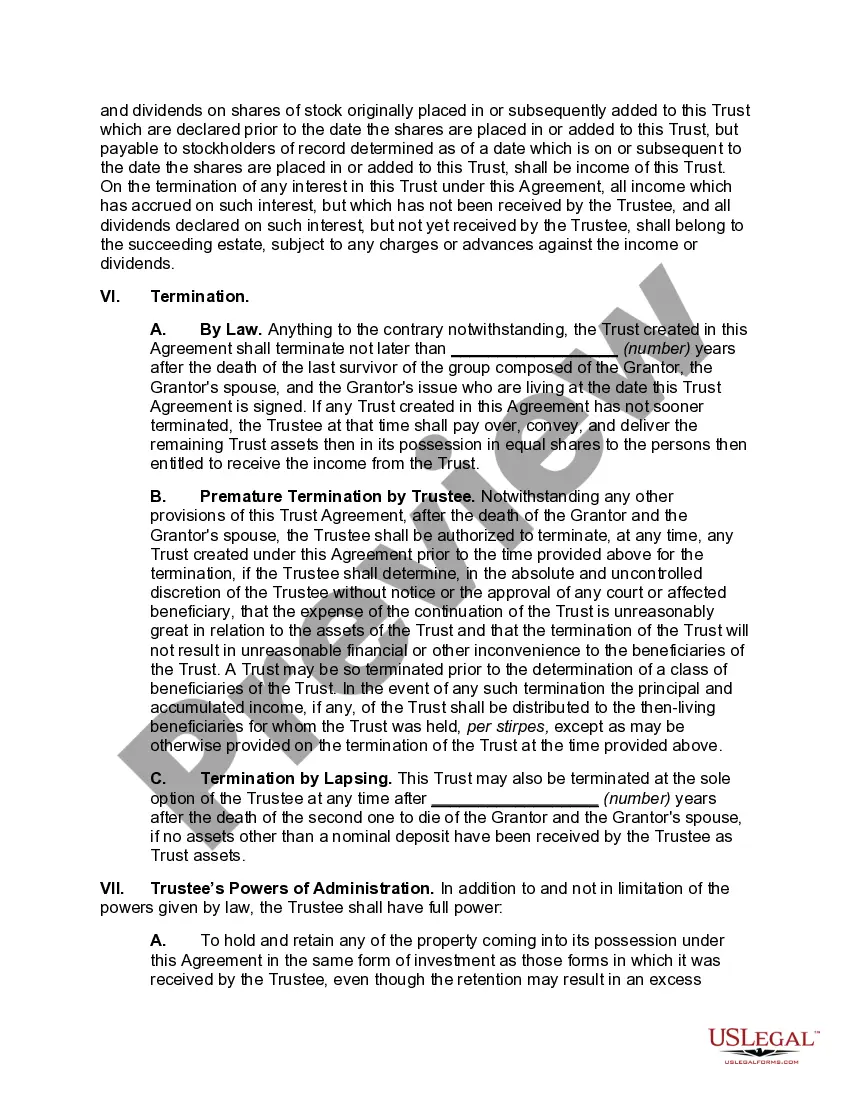
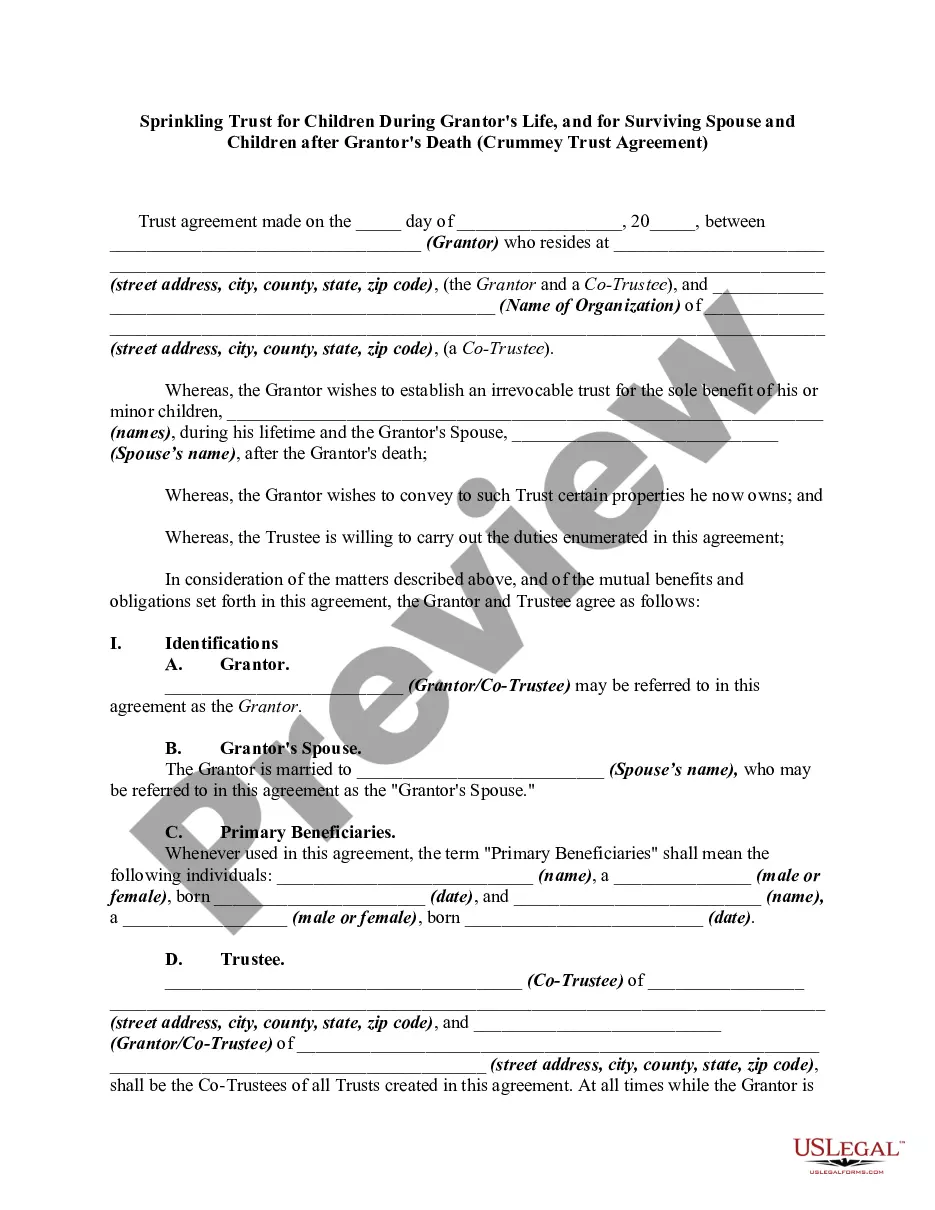
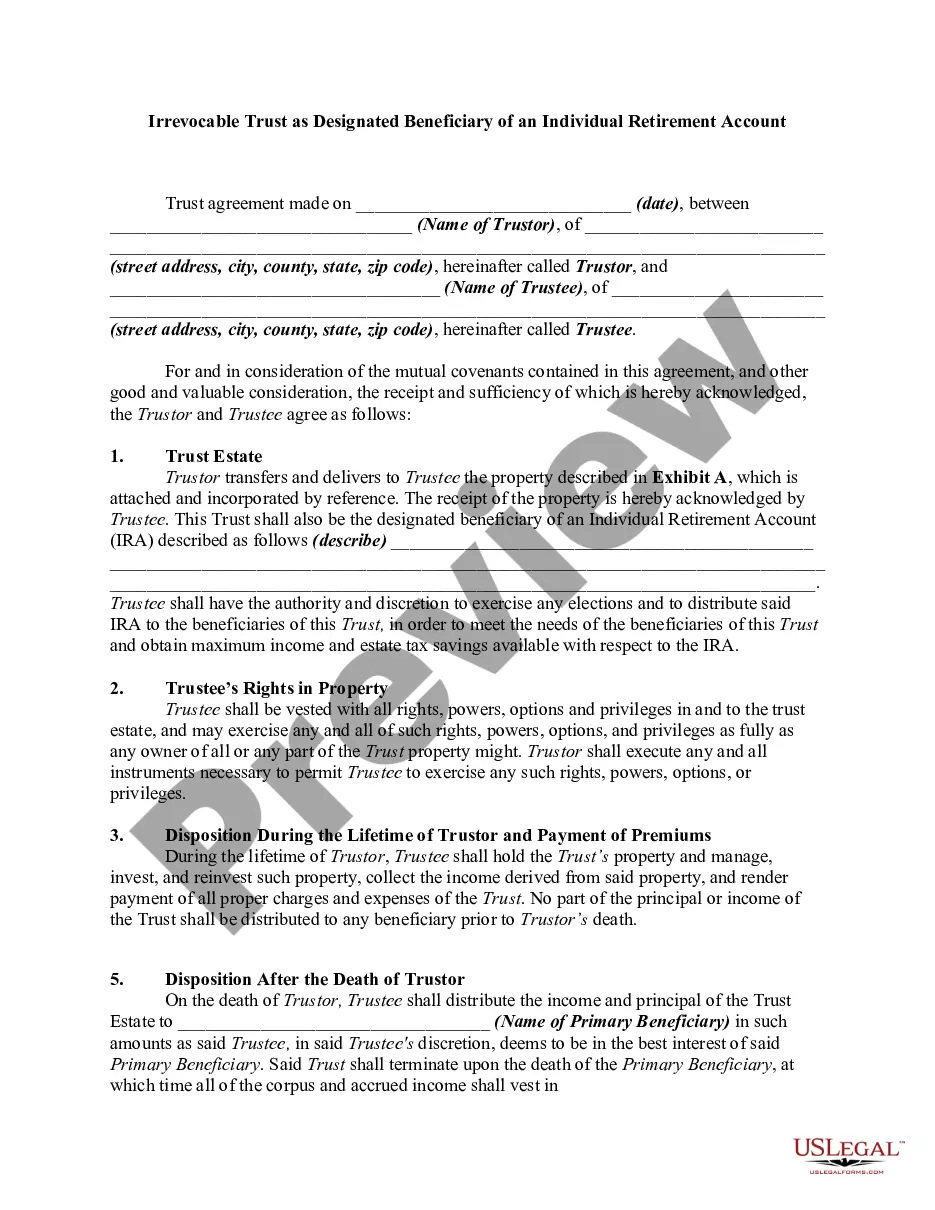
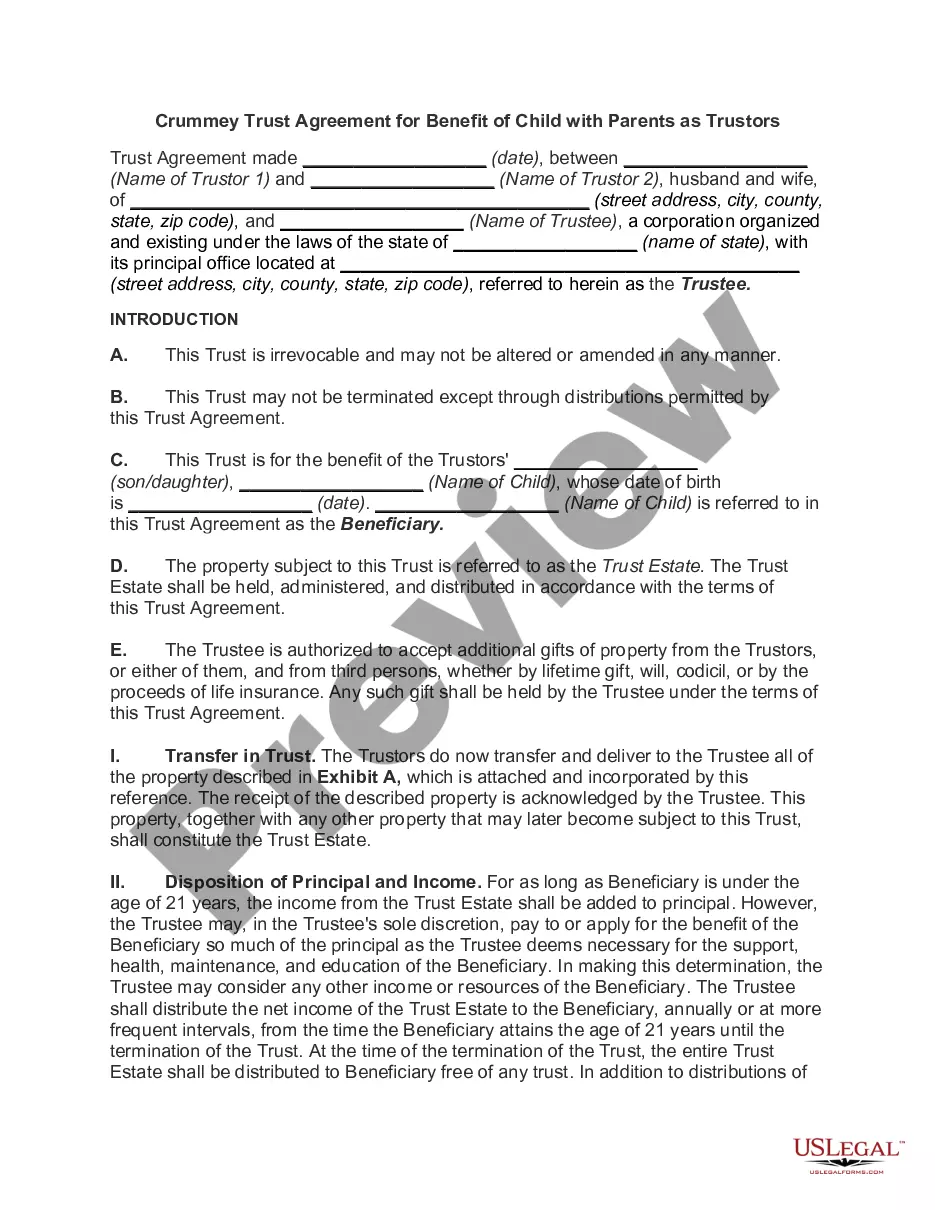
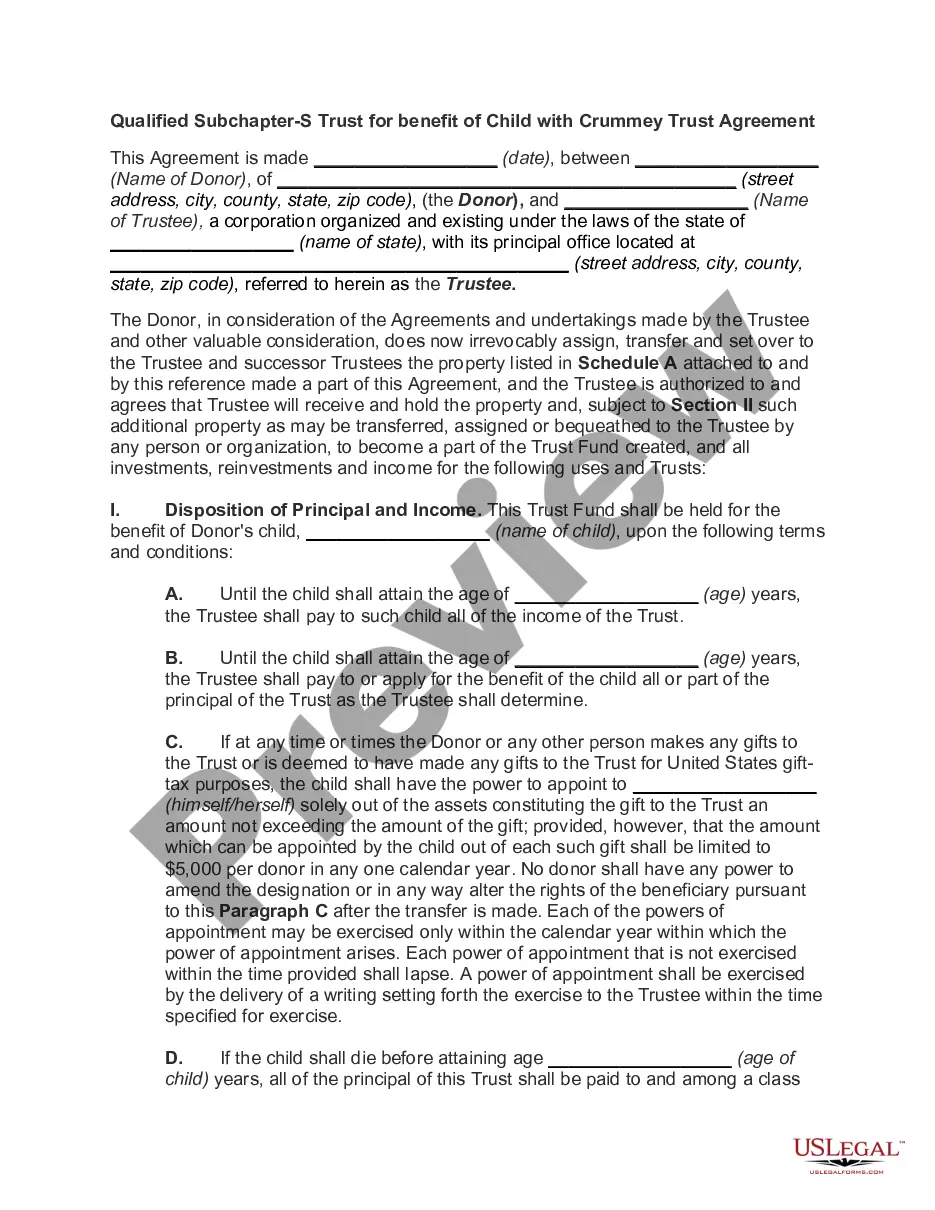
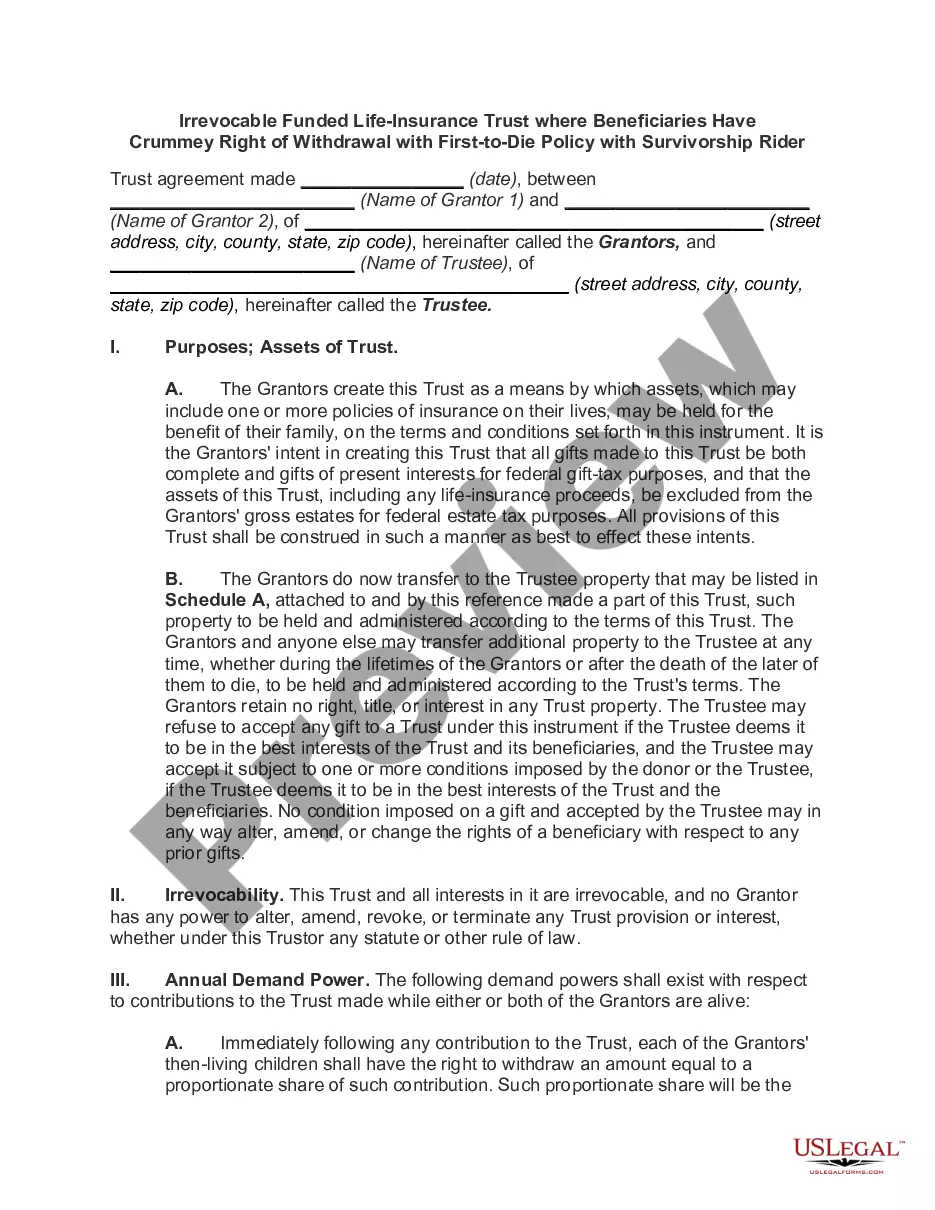
The Irrevocable Life Insurance Trust - Beneficiaries Have Crummey Right of Withdrawal is a specialized trust designed to manage life insurance policies and other assets. This trust structure allows beneficiaries to withdraw funds within specific limits while taking advantage of gift tax exclusions. Unlike standard trusts, this irrevocable trust can help preserve assets from estate taxes and provide financial support to designated beneficiaries.
What’s included in this form
- Identification of the Grantor and Trustee.
- Details of the life insurance policies and assets included in the trust.
- Irrevocability clause preventing amendments or revocation of the trust terms.
- Provisions for beneficiary withdrawals within specified limits.
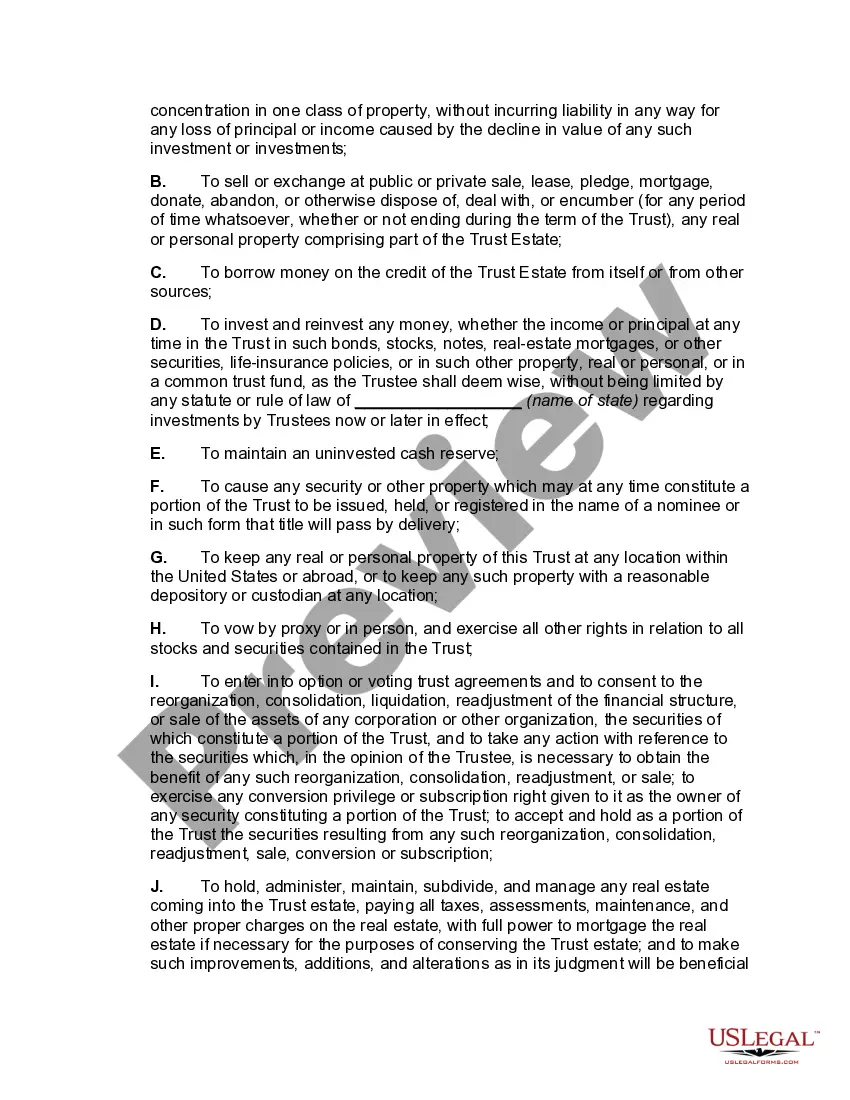
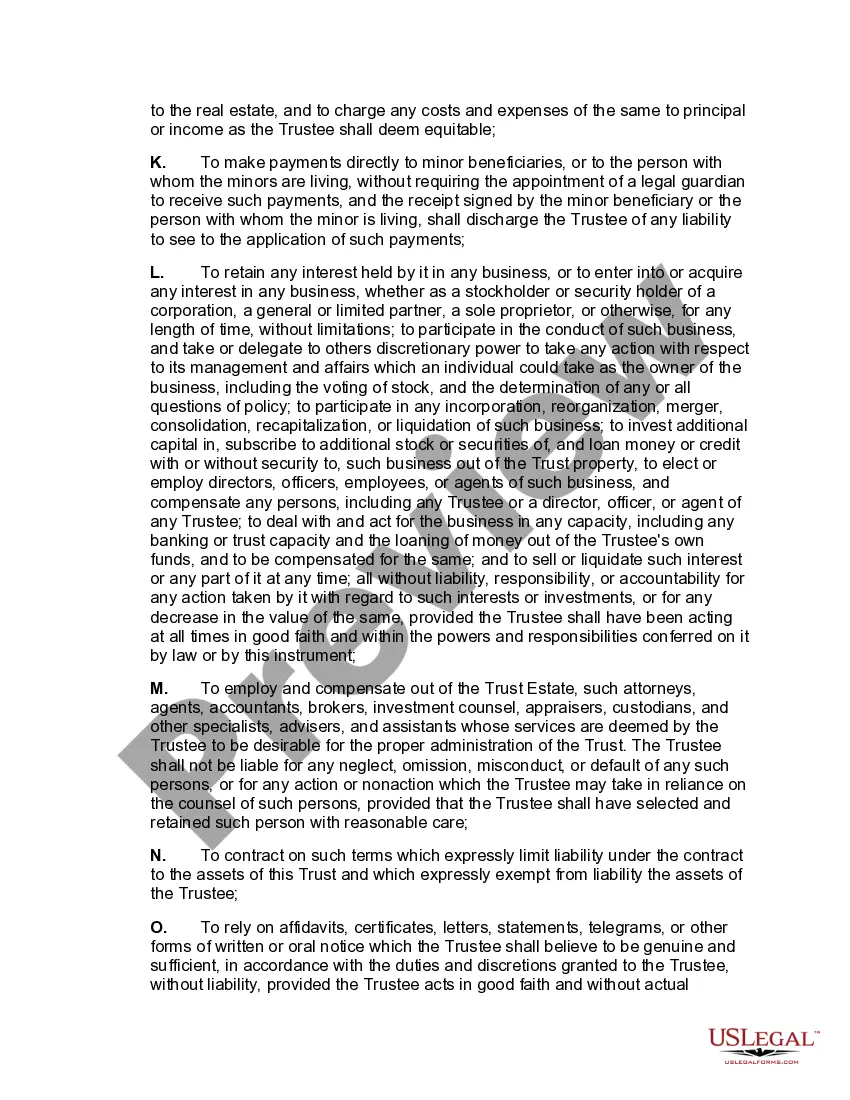
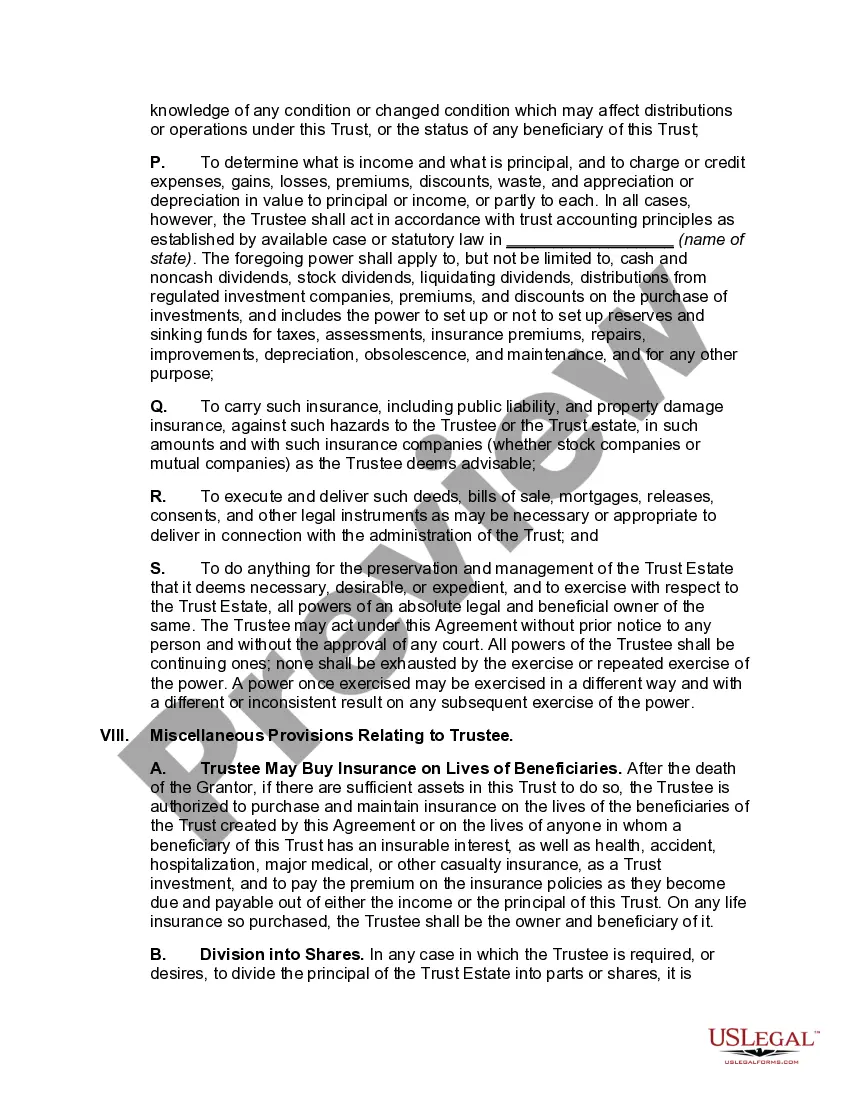
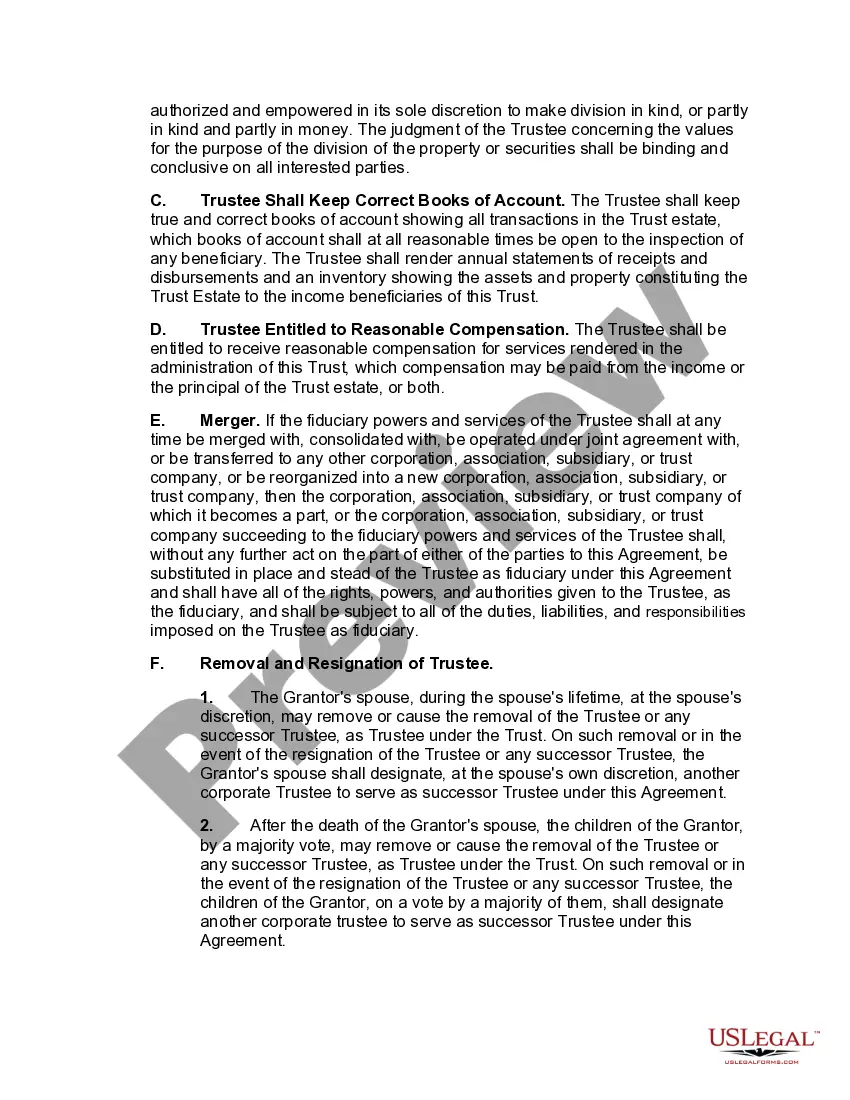
- Trustee responsibilities for managing and distributing trust assets.
- Spendthrift provisions to protect trust assets from beneficiary creditors.

When this form is needed
This form is useful in situations where individuals want to provide financial support to their beneficiaries through life insurance while minimizing potential tax implications. It is applicable in estate planning to ensure that the life insurance benefits are preserved for heirs and used for their benefit without immediate estate tax exposure.
Who can use this document
- Individuals seeking to enhance their estate planning strategies.
- Anyone wanting to provide for beneficiaries while controlling the management of the assets.
- Parents or guardians planning for the financial future of their children.
- Those looking to utilize life insurance in a tax-efficient manner.
Steps to complete this form
- Identify the date and parties involved, including the Grantor and Trustee.
- List the insurance policies and assets being transferred into the trust.
- Specify the withdrawal limits for beneficiaries based on current tax exemptions.
- Complete the terms and conditions of trust management and distribution.
- Include necessary signatures and dates for validation.
Notarization guidance
In most cases, this form does not require notarization. However, some jurisdictions or signing circumstances might. US Legal Forms offers online notarization powered by Notarize, accessible 24/7 for a quick, remote process.
Get your form ready online
Our built-in tools help you complete, sign, share, and store your documents in one place.
Make edits, fill in missing information, and update formatting in US Legal Forms—just like you would in MS Word.
Download a copy, print it, send it by email, or mail it via USPS—whatever works best for your next step.
Sign and collect signatures with our SignNow integration. Send to multiple recipients, set reminders, and more. Go Premium to unlock E-Sign.
If this form requires notarization, complete it online through a secure video call—no need to meet a notary in person or wait for an appointment.
We protect your documents and personal data by following strict security and privacy standards.

Make edits, fill in missing information, and update formatting in US Legal Forms—just like you would in MS Word.

Download a copy, print it, send it by email, or mail it via USPS—whatever works best for your next step.

Sign and collect signatures with our SignNow integration. Send to multiple recipients, set reminders, and more. Go Premium to unlock E-Sign.

If this form requires notarization, complete it online through a secure video call—no need to meet a notary in person or wait for an appointment.

We protect your documents and personal data by following strict security and privacy standards.
Typical mistakes to avoid
- Failing to properly identify the Grantor and Trustee.
- Omitting specific details about the assets being transferred into the trust.
- Not specifying the withdrawal limits for beneficiaries correctly.
- Neglecting to follow state-specific requirements for trust formations.
- Signing without understanding the irrevocable nature of the trust.
Why use this form online
- Ease of access to legally vetted templates.
- Instant download for quick completion and use.
- Convenient editing options to tailor the trust agreement as needed.
- Secure and compliant digital document management.
- Affordability compared to hiring legal professionals for drafting.
Looking for another form?
Form popularity
FAQ
Because of the irrevocable trust provision they can either transfer the trust asset to another beneficiary or donate it to a charity. However, you can't transfer assets from an irrevocable trust back to your original estate under any circumstances.
Tax Considerations However, the cash value accumulating in a life insurance policy is free from taxation as is the death benefit. So there are no tax issues with having a policy owned in an ILIT.
The trustee of an irrevocable trust can only withdraw money to use for the benefit of the trust according to terms set by the grantor, like disbursing income to beneficiaries or paying maintenance costs, and never for personal use.
Crummey powers give the beneficiary a limited time (often 30, 45 or 60 days) to withdraw contributions to a trust at will, converting the future interest gift to a present interest gift. This withdrawal right is generally limited to an amount equal to the current annual gift tax exclusion.
An irrevocable trust has a grantor, a trustee, and a beneficiary or beneficiaries. Once the grantor places an asset in an irrevocable trust, it is a gift to the trust and the grantor cannot revoke it.To gift assets the estate while still retaining the income from the assets.
Despite the Tax Court's rulings, the IRS continues to review and challenge ILIT contributions and their qualifications as annual exclusion gifts during audits. Thus, clients generally should still be advised to give actual written notice to Crummey powerholders upon each gift to a trust.
Irrevocable trust: The purpose of the trust is outlined by an attorney in the trust document. Once established, an irrevocable trust usually cannot be changed. As soon as assets are transferred in, the trust becomes the asset owner. Grantor: This individual transfers ownership of property to the trust.
Tax ConsiderationsIrrevocable trusts have a separate tax identification number and a very aggressive income tax schedule. However, the cash value accumulating in a life insurance policy is free from taxation as is the death benefit. So there are no tax issues with having a policy owned in an ILIT.
Trustees Can Withdraw For Trust UseTrust law varies from state to state, but under no circumstances can a trustee withdraw funds from the trust for the personal use of the trustee.Common trust law dictates that the trustee (or trustees) are the only parties that can disburse funds from a trust account.