Agreement to Devise or Bequeath Property to Grantors Who Convey Property to Testator
Understanding this form
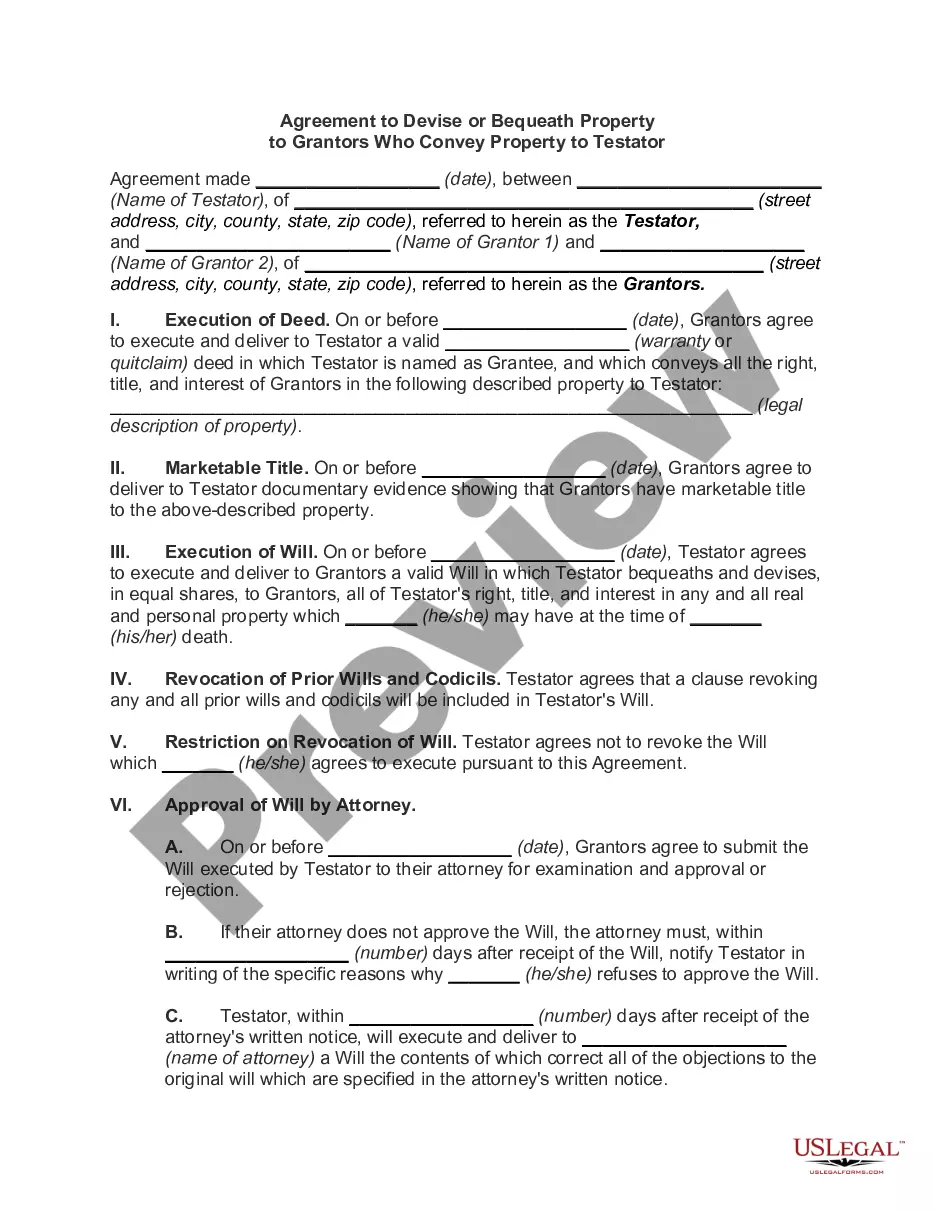
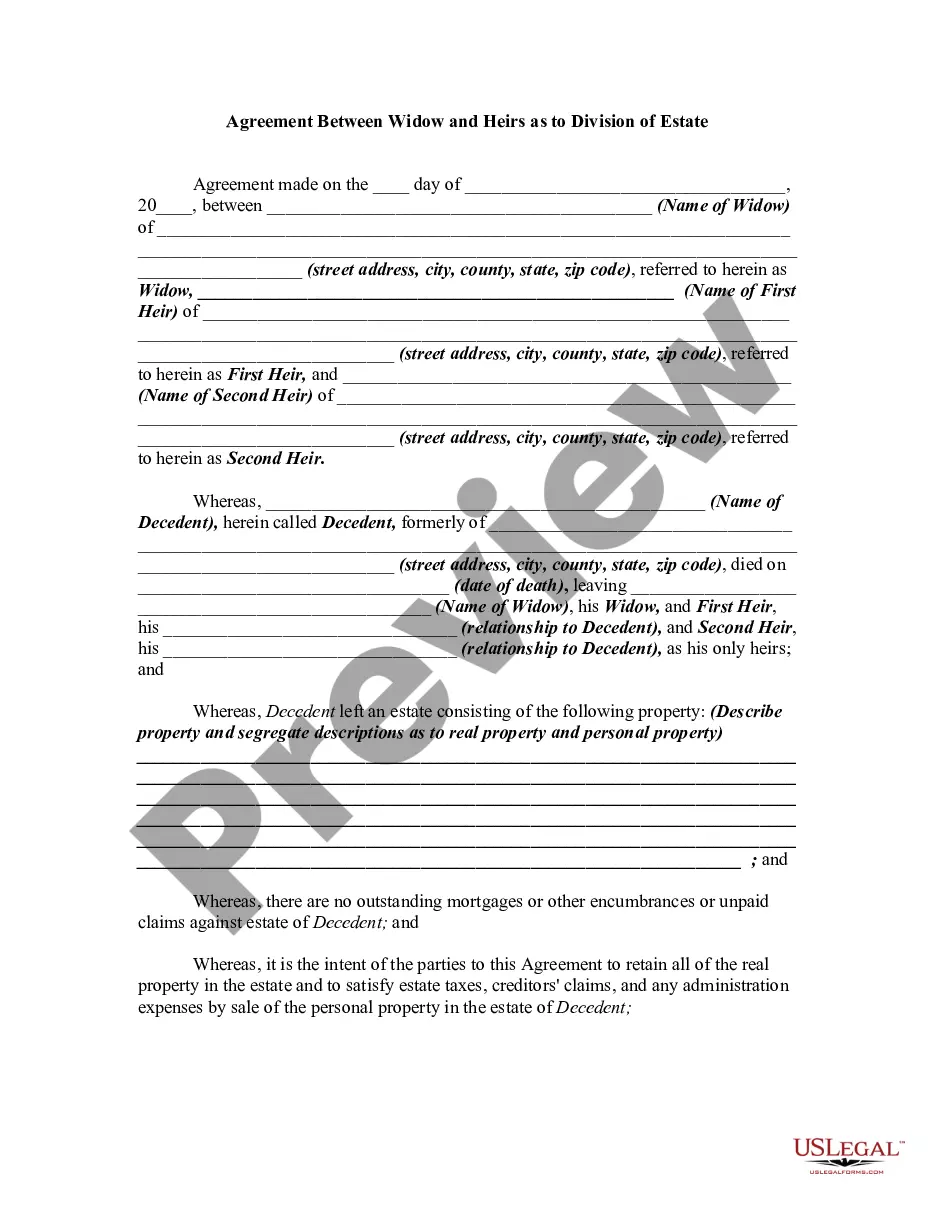
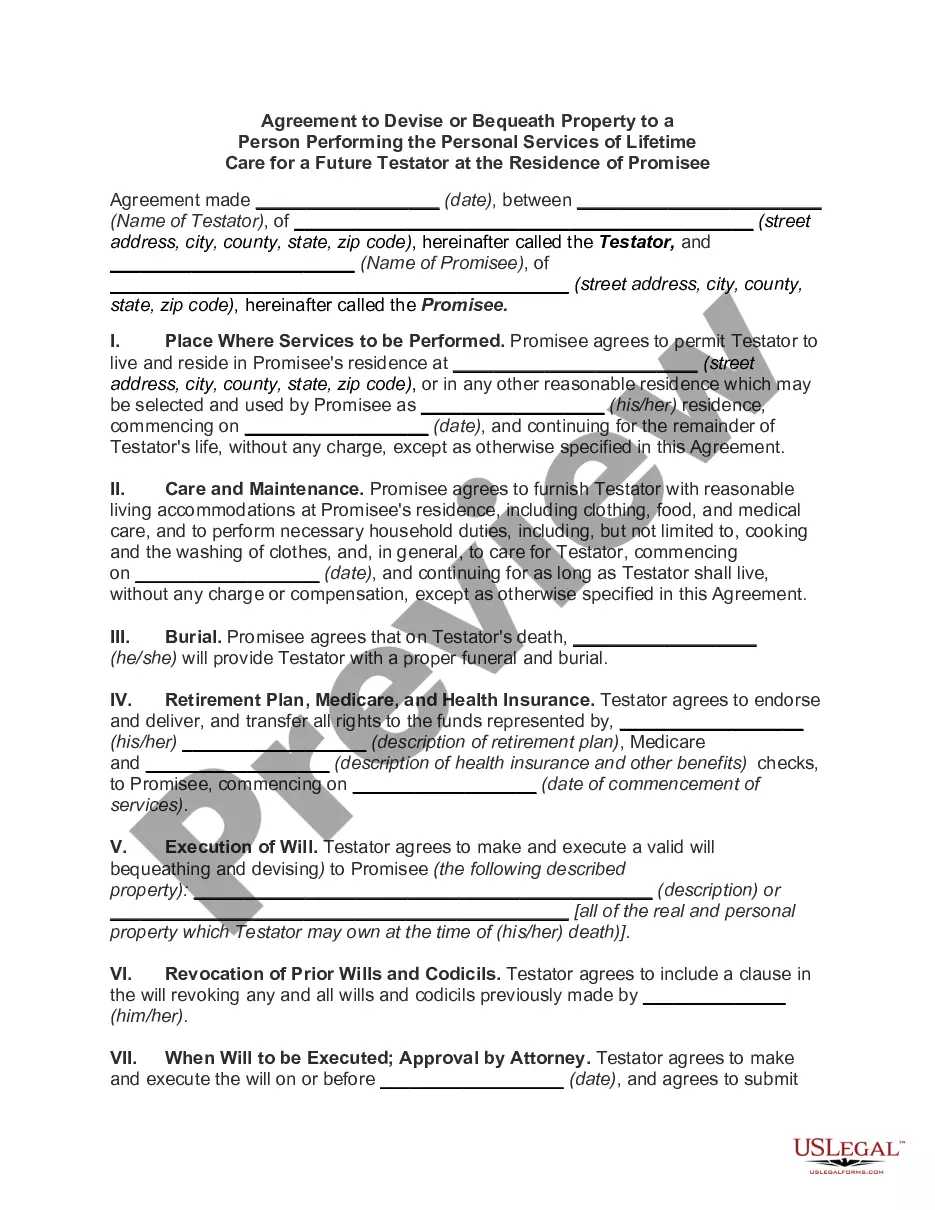
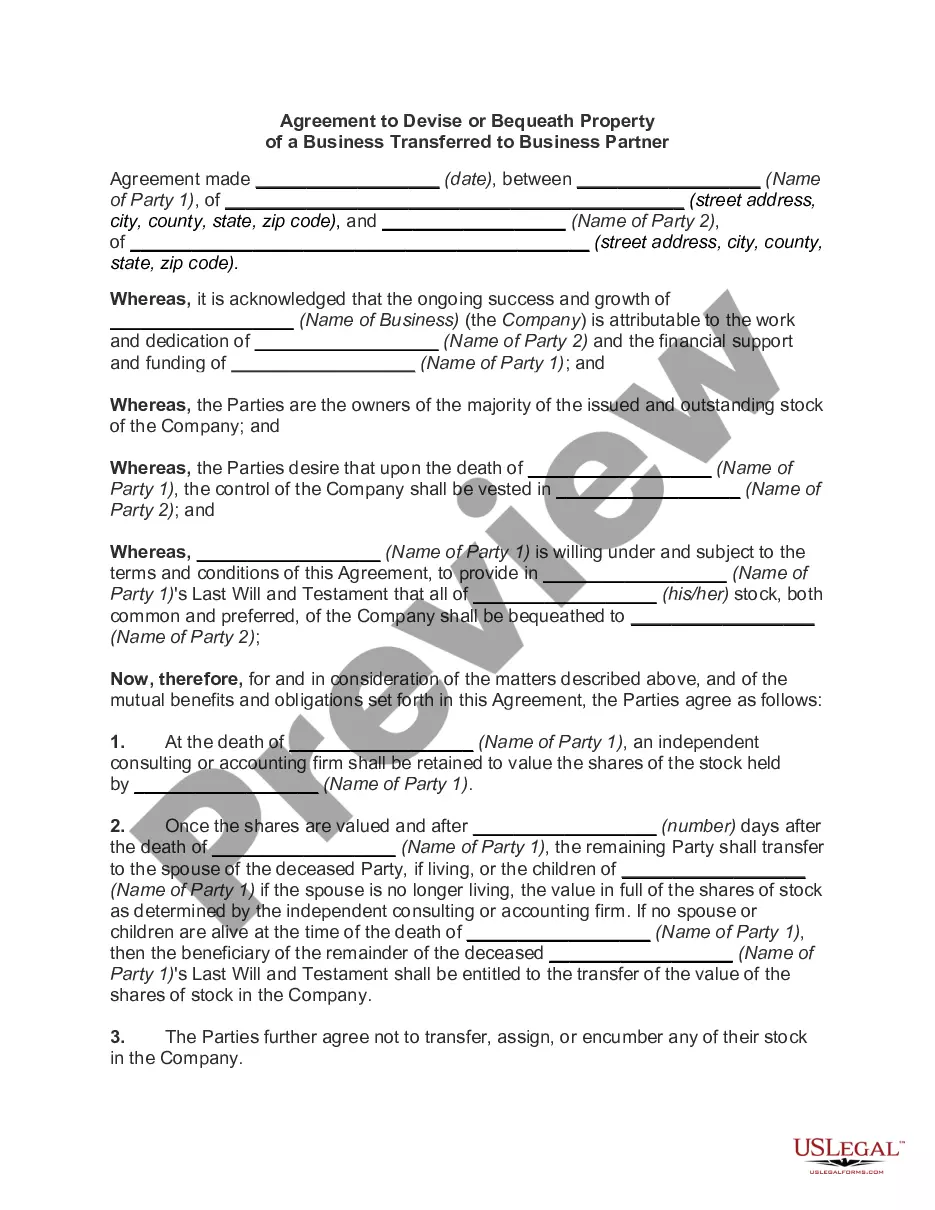
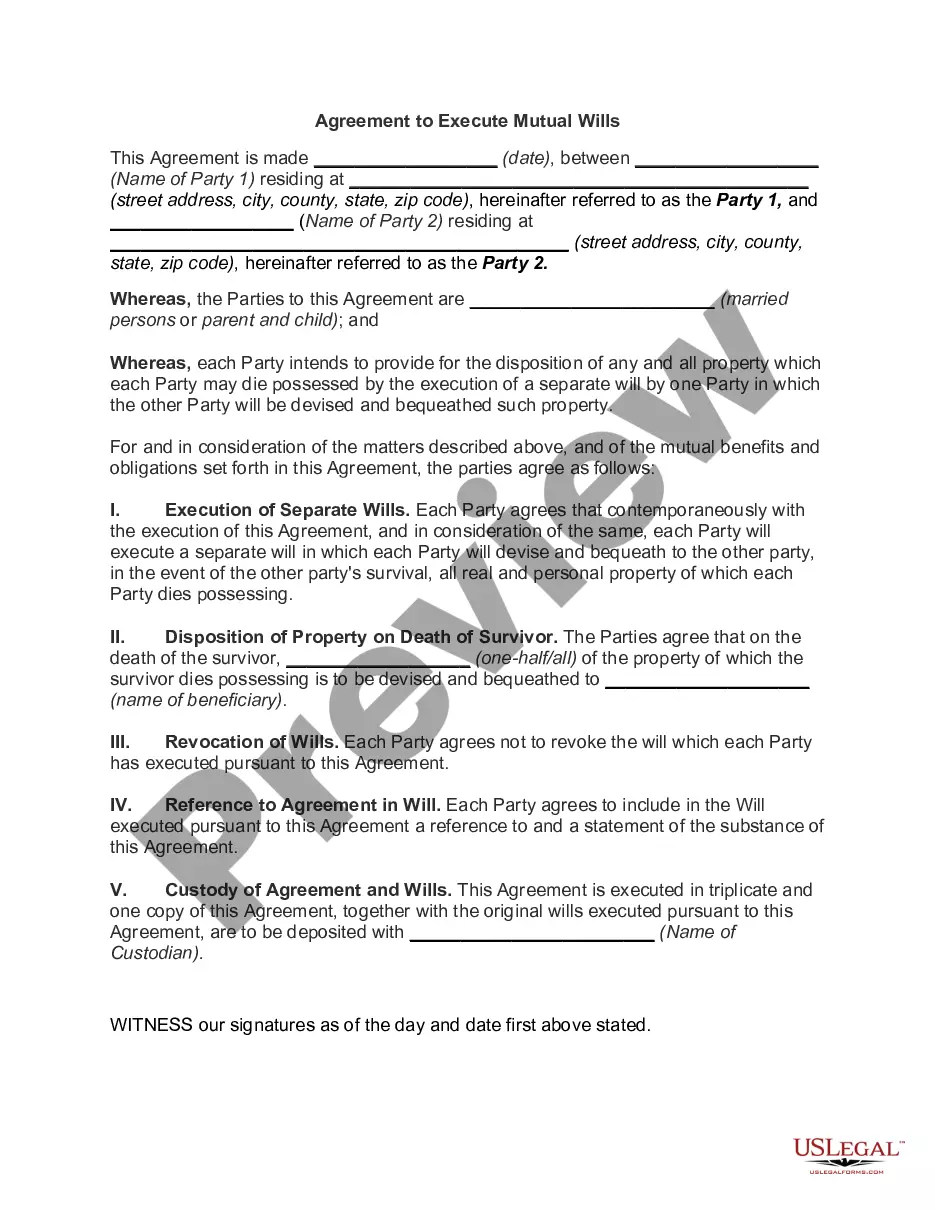
This Agreement to Devise or Bequeath Property to Grantors Who Convey Property to Testator is a legal document that establishes an arrangement where a person, known as the Testator, agrees to leave property to specific individuals known as Grantors via their will. It outlines the responsibilities of both the Testator and the Grantors regarding the conveyance of property and ensures that the bequest is clearly defined and legally enforceable.
Main sections of this form
- Execution of Deed: Details the timeline and requirements for Grantors to execute and deliver a valid deed to the Testator.
- Marketable Title: Obligates Grantors to provide proof of ownership of the property before the Testatorâs will is executed.
- Execution of Will: Specifies that the Testator will draft a will that bequeaths property to the Grantors.
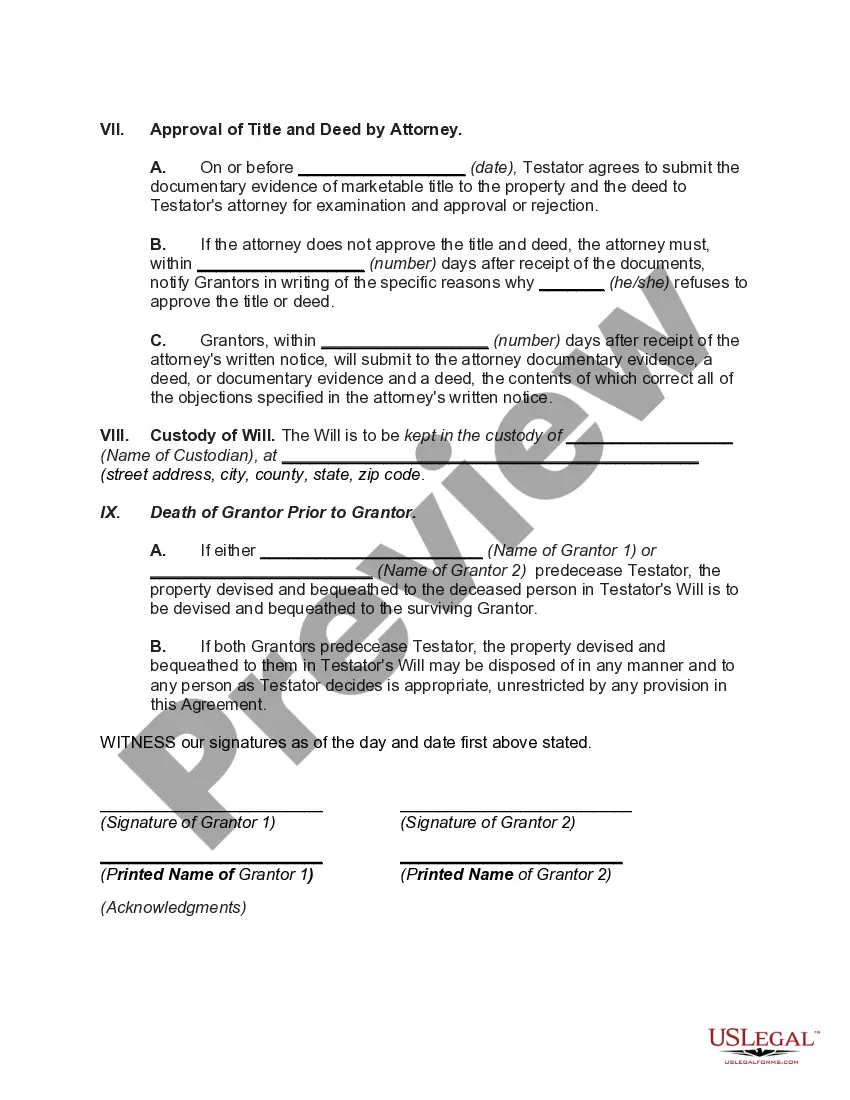
- Custody of Will: Indicates where the final will should be stored.
- Death of Grantor: Outlines what happens if either Grantor dies before the Testator.
Situations where this form applies
This form is ideal for individuals who wish to formalize an agreement, ensuring that property is transferred to specified individuals upon their death. It is particularly useful in situations where family members or partners want to establish clear intentions regarding inheritance and protect the rights of all parties involved.
Intended users of this form
- Individuals looking to create a will that includes specific bequests to individuals.
- Grantors who want to ensure their property is transferred legally and as intended.
- Any party involved in a property transfer or estate planning process.
Completing this form step by step
- Identify the parties involved: Write the names and addresses of the Testator and Grantors.
- Specify the property: Provide a detailed legal description of the property to be conveyed.
- Fill in key dates: Include dates for the execution of the deed and will.
- Obtain necessary approvals: Ensure the will and deed are reviewed by attorneys as specified.
- Gather signatures: Have all parties sign the agreement and keep it in a secure location.
Does this document require notarization?
This form does not typically require notarization unless specified by local law. However, having the signatures notarized can provide additional legal assurance and credibility.
Get your form ready online
Our built-in tools help you complete, sign, share, and store your documents in one place.
Make edits, fill in missing information, and update formatting in US Legal Forms—just like you would in MS Word.
Download a copy, print it, send it by email, or mail it via USPS—whatever works best for your next step.
Sign and collect signatures with our SignNow integration. Send to multiple recipients, set reminders, and more. Go Premium to unlock E-Sign.
If this form requires notarization, complete it online through a secure video call—no need to meet a notary in person or wait for an appointment.
We protect your documents and personal data by following strict security and privacy standards.

Make edits, fill in missing information, and update formatting in US Legal Forms—just like you would in MS Word.

Download a copy, print it, send it by email, or mail it via USPS—whatever works best for your next step.

Sign and collect signatures with our SignNow integration. Send to multiple recipients, set reminders, and more. Go Premium to unlock E-Sign.

If this form requires notarization, complete it online through a secure video call—no need to meet a notary in person or wait for an appointment.

We protect your documents and personal data by following strict security and privacy standards.
Typical mistakes to avoid
- Failing to provide a clear legal description of the property.
- Not including all required parties in the agreement.
- Neglecting to have the will reviewed by an attorney as outlined.
- Overlooking signature requirements or not witnessing signatures when necessary.
Why use this form online
- Convenience of downloading and completing the form at your own pace.
- Editability allowing users to customize the document to their specific needs.
- Reliability of using legally vetted templates created by licensed attorneys.
Quick recap
- The Agreement to Devise or Bequeath Property is essential for establishing clear expectations between a testator and grantors.
- Accurate completion and legal review of the form are crucial for enforceability.
- Understanding each component of the agreement helps prevent disputes and simplifies estate planning.
Looking for another form?

Form popularity
FAQ
Once the COURT appoints you as executor, you will record an affidavit of death of joint tenant to get your mother's name of the property. Then, when you get an order for final distribution, you will record a certified copy to get the property into the names of the beneficiaries under the will.
To dispose of Personal Property owned by a decedent at the time of death as a gift under the provisions of the decedent's will. The term bequeath applies only to personal property. A testator, to give real property to someone in a testamentary provision, devises it.
Step 1 : Declaration in the beginning : Step 2 : Details of Property and Documents : Step 3: Details of ownership : Step 4 : Signing the Will :
To bequeath something meant to give personal property by will to another. To devise something meant to make a gift of real property by will.So the decedent in Charmaine's case bequeathed his personal property, and he devised his real property his land.
Bank accounts. Brokerage or investment accounts. Retirement accounts and pension plans. A life insurance policy.
The court will force the executor to return the property to the estate or pay restitution to the beneficiaries of the estate.The executor cannot transfer estate property to himself because the property belongs to someone else unless he pays the full price for it.
In most cases, the surviving owner or heir obtains the title to the home, the former owner's death certificate, a notarized affidavit of death, and a preliminary change of ownership report form. When all these are gathered, the transfer gets recorded, the fees are paid, and the county issues a new title deed.
You can bequeath property, or transfer it upon death, by writing a will. In the will, you'll name the beneficiary for your property, which is the person who will receive it when you die. Drafting a will is easy, and you can do it yourself.
As the recipient of an inherited property, you'll benefit from a step-up tax basis, meaning you'll inherit the home at the fair market value on the date of inheritance, and you'll only be taxed on any gains between the time you inherit the home and when you sell it.