Agreement to Devise or Bequeath Property to a Person Performing the Personal Services of Lifetime Care for a Future Testator
Understanding this form
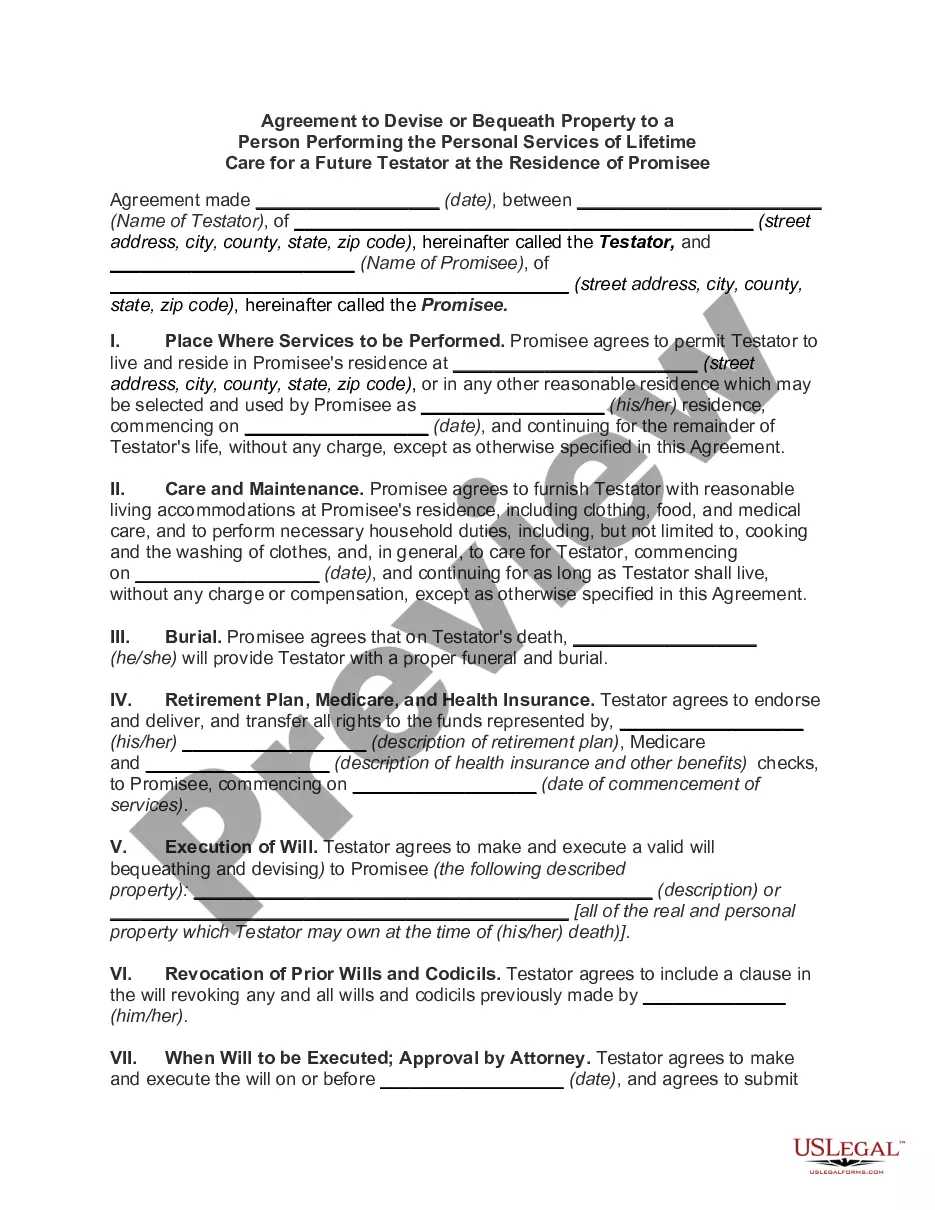
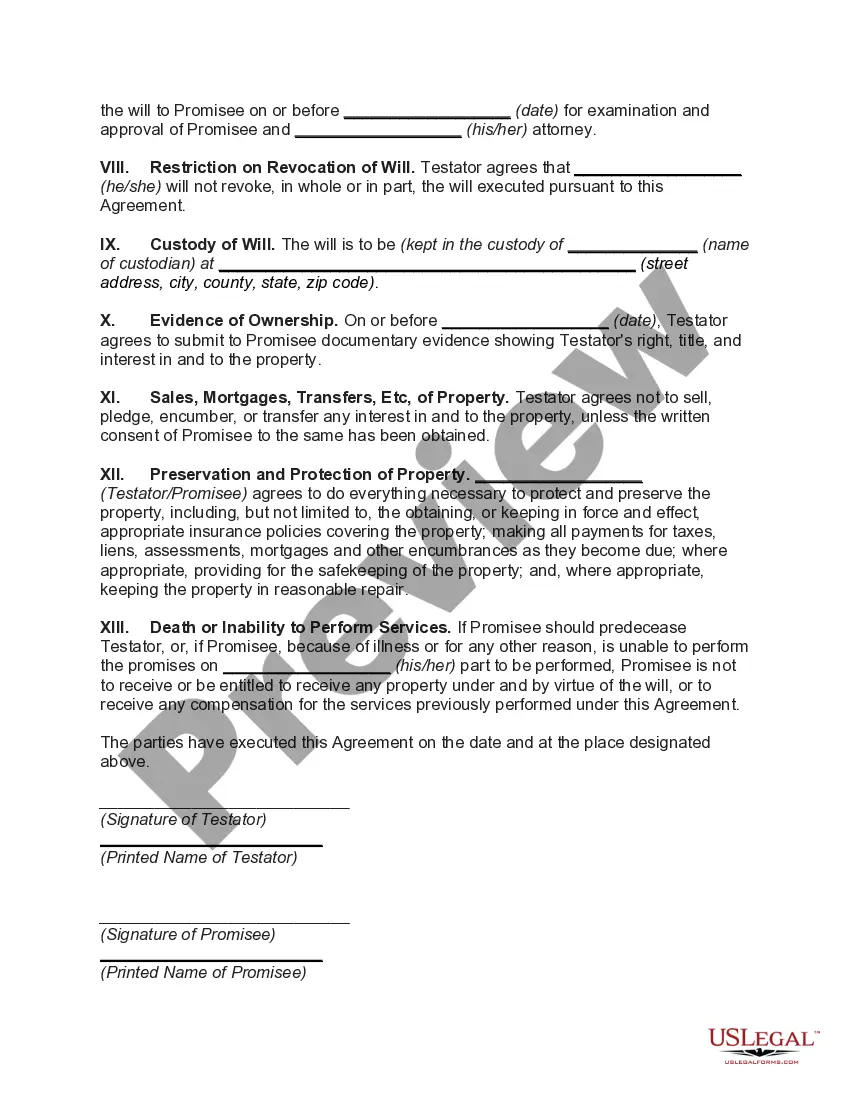
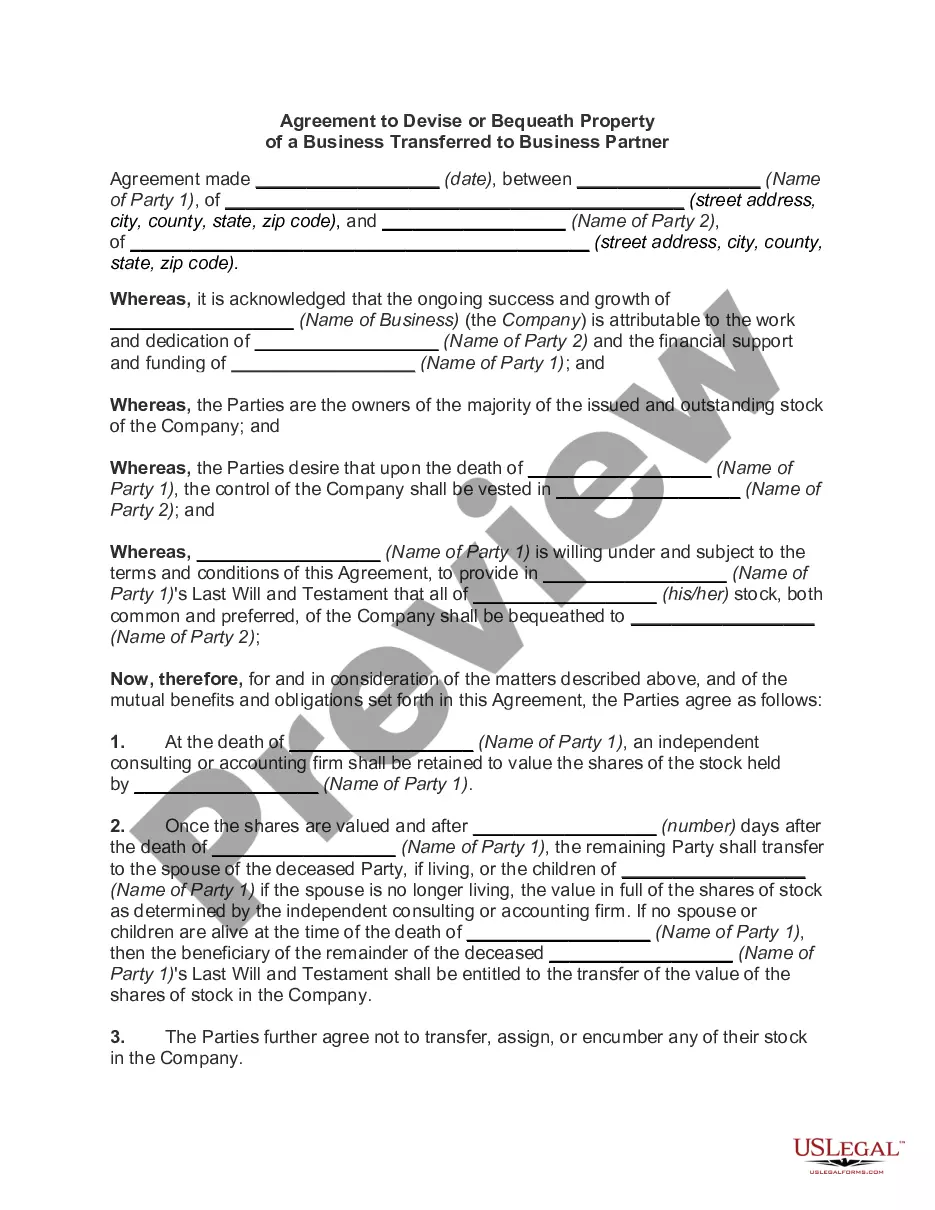
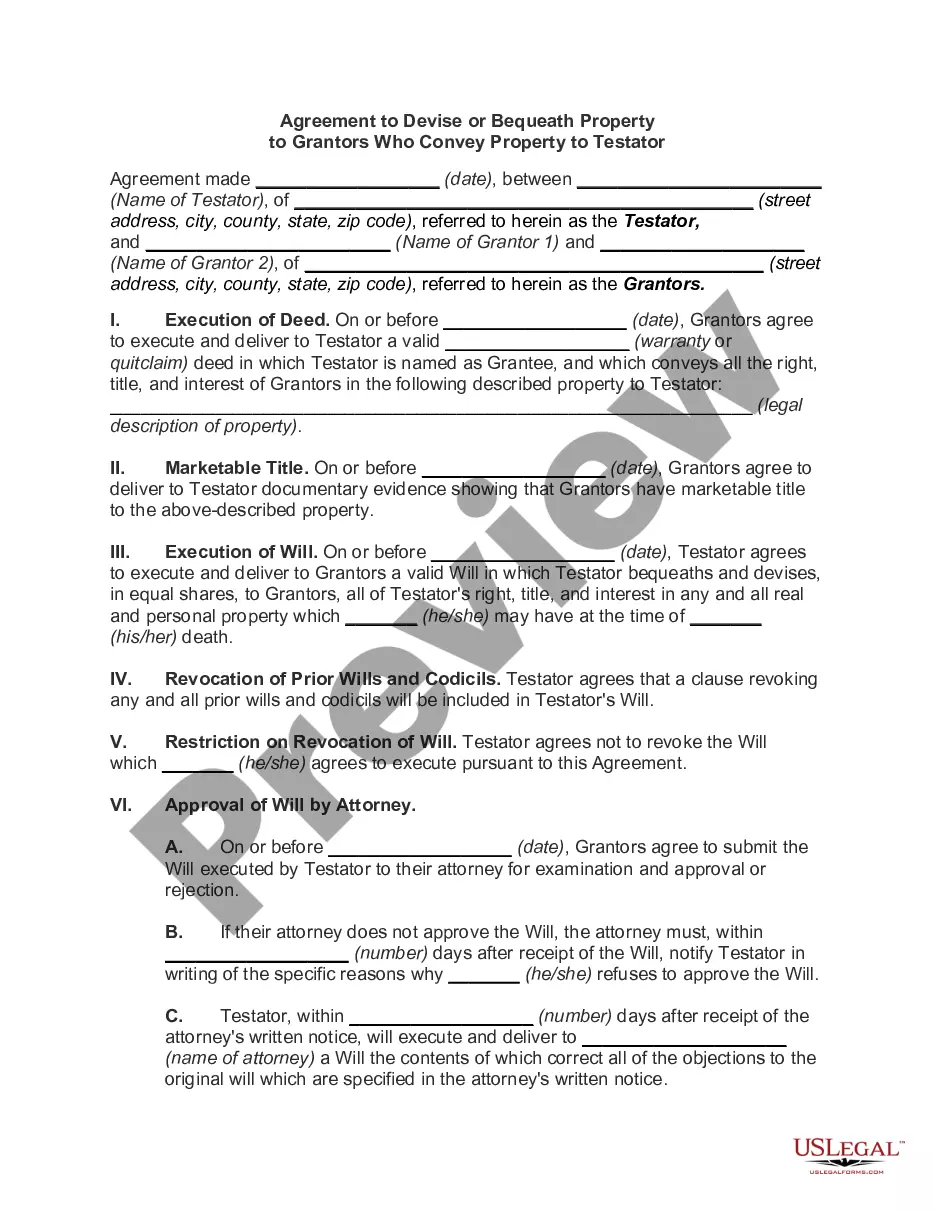
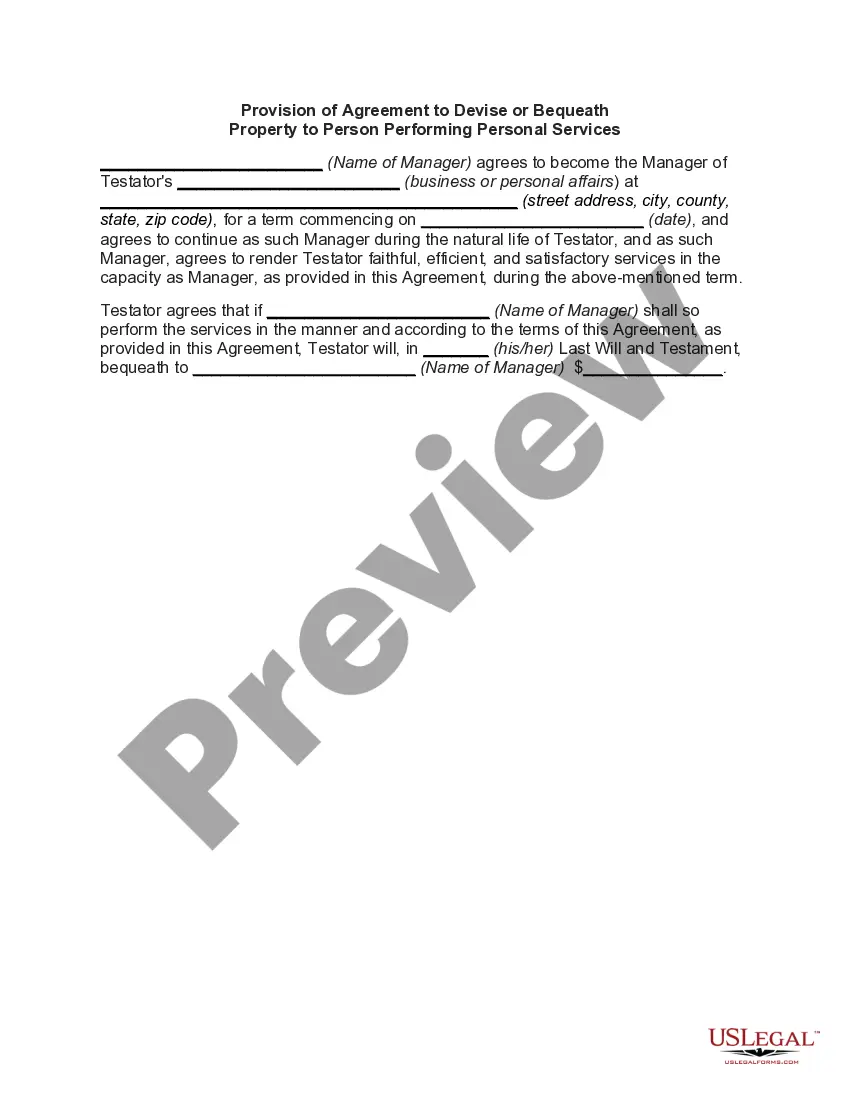
This form is an Agreement to Devise or Bequeath Property to a Person Performing the Personal Services of Lifetime Care for a Future Testator. It outlines the terms under which a caregiver (Promisee) provides lifetime care to a testator at the caregiver's residence in exchange for a bequest of property upon the testator's death. This form is distinct because it combines elements of caregiving and estate planning, ensuring clear agreements regarding care and property inheritance.
Form components explained
- Identification of the parties involved: the Testator and the Promisee.
- Details of the residence where caregiving will occur.
- Scope of care and maintenance responsibilities of the Promisee.
- Funeral and burial arrangements upon the Testator's death.
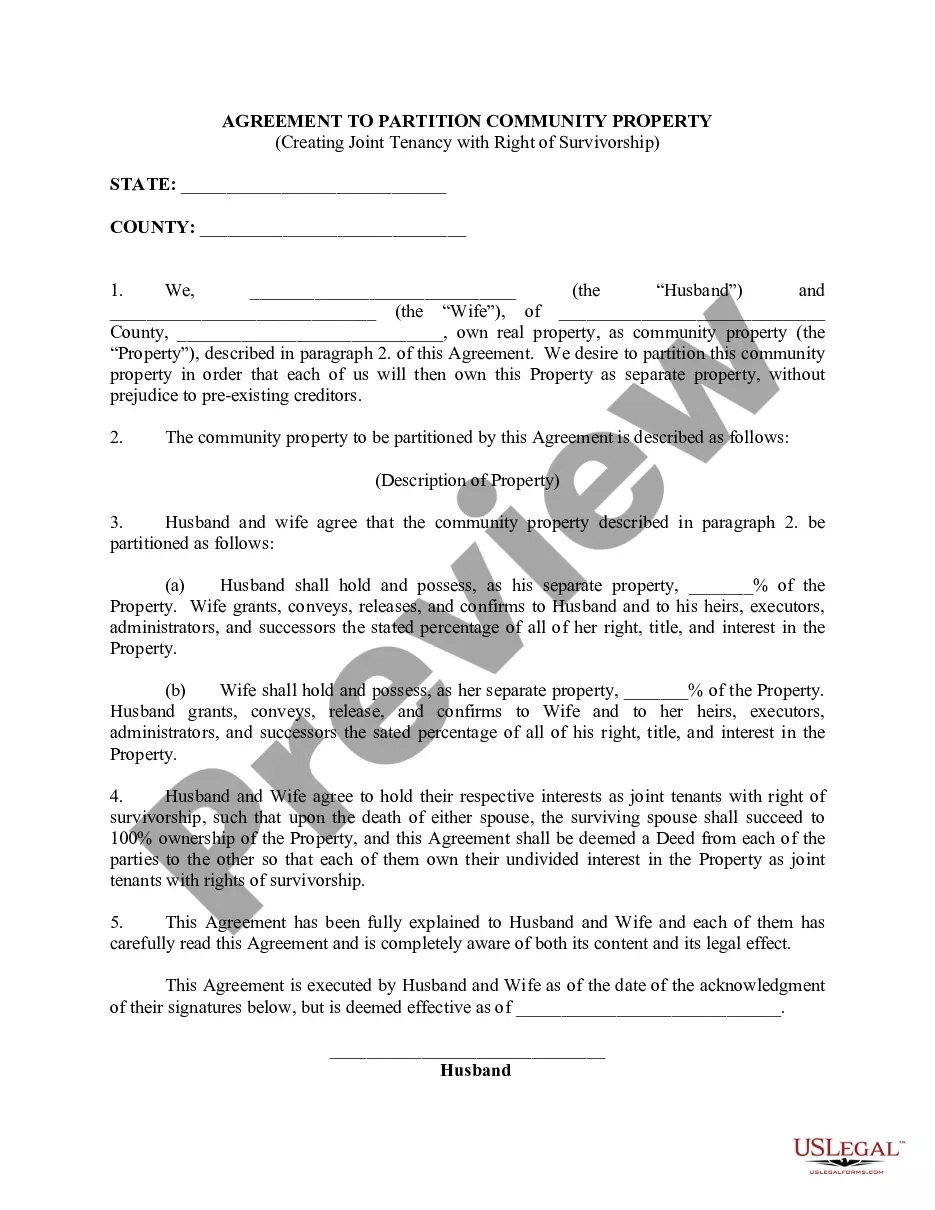
- Restrictions on property sales or transfers by the Testator.
- Provisions for the execution and custody of a will specifying property bequeathment.

Situations where this form applies
This form is useful when an individual (Testator) wishes to ensure that they receive dedicated long-term care from a specific person (Promisee) in exchange for a bequest of property. It is particularly relevant for elderly individuals needing assistance with daily living activities, who want to formalize their arrangement and ensure their caregiver is rewarded upon their passing.
Who this form is for
- Individuals planning for their long-term care needs.
- Caregivers looking to secure a property bequest as compensation for their services.
- Family members who want to formalize living and care arrangements for elderly relatives.
- Anyone interested in combining estate planning with caregiving responsibilities.
Instructions for completing this form
- Identify the parties by entering the names and addresses of the Testator and the Promisee.
- Specify the address where the services will be performed.
- Detail the responsibilities of the Promisee regarding the Testator's care and maintenance.
- Outline the burial arrangement and how the Testator's property will be bequeathed.
- Include any additional clauses regarding the execution and custody of the will.
- Ensure both parties sign and date the agreement to make it legally binding.
Notarization guidance
This form does not typically require notarization unless specified by local law. Always check the specific legal requirements in your jurisdiction to ensure compliance.
Get your form ready online
Our built-in tools help you complete, sign, share, and store your documents in one place.
Make edits, fill in missing information, and update formatting in US Legal Forms—just like you would in MS Word.
Download a copy, print it, send it by email, or mail it via USPS—whatever works best for your next step.
Sign and collect signatures with our SignNow integration. Send to multiple recipients, set reminders, and more. Go Premium to unlock E-Sign.
If this form requires notarization, complete it online through a secure video call—no need to meet a notary in person or wait for an appointment.
We protect your documents and personal data by following strict security and privacy standards.

Make edits, fill in missing information, and update formatting in US Legal Forms—just like you would in MS Word.

Download a copy, print it, send it by email, or mail it via USPS—whatever works best for your next step.

Sign and collect signatures with our SignNow integration. Send to multiple recipients, set reminders, and more. Go Premium to unlock E-Sign.

If this form requires notarization, complete it online through a secure video call—no need to meet a notary in person or wait for an appointment.

We protect your documents and personal data by following strict security and privacy standards.
Avoid these common issues
- Failing to specify the property to be bequeathed clearly.
- Not detailing the specific obligations of the Promisee.
- Neglecting to include dates for the commencement of services and execution of the will.
- Forgetting to have both parties sign the agreement.
- Overlooking state-specific legal requirements that may affect the validity of the form.
Benefits of completing this form online
- Convenient access to legal documentation from any location.
- Editable form templates tailored to specific needs.
- Reliable formats crafted by licensed attorneys.
- Instant download availability for immediate use.
Quick recap
- This form establishes a legal agreement between a Testator and a caregiver regarding property bequeathment for caregiving services.
- It ensures that both parties are aware of their roles and responsibilities throughout the caregiving arrangement.
- Proper execution of this agreement can help prevent future disputes regarding property and care services.
Looking for another form?
Form popularity
FAQ
A bequest and an inheritance are basically two sides of the same coin. The bequest is the act of leaving something to another person through a will. The inheritance, on the other hand, describes the process and rights a person has to property or assets after the death of a spouse or relative.
To leave the home to someone you live with, you can name them or make them a specific beneficiary of the house under your will and in that approach you can say that the mortgage remains due and payable on the house and is to be paid by the beneficiary--in this approach, you are saying that the house transfer to the
In most cases, the surviving owner or heir obtains the title to the home, the former owner's death certificate, a notarized affidavit of death, and a preliminary change of ownership report form. When all these are gathered, the transfer gets recorded, the fees are paid, and the county issues a new title deed.
Transitive verb. 1 : to give or leave by will (see will entry 2 sense 1) used especially of personal property a ring bequeathed to her by her grandmother. 2 : to hand down : transmit lessons bequeathed to future generations.
You can bequeath property, or transfer it upon death, by writing a will. In the will, you'll name the beneficiary for your property, which is the person who will receive it when you die. Drafting a will is easy, and you can do it yourself.
Bequeath: To leave property at one's death; another word for give.Also a verb meaning to give at death. Devisee: Someone who inherits real estate through a will. Executor: The person named in a will, and appointed by the probate court after the will-maker's death, to wind up the affairs of a deceased person.
Step 2: Fill in t200bhe Transmission Application form. Step 3: Get a certifie200bd copy of the grant of Probate or Letters of Administration. Step 4: Lodge with Revenue NSW. Step 5: Create an electronic notice of sale (eNOS) record.
If the deceased was sole owner, or co-owned the property without right of survivorship, title passes according to his will. Whoever the will names as the beneficiary to the house inherits it, which requires filing a new deed confirming her title. If the deceased died intestate -- without a will -- state law takes over.
To dispose of Personal Property owned by a decedent at the time of death as a gift under the provisions of the decedent's will. The term bequeath applies only to personal property. A testator, to give real property to someone in a testamentary provision, devises it.