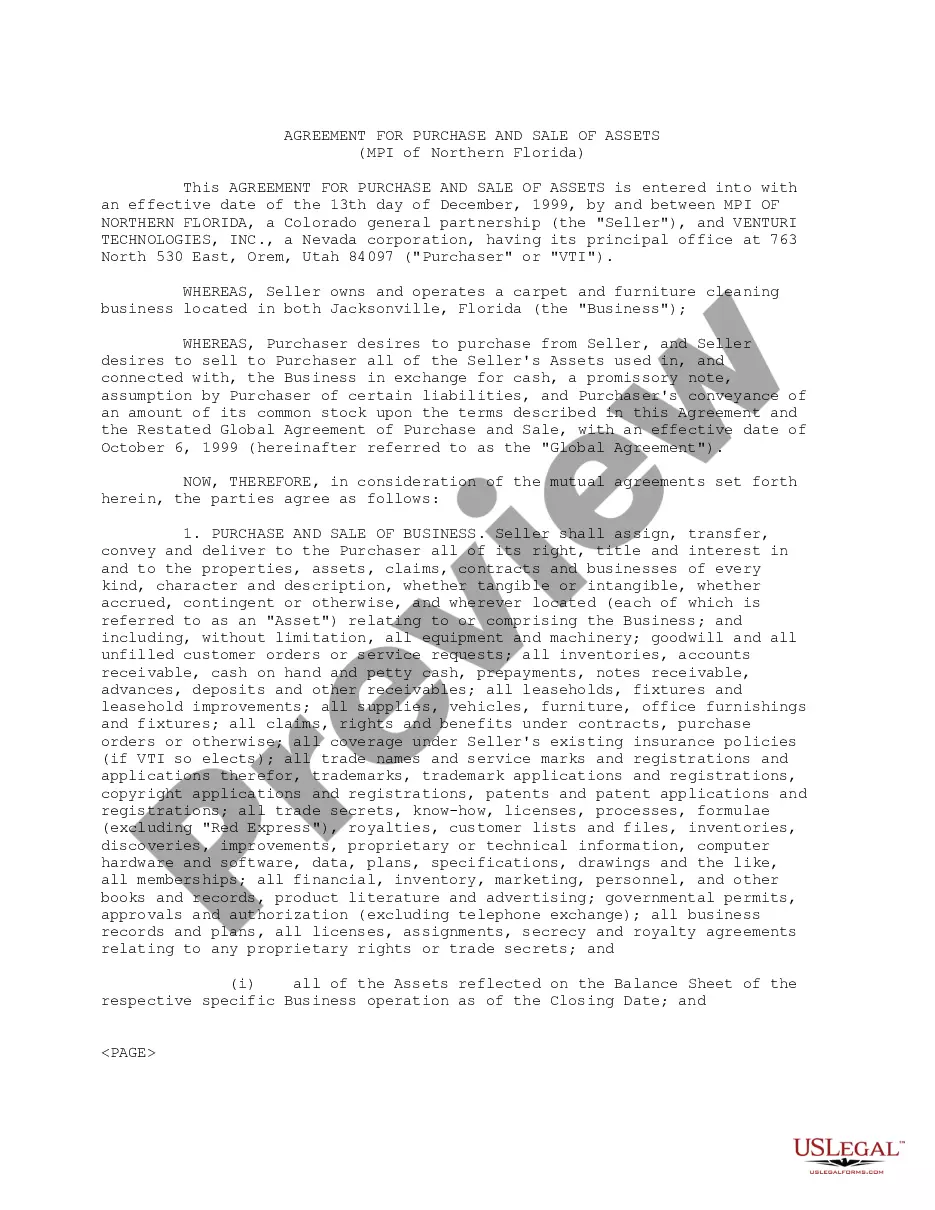
Sample Asset Purchase Agreement between MPI of Northern Florida and Venturi Technologies, Inc. regarding the sale and purchase of assets - Sample
What this document covers
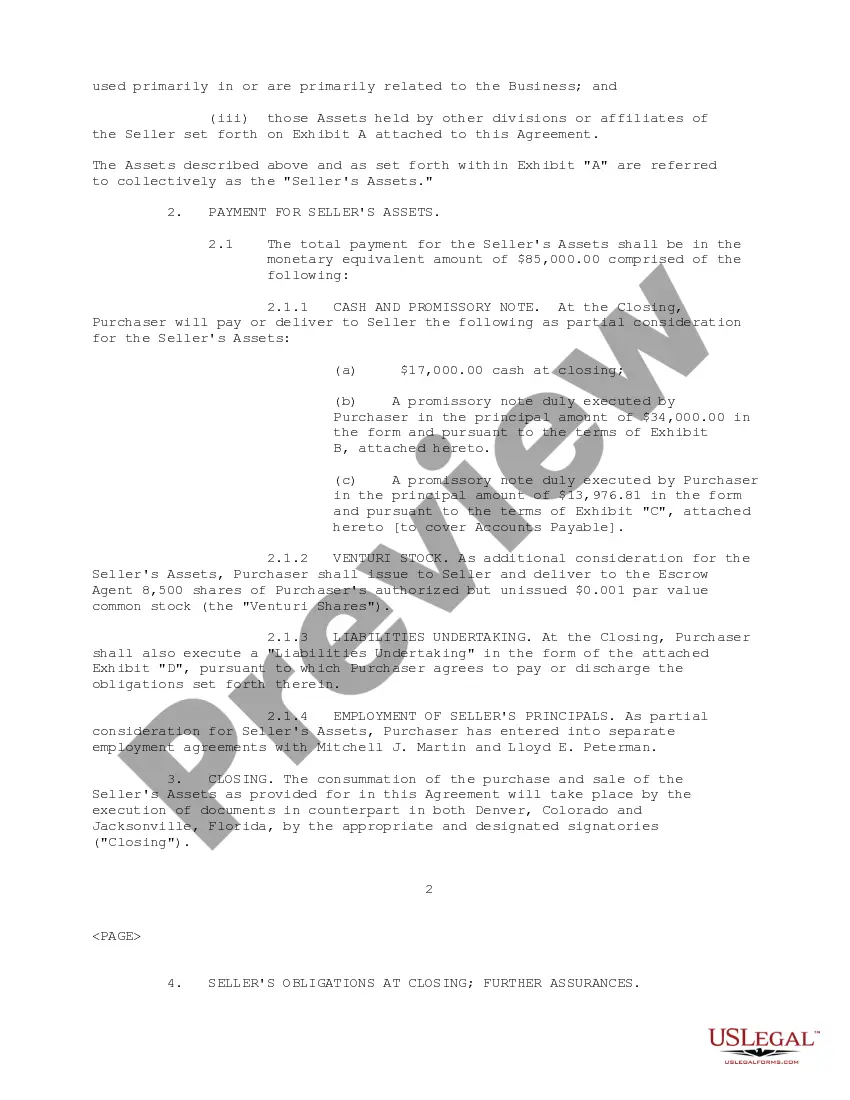
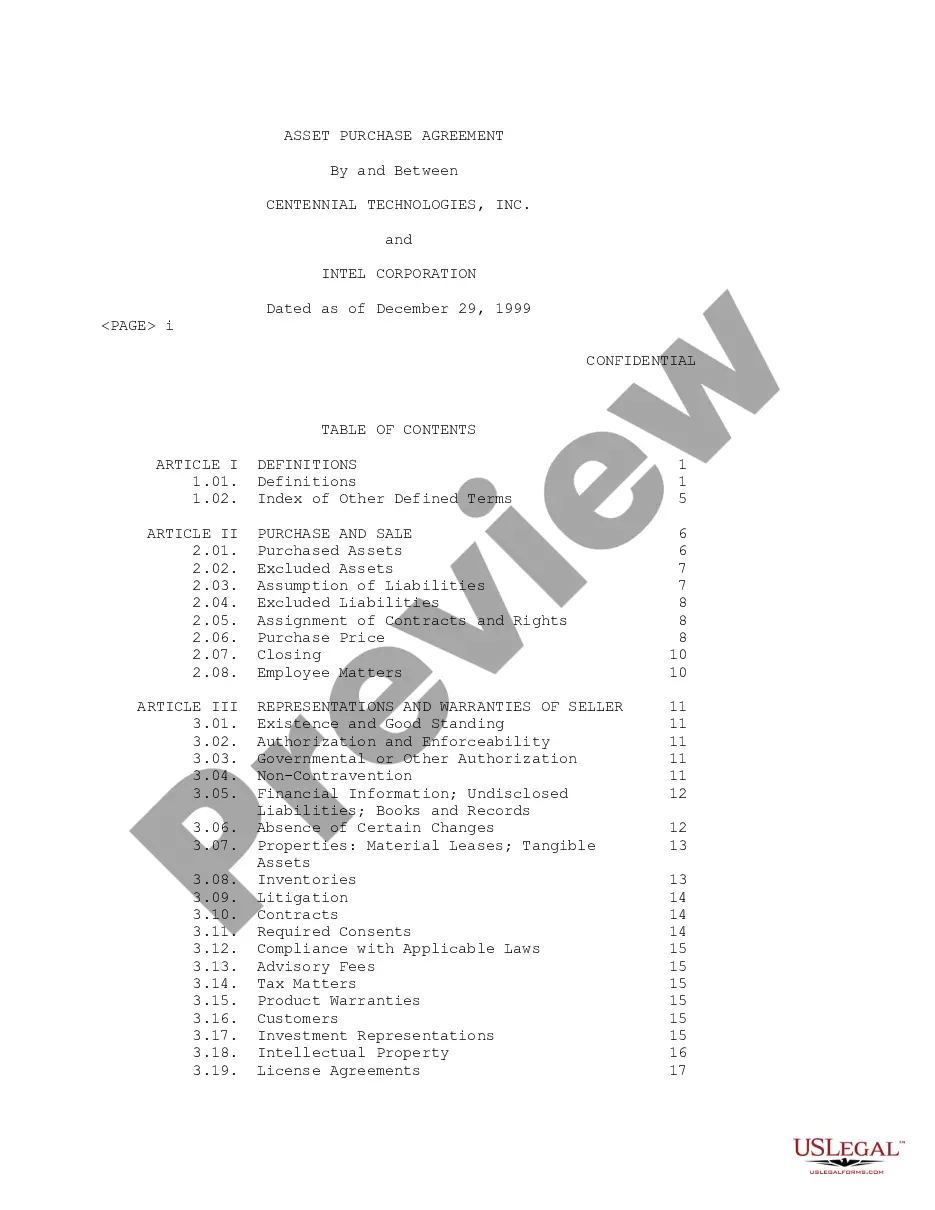
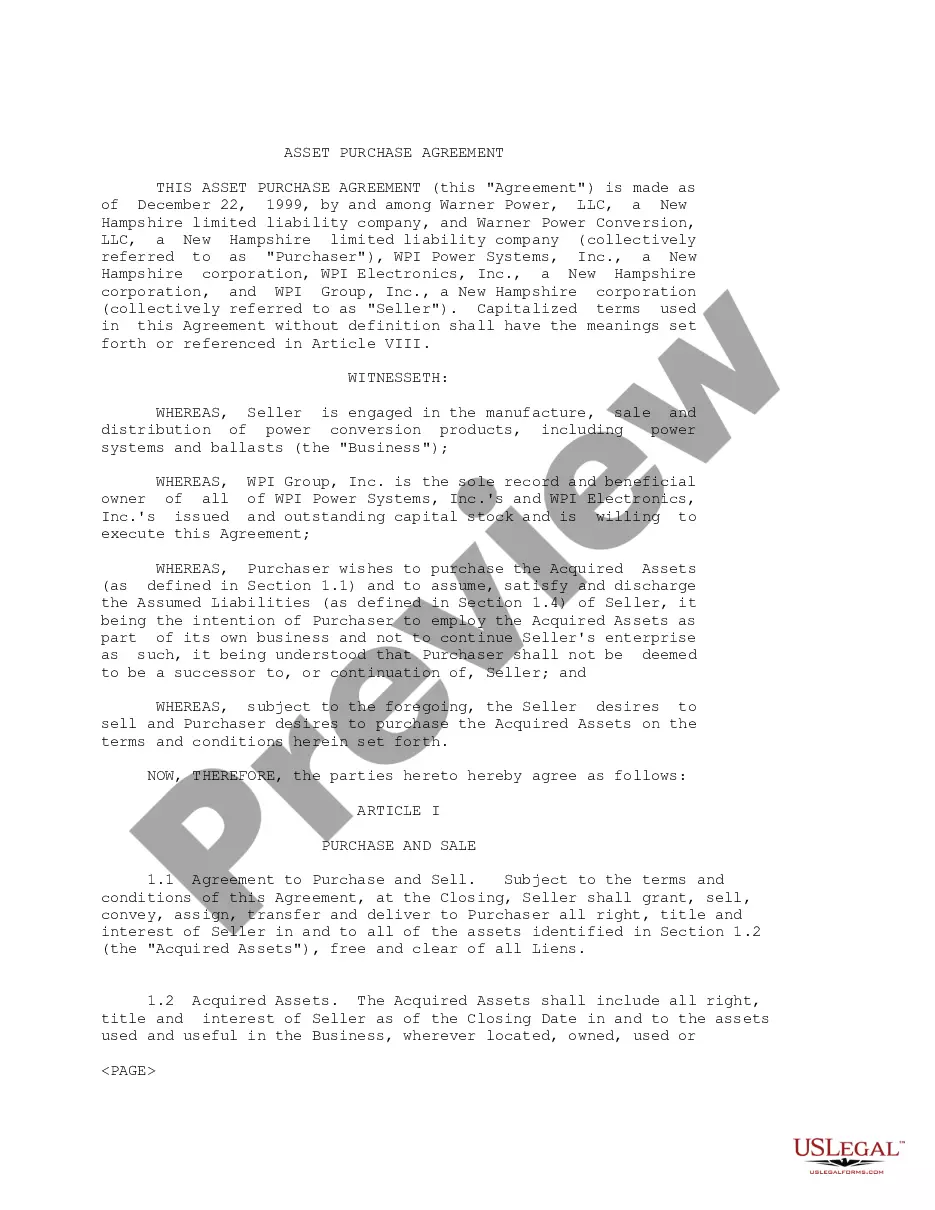
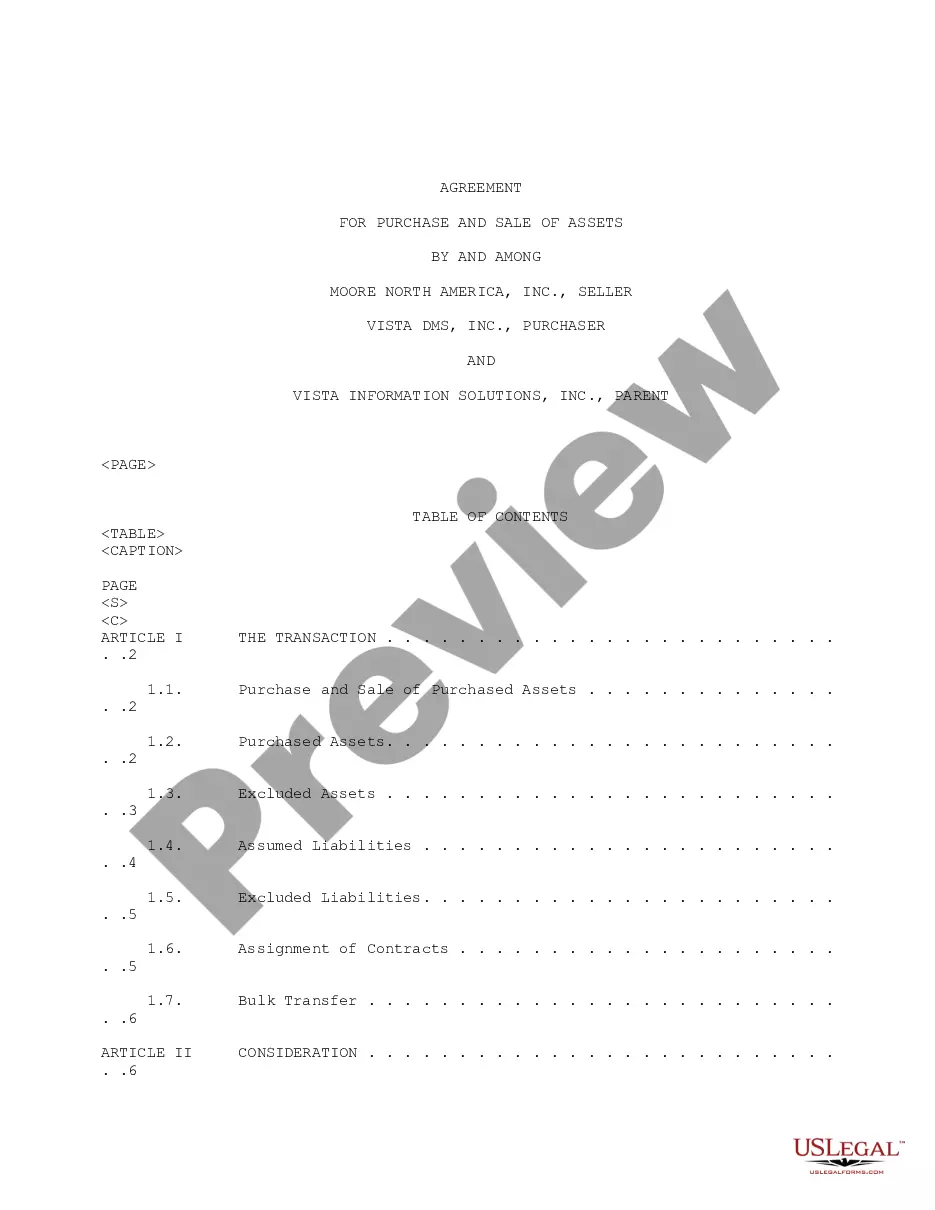
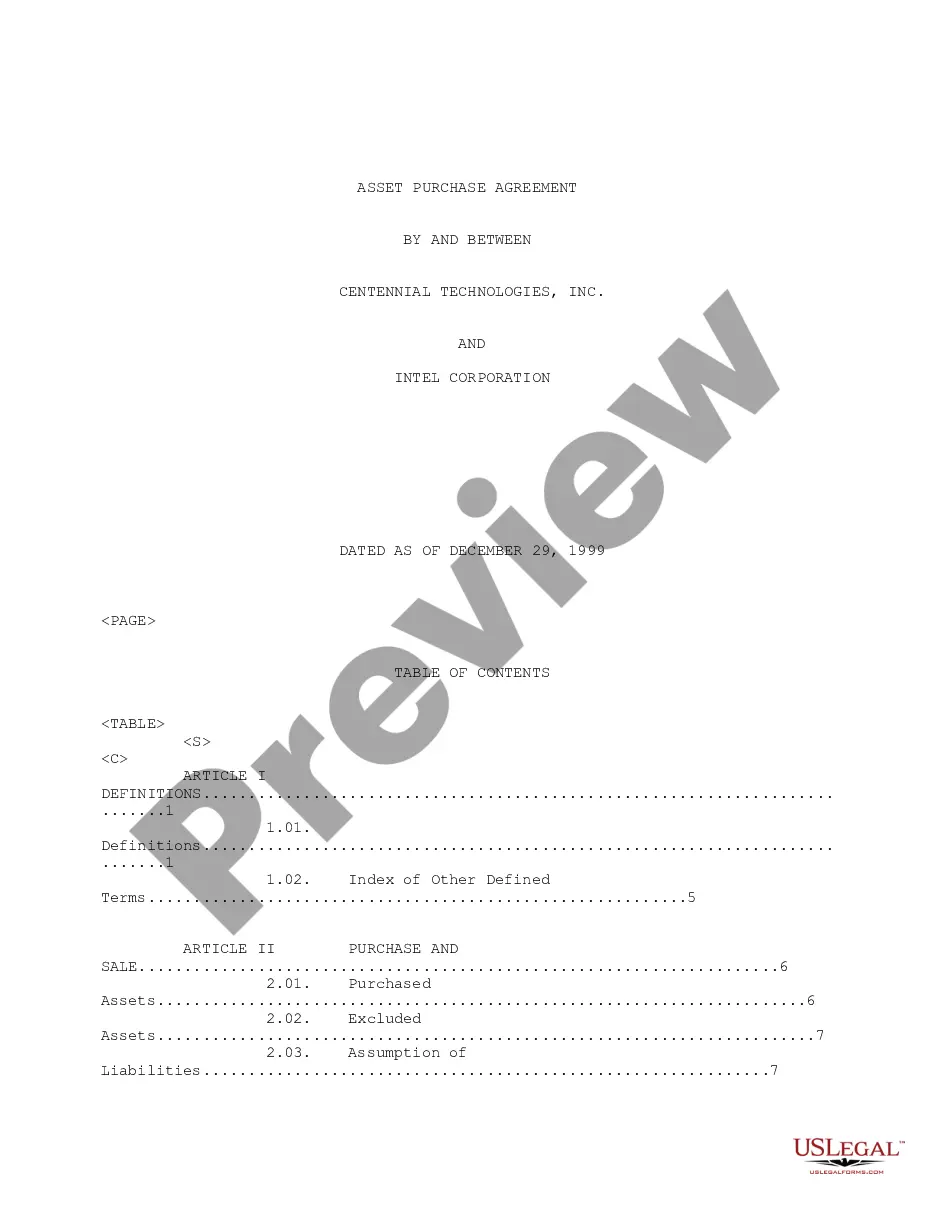
The Sample Asset Purchase Agreement is a legal document that outlines the terms and conditions under which MPI of Northern Florida agrees to sell its business assets to Venturi Technologies, Inc. This agreement details the financial arrangements, including cash payments, promissory notes, and stock transactions involved in the asset purchase. It is distinct from other purchase agreements because it specifically addresses the transfer of business assets rather than shares or ownership interests in a company.
Key components of this form
- Parties involved: Identification of the seller and purchaser.
- List of assets: Detailed enumeration of the assets being transferred.
- Payment terms: Breakdown of cash payment, notes, and other compensation.
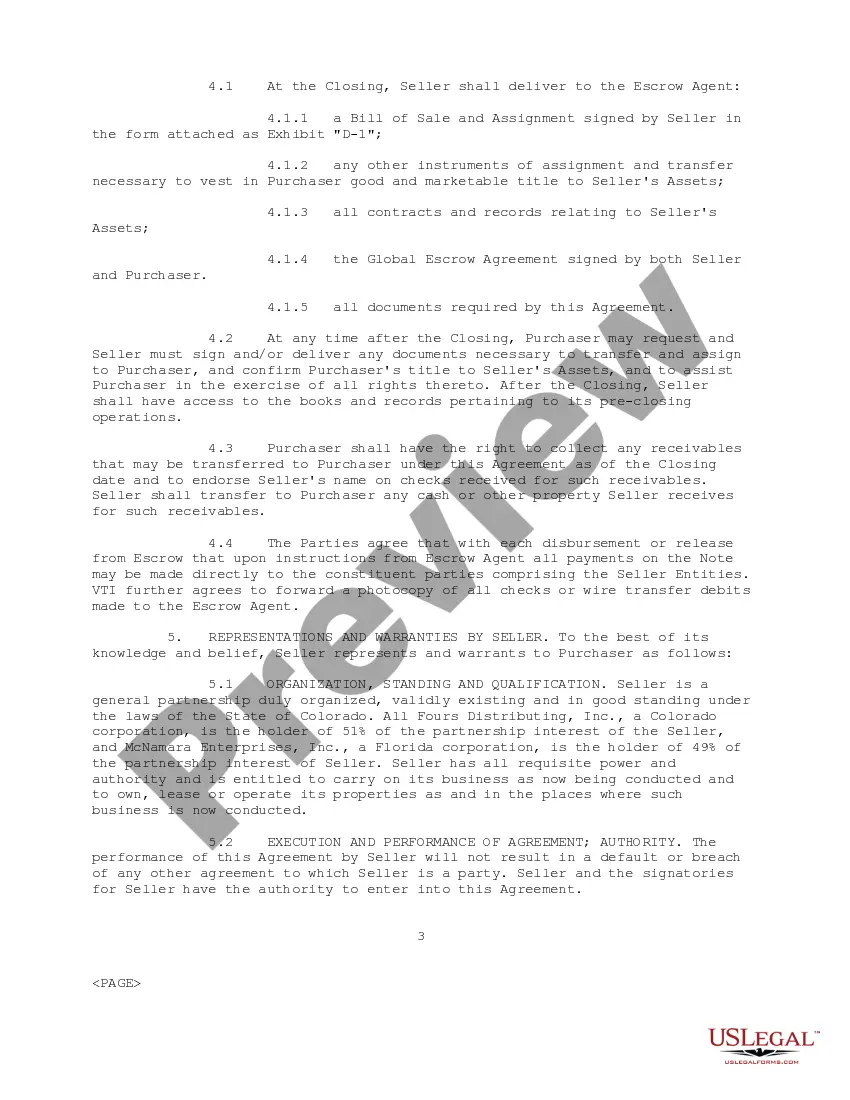
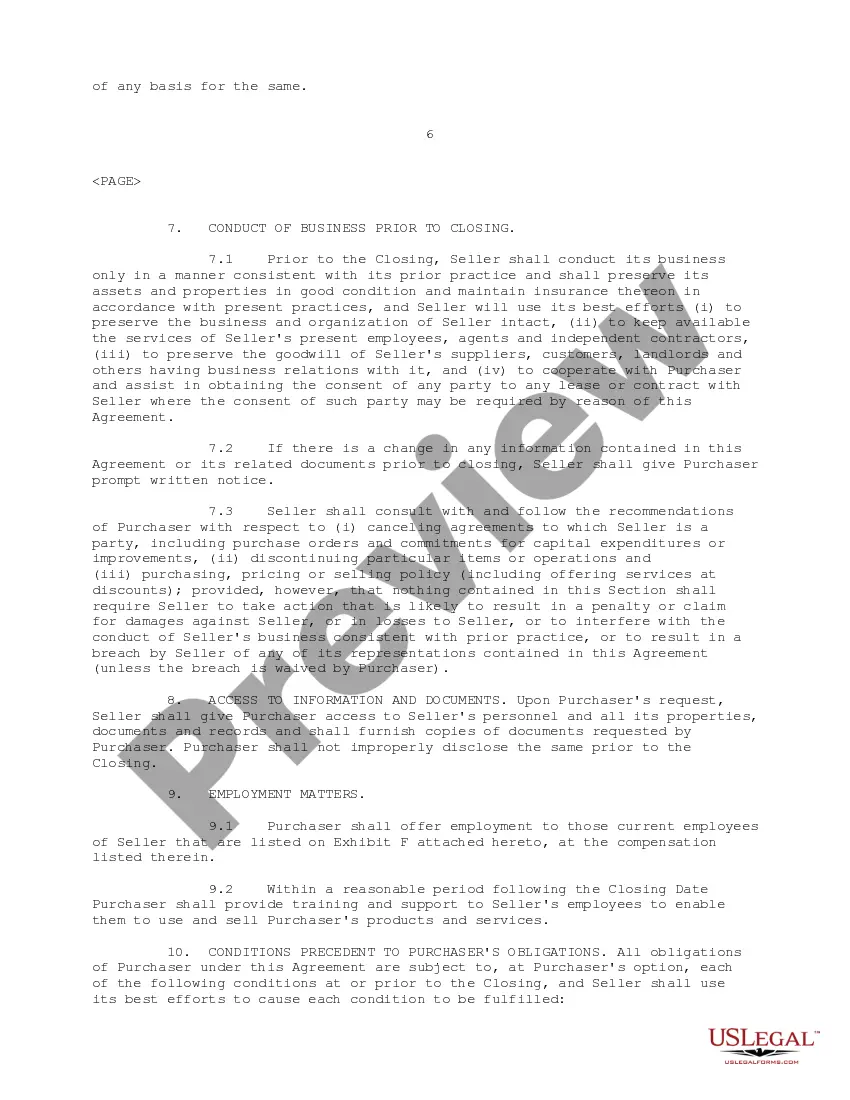
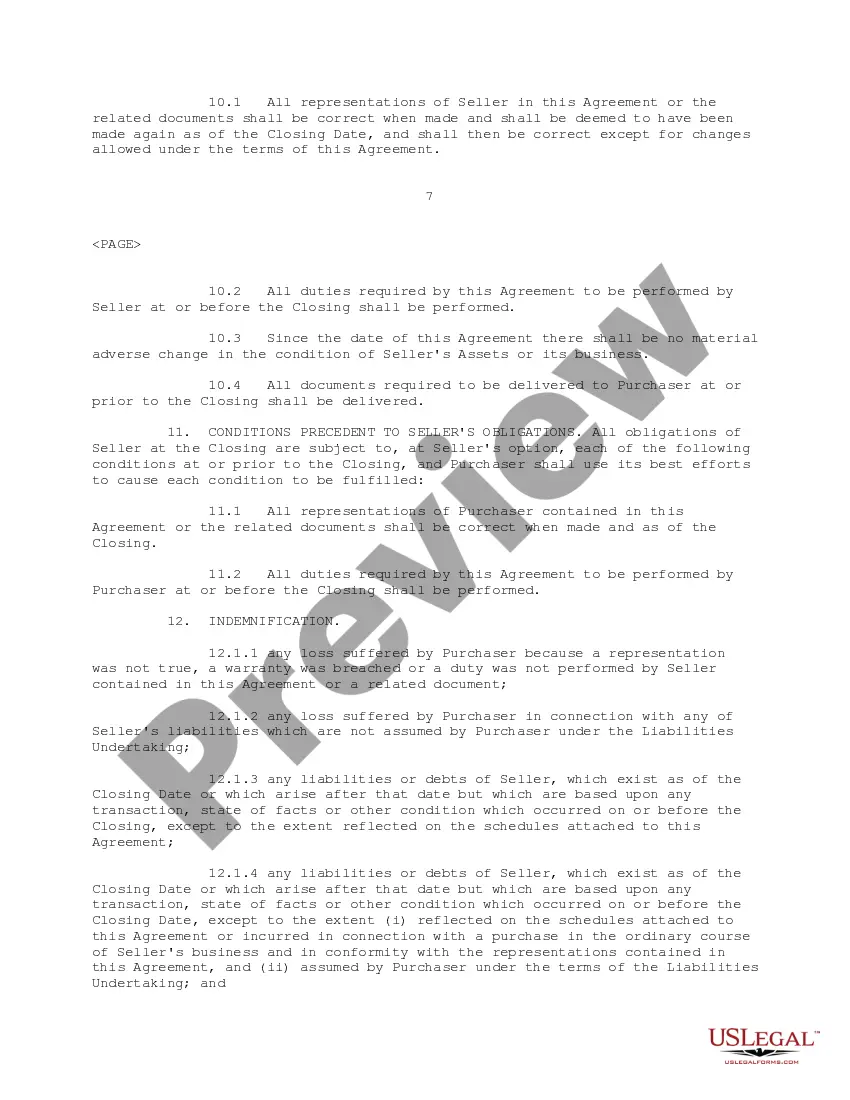
- Closing conditions: Requirements that must be fulfilled before the transaction is finalized.
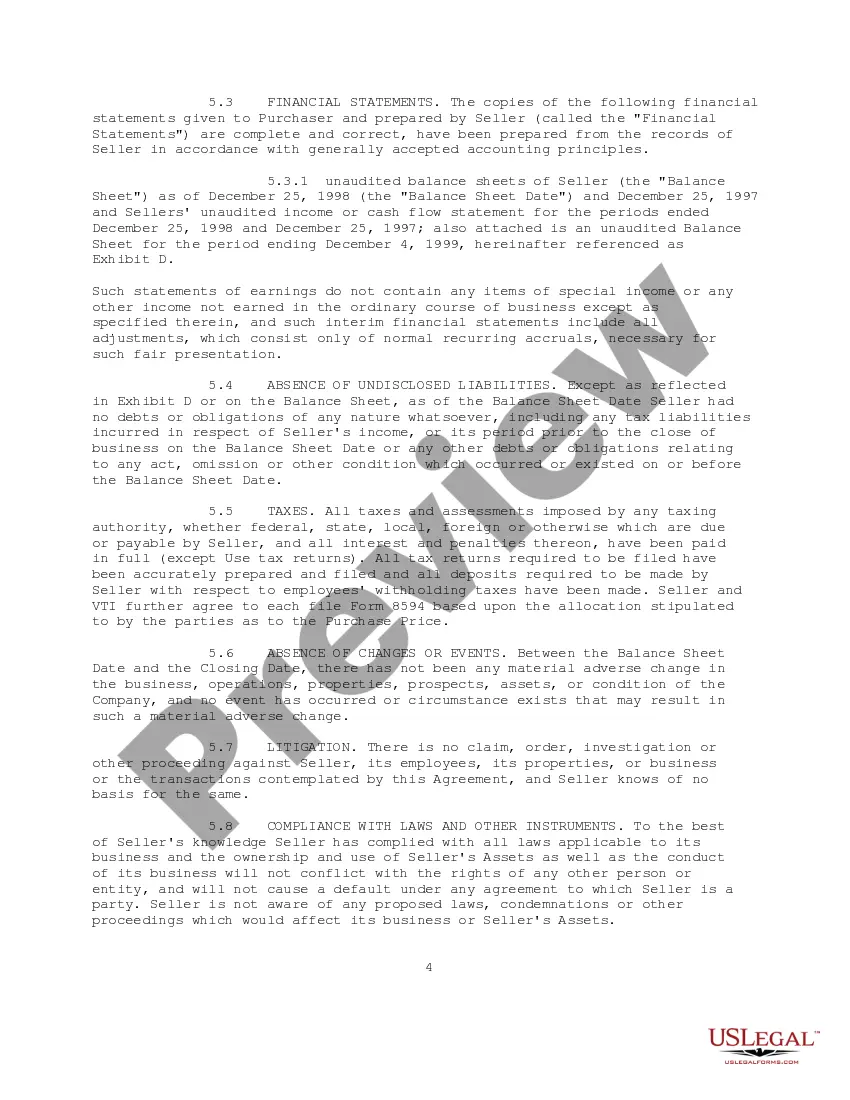
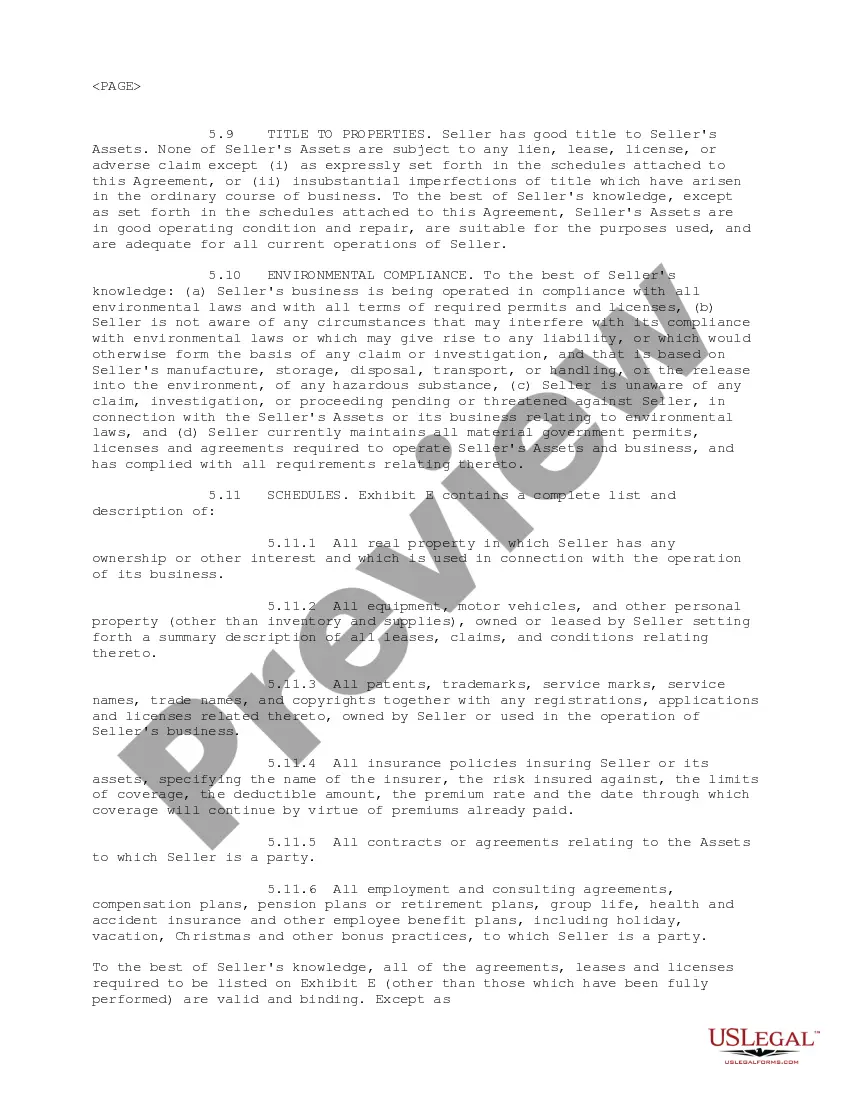
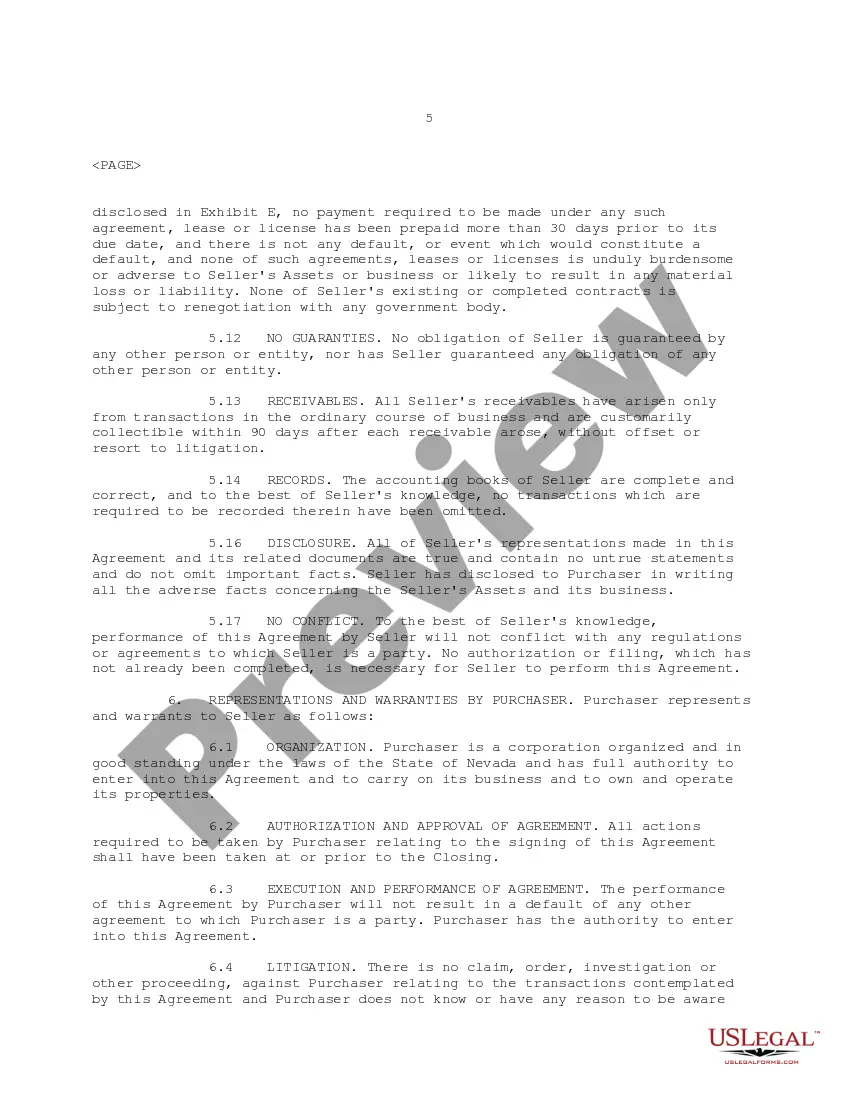
- Representations and warranties: Assurances made by both parties regarding the asset condition and liabilities.
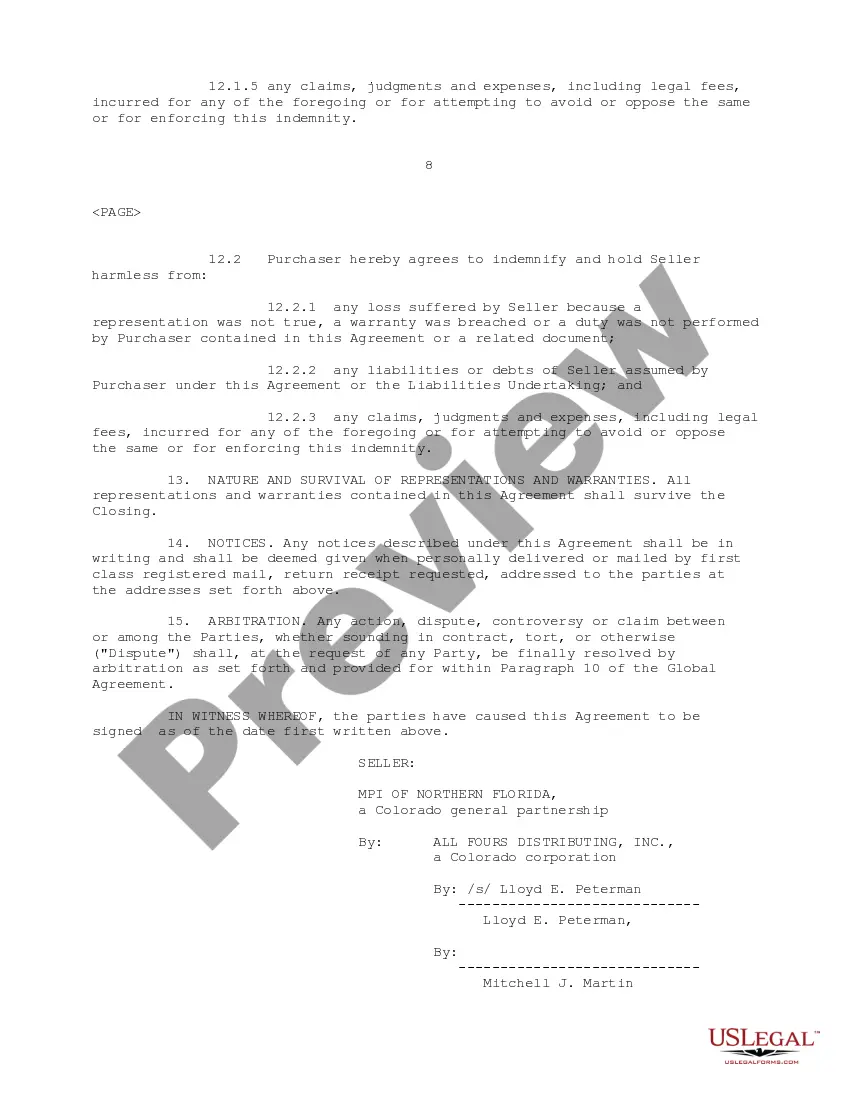
- Indemnification clauses: Terms related to liability coverages for both parties.

Common use cases
This form is necessary when two parties agree on the sale and purchase of business assets. This situation often arises during business transitions, such as the sale of a company, acquisition of a specific division, or restructuring of business operations. Utilizing this agreement helps ensure thorough documentation of the transaction, which can protect both parties' interests.
Who should use this form
- Business owners or sellers looking to sell their assets to another party.
- Purchasers interested in acquiring assets from another business.
- Legal professionals preparing or reviewing asset purchase agreements.
- Business advisors involved in mergers and acquisitions.
Instructions for completing this form
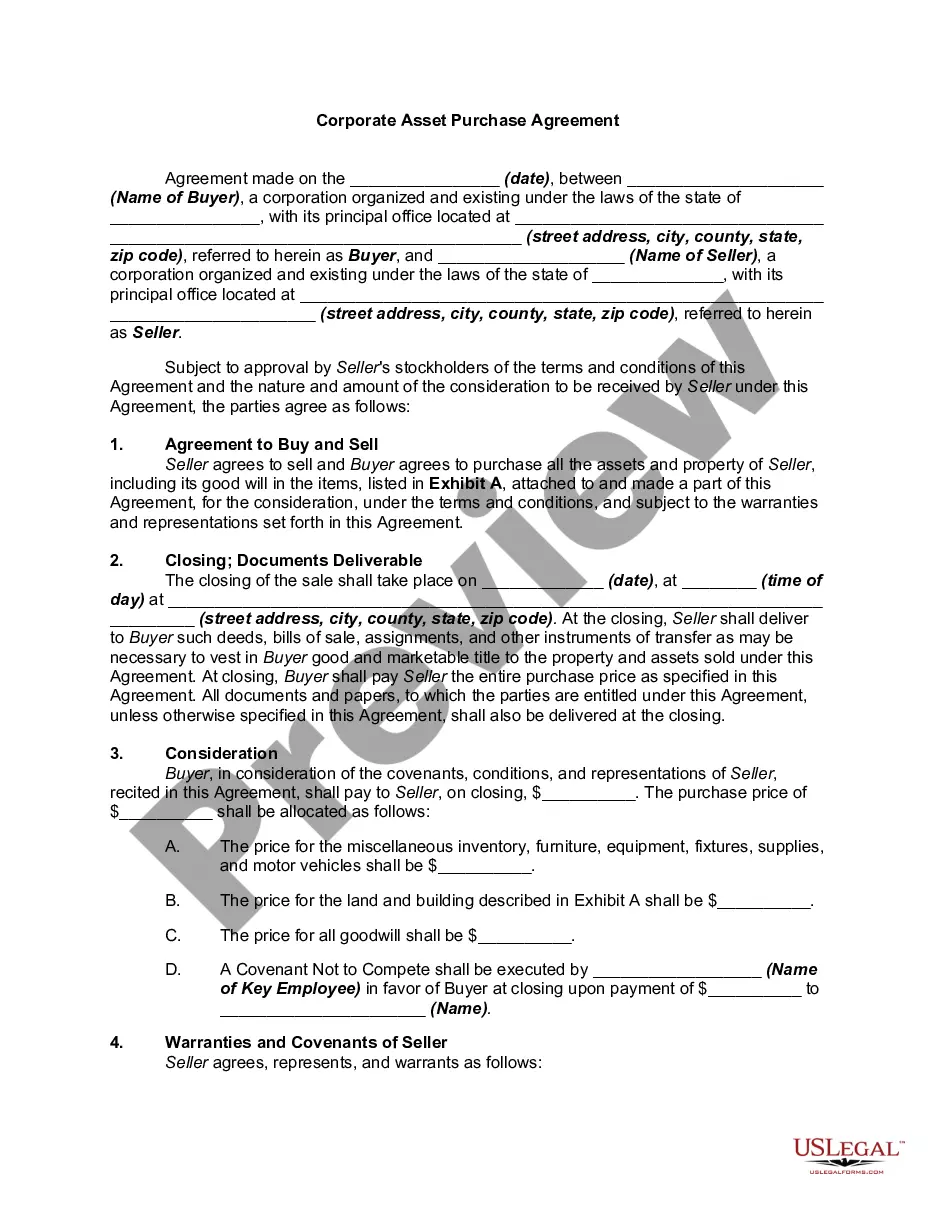
- Identify the parties: Clearly state the names of the seller and purchaser involved in the transaction.
- Specify the assets: List all assets being sold, ensuring clarity regarding what is included in the sale.
- Outline the payment structure: Detail the cash amounts, promissory notes, and any shares to be issued as part of the payment.
- Include closing conditions: Specify any prerequisites that must be satisfied before the asset transfer can occur.
- Gather necessary signatures: Ensure that both parties sign the agreement in the designated spaces to make it enforceable.
Does this document require notarization?
This form does not typically require notarization unless specified by local law. However, having the document notarized can enhance its legitimacy in certain circumstances. Consider consulting a legal professional to understand if notarization would be beneficial for your specific transaction.
Get your form ready online
Our built-in tools help you complete, sign, share, and store your documents in one place.
Make edits, fill in missing information, and update formatting in US Legal Forms—just like you would in MS Word.
Download a copy, print it, send it by email, or mail it via USPS—whatever works best for your next step.
Sign and collect signatures with our SignNow integration. Send to multiple recipients, set reminders, and more. Go Premium to unlock E-Sign.
If this form requires notarization, complete it online through a secure video call—no need to meet a notary in person or wait for an appointment.
We protect your documents and personal data by following strict security and privacy standards.

Make edits, fill in missing information, and update formatting in US Legal Forms—just like you would in MS Word.

Download a copy, print it, send it by email, or mail it via USPS—whatever works best for your next step.

Sign and collect signatures with our SignNow integration. Send to multiple recipients, set reminders, and more. Go Premium to unlock E-Sign.

If this form requires notarization, complete it online through a secure video call—no need to meet a notary in person or wait for an appointment.

We protect your documents and personal data by following strict security and privacy standards.
Common mistakes to avoid
- Failing to list all assets or liabilities associated with the business.
- Not specifying payment terms in clear and understandable language.
- Omitting necessary signatures and dates, making the agreement invalid.
- Neglecting to verify that all stated representations and warranties are accurate.
Advantages of online completion
- Convenient access: Downloadable and editable templates allow for quick customization.
- Accuracy: Forms drafted by licensed attorneys help ensure legal compliance.
- Time-saving: Online access eliminates the need for face-to-face meetings or lengthy consultations.
What to keep in mind
- The Sample Asset Purchase Agreement facilitates the sale of business assets and protects both parties involved.
- Clear identification of assets, payment terms, and conditions is crucial for a successful transaction.
- Both buyers and sellers should seek to include all relevant details to avoid future disputes.
Looking for another form?
Form popularity
FAQ
Reporting the Sale of a Business on Form 8594. Form 8594 is used to report the sale and purchase of a group of assets that constitute a business. Both the purchaser and seller must file Form 8594 with their own individual income tax return.
You report gains on the sale of assets as non-operating income on your income statement. To measure the gain, subtract the value of the asset in your ledgers from the sale price.
When a sale or purchase of a group of assets constituting a business occurs, both entities must file Form 8594, Asset Acquisition Statement with their individual income tax returns.Using this allocation method, the values are assigned according to the fair market value of the assets at the time of sale.
Both the seller and purchaser of a group of assets that makes up a trade or business must use Form 8594 to report such a sale if: goodwill or going concern value attaches, or could attach, to such assets and. the purchaser's basis in the assets is determined only by the amount paid for the assets.
Report the sale of your business assets on Form 8594 and Form 4797, and attach these forms to your final tax return. Form 8594 is the Asset Acquisition Statement, which the buyer and seller must complete and submit to the IRS.
Class IV assets are stock in trade of the taxpayer or other property of a kind that would properly be included in the inventory of the taxpayer if on hand at the close of the taxable year, or property held by the taxpayer primarily for sale to customers in the ordinary course of its trade or business.
Class III assets are assets that the taxpayer marks-to-market at least annually for federal income tax purposes and debt instruments (including accounts receivable).