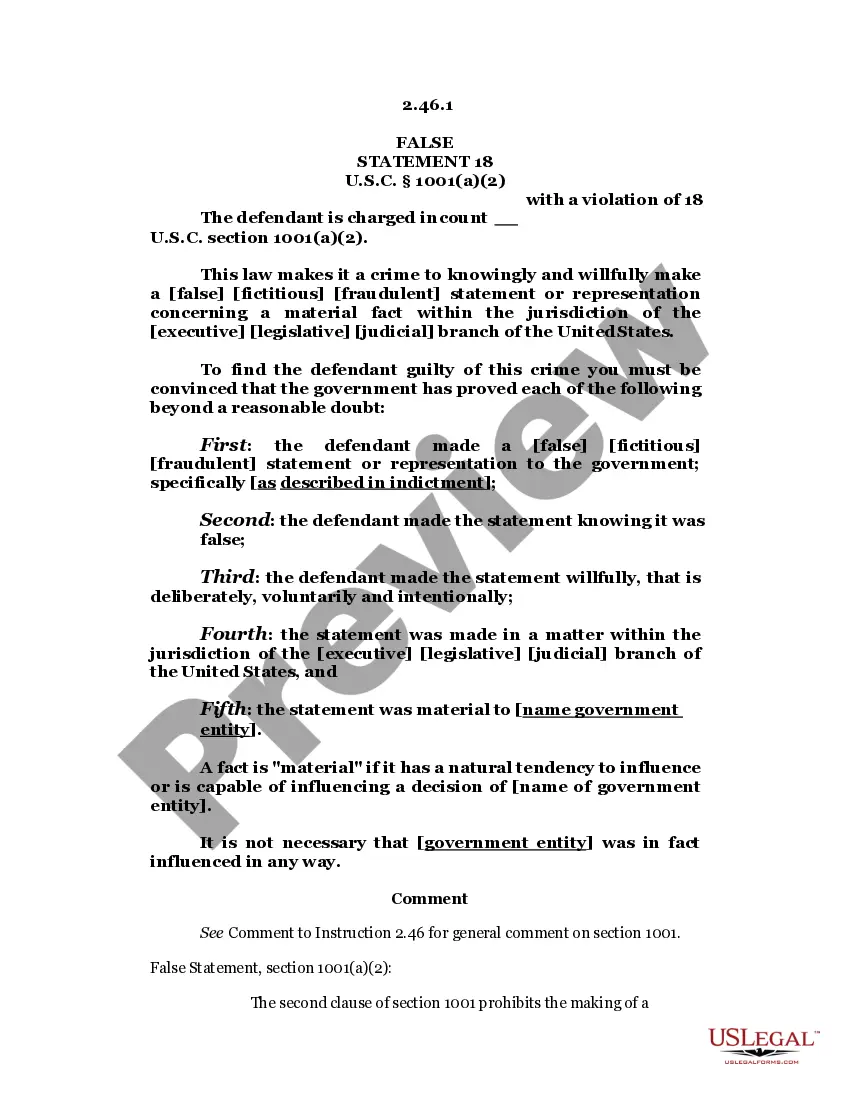
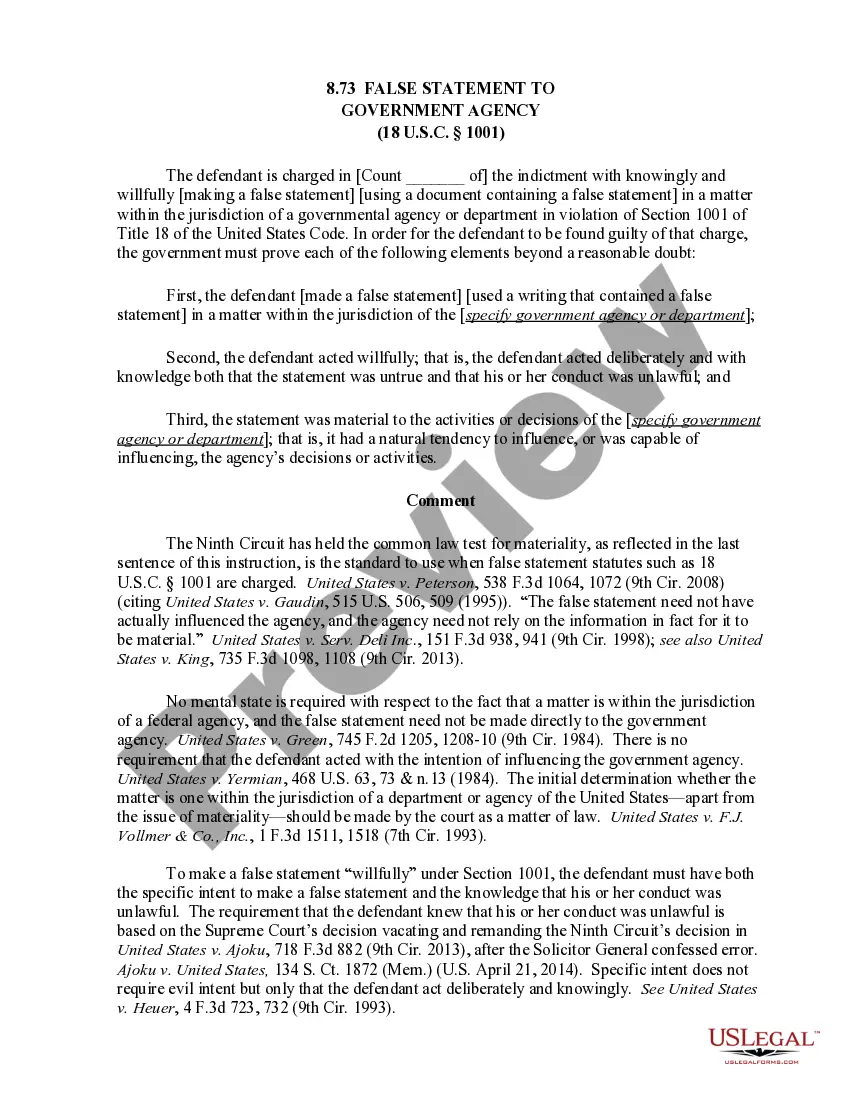
FALSE STATEMENT / 18 U.S.C. Sec. 1001(a)(2)
About this form
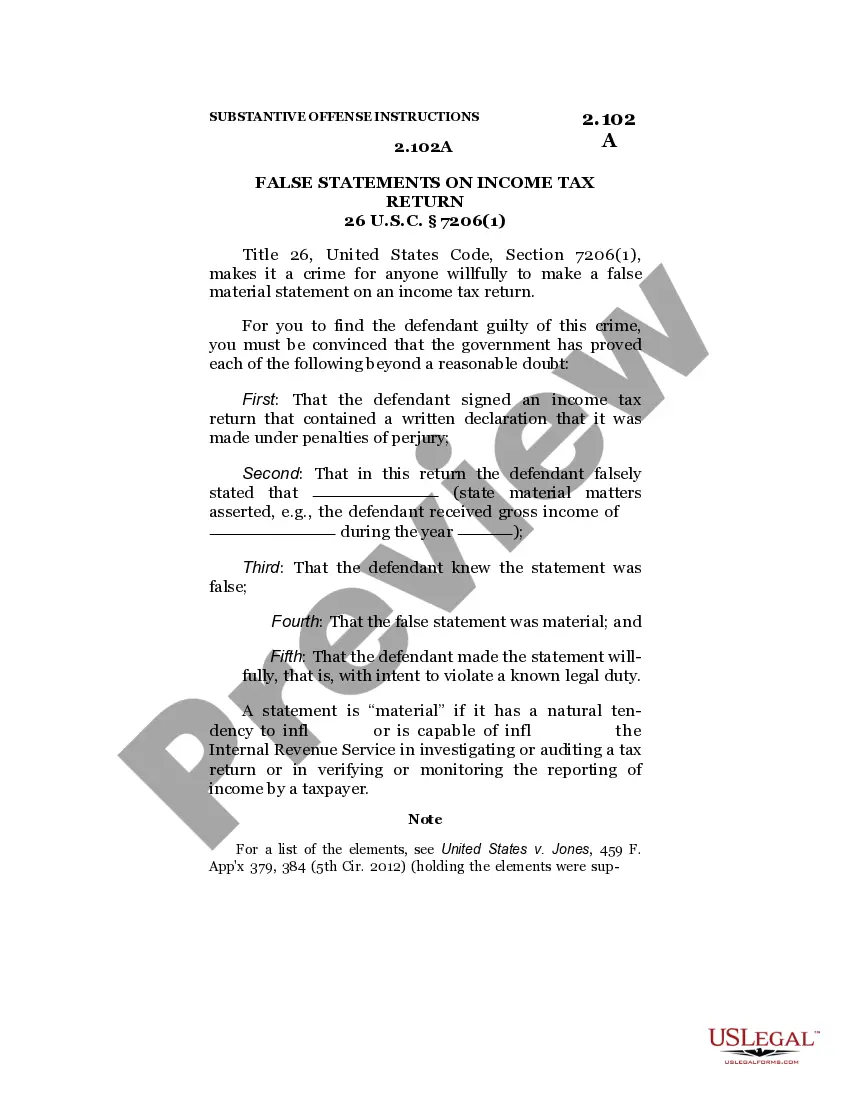
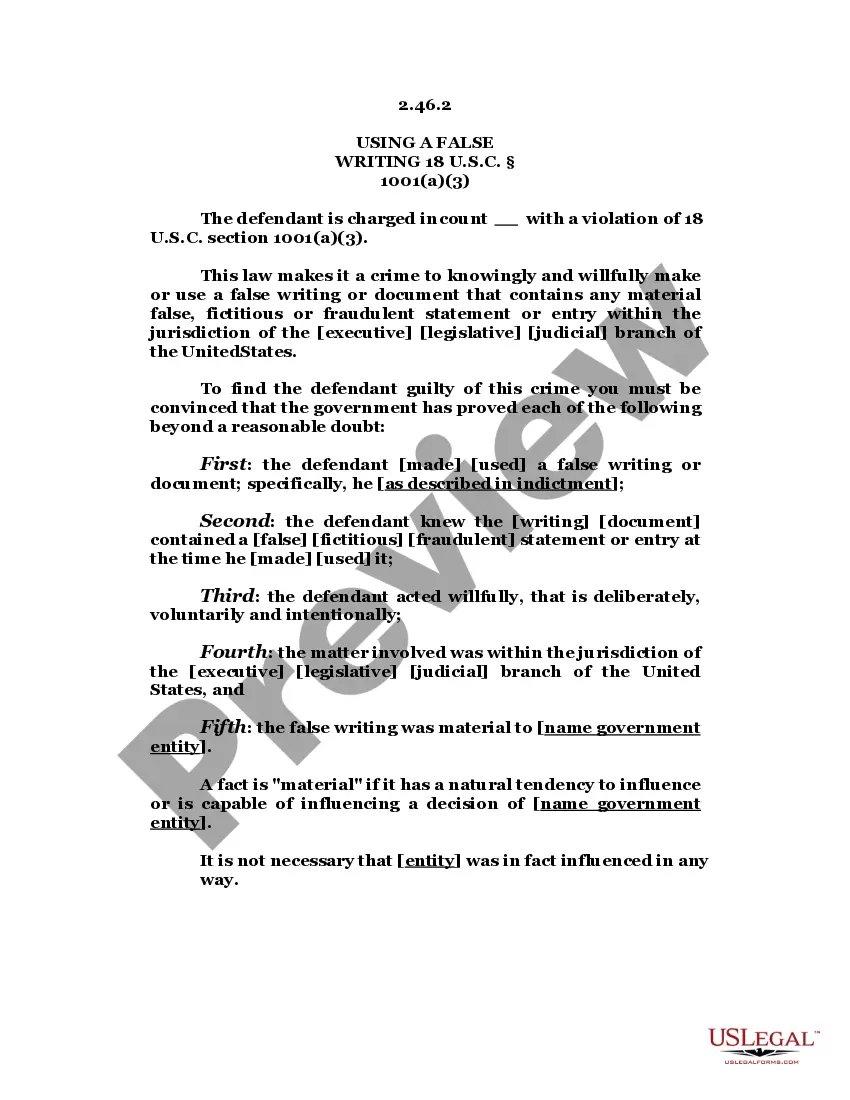
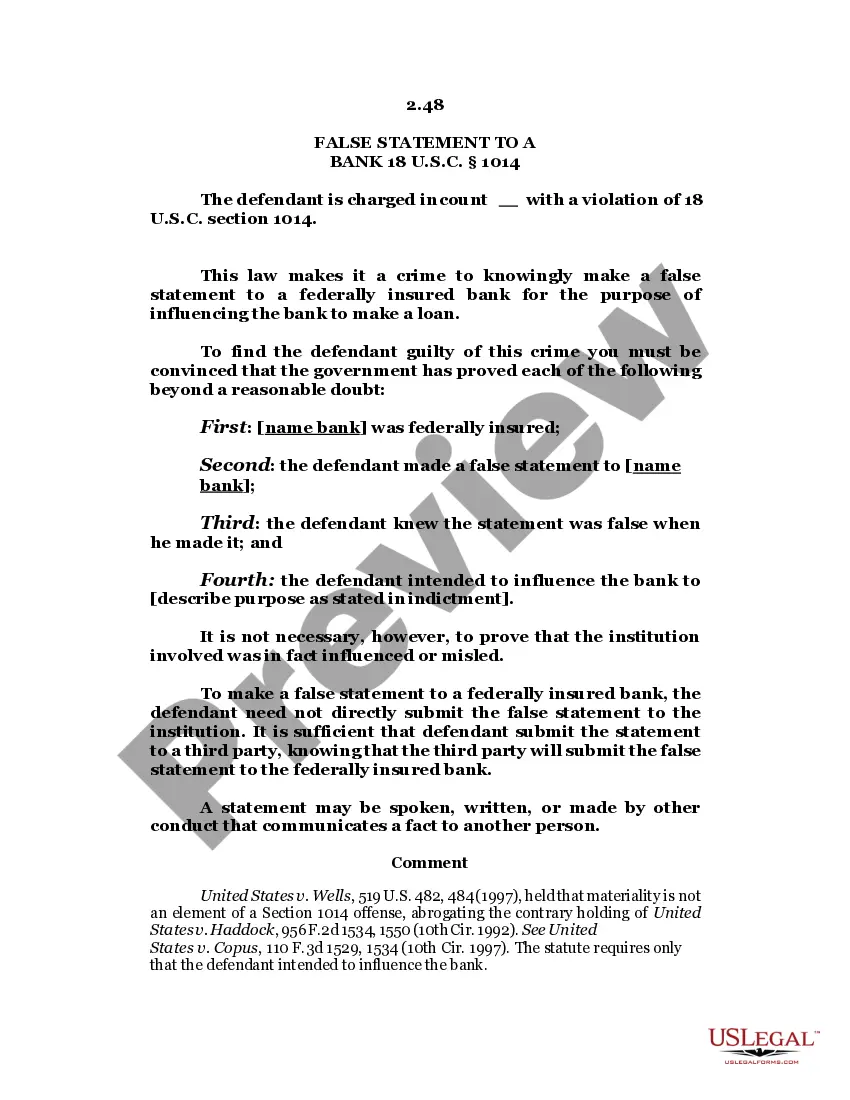
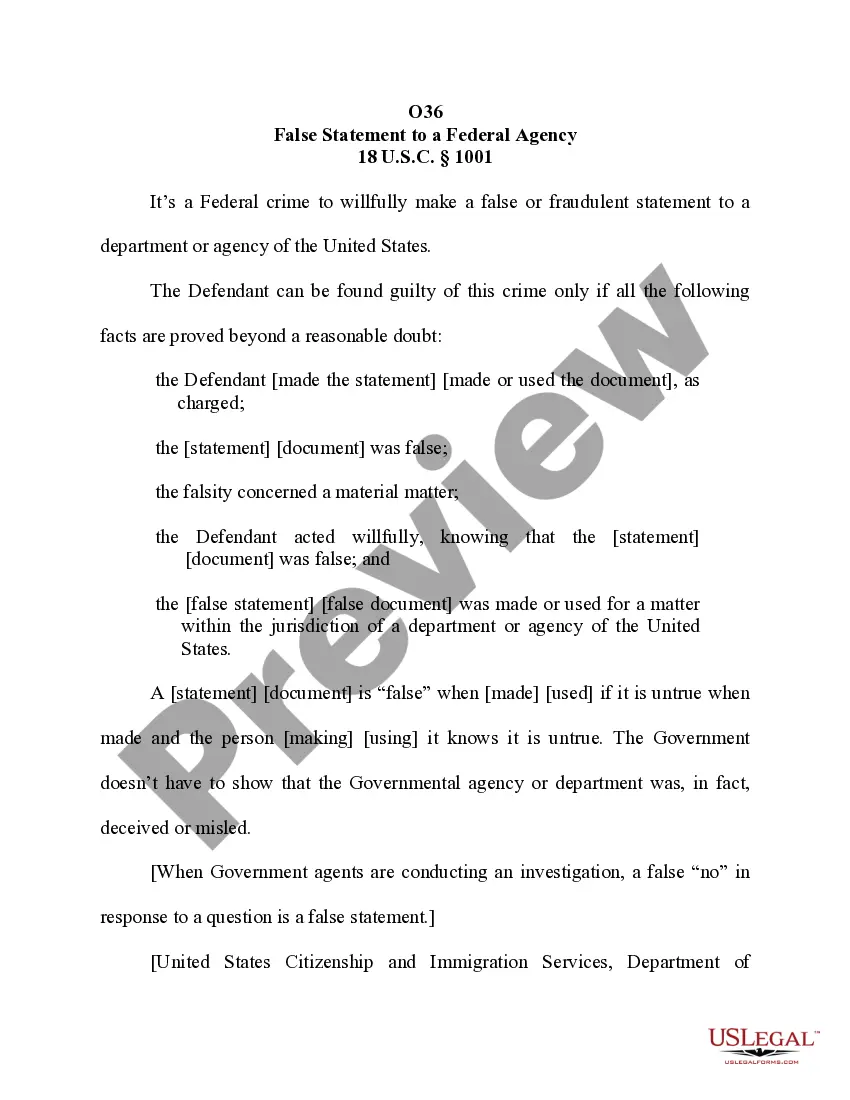
The False Statement form, under 18 U.S.C. Sec. 1001(a)(2), is a legal document used to address the making of knowingly false, fictitious, or fraudulent statements to the government. This form is crucial for ensuring accountability in representations made to federal entities and helps clarify the distinction between merely incorrect statements and those made with intent to deceive.
Key components of this form
- Allegation of knowingly making a false statement to the government.
- Requirements for proving intent: knowing the statement was false and making it willfully.
- Specification that the statement must fall within federal jurisdiction.
- Definition of "material" as influence on government decision-making.
- Guidance on the necessity for the government to demonstrate materiality.
When to use this form
This form should be used in scenarios where an individual is accused of making false statements, particularly in legal proceedings involving federal agencies. It may apply to cases related to applications, contracts, or representations made during investigations where integrity and honesty are paramount.
Who should use this form
This form is primarily intended for individuals involved in legal proceedings concerning false statements submitted to federal entities. It is relevant for:
- Defendants facing charges under 18 U.S.C. Sec. 1001(a)(2).
- Legal representatives handling cases of false statements.
- Individuals wishing to understand the implications of their statements made to government bodies.
How to complete this form
- Identify the specific government entity being addressed in the statement.
- Clearly articulate the statement made, ensuring it reflects the charges laid out in the indictment.
- Reiterate the knowledge of the falsehood at the time the statement was made.
- Ensure the statement is made willfully and not accidentally.
- Provide any supporting documentation or evidence that validates your position regarding the materiality of the statement.
Notarization guidance
Notarization is not commonly needed for this form. However, certain documents or local rules may make it necessary. Our notarization service, powered by Notarize, allows you to finalize it securely online anytime, day or night.
Get your form ready online
Our built-in tools help you complete, sign, share, and store your documents in one place.
Make edits, fill in missing information, and update formatting in US Legal Forms—just like you would in MS Word.
Download a copy, print it, send it by email, or mail it via USPS—whatever works best for your next step.
Sign and collect signatures with our SignNow integration. Send to multiple recipients, set reminders, and more. Go Premium to unlock E-Sign.
If this form requires notarization, complete it online through a secure video call—no need to meet a notary in person or wait for an appointment.
We protect your documents and personal data by following strict security and privacy standards.

Make edits, fill in missing information, and update formatting in US Legal Forms—just like you would in MS Word.

Download a copy, print it, send it by email, or mail it via USPS—whatever works best for your next step.

Sign and collect signatures with our SignNow integration. Send to multiple recipients, set reminders, and more. Go Premium to unlock E-Sign.

If this form requires notarization, complete it online through a secure video call—no need to meet a notary in person or wait for an appointment.

We protect your documents and personal data by following strict security and privacy standards.
Avoid these common issues
- Failing to fully understand the definition of "material" in relation to the statement made.
- Overlooking the requirement of willfulness, which may lead to misrepresentation of intent.
- Not specifying the jurisdiction clearly in relation to the government entity involved.
Why complete this form online
- Immediate access to downloadable and customizable templates drafted by licensed attorneys.
- Convenience of completing the form electronically, allowing for edits and corrections.
- Reliable documentation that aligns with current legal standards and practices.
Looking for another form?
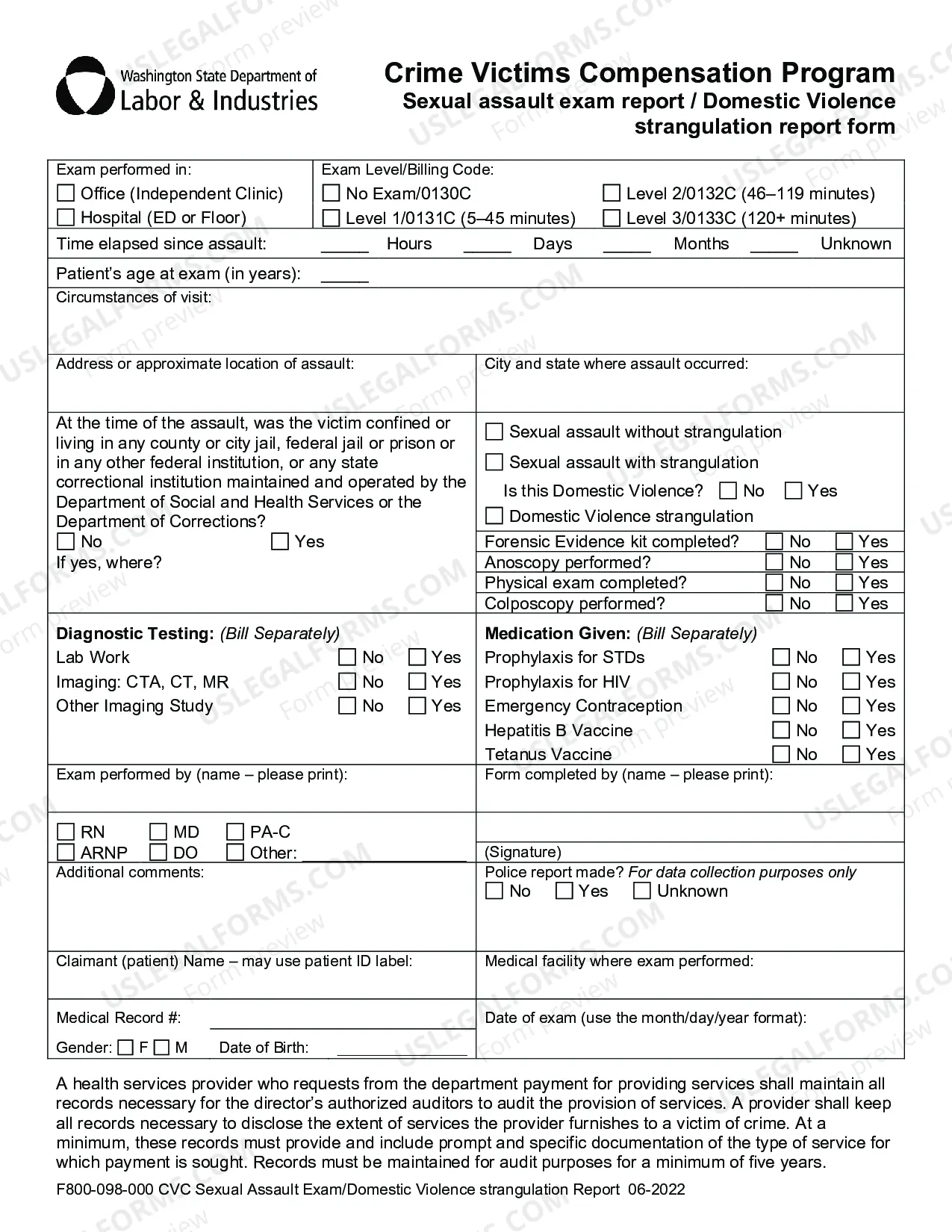
Form popularity
FAQ
1001, Crimes and Criminal Procedures, makes it a criminal offense, subject to a maximum fine of $10,000 or imprisonment for not more than 5 years or both, to knowingly and willfully make or cause to be made any false or fraudulent statements or representations in any matter within the jurisdiction of any agency of the
Concealment--Failure to Disclose. Although 18 U.S.C. § 1001 is often referred to as a false statement statute, its scope extends beyond statements. The statute proscribes the acts of making false statements, falsifying, concealing or covering up.
Title 18, United States Code, Section 1001 makes it a crime to: 1) knowingly and willfully; 2) make any materially false, fictitious or fraudulent statement or representation; 3) in any matter within the jurisdiction of the executive, legislative or judicial branch of the United States.
The statute of limitations for a § 1001 prosecution is five years and commences upon completion of the crime, e.g., upon making of false statement or submission of false document.
Making a false statement on a federal level is covered under 18 U.S.C. §1001, which states you could be facing up to five years in a federal prison. Under certain circumstances, you might even be facing up to eight years.
What is the Statute of Limitations for False Statements? The statute of limitations is five years, from the time the statement was made or submitted.
Section 1001's statutory terms are violated if someone: "falsifies, conceals or covers up by any trick, scheme or device a material fact," "makes any false, fictitious or fraudulent statements or representations,"
Whoever, knowingly and with intent to defraud the United States, or any agency thereof, possesses any false, altered, forged, or counterfeited writing or document for the purpose of enabling another to obtain from the United States, or from any agency, officer or agent thereof, any sum of money, shall be fined under