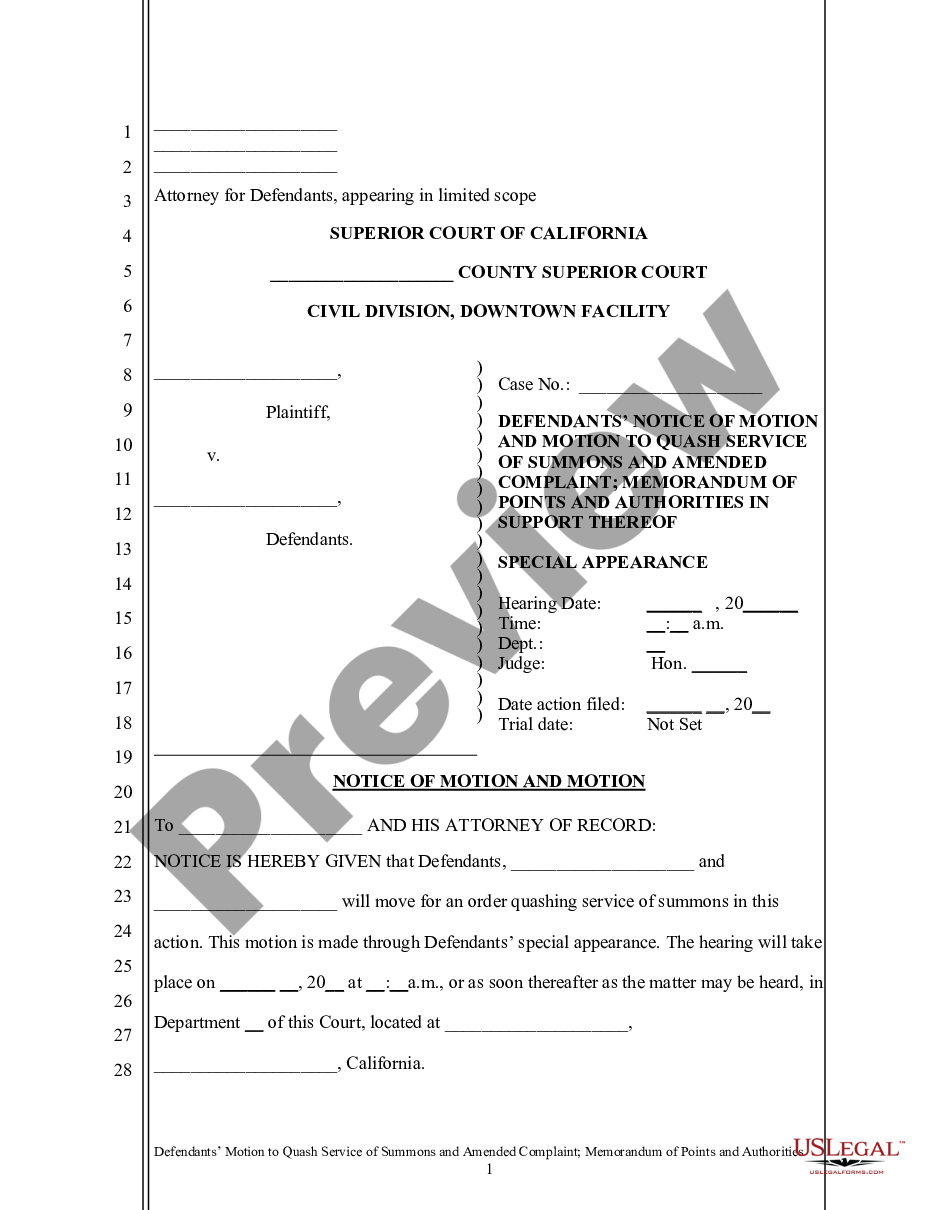
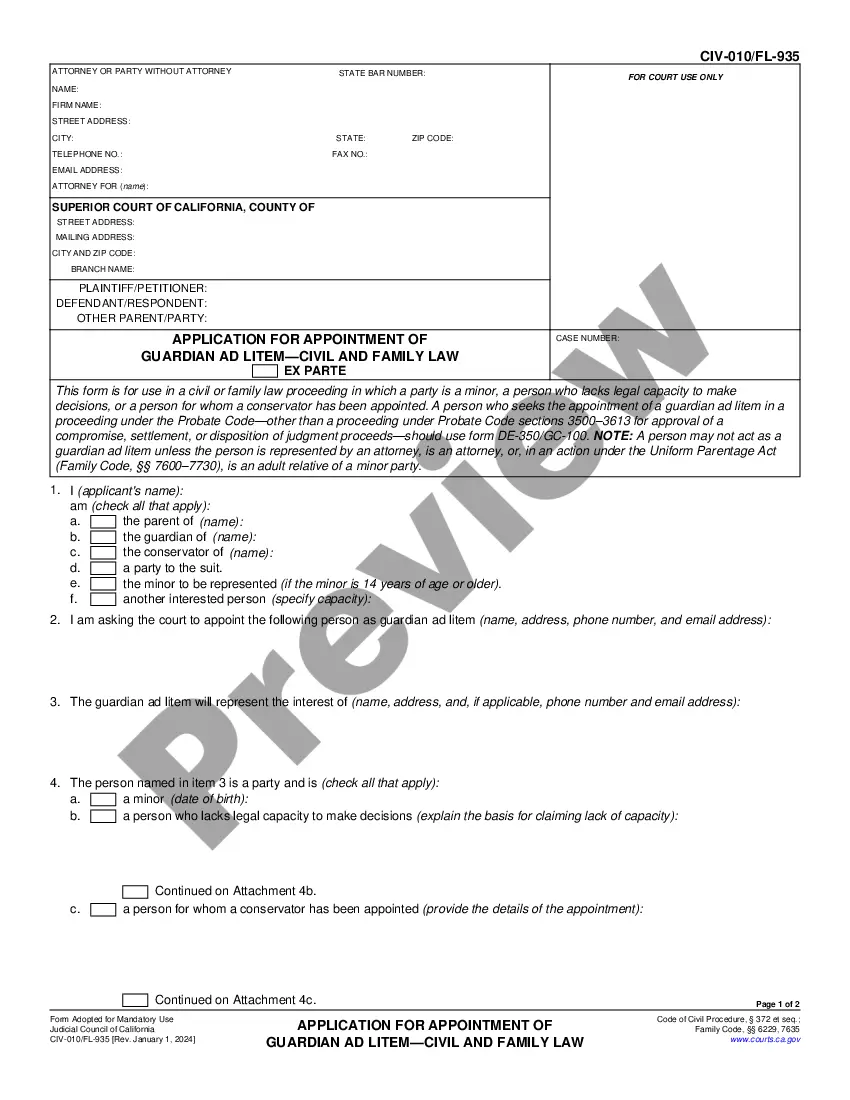
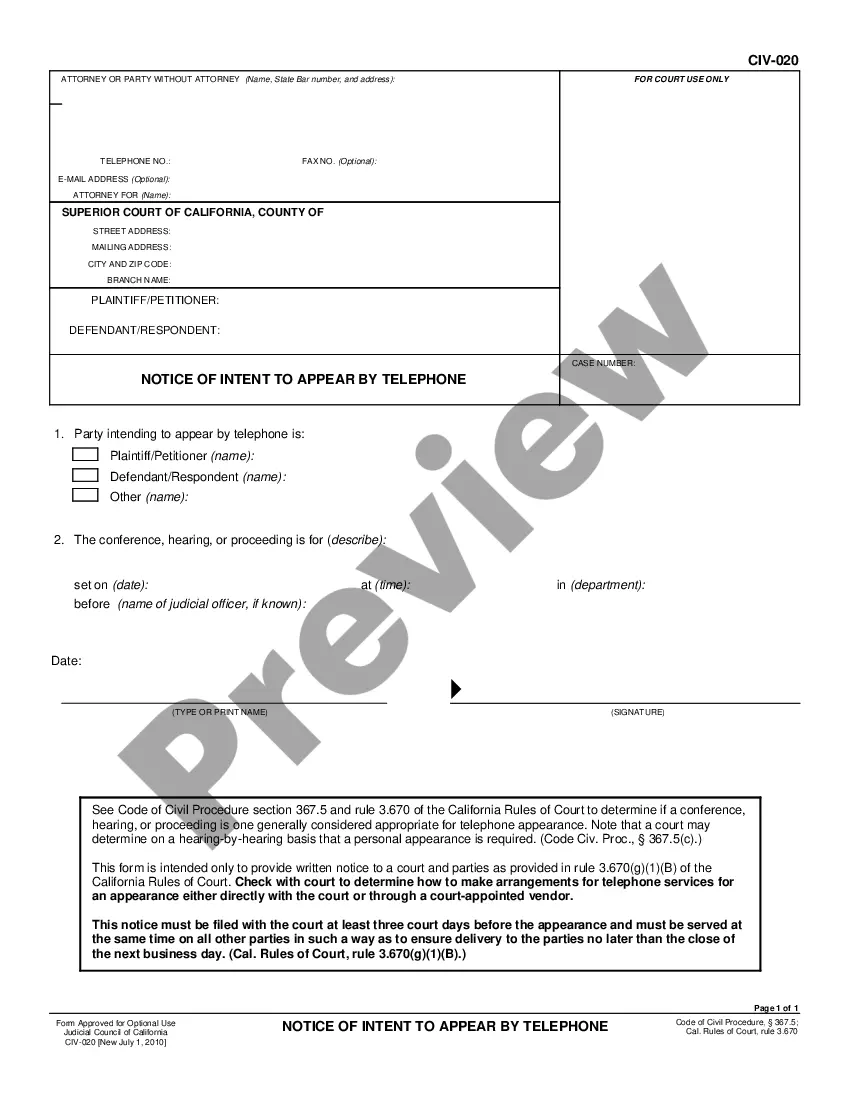
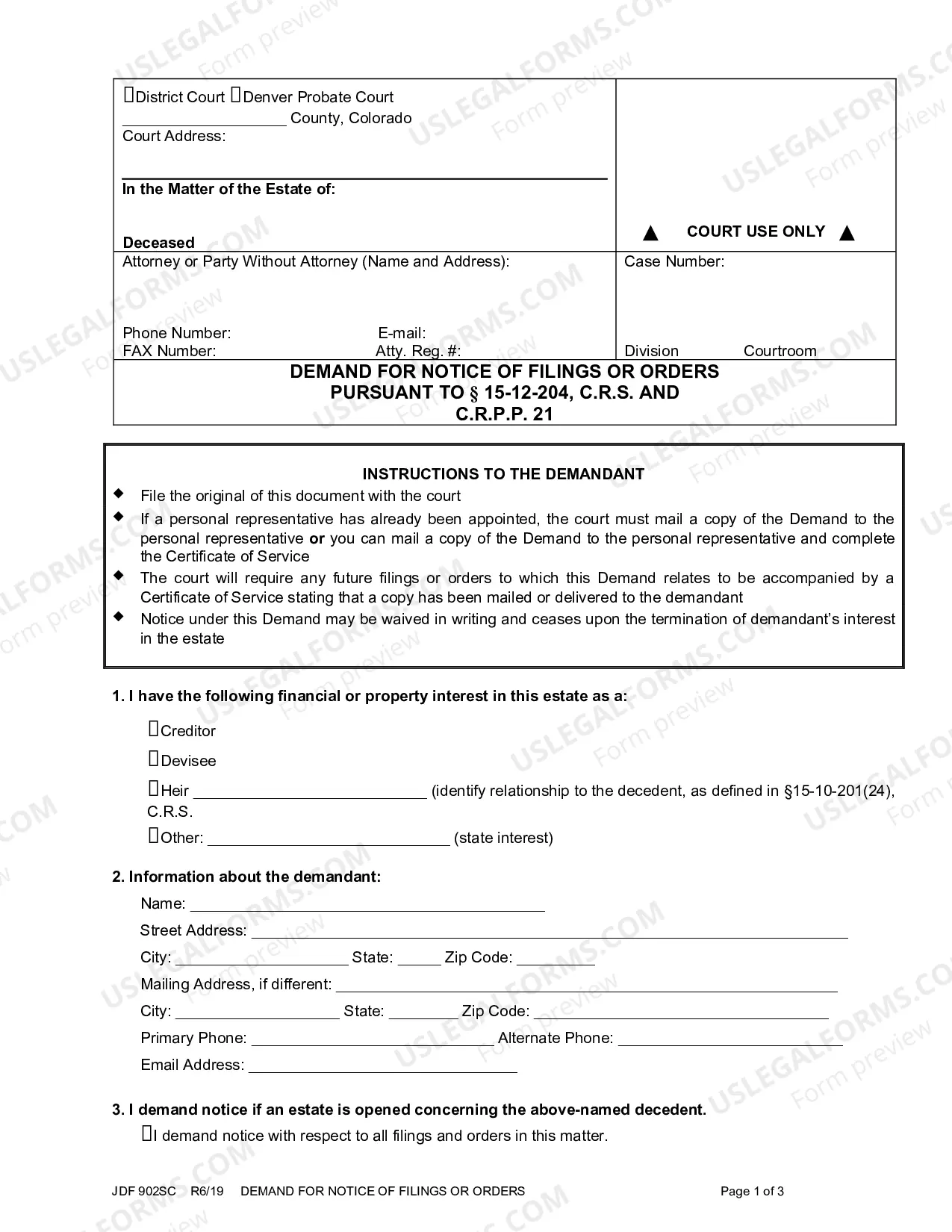
Disclaimer of Inheritance Rights for Stepchildren
What is this form?
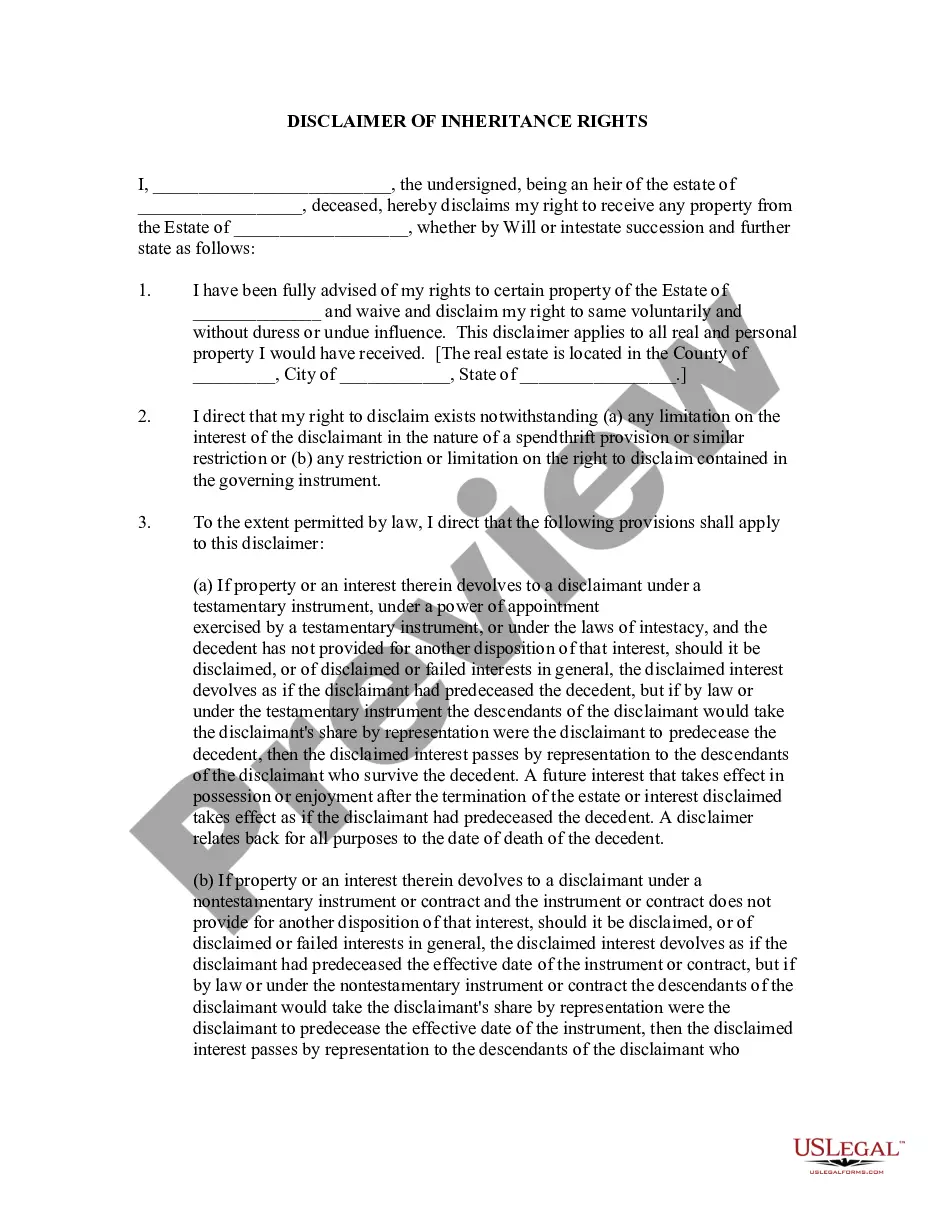
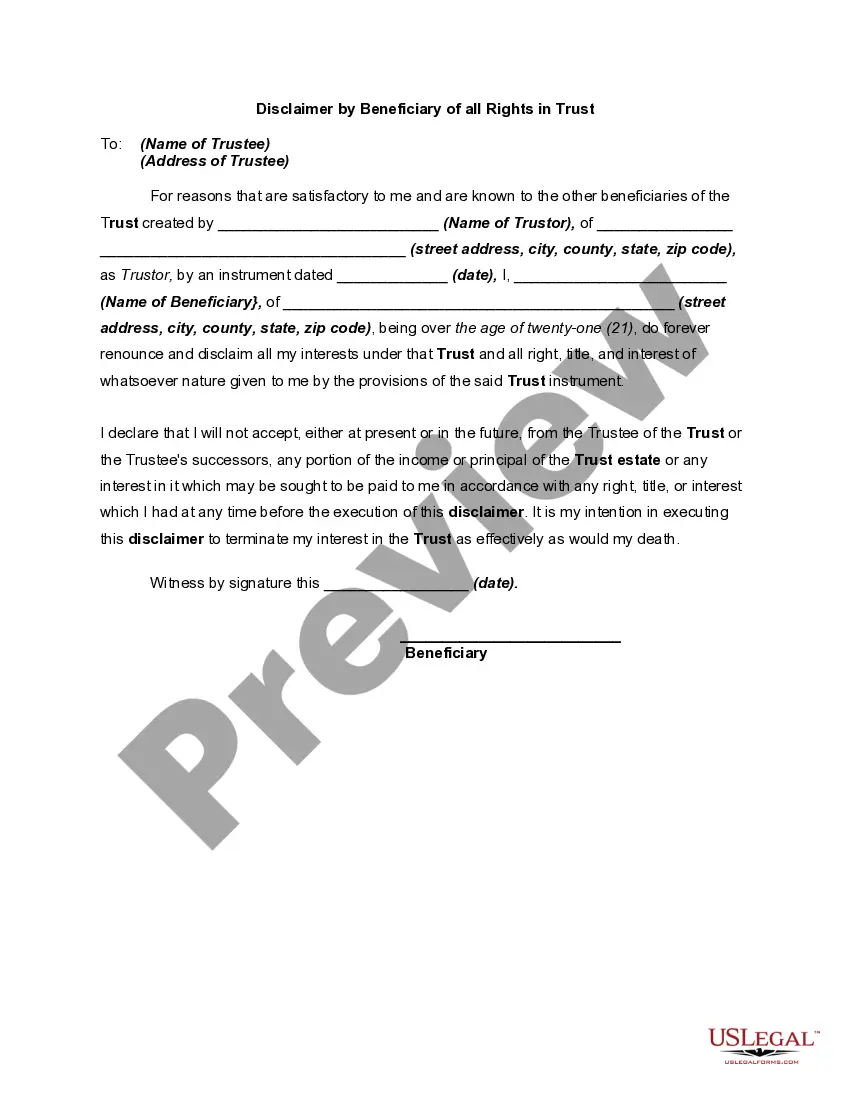
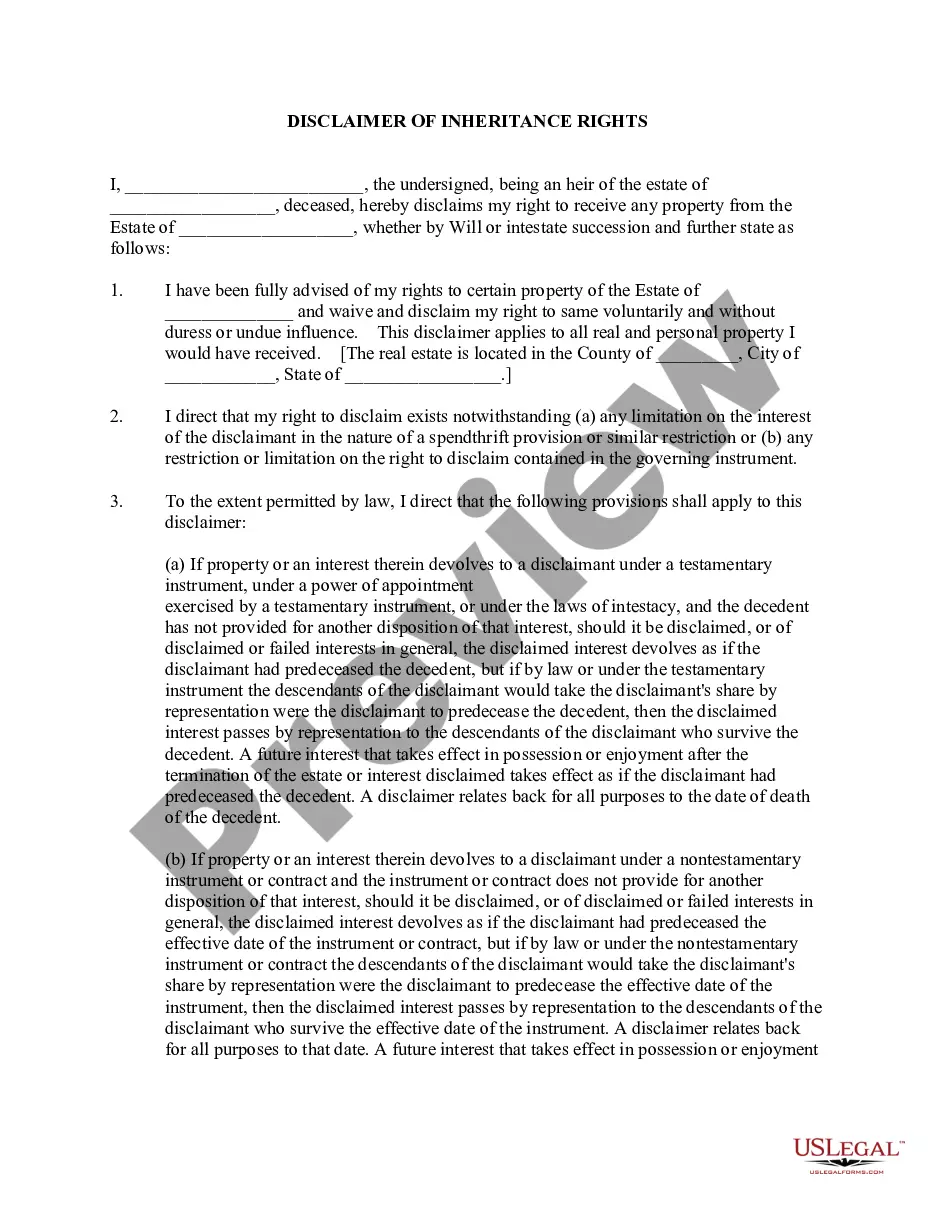
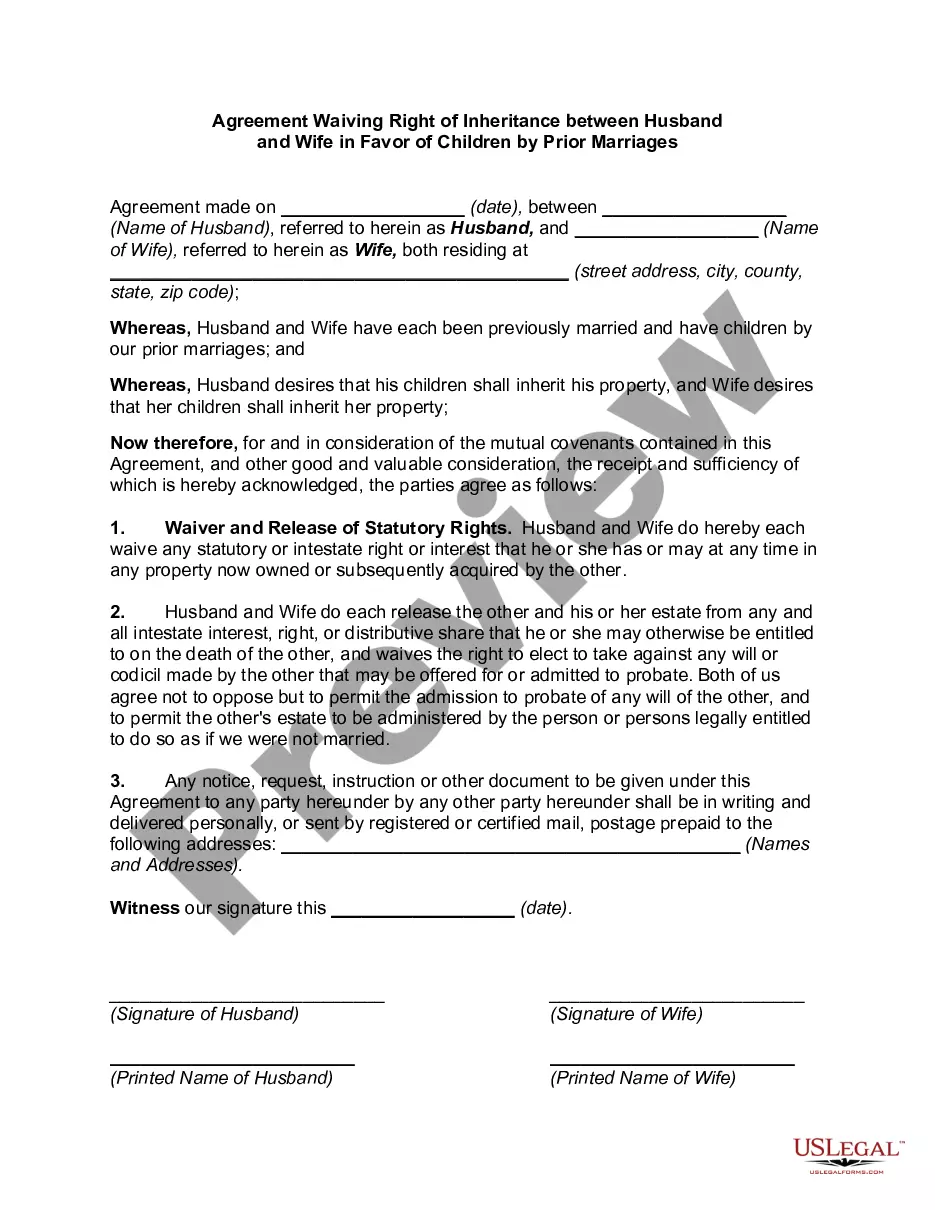
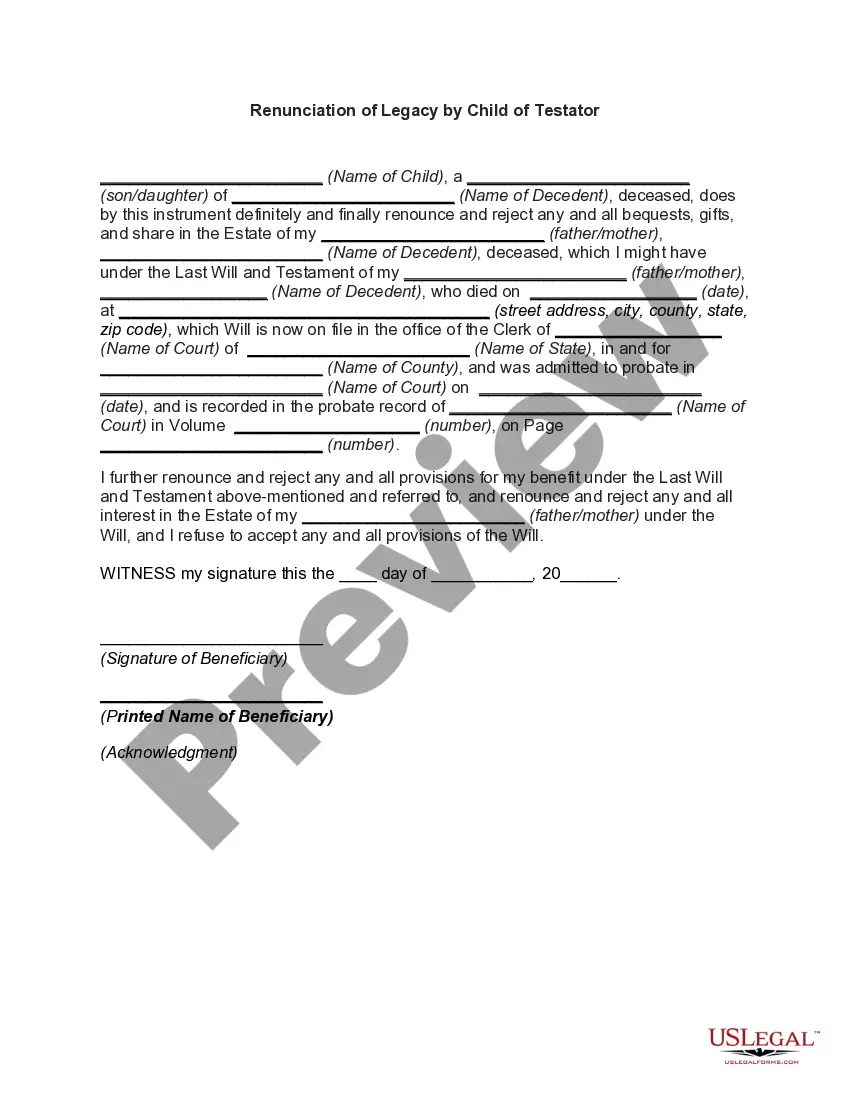
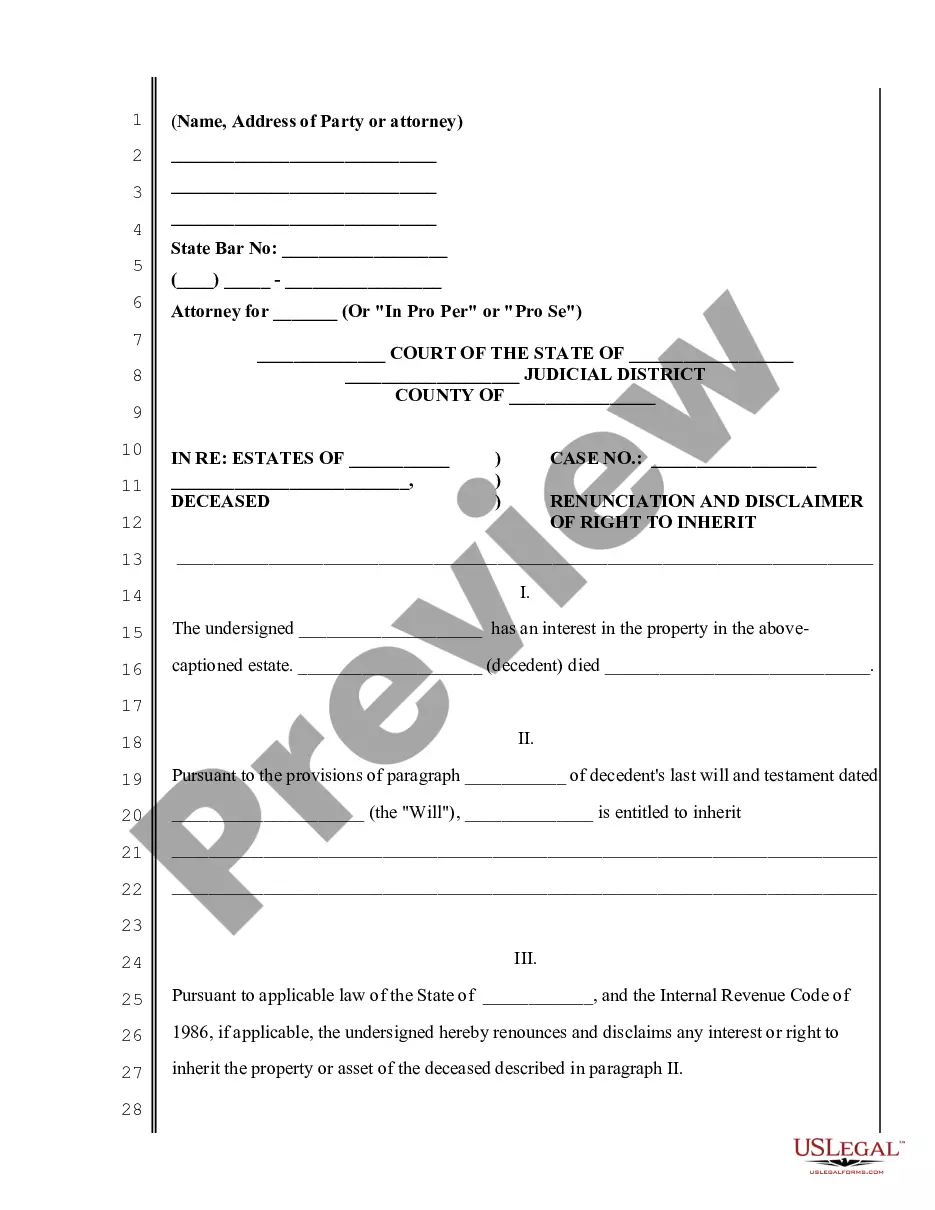
The Disclaimer of Inheritance Rights for Stepchildren is a legal document that allows a stepchild to formally refuse their right to inherit property from a deceased step-parent. This form serves a specific purpose in estate planning, distinguishing between those who choose to disclaim an inheritance and those who accept it. By completing this form, the stepchild relieves themselves of any claims to assets under a will, through intestate succession, or from a trust, ensuring clarity in the distribution of the estate.
What’s included in this form
Identification of the disclaimant: Personal information of the stepchild who is disclaiming inheritance rights.
Identification of the deceased: Details about the deceased step-parent, including their name and estate.
Statement of disclaimer: A clear declaration that the stepchild is voluntarily waiving their right to all property.
Specification of property: Information about the specific real and personal property affected by the disclaimer.
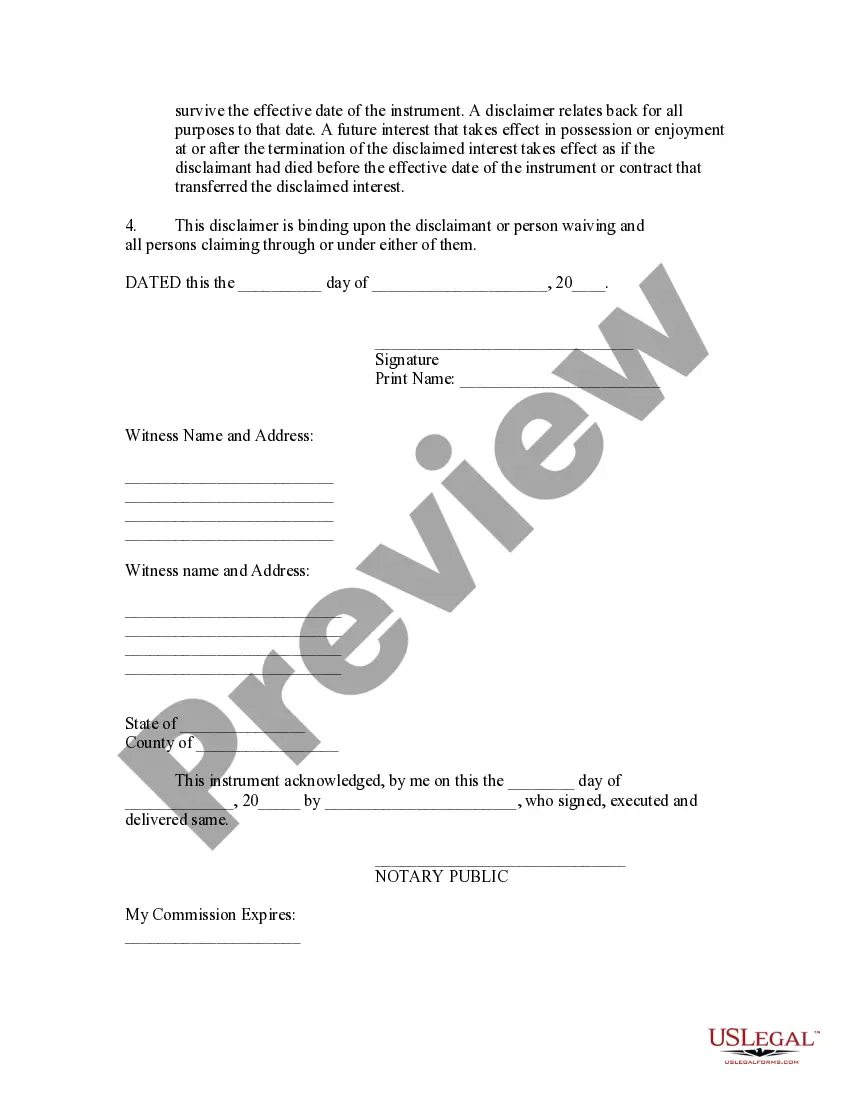
Legal clauses: Provisions detailing how the disclaimed interests will be treated under law.
Signatures: Signatures of the disclaimant, witnesses, and notary public to validate the document.
When this form is needed
This form is used when a stepchild wishes to legally refuse any inheritance from a deceased step-parent's estate. Common scenarios include situations where the stepchild may not have a close relationship with the deceased, prefers to avoid tax implications associated with the inheritance, or agrees with other family members that disallowing the inheritance is the best course of action.
Who can use this document
- Stepchildren of a deceased person who wish to disclaim their inheritance rights.
- Individuals involved in an estate where inheritance laws may be complex or disputed.
- Beneficiaries looking to simplify the distribution of assets among surviving heirs.
How to complete this form
- Identify the disclaimant by entering their full name in the designated section.
- Provide the name of the deceased individual whose estate is being disclaimed.
- Clearly state the properties and interests that are being disclaimed.
- Sign the form in the presence of at least two witnesses and a notary public.
- Ensure that all fields are filled out accurately and completely to avoid any legal issues.
Notarization guidance
Yes, this form must be notarized to be legally valid. Having it notarized ensures that the disclaimant's identity is verified and that the document is executed properly, thereby enhancing its enforceability in legal matters. US Legal Forms offers integrated online notarization services, making it easy to complete this step securely and conveniently.
Get your form ready online
Our built-in tools help you complete, sign, share, and store your documents in one place.
Make edits, fill in missing information, and update formatting in US Legal Forms—just like you would in MS Word.
Download a copy, print it, send it by email, or mail it via USPS—whatever works best for your next step.
Sign and collect signatures with our SignNow integration. Send to multiple recipients, set reminders, and more. Go Premium to unlock E-Sign.
If this form requires notarization, complete it online through a secure video call—no need to meet a notary in person or wait for an appointment.
We protect your documents and personal data by following strict security and privacy standards.

Make edits, fill in missing information, and update formatting in US Legal Forms—just like you would in MS Word.

Download a copy, print it, send it by email, or mail it via USPS—whatever works best for your next step.

Sign and collect signatures with our SignNow integration. Send to multiple recipients, set reminders, and more. Go Premium to unlock E-Sign.

If this form requires notarization, complete it online through a secure video call—no need to meet a notary in person or wait for an appointment.

We protect your documents and personal data by following strict security and privacy standards.
Avoid these common issues
- Failing to sign the form in front of a notary or witnesses, which may invalidate the disclaimer.
- Leaving out necessary property details that could lead to ambiguities in the estate.
- Not fully understanding the implications of disclaiming inheritance rights.
Why complete this form online
- Convenient access to the form anytime, ensuring you can complete it at your own pace.
- Editability allows for modifications before finalizing the document.
- Reliable templates drafted by licensed attorneys help ensure accuracy and legality.
Looking for another form?
Form popularity
FAQ
A stepchild cannot inherit from a stepparent, unless the stepparent made stepchild a legatee in his will.
Yes there still exist the relationship of step-father and step-child. The relation would still qualify under the Federal family leave act, but you will not inherit from your step-father's estate nor he through your's unless you or he is named in the will.
In fact, California law states that stepchildren do not inherit until all of the relatives directly related to the stepparent or relatives descended from the stepparent's grandparents receive property. This can even apply if your stepparent inherited your biological parent's assets upon their passing.
Even if biological dad and stepmother makes their wills at the same time and the wills are identical in that both wills leave the estate to the surviving spouse, and upon the second to die leave the estate in equal shares to the biological and stepchildren, after the death of the first spouse, the surviving spouse can
Yes there still exist the relationship of step-father and step-child. The relation would still qualify under the Federal family leave act, but you will not inherit from your step-father's estate nor he through your's unless you or he is named in the will.
If your partner dies, you don't automatically get parental responsibility for your stepchild. Parental responsibility passes to your stepchild's surviving biological parent. Even after biological parents separate, they still have shared parental responsibility.
Unfortunately, stepchildren are not included under the definition of children in these laws.In fact, California law states that stepchildren do not inherit until all of the relatives directly related to the stepparent or relatives descended from the stepparent's grandparents receive property.
Generally, step children are not the next of kin as they are not blood related to the step father. If the mother had a will or died with out a will and her estate never went through the probate process, the children may be able to come back and get half the house.