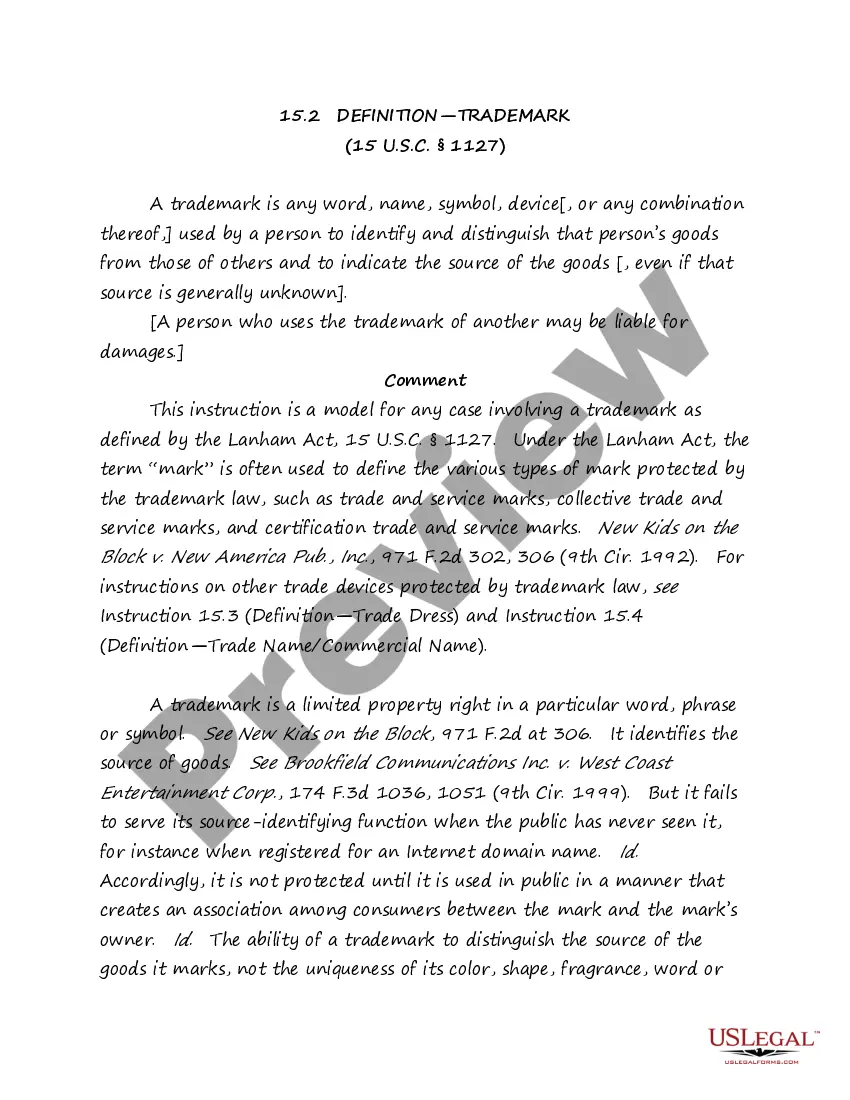
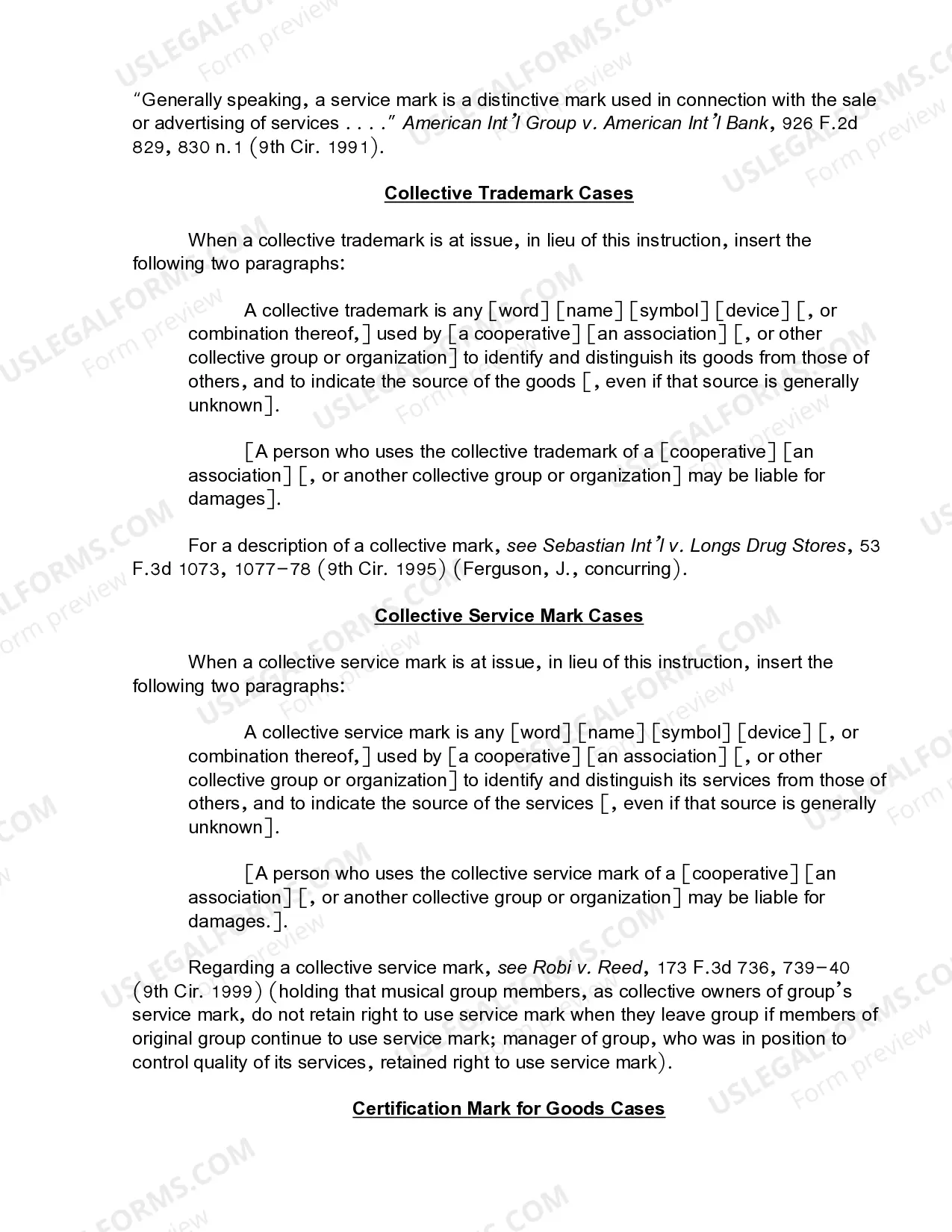
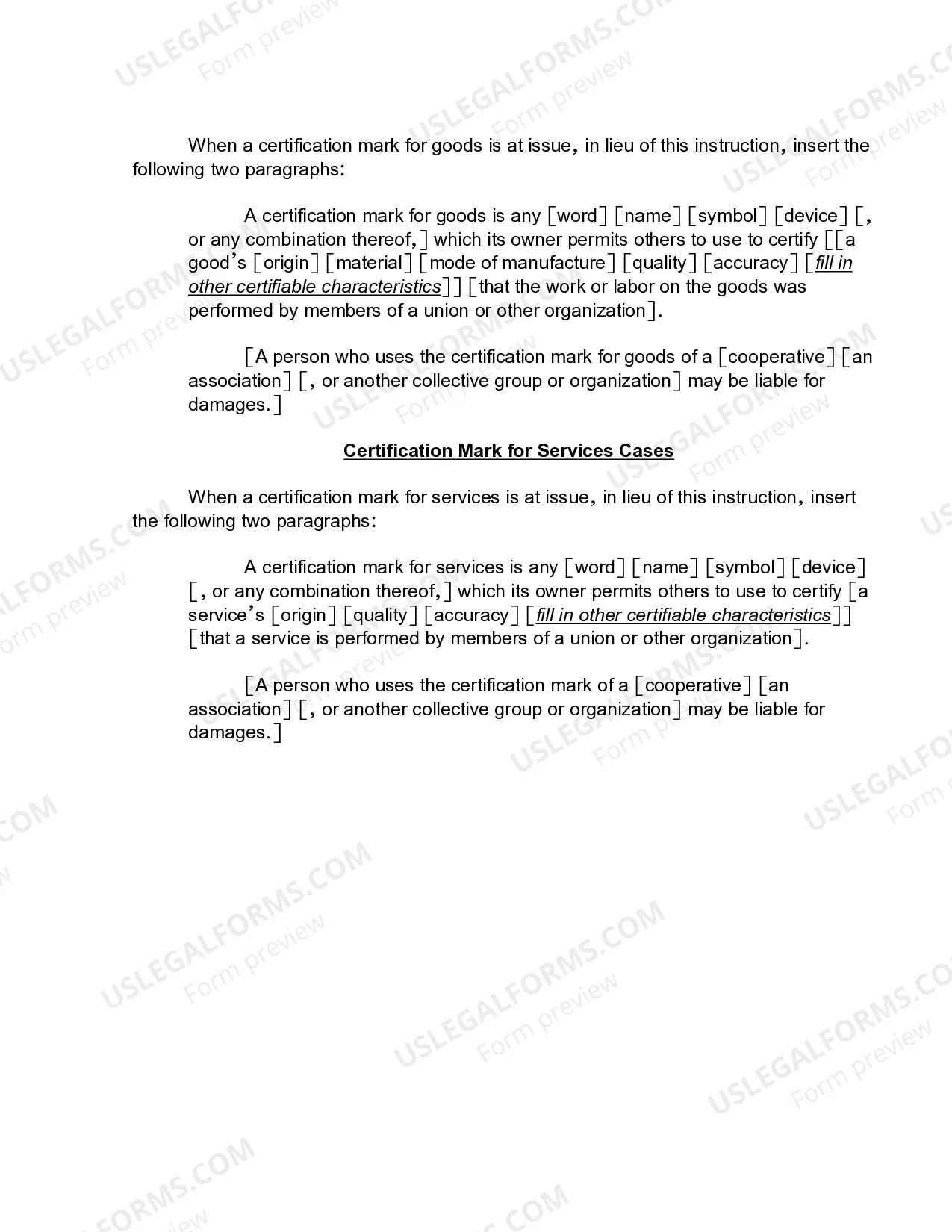
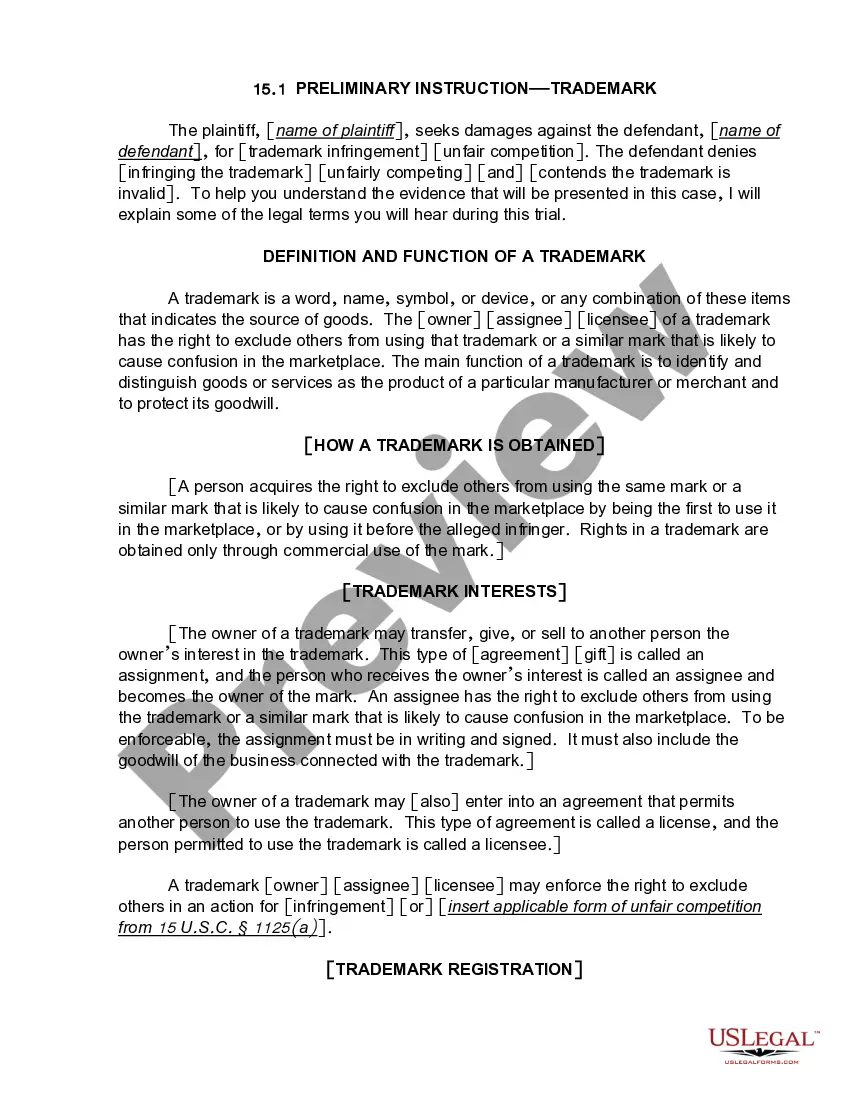
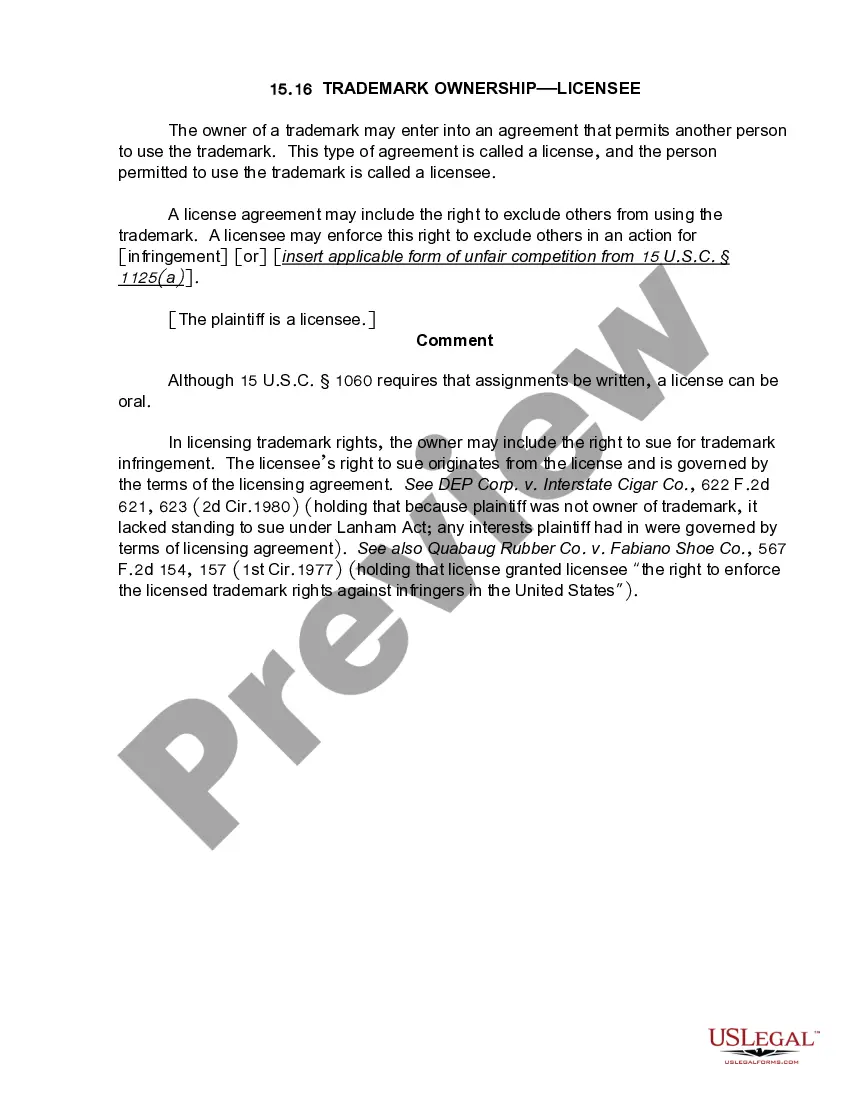
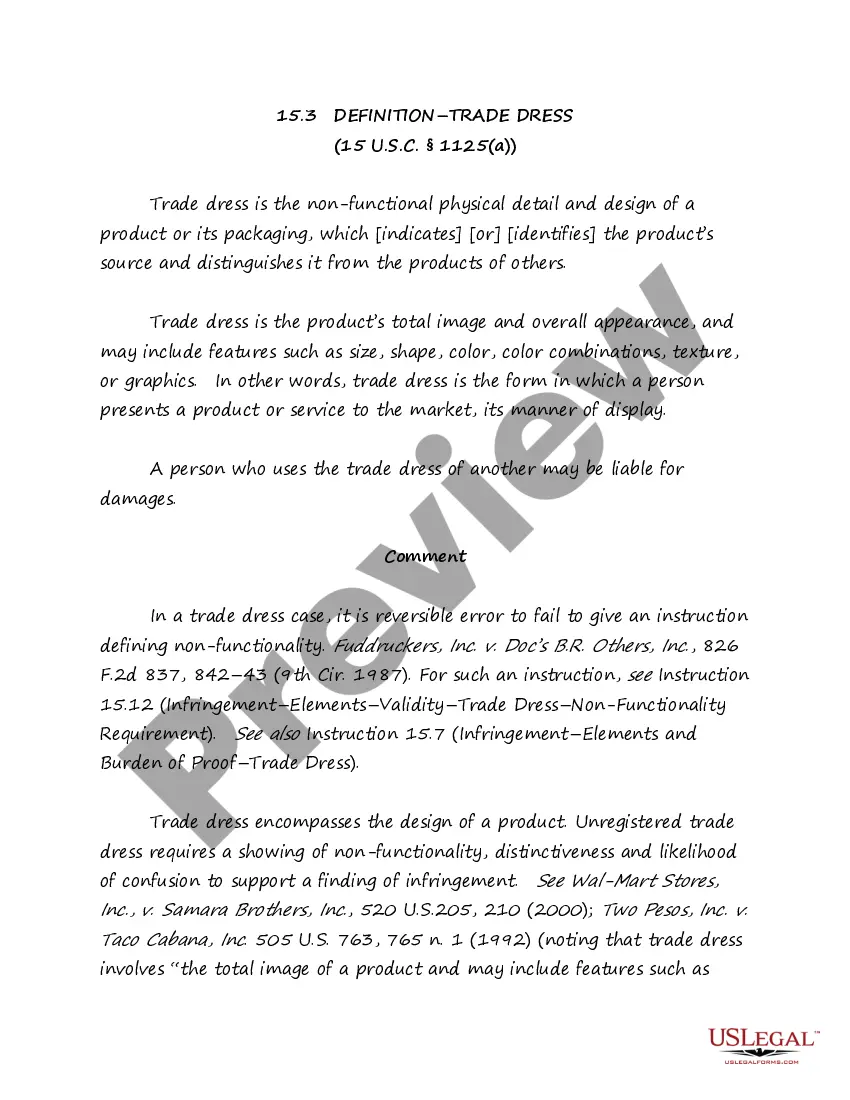
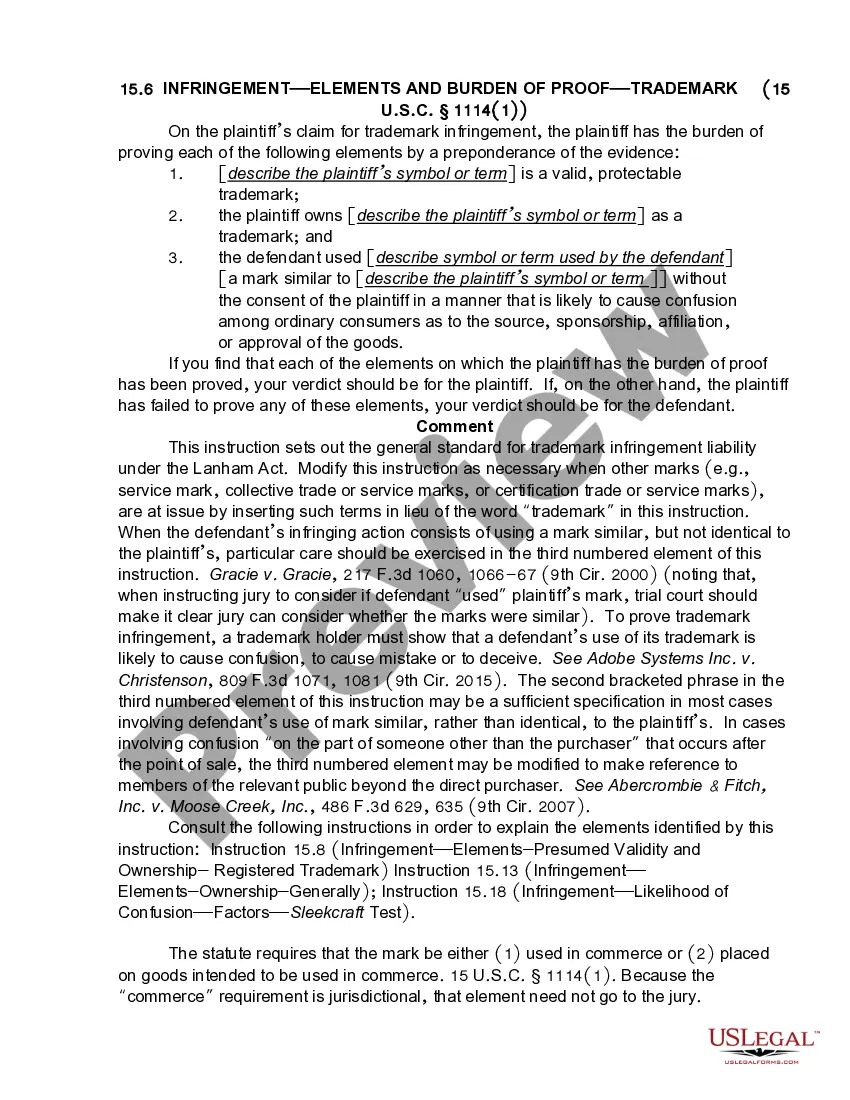
15.2 Definition-Trademark (15 U.S.C. Sec. 1127
Notarization requirements for this form
Notarization is generally not required for this form. However, certain states or situations might demand it. You can complete notarization online through US Legal Forms, powered by Notarize, using a verified video call available anytime.
Get your form ready online
Our built-in tools help you complete, sign, share, and store your documents in one place.
Make edits, fill in missing information, and update formatting in US Legal Forms—just like you would in MS Word.
Download a copy, print it, send it by email, or mail it via USPS—whatever works best for your next step.
Sign and collect signatures with our SignNow integration. Send to multiple recipients, set reminders, and more. Go Premium to unlock E-Sign.
If this form requires notarization, complete it online through a secure video call—no need to meet a notary in person or wait for an appointment.
We protect your documents and personal data by following strict security and privacy standards.

Make edits, fill in missing information, and update formatting in US Legal Forms—just like you would in MS Word.

Download a copy, print it, send it by email, or mail it via USPS—whatever works best for your next step.

Sign and collect signatures with our SignNow integration. Send to multiple recipients, set reminders, and more. Go Premium to unlock E-Sign.

If this form requires notarization, complete it online through a secure video call—no need to meet a notary in person or wait for an appointment.

We protect your documents and personal data by following strict security and privacy standards.
Looking for another form?
Form popularity
FAQ
These factors include the strength of the mark, the proximity of the goods, the similarity of the marks, evidence of actual confusion, the marketing channels used, the types of goods, the degree of care likely to be exercised by the purchaser, the defendant's intent in selecting the allegedly infringing mark and the
Also known as the Trademark Act of 1946. The federal statute governing trademark law, including registration (with the US Patent and Trademark Office (USPTO)), maintenance, and protection of trademarks used in or affecting interstate commerce (15 U.S.C. §§ 1051 to 1127).
But what is trademark infringement? Under the Lanham Act, trademark infringement elements include (1) use (2) in commerce (3) of a registered mark that causes confusion. Common defenses include fair use, parody, and unclean hands.
The United States includes and embraces all territory which is under its jurisdiction and control. The word ?commerce? means all commerce which may lawfully be regulated by Congress.
Under Section §2(e)(1) of the Trademark Act, the USPTO may refuse to register a trademark that merely describes the goods or services.
The Lanham Act defines a trademark as a mark used in commerce, or registered with a bona fide intent to use it in commerce.
What Are Trademark Requirements? Provide your name and address as owner of the trademark. State the entity type (individual or corporation) and your national citizenship. Demonstrate actual use or a real intent to use the trademark in commerce. Give a detailed description of the product being trademarked.
The Lanham Act defines a trademark as ?any word, name, symbol, or device, or any combination thereof? that a person or business either uses in commerce to distinguish their product or service from others or ?has a bona fide intention to use in commerce? when they apply for registration. 15 U.S.C. § 1127.