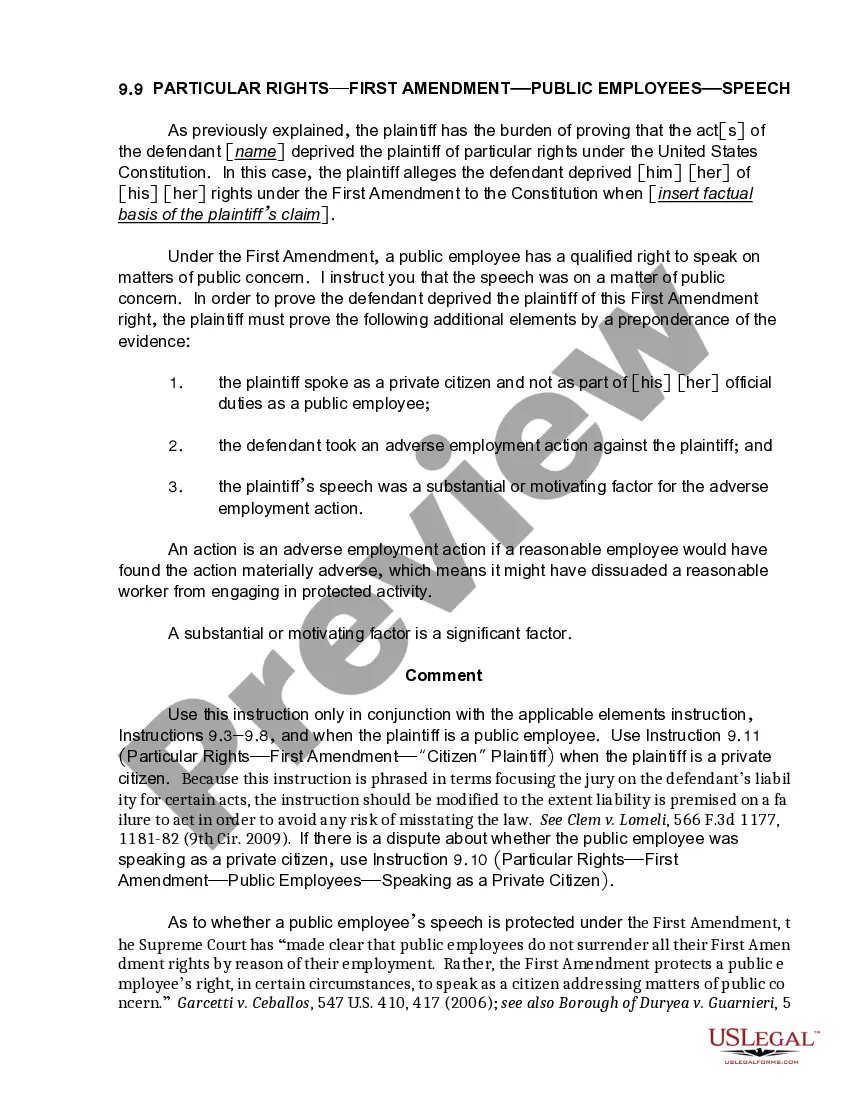
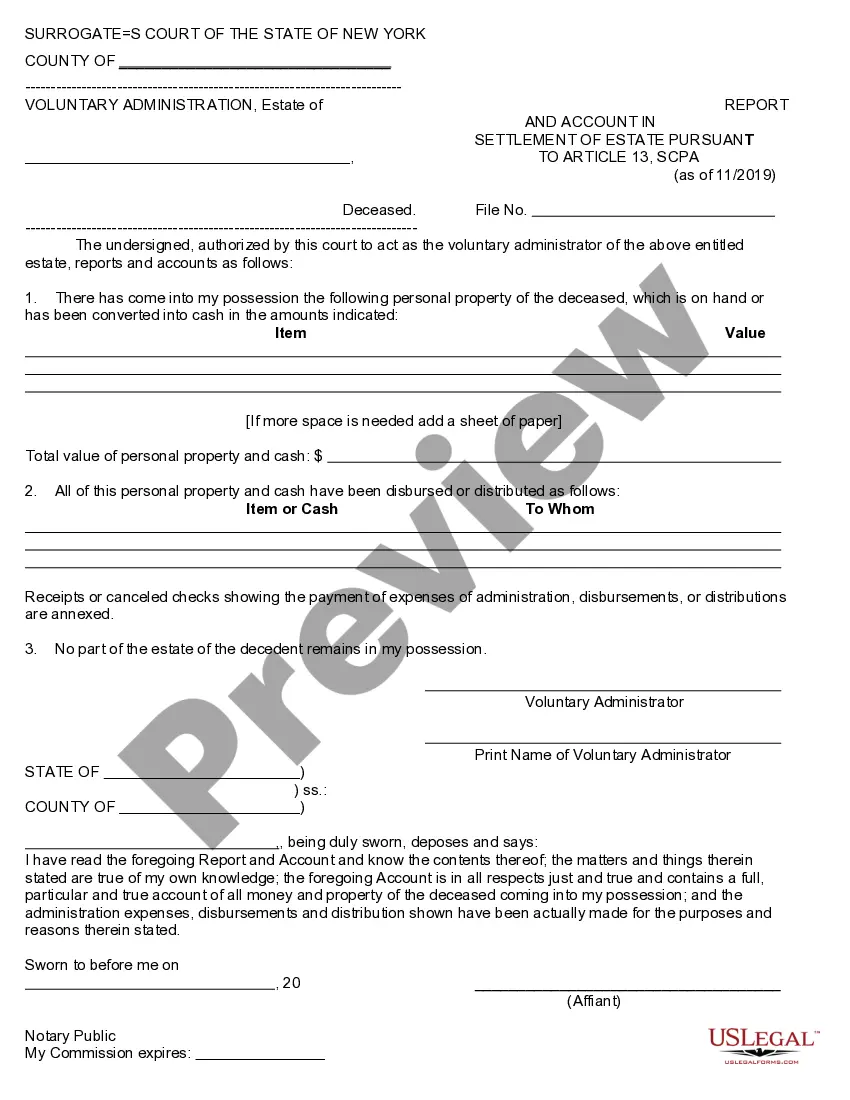
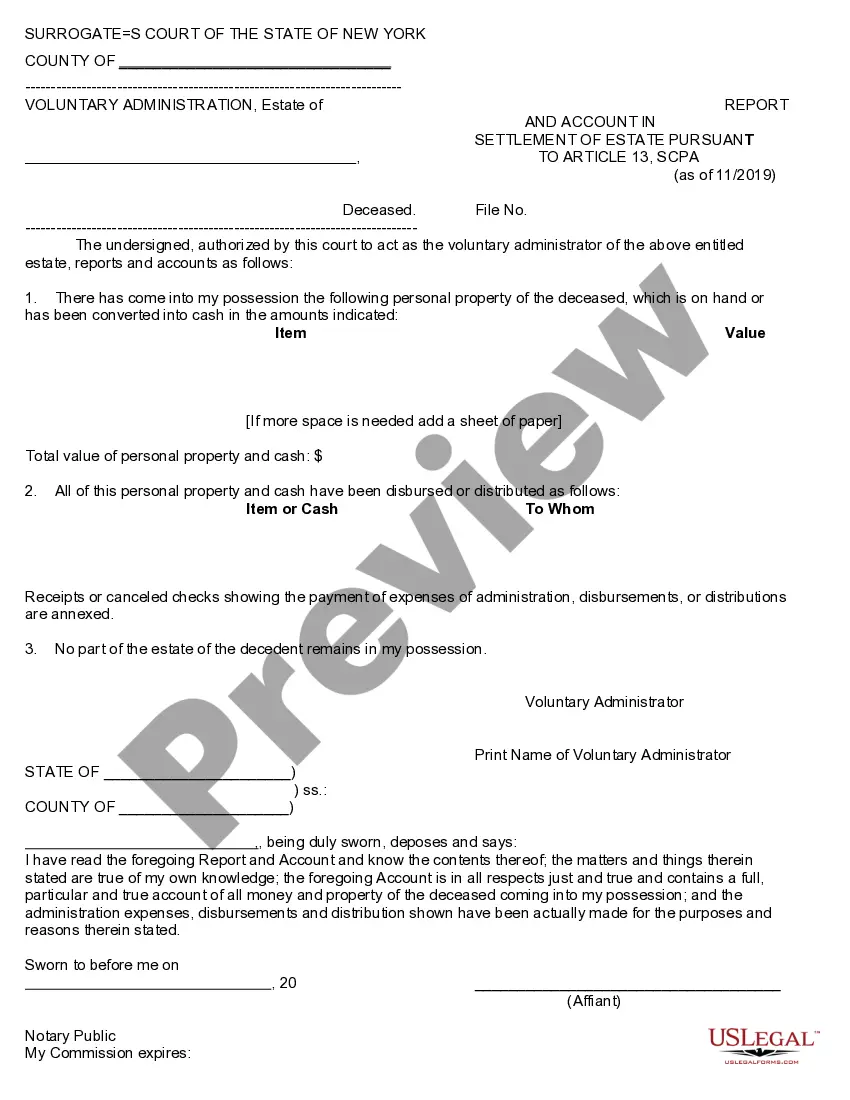
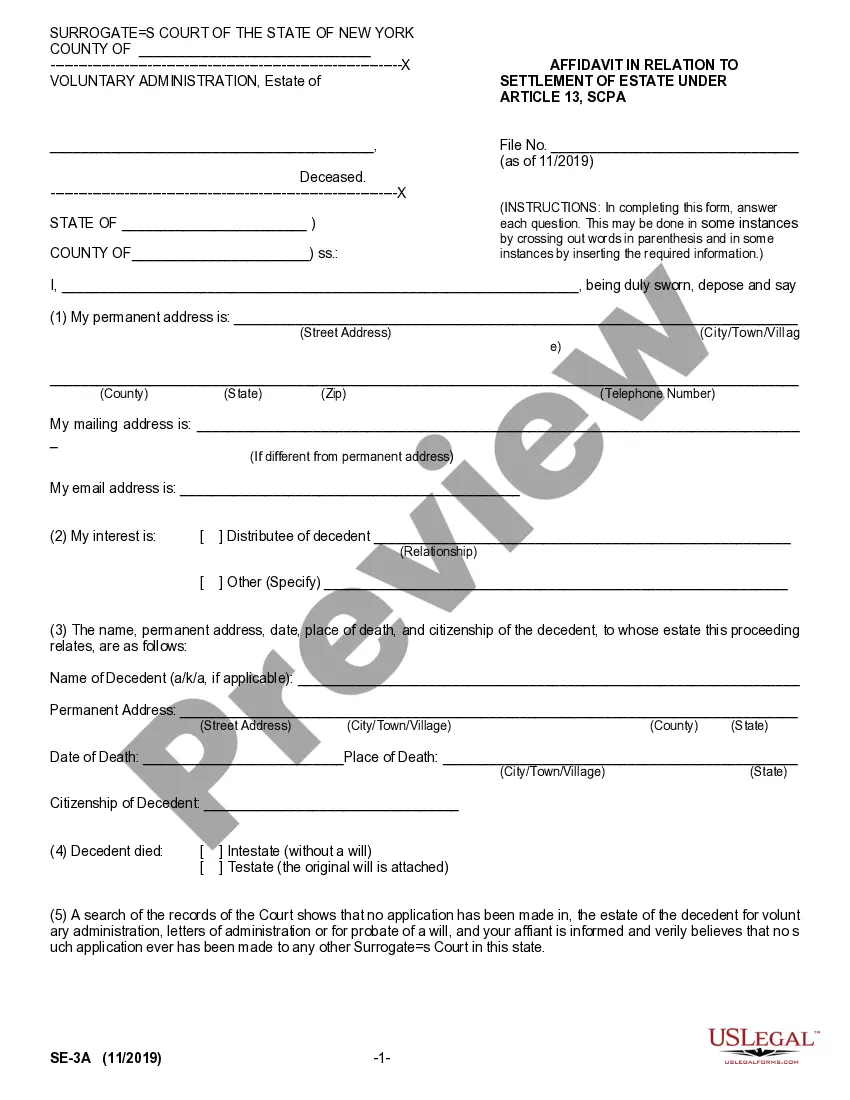
Report and Account to Settle Small Estate in New York
Description

Get your form ready online
Our built-in tools help you complete, sign, share, and store your documents in one place.
Make edits, fill in missing information, and update formatting in US Legal Forms—just like you would in MS Word.
Download a copy, print it, send it by email, or mail it via USPS—whatever works best for your next step.
Sign and collect signatures with our SignNow integration. Send to multiple recipients, set reminders, and more. Go Premium to unlock E-Sign.
If this form requires notarization, complete it online through a secure video call—no need to meet a notary in person or wait for an appointment.
We protect your documents and personal data by following strict security and privacy standards.

Make edits, fill in missing information, and update formatting in US Legal Forms—just like you would in MS Word.

Download a copy, print it, send it by email, or mail it via USPS—whatever works best for your next step.

Sign and collect signatures with our SignNow integration. Send to multiple recipients, set reminders, and more. Go Premium to unlock E-Sign.

If this form requires notarization, complete it online through a secure video call—no need to meet a notary in person or wait for an appointment.

We protect your documents and personal data by following strict security and privacy standards.
Looking for another form?
How to fill out Report And Account To Settle Small Estate In New York?
When it comes to completing Report and Account to Settle Small Estate in New York, you most likely visualize a long procedure that consists of choosing a appropriate form among numerous very similar ones after which needing to pay a lawyer to fill it out for you. In general, that’s a slow-moving and expensive choice. Use US Legal Forms and choose the state-specific document in a matter of clicks.
For those who have a subscription, just log in and then click Download to find the Report and Account to Settle Small Estate in New York template.
In the event you don’t have an account yet but need one, stick to the step-by-step guide listed below:
- Be sure the file you’re getting applies in your state (or the state it’s needed in).
- Do so by reading through the form’s description and through visiting the Preview option (if available) to view the form’s content.
- Click on Buy Now button.
- Select the suitable plan for your budget.
- Sign up for an account and choose how you would like to pay out: by PayPal or by credit card.
- Save the file in .pdf or .docx format.
- Get the record on the device or in your My Forms folder.
Professional attorneys work on drawing up our templates to ensure that after saving, you don't need to bother about editing content material outside of your individual details or your business’s details. Be a part of US Legal Forms and receive your Report and Account to Settle Small Estate in New York sample now.
Form popularity
FAQ
Only an estate valued over $30,000 must be probated when there is a will. The court has a small estate proceeding when the estate is below $30,000. An estate without a will is administered, not probated.
When a Decedent (the person who died) had less than $50,000 of personal property then it's considered a small estate, and is formally called a voluntary administration. It does not matter if the Decedent had a Will or not. Personal property are things that belong to a person not including real property.
How Long to Settle an Estate in New York? The short answer: from 7 months to 3 years. Typically 9 months. Estate settlement (also known as estate administration) is the phase during which you, as the court-appointed executor, must collect the estate assets, organize and pays debts, and file all final taxes.
The Will must be filed in the Surrogate's Court in the county where the decedent lived. The Will must be filed within a reasonable period of time after the death.
File the Will and Probate Petition. Secure Personal Property. Appraise and Insure Valuable Assets. Cancel Personal Accounts. Determine Cash Needs. Remove Estate Tax Lien. Determine Location of Assets and Secure "Date of Death Values" Submit Probate Inventory.
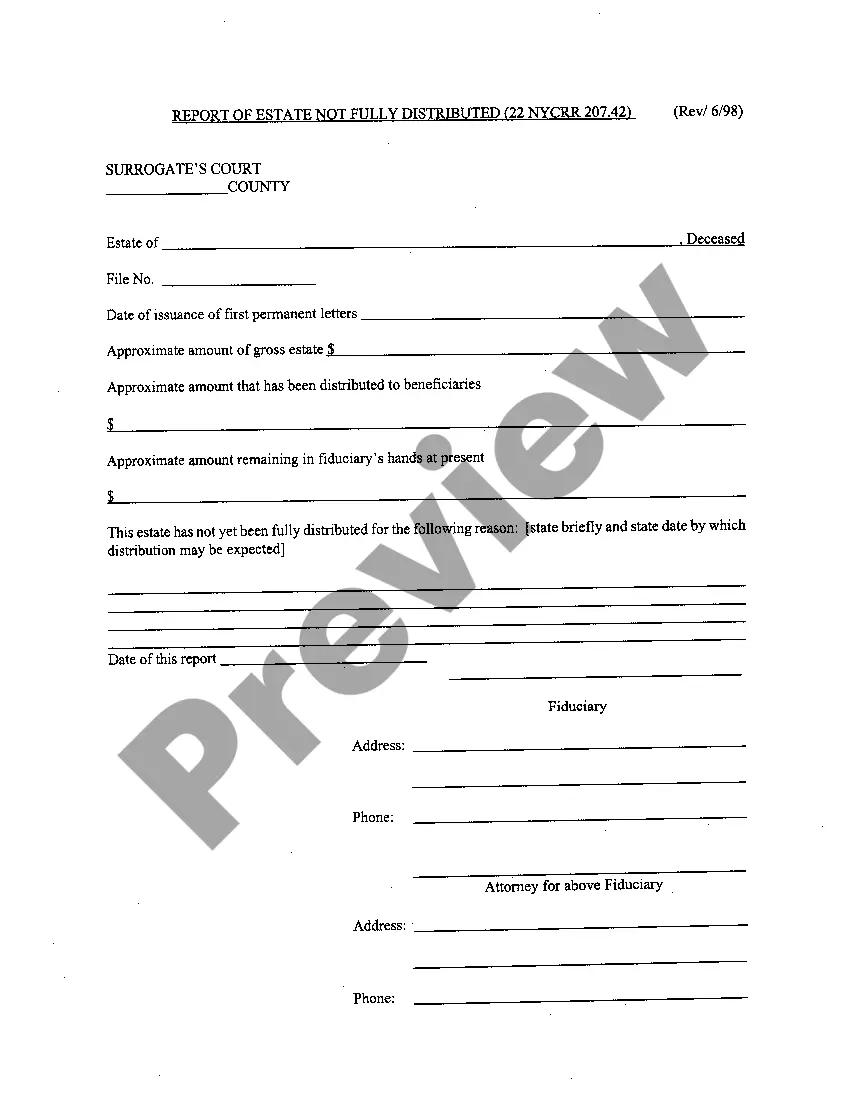
CLOSING THE ESTATE: FORM 207.42 must be prepared and executed by the fiduciary and the attorney and filed after 7 months or by the end of 2 years from the date of fiduciary appointment. RELEASES from all beneficiaries of the estate must be executed and filed at this time, if not already filed.
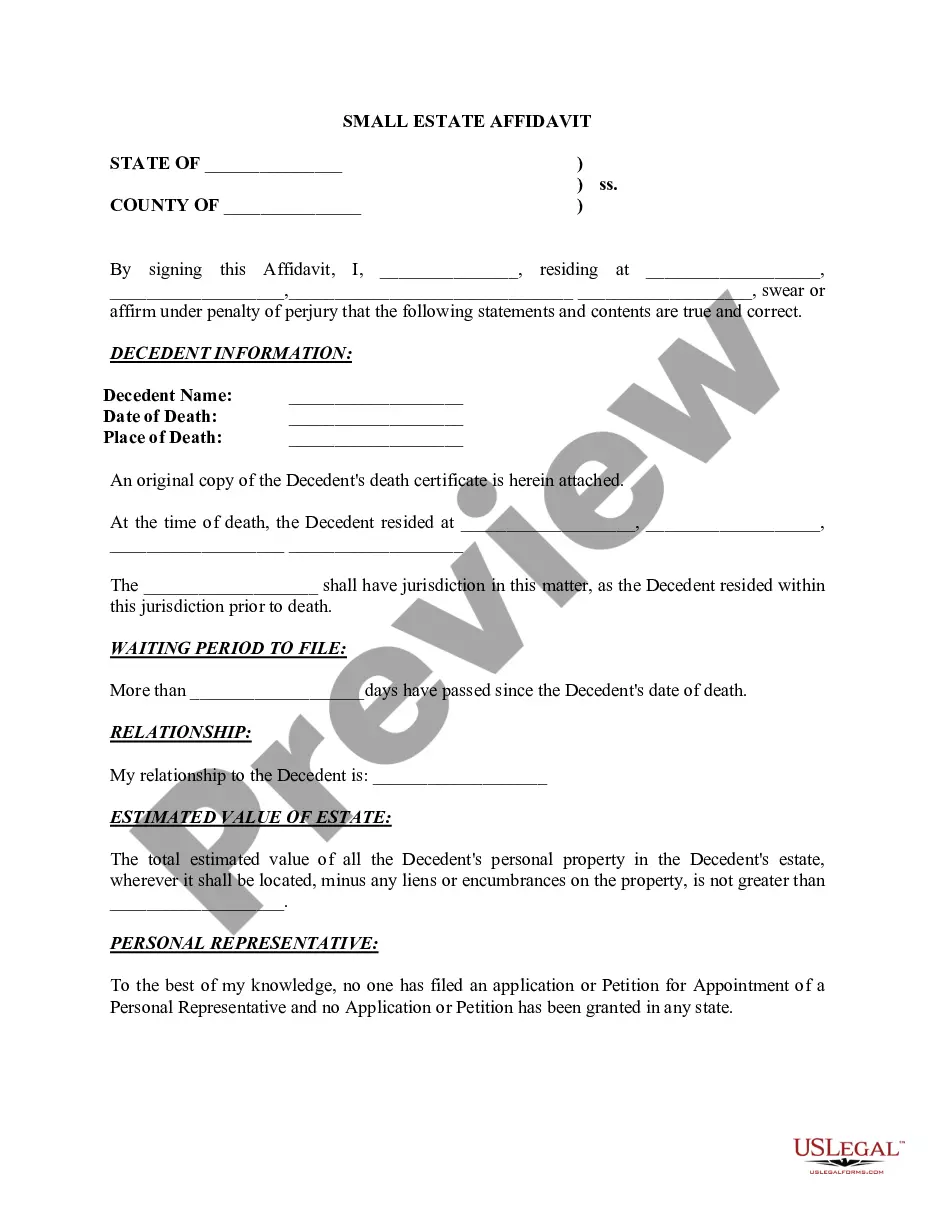
Small estate administration is a simplified court procedure that is an alternative to the longer probate process. It is available when the person who dies did not own that much in assets. There is often a limit to the value of the property, such as $25,000 or $100,000.
When you use a small estate affidavit , you have to pay the decedent's bills before paying money to anyone else. For example, the decedent might have owed money to a credit card company when they died. If you use the small estate affidavit, you must give money from the estate to pay the credit card company.