Assignment - Employee Inventor
Overview of this form
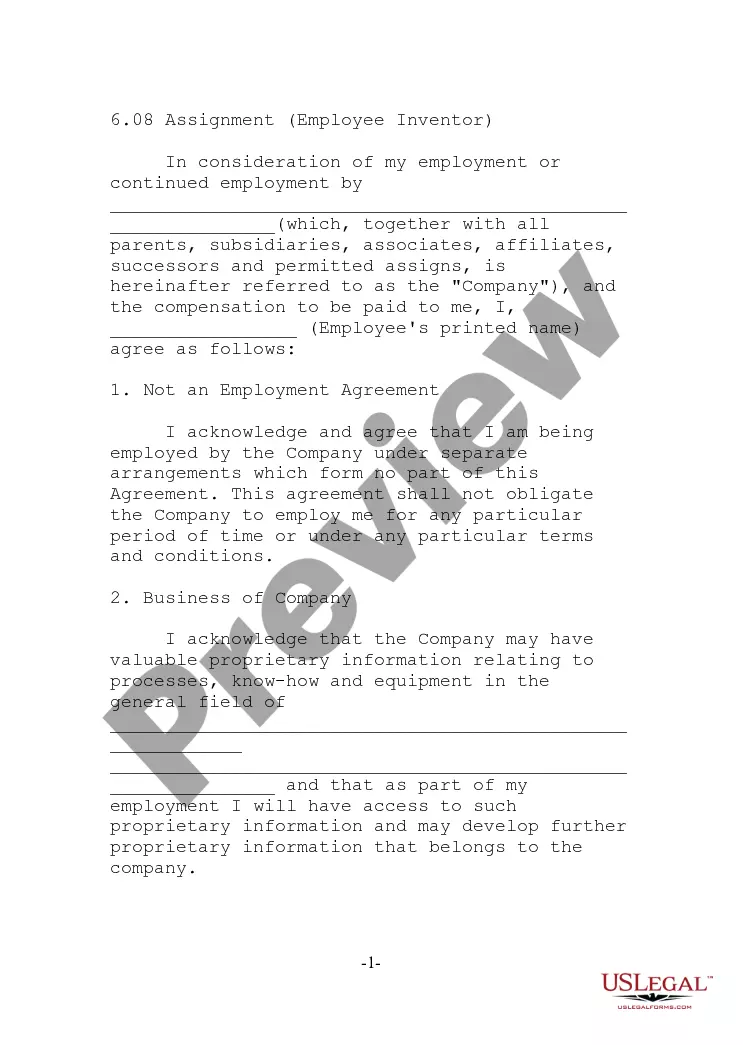
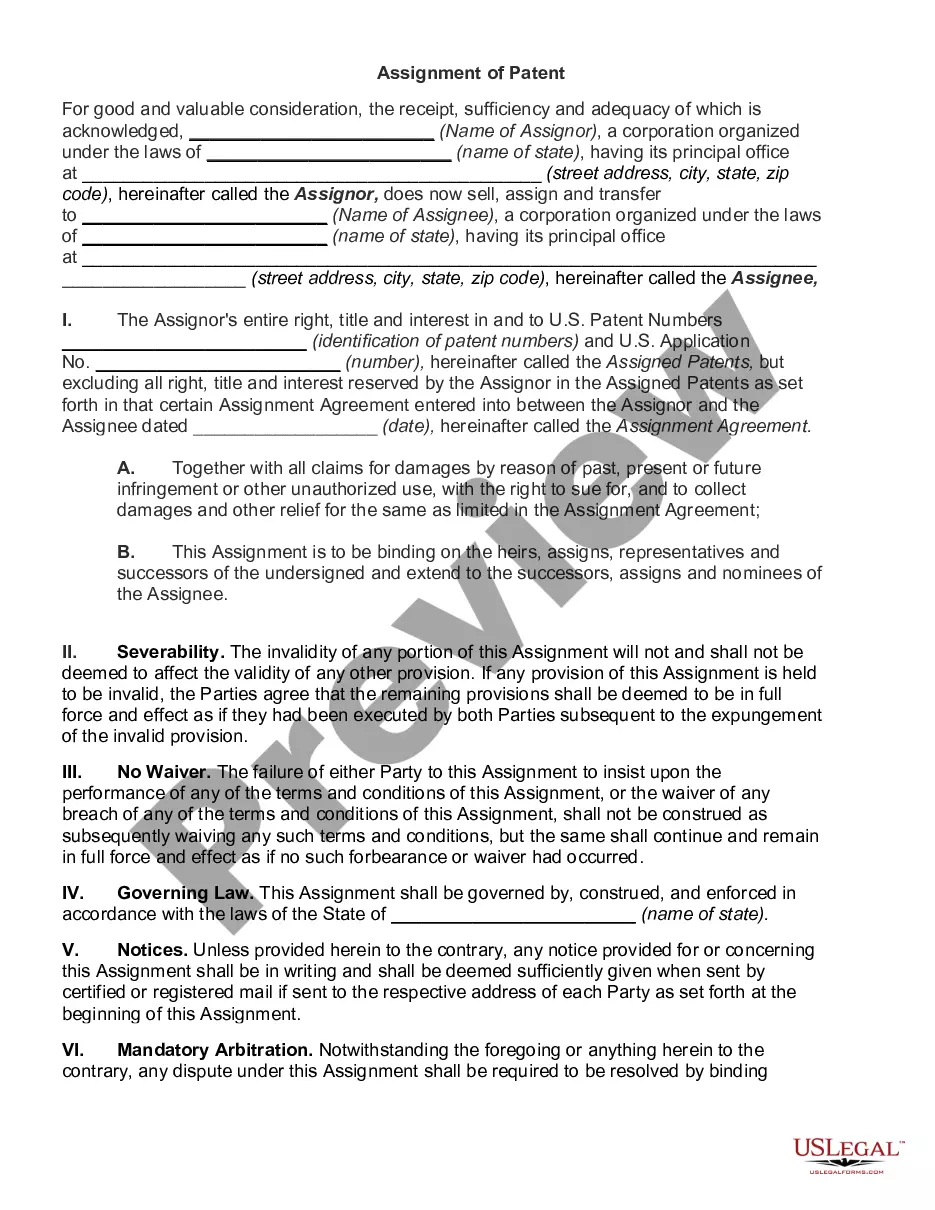
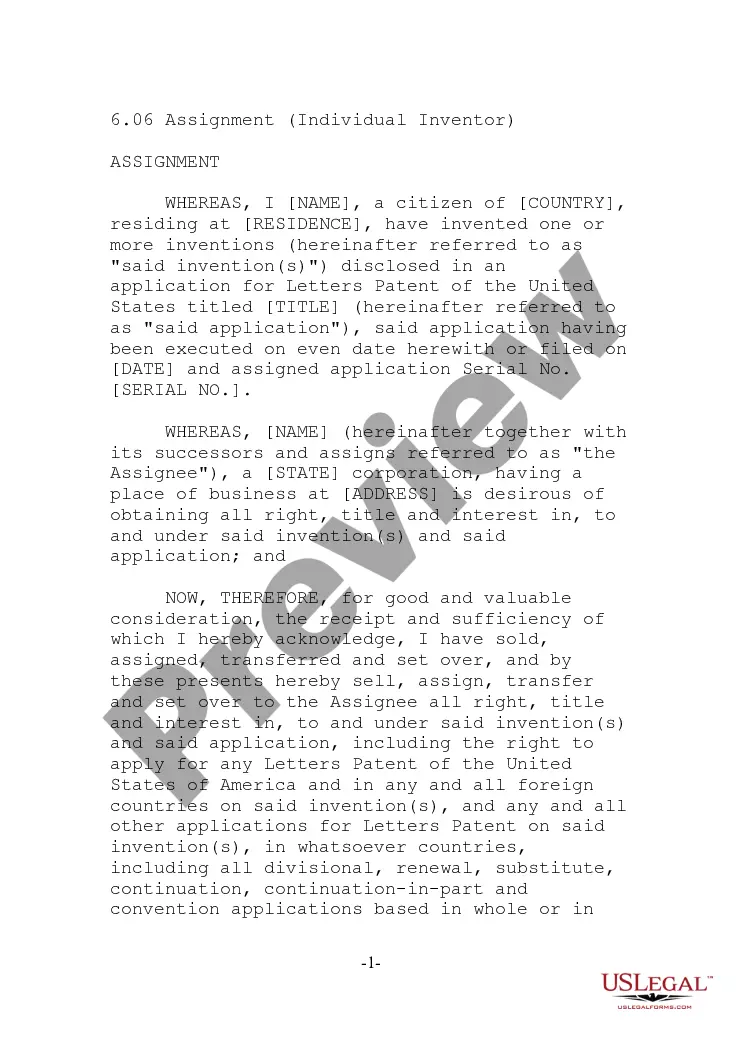
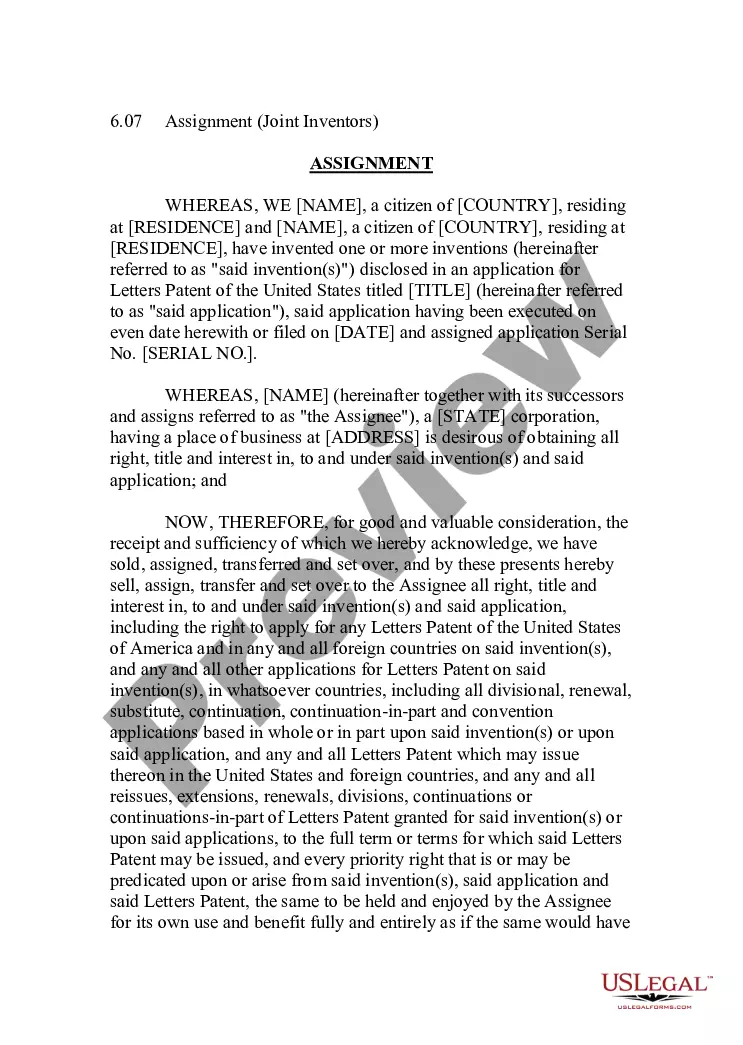
The Assignment - Employee Inventor form is a legal document that facilitates the transfer of rights to inventions and intellectual property created by employees during their employment. Unlike other employment agreements, this form specifically addresses the ownership of technology and any related developments made by the employee, ensuring that all such innovations are assigned to the employer. It clarifies both parties' rights and responsibilities regarding proprietary information and inventions created during and after employment.
What’s included in this form
- Identification of the Company and Employee.
- Clarification that this document is not an employment contract.
- Definition of "Technology" and employee obligations regarding disclosures.
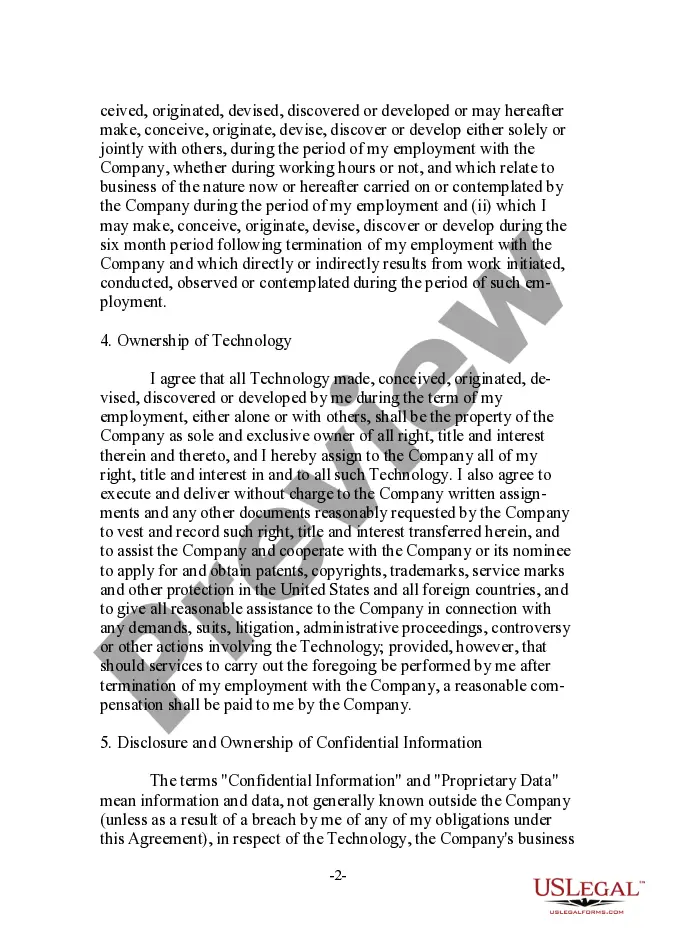
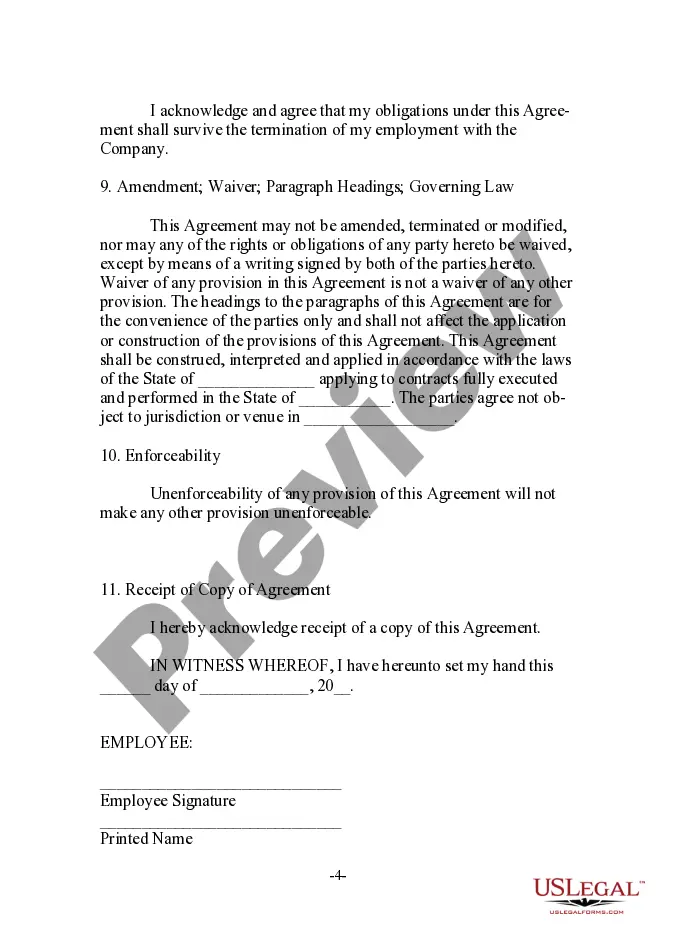
- Assignment of rights to Technology created during employment.
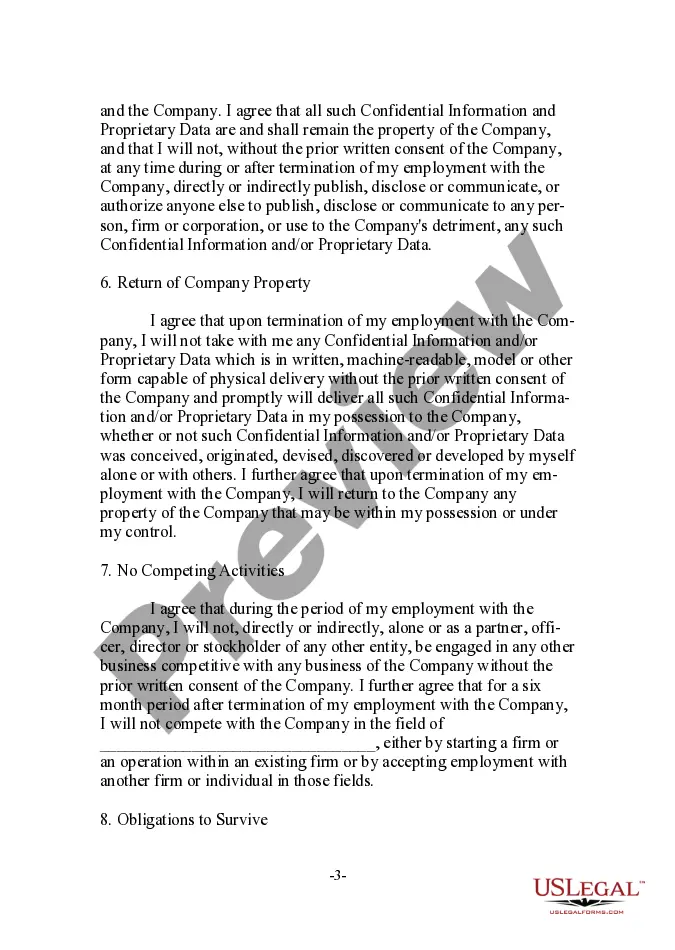
- Ownership clauses for Confidential Information and Proprietary Data.
- Terms regarding the return of Company property and non-compete agreements.
When to use this document
This form is essential for employers in protecting their intellectual property created by employees. It should be used when hiring new employees who will likely create proprietary technology or inventions. Additionally, it is useful when companies need to establish clear ownership of ideas and creations developed during or after employment, particularly in industries such as technology, entertainment, and research.
Who this form is for
- Employers seeking to establish clear ownership of inventions created by employees.
- Employees who create technology or inventions as part of their work.
- Companies in the entertainment, technology, or intellectual property sectors.
Completing this form step by step
- Provide the name of the Company and the Employee in the designated fields.
- Define the business area relating to the Technology the employee will work on.
- Clearly outline any Confidential Information and proprietary data definitions.
- Specify any non-compete obligations, including duration and scope.
- Sign and date the agreement, ensuring that all parties have copies for their records.
Does this document require notarization?
This form does not typically require notarization unless specified by local law. It is always advisable to check with local regulations or legal counsel to determine if notarization is necessary in your jurisdiction.
Get your form ready online
Our built-in tools help you complete, sign, share, and store your documents in one place.
Make edits, fill in missing information, and update formatting in US Legal Forms—just like you would in MS Word.
Download a copy, print it, send it by email, or mail it via USPS—whatever works best for your next step.
Sign and collect signatures with our SignNow integration. Send to multiple recipients, set reminders, and more. Go Premium to unlock E-Sign.
If this form requires notarization, complete it online through a secure video call—no need to meet a notary in person or wait for an appointment.
We protect your documents and personal data by following strict security and privacy standards.

Make edits, fill in missing information, and update formatting in US Legal Forms—just like you would in MS Word.

Download a copy, print it, send it by email, or mail it via USPS—whatever works best for your next step.

Sign and collect signatures with our SignNow integration. Send to multiple recipients, set reminders, and more. Go Premium to unlock E-Sign.

If this form requires notarization, complete it online through a secure video call—no need to meet a notary in person or wait for an appointment.

We protect your documents and personal data by following strict security and privacy standards.
Common mistakes
- Failing to specify the scope of technology or inventions covered by the agreement.
- Not including a clear definition of Confidential Information.
- Neglecting to obtain signatures from both the employee and a witness.
Why complete this form online
- Convenience of filling out the form from any location at any time.
- Editability allows customization to meet specific company needs.
- Reliable access to professionally drafted legal language ensuring compliance.
Legal use & context
- This form is legally binding once signed by all parties and serves to protect the company's intellectual property rights.
- Employees are legally obligated to disclose inventions and must recognize that their creations belong to the company.
- The agreement outlines specific limitations on competing activities, protecting the company's interests after employment ends.
Quick recap
- The Assignment - Employee Inventor form is essential for protecting a company's intellectual property rights.
- Clear disclosure and ownership clauses ensure that employees understand their obligations regarding inventions.
- Proper completion and signing of the agreement are crucial for enforceability and legal protection.
Looking for another form?
Form popularity
FAQ
To the extent that the Company is not considered the first owner of the Intellectual Property Rights created by the Employee, the copyright and all related rights, title and interest in all such Company Intellectual Property is irrevocably assigned by the Employee to the Company in consideration of the Employment which
The general rule is that you own the patent rights to an invention you create during the course of your employment unless you either: signed an employment agreement assigning invention rights, or. were specifically hired (even without a written agreement) for your inventing skills or to create the invention.
Examples of intellectual property include an author's copyright on a book or article, a distinctive logo design representing a soft drink company and its products, unique design elements of a web site, or a patent on a particular process to, for example, manufacture chewing gum.
The IP ownership in India varies under different IP laws. For instance, in case of an employee developed copyright, the employer will be the first owner of the copyright. Therefore, the Indian Vendor will own its employee developed copyright.
A California-specific agreement between an employer and an employee concerning confidentiality and appropriate handling of the employer's commercially valuable information, compliance with relevant security rules and policies, and protection of the employer's intellectual property assets.
Also known as Proprietary Information and Inventions Assignment Agreements (or PIIAAs), Confidential Information and Inventions Assignment Agreements ensure that intellectual property and other proprietary rights created by employees during the course of their employment are assigned to the employer.
Confidential Information and Inventions Assignment Agreements CIIAAInventions or intellectual property created by the employee prior to beginning their employment are carved-out from the assignment by this type of agreement.
An invention assignment agreement is a contract that gives the employer certain rights to inventions created or conceptualized by the employee during the employment relationship.In other words, all inventions not listed are assumed to be the property of the employer.
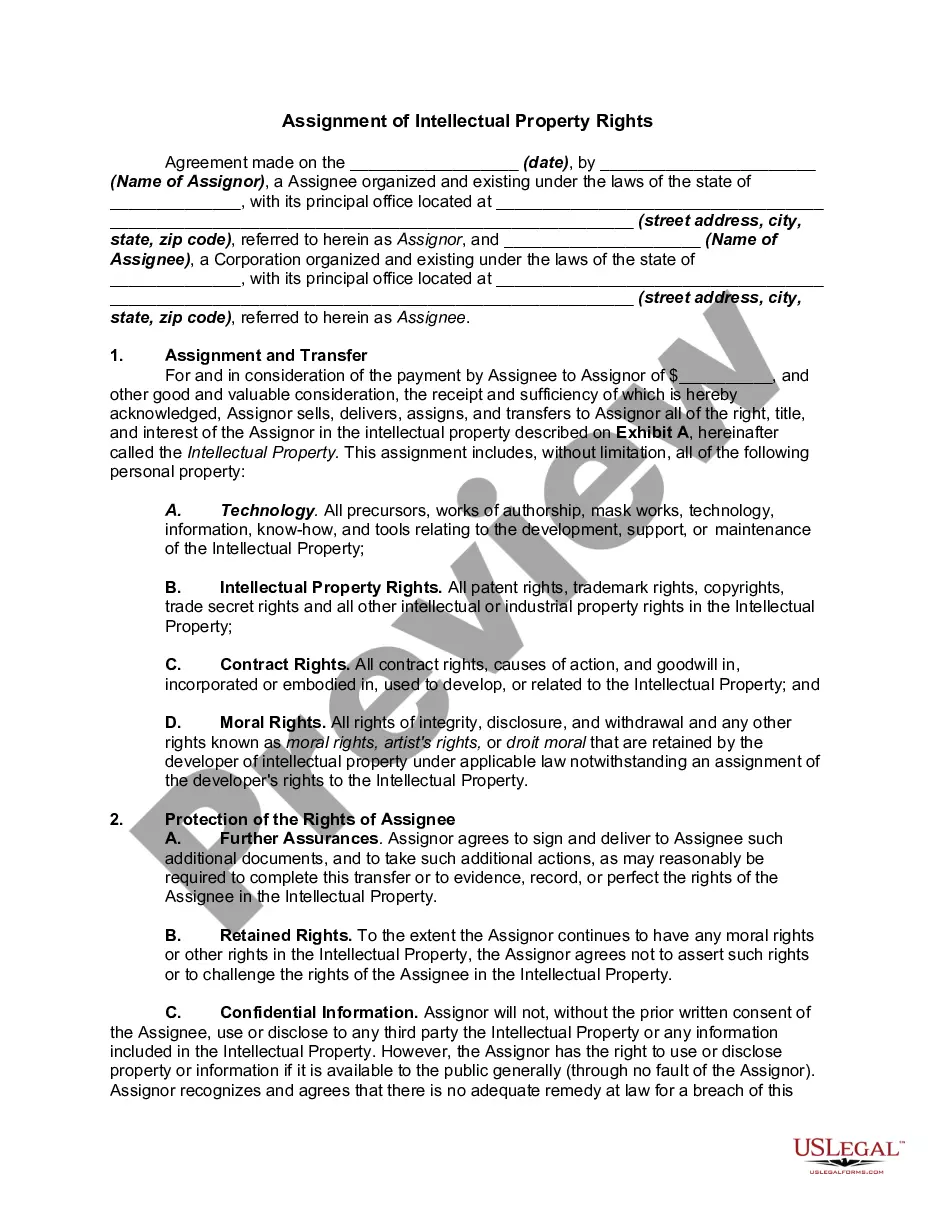
The assignment of intellectual property (IP) refers to the process by which ownership of work product created for a company by an employee or consultant is transferred to the entity.