Delivery Order to Warehouseman
About this form
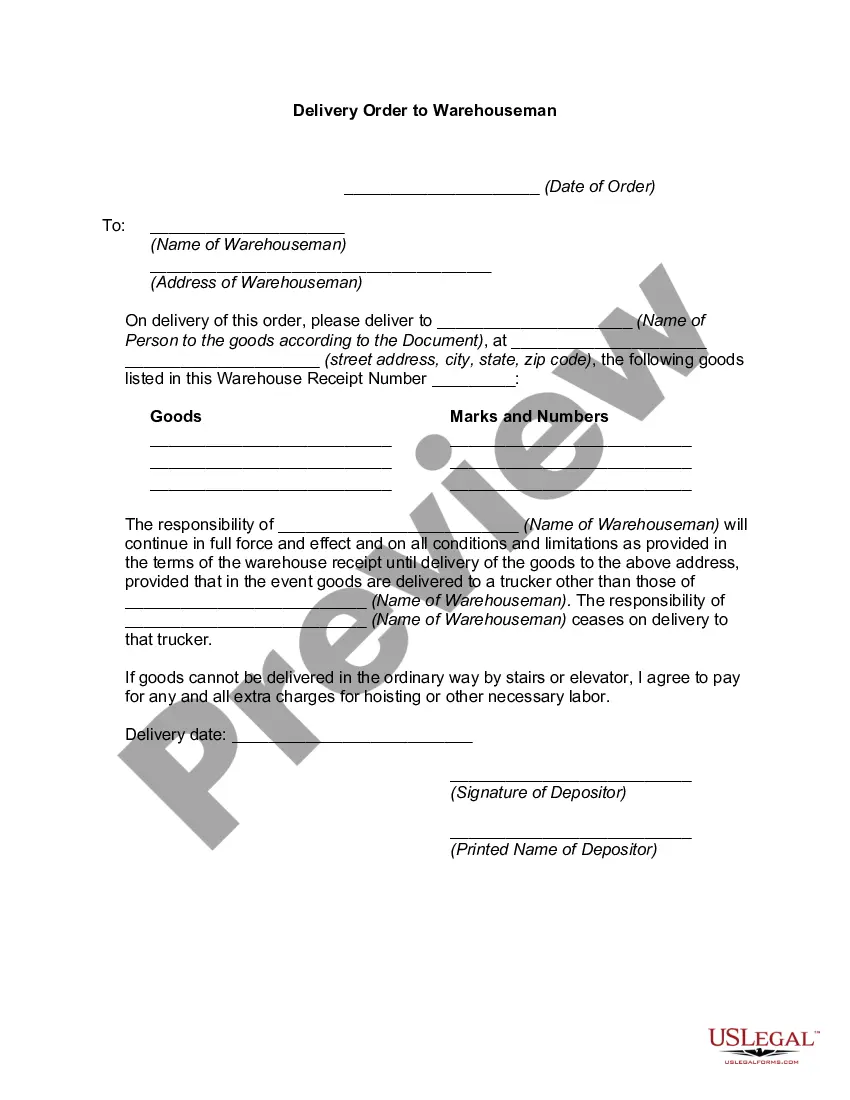
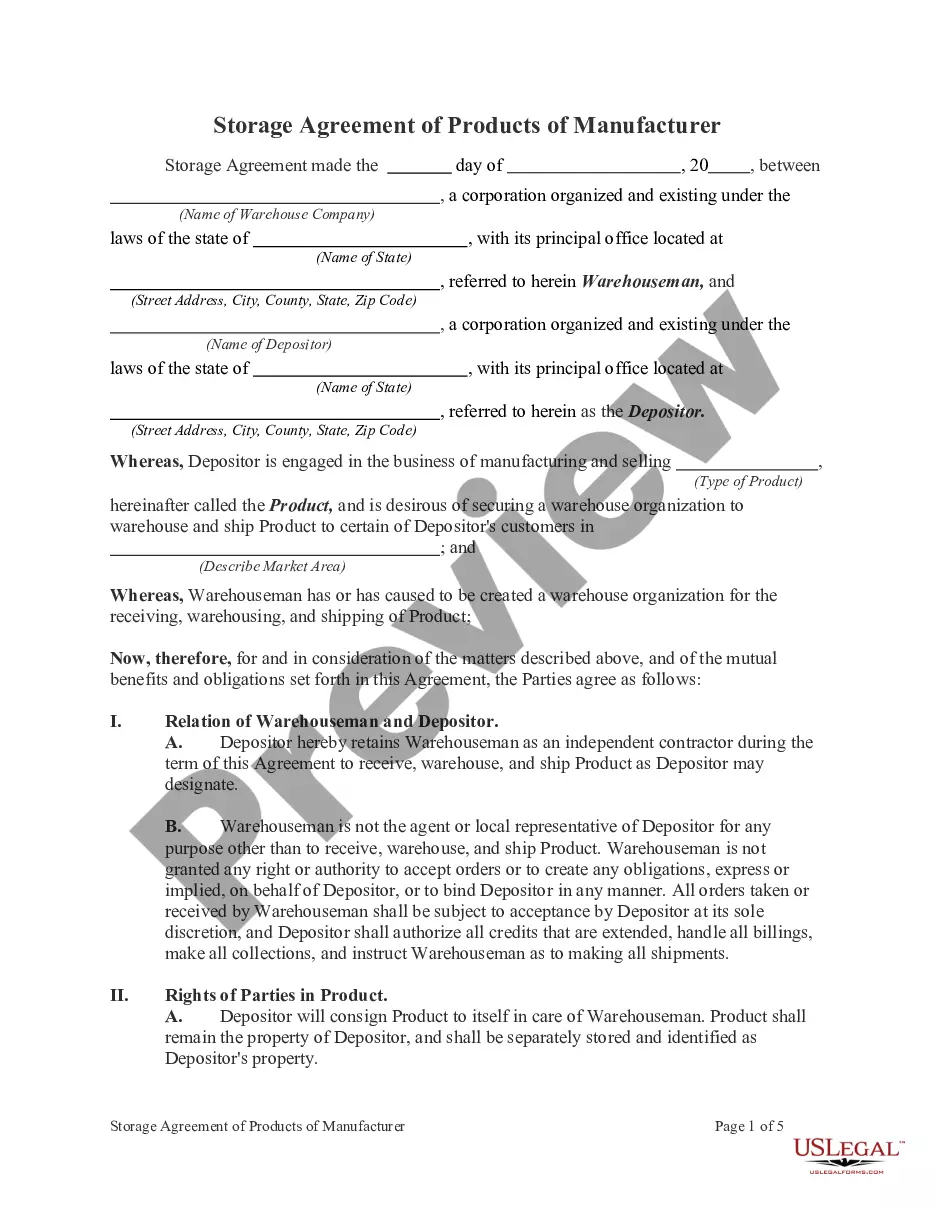
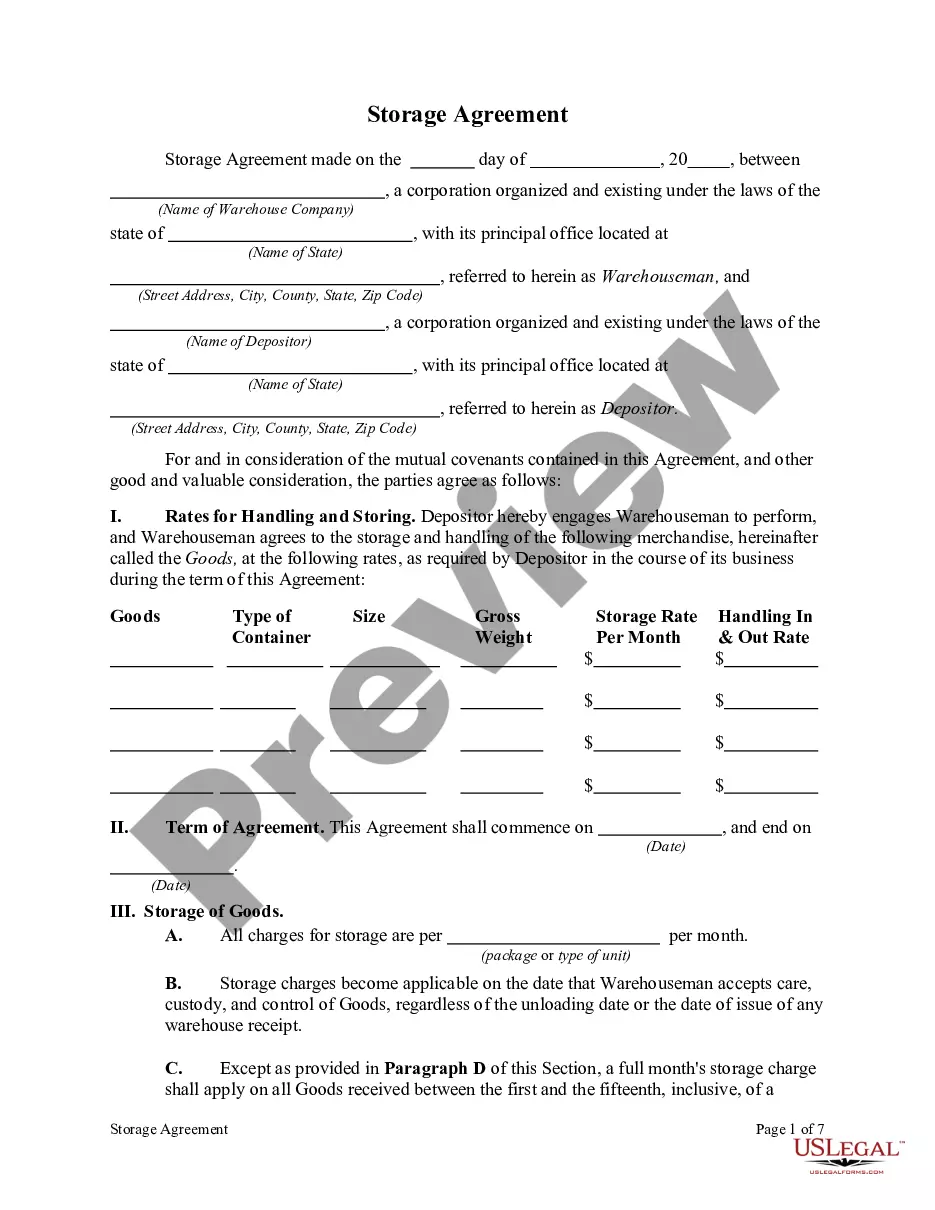
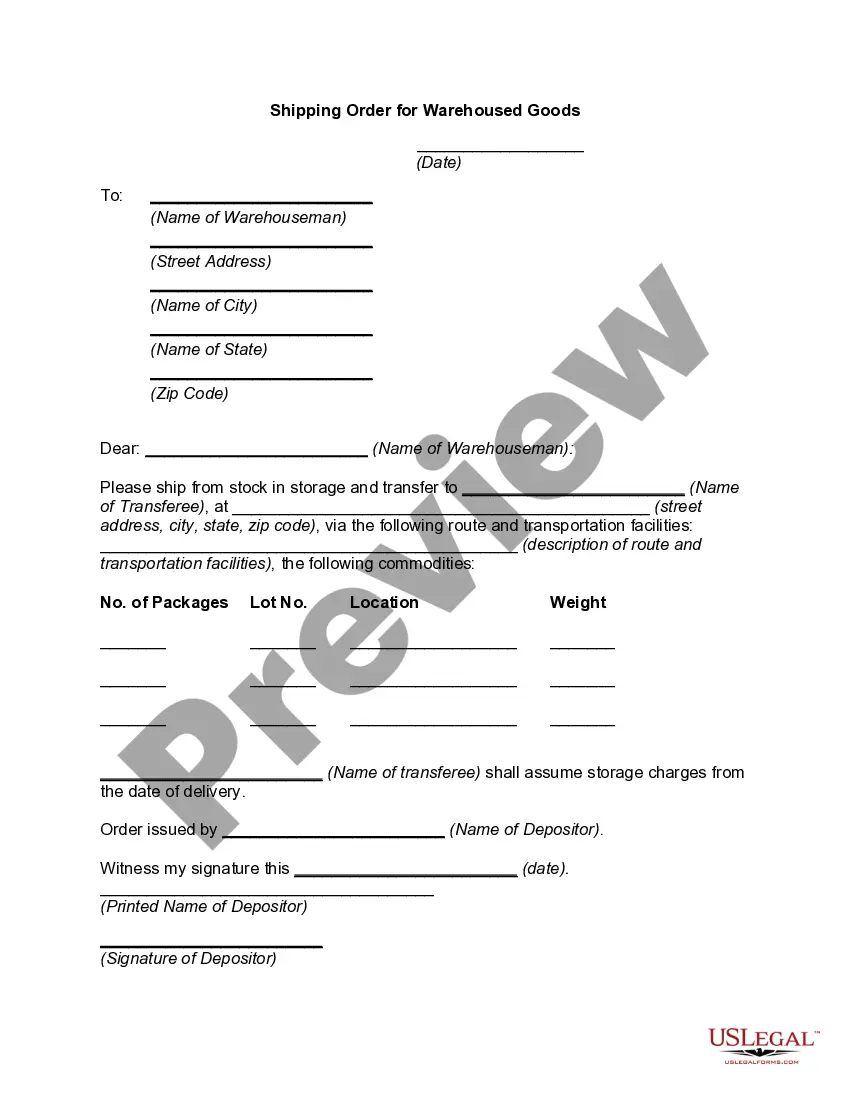
The Delivery Order to Warehouseman is a legal document used to instruct a warehouseman to release specific goods to a designated individual or entity. This form serves as an official request for the transfer of goods listed in a warehouse receipt, differentiating itself from more general delivery orders by its focus on goods stored in a warehouse and the responsibilities of the warehouseman involved.
What’s included in this form
- Date of order: Indicates when the delivery order is issued.
- Name of warehouseman: Identifies the warehouse in possession of the goods.
- Address of warehouseman: Provides the location of the warehouse.
- Recipient information: Details the person or entity to receive the goods.
- Goods description: Lists the items to be delivered along with their marks and numbers.
- Warehouseman responsibilities: Clarifies the warehouseman's obligations until delivery is made.
- Signatures: Requires the depositor's signature for validation.
When to use this document
This form is necessary when you need to retrieve goods stored in a warehouse but require formal authorization for their release. Typical scenarios include transferring ownership, selling goods, or simply retrieving inventory that was stored temporarily. This document helps to ensure that the warehouseman complies with your request while outlining their responsibilities and any potential charges for special delivery circumstances.
Who this form is for
This form is suitable for:
- Individuals or businesses that have goods stored in a warehouse and wish to retrieve them.
- Warehousemen who need formal authorization to release goods to another party.
- Anyone involved in the logistics of transferring stored goods to ensure proper legal protocol is followed.
Completing this form step by step
- Enter the date of the order in the designated space.
- Provide the name and address of the warehouseman responsible for the goods.
- Fill in the recipient's name and delivery address information.
- List the goods to be delivered, including any relevant marks and numbers.
- Sign the document and include your printed name as the depositor.
Notarization requirements for this form
Notarization is generally not required for this form. However, certain states or situations might demand it. You can complete notarization online through US Legal Forms, powered by Notarize, using a verified video call available anytime.
Get your form ready online
Our built-in tools help you complete, sign, share, and store your documents in one place.
Make edits, fill in missing information, and update formatting in US Legal Forms—just like you would in MS Word.
Download a copy, print it, send it by email, or mail it via USPS—whatever works best for your next step.
Sign and collect signatures with our SignNow integration. Send to multiple recipients, set reminders, and more. Go Premium to unlock E-Sign.
If this form requires notarization, complete it online through a secure video call—no need to meet a notary in person or wait for an appointment.
We protect your documents and personal data by following strict security and privacy standards.

Make edits, fill in missing information, and update formatting in US Legal Forms—just like you would in MS Word.

Download a copy, print it, send it by email, or mail it via USPS—whatever works best for your next step.

Sign and collect signatures with our SignNow integration. Send to multiple recipients, set reminders, and more. Go Premium to unlock E-Sign.

If this form requires notarization, complete it online through a secure video call—no need to meet a notary in person or wait for an appointment.

We protect your documents and personal data by following strict security and privacy standards.
Common mistakes
- Failing to provide a complete list of goods in the order.
- Omitting the name or address of the warehouseman.
- Not signing the form before submission to the warehouseman.
Why use this form online
- Convenience of accessing and downloading the form from anywhere.
- Editable format allows for easy customization according to individual needs.
- Reliable templates created by licensed attorneys ensure legal compliance.
Looking for another form?


Form popularity
FAQ
Delivery Note: when goods that are being transported on one Bill of Lading are sold on during transport by sea, the recipient who sold the goods will issue a delivery order or delivery note to the different buyers, each for their share in the load they purchased.
Delivery order is the order given by carrier to the party to take delivery of goods.Once after arrival of cargo at final customs port of destination, the said carrier of goods issues delivery order to consignee (or his order) after collecting necessary charges if any.
The Purchasing Process Purchasing is the process of buying goods and services.The supplier then has to release the goods with the delivery order. An invoice is sent by the supplier which is then cross-checked with the purchase order and documents specifying which goods have been received.
How to release goods from Shipping Company? Delivery order is the order given by carrier to the party to take delivery of goods. Once cargo arrived at port of destination, the goods are moved to customs bonded area where in customs clearance procedures are carried out.
What Is the Difference Between a Bill of Lading and Proof of Delivery?A Bill of Lading is a written receipt from a carrier for the transportation of materials, whereas the proof of delivery is a receipt signed by the party receiving the materials.
A delivery order is a document that can be issued by the owner of freight, consignee, shipper or a carrier to deliver the goods to another party. A delivery order should be differentiated from the bill of lading. The delivery order is not a negotiable document and it does not act as evidence or receipt of goods.
Share. Also known as Shipping order. A document from a shipping carrier instructing a terminal operator or shipping agent to release cargo or freight to the agent or consignee designated on the Bill of Lading.
You create a delivery order in the SAP System from a pick-up sheet sent in by the customer.The delivery order contains information detailing the material(s) to be picked up by the customer's forwarding agent and the pick-up date and times. It is based on one or more scheduling agreements for delivery orders.