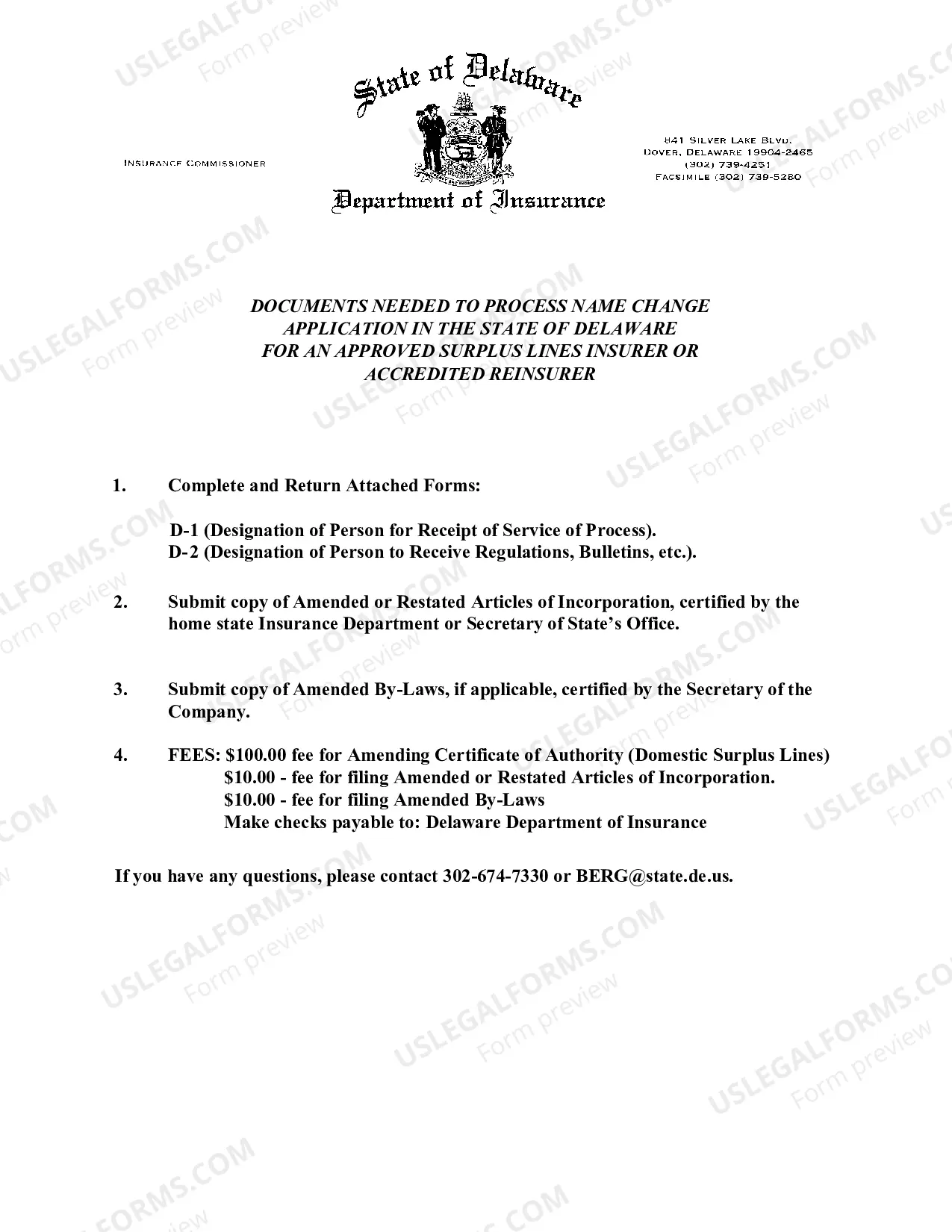
Storage Agreement
What is this form?
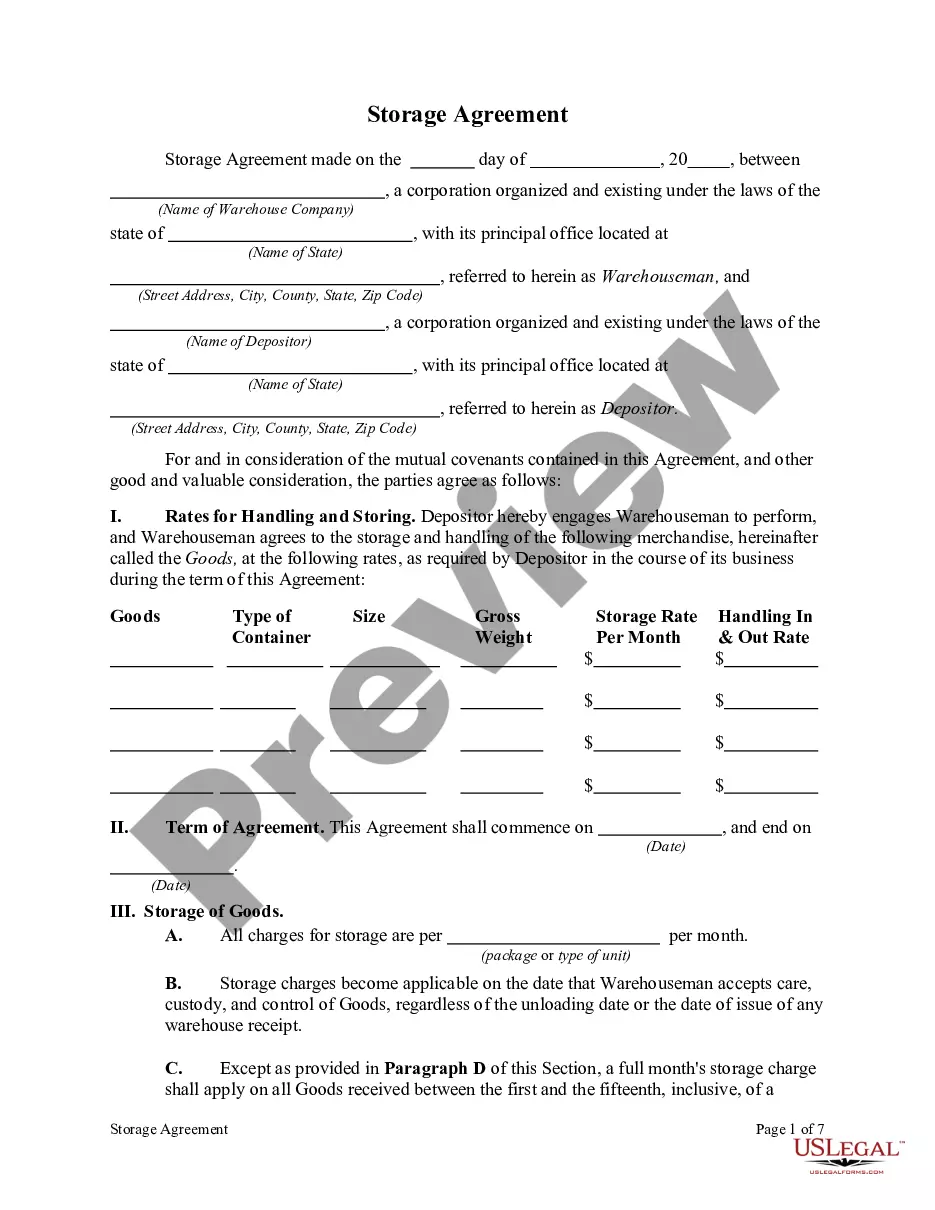
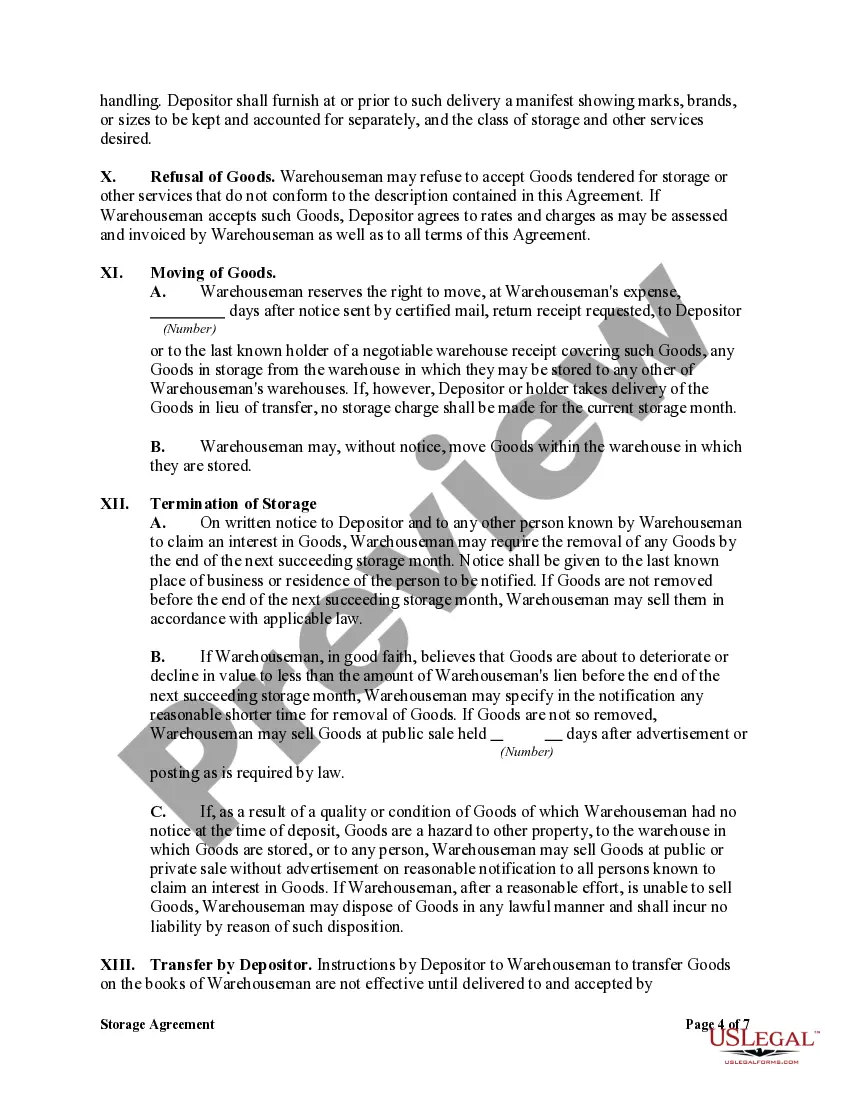
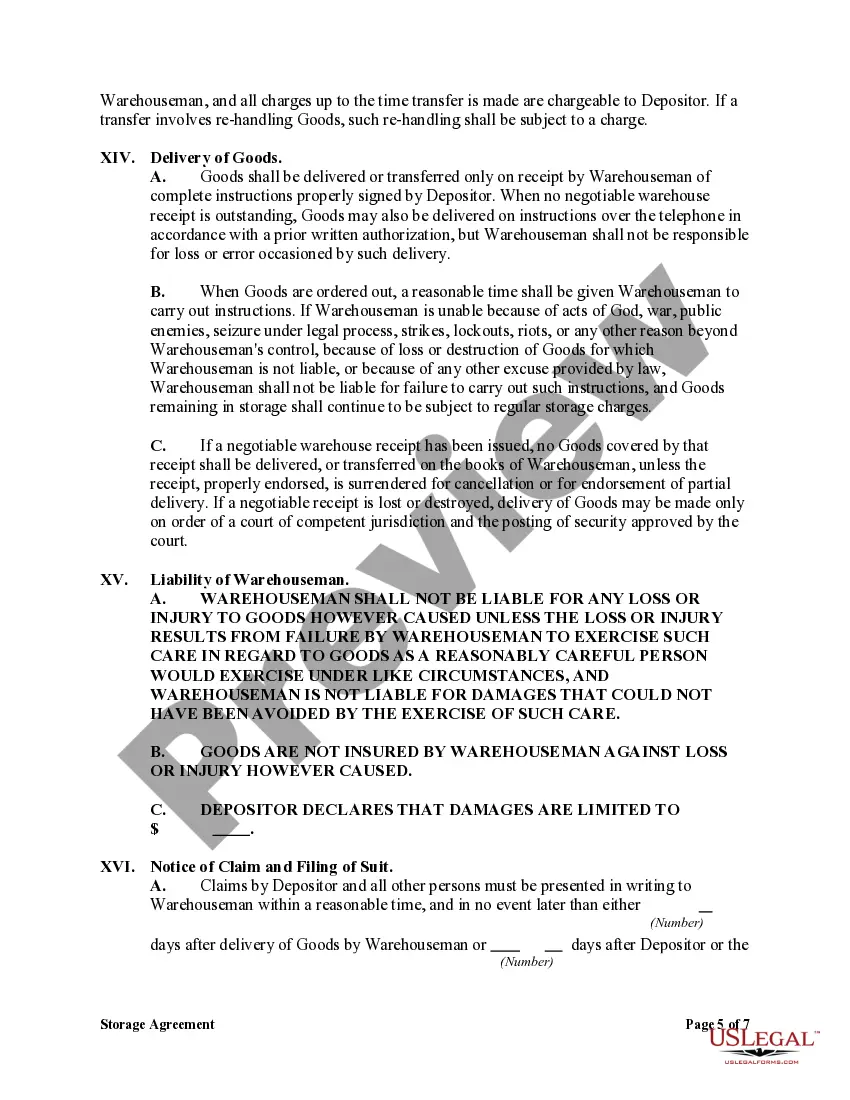
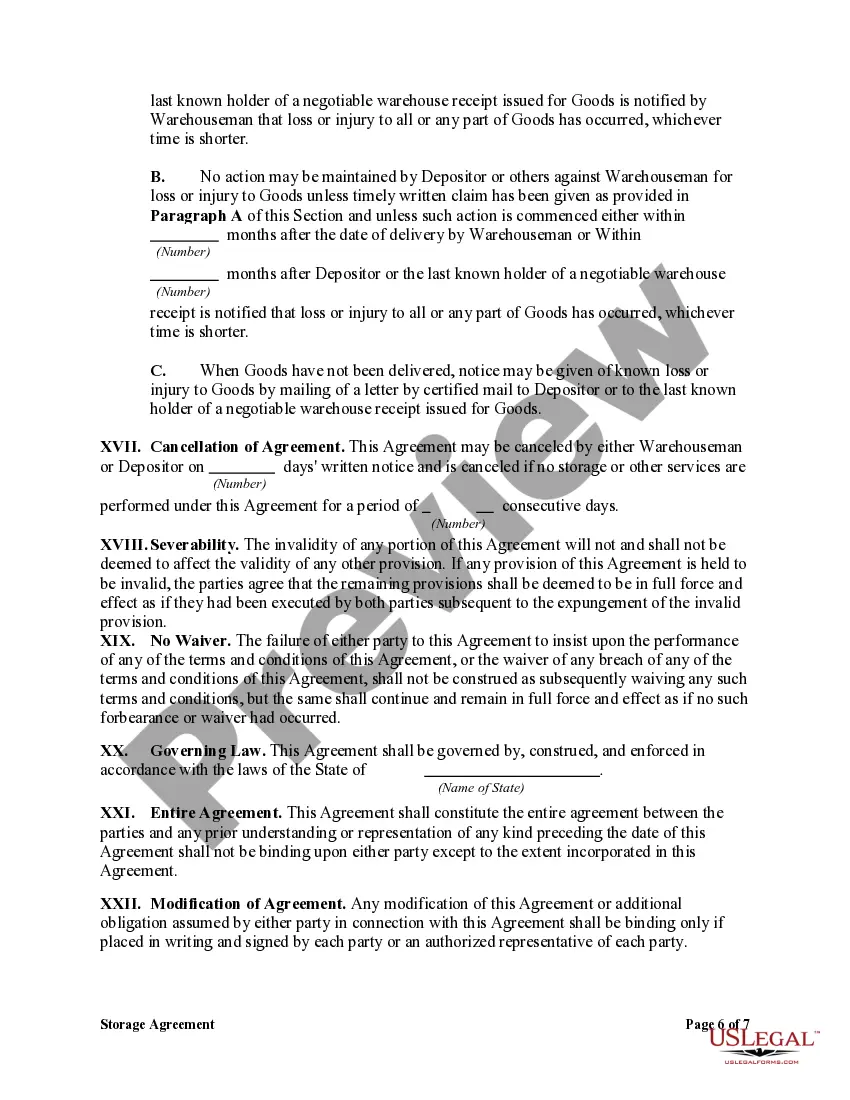
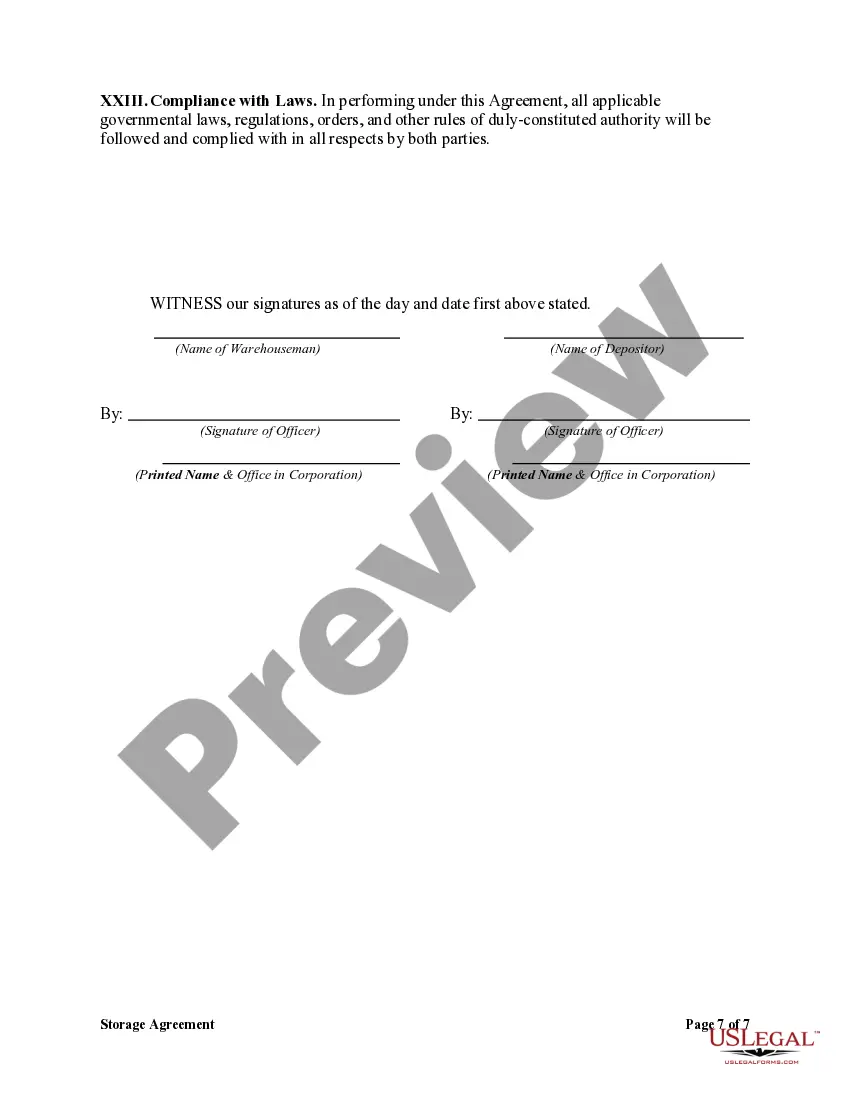
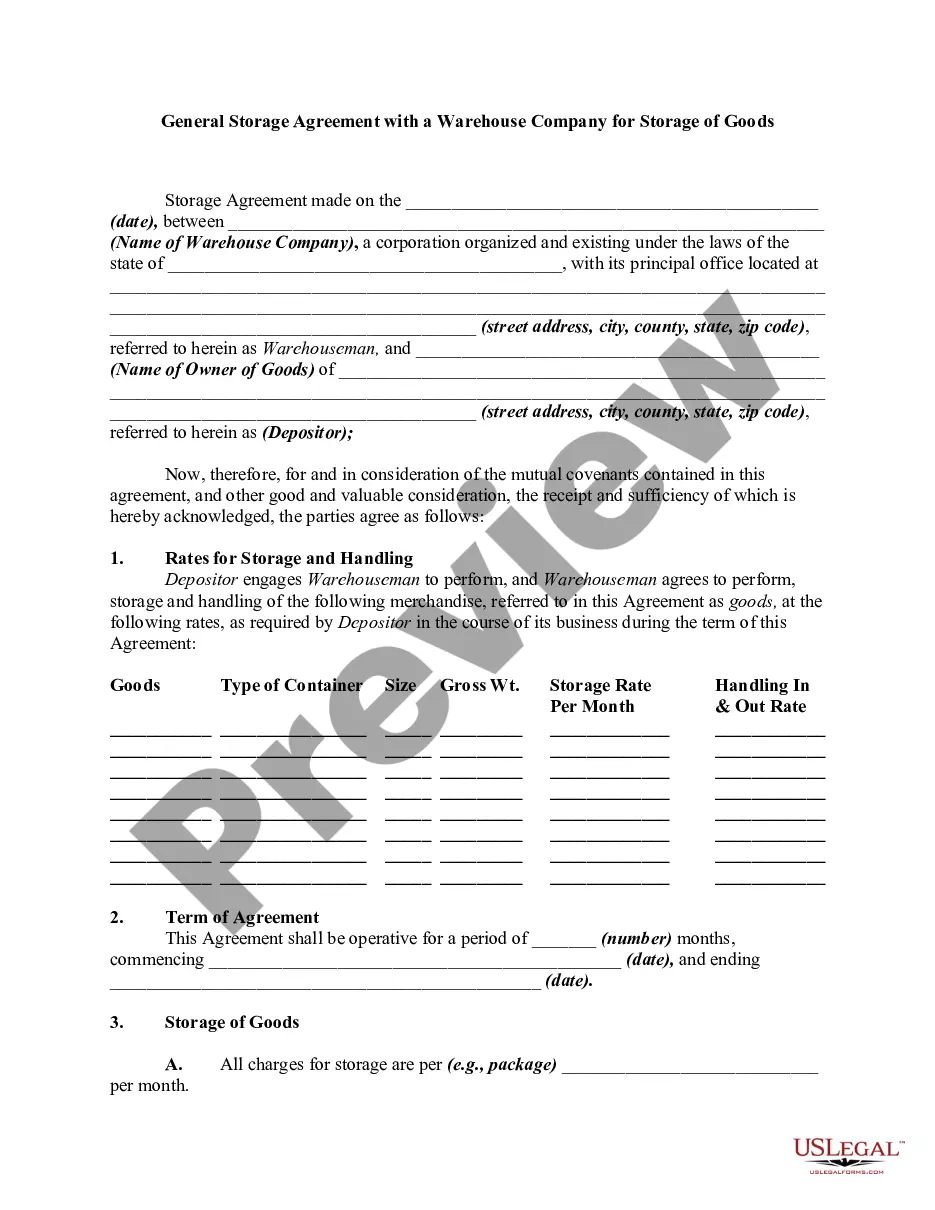
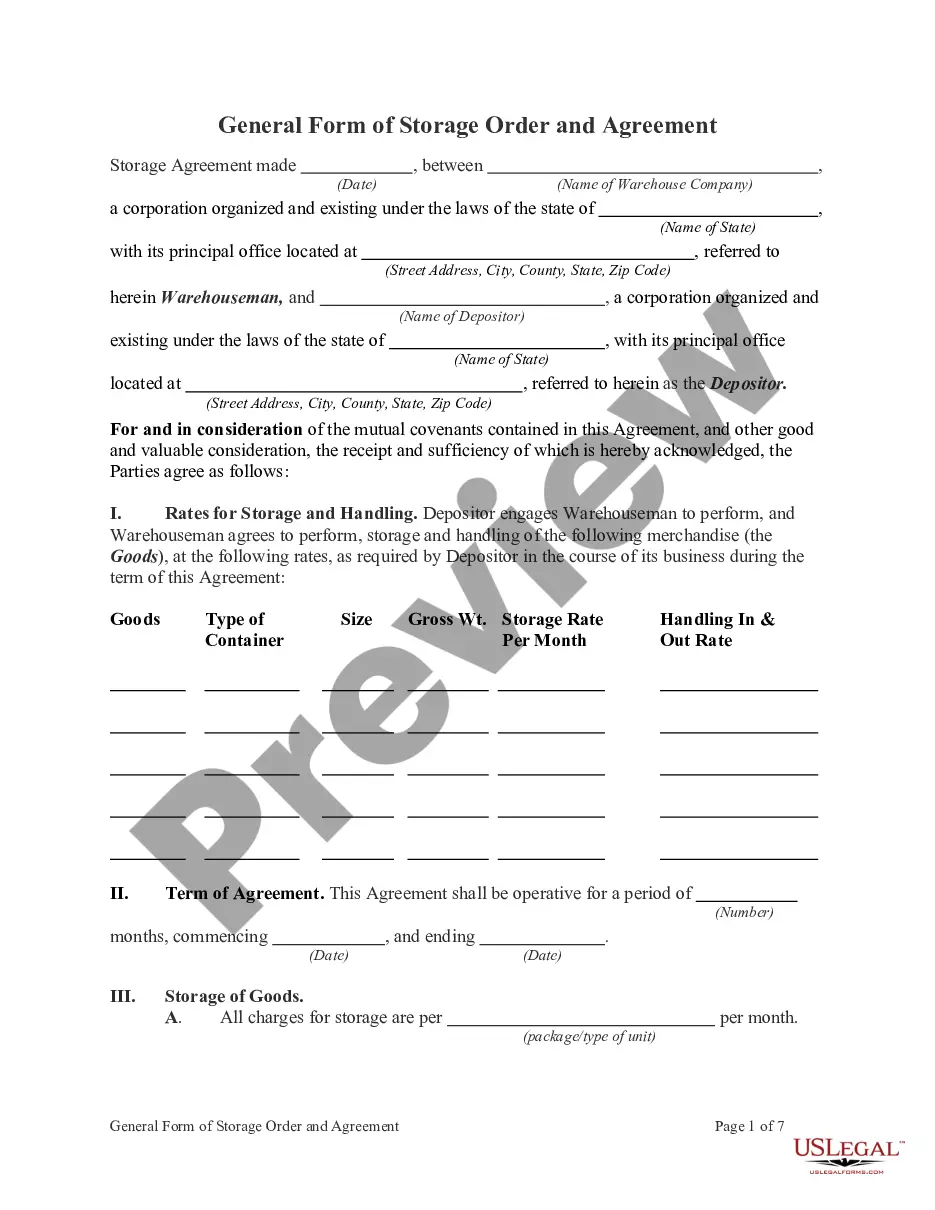
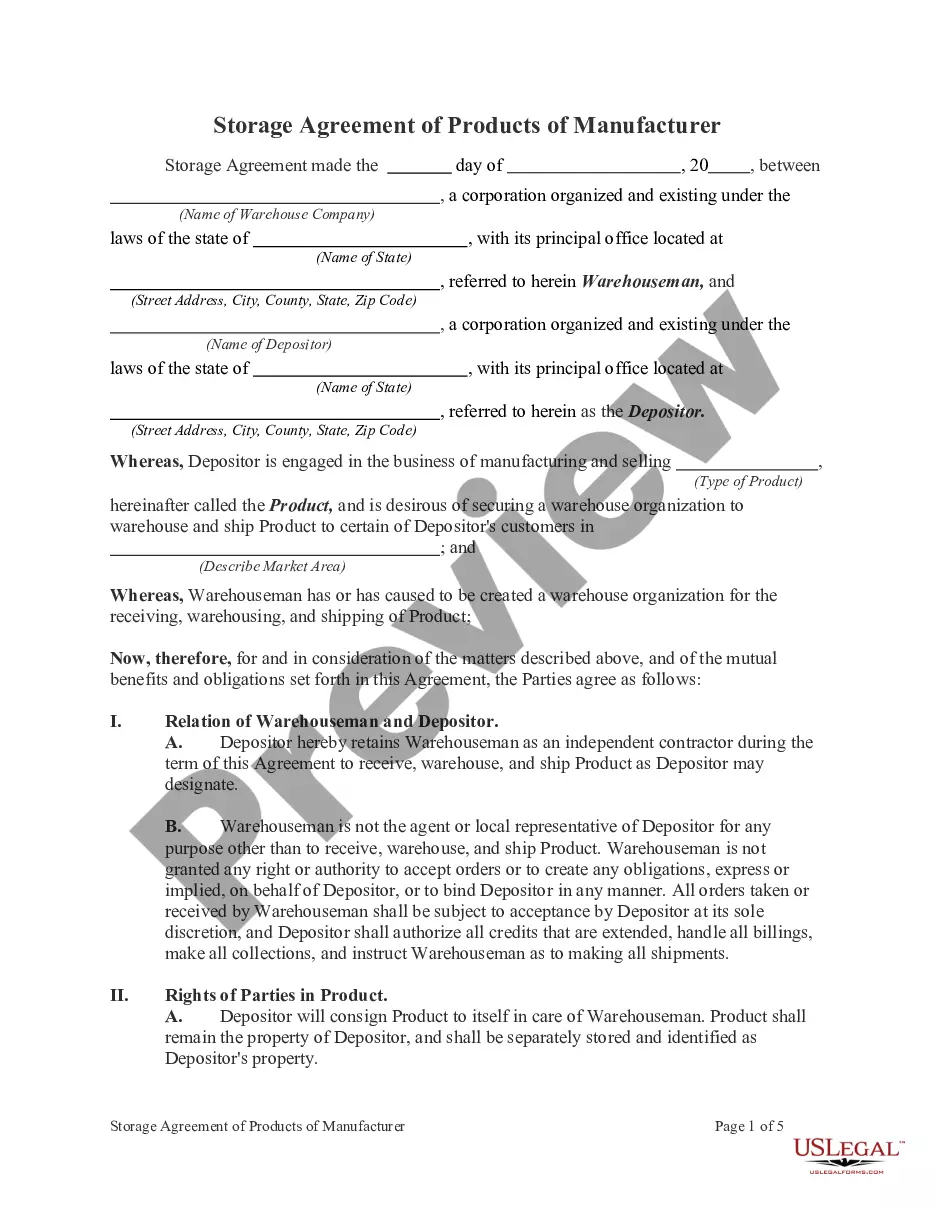
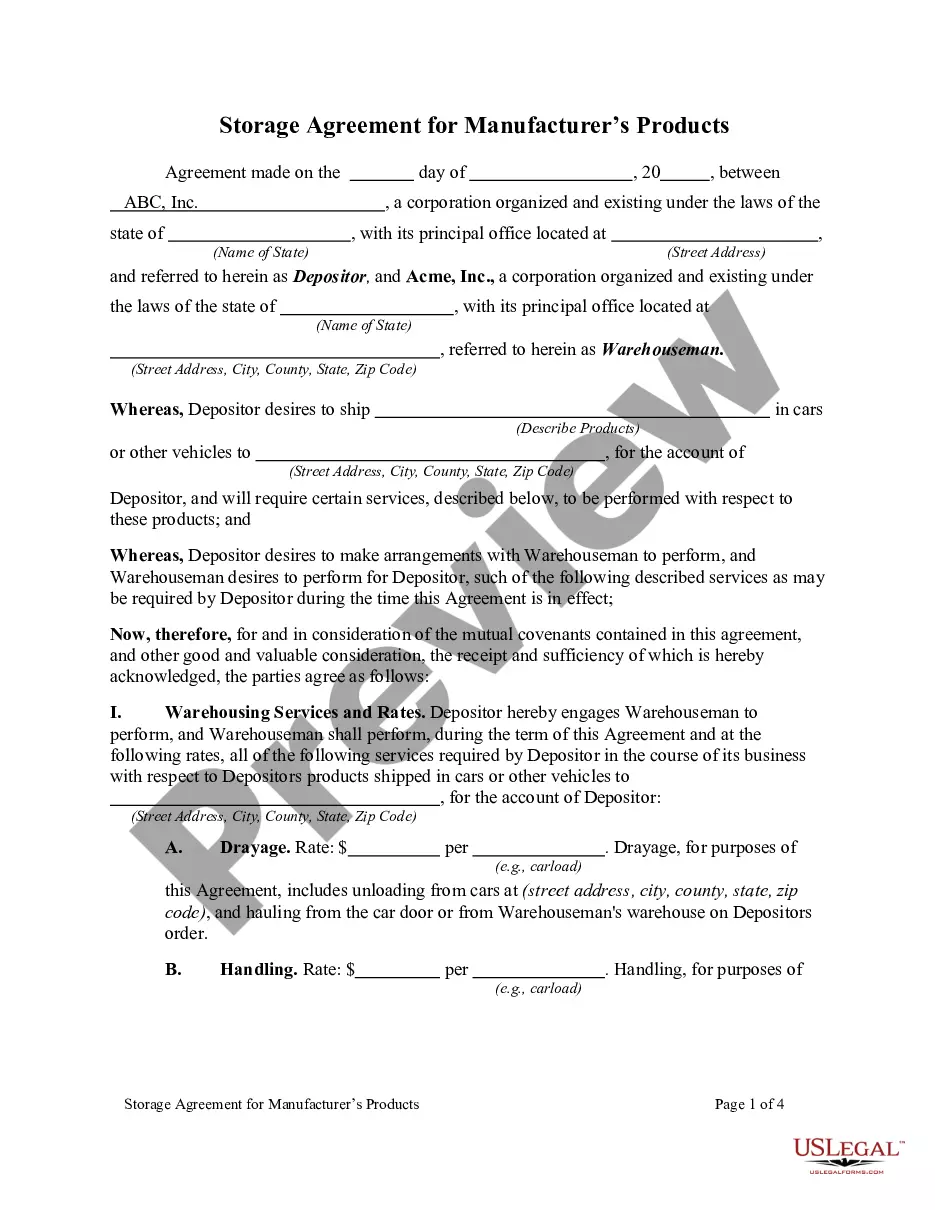
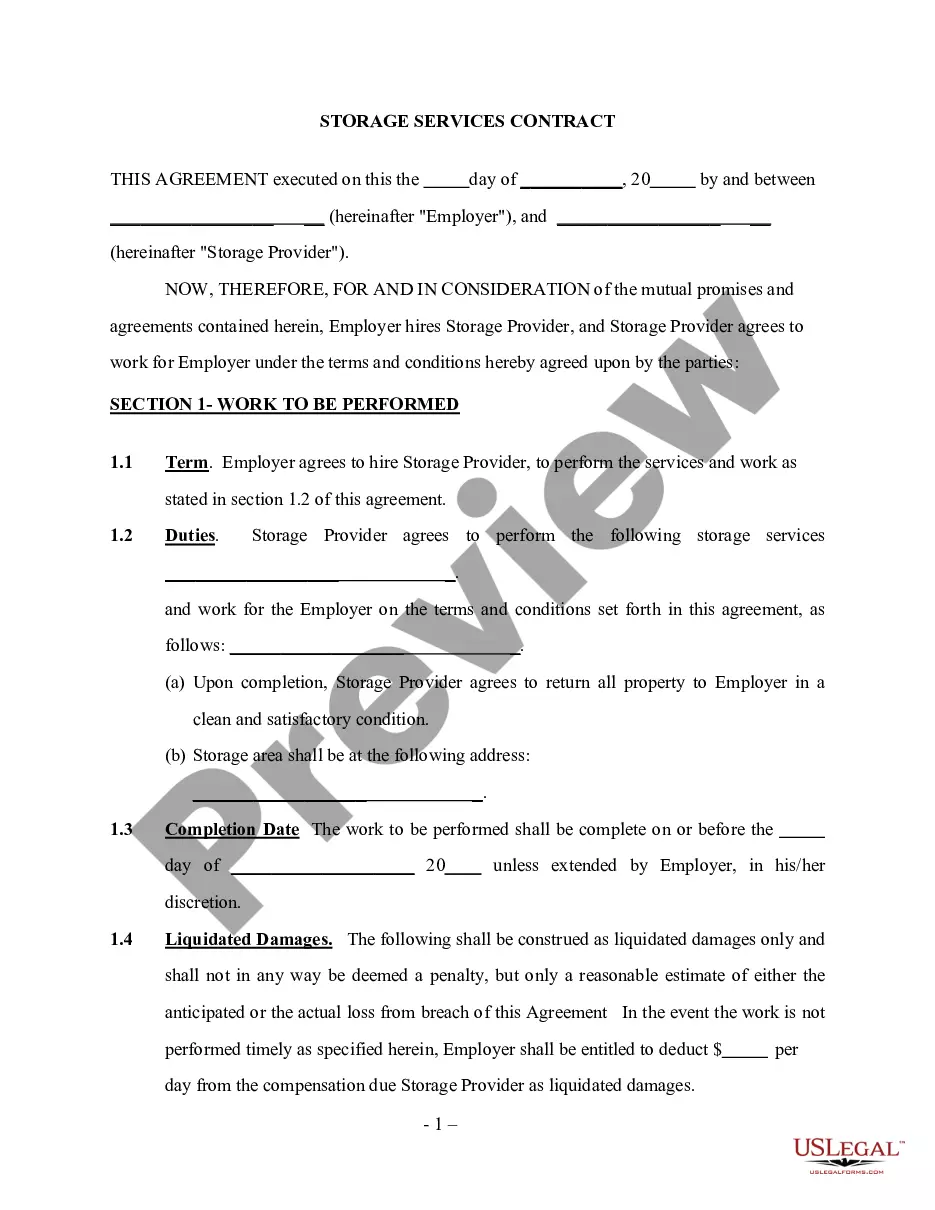
The Storage Agreement is a legal document that outlines the terms and conditions for storing goods between a depositor and a warehouseman. This form specifies the fees for storage, handling, and any special services required for the goods stored. Unlike a simple rental agreement, this storage agreement provides detailed clauses on responsibilities, liabilities, and termination, ensuring clarity and protection for both parties involved in the storage transaction.
Key components of this form
- Rates for handling and storing goods, including minimum charges.
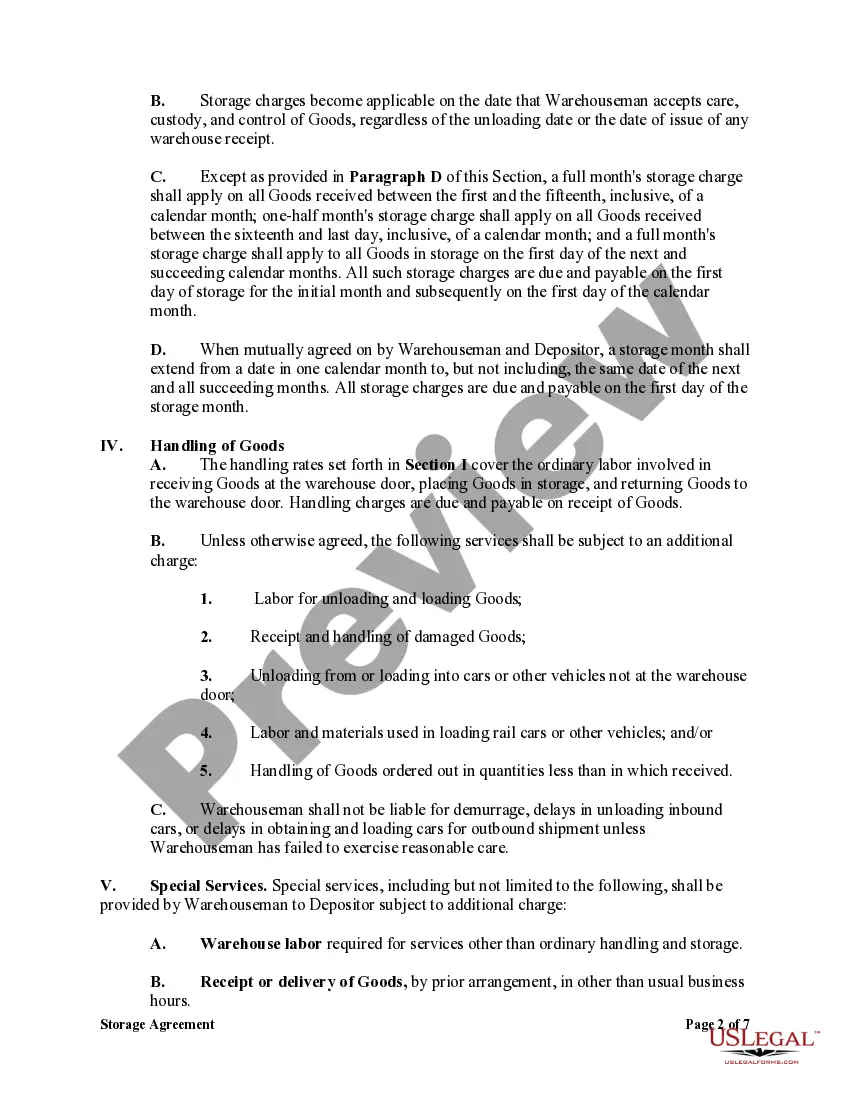
- Conditions for the handling of goods, outlining ordinary and special charges.
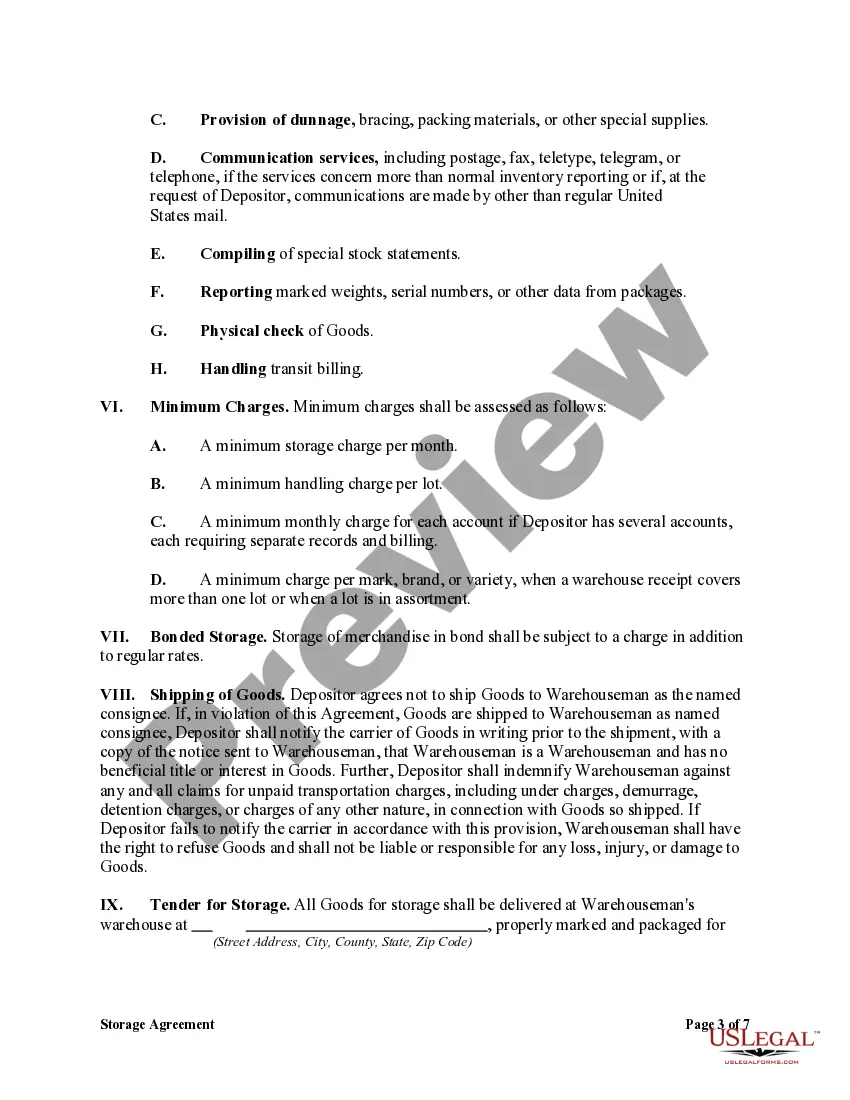
- Provision for bonded storage and conditions under which goods may be refused.
- Provisions for termination of storage with notice requirements.
- Liability limitations for the warehouseman regarding loss or injury to goods.
When this form is needed
This Storage Agreement should be used when individuals or businesses need to store their physical goods in a warehouse. It is essential when engaging storage services for both short- and long-term needs. This form is beneficial for clarifying expectations regarding storage fees, handling conditions, and procedures for retrieval or termination of the storage arrangement.
Intended users of this form
- Businesses requiring storage solutions for inventory or equipment.
- Individuals needing temporary or long-term storage for personal belongings.
- Warehouse operators looking to formalize agreements with depositors.
How to complete this form
- Identify the parties involved: the warehouseman and the depositor.
- Specify the goods to be stored and their condition.
- Detail the agreed storage rates and the payment terms.
- Include clauses related to handling, liability, and special services.
- Sign and date the agreement to validate the terms.
Does this document require notarization?
This form does not typically require notarization unless specified by local law. However, you may consider having it notarized to enhance its legal enforceability.
Get your form ready online
Our built-in tools help you complete, sign, share, and store your documents in one place.
Make edits, fill in missing information, and update formatting in US Legal Forms—just like you would in MS Word.
Download a copy, print it, send it by email, or mail it via USPS—whatever works best for your next step.
Sign and collect signatures with our SignNow integration. Send to multiple recipients, set reminders, and more. Go Premium to unlock E-Sign.
If this form requires notarization, complete it online through a secure video call—no need to meet a notary in person or wait for an appointment.
We protect your documents and personal data by following strict security and privacy standards.

Make edits, fill in missing information, and update formatting in US Legal Forms—just like you would in MS Word.

Download a copy, print it, send it by email, or mail it via USPS—whatever works best for your next step.

Sign and collect signatures with our SignNow integration. Send to multiple recipients, set reminders, and more. Go Premium to unlock E-Sign.

If this form requires notarization, complete it online through a secure video call—no need to meet a notary in person or wait for an appointment.

We protect your documents and personal data by following strict security and privacy standards.
Typical mistakes to avoid
- Failing to specify all items being stored, which can lead to disputes.
- Neglecting to clarify additional charges for handling or special services.
- Not understanding liability clauses, leading to unexpected losses.
- Omitting necessary signatures or dates, which may invalidate the agreement.
Advantages of online completion
- Convenient access to customized storage agreements tailored to specific needs.
- Editable documents allow for adjustments before finalizing the terms.
- Quick download option enables immediate use without waiting for postal services.
Legal use & context
- The Storage Agreement is legally binding and enforceable if completed and signed properly.
- It is crucial to adhere to the terms outlined to avoid potential disputes.
- In the event of disputes, the agreement serves as a key document in legal proceedings.
Quick recap
- The Storage Agreement defines the terms of storing goods at a warehouse.
- Clear communication and understanding of fees and responsibilities are essential.
- This form serves multiple users, from businesses to individual needs for storage.
Looking for another form?

Form popularity
FAQ
In California, a prospective landlord cannot ask about race, color, religion, sex, gender, gender identity, gender expression, sexual orientation, marital status, national origin, ancestry, familial status, disability, or genetic information.
If you need to store any items you rarely use, the garagelike the basement or atticis often a great place to hide them away. The garage also can be a good temporary storage spot for items you ultimately plan to get rid, as well as items that just don't have another home at the moment.
Pay the balance owed. Perhaps the most obvious way to get out of a lease is to just pay out what's owed. Clear it out and then wait. Try to transfer the lease contract. Submit a request for lease release.
If you're moving for your job and don't yet have a place to live, storage is a good option. Likewise, if you need to make your home more presentable while it's on the market, but don't want to get rid of your stuff, rent a storage unit.
Self-storage facilities typically offer contracts on a month-to-month basis. This way, the customer has the option to store temporarily or long-term.Contracts offered by full-service storage facilities vary from company to company. Some insist on a 3 month minimum, while others offer month-to-month services.
A landlord cannot evict a tenant without an adequately obtained eviction notice and sufficient time. A landlord cannot retaliate against a tenant for a complaint. A landlord cannot forego completing necessary repairs or force a tenant to do their own repairs.A landlord cannot remove a tenant's personal belongings.
While using the garage for storage or a vehicle is legal, this space can't be used as a bedroom because it's not deemed to be a habitable area.If you have any questions about renting your car space, contact your Strata Manager at Netstrata.
If you don't prohibit a tenant from using that garage for storage in the lease or tenant rules, and you include the garage as their area in their lease, they can do as they like with it. You didn't tell them otherwise. They can use it for storage of tons of boxes.
Self Storage operators do not typically run credit checks on their customers before renting a space and require minimum identification.If a customer does not pay their rent, the facility operator can recover the spaced in 60 to 90 days from default.