Compensation for Change Orders and Builder Allowance Overages
About this form
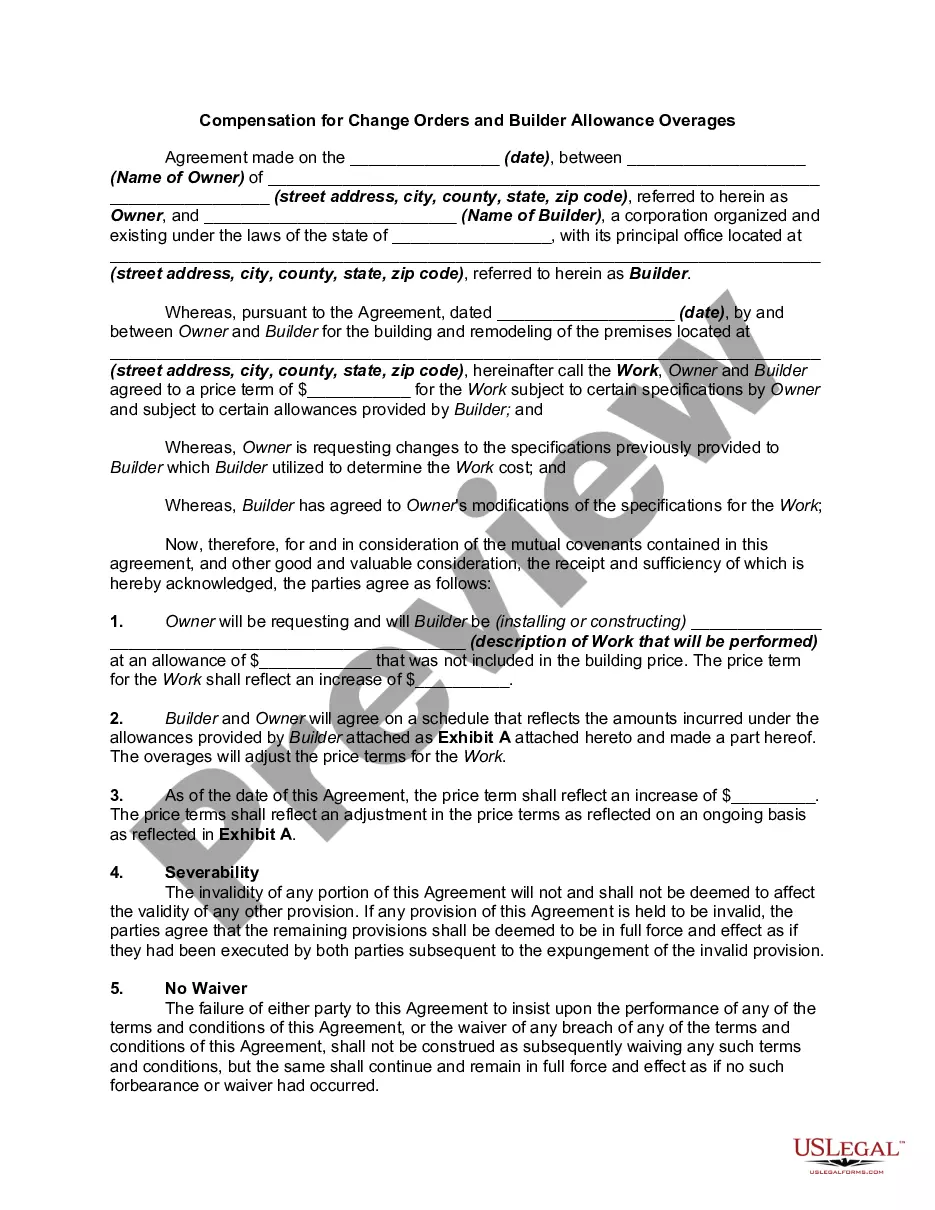
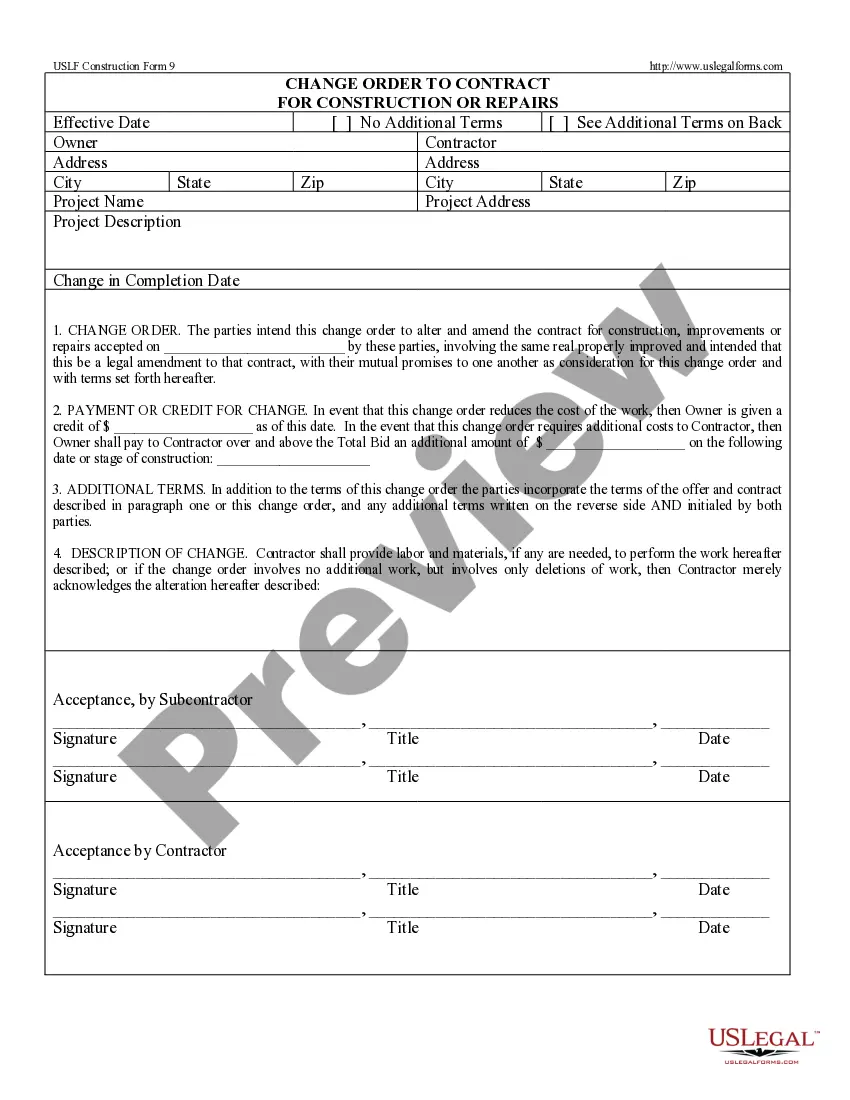
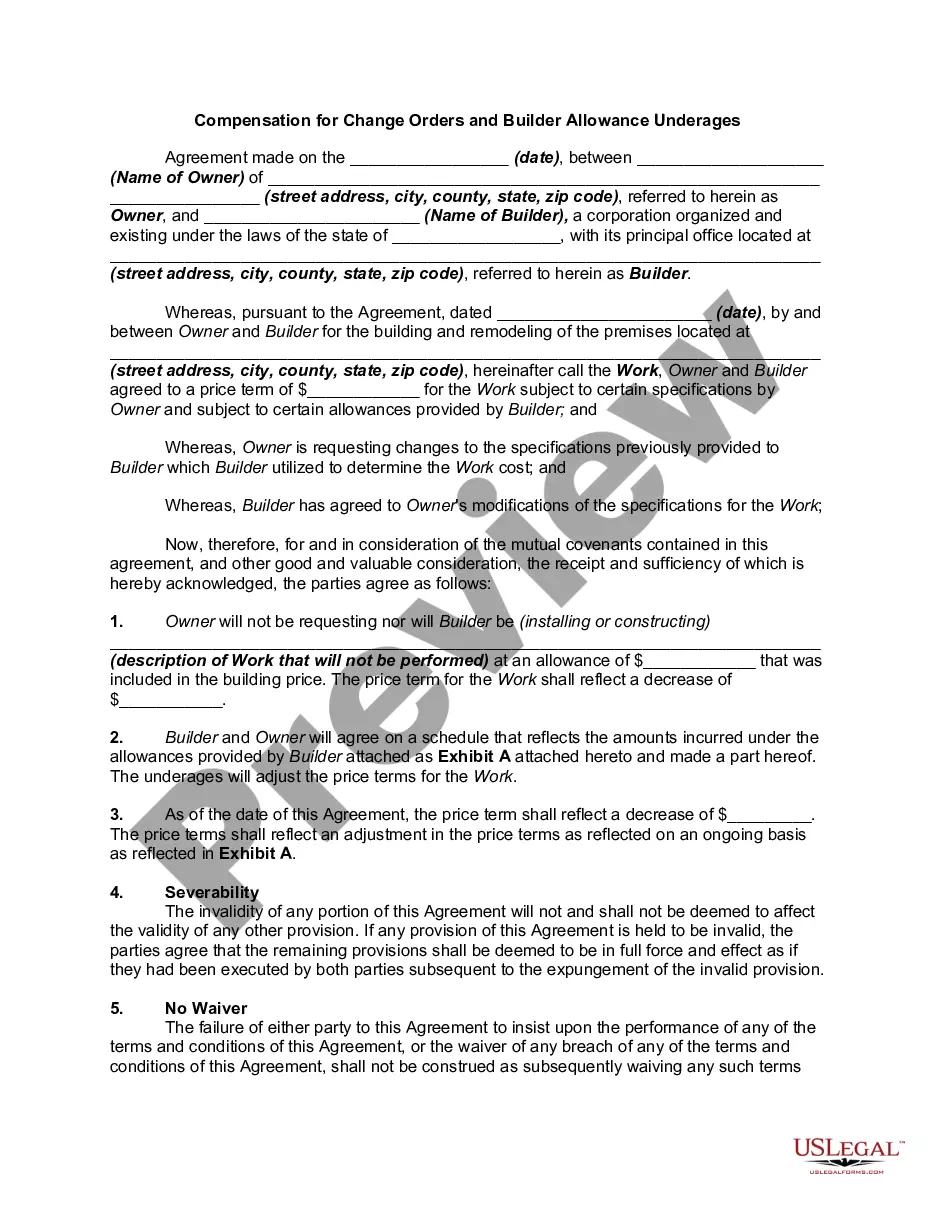
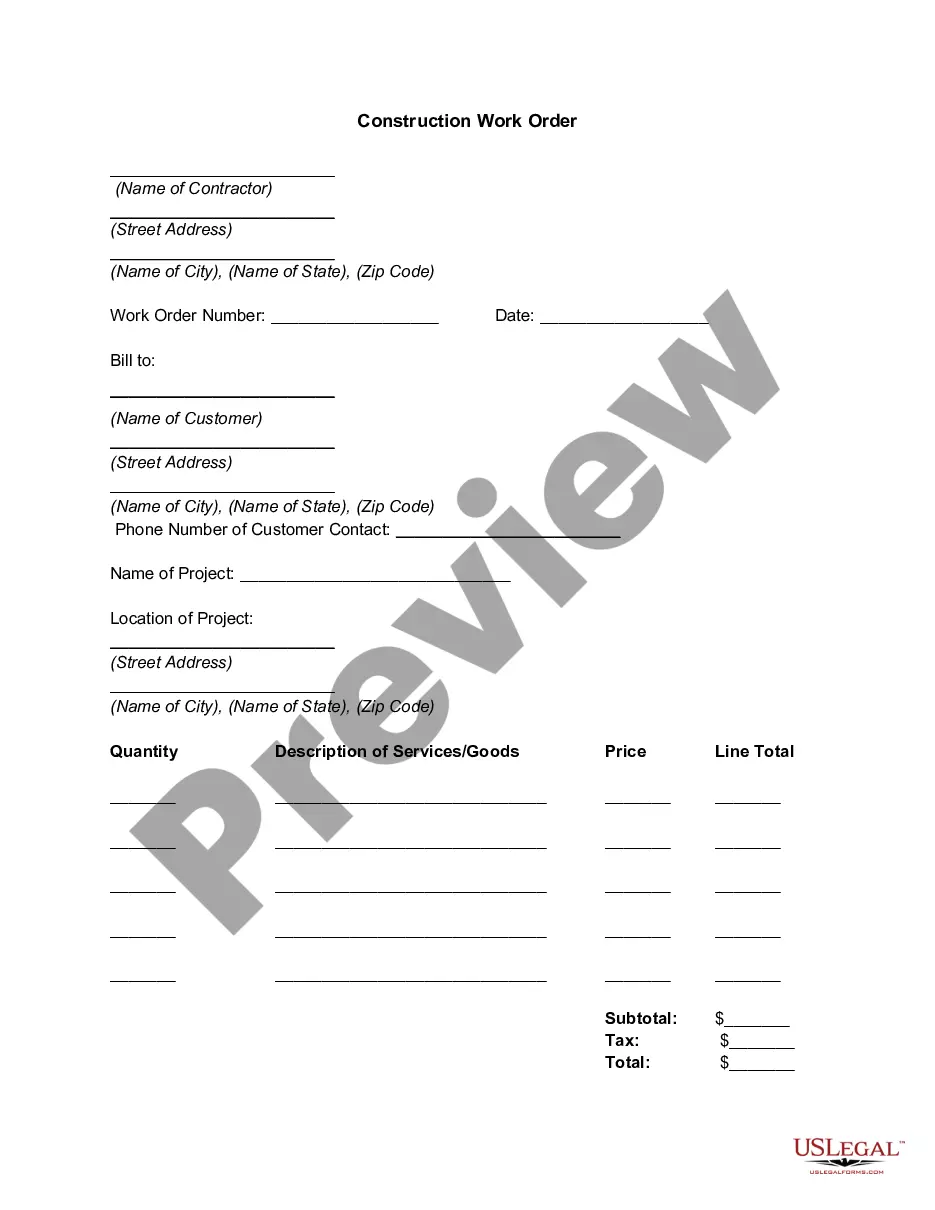
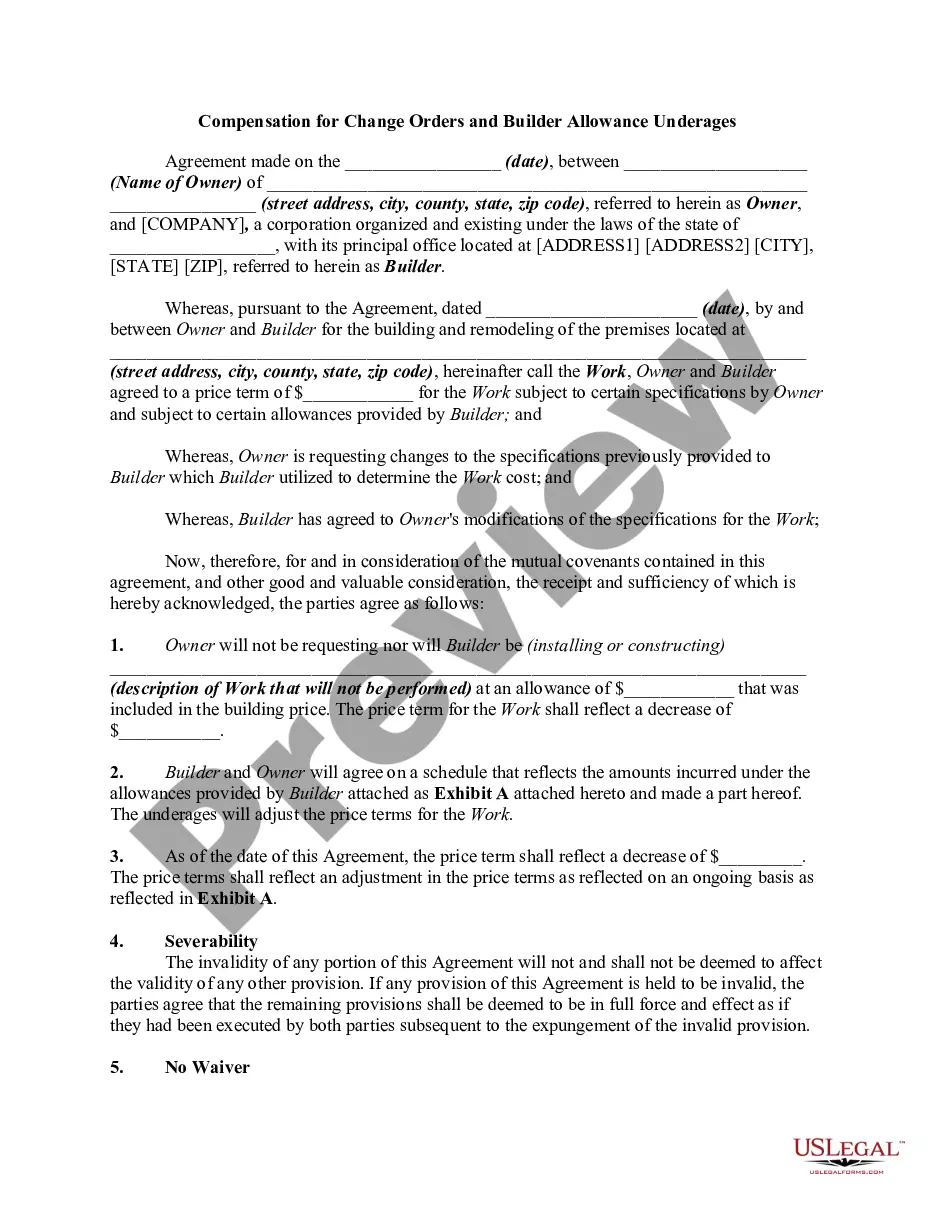
The Compensation for Change Orders and Builder Allowance Overages form is a legal document used in construction projects to address changes in specifications after the initial agreement has been formed. This form outlines the financial implications of these changes, including any additional costs incurred due to modifications requested by the owner. Unlike standard contracts, this form specifically handles change orders and builder allowances, ensuring that both parties agree on new terms and pricing adjustments as the project evolves.
Key components of this form
- Identification of the owner and the builder, including contact and company details.
- Agreement date and reference to the original contract.
- Detailed description of requested changes along with any specified allowances.
- Adjustment of project pricing reflecting change orders and overages.
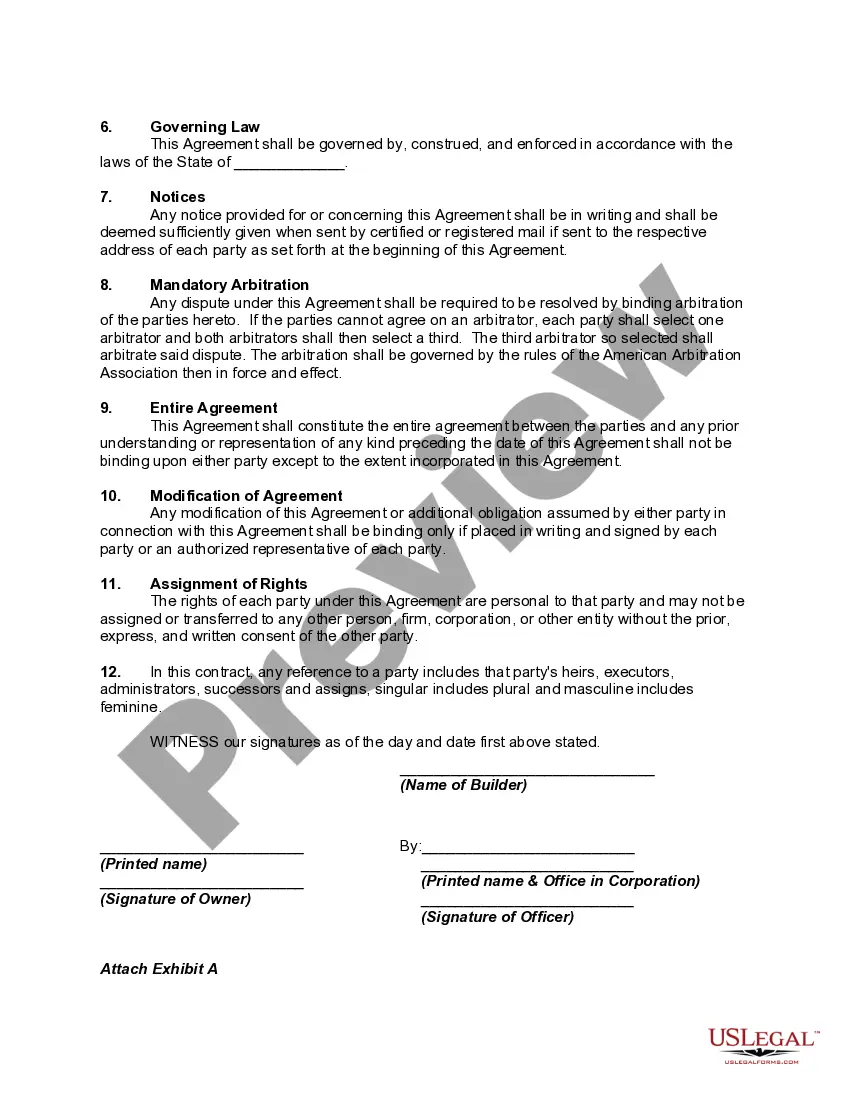
- Governing law and compliance with state requirements.
- Dispute resolution through mandatory arbitration.
When this form is needed
This form should be used when a client requests changes to the initial construction plans that require pricing adjustments. Common situations include discovering unforeseen obstacles, realizing project inefficiencies, or wanting to add new features during the construction process. Utilizing this form helps clarify new responsibilities and costs associated with these changes, protecting both the owner and builder from potential disputes.
Who needs this form
This form is suitable for:
- Homeowners or property owners initiating construction or renovation projects.
- Builders or contractors responsible for executing construction projects.
- Project managers overseeing changes in the scope of construction work.
- Any parties involved in contracts where modifications may affect costs and completion timelines.
How to prepare this document
- Start by identifying the owner and builder, including their complete contact information.
- Specify the date of the agreement and refer to the original contract.
- Clearly describe the requested changes and list any allowances applicable to those changes.
- Adjust the project pricing as necessary for the changes outlined in the form.
- Ensure both parties sign the agreement to validate the terms and conditions following the changes.
Notarization requirements for this form
This form does not typically require notarization unless specified by local law. However, it is good practice to have it notarized to provide additional legal protection and authenticity.
Get your form ready online
Our built-in tools help you complete, sign, share, and store your documents in one place.
Make edits, fill in missing information, and update formatting in US Legal Forms—just like you would in MS Word.
Download a copy, print it, send it by email, or mail it via USPS—whatever works best for your next step.
Sign and collect signatures with our SignNow integration. Send to multiple recipients, set reminders, and more. Go Premium to unlock E-Sign.
If this form requires notarization, complete it online through a secure video call—no need to meet a notary in person or wait for an appointment.
We protect your documents and personal data by following strict security and privacy standards.

Make edits, fill in missing information, and update formatting in US Legal Forms—just like you would in MS Word.

Download a copy, print it, send it by email, or mail it via USPS—whatever works best for your next step.

Sign and collect signatures with our SignNow integration. Send to multiple recipients, set reminders, and more. Go Premium to unlock E-Sign.

If this form requires notarization, complete it online through a secure video call—no need to meet a notary in person or wait for an appointment.

We protect your documents and personal data by following strict security and privacy standards.
Typical mistakes to avoid
- Failing to include all necessary details about the requested changes.
- Not updating the pricing accurately to reflect additional costs.
- Neglecting to obtain signatures from both parties before proceeding with changes.
- Overlooking state-specific regulations regarding change orders.
- Using vague language that can lead to misunderstandings later on.
Advantages of online completion
- Convenience of downloading and editing the form on your schedule.
- Access to templates drafted by licensed attorneys, ensuring legal compliance.
- Easy storage and retrieval of documents for future reference.
- Ability to update details quickly as project specifications change.
- This form creates a legally binding agreement between the Owner and Builder regarding changes to the original contract.
- It is essential to expedite construction changes and manage financial adjustments formally.
- Failure to utilize this form can lead to misunderstandings or disputes over project costs and responsibilities.
Summary of main points
- The form is crucial for documenting alterations to construction contracts due to change orders.
- Proper completion helps mitigate disputes and clarifies financial responsibilities.
- Utilizing this legally vetted form ensures compliance with state-specific laws.
Looking for another form?
Form popularity
FAQ
The form is used to address changes in construction specifications after the original agreement, outlining the financial impact of modifications and ensuring both the owner and builder agree on new terms and pricing. It is used when a client requests changes that require pricing adjustments, helping clarify responsibilities and costs and prevent disputes.
The form documents the financial implications of change orders and builder allowance overages and requires agreement on revised pricing, so it helps determine which party bears the cost as part of the updated contract. It supports both owner and builder in resolving payment responsibilities within the project by recording agreed changes.
In this form, an allowance is a listed budget item tied to a change in scope, with a place to describe it and adjust the total project pricing accordingly. The form incorporates this allowance into the calculation of change orders and overages, ensuring transparent cost updates.
The form requires identification of the owner and builder with contact details, the agreement date, a reference to the original contract, a detailed description of the requested changes and any specified allowances, and the adjusted project pricing, along with governing law and dispute resolution terms.
By documenting who is responsible for the changes, listing the exact changes and any allowances, and showing the updated pricing, the form clarifies obligations and costs. It also includes governing law and mandatory arbitration to resolve disagreements in a structured way.
This form specifically covers compensation for change orders and builder allowance overages, includes a dedicated section for allowances, requires explicit pricing adjustments, and provides governing law and mandatory arbitration, making it more comprehensive for multi-state projects than a generic change order form.