Services Contract with Hotel to Maintain in Working Order LCD Televisions - Self-Employed
Understanding this form
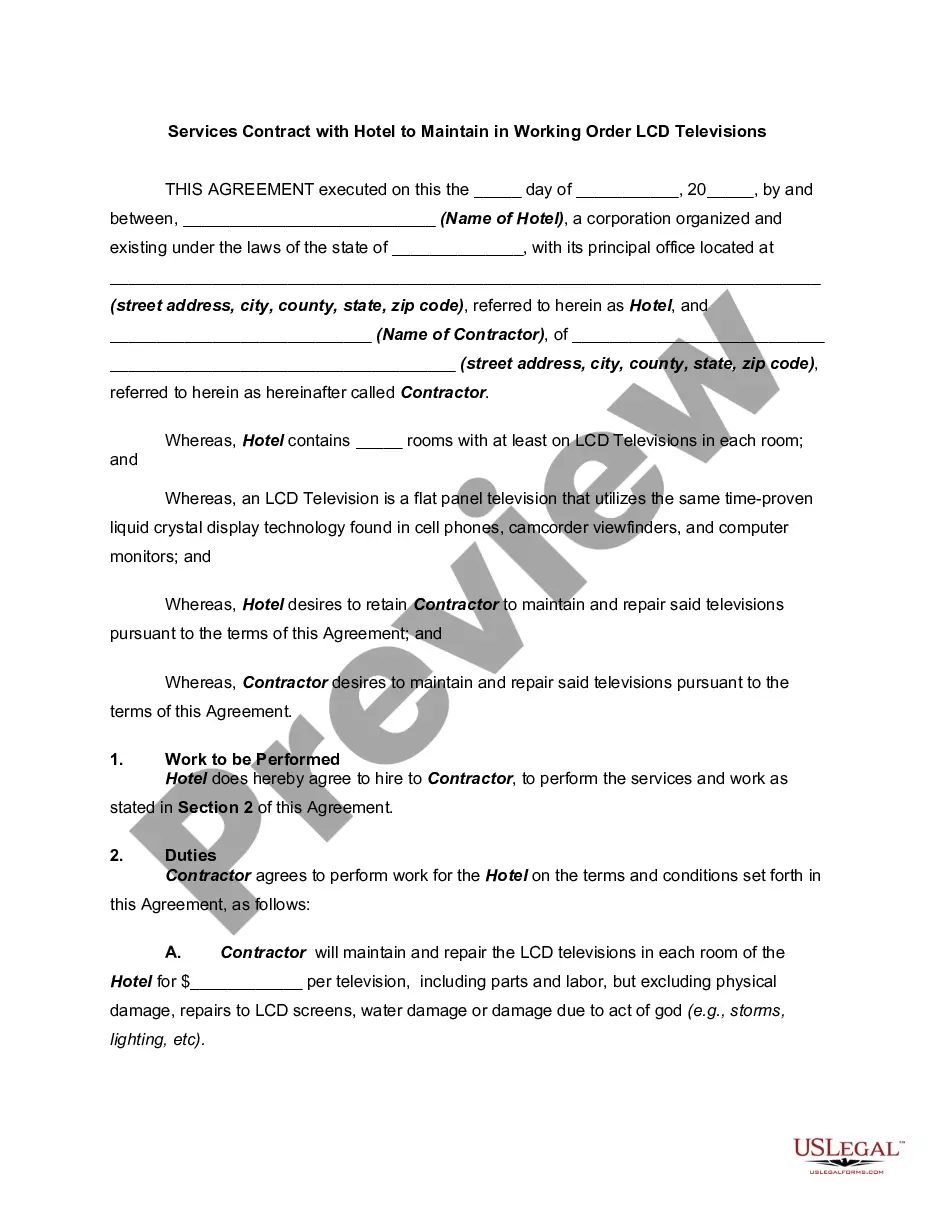
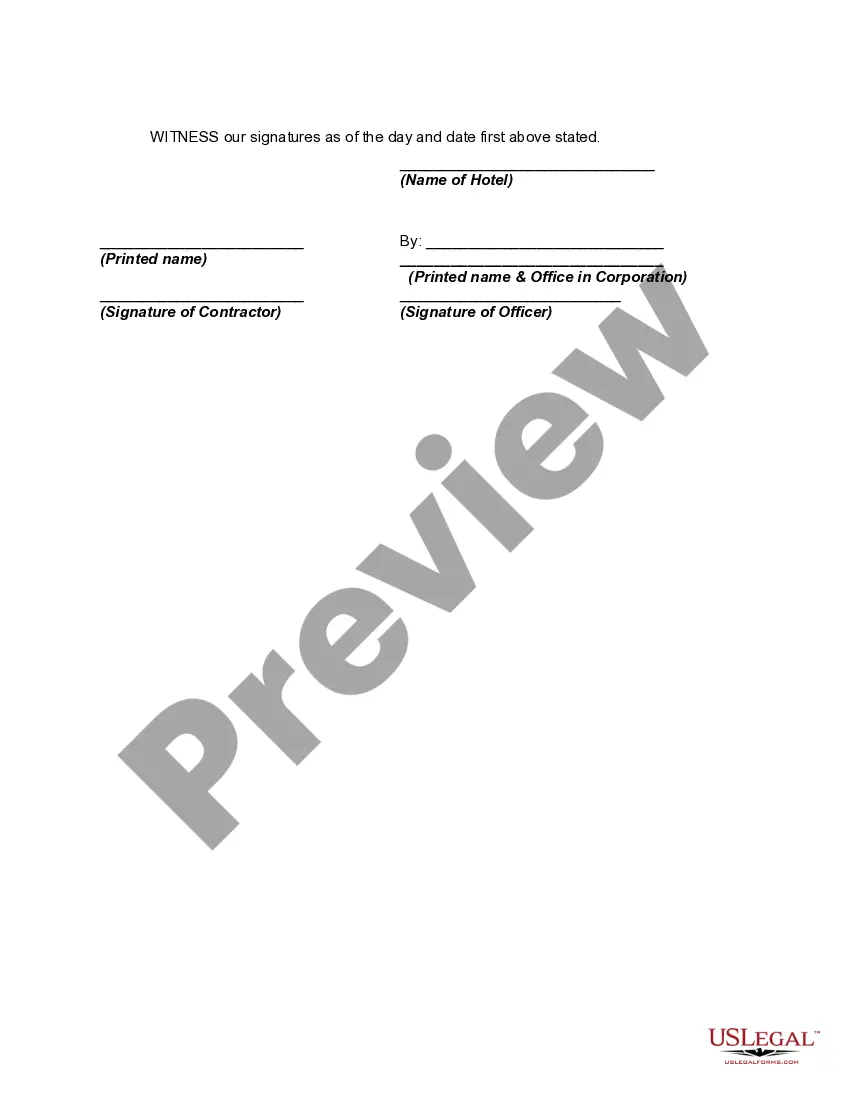
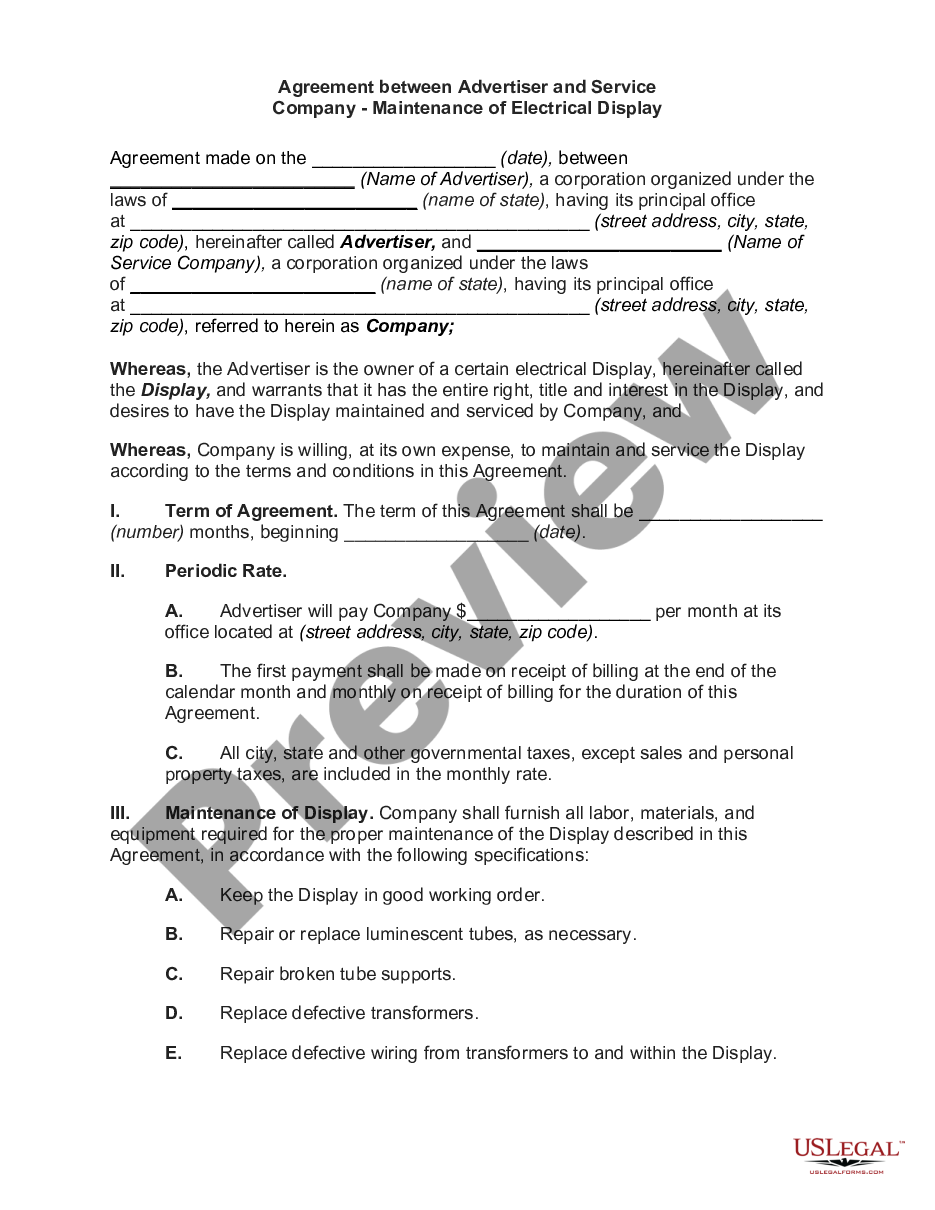
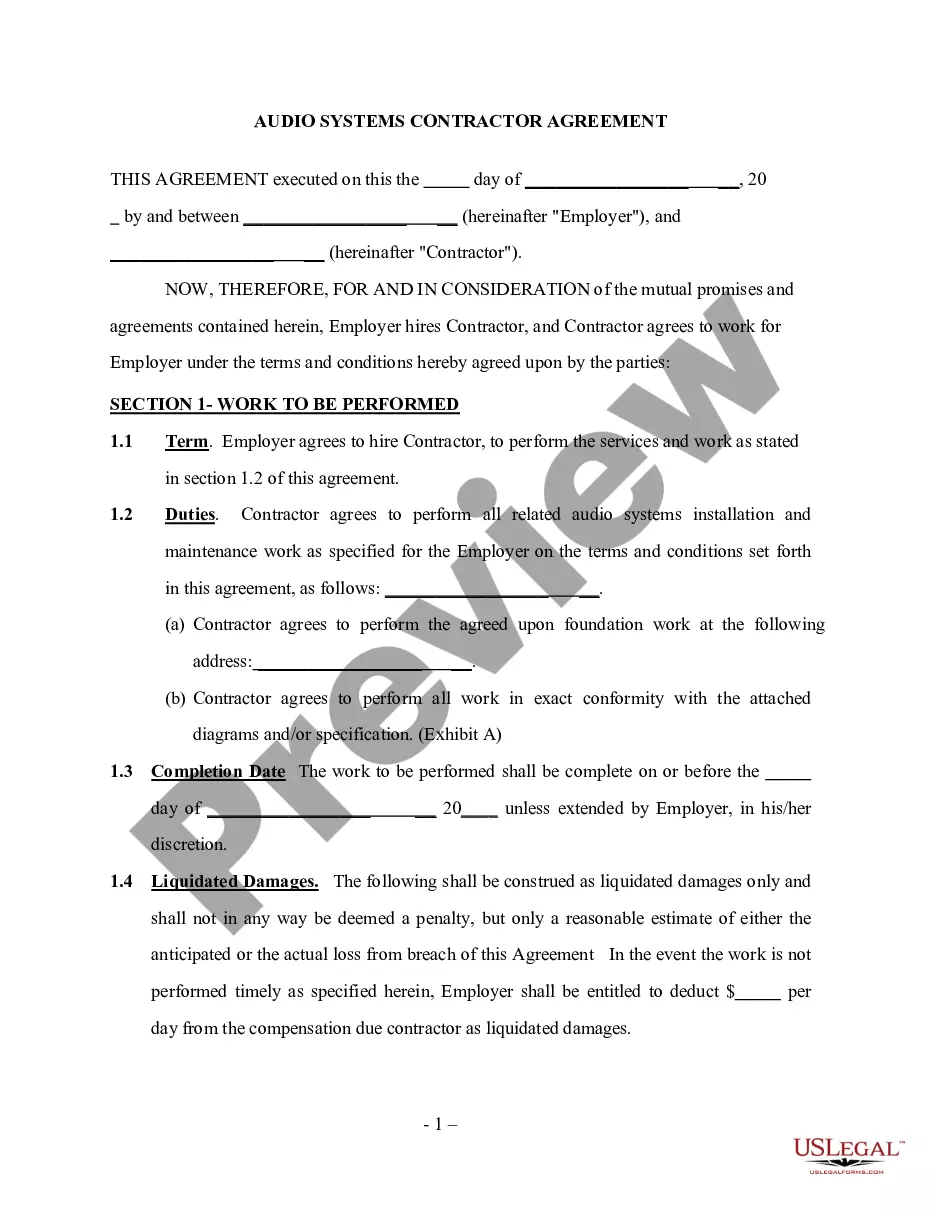
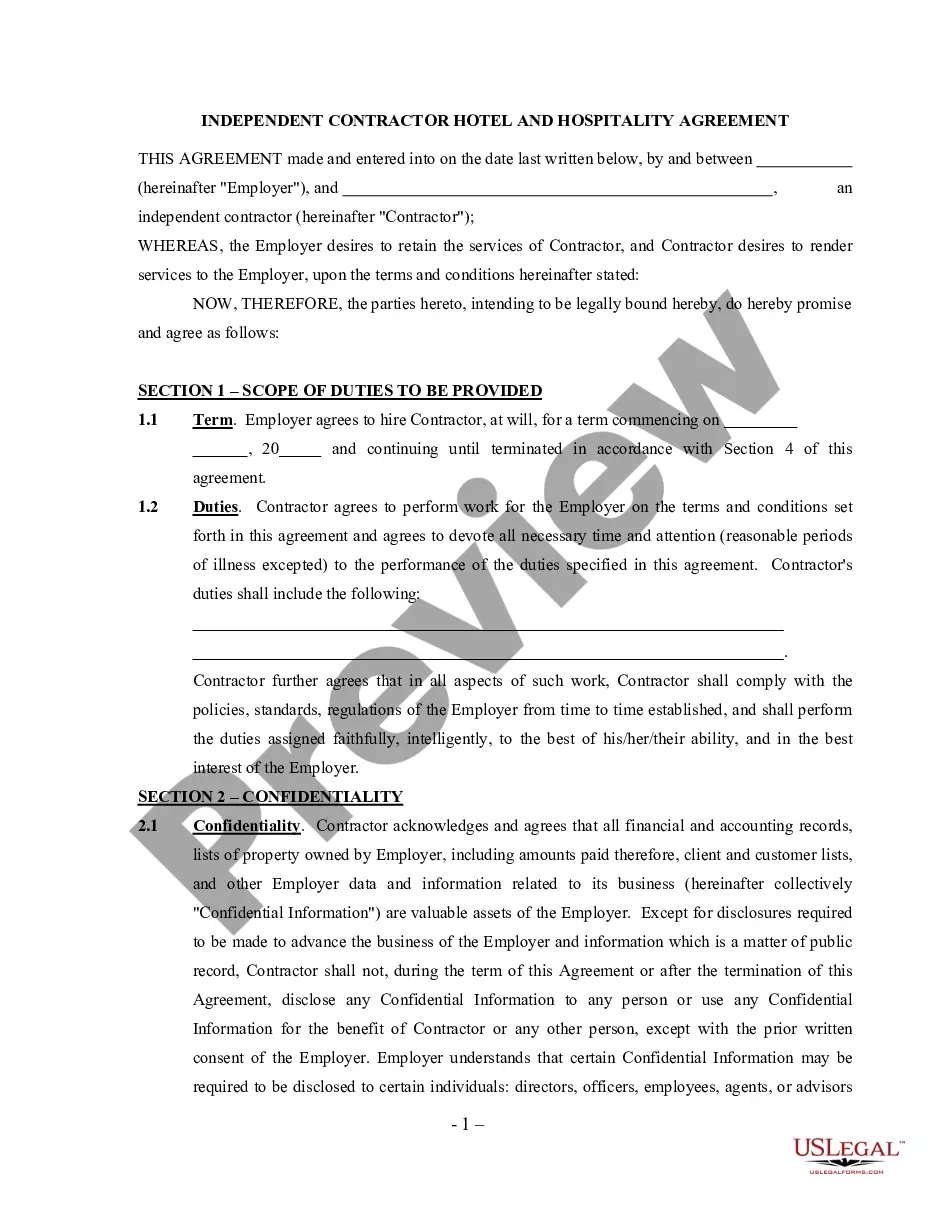
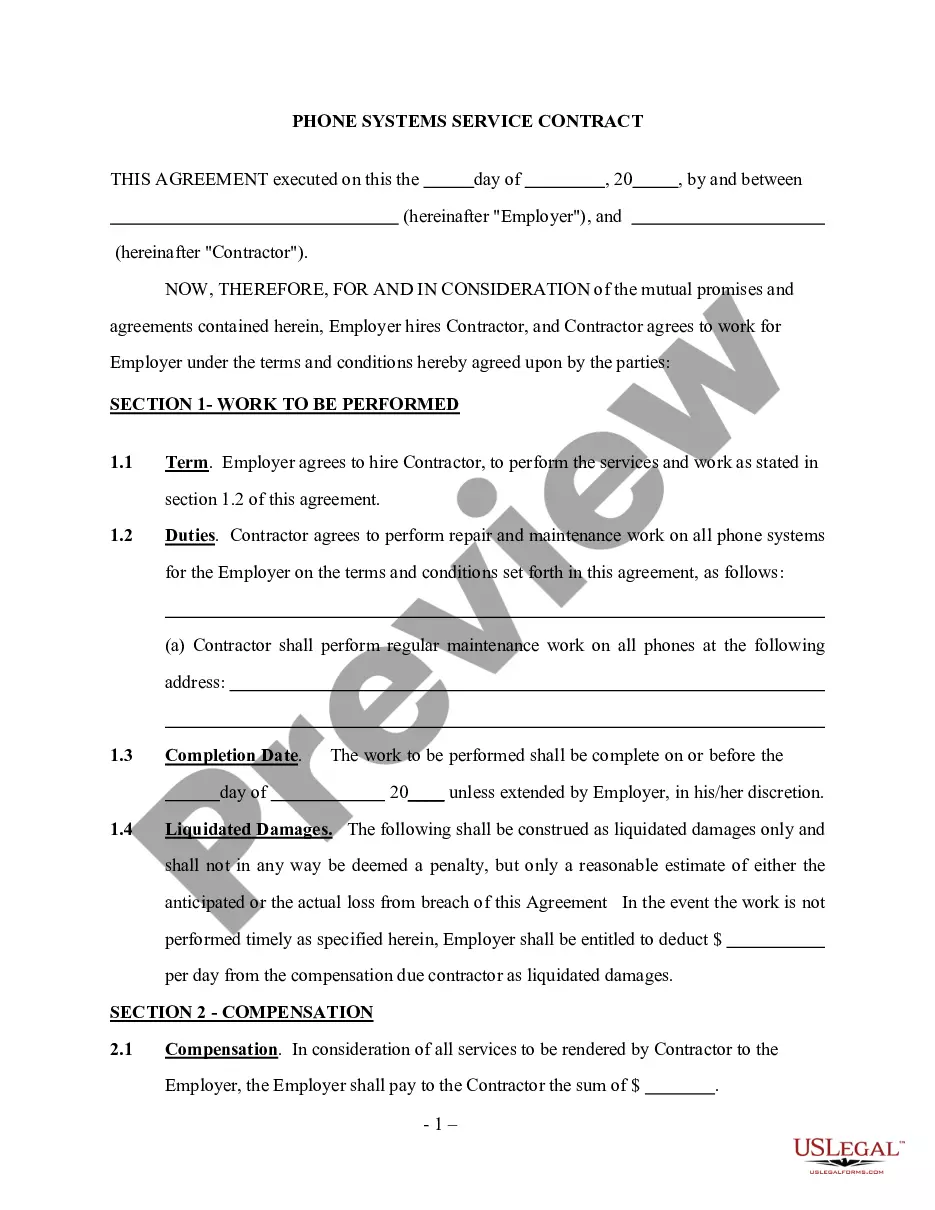
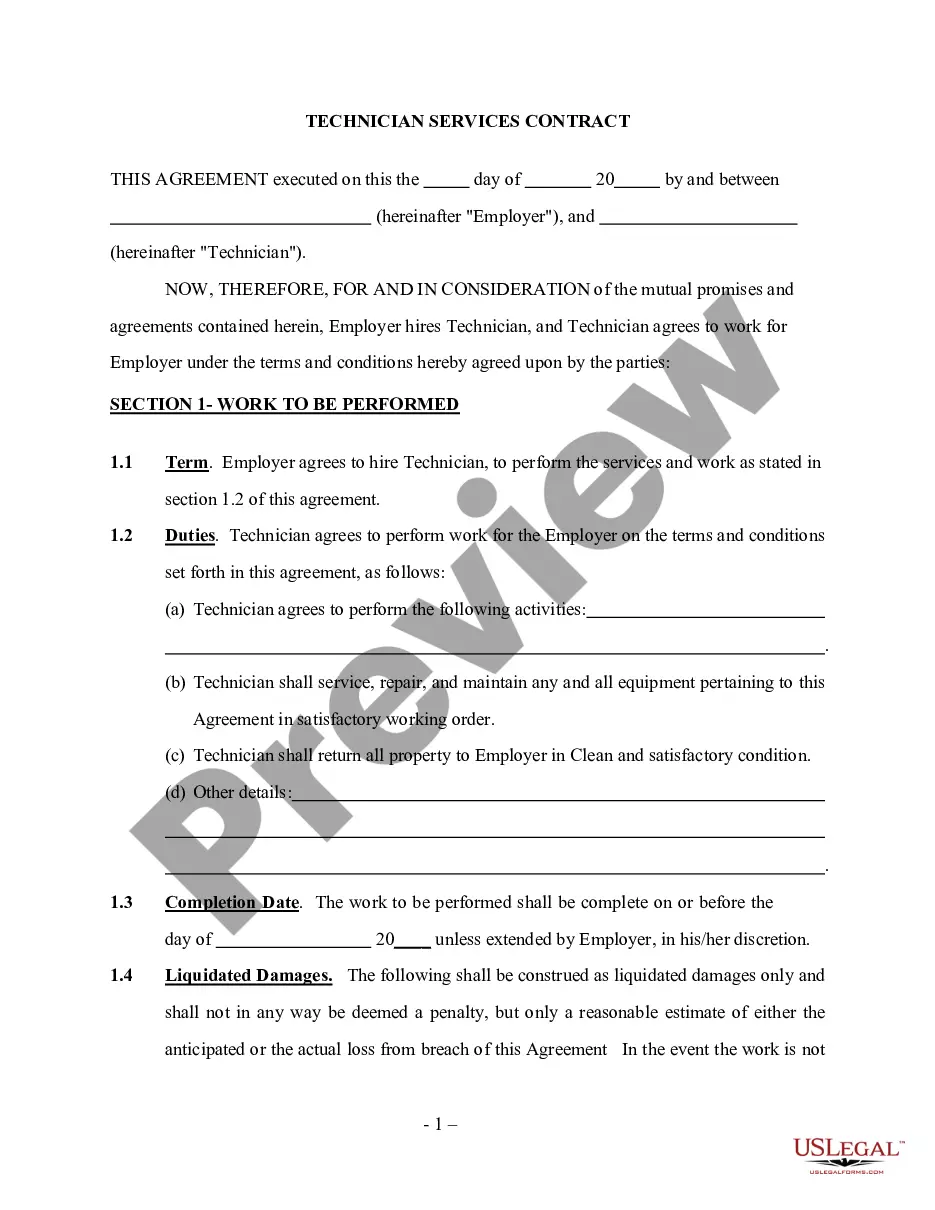
This Services Contract with Hotel to Maintain in Working Order LCD Televisions is a legal agreement that establishes the relationship between a hotel and an independent contractor responsible for the maintenance and repair of LCD televisions in hotel rooms. This form clearly defines the roles, responsibilities, and payment terms between the hotel and the contractor, distinguishing the independent contractor's status from that of an employee. This contract helps ensure that both parties understand their obligations and rights regarding the services provided.
What’s included in this form
- Identification of the parties involved - hotel and contractor.
- Scope of services to be performed, including maintenance and repair details.
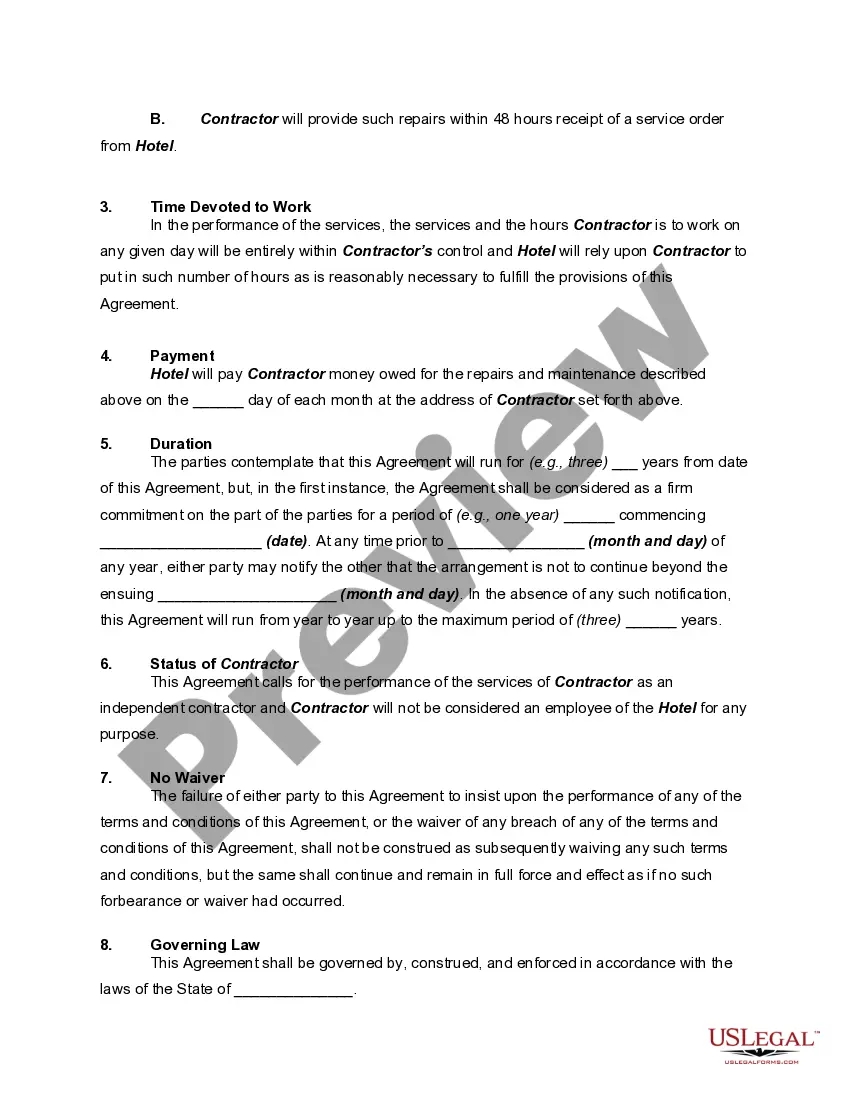
- Payment terms and schedule for the contractor's services.
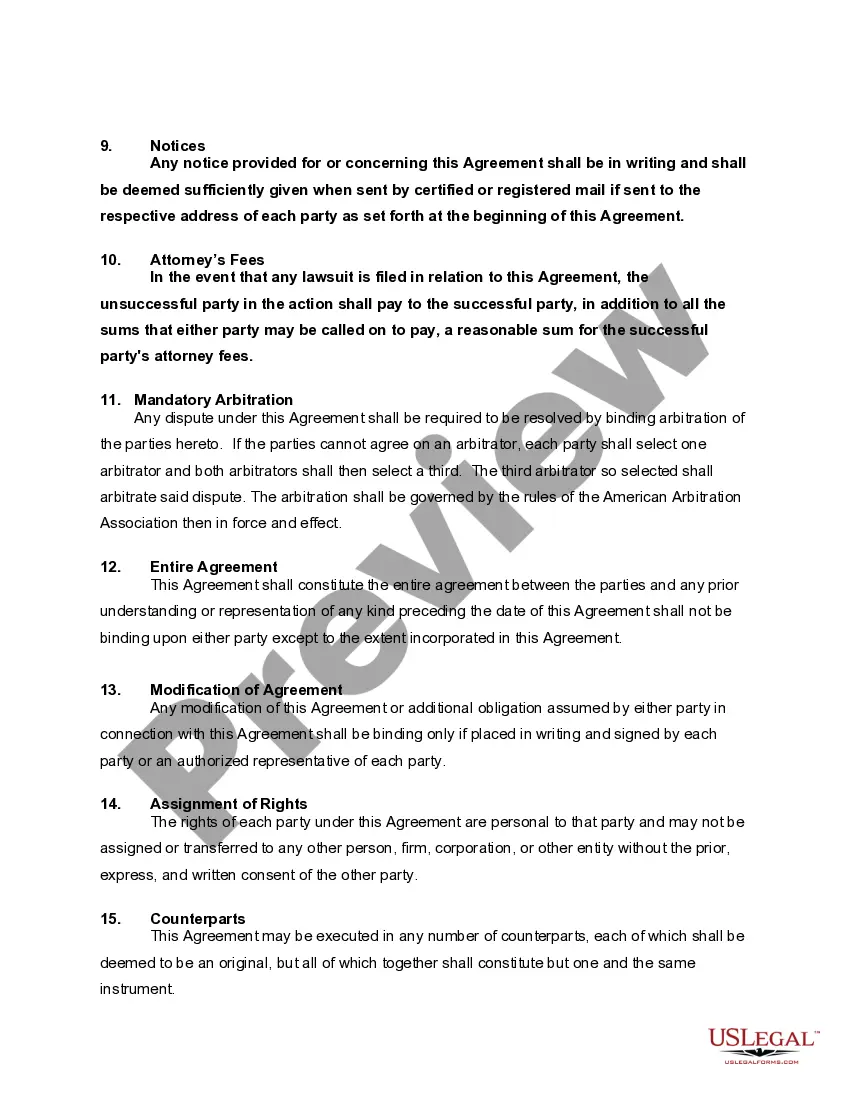
- Duration of the agreement, including renewal and termination clauses.
- Conditions relating to the status of the contractor as an independent entity.
- Provisions for governing law, dispute resolution, and modification of the contract.
Common use cases
This form is useful when a hotel wishes to hire an independent contractor to maintain and repair LCD televisions within its premises. It applies to situations where the hotel requires specialized service without creating an employer-employee relationship, thereby reducing liability for the hotel's operational oversight. This contract is especially relevant when dealing with premium hotel services, where functionality of amenities like televisions is crucial for guest satisfaction.
Who needs this form
- Hotel owners or managers seeking to contract maintenance services.
- Independent contractors who specialize in electronic repairs or maintenance.
- Businesses looking to manage costs and liability by using independent contractors rather than employees.
How to prepare this document
- Identify the hotel and contractor parties by entering their names and addresses at the beginning of the form.
- Specify the maintenance duties and payment structure as detailed in the contract.
- Fill in the duration of the contract, including any terms for renewal or termination.
- Include any stipulations regarding the status of the contractor as an independent entity.
- Ensure that both parties sign the agreement to make it legally binding.
Notarization requirements for this form
This form does not typically require notarization unless specified by local law. It is advisable to check any specific state mandates regarding notarization for independent contractor agreements.
Get your form ready online
Our built-in tools help you complete, sign, share, and store your documents in one place.
Make edits, fill in missing information, and update formatting in US Legal Forms—just like you would in MS Word.
Download a copy, print it, send it by email, or mail it via USPS—whatever works best for your next step.
Sign and collect signatures with our SignNow integration. Send to multiple recipients, set reminders, and more. Go Premium to unlock E-Sign.
If this form requires notarization, complete it online through a secure video call—no need to meet a notary in person or wait for an appointment.
We protect your documents and personal data by following strict security and privacy standards.

Make edits, fill in missing information, and update formatting in US Legal Forms—just like you would in MS Word.

Download a copy, print it, send it by email, or mail it via USPS—whatever works best for your next step.

Sign and collect signatures with our SignNow integration. Send to multiple recipients, set reminders, and more. Go Premium to unlock E-Sign.

If this form requires notarization, complete it online through a secure video call—no need to meet a notary in person or wait for an appointment.

We protect your documents and personal data by following strict security and privacy standards.
Common mistakes
- Failing to clearly define the scope of work, leading to misunderstandings later.
- Not specifying payment terms, which can cause payment delays.
- Neglecting to include a termination clause, which may complicate future exits from the agreement.
- Overlooking the significance of finalizing the contractor's independent status to prevent misclassification disputes.
Why use this form online
- Immediate access to professional legal language crafted by licensed attorneys.
- Ability to download and customize the form according to specific needs.
- Cost-effective compared to hiring legal counsel for standard agreements.
- Convenient digital management of documents, enabling quick adjustments or updates.
Legal use & context
- This contract defines the relationship between the hotel and contractor, clearly establishing the independent contractor status.
- It outlines liability limitations, including the contractor's responsibilities for damages and repairs.
- The form ensures both parties are aware of their rights regarding payment and contract termination.
Key takeaways
- This form is essential for formalizing the contractor-hotel relationship.
- Clearly outlines expectations for performance and payment.
- It helps mitigate legal risks by establishing liability limitations and dispute resolution methods.
Looking for another form?



Form popularity
FAQ
This is where it gets tricky, in almost all cases, an independent contractor is self-employed, but not everyone who is self-employed is an independent contractor.Since independent contractors are not employees the contractor is responsible for paying employment taxes, income taxes, social security, and insurance.
Finally, the new stimulus bill provides independent contractors with paid sick and paid family leave benefits through March 14, 2021.Under CARES Act II, unemployed or underemployed independent contractors who have an income mix from self-employment and wages paid by an employer are still eligible for PUA.
A sole proprietorship can use independent contractors for the term of the contract without any further obligation. If the sole proprietor no longer needs the independent contractor, the sole proprietor is under no obligation to extend the contract.
Simply put, being an independent contractor is one way to be self-employed. Being self-employed means that you earn money but don't work as an employee for someone else.An independent contractor is someone who provides a service on a contractual basis.
A self employed person will not usually have a contract of employment; they will usually be hired for a certain amount of time. The contract that exists between the self employed person and the person or company supplying the work will have a number of rules or conditions set down within it.
People who work for themselves or who own their own company are sometimes alternately referred to as self-employed or independent contractors, though there is a difference between the two. In general, all independent contractors are self-employed, but not all self-employed people are independent contractors.
The earnings of a person who is working as an independent contractor are subject to Self-Employment Tax. If you are an independent contractor, you are self-employed.You are not an independent contractor if you perform services that can be controlled by an employer (what will be done and how it will be done).
The law codifies and expands on an April 2018 California Supreme Court decision that set a strict new test for employers. Independent contractors must be free to perform their work as they wish, must be in a different line of work from the company contracting with them and must operate their own business.
A person is self-employed if they run their business for themselves and take responsibility for its success or failure. Self-employed workers aren't paid through PAYE, and they don't have the employment rights and responsibilities of employees.