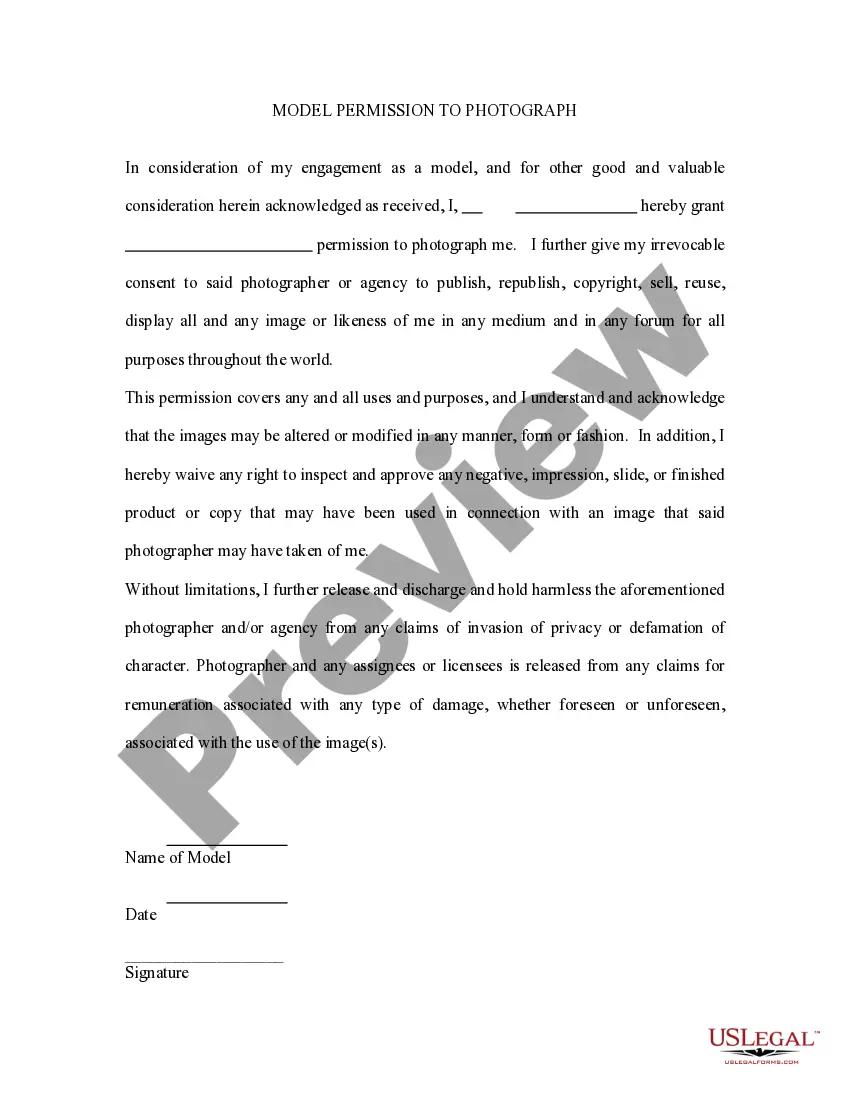
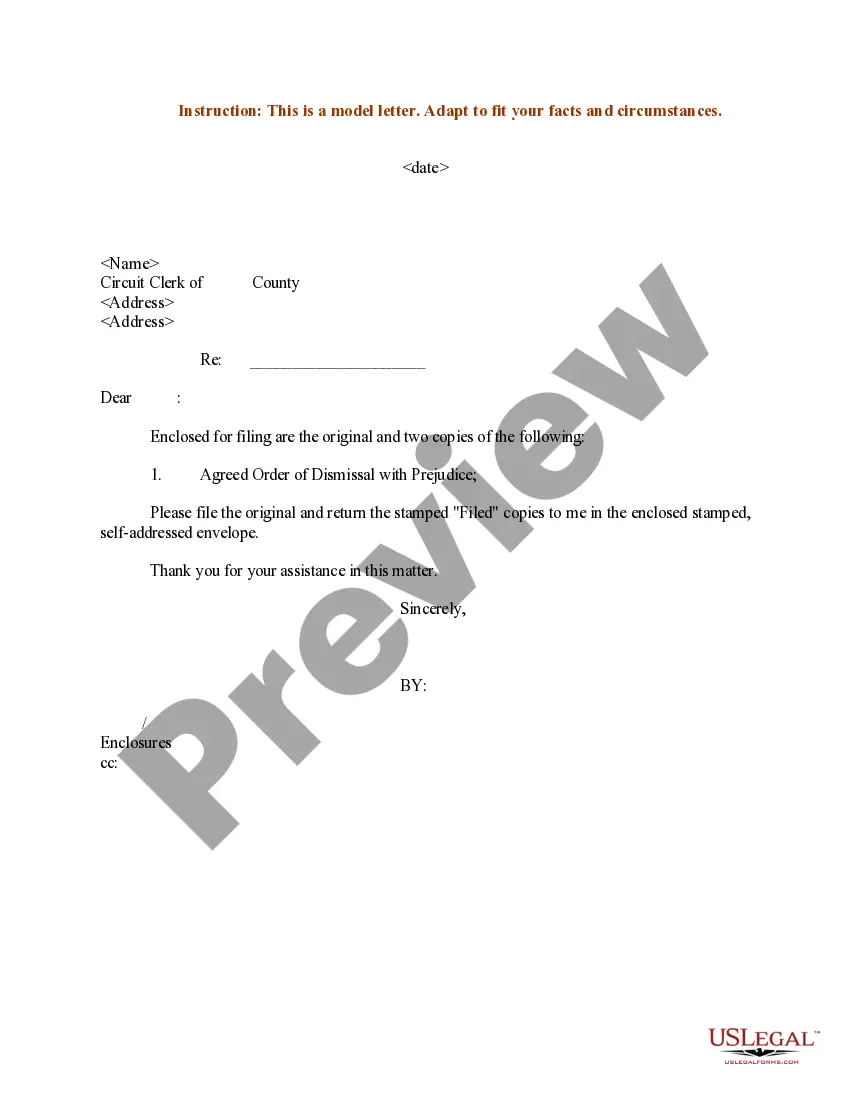
Sample Letter to Circuit Clerk with Instructions to File Order
Overview of this form
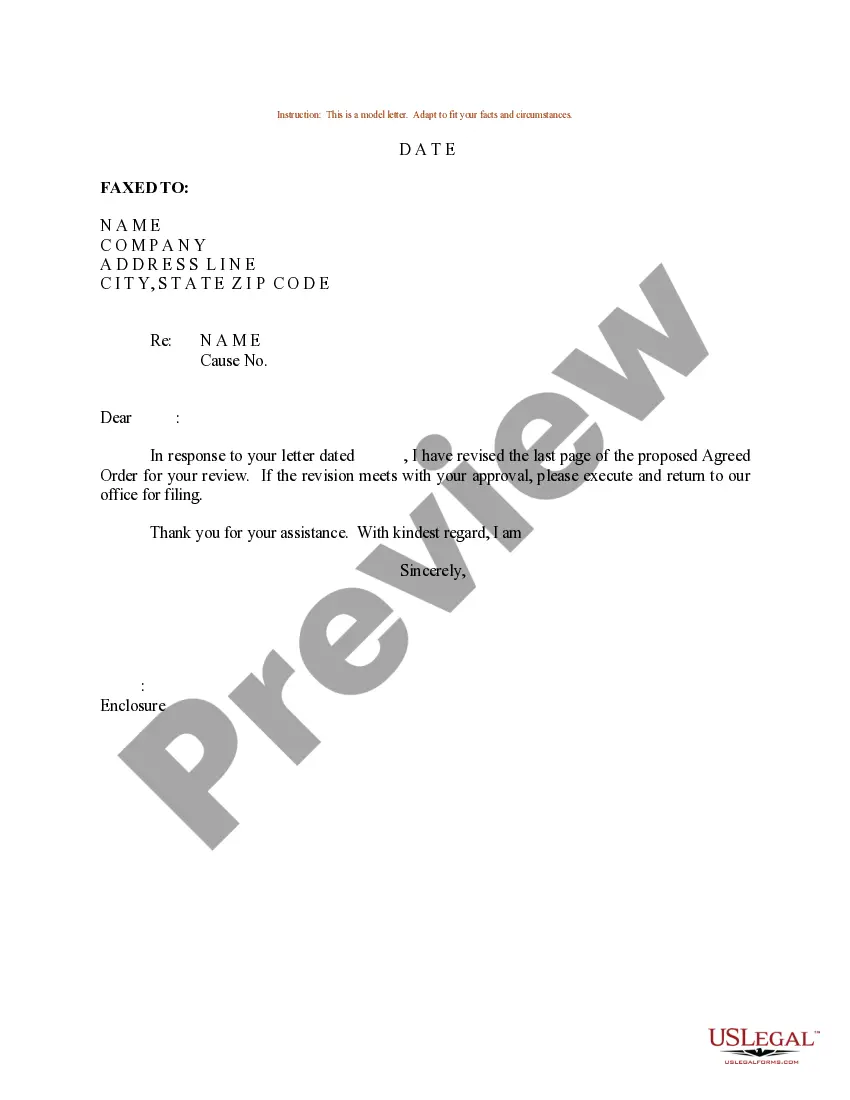
This Sample Letter to Circuit Clerk with Instructions to File Order is a template designed to help individuals formally communicate with a circuit clerk's office. This letter serves a specific purpose in conveying requests for legal orders or paperwork while ensuring that the filing process is straightforward. Unlike other legal forms that may require various documents or complex submissions, this letter provides a simple way to initiate communication with court officials.
What’s included in this form
- Sender's details: Name and address of the person sending the letter.
- Date: The date the letter is written.
- Recipient details: Name and title of the circuit clerk, along with the address of the court.
- Subject line: Clear indication of the letter's purpose.
- Body of the letter: Specific instructions or requests regarding the order to be filed.
- Signature: Signature of the sender, indicating consent and responsibility.


When to use this document
You may need to use this form when you are required to file a legal order in a circuit court. This could involve situations where you need to request a specific legal action or submit documents for approval. It is essential in cases such as divorce filings, child custody arrangements, or other family law matters where the court's attention is required.
Who can use this document
Individuals who may need this form include:
- People filing for divorce or legal separation.
- Parents seeking custody agreements.
- Individuals needing to submit court orders for judgment modifications.
- Anyone needing to formally communicate with the circuit clerk for legal procedures.
Steps to complete this form
Steps to complete the form:
- Identify the parties: Clearly state your name and address at the top of the letter.
- Enter the date: Include the date on which you are writing the letter.
- Specify the recipient: Write the name and title of the circuit clerk along with the court's address.
- Draft the subject line: Clearly state what order or request you are filing.
- Compose the letter body: Provide detailed instructions or requests regarding the order.
- Sign the letter: Include your signature at the bottom to validate the request.
Is notarization required?
This form does not typically require notarization unless specified by local law. It is advisable to check with the circuit court for any specific requirements regarding notarization for your order.
Get your form ready online
Our built-in tools help you complete, sign, share, and store your documents in one place.
Make edits, fill in missing information, and update formatting in US Legal Forms—just like you would in MS Word.
Download a copy, print it, send it by email, or mail it via USPS—whatever works best for your next step.
Sign and collect signatures with our SignNow integration. Send to multiple recipients, set reminders, and more. Go Premium to unlock E-Sign.
If this form requires notarization, complete it online through a secure video call—no need to meet a notary in person or wait for an appointment.
We protect your documents and personal data by following strict security and privacy standards.

Make edits, fill in missing information, and update formatting in US Legal Forms—just like you would in MS Word.

Download a copy, print it, send it by email, or mail it via USPS—whatever works best for your next step.

Sign and collect signatures with our SignNow integration. Send to multiple recipients, set reminders, and more. Go Premium to unlock E-Sign.

If this form requires notarization, complete it online through a secure video call—no need to meet a notary in person or wait for an appointment.

We protect your documents and personal data by following strict security and privacy standards.
Typical mistakes to avoid
- Failing to include all necessary details, such as sender and recipient information.
- Not clearly specifying the purpose of the letter in the subject line.
- Omitting a formal closing and signature, which could invalidate the request.
Benefits of completing this form online
- Convenience: Download and fill out the form at your pace.
- Editability: Easily make changes to the template to suit your needs.
- Reliability: Templates are created by licensed attorneys, ensuring legal compliance.
Legal use & context
- Provides proof of communication with the circuit clerk.
- Ensures that detailed instructions are formally communicated.
- Helps maintain records for legal proceedings and future references.
What to keep in mind
- The Sample Letter to Circuit Clerk is crucial for clear legal communication.
- Use this form to maintain protocol when submitting orders.
- Tailor the content to comply with state-specific requirements.
- Avoid common mistakes to ensure smooth processing by the circuit clerk.
Looking for another form?

Form popularity
FAQ
Address justices of the UK Supreme Court as "Dear (Lord/Lady) (surname)" instead. If writing to a U.S. state or federal Supreme Court, use Dear Justice instead. If a judge's title is "Chief Judge" or "Chief Justice," you may use that title instead.
Read and Examine the Case Thoroughly. Take notes, highlight relevant facts, underline key problems. Focus Your Analysis. Identify two to five key problems. Uncover Possible Solutions/Changes Needed. Review course readings, discussions, outside research, your experience. Select the Best Solution.
Read the Complaint. Find copies of contracts and any other written communications between you and the other side. Analyze the strengths and weaknesses of your case. Prepare your documents and evidence for trial. Identify and prepare any witnesses. Practice, Practice, Practice your presentation.
Example: Dear Chief Justice Shepard. When addressing a letter to a judicial clerk, include the title "Law Clerk" after the name. The appropriate closing for a cover letter to a judge is "Respectfully" instead of "Sincerely."
Register or log in to the Online Registry. Click on the 'Start or defend a case' tab. Select the appropriate form. Complete the form online. Pay the appropriate fee to submit your form.
First Things First: Take a Deep Look at Your Current System. De-Clutter Your Office. Set Your Own Keep or Throw Away System. Organize Everything like There's No Tomorrow. Design Your Own System. Follow Through and Audits.
The case file may also refer to a duplicate, paper copy of the electronic case file and the supporting paper documentation.Case file means the compendium of original documents filed in an action or proceeding in a court, including the pleadings, motions, orders, and judgments of the court on a case by case basis.
If the letter is not on letterhead, the first thing at the top of the letter should be the sender's address, followed by the date. Below the date should be the recipient's name and address, called the inside address.
A case file must begin with the defendant's full legal name. It is wise to include alias information, maiden and former names as well. Be sure to include any suffix or prefix and make certain of the correct spelling. Correct transcription of the defendant's name is very important in subsequent searches for the file.