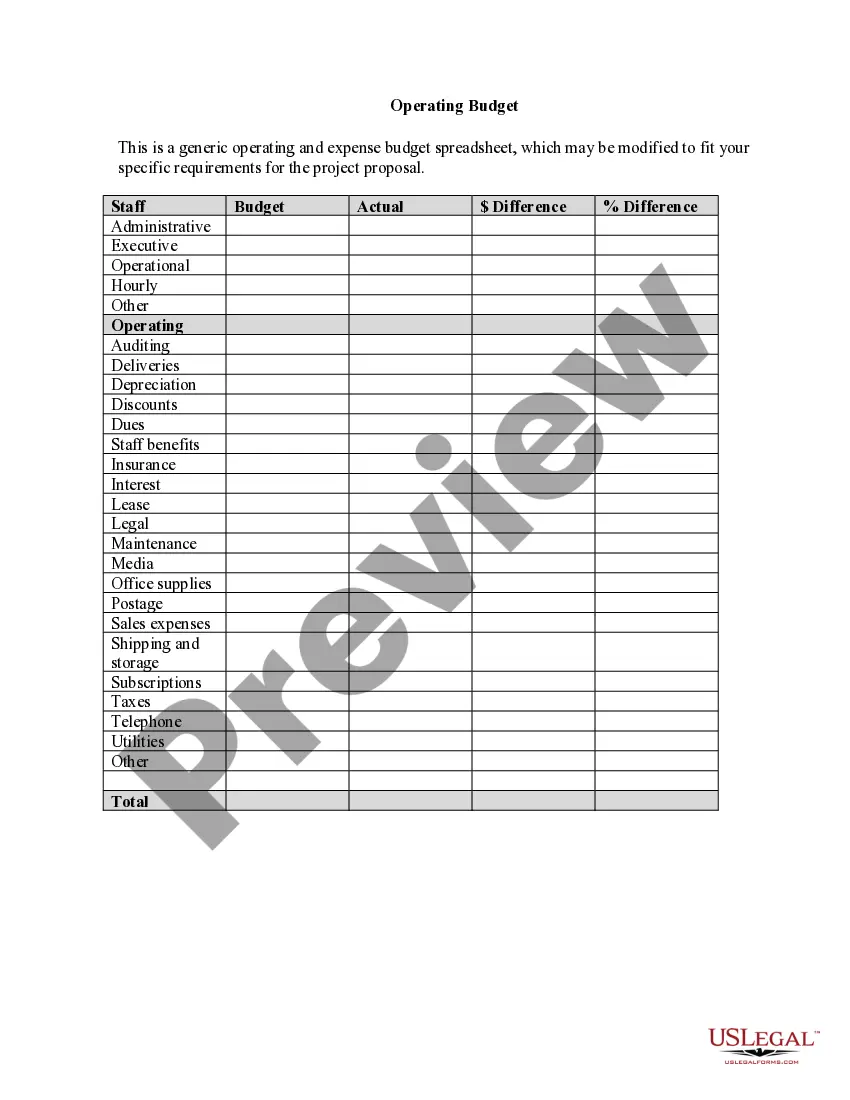
Operating Budget
What this document covers
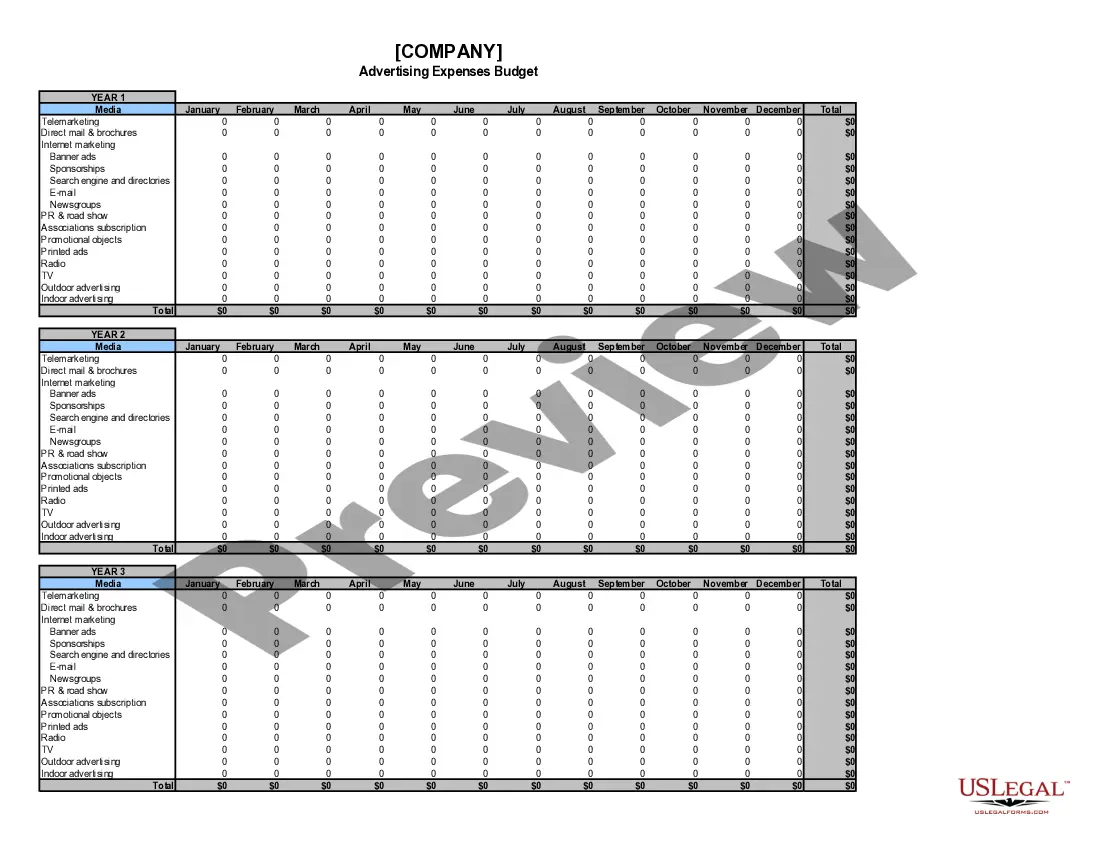
The Operating Budget is a key financial document that outlines projected revenues and expenses for a specific period, typically one year. This form is designed to help organizations manage their finances effectively, enabling them to plan and track their spending and income. Unlike simple budget templates, this operating budget includes detailed categories for income and a comprehensive breakdown of expenses to ensure accurate financial planning and oversight.
Key parts of this document
- Revenue projections: Expected income sources and amounts.
- Expense categories: Detailed sections for wages, materials, operating expenses, and other costs.
- Staff budget breakdown: Includes positions such as administrative, executive, and operational roles.
- Actual vs. projected analysis: Space to compare budgeted vs. actual expenses.
- Total summary: A line for calculating total income and expenses.
When to use this form
This form is useful when preparing an annual budget for an organization, project, or initiative. It is appropriate for businesses, non-profits, or any project that requires formal financial management. You may need this form during budget planning meetings, grant applications, or financial reporting to stakeholders.
Who should use this form
This form is ideal for:
- Business owners looking to manage their financial resources.
- Non-profit organizations needing to create a detailed financial plan.
- Project managers who require budget oversight for specific initiatives.
- Financial officers responsible for tracking organizational expenses.
Steps to complete this form
- Identify all revenue sources: List expected income streams at the top of the spreadsheet.
- Detail expense categories: Fill in the various categories such as salaries, office supplies, and utilities.
- Enter projected amounts: For each category, input estimated amounts for the budget period.
- Compare actuals: As expenses occur, record actual amounts in the designated columns.
- Calculate totals: At the end of the period, review total income and expenses to assess financial performance.
Notarization requirements for this form
In most cases, this form does not require notarization. However, some jurisdictions or signing circumstances might. US Legal Forms offers online notarization powered by Notarize, accessible 24/7 for a quick, remote process.
Get your form ready online
Our built-in tools help you complete, sign, share, and store your documents in one place.
Make edits, fill in missing information, and update formatting in US Legal Forms—just like you would in MS Word.
Download a copy, print it, send it by email, or mail it via USPS—whatever works best for your next step.
Sign and collect signatures with our SignNow integration. Send to multiple recipients, set reminders, and more. Go Premium to unlock E-Sign.
If this form requires notarization, complete it online through a secure video call—no need to meet a notary in person or wait for an appointment.
We protect your documents and personal data by following strict security and privacy standards.

Make edits, fill in missing information, and update formatting in US Legal Forms—just like you would in MS Word.

Download a copy, print it, send it by email, or mail it via USPS—whatever works best for your next step.

Sign and collect signatures with our SignNow integration. Send to multiple recipients, set reminders, and more. Go Premium to unlock E-Sign.

If this form requires notarization, complete it online through a secure video call—no need to meet a notary in person or wait for an appointment.

We protect your documents and personal data by following strict security and privacy standards.
Typical mistakes to avoid
- Failing to account for all revenue sources.
- Overestimating income which can lead to cash flow issues.
- Not revisiting the budget periodically to update projections.
- Neglecting to include variable costs that may fluctuate.
Benefits of completing this form online
- Easy download and customization to fit your specific needs.
- Access to templates drafted by licensed attorneys ensures professionalism.
- Secure tracking of changes to maintain accurate financial records.
- Immediate access from any device reduces delays in budget preparations.
Key takeaways
- The Operating Budget is essential for effective financial planning and management.
- It includes detailed categories for income and expenses to provide clarity.
- Regular updates and adjustments are crucial for accurate financial oversight.
Looking for another form?







Form popularity
FAQ
An operating expense is an ongoing expense a business incurs during its normal operations, which keeps the company operating effectively. Operating expenses include employee salaries, buildings and utilities, tools, office supplies, materials and equipment and marketing costs.
Capital costs are usually excluded from an operating budget. The term operating refers to a statement of operations (income statement) which does not include capital expenditures. Most companies prepare a separate budget for capital investments.
Operating budgets include multiple parts like revenue, variable costs (such as payroll and cost of goods), and fixed costs (like rent and insurance). Other examples to consider when creating an operating budget are things like depreciation of assets, interest payments, and currency exchanges, if applicable.
Operating budgets include multiple parts like revenue, variable costs (such as payroll and cost of goods), and fixed costs (like rent and insurance). Other examples to consider when creating an operating budget are things like depreciation of assets, interest payments, and currency exchanges, if applicable.
An operating budget, also known as an operational budget, is a document that contains all expenditure and revenue that a company expects to generate from its daily operations during a specific period of time.
Are Wages Operating Expenses? Administrative expenses such as full-time staff salaries or hourly wages are considered part of a company's operating expenses. The costs for hiring labor to produce a product are calculated separately under the cost of goods sold.
Operational budgeting in healthcare is the process of determining the funding planned for facility operating costs and personnel costs, such as staffing and training.