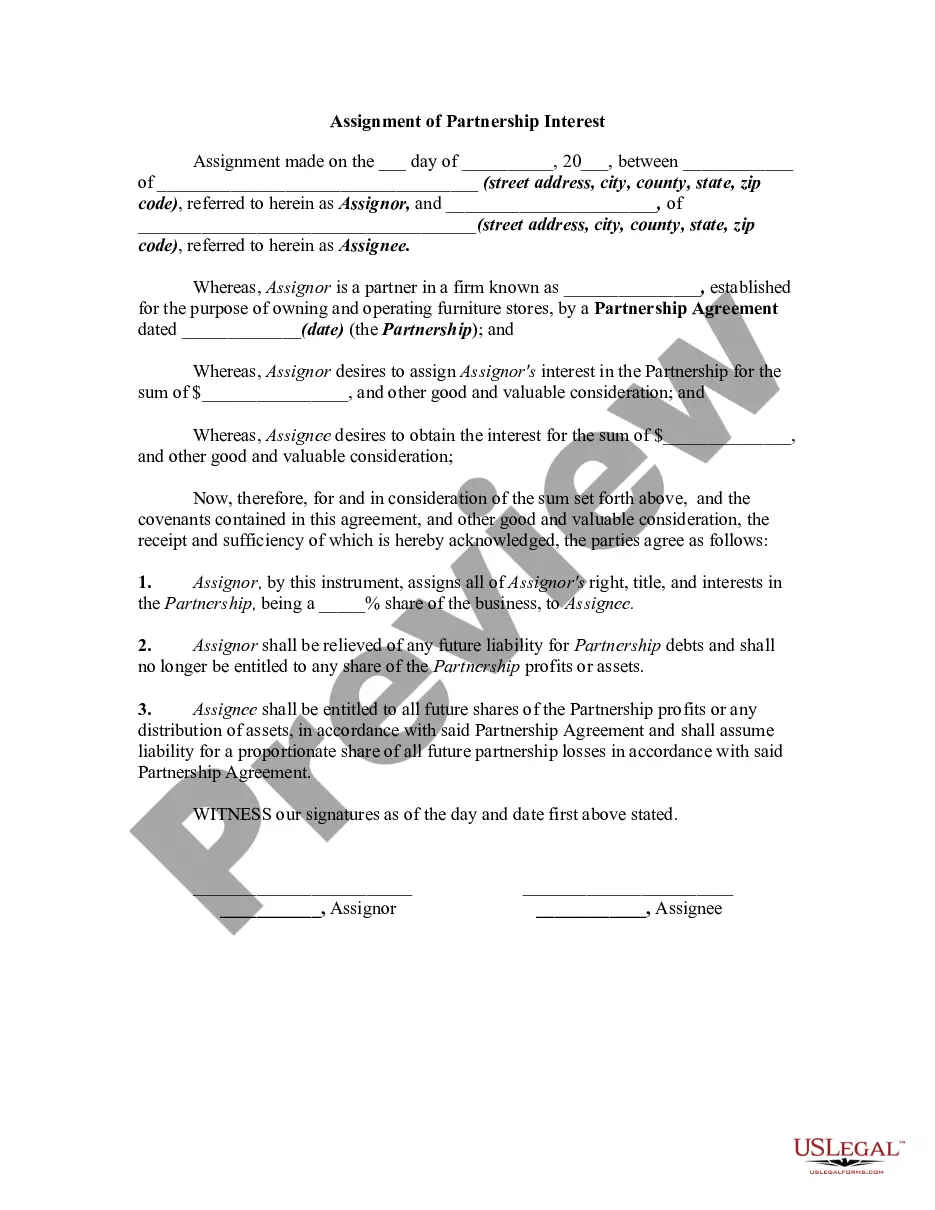
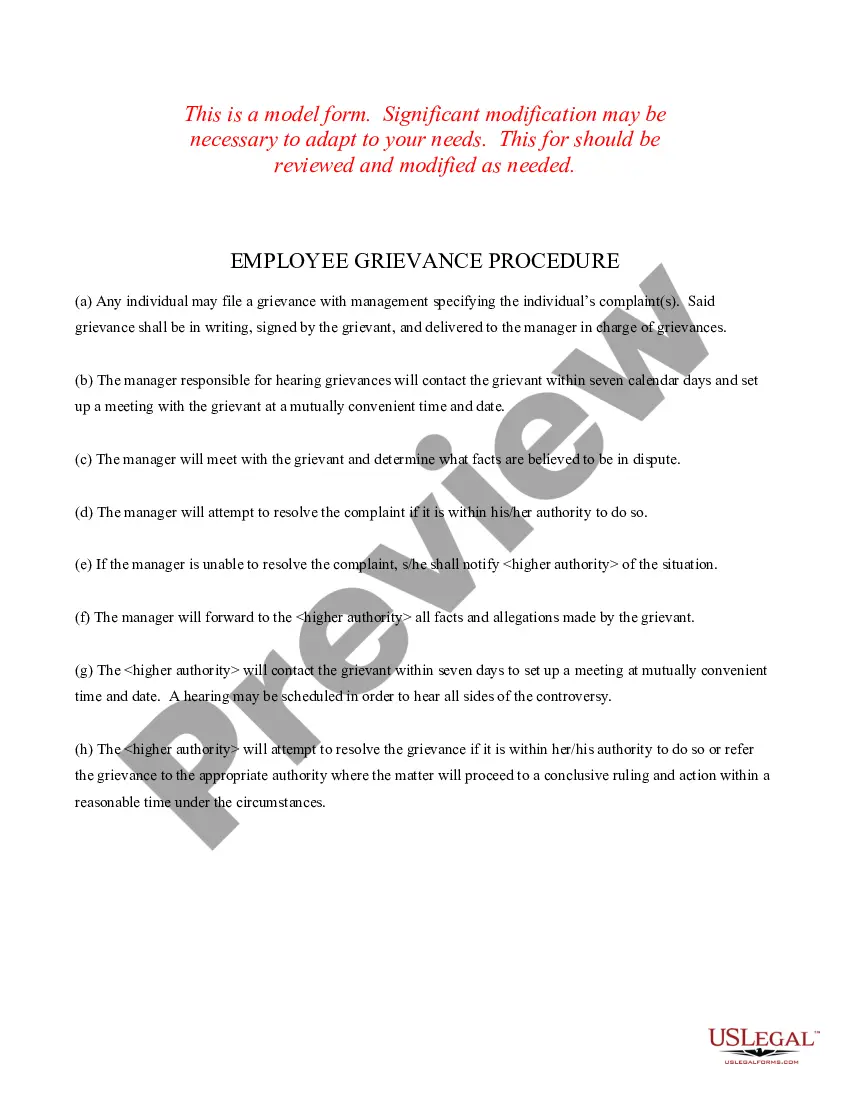
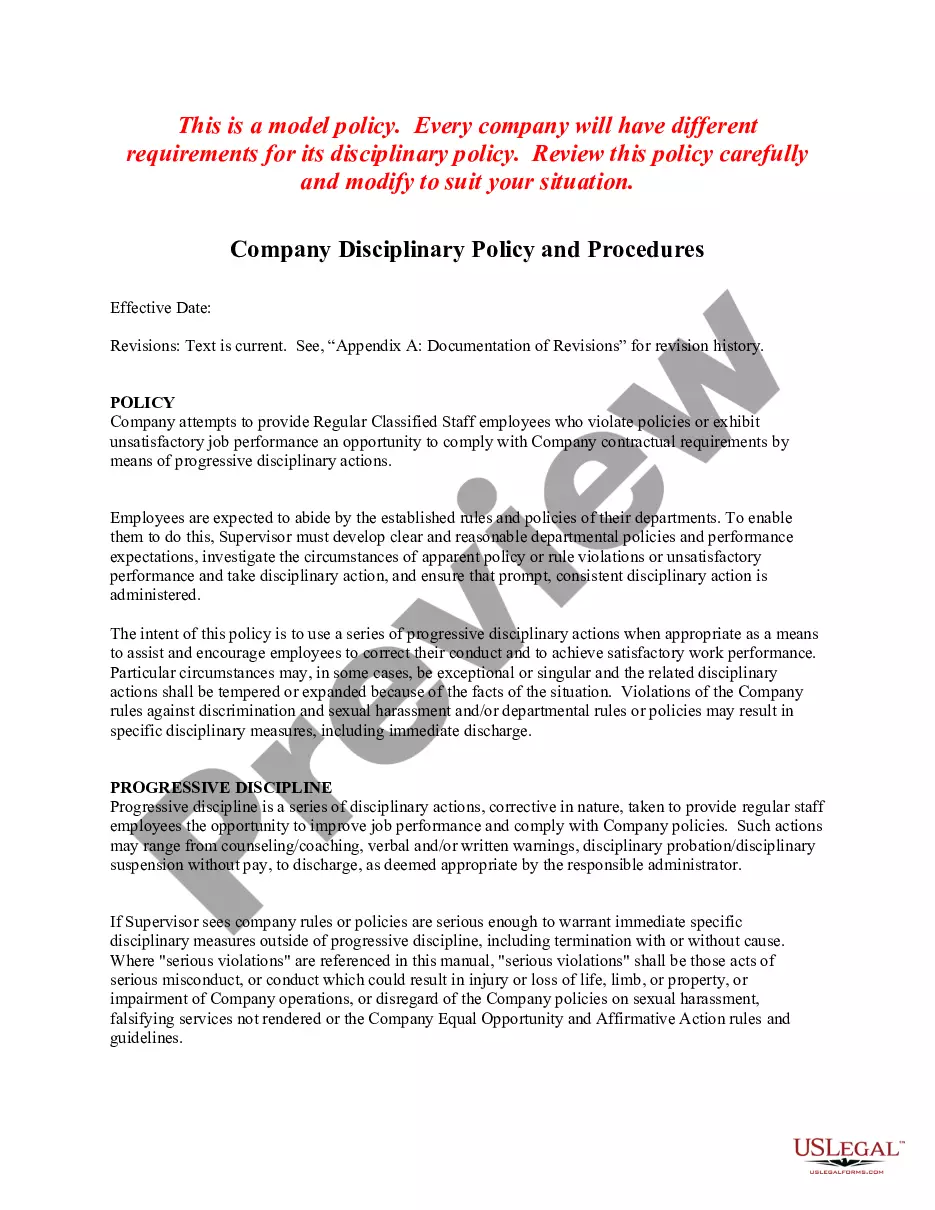
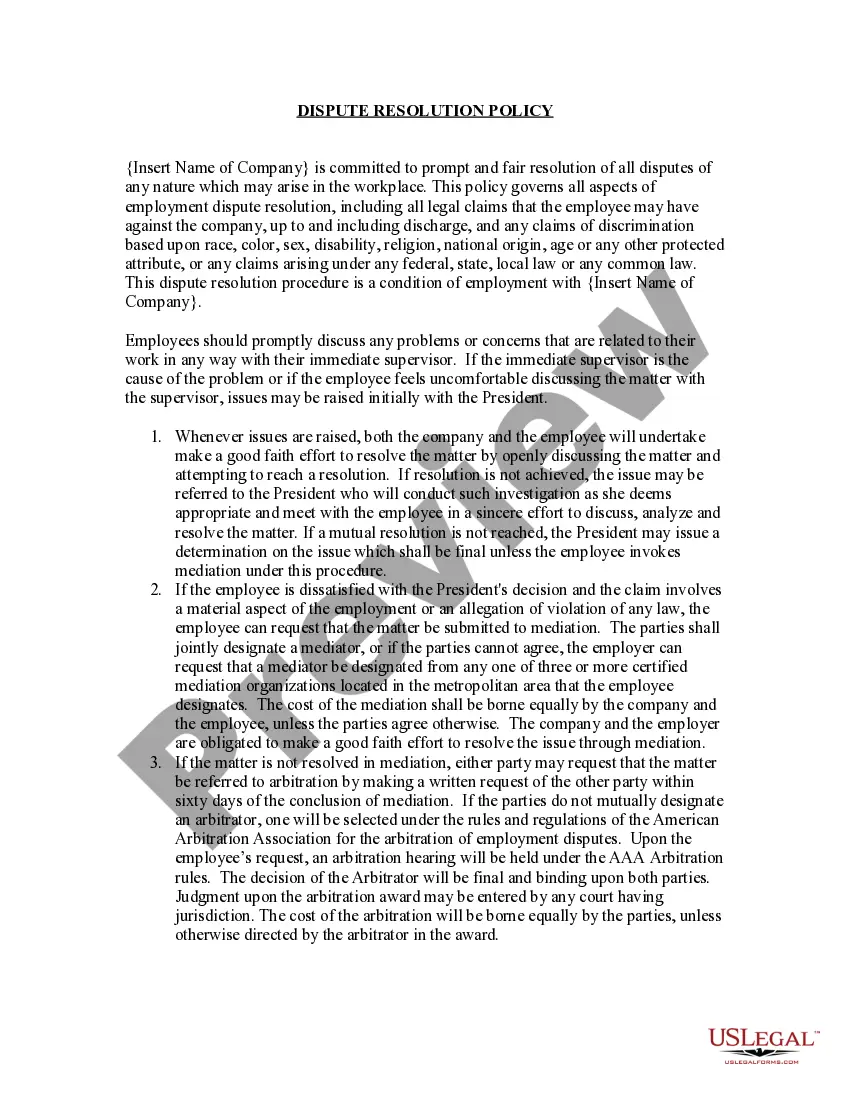
Texas Employee Grievance Procedures
Description
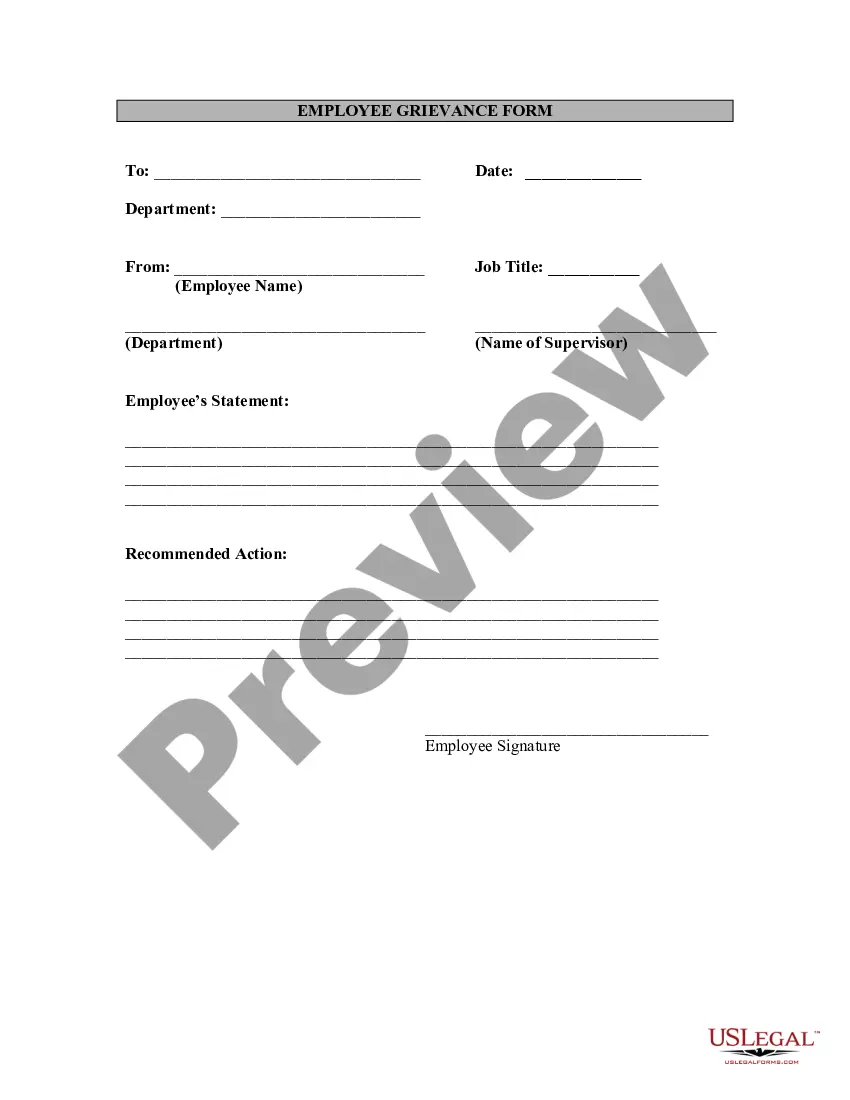
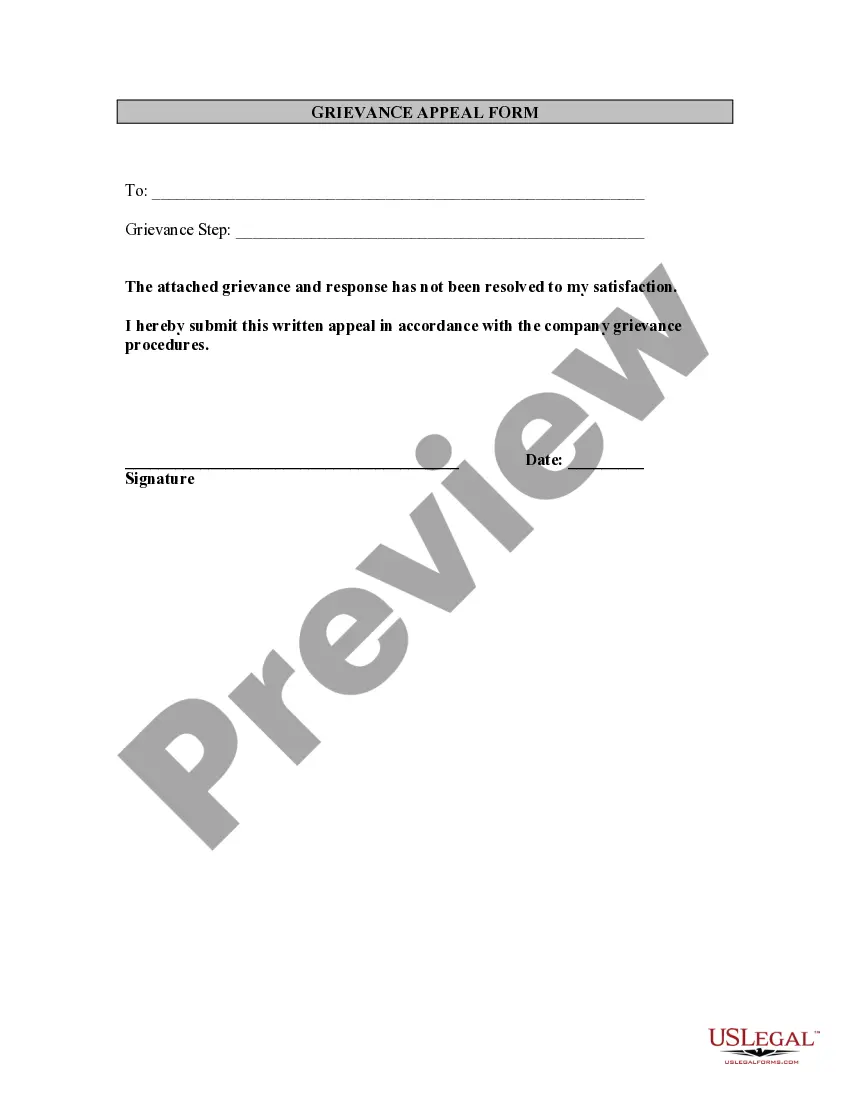

Get your form ready online
Our built-in tools help you complete, sign, share, and store your documents in one place.
Make edits, fill in missing information, and update formatting in US Legal Forms—just like you would in MS Word.
Download a copy, print it, send it by email, or mail it via USPS—whatever works best for your next step.
Sign and collect signatures with our SignNow integration. Send to multiple recipients, set reminders, and more. Go Premium to unlock E-Sign.
If this form requires notarization, complete it online through a secure video call—no need to meet a notary in person or wait for an appointment.
We protect your documents and personal data by following strict security and privacy standards.

Make edits, fill in missing information, and update formatting in US Legal Forms—just like you would in MS Word.

Download a copy, print it, send it by email, or mail it via USPS—whatever works best for your next step.

Sign and collect signatures with our SignNow integration. Send to multiple recipients, set reminders, and more. Go Premium to unlock E-Sign.

If this form requires notarization, complete it online through a secure video call—no need to meet a notary in person or wait for an appointment.

We protect your documents and personal data by following strict security and privacy standards.
Looking for another form?
How to fill out Employee Grievance Procedures?
You can spend hours online looking for the legal document template that meets the state and federal requirements you need.
US Legal Forms provides a vast array of legal templates that have been reviewed by experts.
It is easy to download or print the Texas Employee Grievance Procedures from this service.
If an alternative version of the document is required, use the Search field to locate the template that satisfies your needs and requirements.
- If you possess a US Legal Forms account, you can Log In and click on the Download button.
- Subsequently, you can complete, edit, print, or sign the Texas Employee Grievance Procedures.
- Every legal document template you obtain is your property permanently.
- To get another copy of any purchased document, navigate to the My documents tab and click on the relevant button.
- If you are visiting the US Legal Forms website for the first time, follow these simple instructions.
- First, ensure that you have selected the correct document format for your area/region.
- Review the document description to confirm that you have chosen the right template.
Form popularity
FAQ
A grievance is generally defined as a claim by an employee that he or she is adversely affected by the misinterpretation or misapplication of a written company policy or collectively bargained agreement. To address grievances, employers typically implement a grievance procedure.
An individual grievance is a complaint that an action by management has violated the rights of an individual as set out in the collective agreement or law, or by some unfair practice. Examples of this type of grievance include: discipline, demotion, classification disputes, denial of benefits, etc.
Three Stages of Employee GrievancesStage One: Self-Resolution. Once an employee has experienced a wrong doing their first step is often to try to resolve the issue on their own.Stage Two: Company Intervention.Stage Three: Legal Intervention.
Grievance procedure is a Step by step process an employee must follow to get his or her complaint addressed satisfactorily. In this process, the formal (written) complaint moves from one level of authority (of the firm and the union) to the next higher level.
Reasons for filing a grievance in the workplace can be as a result of, but not limited to, a breach of the terms and conditions of an employment contract, raises and promotions, or lack thereof, as well as harassment and employment discrimination.
8 Effective Steps To Handle Employee Grievances Most Effectively:Create the system:Acknowledge the grievance:Investigate:Hold the formal meeting:Take your decision and act accordingly:Appeal process:Review the situation:Uproot the main cause of grievance:01-Oct-2021
They are:Individual Grievances. When an individual employee grieves against a management action like demotion based on bias, non payment of salary, workplace harassment etc.Group Grievances.Union Grievances.
If there is evidence that a grievance is being brought by an employee in bad faith against the employer or one of its staff members, then an employer could refuse to hear the grievance.
Step 1 - raise the issue informally with the employer. Step 2 raise the issue formally with a grievance letter. Step 3 - grievance investigation should take place. Step 4 - a grievance hearing may be required to review the evidence and for a decision to be made.