NCAA Intercollegiate Athletic Competition Agreement - Football
Overview of this form
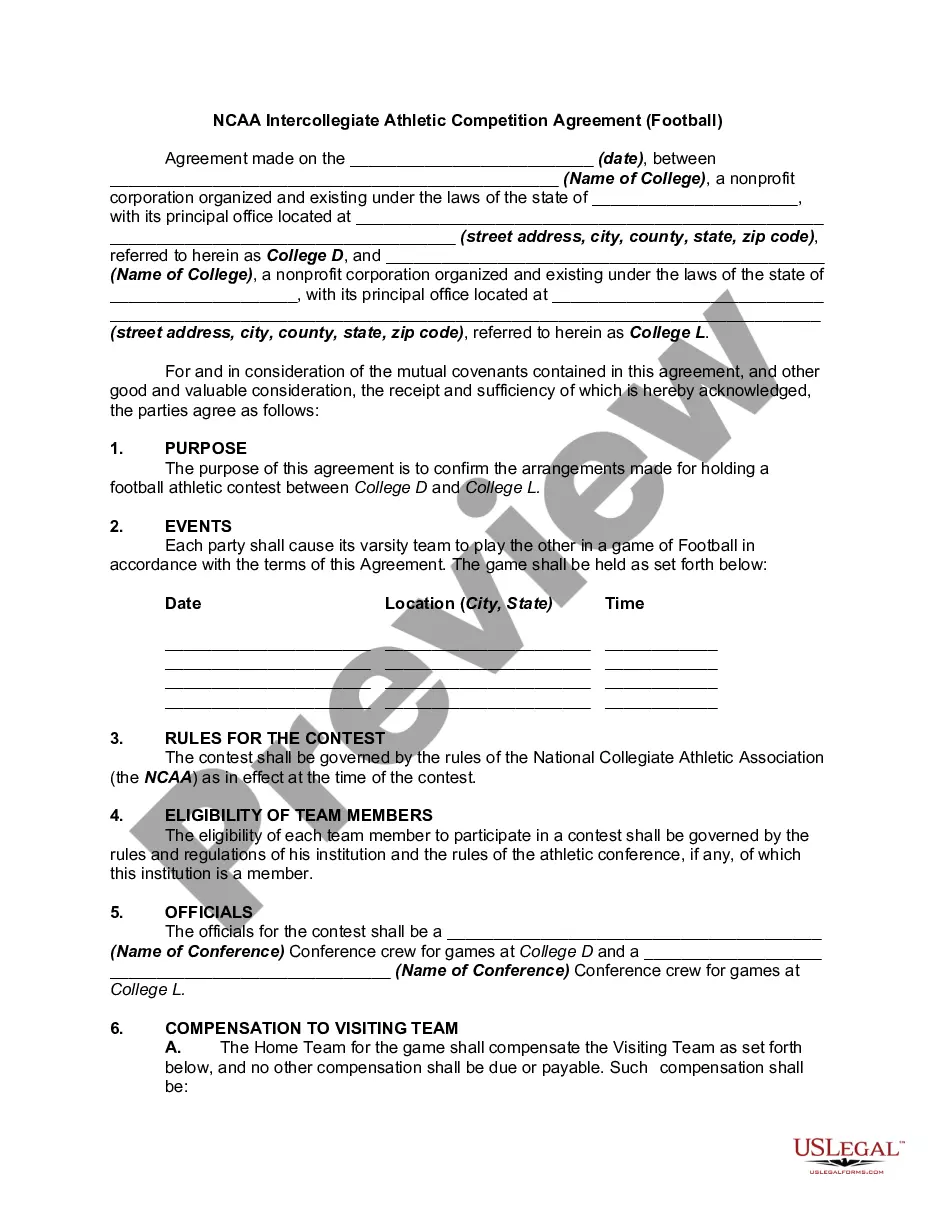
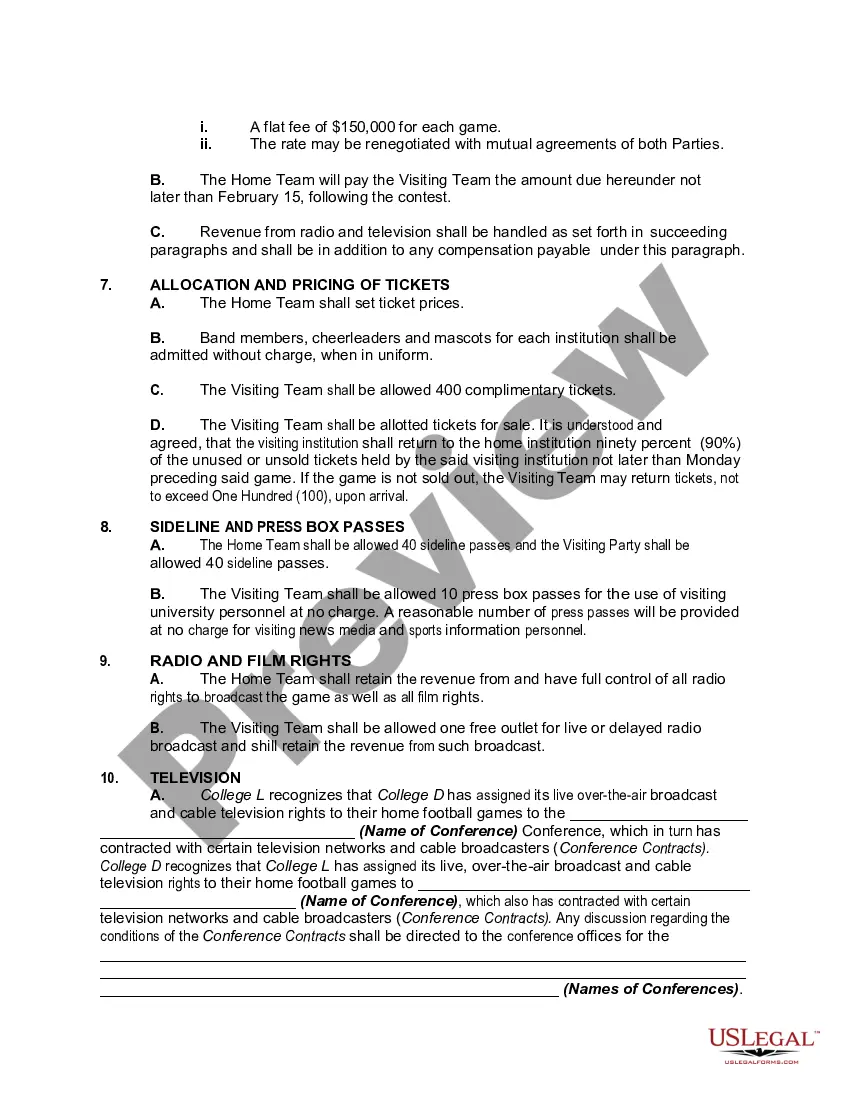
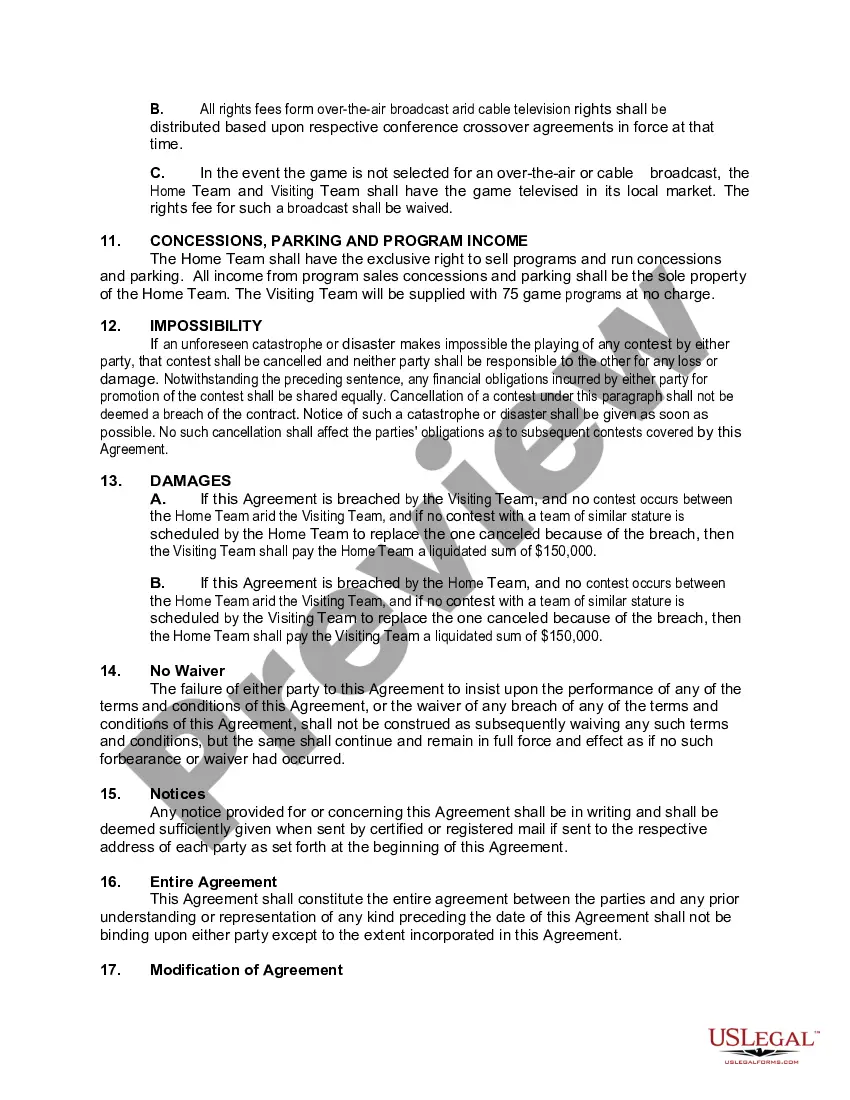
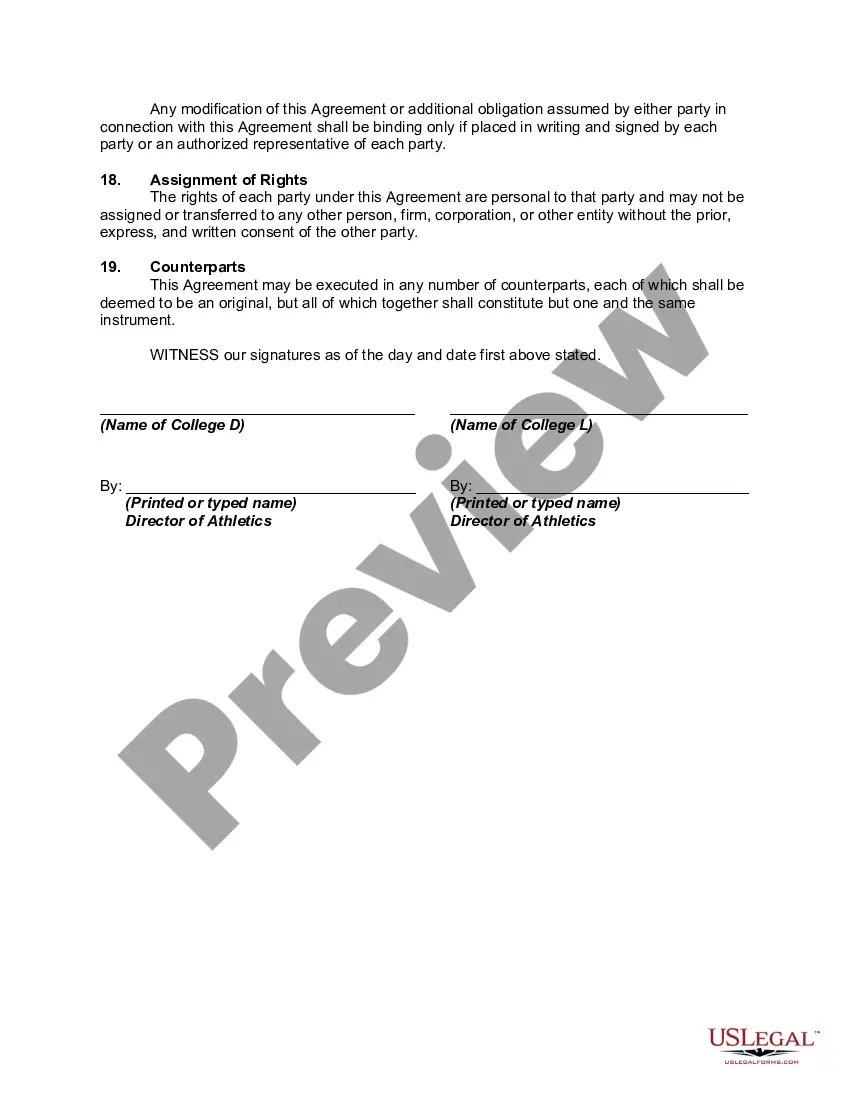
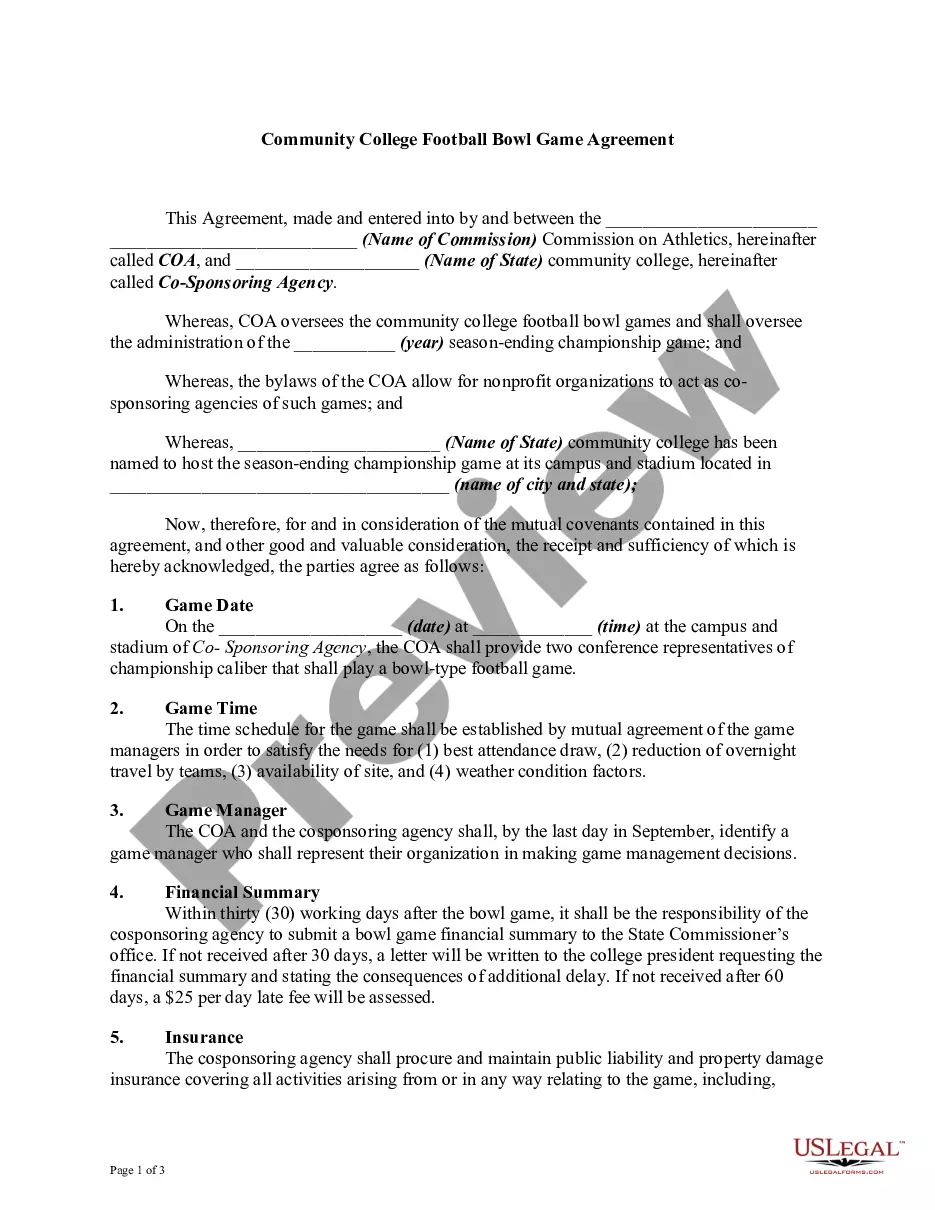
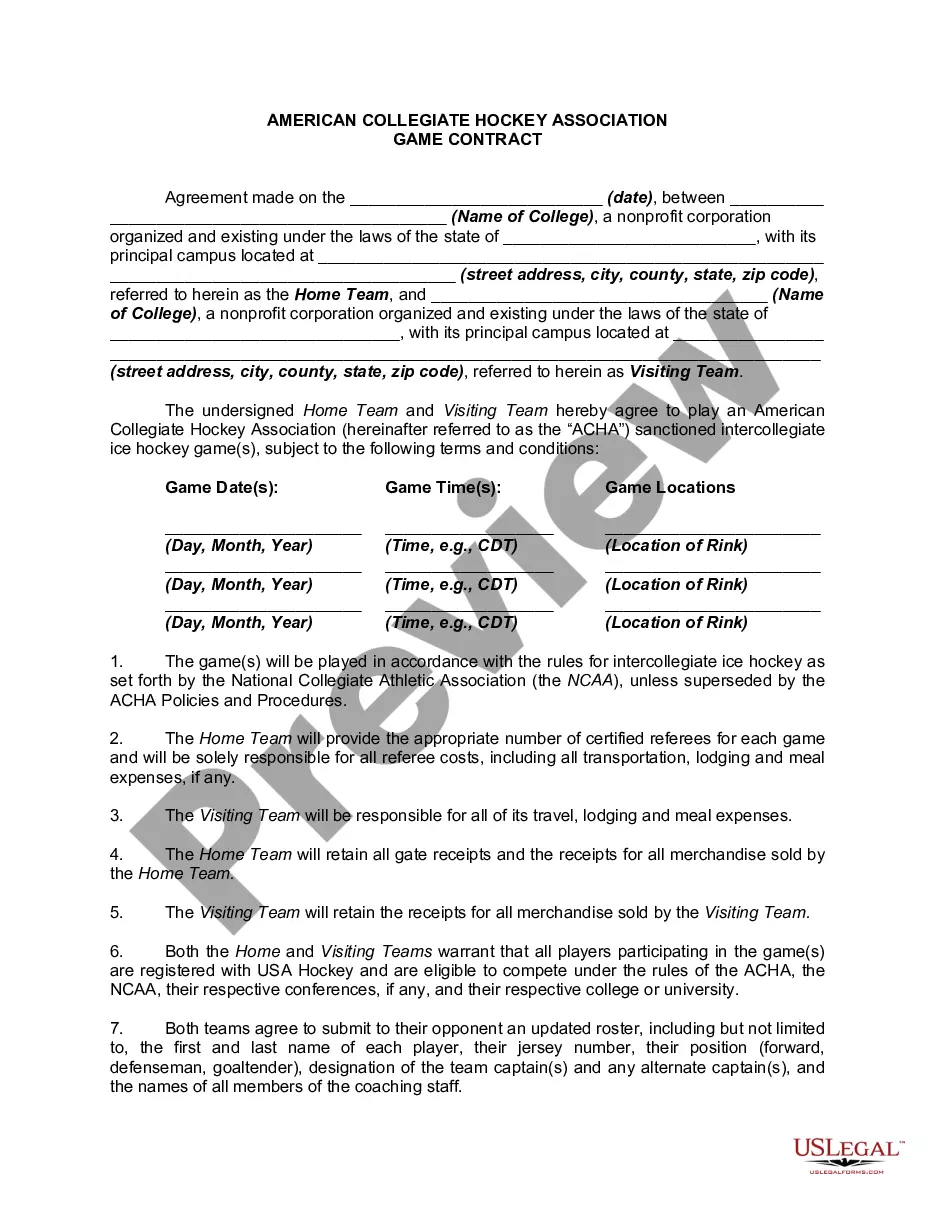
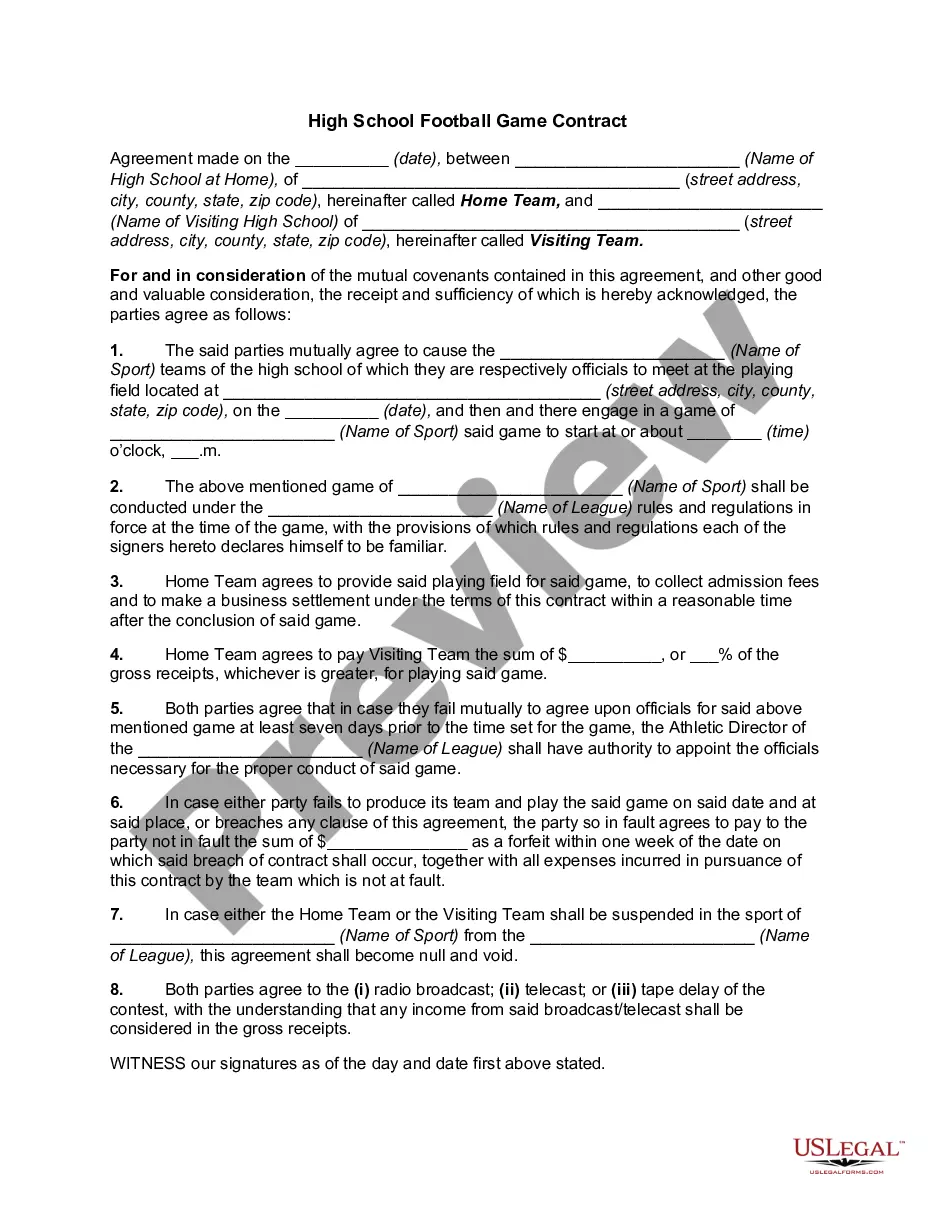
The NCAA Intercollegiate Athletic Competition Agreement - Football is a legal document that outlines the terms and conditions between two NCAA Division I Colleges for organizing and playing football games over a specified period, typically four years. This form establishes the framework for competitions, ensuring both parties adhere to NCAA rules while defining the obligations related to event organization, compensation, ticketing, and other logistical elements.
Key components of this form
- Agreement date and parties involved.
- Event details including dates, locations, and times for games.
- Rules governing the contest based on NCAA regulations.
- Compensation structure for the visiting team.
- Ticket allocation and pricing information.
- Management of broadcasting rights and concessions.
When to use this document
This form is essential when two NCAA Division I colleges want to formalize an agreement to compete in football games. It can be used when drafting contracts to ensure that both colleges understand their responsibilities, compensation, and the conditions under which the games will occur.
Who needs this form
- NCAA Division I athletic departments.
- College athletic directors and coaches involved in game scheduling.
- School administrators responsible for contracts and event planning.
How to complete this form
- Identify the parties: Clearly state the names of both colleges involved in the agreement.
- Enter the date of the agreement: Specify when the agreement is being made.
- Outline the details of the events: Fill in the dates, locations, and times for the scheduled football games.
- Specify the compensation terms: Clearly state the agreed compensation for the visiting team.
- Detail ticketing information: Outline the allocation of tickets and any relevant pricing structures.
Notarization guidance
Notarization is generally not required for this form. However, certain states or situations might demand it. You can complete notarization online through US Legal Forms, powered by Notarize, using a verified video call available anytime.
Get your form ready online
Our built-in tools help you complete, sign, share, and store your documents in one place.
Make edits, fill in missing information, and update formatting in US Legal Forms—just like you would in MS Word.
Download a copy, print it, send it by email, or mail it via USPS—whatever works best for your next step.
Sign and collect signatures with our SignNow integration. Send to multiple recipients, set reminders, and more. Go Premium to unlock E-Sign.
If this form requires notarization, complete it online through a secure video call—no need to meet a notary in person or wait for an appointment.
We protect your documents and personal data by following strict security and privacy standards.

Make edits, fill in missing information, and update formatting in US Legal Forms—just like you would in MS Word.

Download a copy, print it, send it by email, or mail it via USPS—whatever works best for your next step.

Sign and collect signatures with our SignNow integration. Send to multiple recipients, set reminders, and more. Go Premium to unlock E-Sign.

If this form requires notarization, complete it online through a secure video call—no need to meet a notary in person or wait for an appointment.

We protect your documents and personal data by following strict security and privacy standards.
Typical mistakes to avoid
- Failing to include all necessary details about each scheduled game.
- Not specifying compensation terms clearly.
- Omitting signatures from both parties, which can invalidate the agreement.
Benefits of completing this form online
- Immediate access to a professionally drafted agreement without the need for legal consultation.
- Easily editable to fit specific needs and details of the event.
- Convenient download and storage options for future reference.
Legal use & context
- This agreement is legally binding once signed by both parties.
- It promotes transparency and understanding between institutions regarding athletic competition.
- Properly executed agreements help prevent potential legal disputes during the sports seasons.
Summary of main points
- The agreement is vital for formalizing athletic competition between colleges.
- Clear definitions of responsibilities, compensation, and event details can prevent disputes.
- Utilizing this form can streamline the scheduling process for college football games.
Looking for another form?


Form popularity
FAQ
Of course they can. If they are released by their team or they are forced to retire for medical reasons, they can obtain unemployment. They were employed and now they are not.Technically, pro athletes aren't employees but independent contractors, working not for wages but prize money.
The NCAA says that: A student-athlete may participate in the official Olympic Games, in final tryouts that directly qualify competitors for the Olympic Games, and in officially recognized competition directly qualifying participants for final Olympic Games tryouts.
NCAA rules heavily restrict the types of jobs players can secure. Additionally, college athletes pay their way through college but aren't eligible for unemployment when they lose their scholarship.Team scholarship limits should be waived if otherwise applicable while roster limits would still apply.
This means that college athletes cannot receive payment for playing a sport, funding to offset training expenses, accept prize money based on performance, be represented or marketed by a sports agent or professional, promote or endorse commercial products and much more.
The Olympics Today Today, professional athletes are allowed to compete in the Olympic Games alongside their amateur counterparts. However, two sports continued to resist the onset of professionalism in the Olympics. These are wrestling and boxing.
NCAA rules do not cover unemployment benefits, and a representative confirmed to The Times that such assistance would not affect an athlete's eligibility. Munir McClain is not the only college student to file for temporary unemployment benefits under PUA.
Student-athletes are allowed to work during the academic year, but must be monitored by the Athletics Department to ensure that all rules regarding employment are followed.All contacts with prospective employers and final job placement must comply with the guidelines established by the University and the NCAA.
The NCAA allows players to have paying jobs. They may rarely have the time to do so, but it is permitted if the work is performed at an amount comparable to the going rate in that area for similar services.
If a player accepts money in any form, even if they do not know they are breaking rules and have no intentions of hiding it from the NCAA, an athlete can be dismissed from the school.