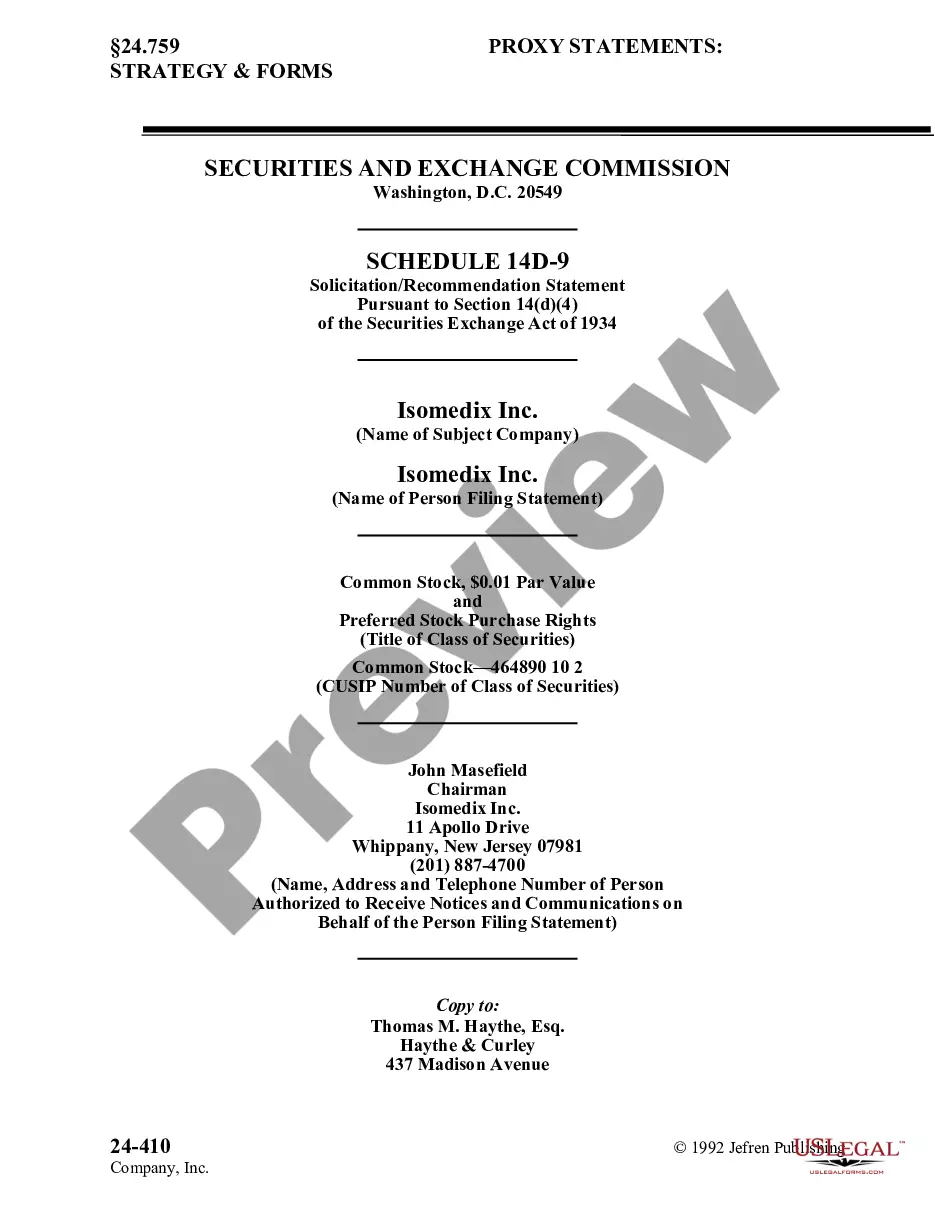
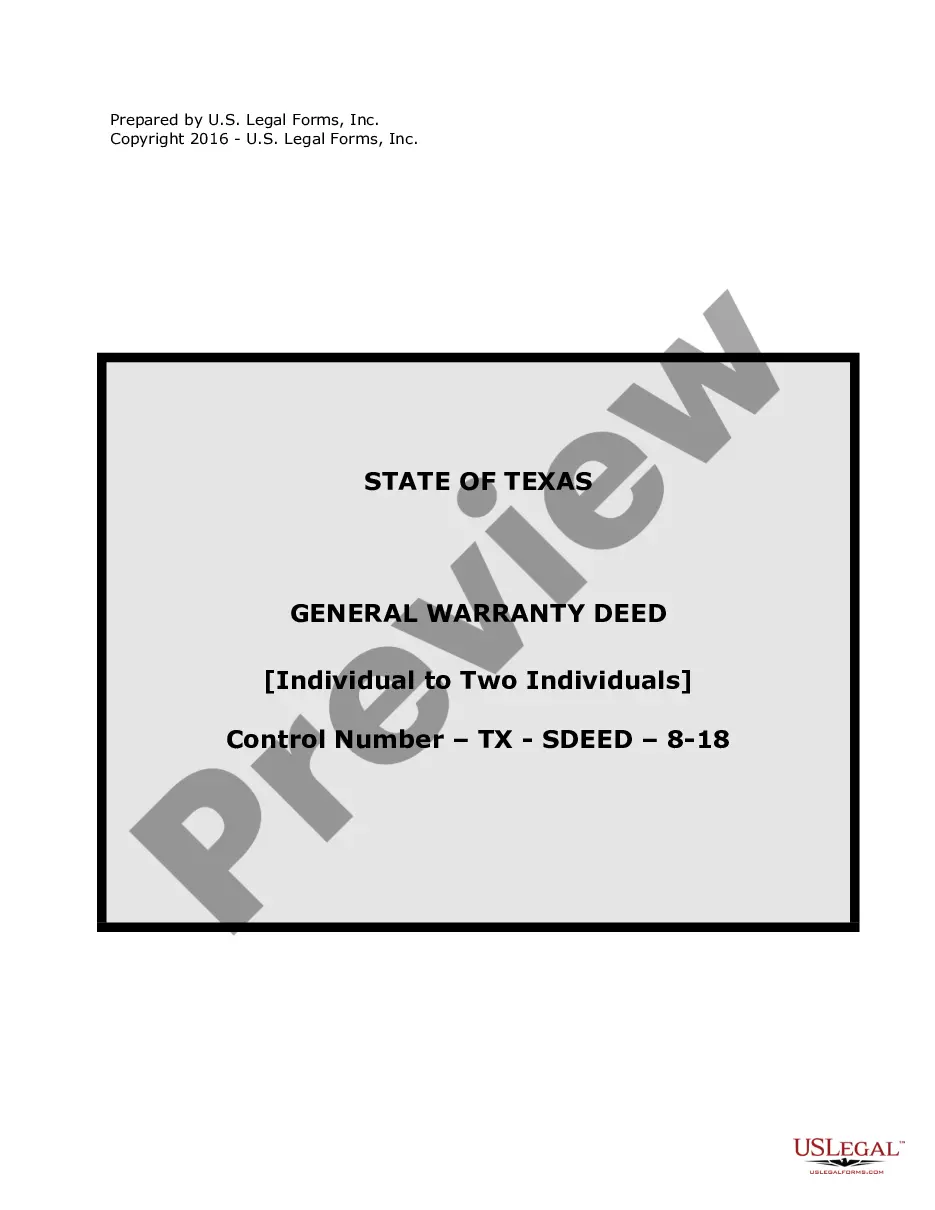
Texas General Warranty Deed for Individual to Two (2) Individuals as Tenants in Common
Understanding this form
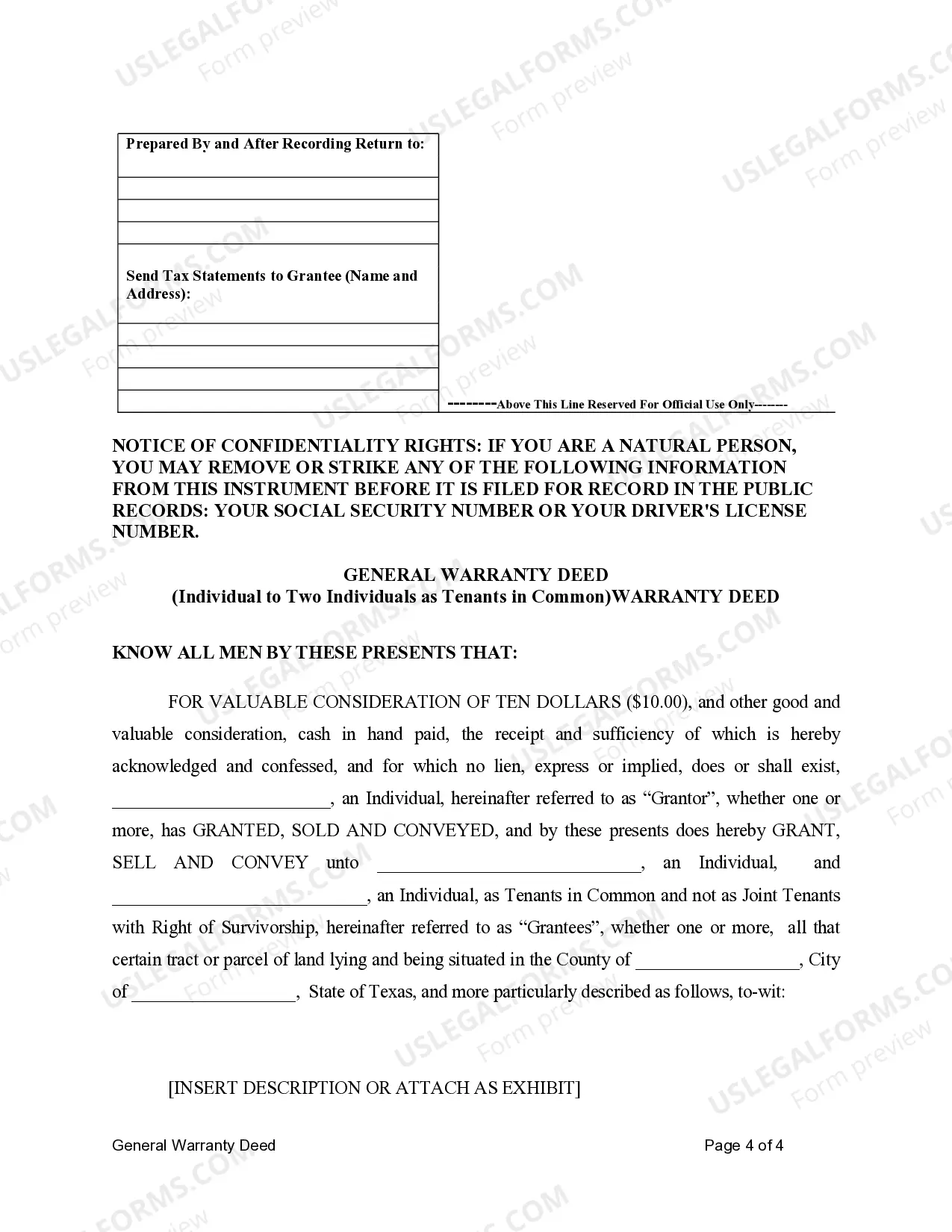
The General Warranty Deed for Individual to Two Individuals as Tenants in Common is a legal document used to transfer real property ownership from one individual (the grantor) to two individuals (the grantees) who will hold the property as tenants in common. This form ensures that both parties share ownership and can independently transfer their interests in the property without the right of survivorship. It is particularly important for those wishing to establish a clear and legally binding deed while ensuring both parties have defined rights to the property.
Form components explained
- Identification of the grantor and grantees.
- Complete description of the property being conveyed.
- Statement of consideration (value exchanged for the property).
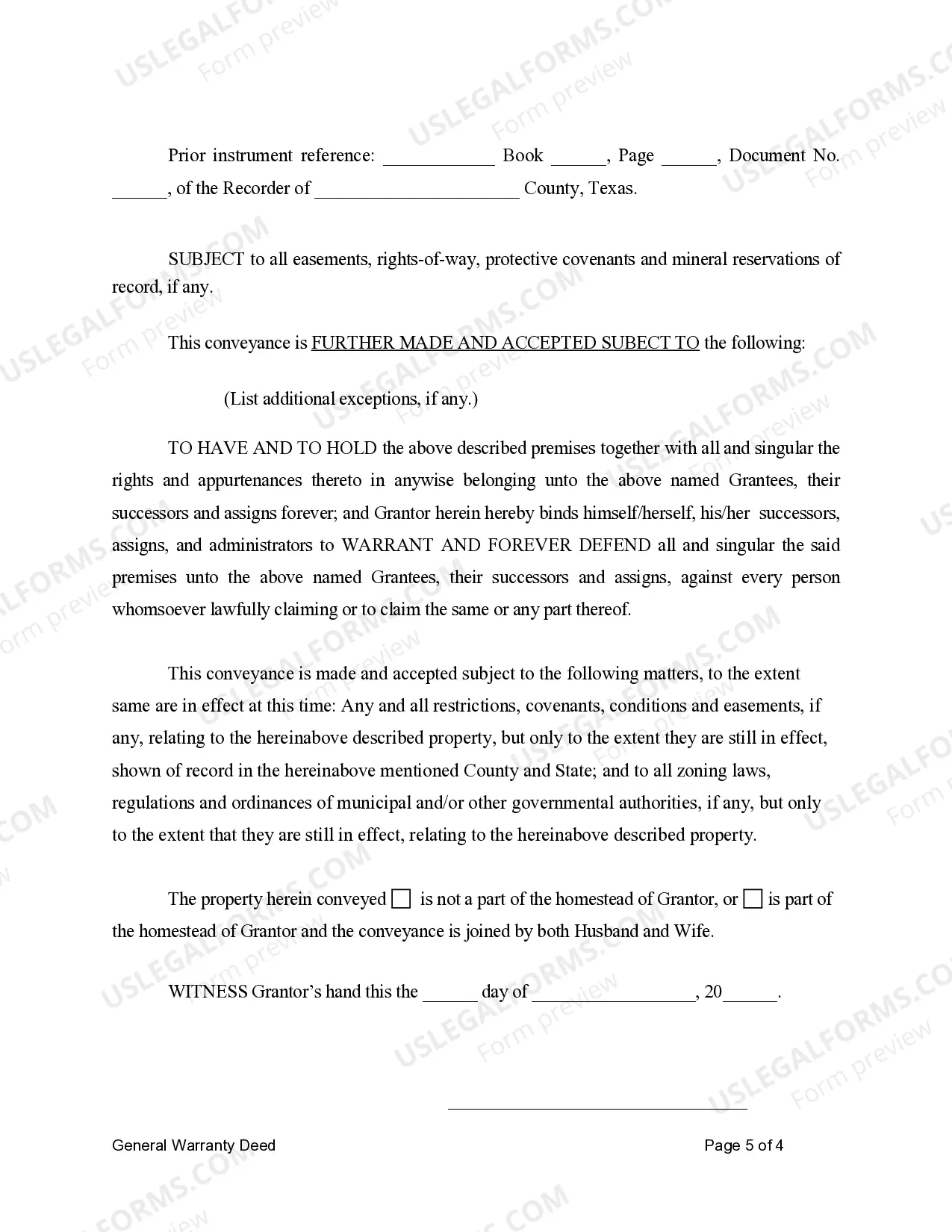
- Clauses outlining any restrictions, conditions, or easements affecting the property.
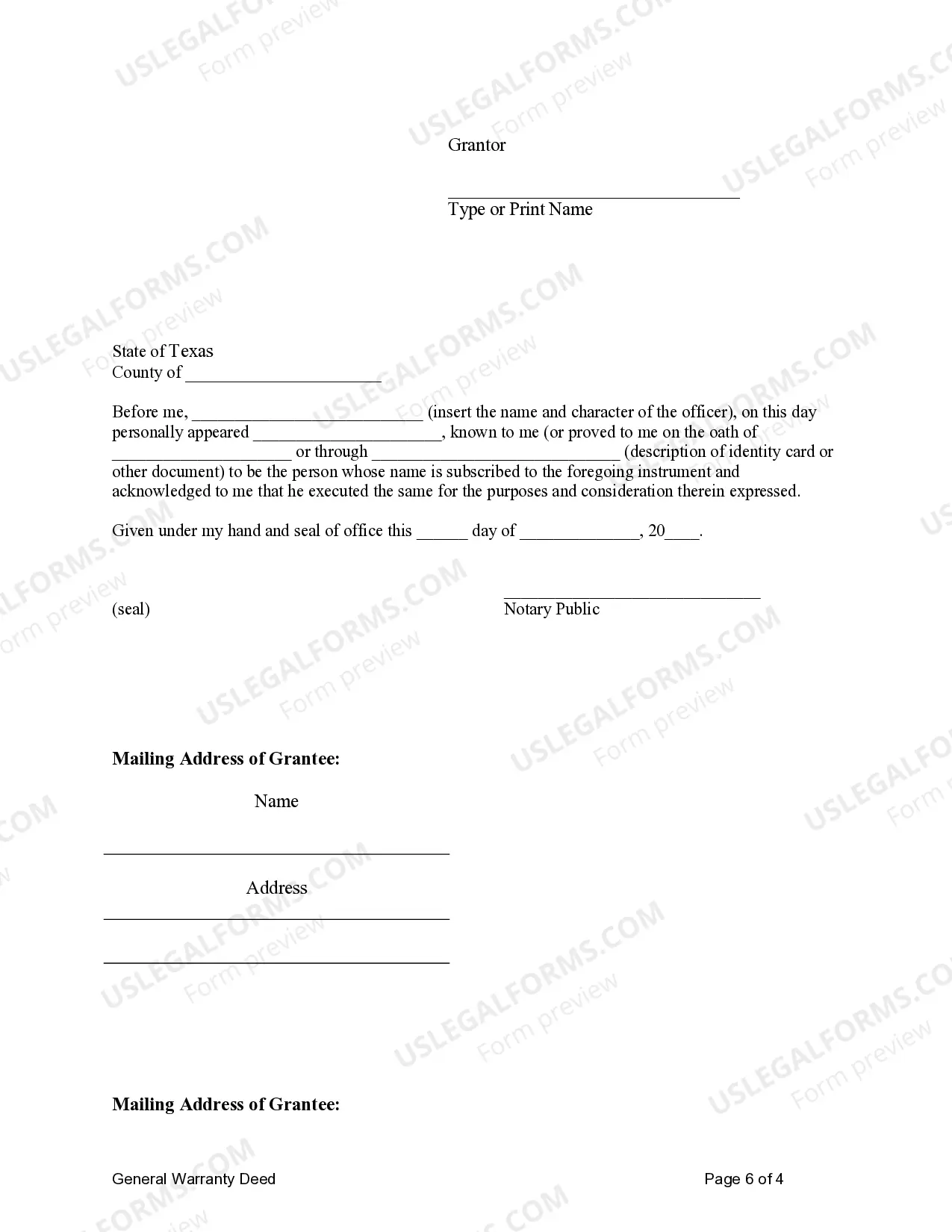
- Signatures of all parties involved.




When this form is needed
This General Warranty Deed should be used when an individual owner wishes to transfer property to two other individuals as tenants in common. Situations may include joint investments, inheritance distributions, or simply the need for multiple owners to hold title to a property with individual rights to their share. This form is particularly useful in managing real estate transactions where division of ownership is required.
Intended users of this form
- Individuals seeking to transfer property to two individuals.
- Co-owners of a property who want to formalize their ownership structure.
- Individuals involved in joint ventures or business partnerships involving real estate.
- Those distributing property as part of an estate plan.
Instructions for completing this form
- Identify and enter the full names of the grantor and the two grantees.
- Provide a clear and detailed description of the property being transferred.
- Specify the consideration amount, typically noted as ten dollars and other good value.
- Include any relevant prior instrument references for historical ownership.
- Have the grantor sign and date the document in the designated area.
Is notarization required?
This form must be notarized to be legally valid. US Legal Forms provides secure online notarization powered by Notarize, allowing you to complete the process through a verified video call.
Get your form ready online
Our built-in tools help you complete, sign, share, and store your documents in one place.
Make edits, fill in missing information, and update formatting in US Legal Forms—just like you would in MS Word.
Download a copy, print it, send it by email, or mail it via USPS—whatever works best for your next step.
Sign and collect signatures with our SignNow integration. Send to multiple recipients, set reminders, and more. Go Premium to unlock E-Sign.
If this form requires notarization, complete it online through a secure video call—no need to meet a notary in person or wait for an appointment.
We protect your documents and personal data by following strict security and privacy standards.

Make edits, fill in missing information, and update formatting in US Legal Forms—just like you would in MS Word.

Download a copy, print it, send it by email, or mail it via USPS—whatever works best for your next step.

Sign and collect signatures with our SignNow integration. Send to multiple recipients, set reminders, and more. Go Premium to unlock E-Sign.

If this form requires notarization, complete it online through a secure video call—no need to meet a notary in person or wait for an appointment.

We protect your documents and personal data by following strict security and privacy standards.
Common mistakes to avoid
- Not including a clear property description, which can lead to disputes over boundaries.
- Failing to include the legal names of all parties involved.
- Using the wrong type of deed for the intended ownership arrangement.
- Omitting necessary signatures or dates, making the document invalid.
Why complete this form online
- Convenience of filling out the form from home at your own pace.
- Editability allows for easy changes before finalizing.
- Access to reliable templates created by licensed attorneys.
- Secure storage options to keep your important documents safe.
What to keep in mind
- The General Warranty Deed facilitates property transfer to two individuals as tenants in common.
- It provides protection against title defects for grantees.
- Clearing understanding around property ownership type helps prevent future disputes.
- Proper completion of the form is essential to ensure the legal effectiveness of the transfer.
Looking for another form?
Form popularity
FAQ
In Texas, two forms of joint ownership have the right of survivorship: Joint tenancy. Property owned in joint tenancy automatically passes to the surviving owners when one owner dies. (The survivor must, however, live at least 120 hours longer than the deceased co-owner.
What Is the Difference Between a Warranty Deed & a Survivorship Deed?A warranty deed is the most comprehensive and provides the most guarantees. Survivorship isn't so much a deed as a title. It's a way to co-own property where, upon the death of one owner, ownership automatically passes to the survivor.
A survivorship deed, or a joint tenancy with right of survivorship, is much more difficult to contest than a will bequeathing property to beneficiaries. However, one circumstance in which a survivorship might be successfully contested is when the document granting right of survivorship has not been properly drafted.
A Survivorship Deed transfers residential or commercial property from one property owner (the grantor) to another (the grantee) while allowing them to avoid going through probate when they (the grantor) passes away. The parties transferring property in a Survivorship Deed must have full ownership of the property.
Special Warranty Deed TX A Special Warranty Deed is a document that transfers title with both express and implied warranties. However, unlike in a General Warranty Deed, the Grantor only warrants the title from the time the Grantor has owned the property.
A tenancy by the entirety is different from the others because only a married couple that owns the property together may use this type of tenancy. In addition, a tenancy by the entirety only lasts as long as the couple is married. Not all states recognize tenancy by the entirety. Texas does not.
In California, most married couples hold real property (such as land and buildings) as joint tenants with right of survivorship.For instance, many married couples share real property as joint tenants. This way, upon the death of a spouse, the surviving spouse will own 100% share of the property.
The name and address of the seller (called the grantor) The name and address of the buyer (called the grantee) A legal description of the property (found on the previous deed) A statement that the grantor is transferring the property to the grantee.
Unlike most states Texas does not automatically recognize joint tenancies as having a right of survivorship. Instead the parties must agree, in writing, to include a right of survivorship.