Action Brief - Board of Directors
About this form
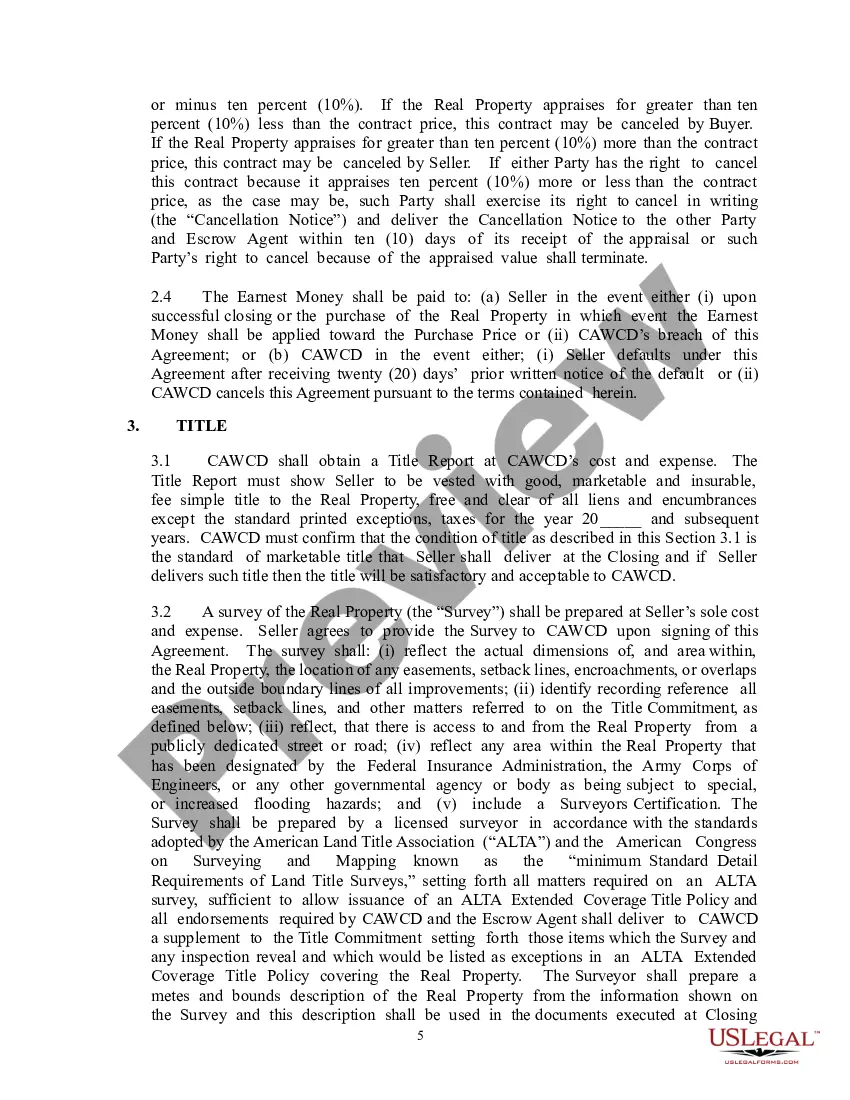
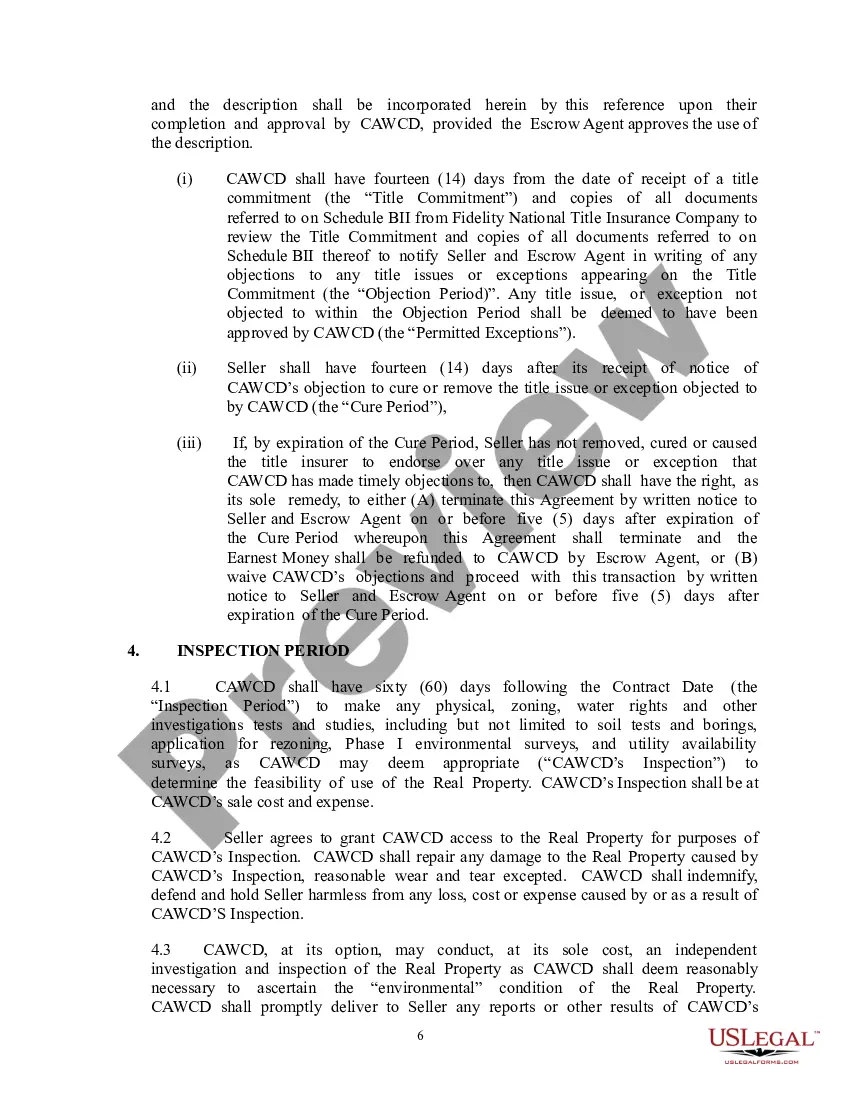
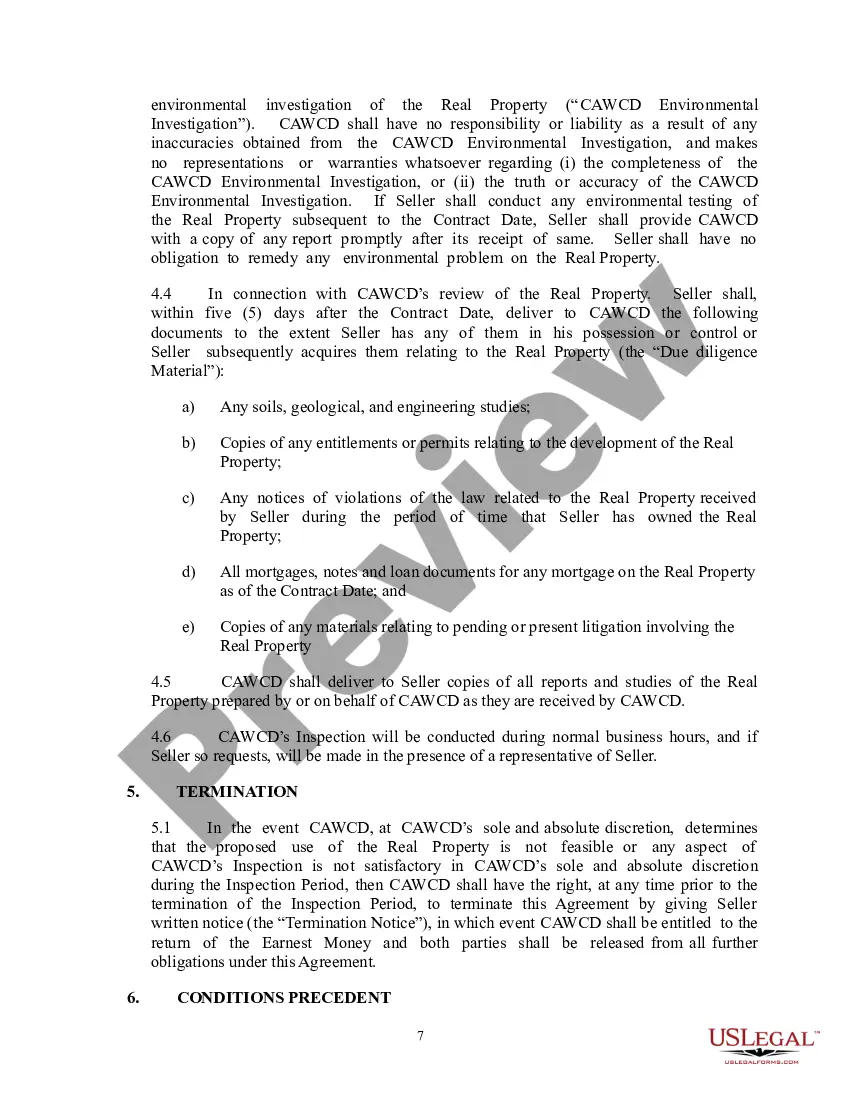
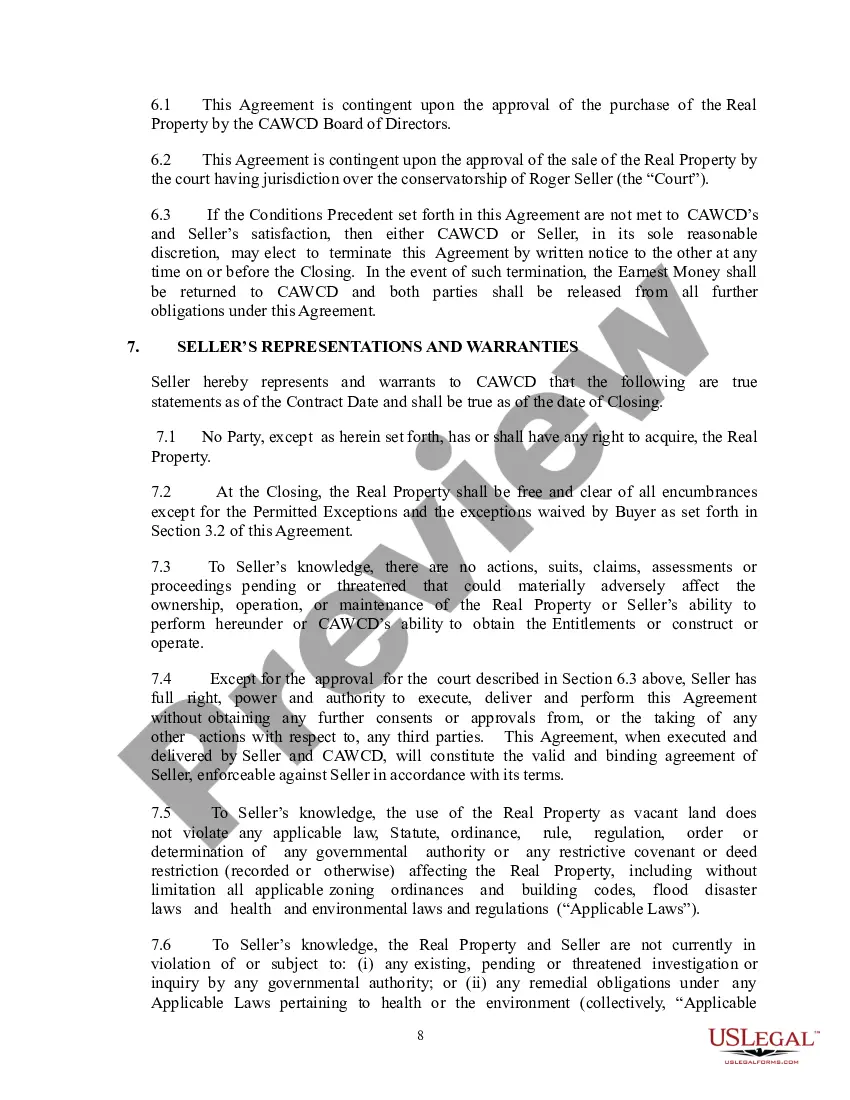
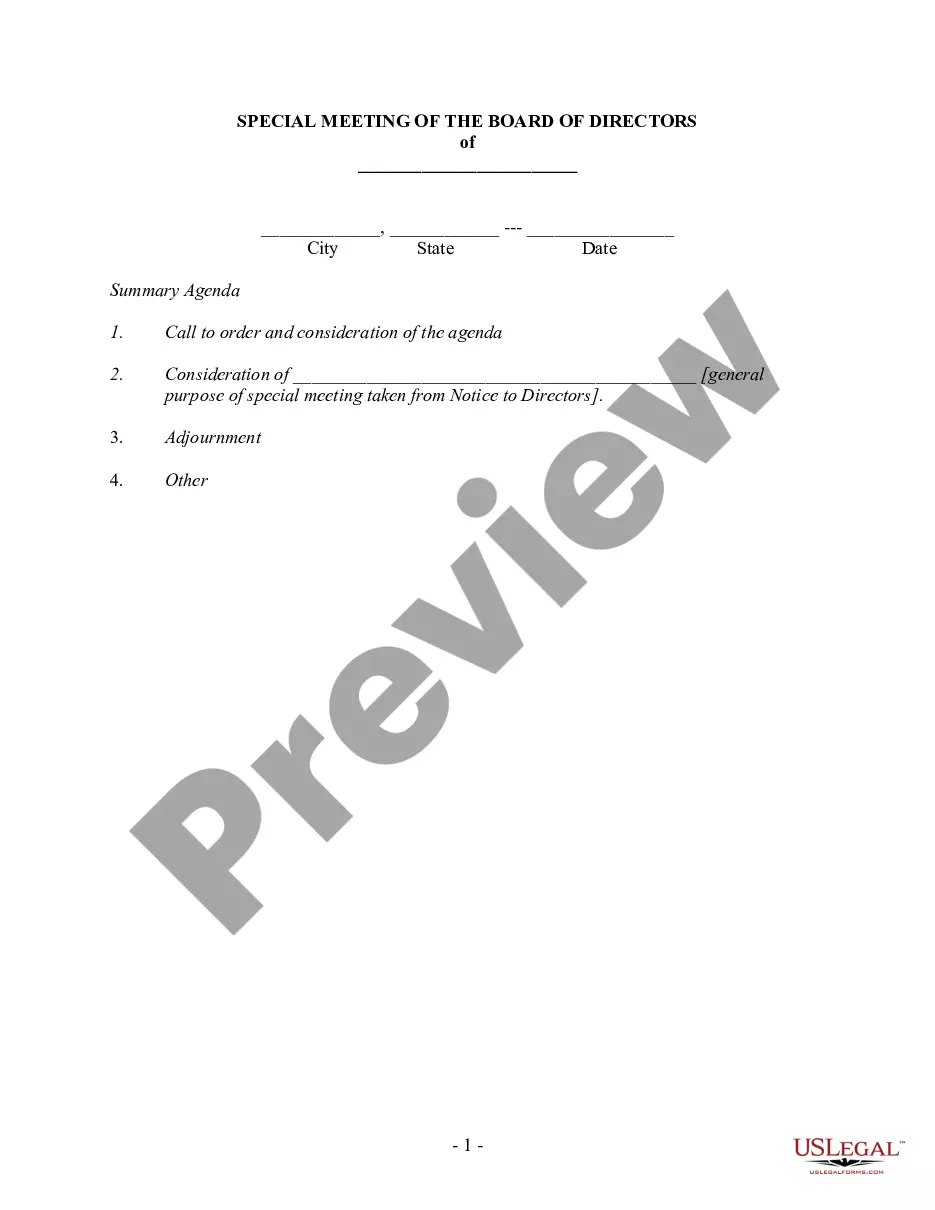
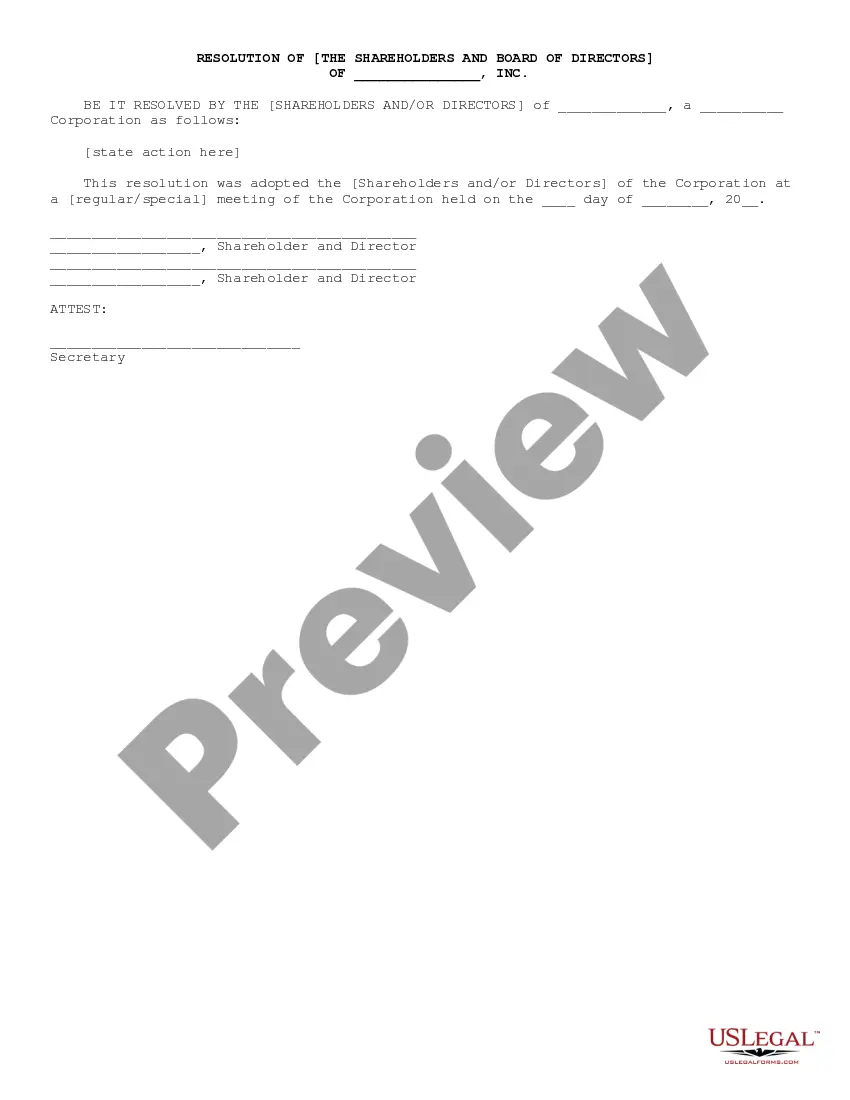
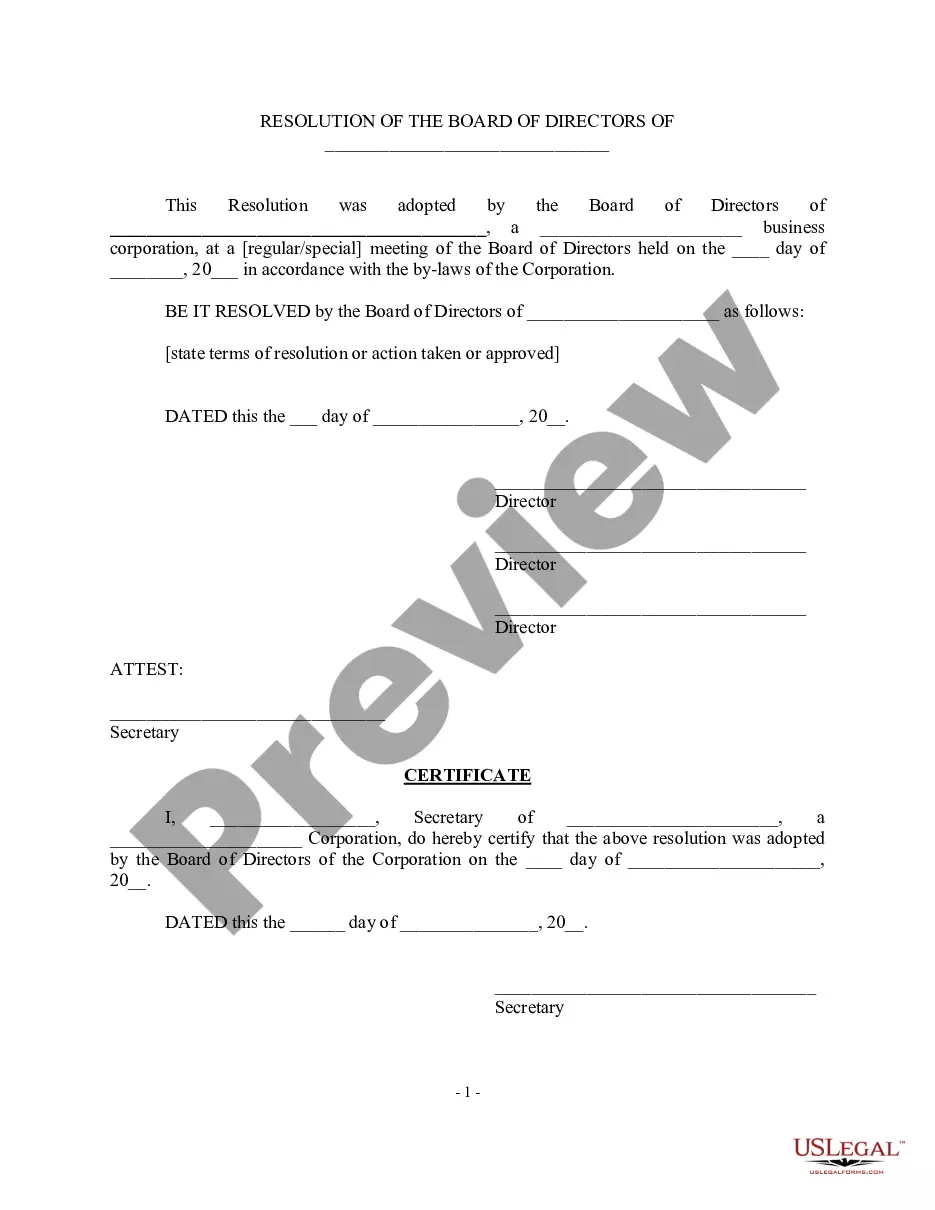
The Action Brief - Board of Directors is a formal document used to record decisions made by a company's board of directors. This form captures important motions, resolutions, or actions that have been approved during a duly called meeting. It differs from general corporate resolutions in that it focuses specifically on actions taken in relation to real estate transactions, such as the purchase and sale of property. This makes it essential for documenting board approval for significant financial commitments.
Form components explained
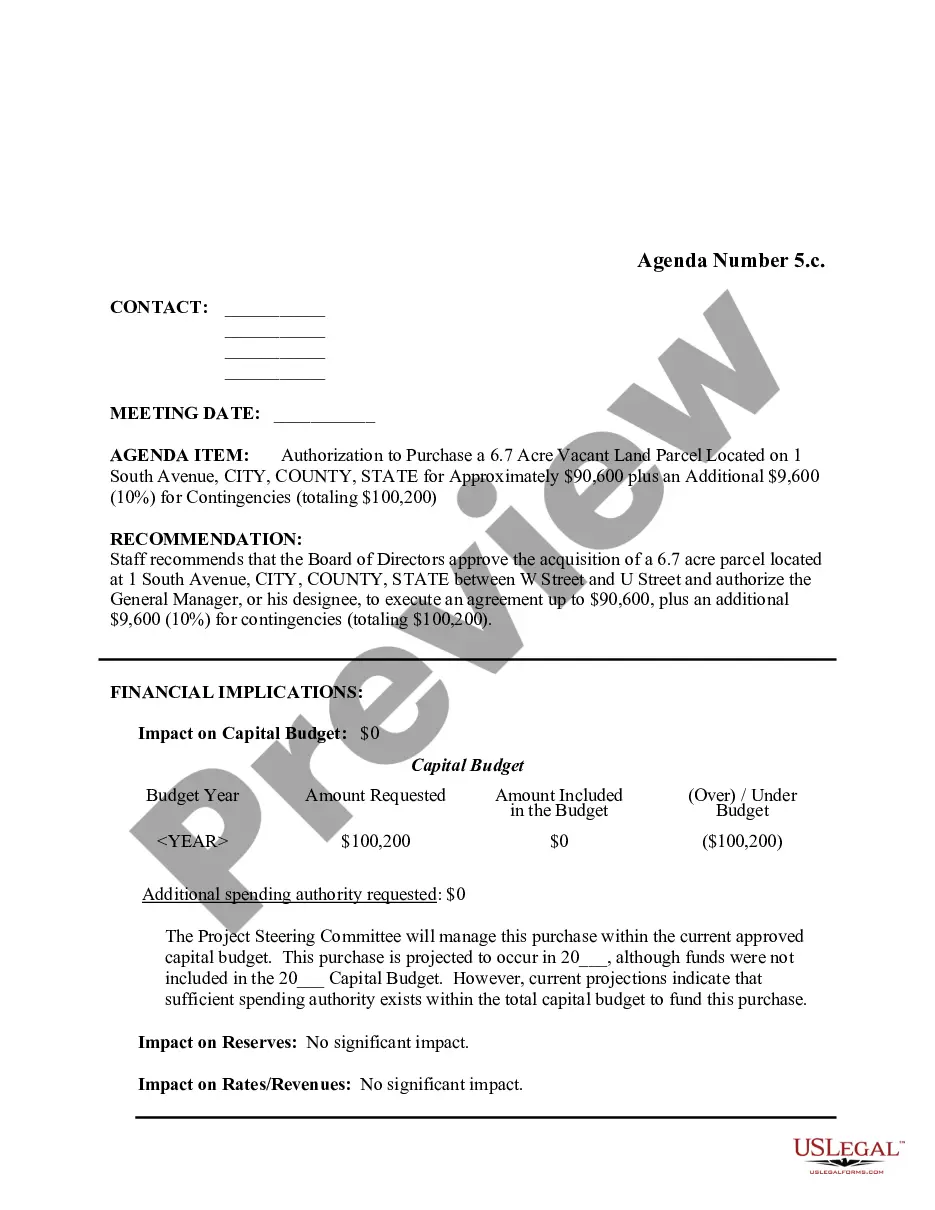
- Agenda Number: Identifies the specific agenda item discussed.
- Contact Information: Includes the names and details of board members involved in the discussion.
- Meeting Date: Records the date of the board meeting.
- Recommendation: Summarizes staff recommendations regarding property acquisition or other actions.
- Financial Implications: Outlines the financial impact, including budget implications and costs associated with the action.
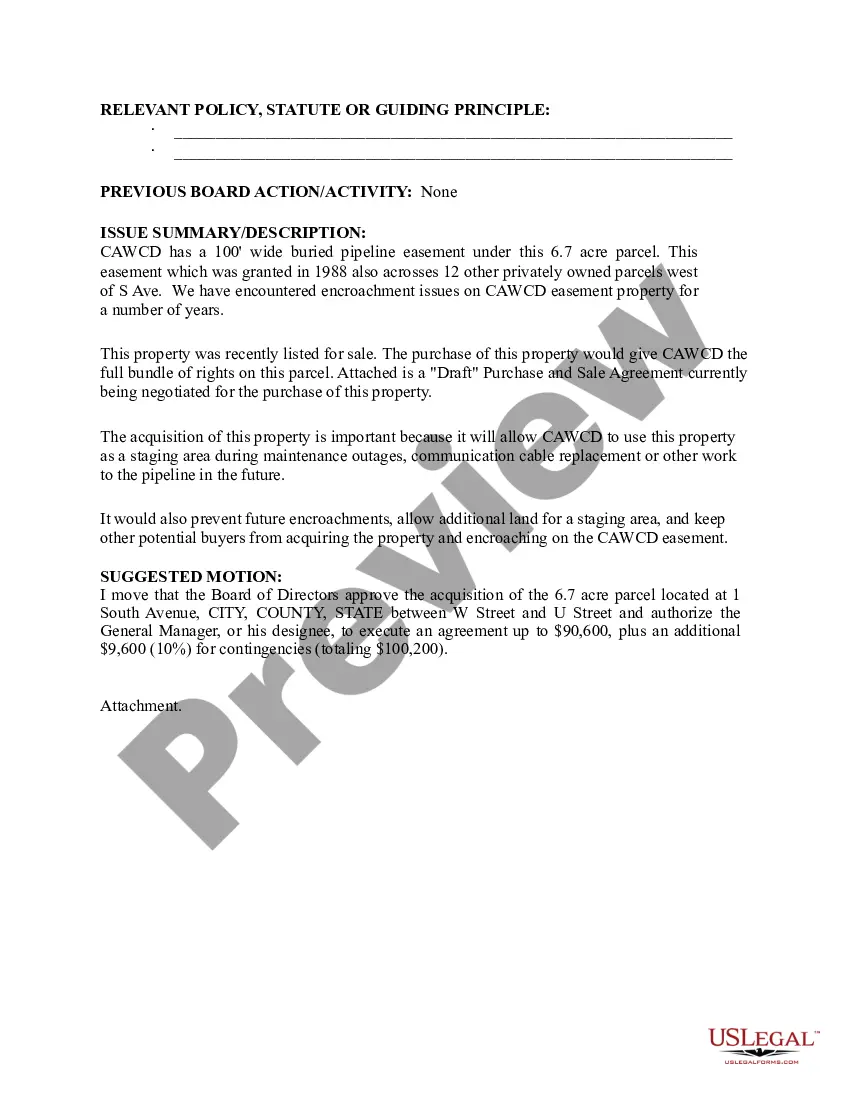
- Suggested Motion: Provides a clear motion for board members to vote on.



Common use cases
This form should be used during board meetings when the directors are required to vote on important matters, such as the acquisition of real estate, major financial decisions, or other significant operations. It serves to formalize the board's approval, thereby ensuring that the actions taken are legally documented and recognized within the organization.
Who can use this document
This form is intended for:
- Members of a board of directors seeking to record formal actions.
- Corporate secretaries responsible for maintaining accurate corporate records.
- Managers and legal representatives involved in corporate governance and real estate matters.
How to complete this form
- Identify the agenda number corresponding to the action item discussed during the meeting.
- Provide contact information for all board members present at the meeting.
- Enter the meeting date to confirm when the vote took place.
- Outline the key recommendation made by the staff regarding the proposed action.
- Detail all financial implications and confirm that they align with the existing budget.
- Record the suggested motion verbatim for clarity during the voting process.
Is notarization required?
This form does not typically require notarization unless specified by local law. However, it's recommended to check specific state or local regulations that might impose such requirements for corporate actions.
Get your form ready online
Our built-in tools help you complete, sign, share, and store your documents in one place.
Make edits, fill in missing information, and update formatting in US Legal Forms—just like you would in MS Word.
Download a copy, print it, send it by email, or mail it via USPS—whatever works best for your next step.
Sign and collect signatures with our SignNow integration. Send to multiple recipients, set reminders, and more. Go Premium to unlock E-Sign.
If this form requires notarization, complete it online through a secure video call—no need to meet a notary in person or wait for an appointment.
We protect your documents and personal data by following strict security and privacy standards.

Make edits, fill in missing information, and update formatting in US Legal Forms—just like you would in MS Word.

Download a copy, print it, send it by email, or mail it via USPS—whatever works best for your next step.

Sign and collect signatures with our SignNow integration. Send to multiple recipients, set reminders, and more. Go Premium to unlock E-Sign.

If this form requires notarization, complete it online through a secure video call—no need to meet a notary in person or wait for an appointment.

We protect your documents and personal data by following strict security and privacy standards.
Typical mistakes to avoid
- Failing to include all relevant board member names and contact information.
- Neglecting to accurately record the date of the meeting.
- Omitting financial implications or not aligning them with the current budget.
- Not providing a clear or concise recommendation or motion.
Why use this form online
- Convenience: Easily fill out and download the form at your convenience.
- Editable: Modify the form as necessary to suit your specific meeting needs.
- Reliability: Ensure that you are using a professionally drafted document trusted by licensed attorneys.
Looking for another form?
Form popularity
FAQ
The basics Just as for any corporation, the board of directors of a nonprofit has three primary legal duties known as the ?duty of care,? ?duty of loyalty,? and ?duty of obedience.?
What to include in an executive summary The hook. The first sentence and paragraph of your executive summary determine whether or not the entire executive summary gets read.Company description summary.Market analysis.Products and services.Financial information and projections.Future plans.
In short, a good executive summary concisely summarizes the report's background, core findings and methods, as well as proposed solutions and actions you want the board to endorse. Make sure to carefully review the complete board report, then condense it to one page, typically around 400 words.
Your executive summary should include: The name, location, and mission of your company. A description of your company, including management, advisors, and brief history. Your product or service, where your product fits in the market, and how your product differs from competitors in the industry.
The Role of the Board of Directors 1) Recruit, supervise, retain, evaluate and compensate the manager.2) Provide direction for the organization.3) Establish a policy based governance system.4) Govern the organization and the relationship with the CEO.
How to Write a Compelling Executive Summary Describe a problem, need or goal. Underneath the words "EXECUTIVE SUMMARY" explain in one or two sentences (at most) why a decision is needed.Describe the desired outcome.Describe your proposed solution.Explain how you'll overcome risks.Ask for the decision you want made.
A simple executive summary structure Purpose: start with the purpose of your report and remind the reader of what the piece of work you are reporting on is.Background or methods: Either the background or what you did.Findings and conclusions: What you found out and/or the conclusions you came to.
Action items are tasks assigned to an individual or group with a specific deadline, typically presented as an extension of meeting minutes. Individuals or groups appointed to action items are responsible for completing the job. These particular tasks can be a single or a multi-step process.