Texas General Warranty Deed for Individual to Two Individuals
Understanding this form
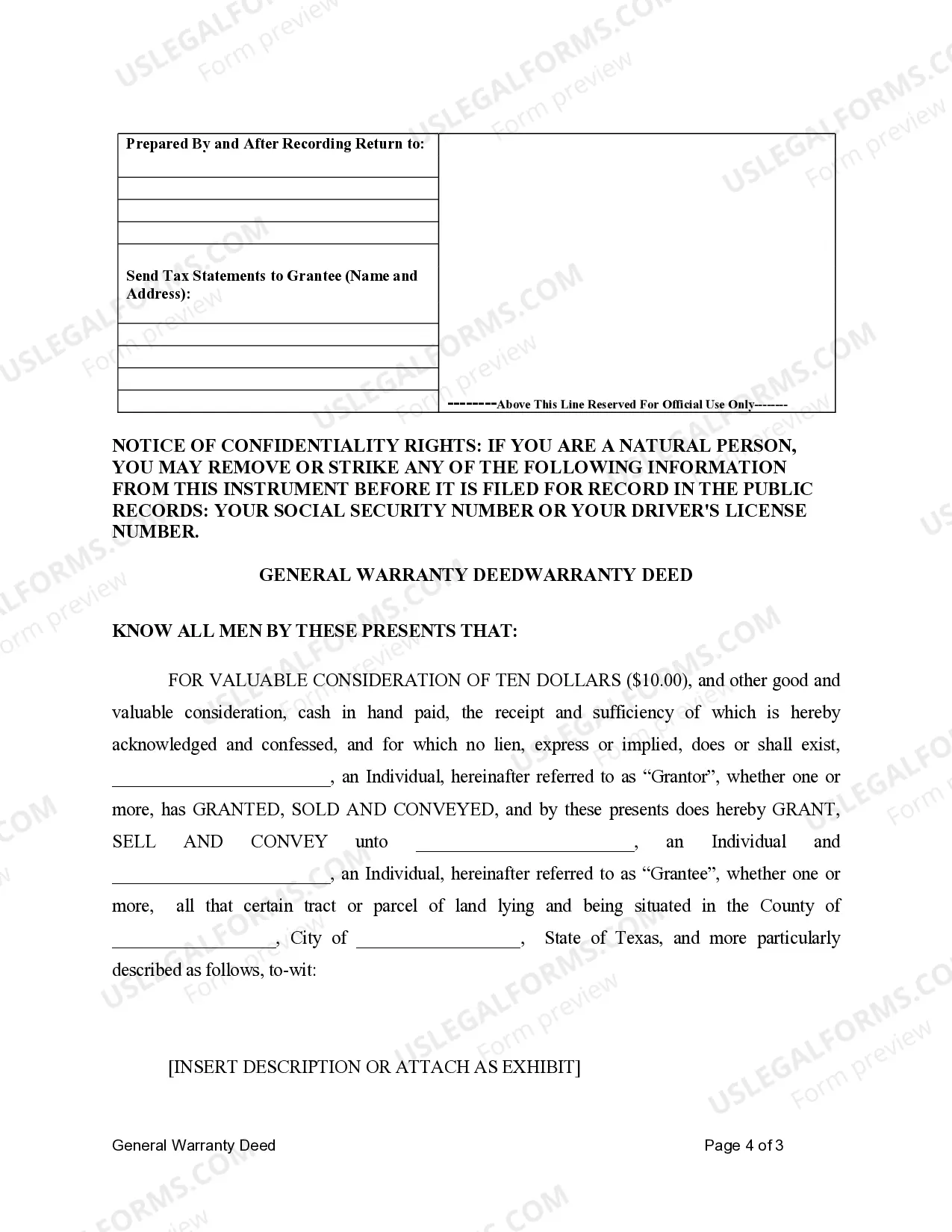
The General Warranty Deed for Individual to Two Individuals is a legal document used to transfer ownership of real estate from one individual (the grantor) to two individuals (the grantees). This form provides a comprehensive guarantee that the property title is clear and free of encumbrances, ensuring that the grantees have legal rights to the property. Unlike other types of deeds, this general warranty deed offers the highest level of protection for the grantees in property transactions.
Key components of this form
- Grantor Information: Details about the individual transferring ownership.
- Grantee Information: Names and details of the two individuals receiving the property.
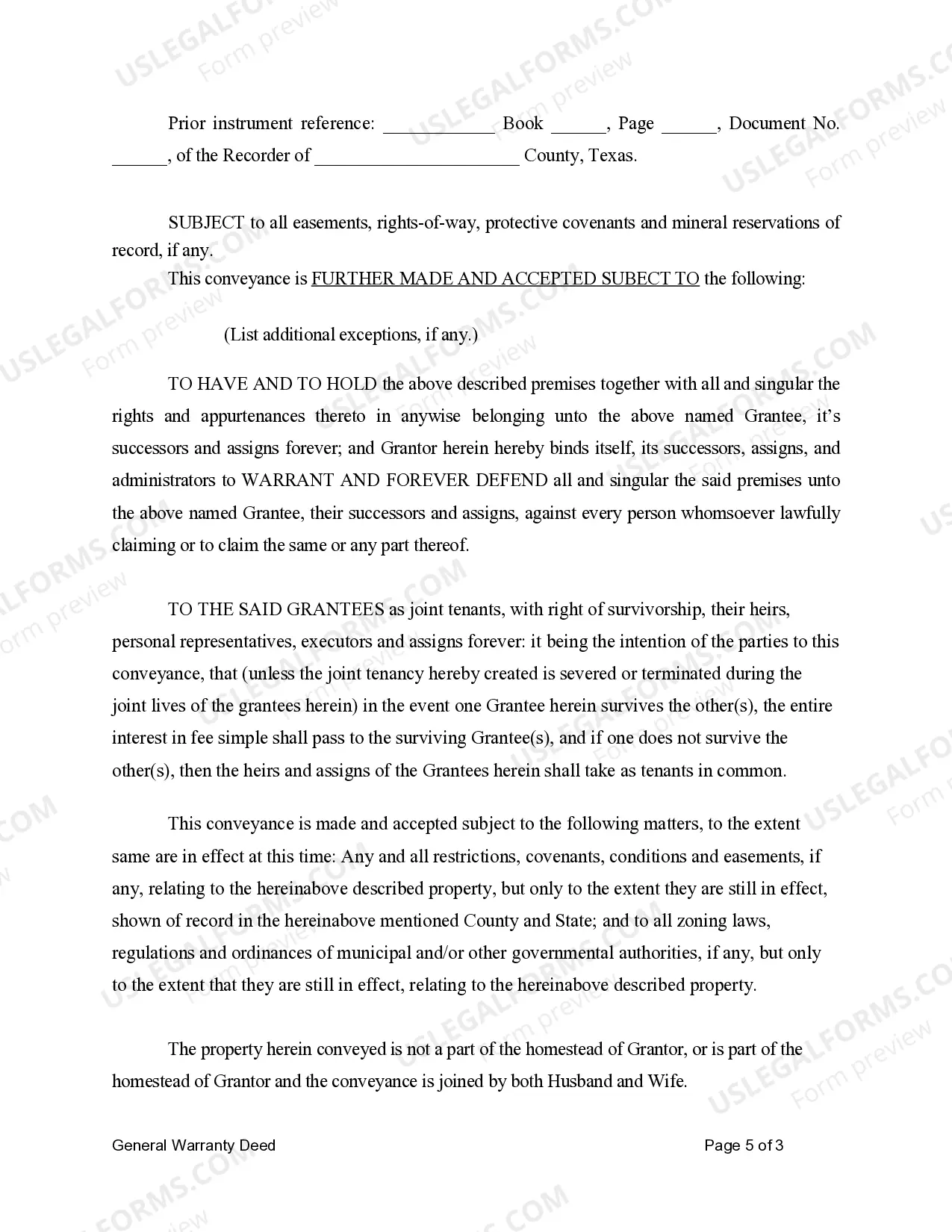
- Property Description: A clear description of the property being conveyed, including its location and any relevant identifiers.
- Consideration Statement: A clause stating the value exchanged (typically nominal, such as ten dollars).
- Joint Tenancy Clause: Specifies how the property will be owned by the grantees, indicating right of survivorship.




When this form is needed
This form is typically used when an individual wants to transfer real property to two different individuals, such as siblings, business partners, or family members, and ensure that both parties have equal ownership rights. Itâs appropriate in situations involving gifts of property, inheritance transfers, or sales between known parties where a warranty of title is desired.
Who needs this form
- Individuals looking to transfer property to two co-owners.
- Property owners wanting to ensure that the title is protected for both new owners.
- Family members transferring property as part of inheritance or gift.
Completing this form step by step
- Identify the grantor and grantees, ensuring accurate names and spellings.
- Provide a complete description of the property being transferred.
- Enter the agreed consideration amount in the designated field.
- Specify the rights of survivorship to clearly outline ownership intent.
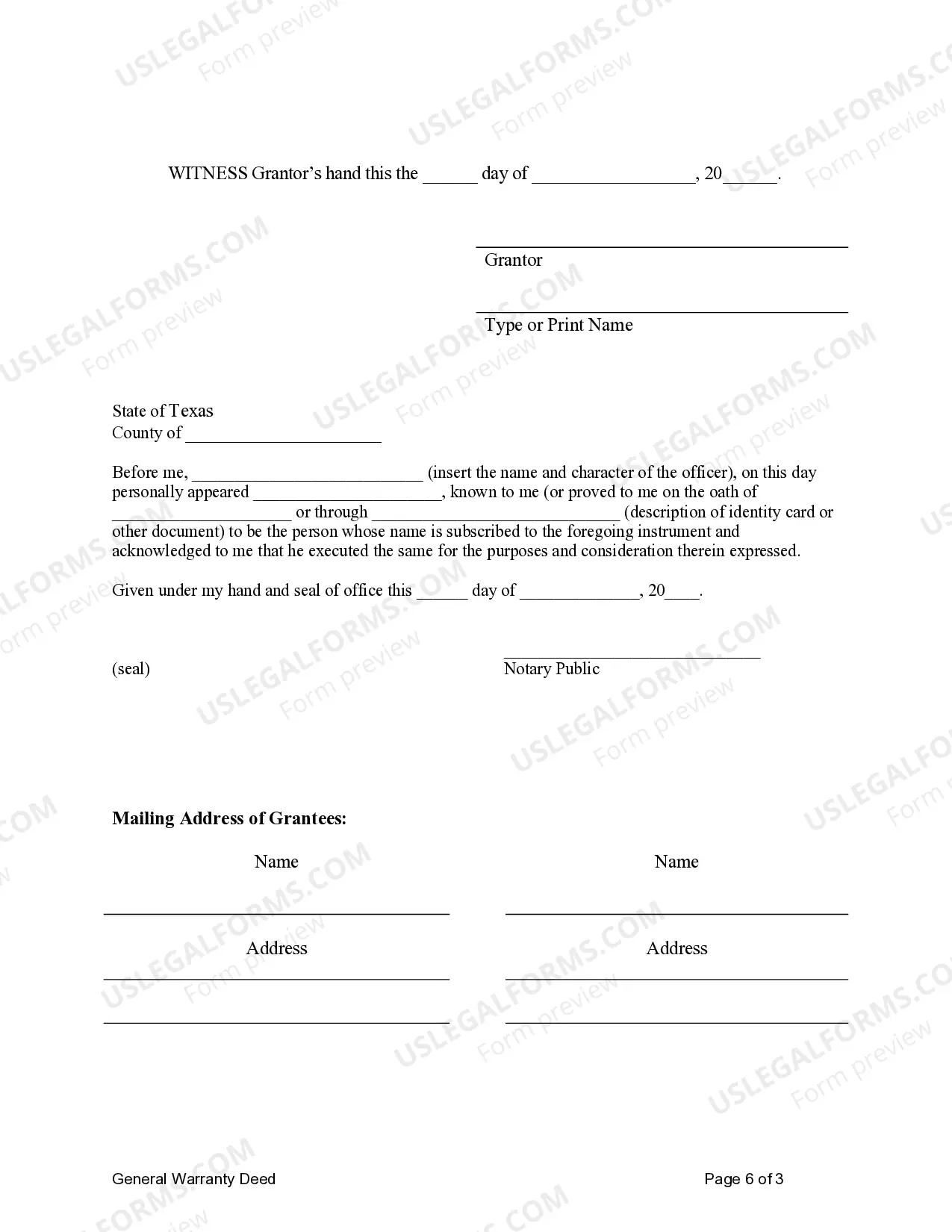
- Sign and date the form to finalize the transfer before a notary, if required.
Notarization guidance
Yes, this form must be notarized to be legally valid. It is essential to have a notary public witness the signatures to authenticate the document, which helps prevent potential disputes about the transaction in the future. US Legal Forms offers integrated online notarization, allowing you to complete this process easily and securely.
Get your form ready online
Our built-in tools help you complete, sign, share, and store your documents in one place.
Make edits, fill in missing information, and update formatting in US Legal Forms—just like you would in MS Word.
Download a copy, print it, send it by email, or mail it via USPS—whatever works best for your next step.
Sign and collect signatures with our SignNow integration. Send to multiple recipients, set reminders, and more. Go Premium to unlock E-Sign.
If this form requires notarization, complete it online through a secure video call—no need to meet a notary in person or wait for an appointment.
We protect your documents and personal data by following strict security and privacy standards.

Make edits, fill in missing information, and update formatting in US Legal Forms—just like you would in MS Word.

Download a copy, print it, send it by email, or mail it via USPS—whatever works best for your next step.

Sign and collect signatures with our SignNow integration. Send to multiple recipients, set reminders, and more. Go Premium to unlock E-Sign.

If this form requires notarization, complete it online through a secure video call—no need to meet a notary in person or wait for an appointment.

We protect your documents and personal data by following strict security and privacy standards.
Mistakes to watch out for
- Failing to accurately describe the property can lead to issues with title transfer.
- Not including both granteesâ names can result in legal challenges later.
- Leaving out the consideration amount may invalidate the deed.
Why complete this form online
- Convenience of completing the form from home without needing to visit a lawyer.
- Editability allows the user to make adjustments before finalizing the document.
- Reliable templates drafted by licensed attorneys ensure legal compliance.
Main things to remember
- A General Warranty Deed transfers property from one individual to two individuals with full ownership guarantees.
- This form is particularly useful for familial transfers, estate planning, or partnerships.
- Complete all sections accurately and ensure notarization for legal validity.
Looking for another form?

Form popularity
FAQ
The answer is yes. Parties to a transaction are always free to prepare their own deeds. If you do so, be sure your deed measures up to your state's legal regulations, to help avert any legal challenge to the deed later.
Typically, the lender will provide you with a copy of the deed of trust after the closing. The original warranty deeds are often mailed to the grantee after they are recorded. These are your original copies and should be kept in a safe place, such as a fireproof lockbox or a safe deposit box at a financial institution.
In Texas, you can't add your spouse's name to an existing deed, but you can create a new deed by transferring the property from yourself to you and your spouse jointly. You can do this by using either a deed without warranty or a quit claim deed.
It's important to note that a warranty deed does not actually prove the grantor has ownership (a title search is the best way to prove that), but it is a promise by the grantor that they are transferring ownership and if it turns out they don't actually own the property, the grantor will be responsible for compensating
The name and address of the seller (called the grantor) The name and address of the buyer (called the grantee) A legal description of the property (found on the previous deed) A statement that the grantor is transferring the property to the grantee.
Fill out the "grantor" section of the warranty deed. The grantors are the givers, or current owners, of the property. Use the legal name of each grantor and insert current addresses after each grantor's name.
Let's start with the definition of a deed: DEED: A written instrument by which one party, the Grantor, conveys the title of ownership in property to another party, the Grantee. A Warranty Deed contains promises, called covenants, that the Grantor makes to the Grantee.
Write the county where the property is located on line provided next to the words "County of" beneath the words "The State of Texas." Write the name and address of the grantor on the lines provided after the words "Know all men by these presents, That I."
A warranty deed guarantees that: The grantor is the rightful owner of the property and has the legal right to transfer the title.The title would withstand third-party claims to ownership of the property. The grantor will do anything to ensure the grantee's title to the property.