Washington Marital Domestic Separation and Property Settlement Agreement for persons with No Children, No Joint Property or Debts where Divorce Action Filed
Overview of this form
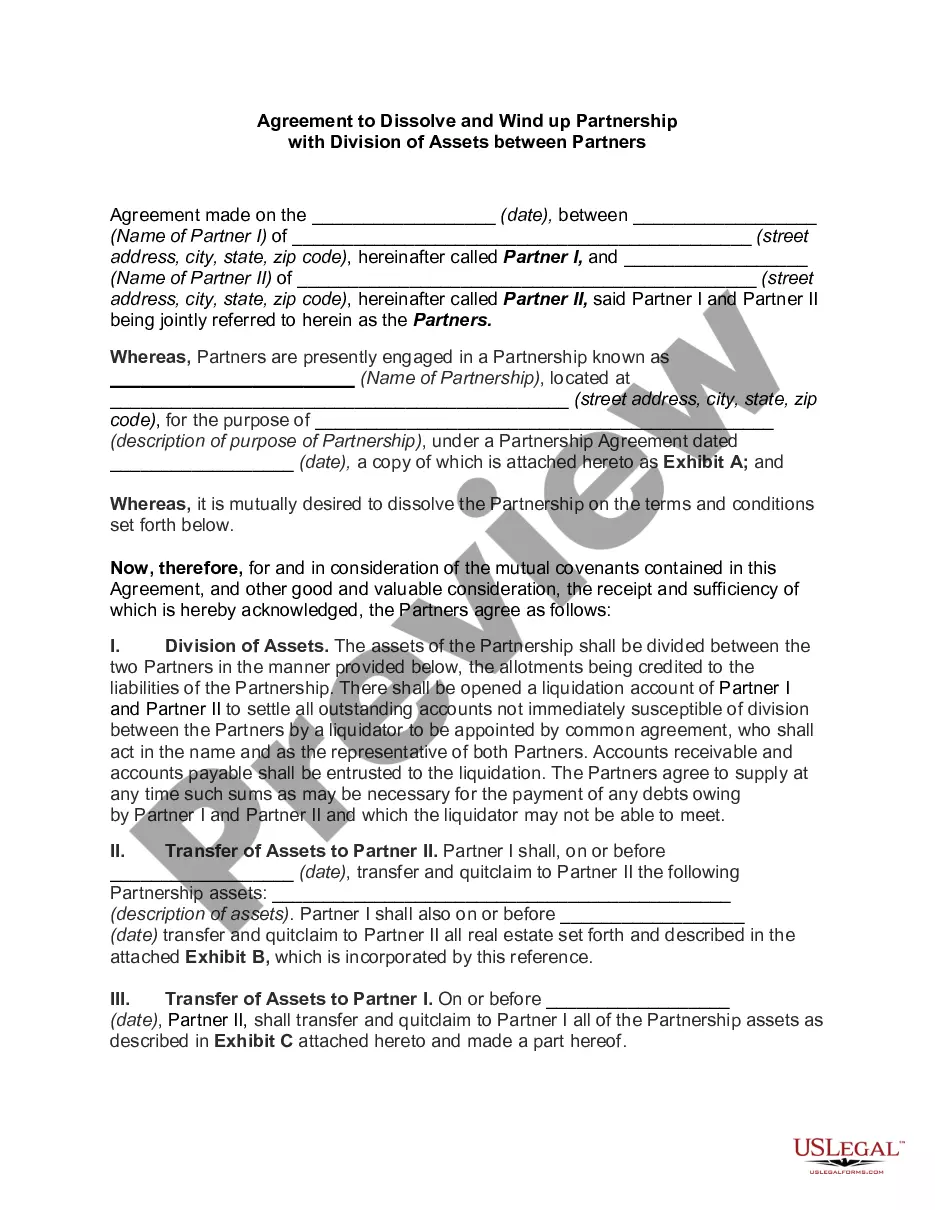
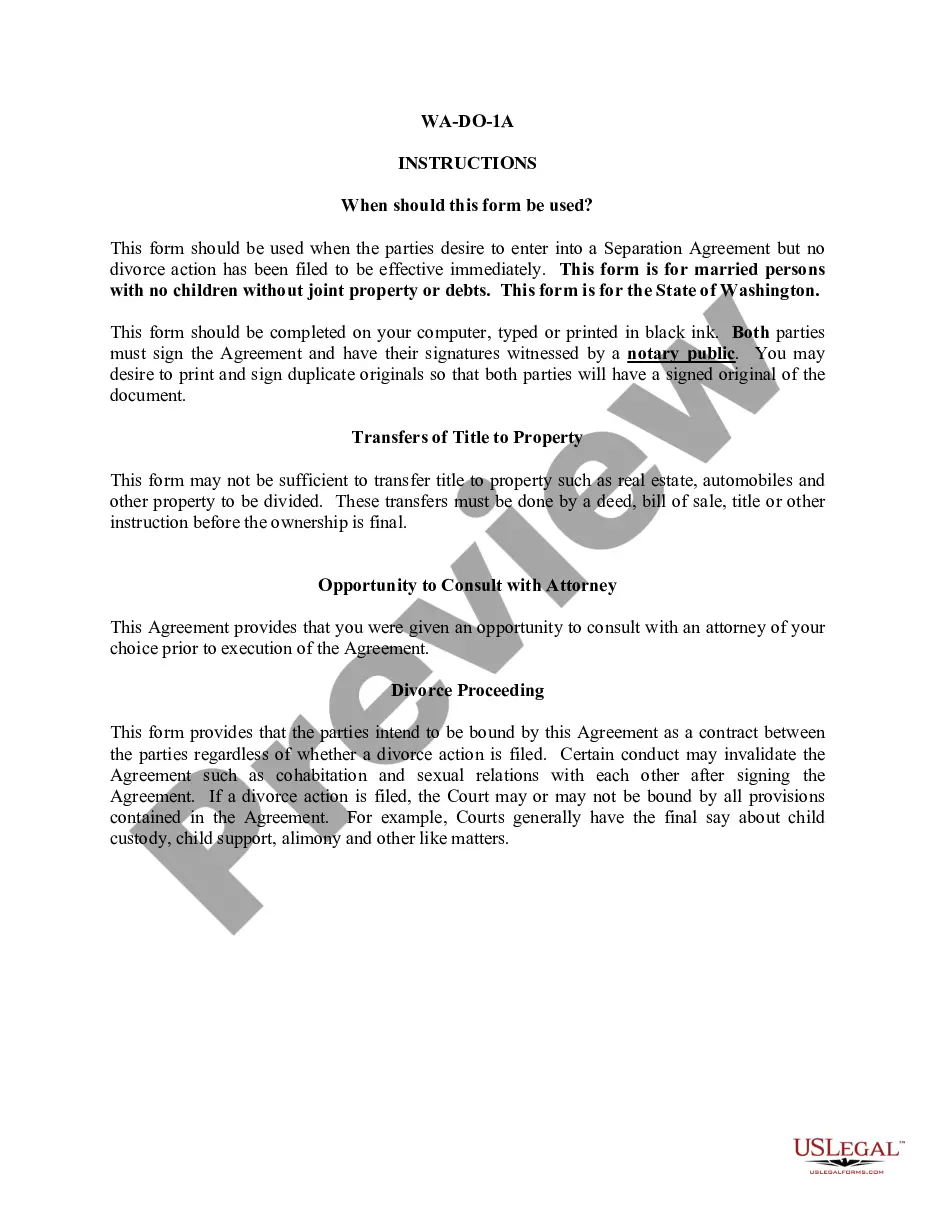
The Marital Domestic Separation and Property Settlement Agreement for persons with no children is a legal document designed for couples who are filing for divorce but do not have any minor children, joint property, or debts. This agreement clarifies the division of assets and responsibilities between the parties, providing a clear framework for their separation while settling critical financial and property issues.
Form components explained
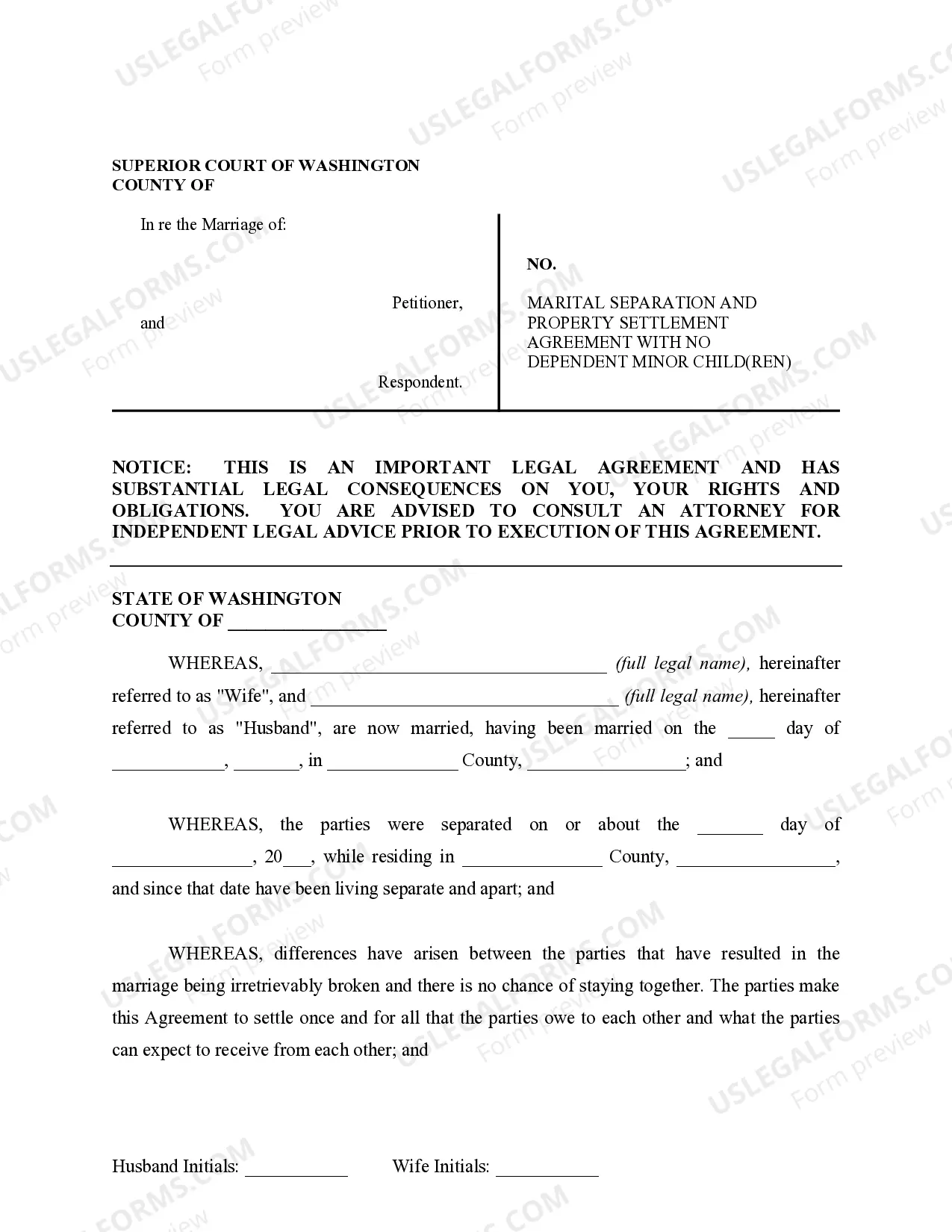
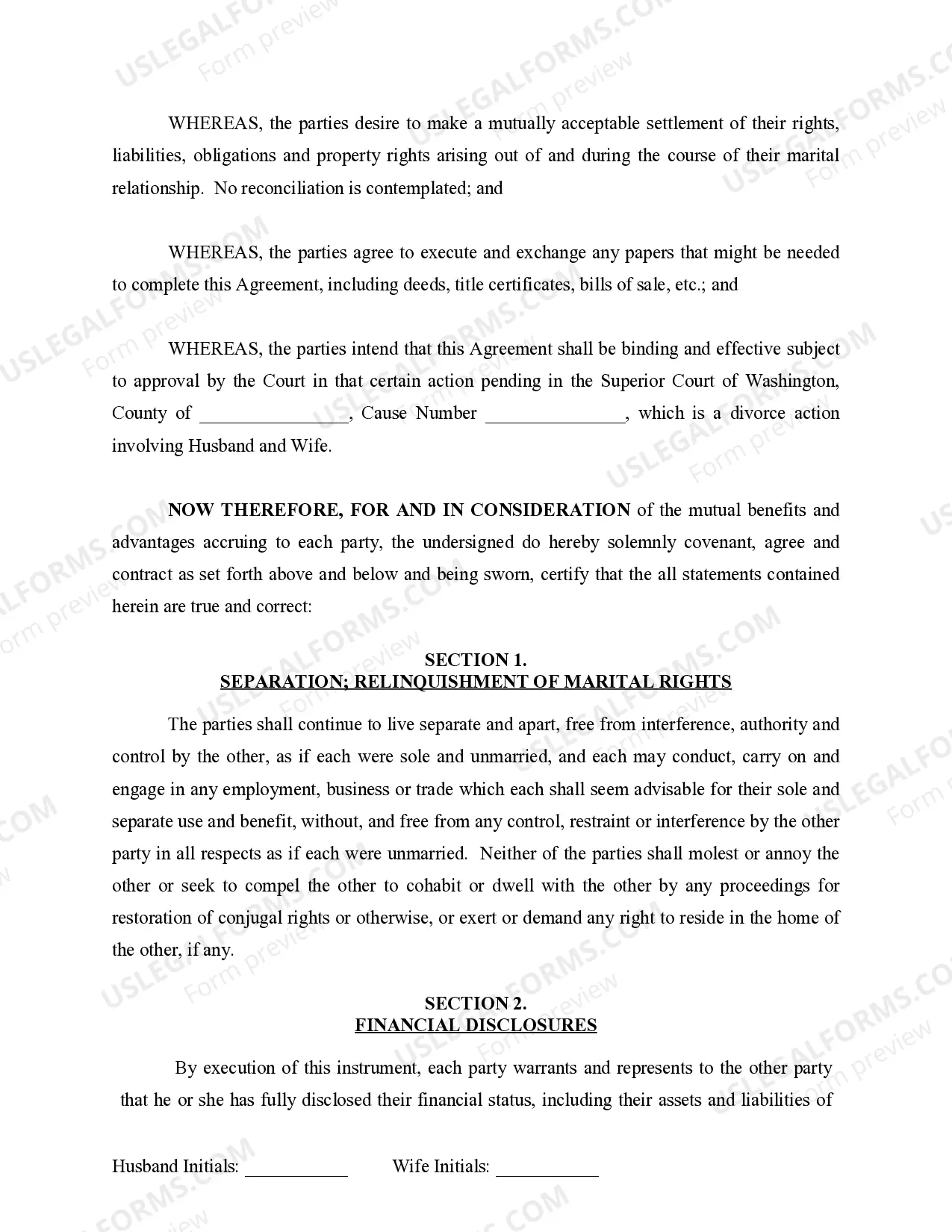
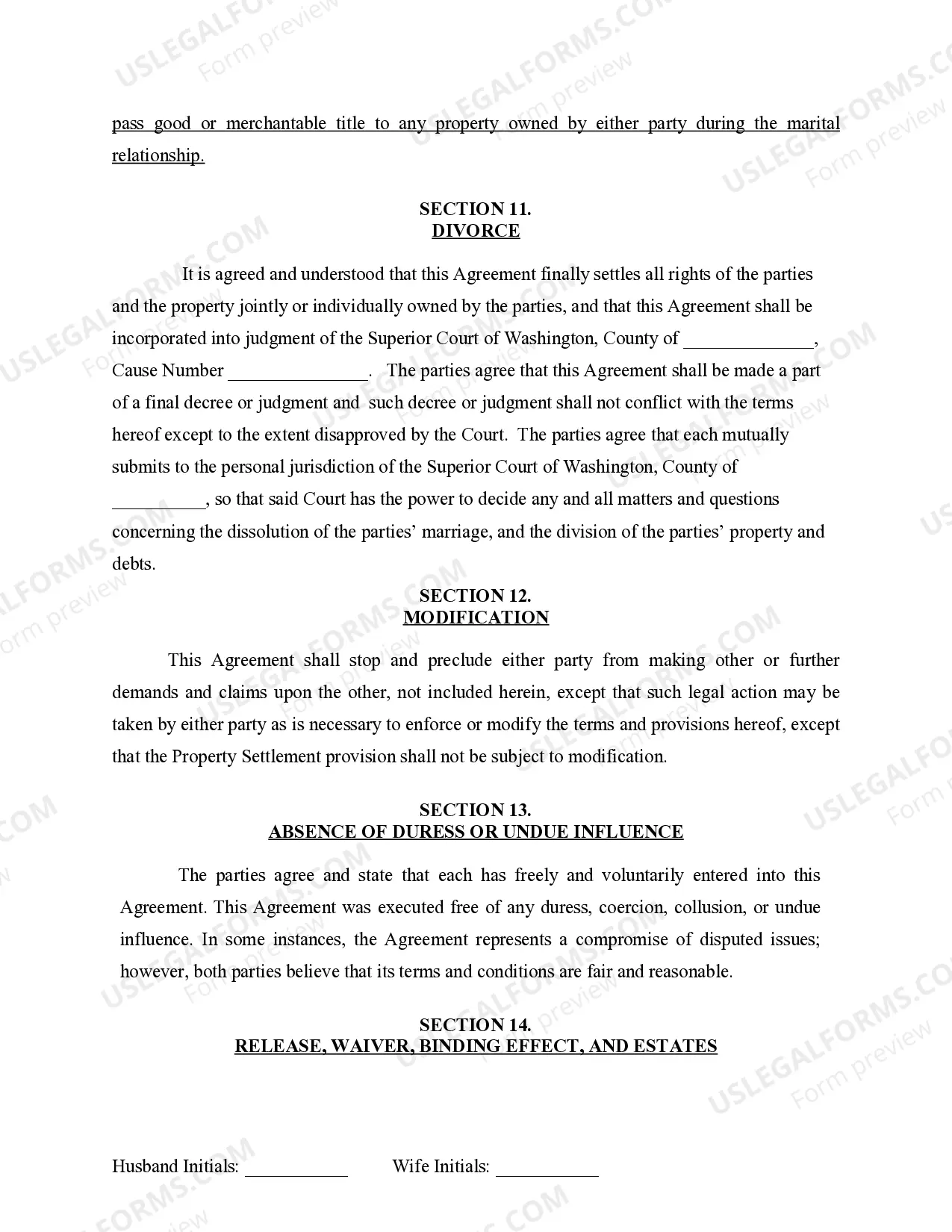
- Separation terms and relinquishment of marital rights.
- Disclosure of financial assets and liabilities.
- Agreement on the disposition of personal property and debts.
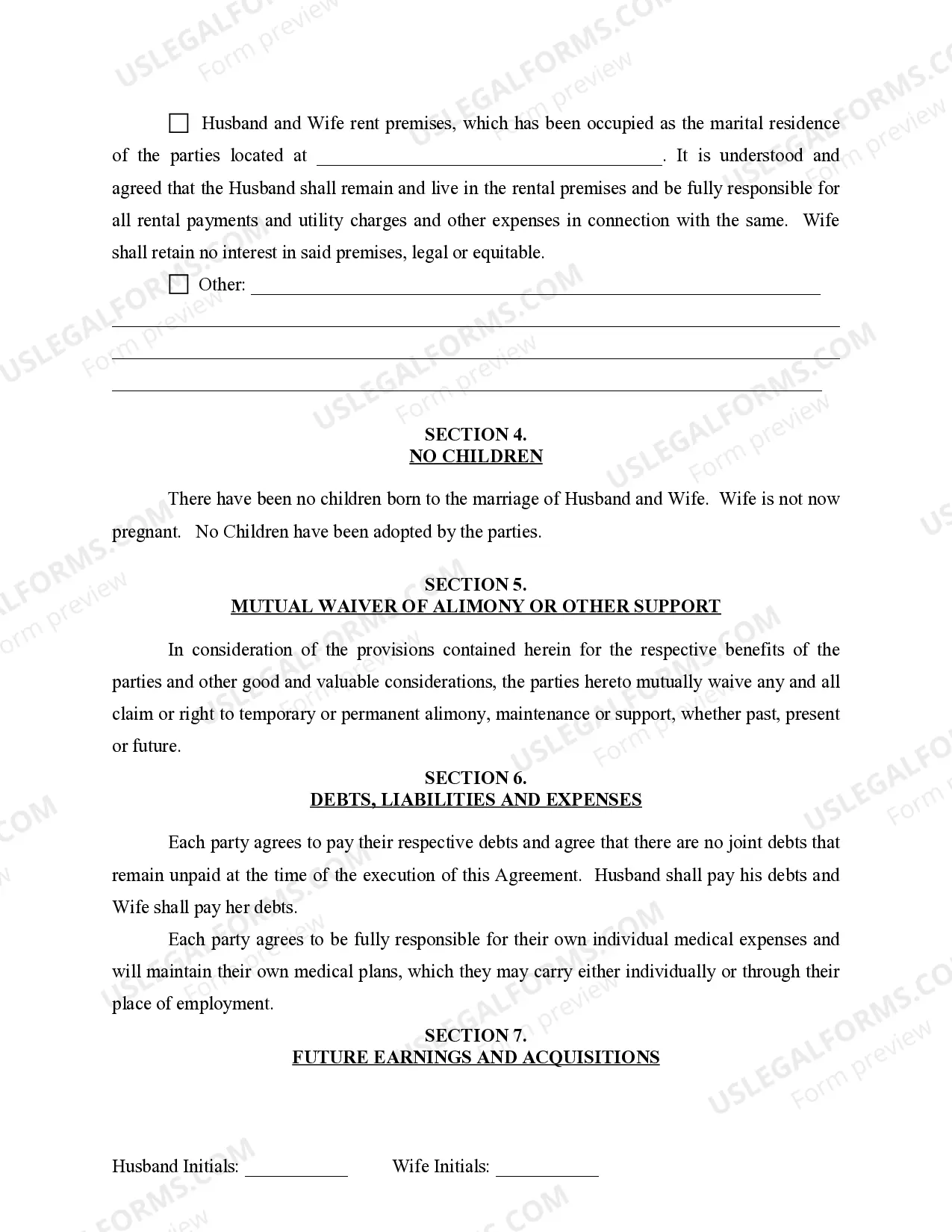
- Mutual waiver of alimony or spousal support.
- Provisions for future earnings and liabilities.
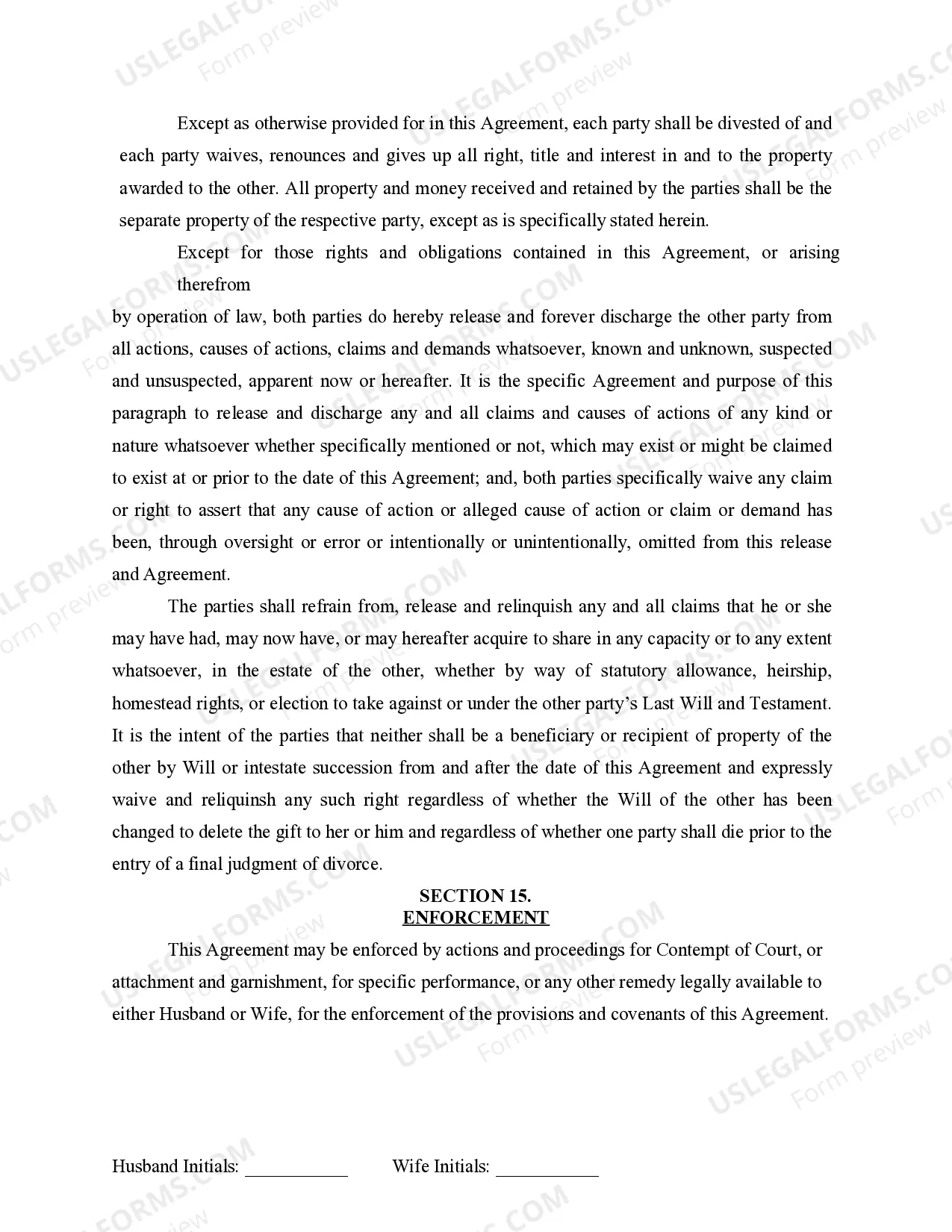
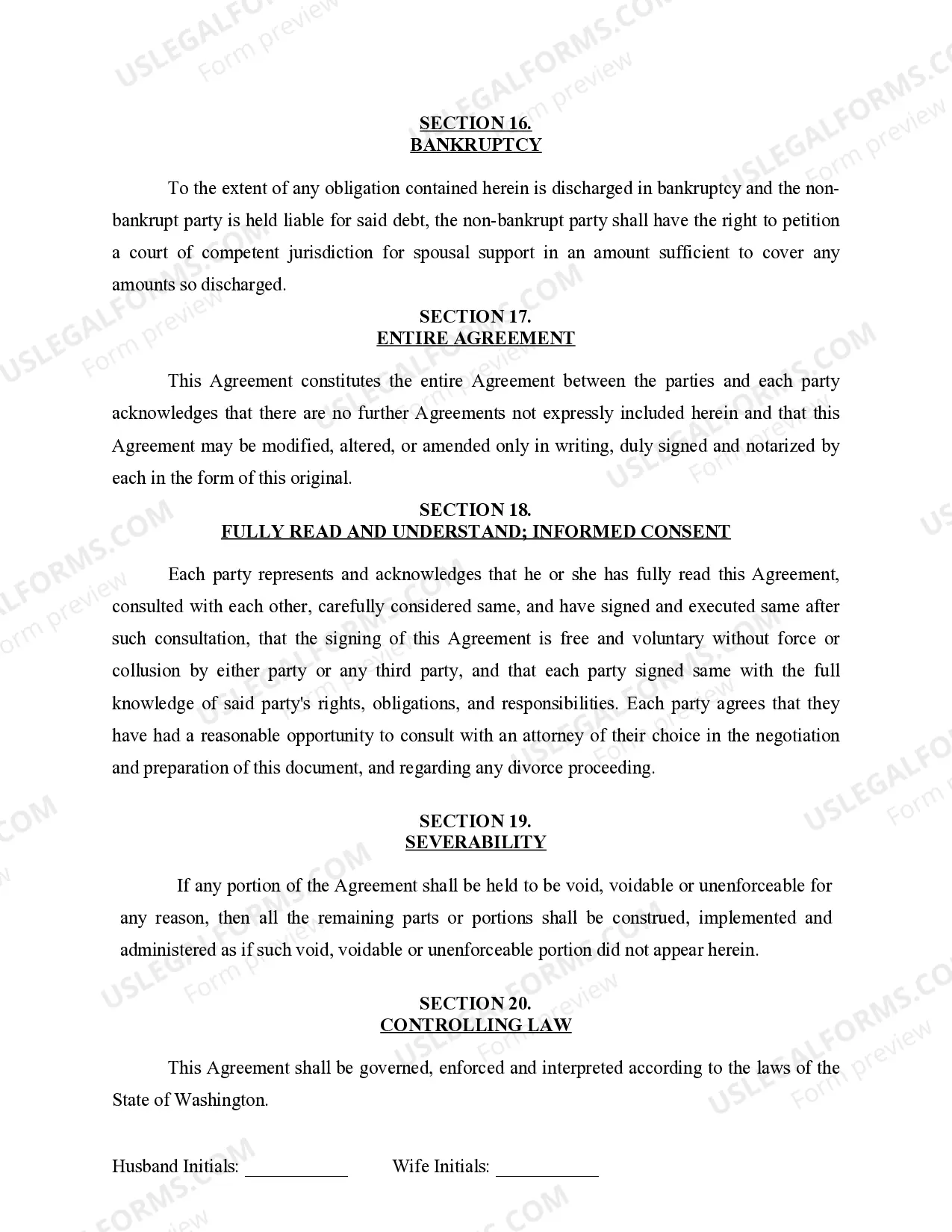
- Notarization and enforcement clauses.




Situations where this form applies
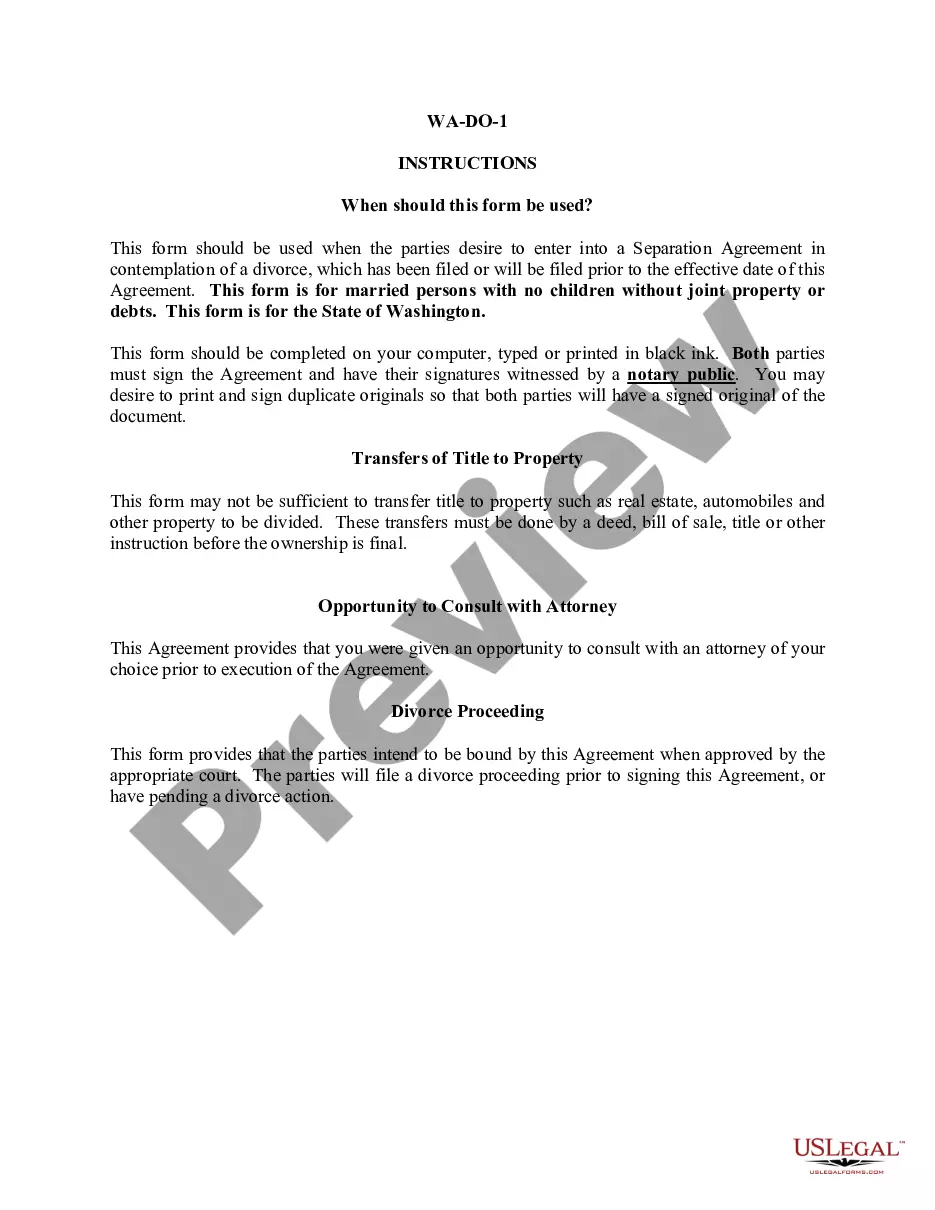
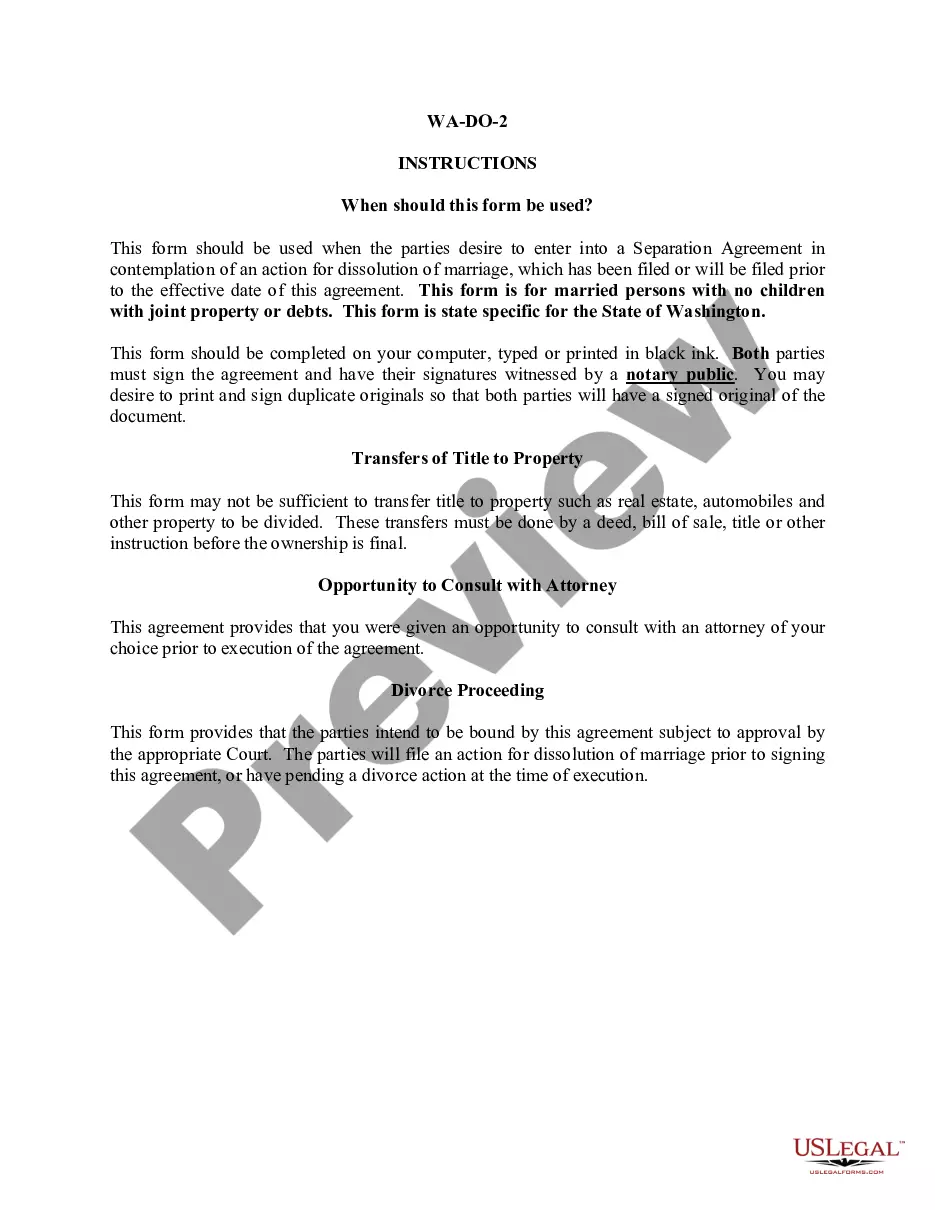
This form should be utilized when both parties in a divorce action have decided to separate and need to formalize their agreement on asset division and liabilities. Specifically, it is appropriate when the couple lacks children and joint property, allowing for a streamlined resolution to their marital differences. It is necessary to complete this form prior to finalizing the divorce proceedings.
Who needs this form
- Married couples intending to file for divorce.
- Couples without dependent minor children.
- Couples without joint property or debts.
- Individuals who wish to clarify their rights and obligations in a separation prior to divorce.
Completing this form step by step
- Identify the full legal names of both parties involved in the agreement.
- Complete the relevant sections regarding asset division and any financial disclosures.
- Specify the separation terms clearly and ensure both parties acknowledge their rights and obligations.
- Both parties must sign the agreement in the presence of a notary public.
- Consider making duplicate originals for each party's records.
Does this form need to be notarized?
This form needs to be notarized to ensure legal validity. US Legal Forms provides secure online notarization powered by Notarize, allowing you to complete the process through a verified video call, available anytime.
Get your form ready online
Our built-in tools help you complete, sign, share, and store your documents in one place.
Make edits, fill in missing information, and update formatting in US Legal Forms—just like you would in MS Word.
Download a copy, print it, send it by email, or mail it via USPS—whatever works best for your next step.
Sign and collect signatures with our SignNow integration. Send to multiple recipients, set reminders, and more. Go Premium to unlock E-Sign.
If this form requires notarization, complete it online through a secure video call—no need to meet a notary in person or wait for an appointment.
We protect your documents and personal data by following strict security and privacy standards.

Make edits, fill in missing information, and update formatting in US Legal Forms—just like you would in MS Word.

Download a copy, print it, send it by email, or mail it via USPS—whatever works best for your next step.

Sign and collect signatures with our SignNow integration. Send to multiple recipients, set reminders, and more. Go Premium to unlock E-Sign.

If this form requires notarization, complete it online through a secure video call—no need to meet a notary in person or wait for an appointment.

We protect your documents and personal data by following strict security and privacy standards.
Mistakes to watch out for
- Failing to fully disclose financial information.
- Not including clear terms for the division of individual assets.
- Omitting signatures from both parties and the notary.
- Not reviewing the document thoroughly for clarity and completeness before signing.
Why use this form online
- Convenience of completing the form at your own pace.
- Easy access to download and print the document.
- Ability to edit the form before finalizing details.
- Reliability of documents drafted by licensed attorneys.
Looking for another form?


Form popularity
FAQ
Washington is a no-fault divorce state. You do not need to prove a spouse was at fault. You must only prove irreconcilable differences. You no longer get along.
Complete divorce forms. The divorce process begins with the divorce form or petition for divorce. File divorce papers with the court. Serve your spouse with the divorce papers. Sign and file final divorce documents.
Is Adultery Grounds For Divorce in Washington? In the state of Washington, the law does not recognize infidelity as grounds for divorce. Instead, Washington is considered a no-fault divorce state. This means that a spouse does not have to provide any specific reasons for divorcing their partner.
Adultery has no bearing on a divorce in Washington State. Cheating doesn't matter because Washington State is a "no-fault" state, which means that either party can file for divorce without providing proof of a particular cause, such as adultery.
In the state of Washington, all property in a divorce is subject to division. That being said, your property will likely not be divided 50/50 in a divorce.Instead, Washington divorces focus on equitable divisionthat is, a division that is fair and just, not necessarily equal.
Each state has its own laws, but generally, property is distributed to the deceased person's spouse and children. If the person is not married, the property will be divided among parents, siblings, aunts and uncles, nieces and nephews, and then to more distant relatives. The decedent's partner will receive nothing.
Alimony in Medium-Term Marriages (525 years) As a general rule of thumb, courts in Washington State award one year of alimony for every three or four years of marriage. There is no statute or case law explicitly stating this formula, but it is an oft mentioned rule and generally what courts can be expected to do.
Washington is a community property state, which means it views all property acquired during a marriage as belonging equally to both parties. As we're not talking about marriage, the situation is somewhat different. Though courts do use similar reasoning for dividing the property.
If a cohabiting couple splits up, they do not have the same legal rights to property as a married couple. In general, unmarried couples can't claim ownership of each other's property in the event of a breakup. This applies to big investments (such as a house) and smaller items (such as furniture).