Washington Marital Domestic Separation and Property Settlement Agreement no Children parties may have Joint Property or Debts where Divorce Action Filed
What this document covers
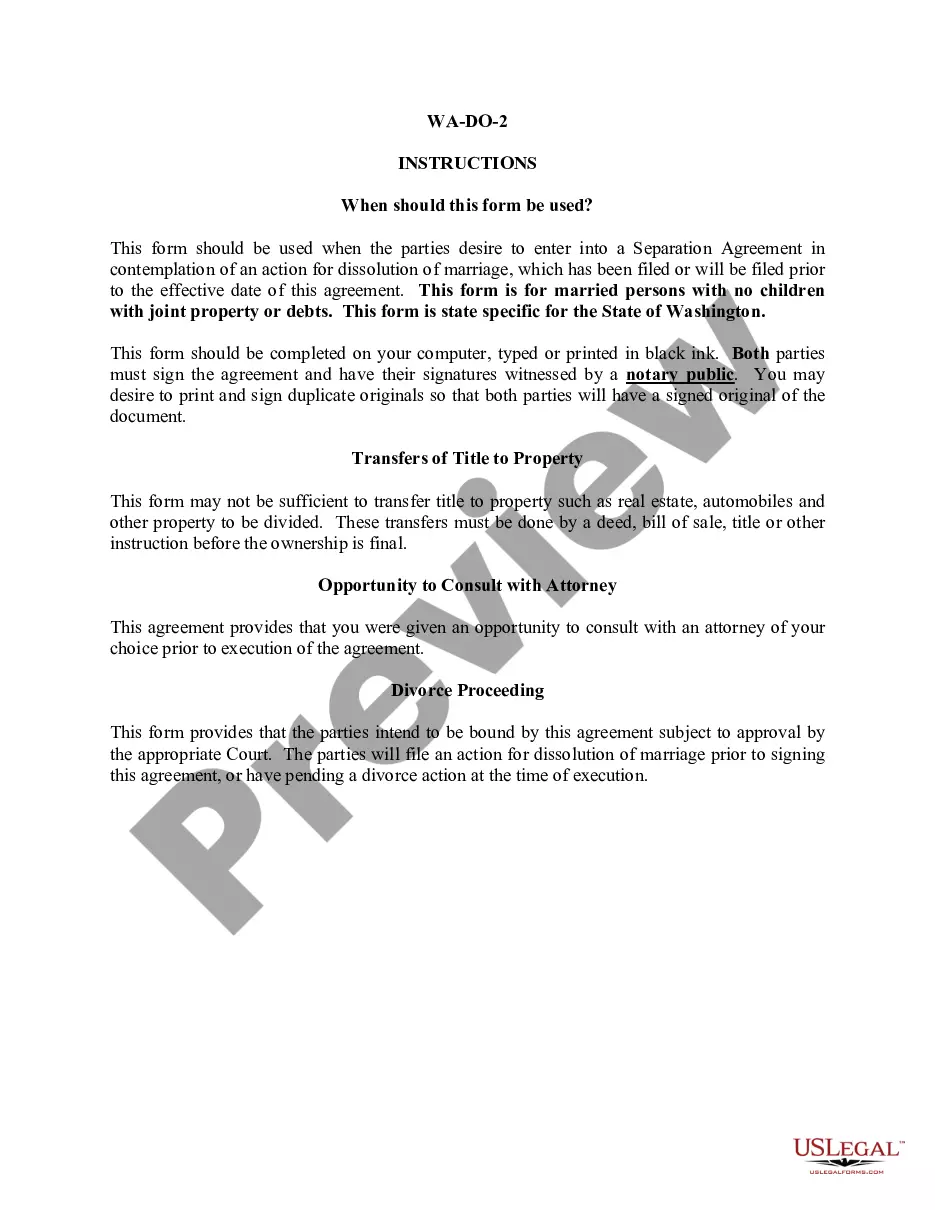
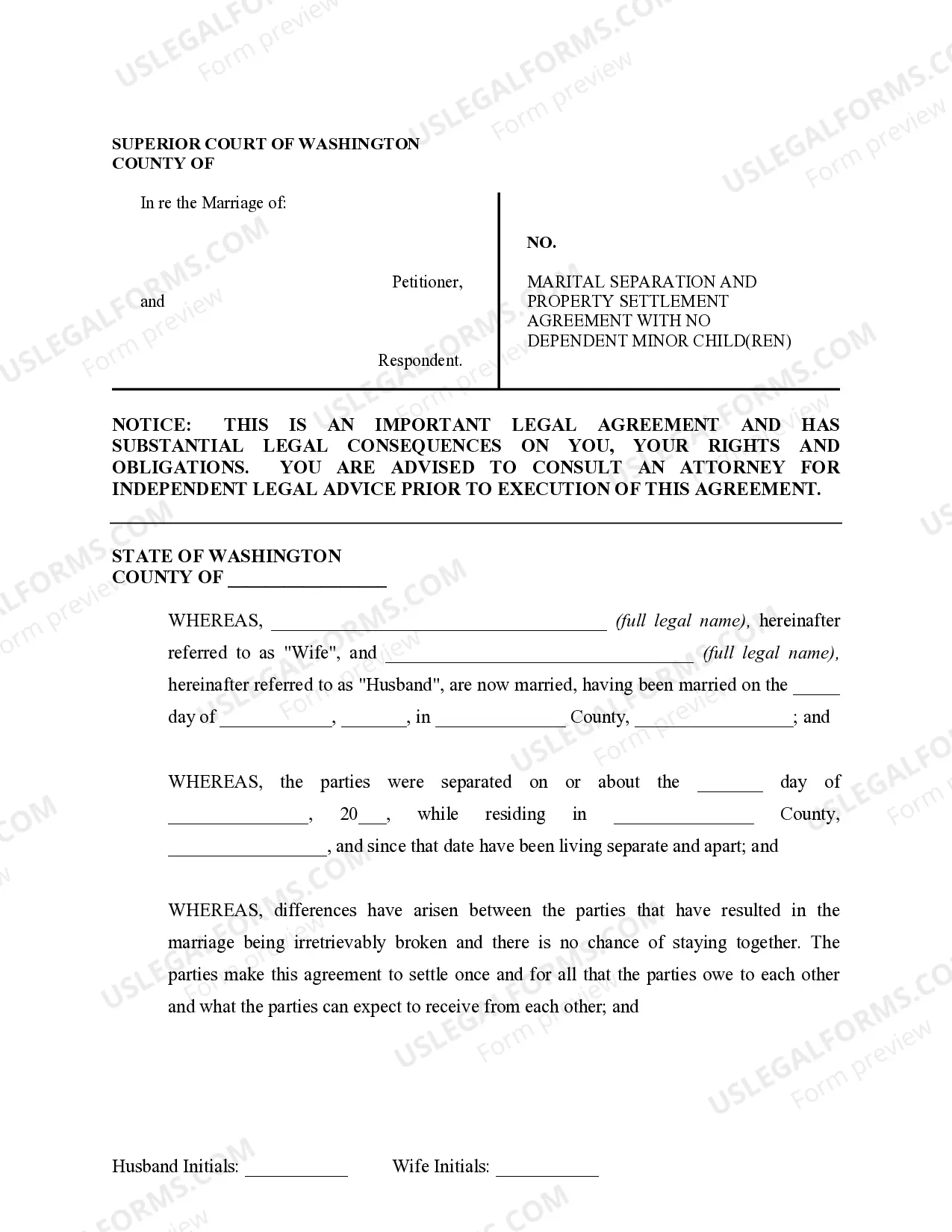
The Marital Domestic Separation and Property Settlement Agreement is a legal document designed for married couples without children who are in the process of divorce and wish to settle their joint property and debt arrangements. This agreement outlines the terms for dividing assets and liabilities, ensuring both parties understand their rights and obligations in the absence of children. It differs from other separation agreements by focusing on couples with joint property or debts while a divorce action is pending.
Key parts of this document
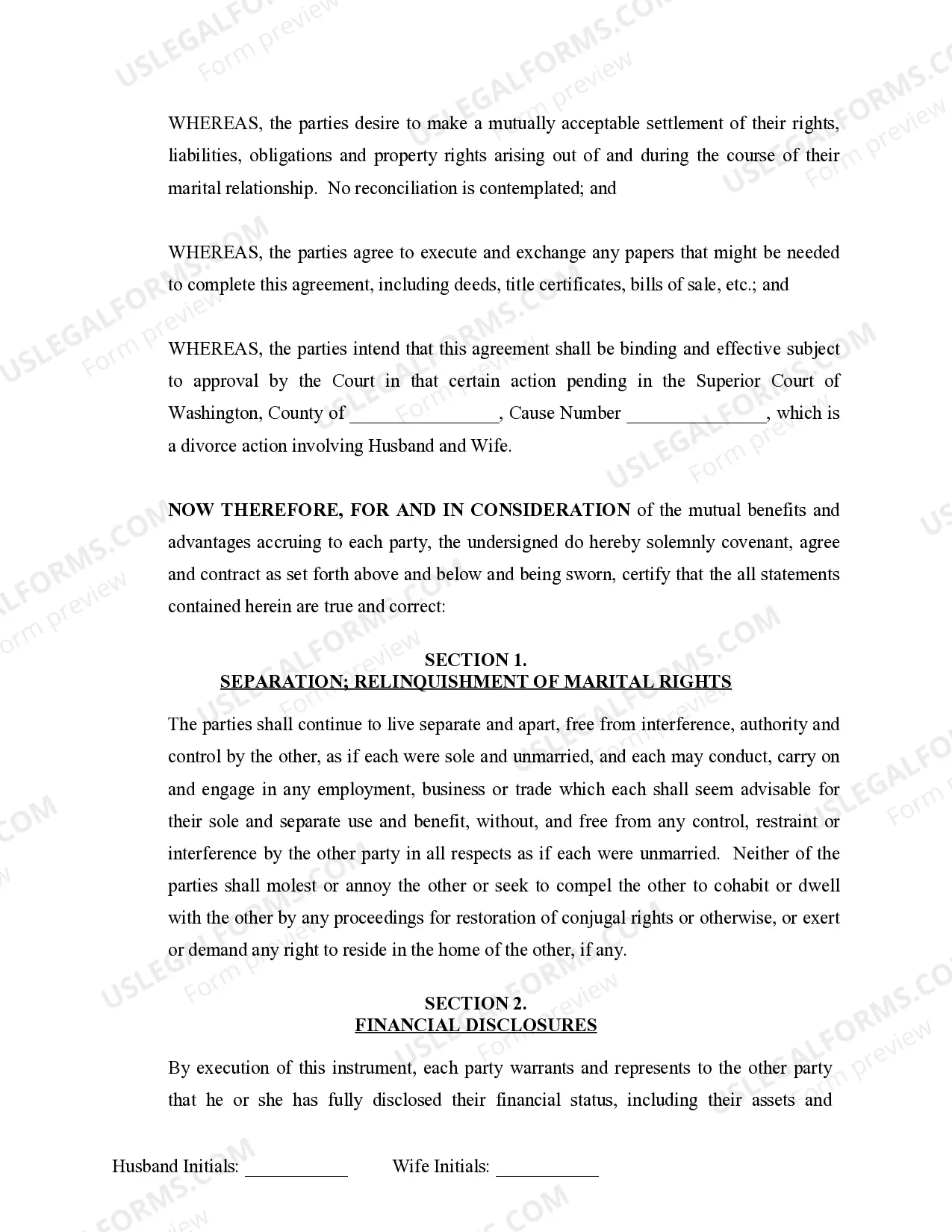
- Separation: Establishes that both parties will live separately and manage their own affairs.
- Financial disclosures: Each party must fully disclose their financial situation.
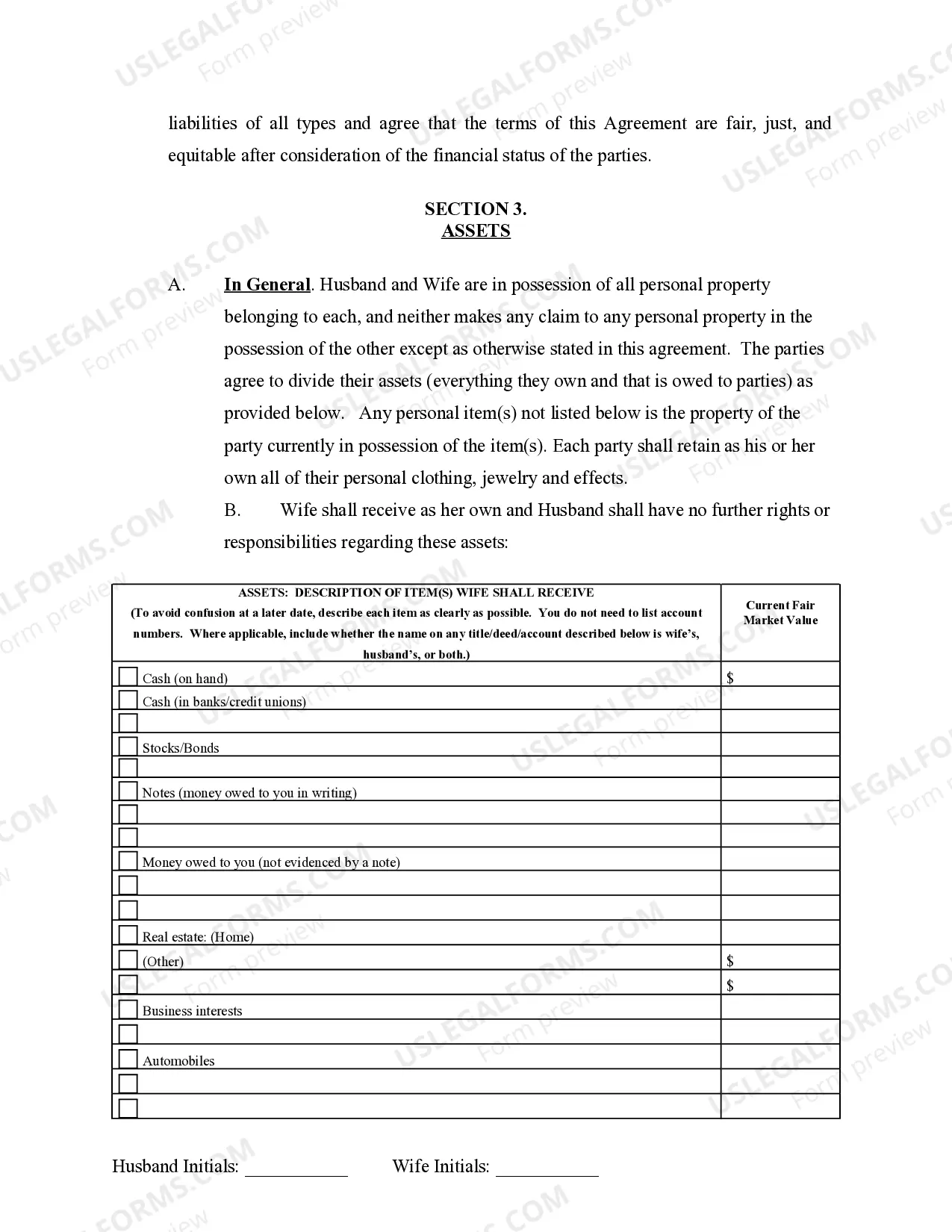
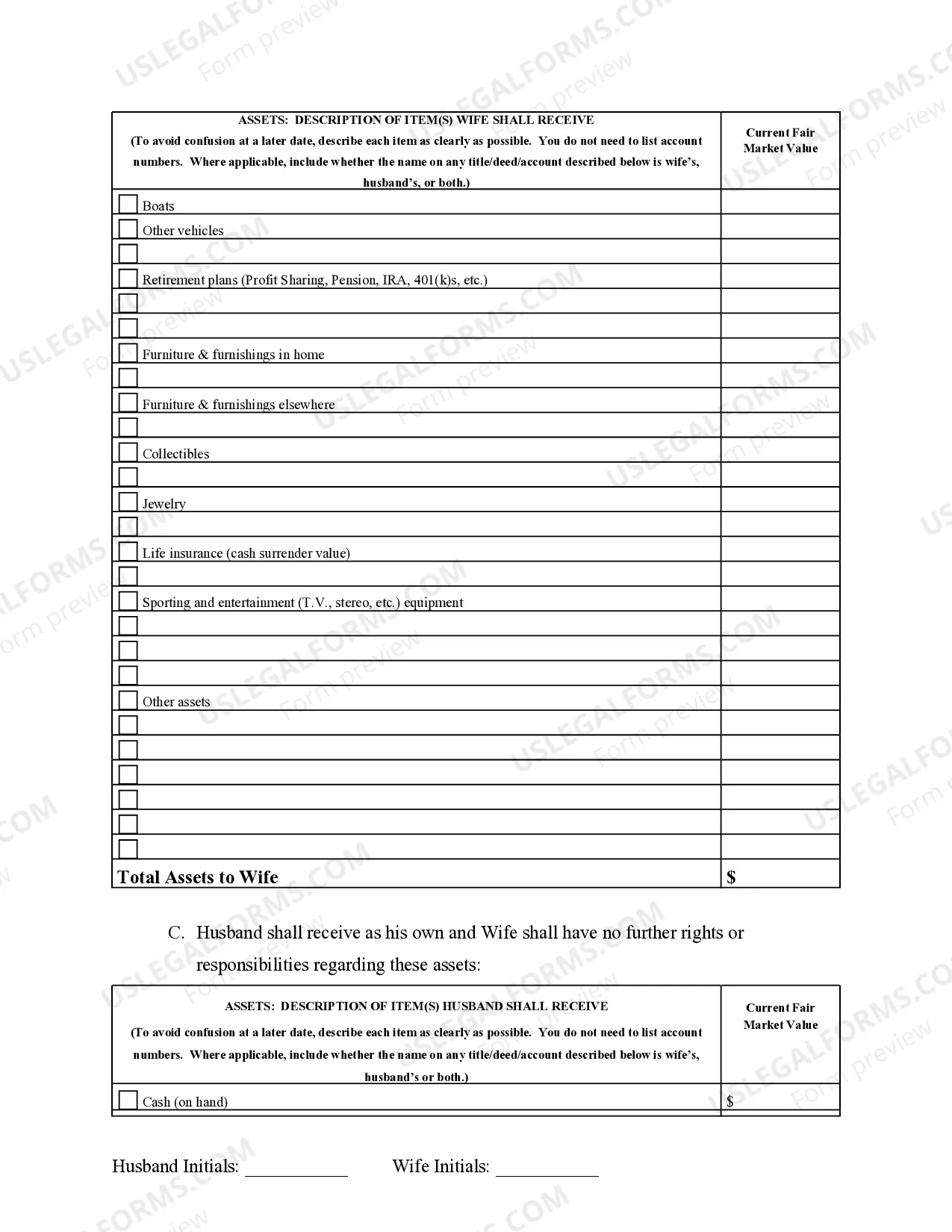
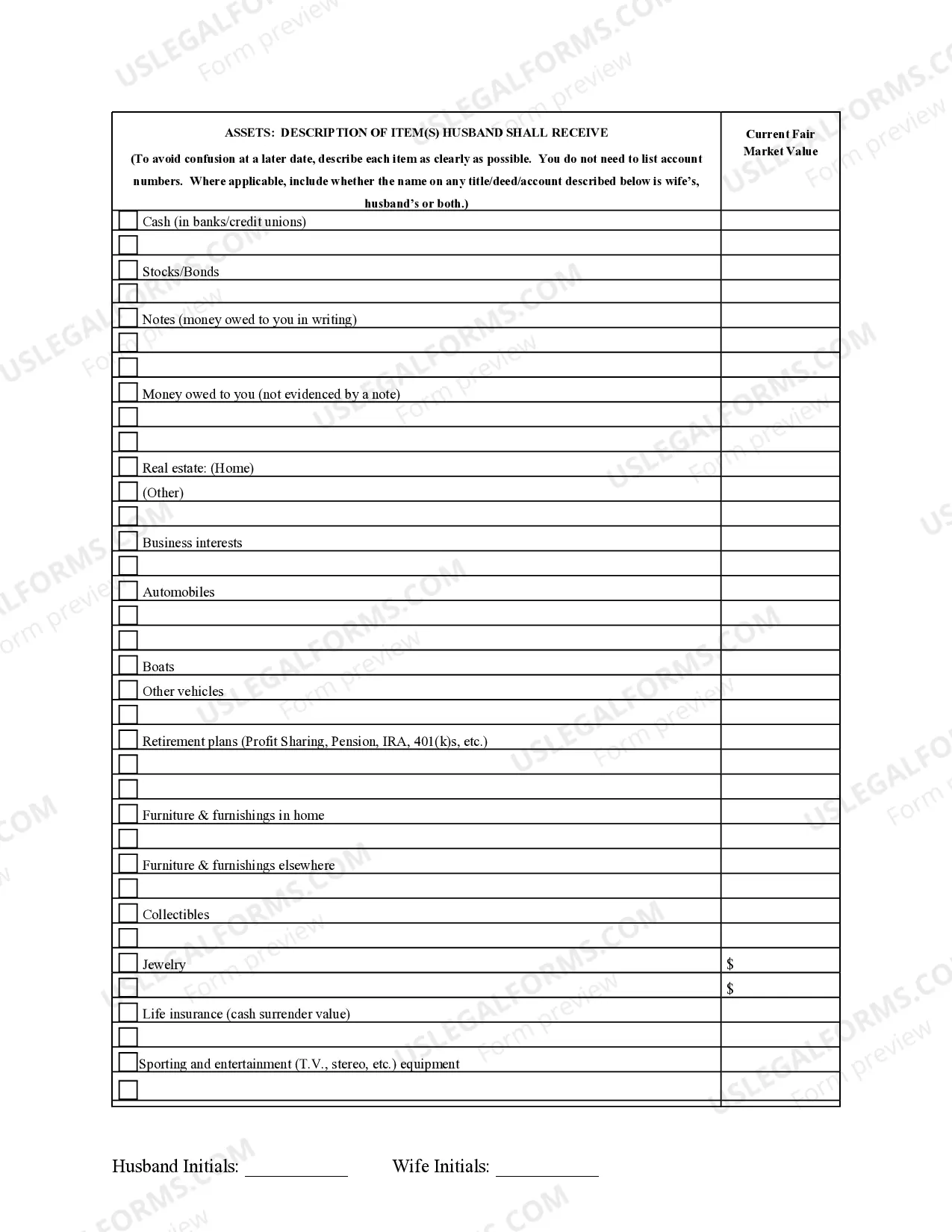
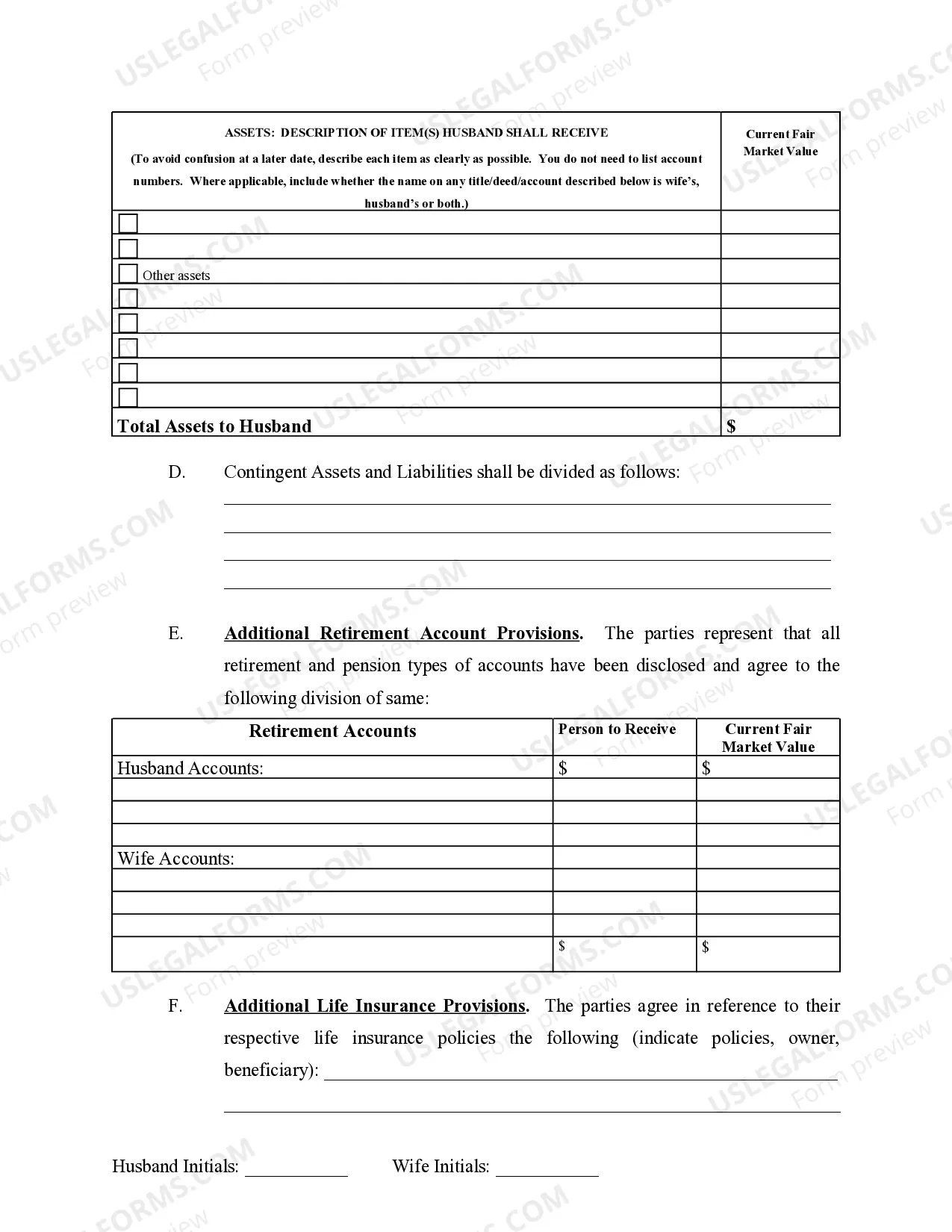
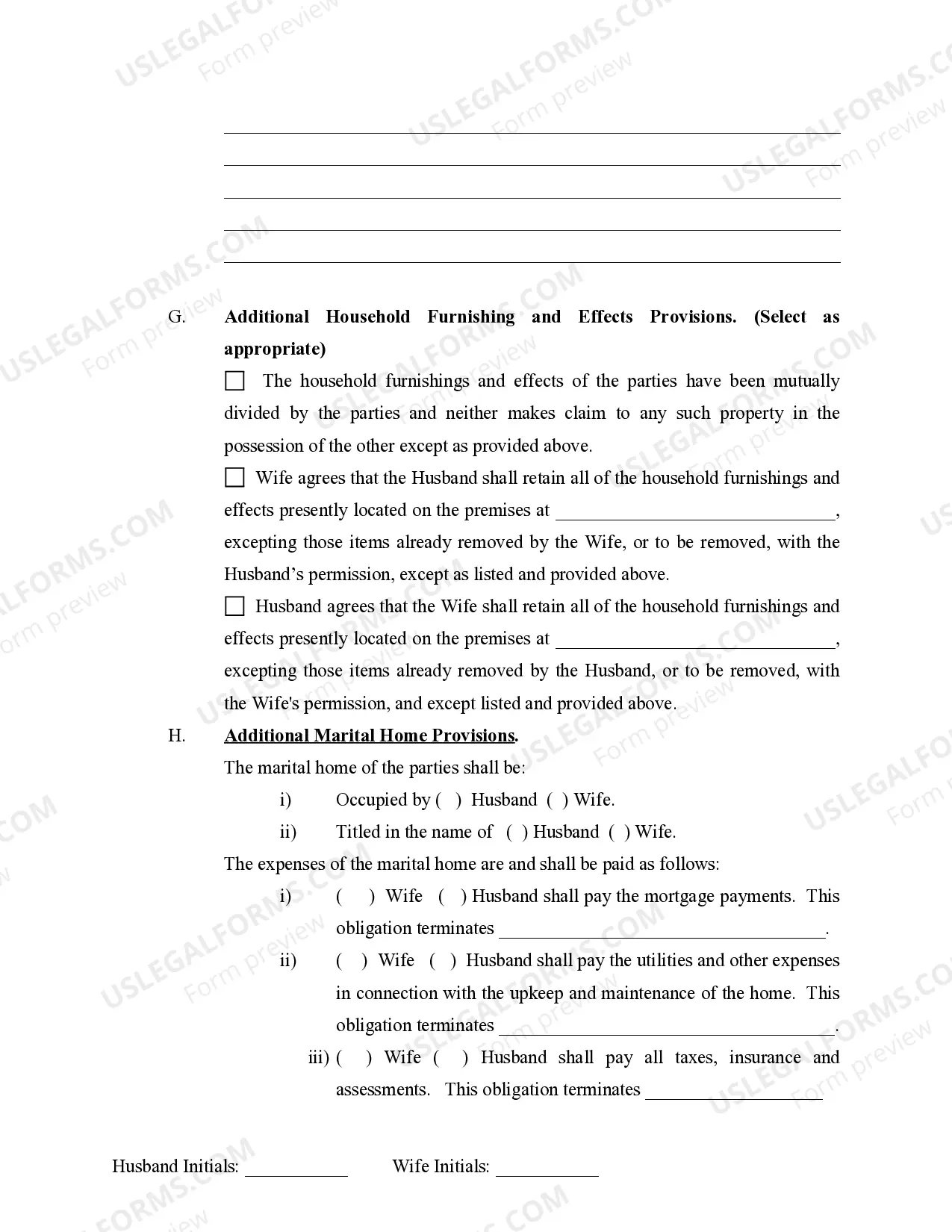
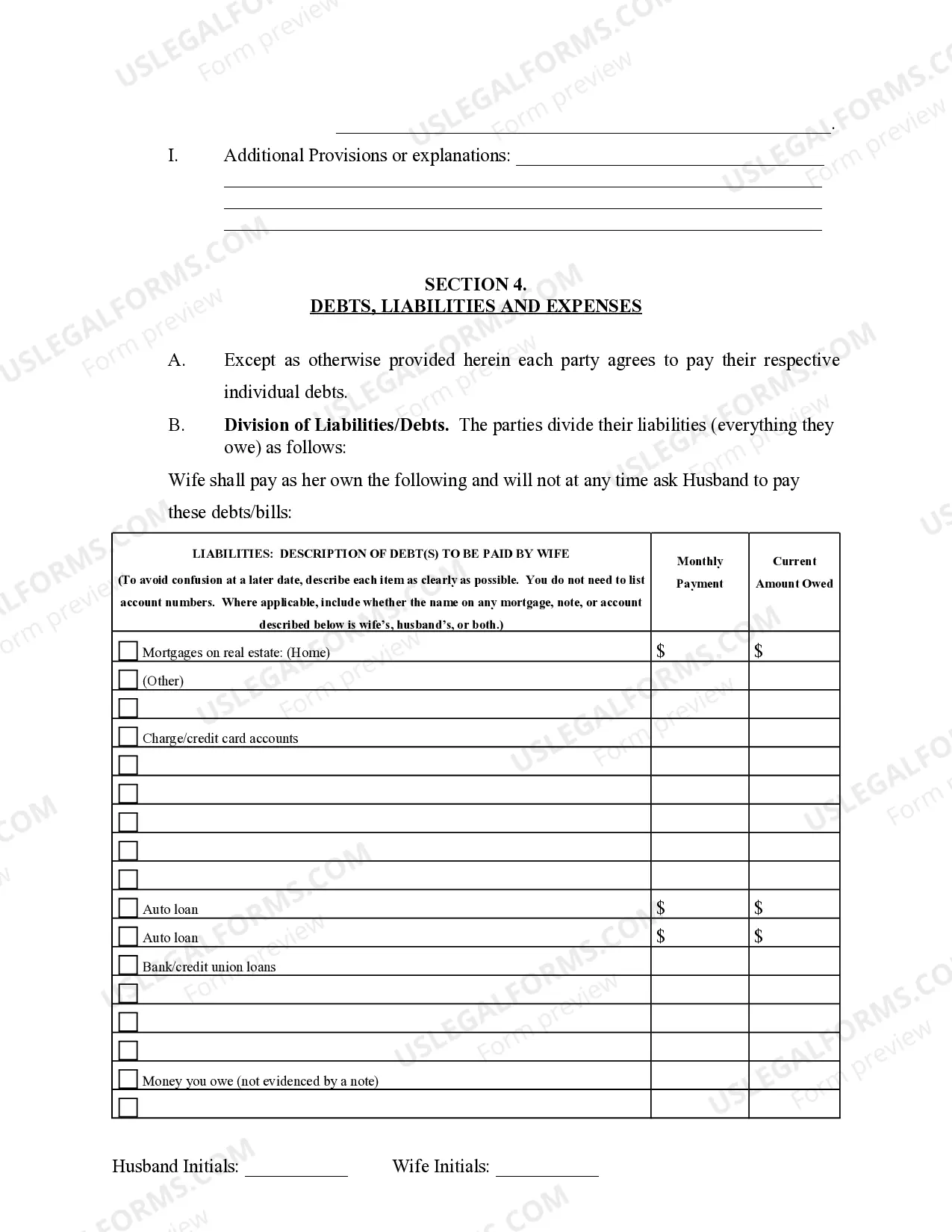
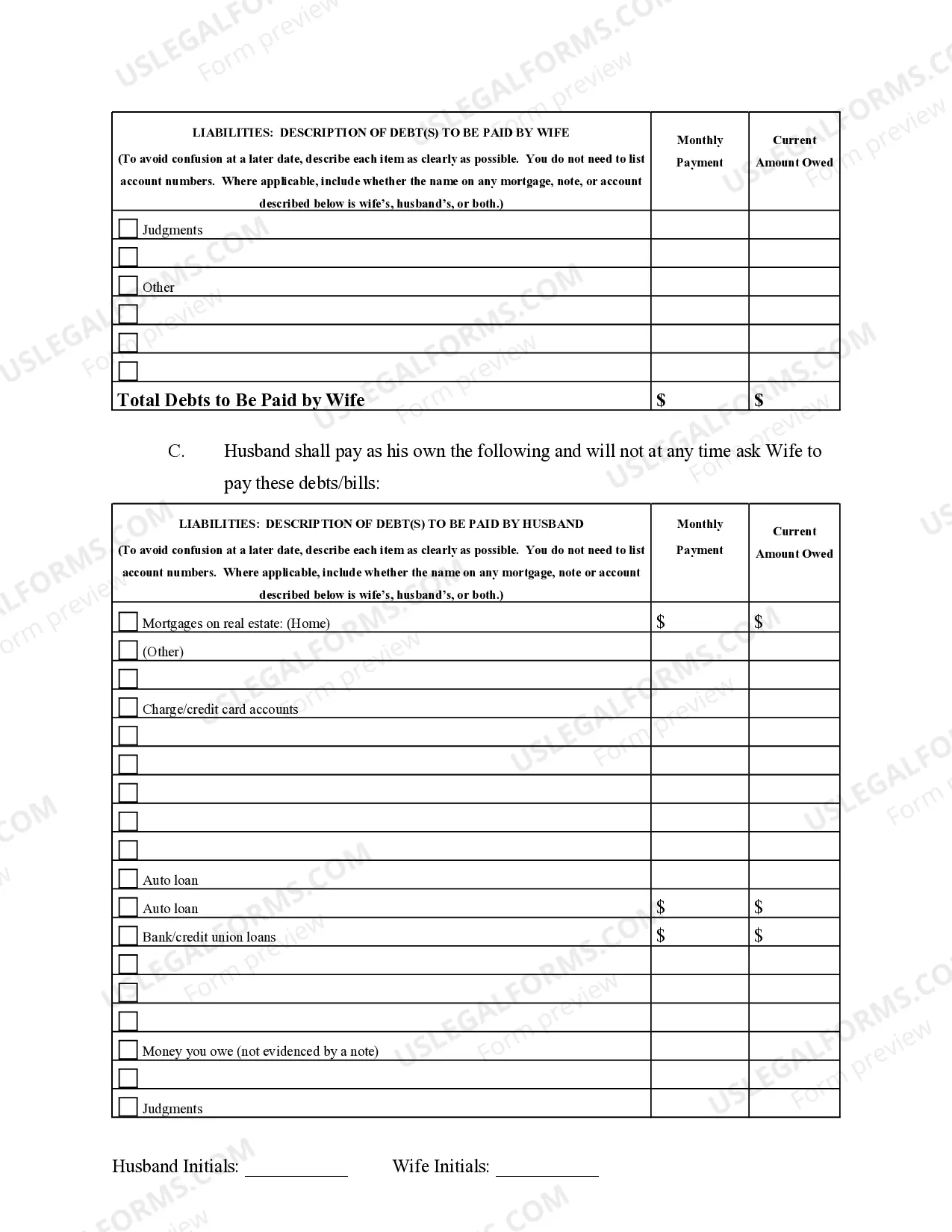
- Asset division: Details how joint assets and debts will be divided between the parties.
- Future earnings: States that income or assets acquired after the agreement remain the separate property of each party.
- Tax considerations: Describes how tax liabilities and filings will be handled post-divorce.


When to use this document
This form should be used when both parties wish to reach a mutual understanding regarding the division of property and debts during a divorce proceeding. It is particularly relevant when there are joint assets and debts to resolve without children involved. Utilizing this agreement can expedite the divorce process and reduce potential conflicts regarding financial responsibilities.
Who needs this form
- Married couples currently undergoing divorce proceedings.
- Couples who have joint property or debts but no children.
- Individuals looking for a clear, legal agreement to divide assets and liabilities.
Instructions for completing this form
- Identify the parties by entering full legal names of both individuals involved.
- Specify the date of marriage and the date of separation to provide context for the agreement.
- List all joint assets and debts clearly, including detailed descriptions and valuations.
- Include provisions for future earnings and spousal support if applicable.
- Ensure both parties sign the document in the presence of a notary public.
Does this form need to be notarized?
Yes, this form must be notarized to be legally valid. Proper notarization helps confirm the identities of both parties and ensures that they are signing the agreement voluntarily. US Legal Forms provides integrated online notarization services, allowing you to complete this step securely without needing to travel.
Get your form ready online
Our built-in tools help you complete, sign, share, and store your documents in one place.
Make edits, fill in missing information, and update formatting in US Legal Forms—just like you would in MS Word.
Download a copy, print it, send it by email, or mail it via USPS—whatever works best for your next step.
Sign and collect signatures with our SignNow integration. Send to multiple recipients, set reminders, and more. Go Premium to unlock E-Sign.
If this form requires notarization, complete it online through a secure video call—no need to meet a notary in person or wait for an appointment.
We protect your documents and personal data by following strict security and privacy standards.

Make edits, fill in missing information, and update formatting in US Legal Forms—just like you would in MS Word.

Download a copy, print it, send it by email, or mail it via USPS—whatever works best for your next step.

Sign and collect signatures with our SignNow integration. Send to multiple recipients, set reminders, and more. Go Premium to unlock E-Sign.

If this form requires notarization, complete it online through a secure video call—no need to meet a notary in person or wait for an appointment.

We protect your documents and personal data by following strict security and privacy standards.
Common mistakes to avoid
- Failing to fully disclose all assets and debts, which can lead to disputes later on.
- Not having the form notarized, which can render it invalid in certain situations.
- Leaving sections incomplete or unclear, which may cause confusion about obligations.
Benefits of completing this form online
- Convenience of downloading and filling out the form at your own pace.
- Editability allows for easy modifications before finalizing the agreement.
- Access to professionally drafted content ensures that legal standards are met.
Looking for another form?
Form popularity
FAQ
Separation means that you are living apart from your spouse, but you're still legally married until you get a judgment of divorce from a court (even if you already have a judgment of separation).
Wives : A wife is entitled to an equal share of her husband's property like other entitled heirs. If there are no sharers, she has full right to the entire property.She is also entitled to maintenance, support and shelter from husband, and if staying in a joint family, from the family.
Dividing the Property Under the divorce rules in California, spouses can divide assets by assigning certain items to each spouse, by allowing one spouse to buy out the other's share of an asset, or by selling assets and dividing the proceeds. They can also agree to hold property together even after the divorce.
If you and your spouse cannot reach an agreement between you and the court needs to decide how your finances should be divided, your spouse is entitled to a fair settlement even though they have cheated.
In California, each spouse or partner owns one-half of the community property. And, each spouse or partner is responsible for one-half of the debt. Community property and community debts are usually divided equally. You may have more community property than you realize.
Courts usually award each spouse his or her separate property and divide community property 50/50. Consequently, if the house is entirely one spouse's separate property, he or she almost always receives it unless the parties agree otherwise.
In the state of Washington, all property in a divorce is subject to division. That being said, your property will likely not be divided 50/50 in a divorce.Instead, Washington divorces focus on equitable divisionthat is, a division that is fair and just, not necessarily equal.
Any assets acquired before the marriage are considered separate property, and are owned only by that original owner.Spouses can also comingle their separate property with community property, for example, by adding funds from before the marriage to the community property funds.
Washington is one of a few remaining community property states in the country, which means items considered marital property are generally split equally. According to Washington law, marital (or community) property is that which was acquired by either party during the course of the marriage, with some exceptions.