Texas Warranty Deed for Two (2) Individuals to Five Individuals as Joint Tenants
Overview of this form
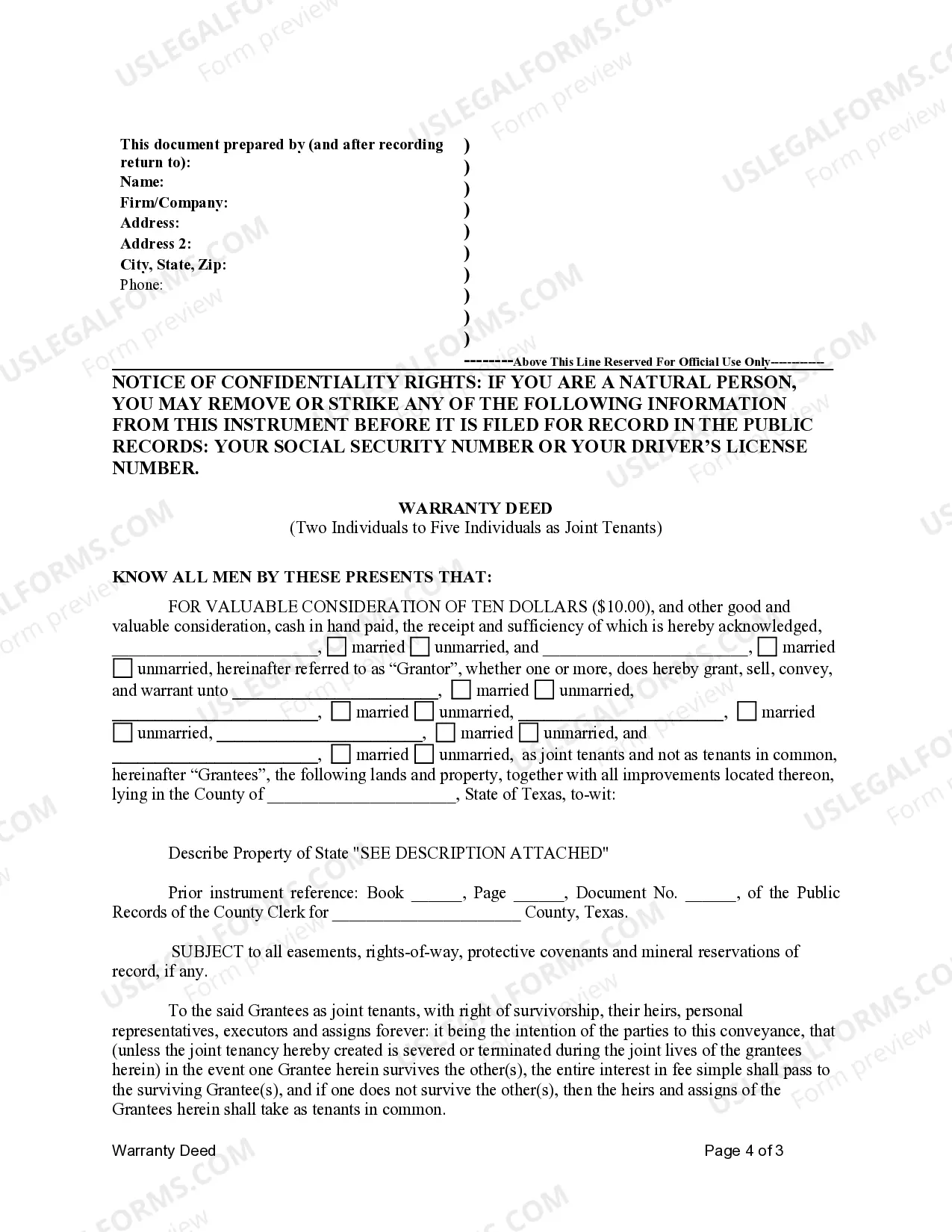
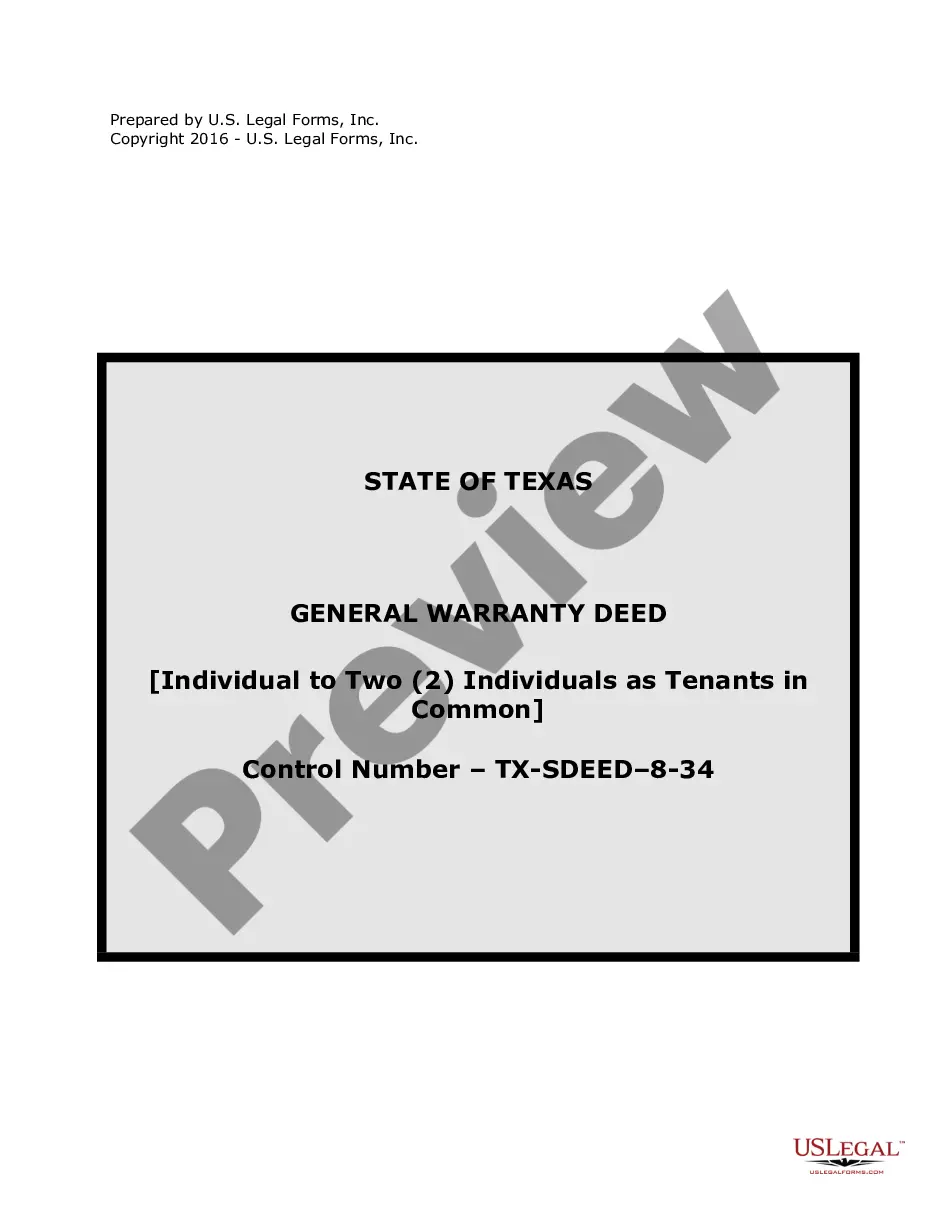
This Warranty Deed is a legal document that allows two individuals (grantors) to transfer property ownership to five individuals (grantees) as joint tenants. This form establishes equal ownership among the grantees and grants them the right of survivorship, meaning that the property automatically passes to the surviving grantees upon the death of any of the owners. Unlike a typical deed, this specific Warranty Deed ensures the security of ownership and clear title against any claims.
What’s included in this form
- Identification of the grantors and grantees, including marital status.
- Description of the property being transferred.
- Provisions for the right of survivorship among joint tenants.
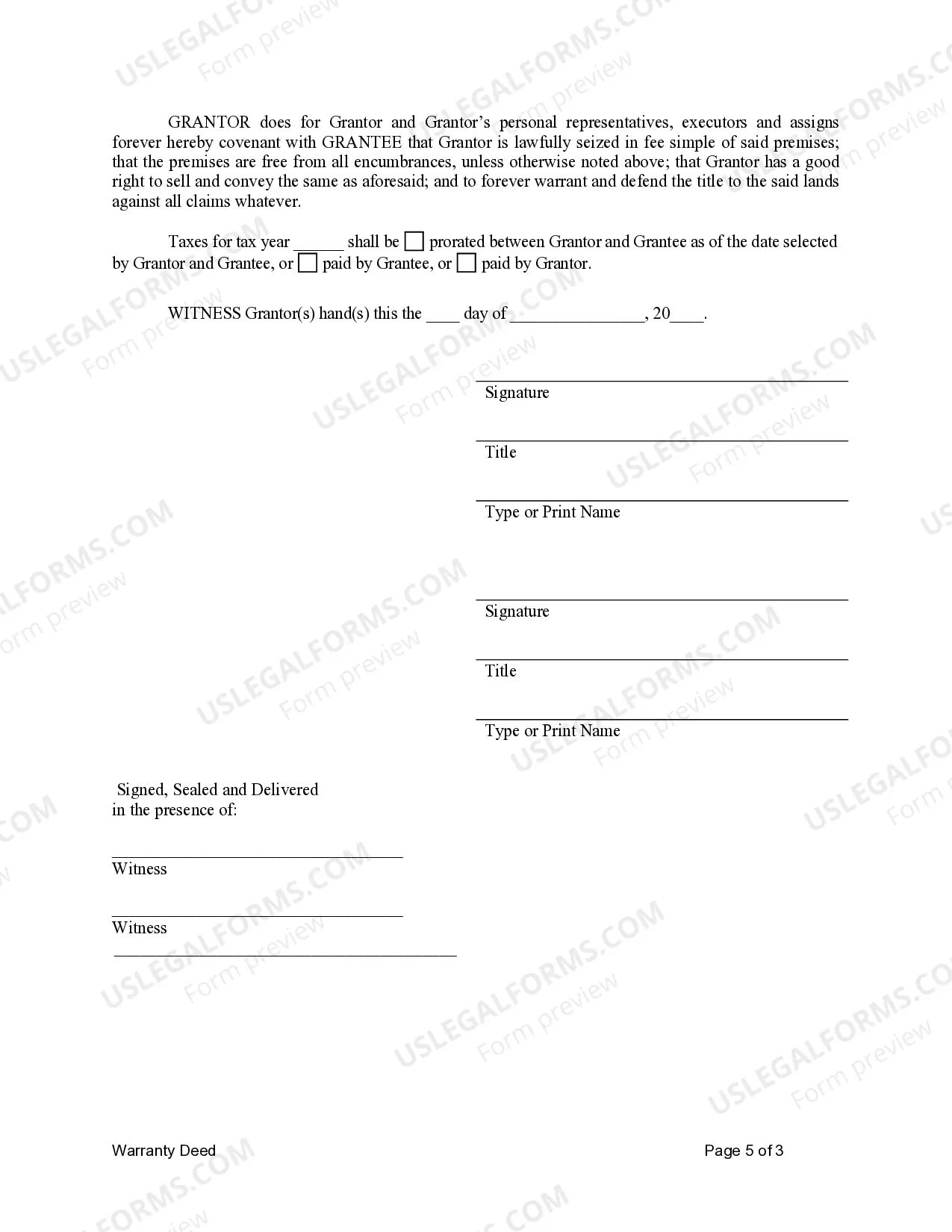
- Covenant of warranty, ensuring the grantor's ownership and absence of encumbrances.
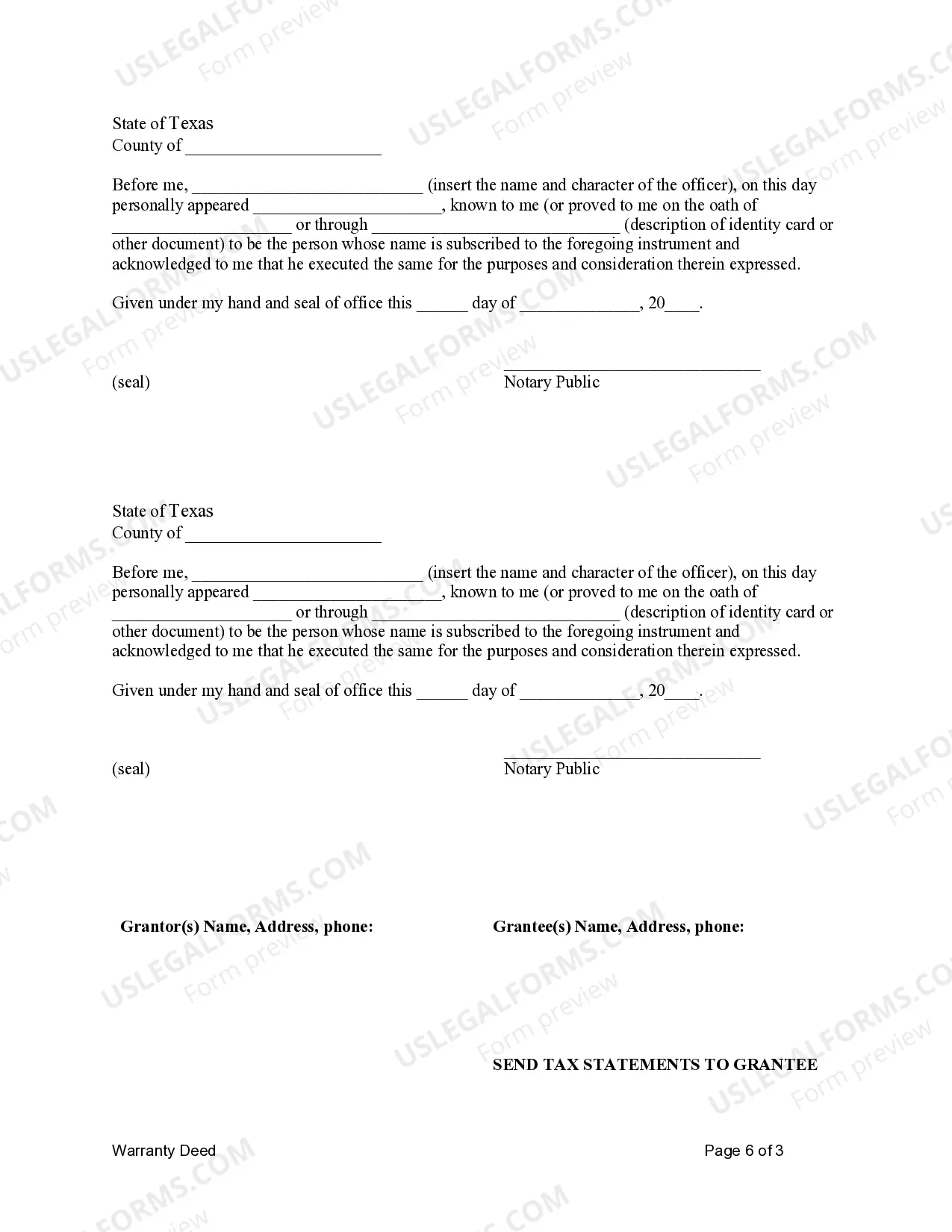
- Notary acknowledgment to validate signatures.

Common use cases
This form is ideal when two individuals wish to transfer property ownership to five others as joint tenants. It is commonly used in family situations, co-ownership arrangements, or estate planning scenarios where the intent is to ensure that the property remains within the group of owners through the right of survivorship.
Who needs this form
This form is intended for:
- Two property owners looking to transfer their interests to multiple individuals.
- Families or groups wishing to hold title together for shared property.
- Individuals involved in estate planning for the seamless transfer of property upon death.
Instructions for completing this form
- Identify and enter the names of the grantors, including their marital statuses.
- List the names of all five grantees, also including their marital statuses.
- Provide a detailed description of the property being conveyed.
- Specify any terms regarding the proration of taxes between the grantors and grantees.
- Sign the document in the presence of a notary public to acknowledge the transfer.
Does this document require notarization?
To make this form legally binding, it must be notarized. Our online notarization service, powered by Notarize, lets you verify and sign documents remotely through an encrypted video session.
Get your form ready online
Our built-in tools help you complete, sign, share, and store your documents in one place.
Make edits, fill in missing information, and update formatting in US Legal Forms—just like you would in MS Word.
Download a copy, print it, send it by email, or mail it via USPS—whatever works best for your next step.
Sign and collect signatures with our SignNow integration. Send to multiple recipients, set reminders, and more. Go Premium to unlock E-Sign.
If this form requires notarization, complete it online through a secure video call—no need to meet a notary in person or wait for an appointment.
We protect your documents and personal data by following strict security and privacy standards.

Make edits, fill in missing information, and update formatting in US Legal Forms—just like you would in MS Word.

Download a copy, print it, send it by email, or mail it via USPS—whatever works best for your next step.

Sign and collect signatures with our SignNow integration. Send to multiple recipients, set reminders, and more. Go Premium to unlock E-Sign.

If this form requires notarization, complete it online through a secure video call—no need to meet a notary in person or wait for an appointment.

We protect your documents and personal data by following strict security and privacy standards.
Mistakes to watch out for
- Failing to properly identify all parties involved in the transaction.
- Not providing a clear description of the property, which can lead to disputes.
- Neglecting to have the document notarized, which is vital for its enforceability.
- Leaving out details regarding the proration of taxes or other financial obligations.
Advantages of online completion
- Immediate access to the form allows for quick preparation and filing.
- Editability ensures that all details can be accurately entered before finalizing.
- Reliable templates crafted by licensed attorneys help minimize legal risks.
Key takeaways
- This form effectively transfers property from two individuals to five others as joint tenants.
- The right of survivorship clause prevents the need for probate upon the death of a joint owner.
- Accurate completion and notarization are critical to the form's validity.
Looking for another form?
Form popularity
FAQ
What Is the Difference Between a Warranty Deed & a Survivorship Deed?A warranty deed is the most comprehensive and provides the most guarantees. Survivorship isn't so much a deed as a title. It's a way to co-own property where, upon the death of one owner, ownership automatically passes to the survivor.
Joint tenancy is a form of property ownership normally associated with real estate. Two or more parties come together at the same time to make a legally-binding agreement with one another through a deed.The deed to the property will name the two owners as joint tenants.
For example, joint tenants must all take title simultaneously from the same deed while tenants in common can come into ownership at different times. Another difference is that joint tenants all own equal shares of the property, proportionate to the number of joint tenants involved.
One of the main differences between the two types of shared ownership is what happens to the property when one of the owners dies. When a property is owned by joint tenants with survivorship, the interest of a deceased owner automatically gets transferred to the remaining surviving owners.
With a Survivorship Deed in place, when one of the parties in a joint tenancy dies, the other party (or parties) takes over the deceased party's interest in the property instead of it passing to the deceased's heirs or beneficiaries.
Unlike most states Texas does not automatically recognize joint tenancies as having a right of survivorship. Instead the parties must agree, in writing, to include a right of survivorship.
The dangers of joint tenancy include the following: Danger #1: Only delays probate. When either joint tenant dies, the survivor usually a spouse or child immediately becomes the owner of the entire property. But when the survivor dies, the property still must go through probate.
For example, joint tenants must all take title simultaneously from the same deed while tenants in common can come into ownership at different times. Another difference is that joint tenants all own equal shares of the property, proportionate to the number of joint tenants involved.
In estate law, joint tenancy is a special form of ownership by two or more persons of the same property. The individuals, who are called joint tenants, share equal ownership of the property and have the equal, undivided right to keep or dispose of the property. Joint tenancy creates a Right of Survivorship.