Texas Shared Access Area Easement and Private Land Use Restrictions
What this document covers
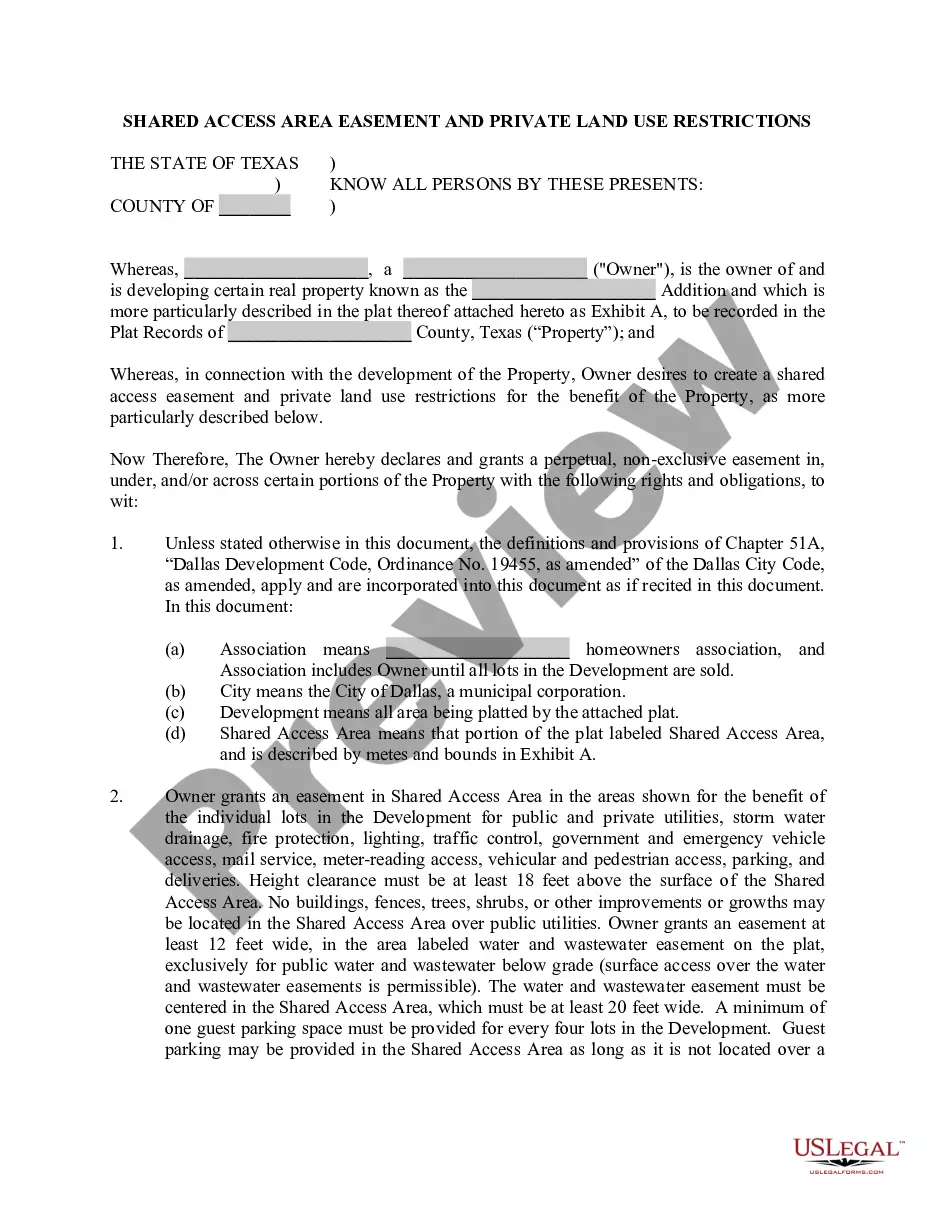
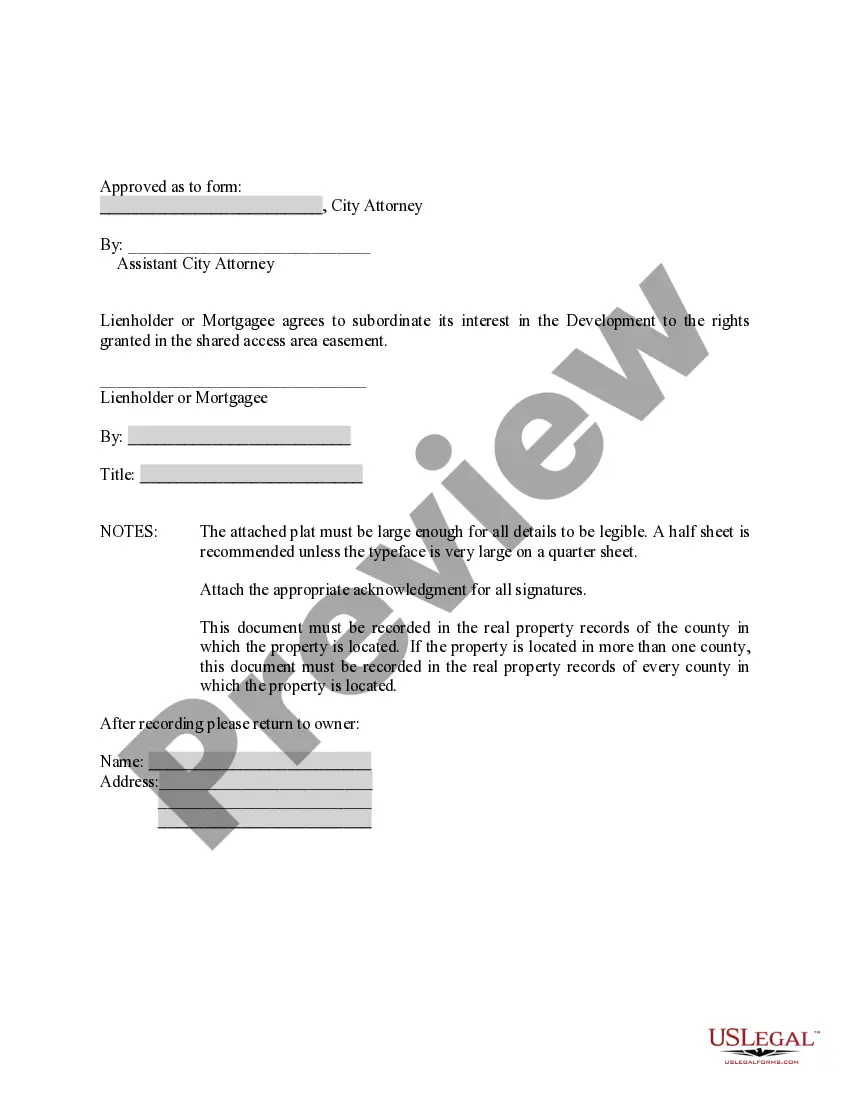
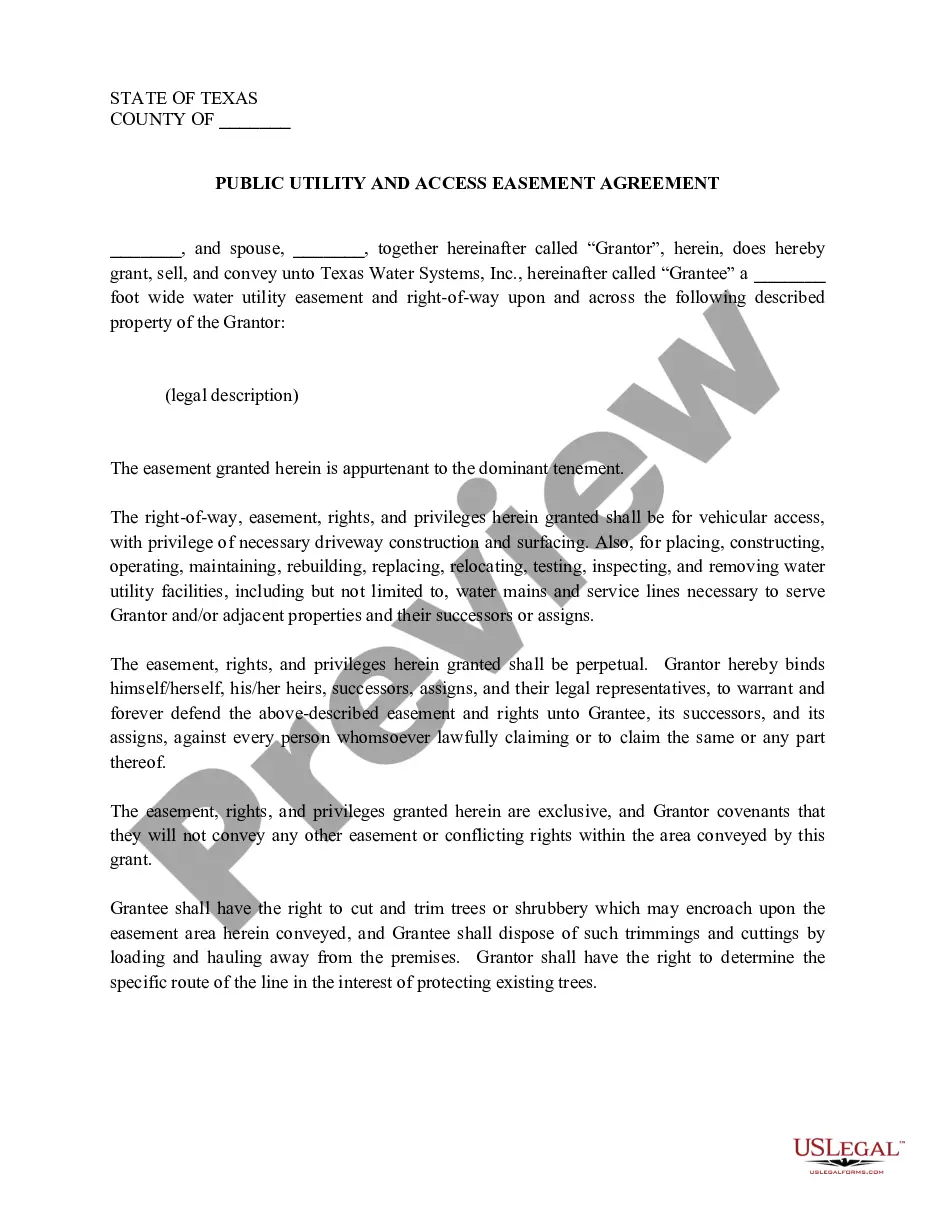
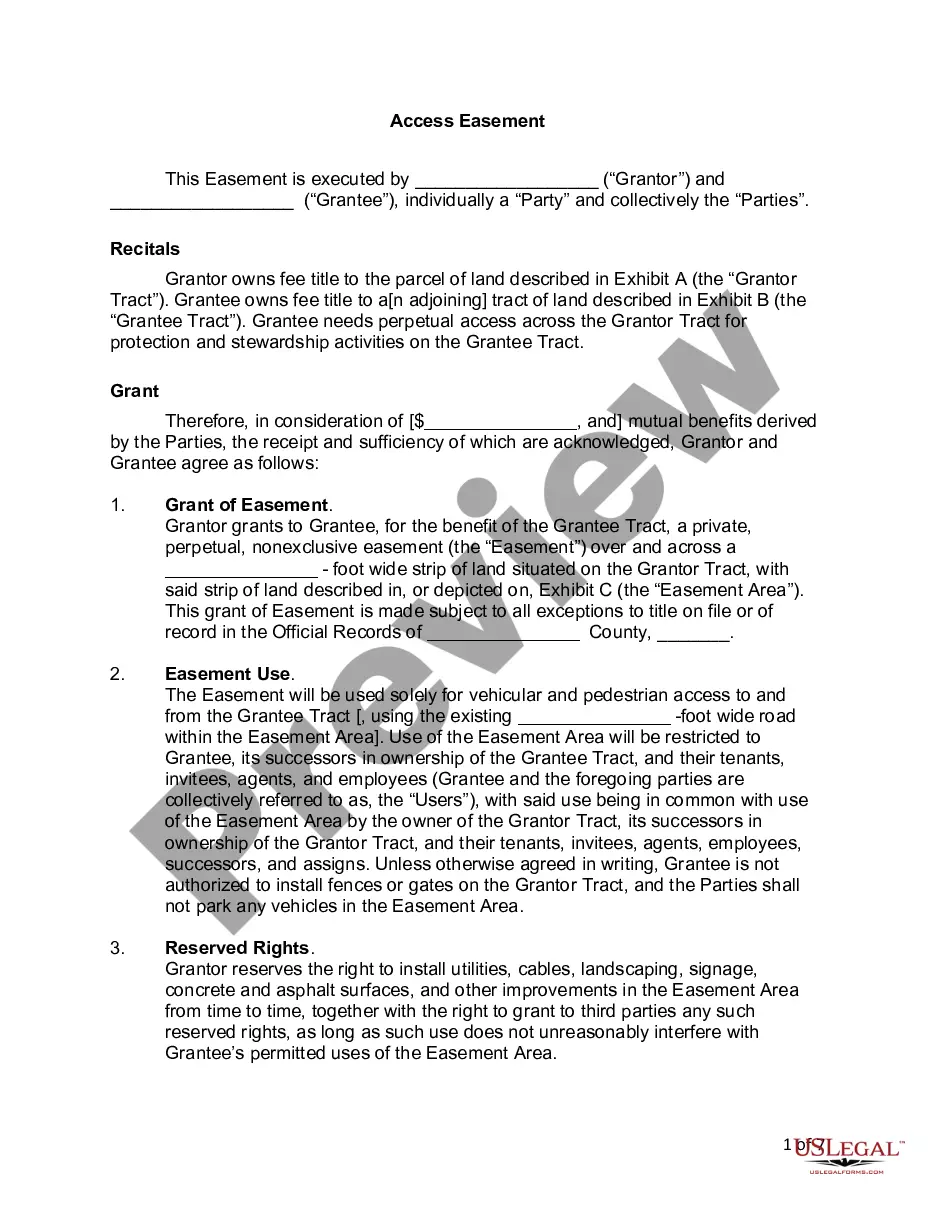
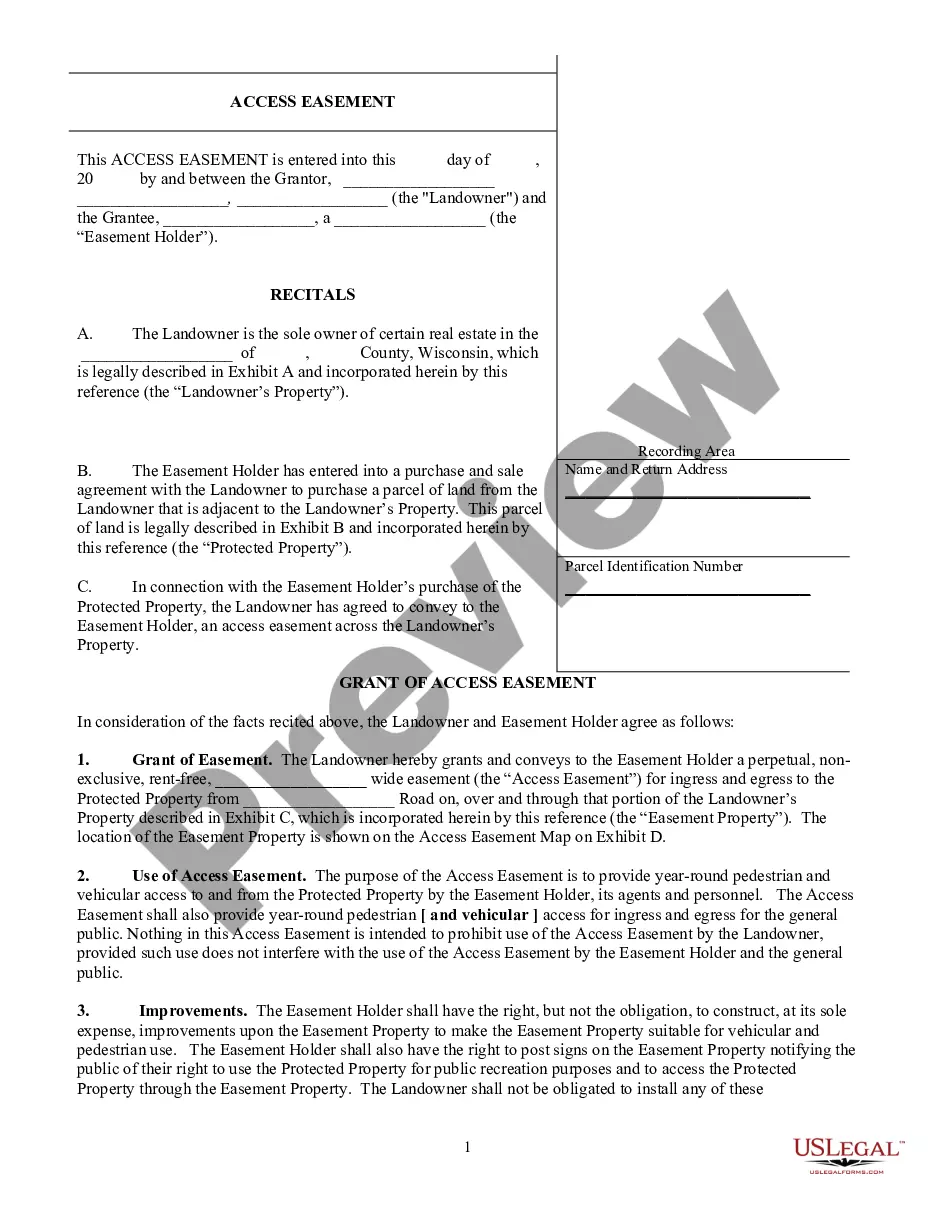
The Shared Access Area Easement and Private Land Use Restrictions form is a legal document that establishes shared access rights to a specific tract of land while imposing restrictions on its use. This easement allows an owner to convey certain rights to another party for specified limited purposes without transferring possession of the land. This form is particularly relevant for property developments that require communal access and define land use parameters among multiple lot owners.
Key parts of this document
- Defines the parties involved, including the owner and any associations.
- Establishes a perpetual, non-exclusive easement for shared access areas.
- Specifies rights and obligations regarding utilities, drainage, emergency vehicle access, and parking provisions.
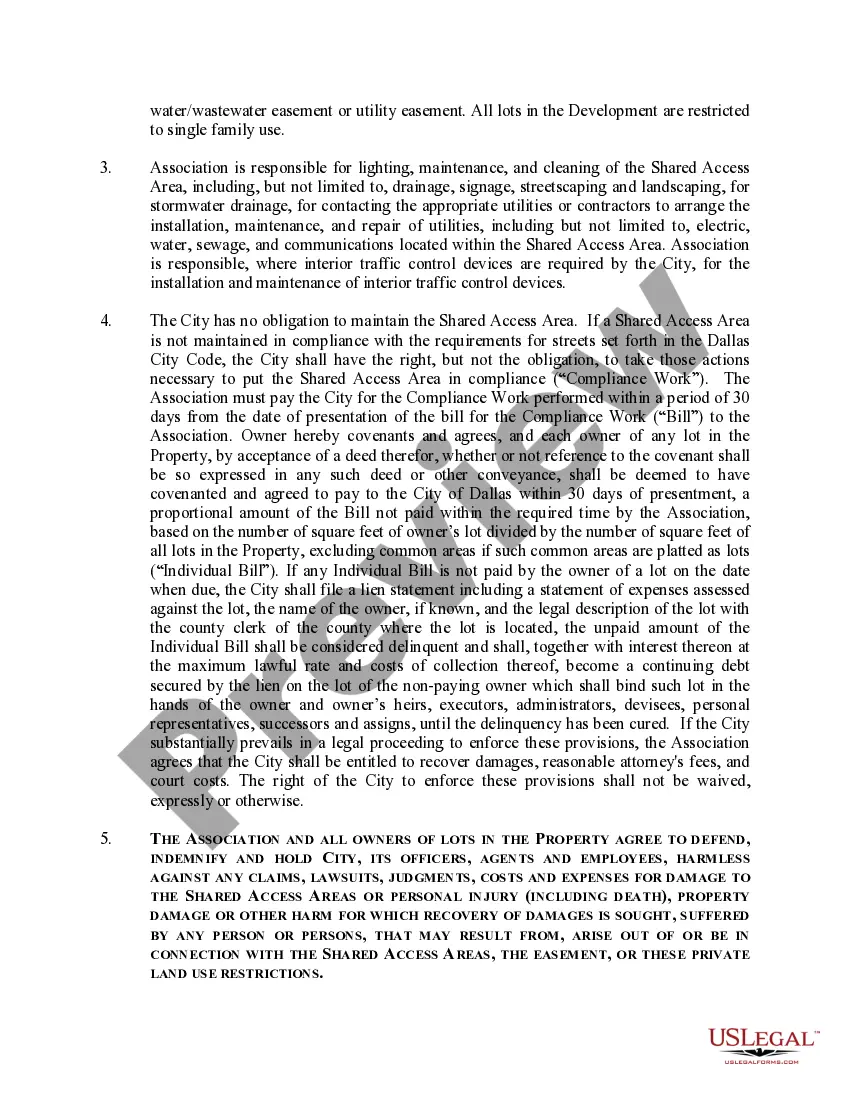
- Assigns maintenance responsibilities to the homeowners association for shared areas.
- Outlines compliance obligations with local ordinances and city code.
- Details the consequences of non-compliance, including potential financial liabilities.
When to use this form
This form should be used when developing residential properties that require shared access to certain areas, like driveways or common utilities. It is appropriate when landowners need to define how shared spaces will be used and maintained, and when limitations on property use must be established to ensure compliance with local regulations.
Intended users of this form
- Property developers looking to establish shared access in new developments.
- Homeowners in a community with common areas needing formal agreements on land use.
- Real estate professionals assisting clients in property development or management.
- Associations that manage shared facilities or access among homeowners.
Instructions for completing this form
- Identify the owner of the property and enter their details at the beginning of the form.
- Provide a description of the property subject to the easement, referencing any attached plats.
- Specify the easement's dimensions and the permissible uses for the shared access area.
- Clearly outline the responsibilities of the homeowners association regarding maintenance and compliance.
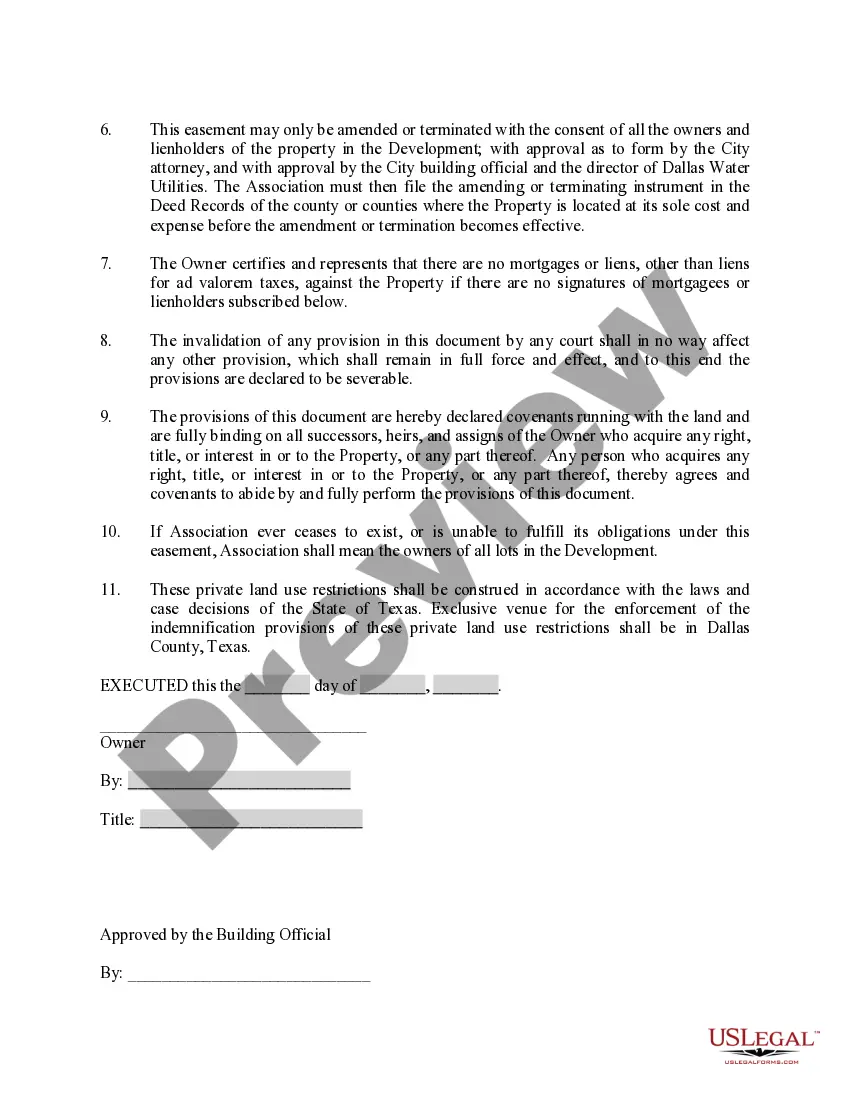
- Obtain necessary signatures from all parties involved, including any lienholders if applicable.
Notarization guidance
This form does not typically require notarization unless specified by local law. However, for additional assurance, consider reviewing any local statutes or consult an attorney regarding specific notarization needs for easements in your area.
Get your form ready online
Our built-in tools help you complete, sign, share, and store your documents in one place.
Make edits, fill in missing information, and update formatting in US Legal Forms—just like you would in MS Word.
Download a copy, print it, send it by email, or mail it via USPS—whatever works best for your next step.
Sign and collect signatures with our SignNow integration. Send to multiple recipients, set reminders, and more. Go Premium to unlock E-Sign.
If this form requires notarization, complete it online through a secure video call—no need to meet a notary in person or wait for an appointment.
We protect your documents and personal data by following strict security and privacy standards.

Make edits, fill in missing information, and update formatting in US Legal Forms—just like you would in MS Word.

Download a copy, print it, send it by email, or mail it via USPS—whatever works best for your next step.

Sign and collect signatures with our SignNow integration. Send to multiple recipients, set reminders, and more. Go Premium to unlock E-Sign.

If this form requires notarization, complete it online through a secure video call—no need to meet a notary in person or wait for an appointment.

We protect your documents and personal data by following strict security and privacy standards.
Common mistakes to avoid
- Failing to accurately define the physical boundaries of the shared access area.
- Omitting necessary signatures, particularly from lienholders or associations.
- Not following local ordinances related to easement provisions and land use.
Benefits of using this form online
- Convenient access to a legally sound form drafted by licensed attorneys.
- Editable to fit specific property details and requirements efficiently.
- Reduces the time and costs involved in consulting legal professionals for drafting similar documents.
Looking for another form?
Form popularity
FAQ
Easement width shall be 24 feet and the length shall be the full width of adjoining properties fronting the roadway. The Director of Public Works may approve an alternative layout as necessary given the shape of the particular tract.
If a city has an easement, the city has authority to maintain the easement in a way that protects the city's property rights while still allowing some use by the property owner.
Yes, you can usually build on a property easement, even a utility easement.
An easement is a legal right to use someone else's land for public or private purposes. While many easement agreements are written into the property records, that is not always the case.
Public Easements In Texas Public easements give the right of enjoyment and use to the public generally or to an entire community. A public easement may be created (a) by a dedication from the owner, (b) by prescription (use by the public for many years), or (c) by condemnation by the government.
What are Easements and Rights-of-Way? Easements are nonpossessory interests in real property. More simply, an easement is the right to use another's property for a specific purpose. Rights-of-way are easements that specifically grant the holder the right to travel over another's property.
Yes, in most cases, you can build a fence on an easement. Fences are regularly built along or across easements. Homeowners who do this must expect the chance that their fence might be pulled down by a dominant estate (utility company, for example).