Freeware License Agreement
About this form
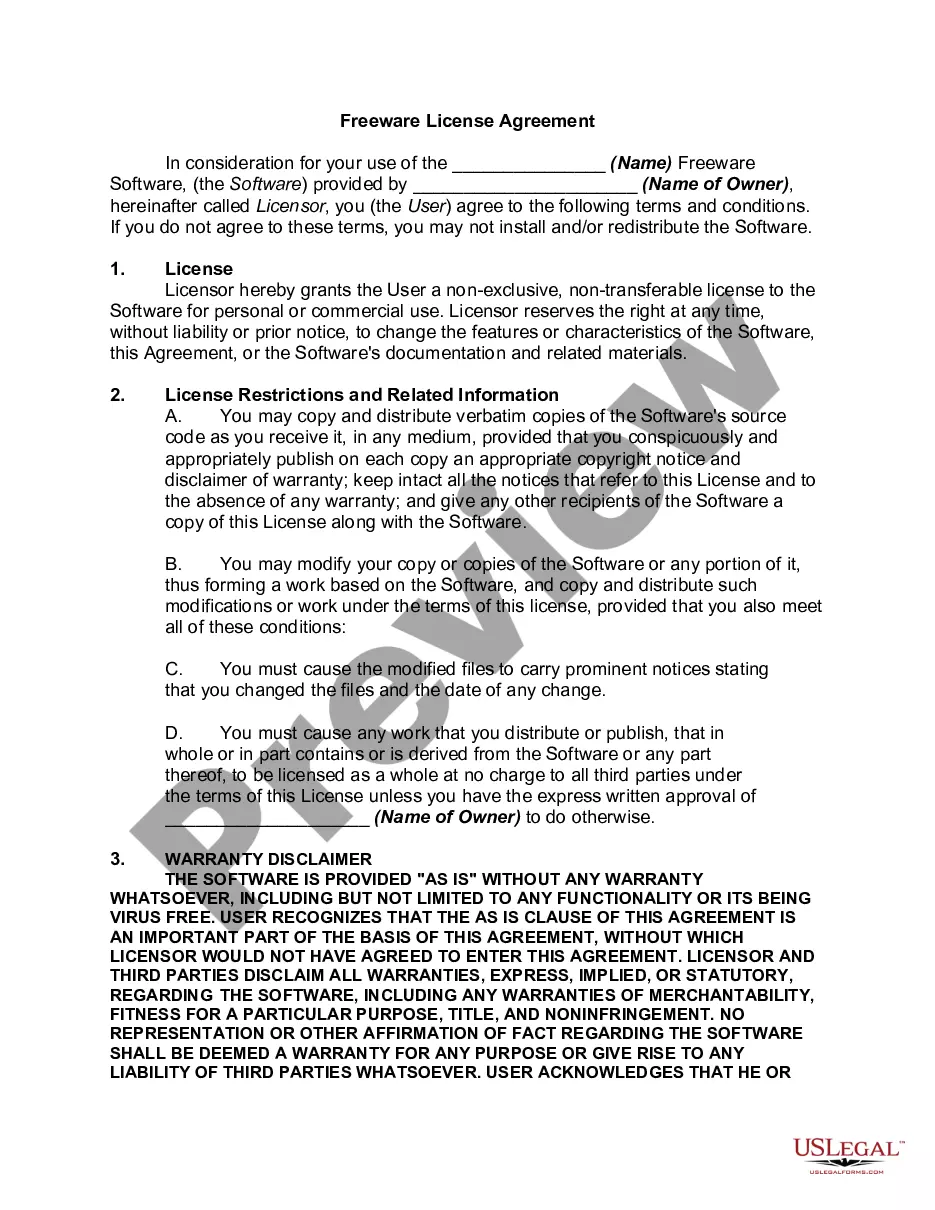
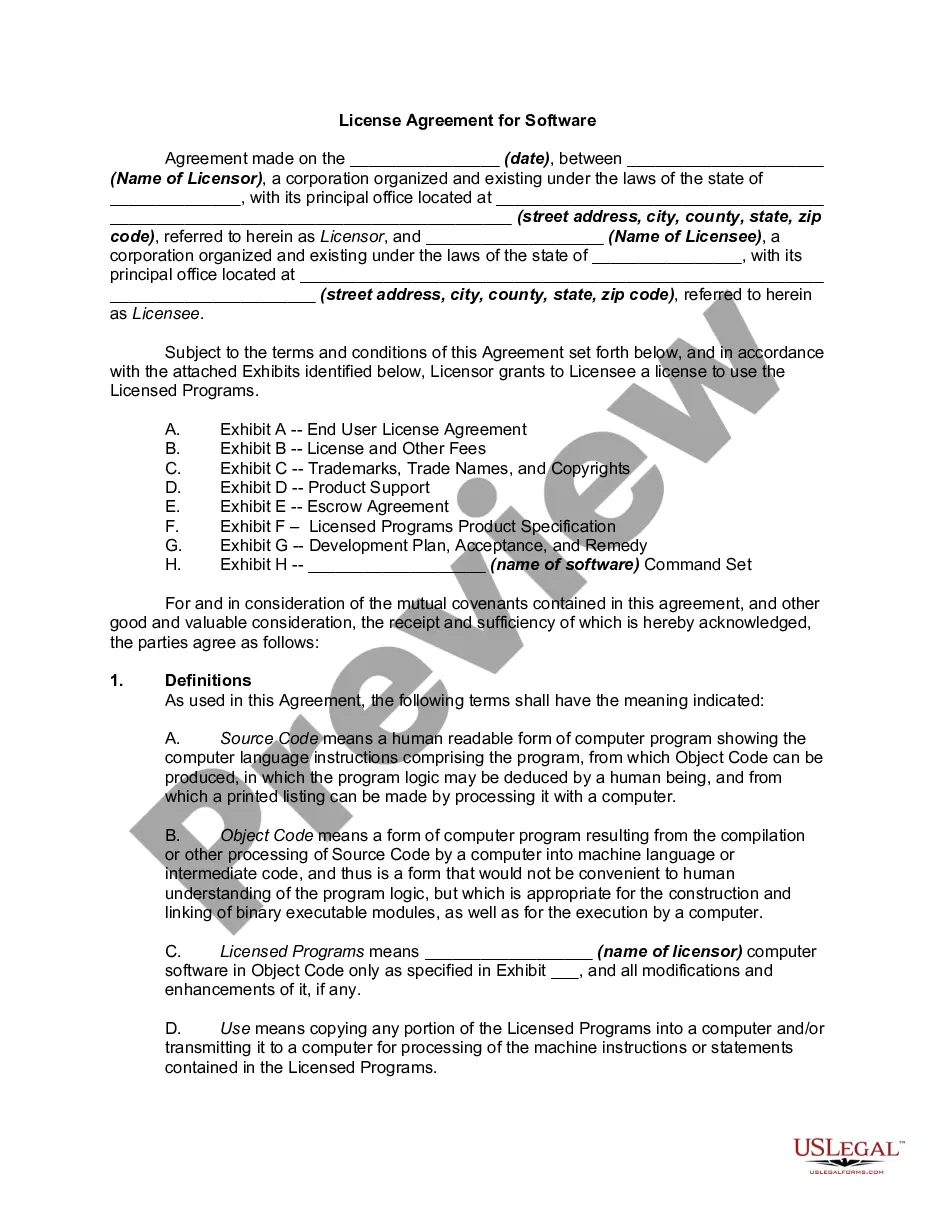
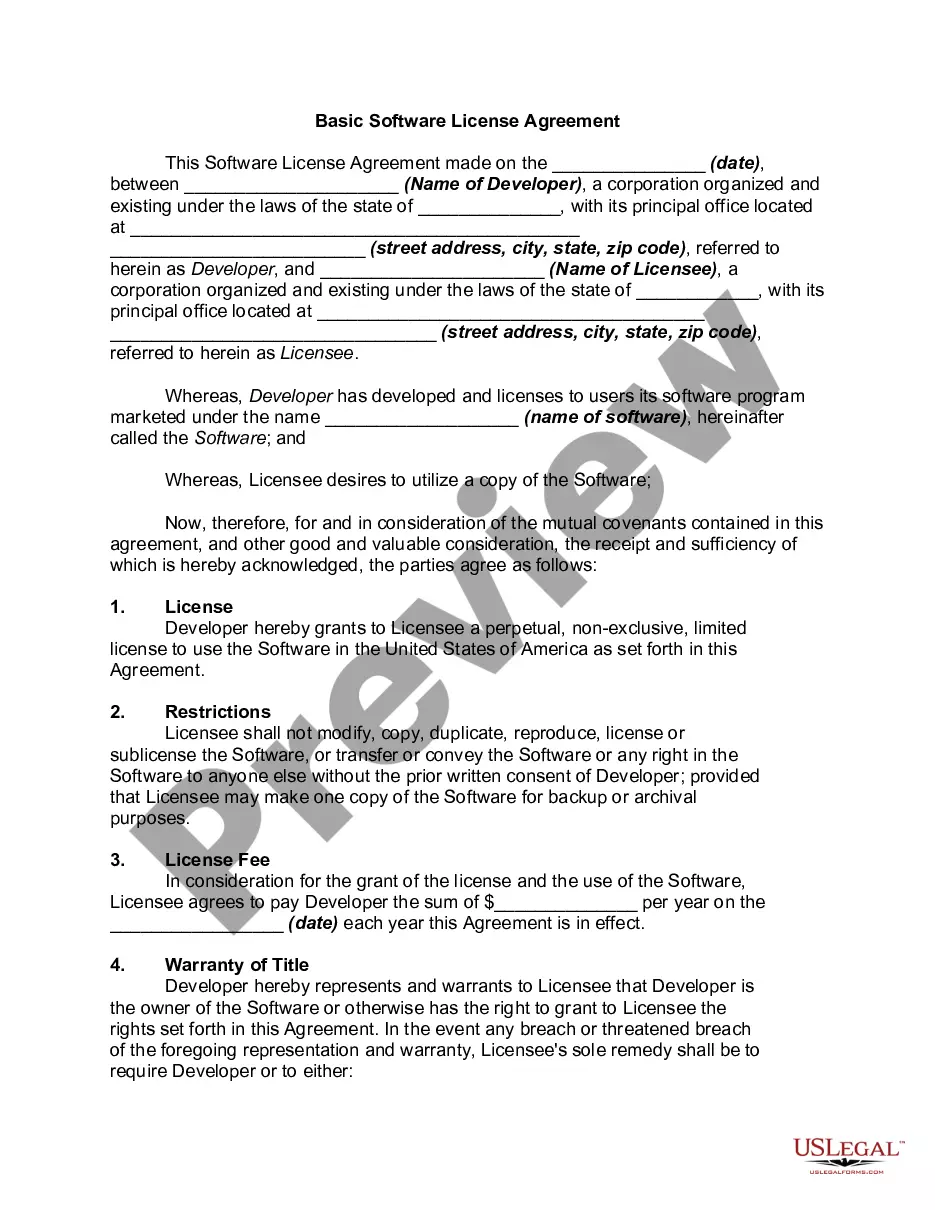
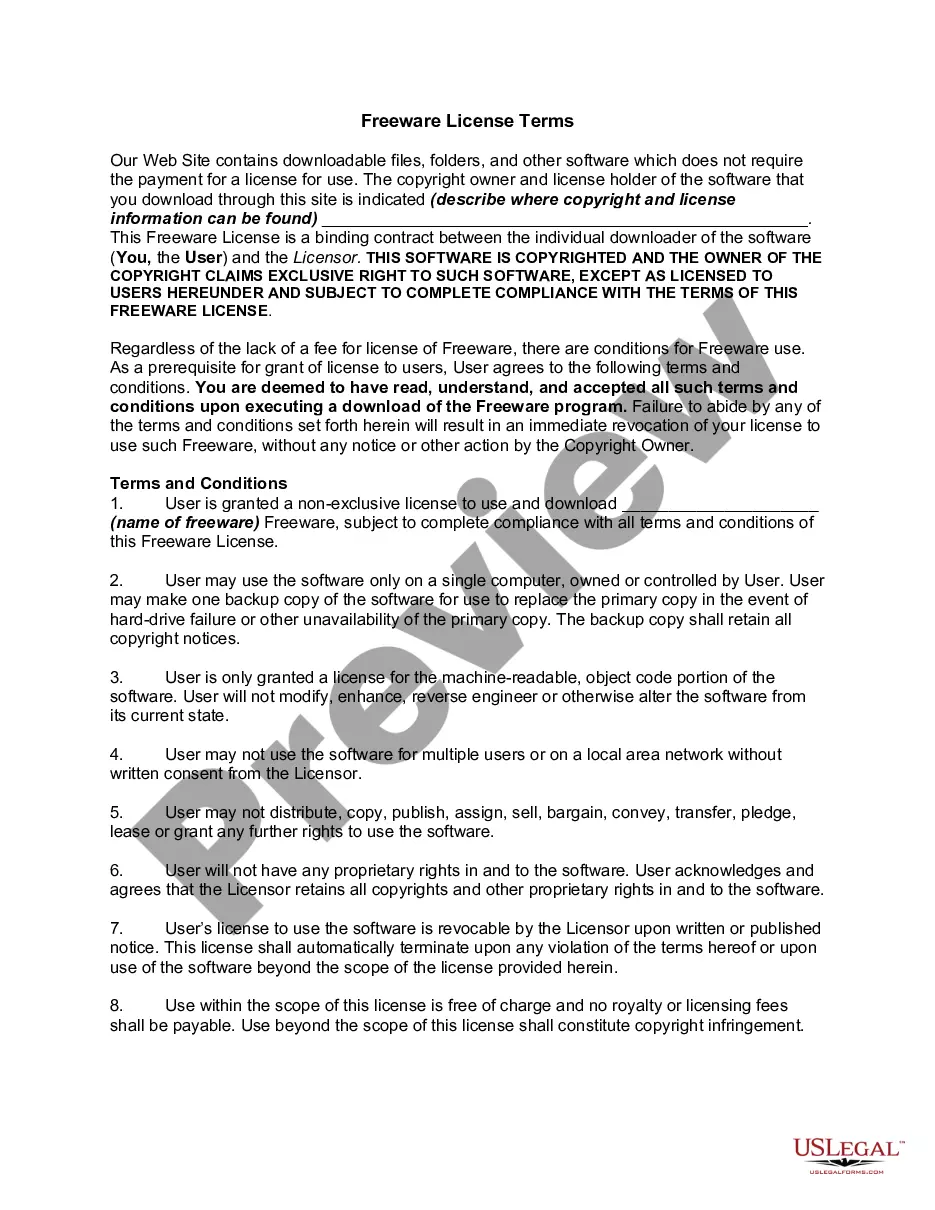
A Freeware License Agreement is a legal document that outlines the terms under which freeware software can be used and distributed. This agreement protects the rights of the software owner (licensor) while allowing users to utilize the software for personal or commercial purposes. Unlike other software licenses that may impose significant fees or restrictions, freeware allows greater accessibility while still enforcing copyright protections. Users must adhere to the conditions laid out in the agreement to avoid legal repercussions.
Key components of this form
- License granted to the user for personal or commercial use of the software.
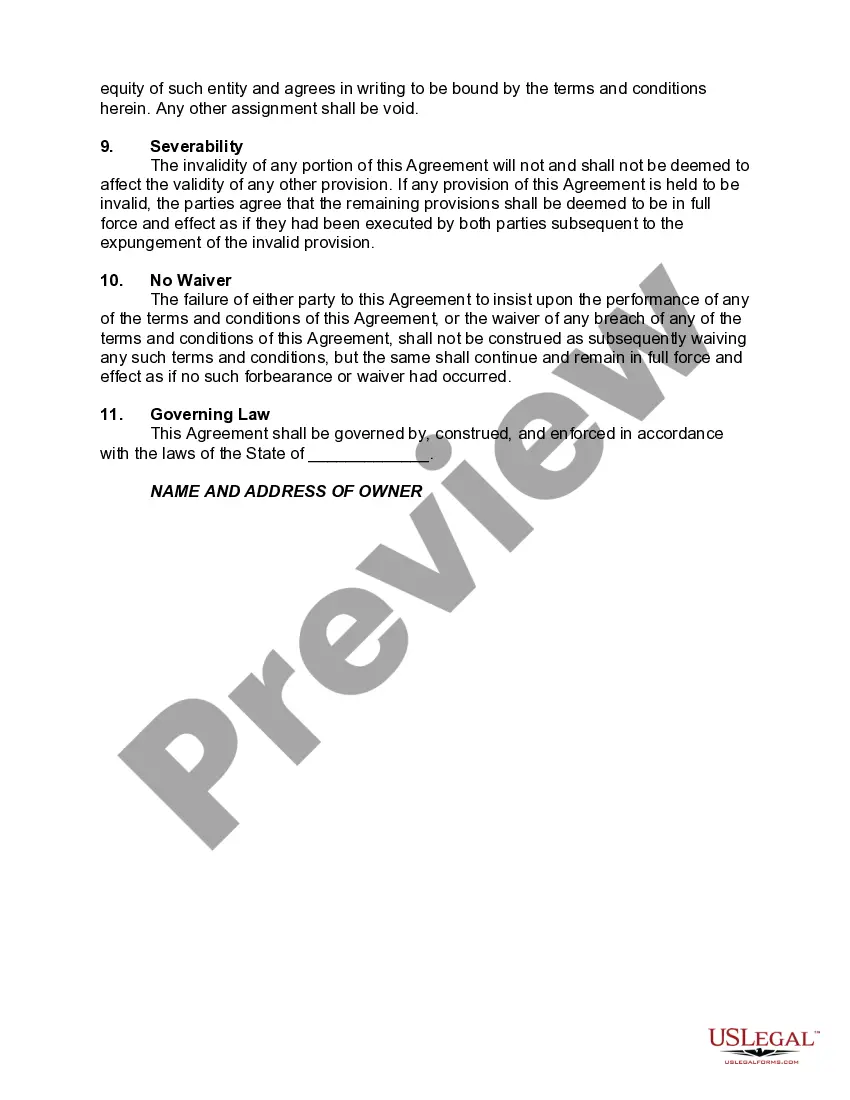
- Restrictions on modification and redistribution of the software.
- Warranty disclaimer emphasizing that the software is provided 'as is' without any guarantees.
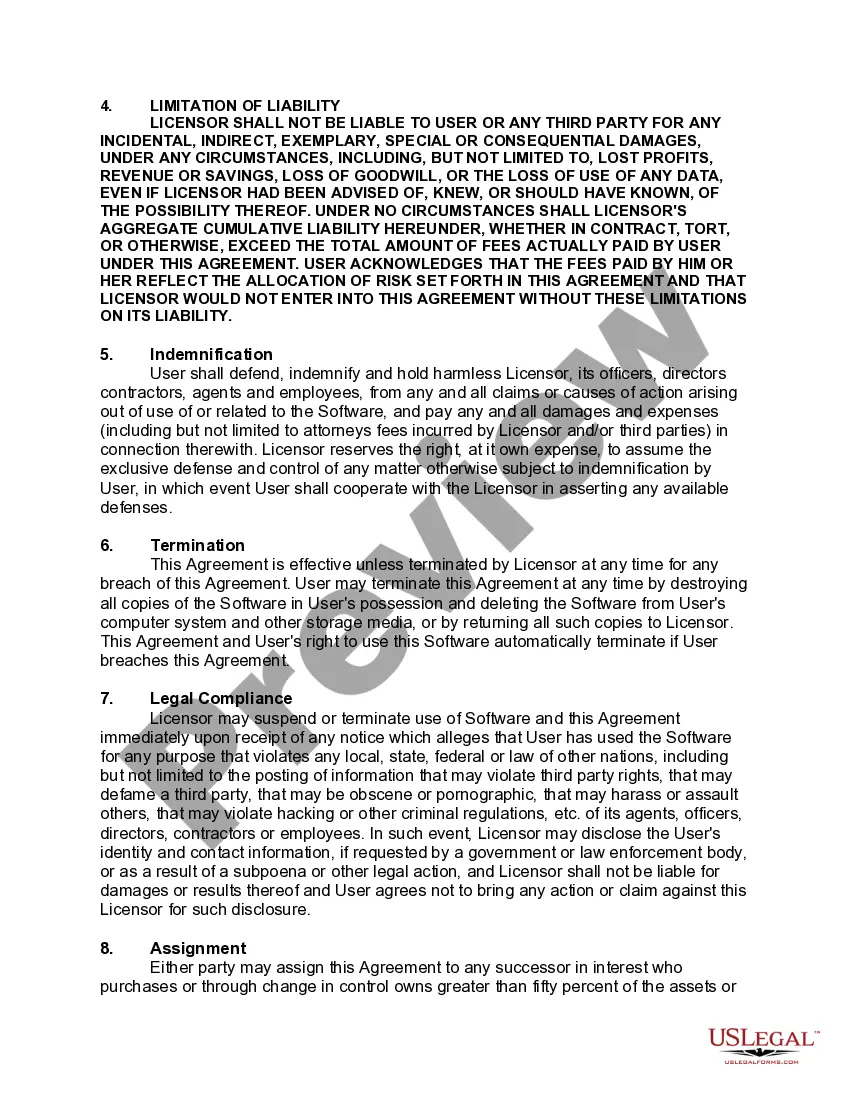
- Indemnification clause protecting the licensor from claims arising from the user's use of the software.
- Termination conditions for the agreement, detailing how it can be ended.
- Legal compliance section outlining the user's obligations under local and federal laws.
Common use cases
This form should be used when a software creator wishes to distribute freeware while ensuring that users comply with specific legal conditions. It is ideal for individual developers offering small applications, educational programs, or tools that can be shared freely but remain the intellectual property of the creator. Utilizing this agreement helps prevent misuse or unauthorized commercial exploitation of the software.
Who can use this document
- Software developers looking to provide freeware to the public.
- Businesses wishing to distribute free software for internal use or marketing purposes.
- Individuals who create software for educational or entertainment purposes.
- Any user seeking to understand their rights and responsibilities regarding freeware software.
Completing this form step by step
- Identify the name of the freeware software being licensed.
- Provide the name of the software owner or developer (licensor).
- Read through the entire agreement to understand the restrictions and rights granted.
- Modify any specific clauses as necessary to reflect unique terms of use or restrictions.
- Ensure all parties understand and agree to the terms before distribution.
Is notarization required?
This form does not typically require notarization to be legally valid. However, some jurisdictions or document types may still require it. US Legal Forms provides secure online notarization powered by Notarize, available 24/7 for added convenience.
Get your form ready online
Our built-in tools help you complete, sign, share, and store your documents in one place.
Make edits, fill in missing information, and update formatting in US Legal Forms—just like you would in MS Word.
Download a copy, print it, send it by email, or mail it via USPS—whatever works best for your next step.
Sign and collect signatures with our SignNow integration. Send to multiple recipients, set reminders, and more. Go Premium to unlock E-Sign.
If this form requires notarization, complete it online through a secure video call—no need to meet a notary in person or wait for an appointment.
We protect your documents and personal data by following strict security and privacy standards.

Make edits, fill in missing information, and update formatting in US Legal Forms—just like you would in MS Word.

Download a copy, print it, send it by email, or mail it via USPS—whatever works best for your next step.

Sign and collect signatures with our SignNow integration. Send to multiple recipients, set reminders, and more. Go Premium to unlock E-Sign.

If this form requires notarization, complete it online through a secure video call—no need to meet a notary in person or wait for an appointment.

We protect your documents and personal data by following strict security and privacy standards.
Mistakes to watch out for
- Failing to include a copyright notice on distributed copies of the software.
- Modifying the software without adding required change notifications.
- Ignoring the warranty disclaimer, leading to misunderstandings about software reliability.
- Distributing the software without the appropriate license accompanying it.
Benefits of using this form online
- Convenient access to a legally reviewed template that simplifies the licensing process.
- Editable format allows for customization to meet specific needs.
- Reliable legal structure ensures compliance with copyright laws.
- Instant downloads enable immediate use without waiting for postal services.
Legal use & context
- The Freeware License Agreement protects the rights of the software creator while allowing free access to users.
- It ensures users are aware of their limitations regarding modification and distribution of the software.
Looking for another form?

Form popularity
FAQ
Exclusive or non-exclusive. In an exclusive license, the intellectual property holder is licensing the work only to one person, for that particular use/territory. Territory. Use. Attribution. Derivative works. Confidentiality. Time frame. Termination.
An example of a licensing agreement is a contract between the copyright holders of software and another company, allowing the latter to use the computer software for their daily business operations.
An example of a licensing agreement is a contract between the copyright holders of software and another company, allowing the latter to use the computer software for their daily business operations.
The 3 P's of collegiate licensing are protection, promotion, and profit.
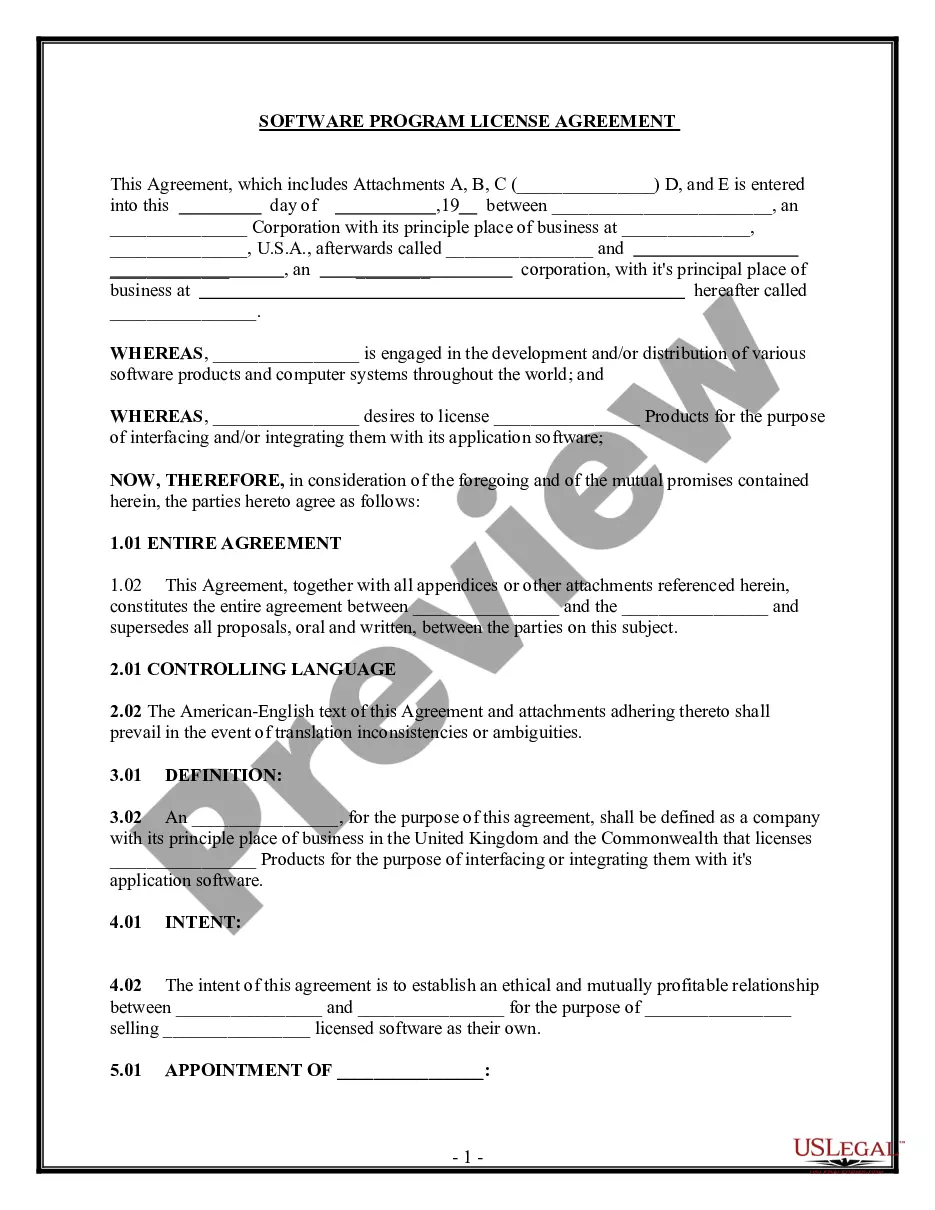
Public domain. This is the most permissive type of software license. Permissive. LGPL. Copyleft. Proprietary.
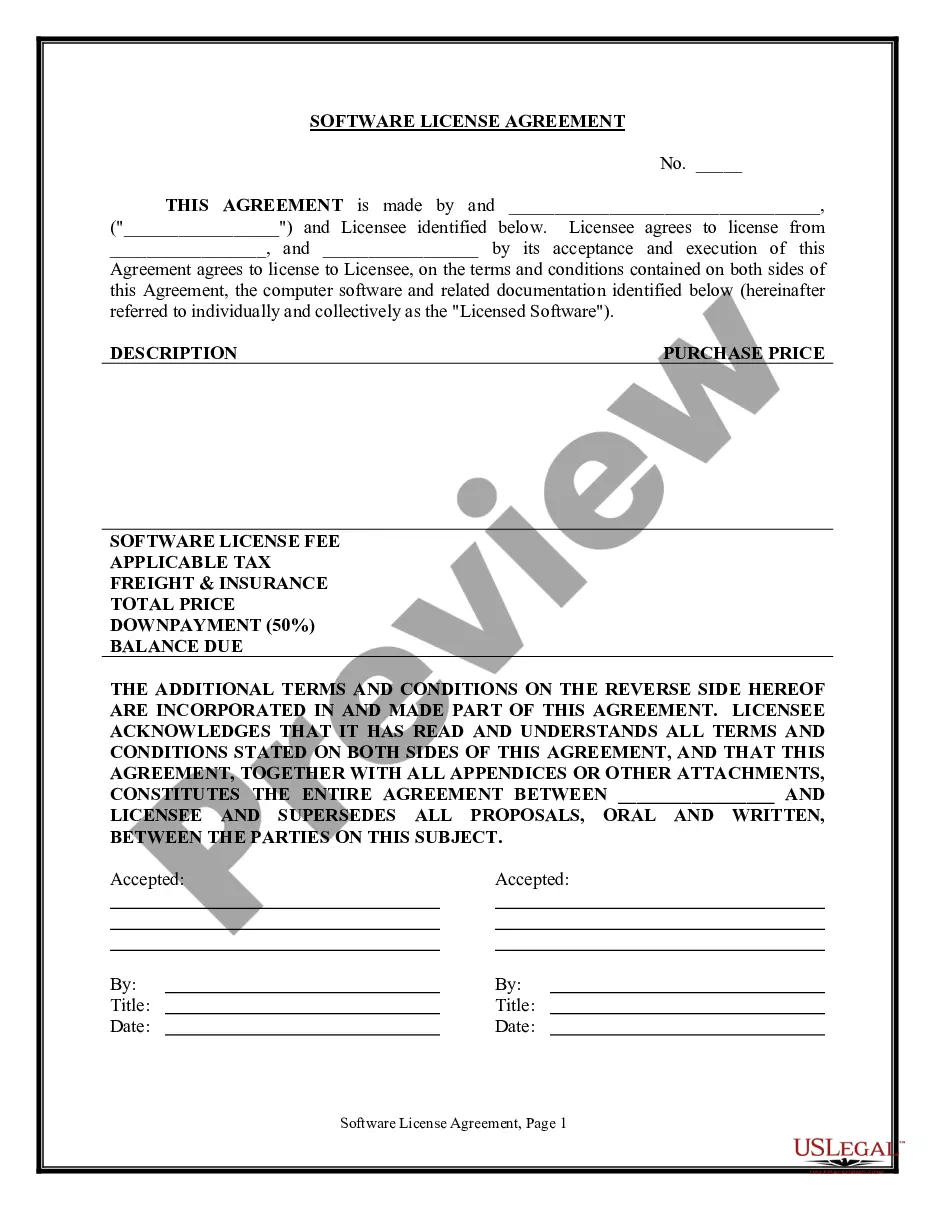
Wisegeek explains software licensing as a type of contract which exists between the person of company who produces a type of software, and the end user, or person who purchases or downloads the software to use. This means that there are many different types of software licenses.
A license agreement is a business contract between two parties. The licensor (the seller of the license) owns the asset being licensed and the licensee (the buyer) pays for the right to use the license. The licensee pays royalties to the owner in exchange for the right to sell the product or use the technology.
Freeware is software, most often proprietary, that is distributed at no monetary cost to the end user. There is no agreed-upon set of rights, license, or EULA that defines freeware unambiguously; every publisher defines its own rules for the freeware it offers.
Download a template for a licensing agreement. Choose your role as the licensor or licensee. Define the license(s) in the agreement. Decide whether the license is exclusive or not. Settle the matter of fees and payment schedule. Add a renewal date and rules.