Texas Plaintiff's Response to Request of Disclosure
Understanding this form
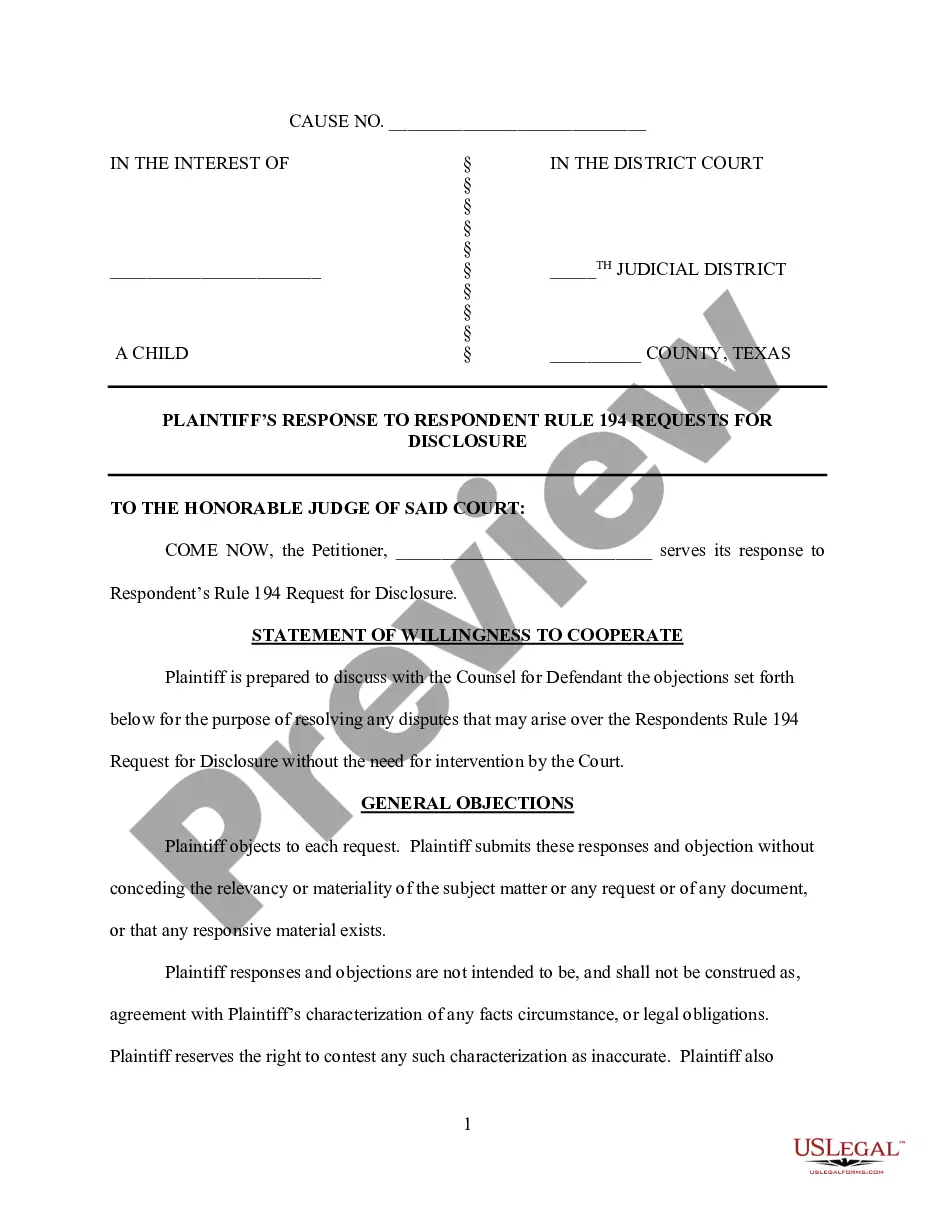
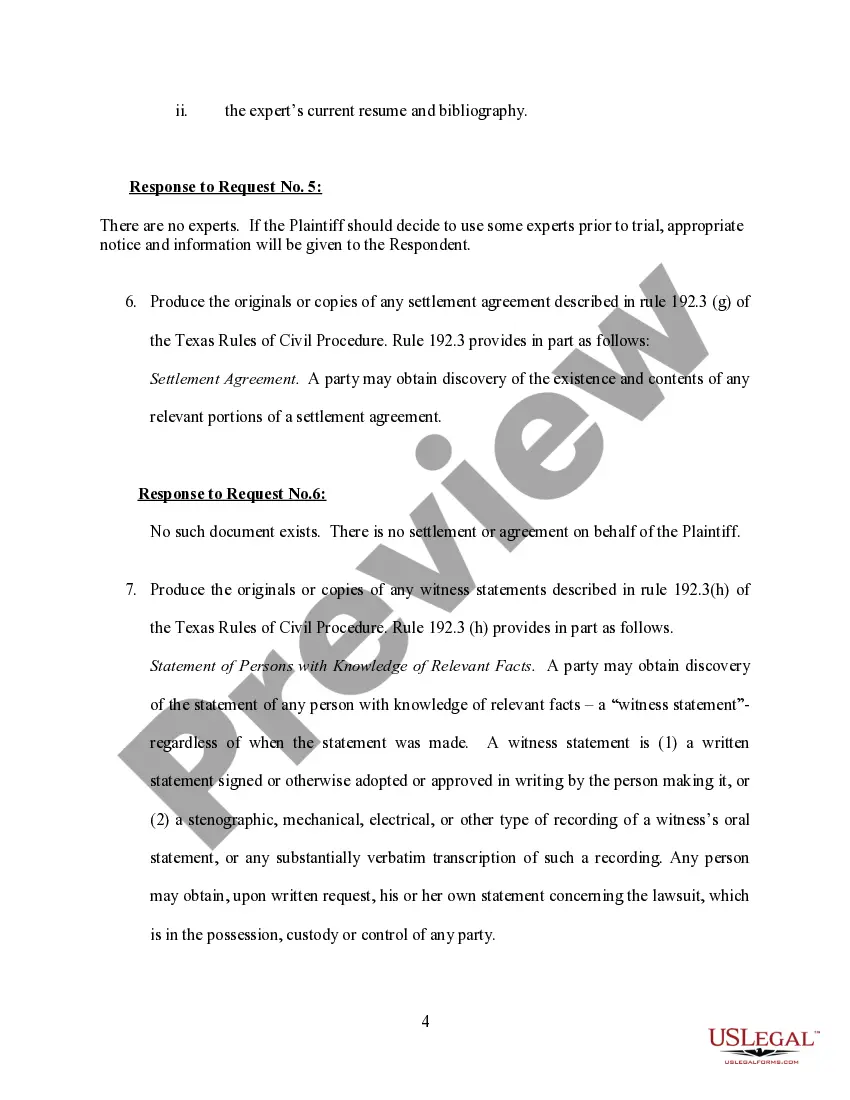
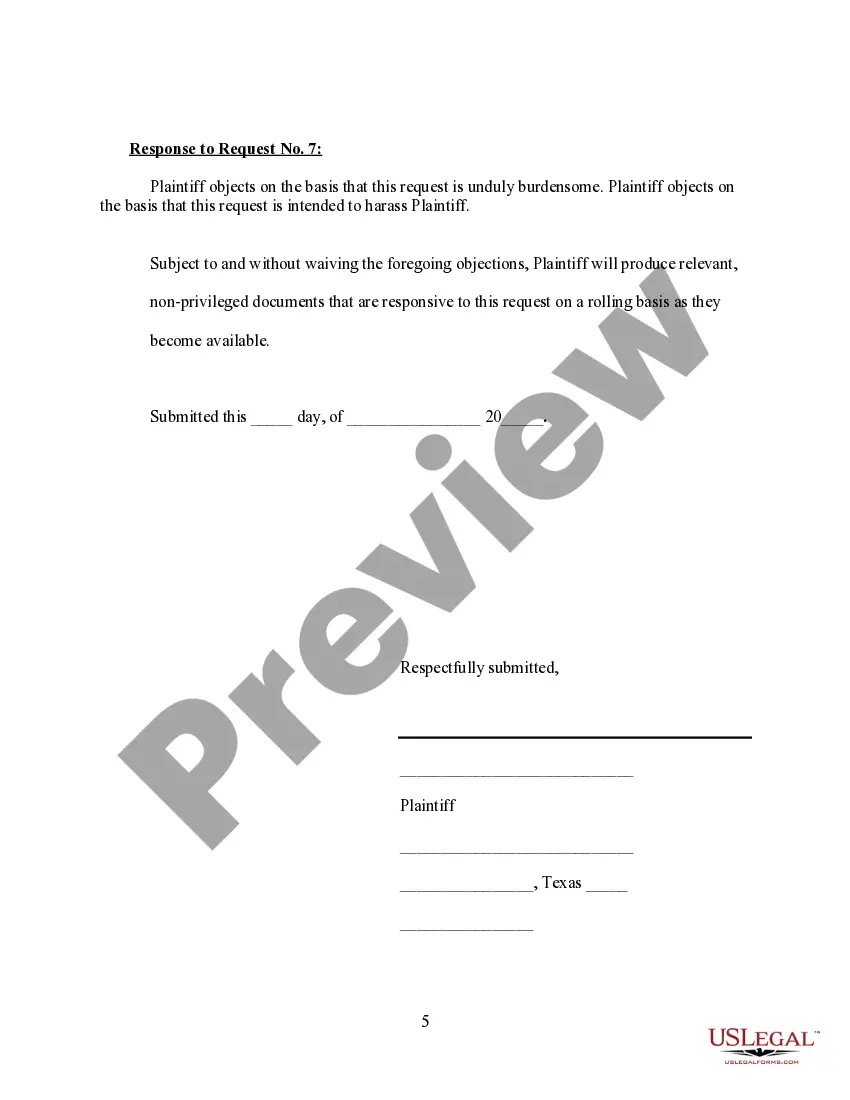
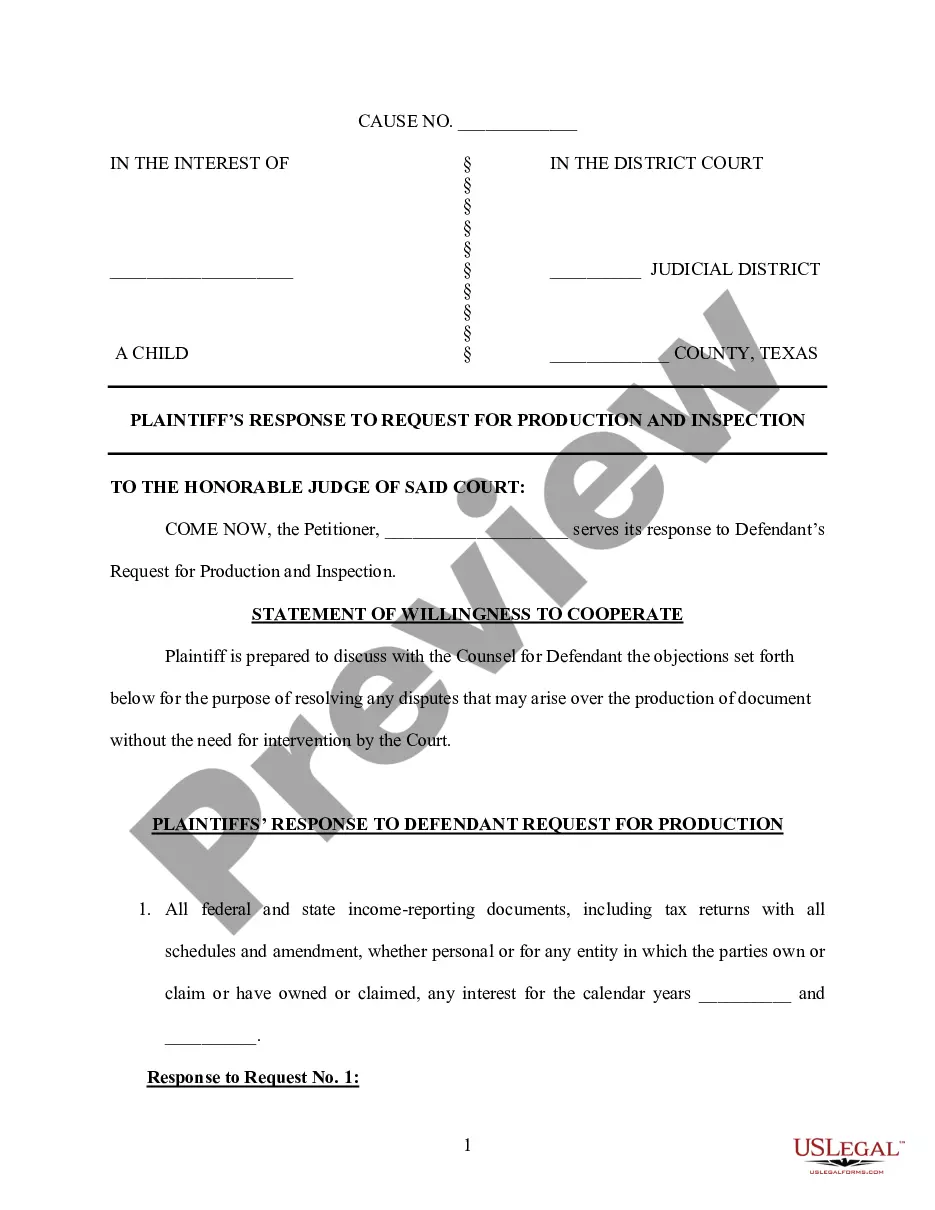
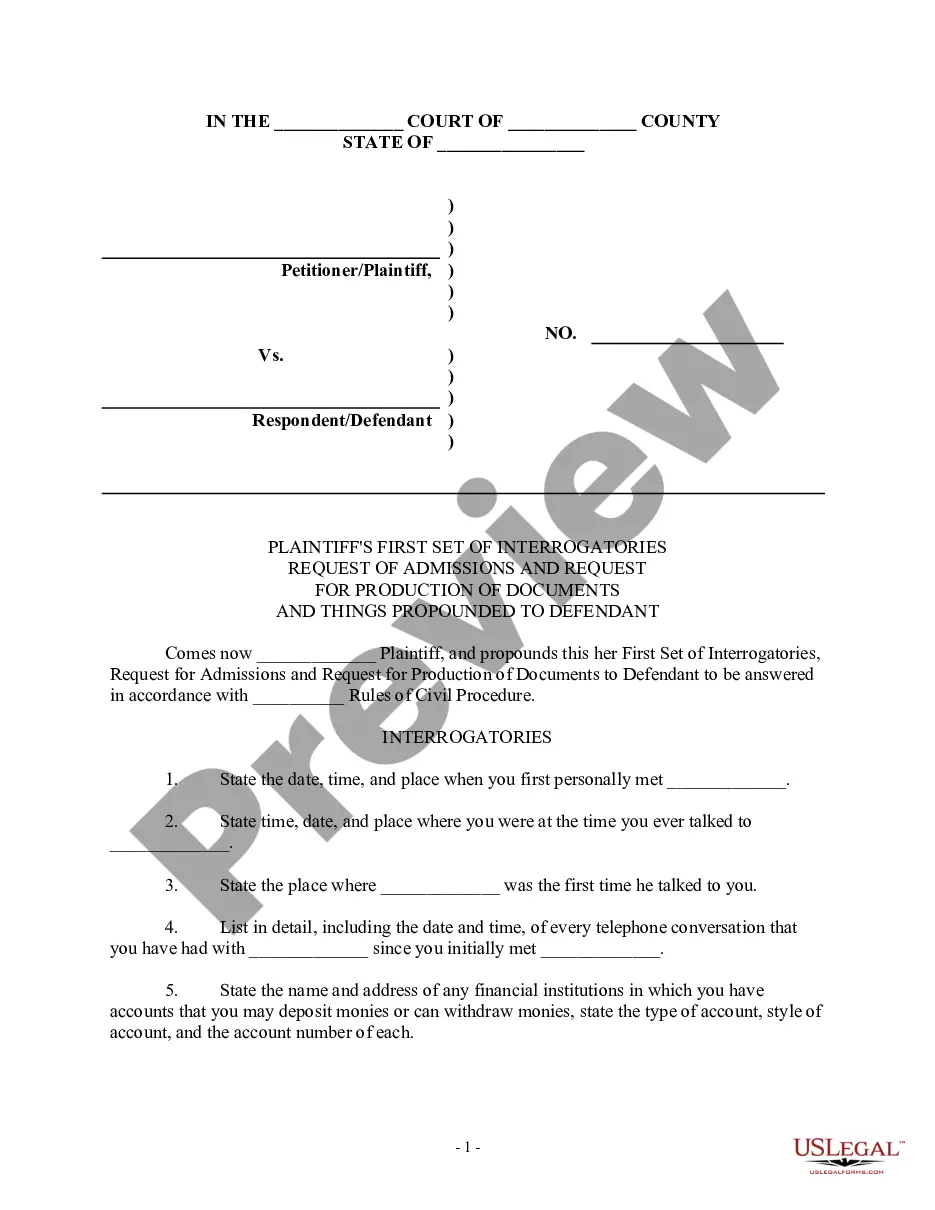
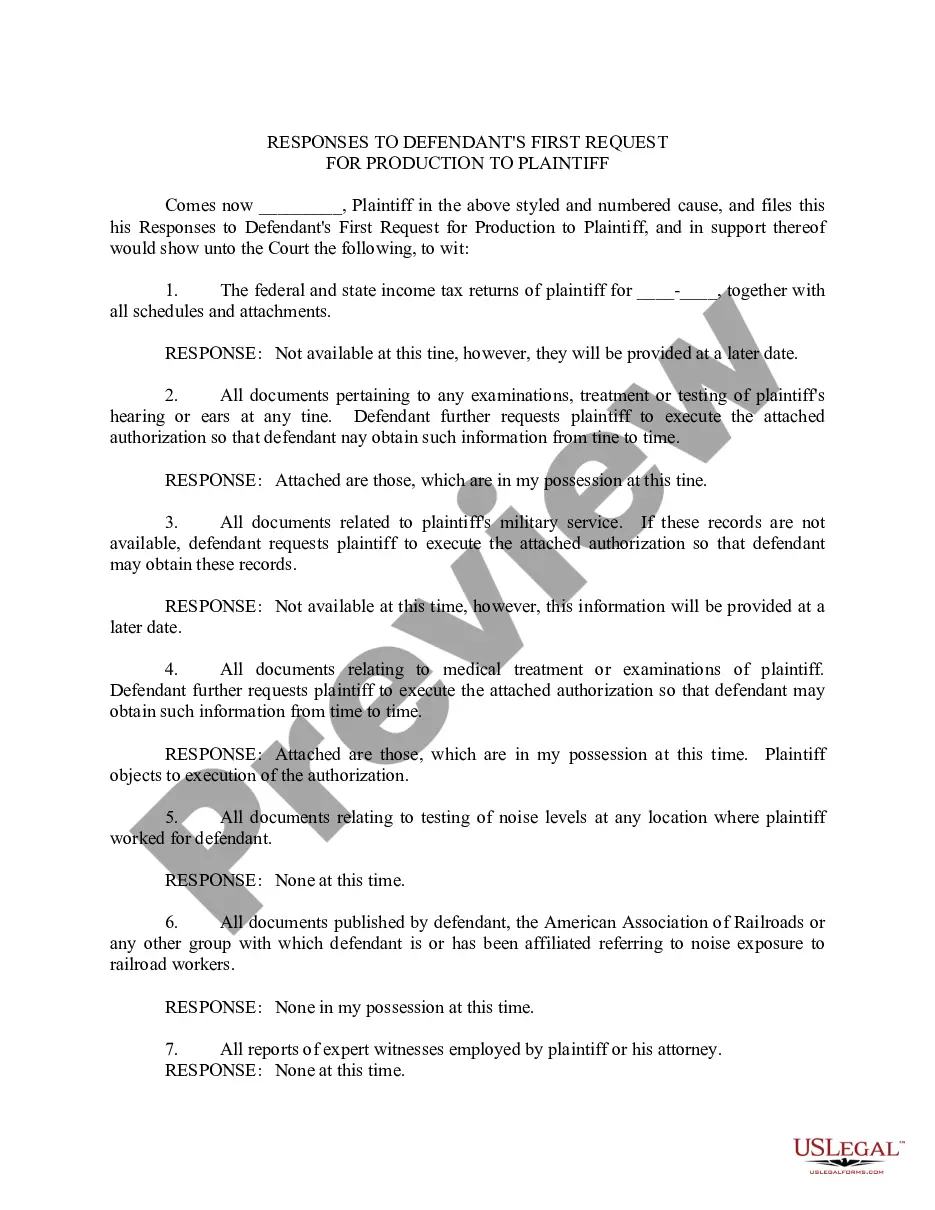
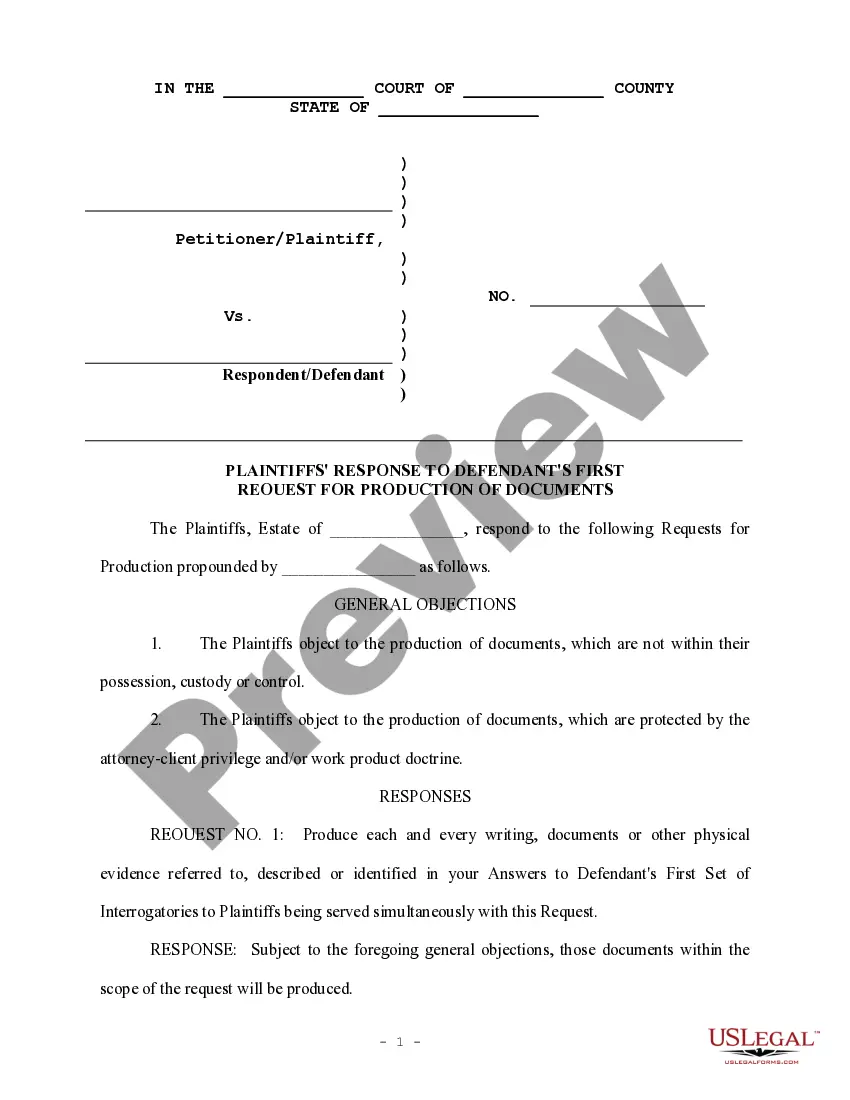
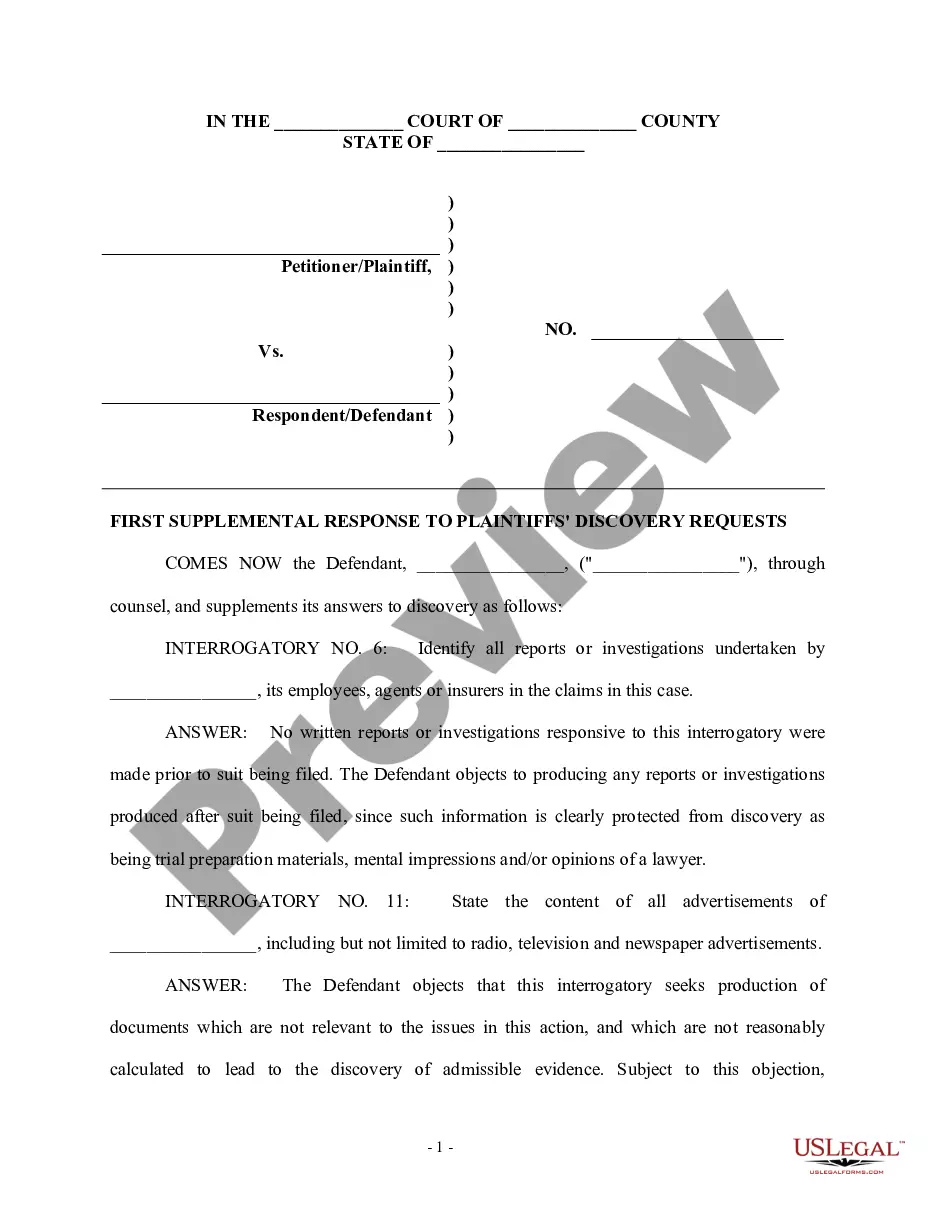
The Plaintiff's Response to Request of Disclosure is a legal document filed in response to a respondent's Rule 194 Request for Disclosure. This form outlines the objections and responses of the plaintiff to the specific requests made by the respondent, ensuring compliance with legal standards while protecting the plaintiff's interests. It differs from similar forms by focusing specifically on the disclosure requests under Rule 194, which address information sharing during litigation.
Key components of this form
- Statement of Willingness to Cooperate: A declaration indicating the plaintiffâs readiness to discuss objections to requests.
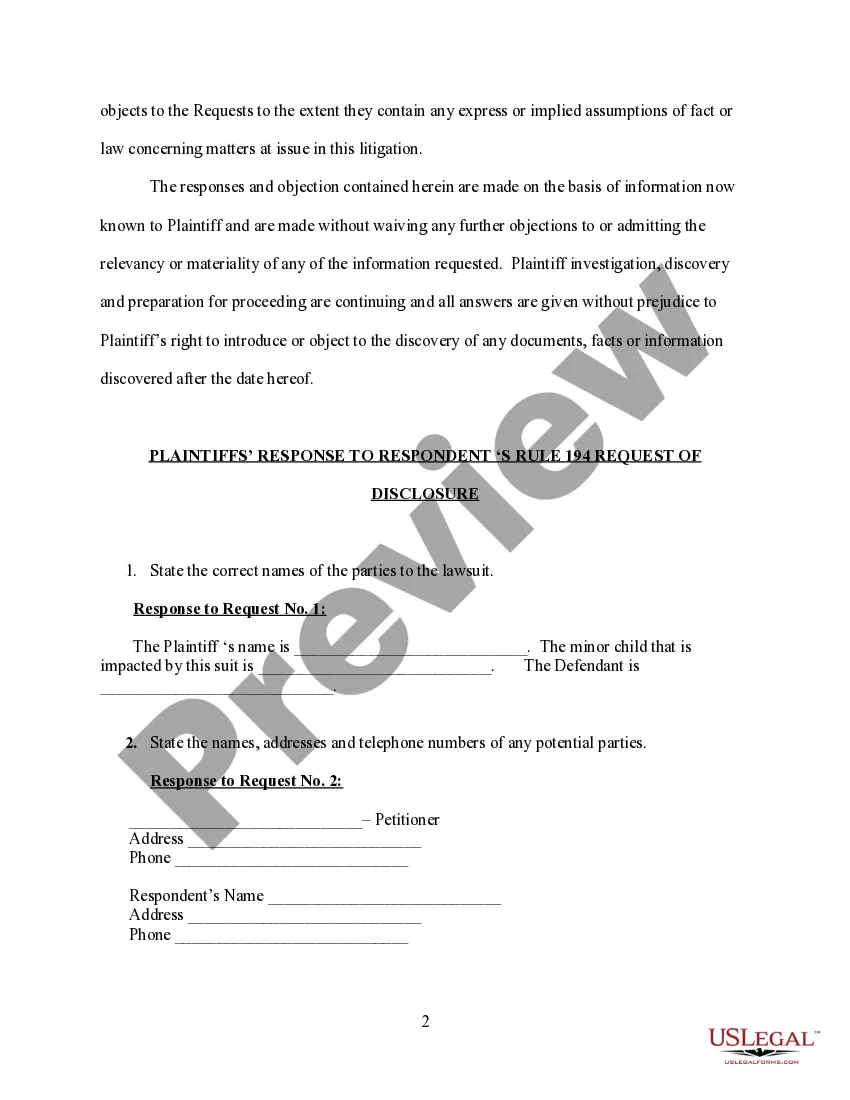
- General Objections: This section allows the plaintiff to outline all general objections to the respondent's disclosure requests.
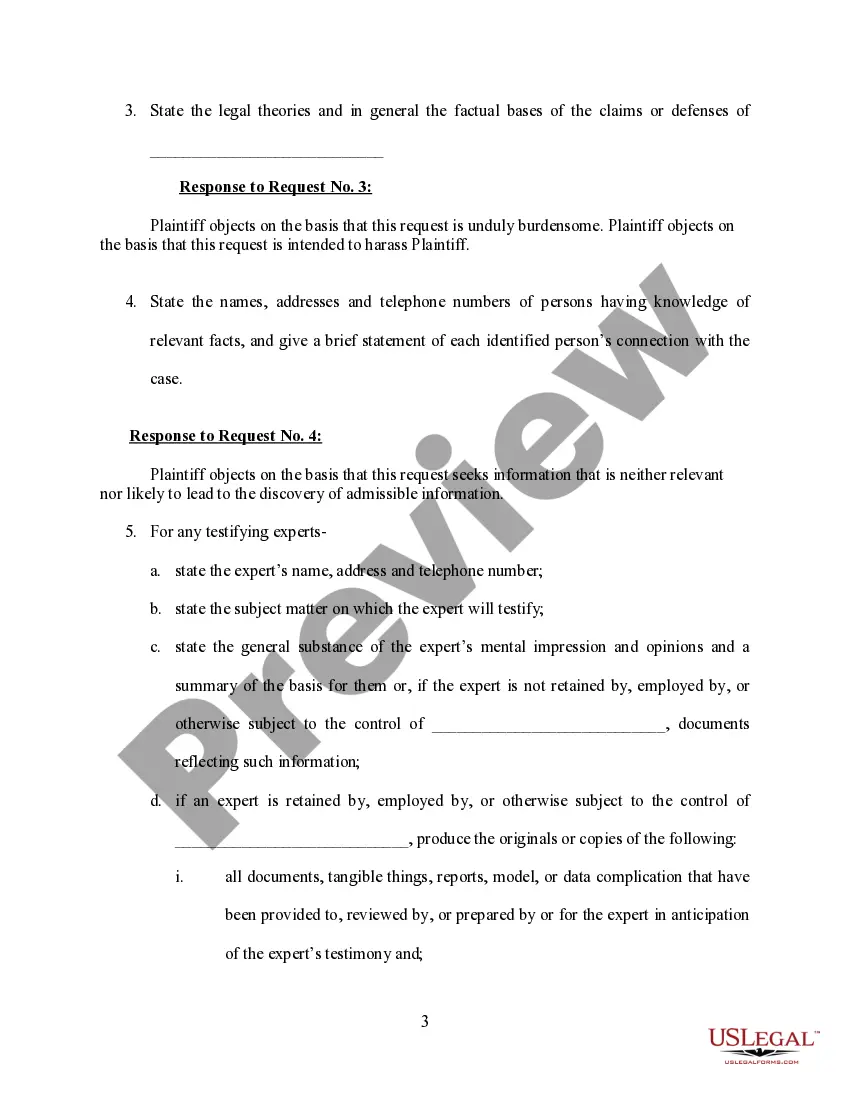
- Specific Responses: Detailed responses to each specific request for disclosure made by the respondent, indicating what information is provided or objected to.
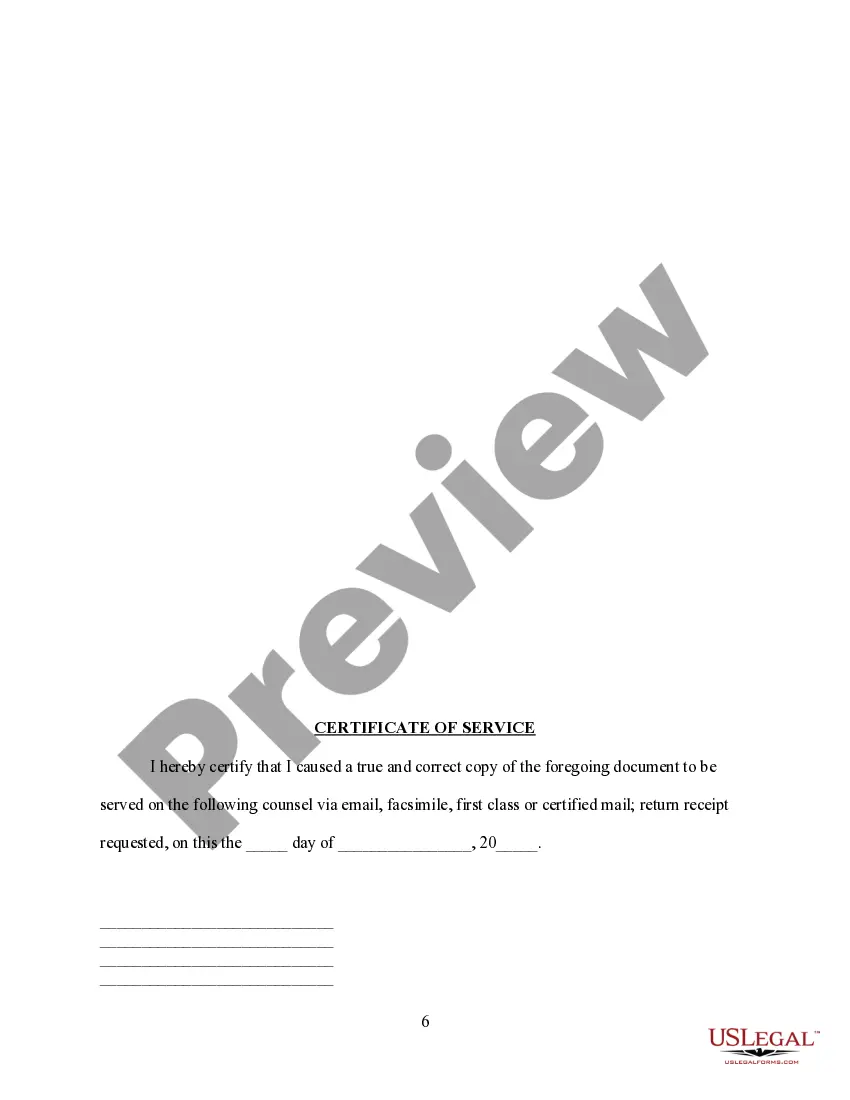
- Certification of Service: Confirms that the response has been properly served to the respondent's counsel.

When to use this form
This form should be used when a plaintiff receives a Rule 194 Request for Disclosure from a respondent in a legal case. It is essential for responding to requests for information, documents, and disclosures that may be relevant to the case, helping the plaintiff protect their rights during the discovery phase of litigation.
Who needs this form
- Individuals involved as plaintiffs in a legal case.
- Attorneys representing plaintiffs who need to respond to a request for disclosure.
- Anyone needing to formally object to or respond to disclosure requests in a family law context, especially involving minor children.
How to prepare this document
- Identify the parties involved in the lawsuit by filling in their correct names.
- Provide addresses and contact information for each party if required.
- Respond to each specific request by stating either the objection or the provided information.
- Sign and date the form to affirm its accuracy and completeness.
- Send a copy to the respondent's counsel as a part of the certification of service.
Notarization requirements for this form
Notarization is not commonly needed for this form. However, certain documents or local rules may make it necessary. Our notarization service, powered by Notarize, allows you to finalize it securely online anytime, day or night.
Get your form ready online
Our built-in tools help you complete, sign, share, and store your documents in one place.
Make edits, fill in missing information, and update formatting in US Legal Forms—just like you would in MS Word.
Download a copy, print it, send it by email, or mail it via USPS—whatever works best for your next step.
Sign and collect signatures with our SignNow integration. Send to multiple recipients, set reminders, and more. Go Premium to unlock E-Sign.
If this form requires notarization, complete it online through a secure video call—no need to meet a notary in person or wait for an appointment.
We protect your documents and personal data by following strict security and privacy standards.

Make edits, fill in missing information, and update formatting in US Legal Forms—just like you would in MS Word.

Download a copy, print it, send it by email, or mail it via USPS—whatever works best for your next step.

Sign and collect signatures with our SignNow integration. Send to multiple recipients, set reminders, and more. Go Premium to unlock E-Sign.

If this form requires notarization, complete it online through a secure video call—no need to meet a notary in person or wait for an appointment.

We protect your documents and personal data by following strict security and privacy standards.
Common mistakes to avoid
- Failing to address each request specifically- it's important to respond to all parts of the disclosure request.
- Leaving parts of the form incomplete, which may lead to complications in court.
- Not serving copies of the completed response to the respondent's counsel.
Why use this form online
- Convenience of downloading and completing the form at your own pace.
- Editability, allowing for easy modifications if needed.
- Access to attorney-drafted templates ensures form reliability and adherence to legal standards.
What to keep in mind
- The Plaintiff's Response to Request of Disclosure is essential for legal compliance in litigation.
- It allows plaintiffs to formally respond to disclosure requests while protecting their rights.
- Accurate completion and timely service of the form are crucial to avoid legal pitfalls.
Looking for another form?

Form popularity
FAQ
Rule 194.2. Initial Disclosures (2021) (a) Time for Initial Disclosures. A party must make the initial disclosures within 30 days after the filing of the first answer or general appearance unless a different time is set by the parties' agreement or court order.
(a) A physician shall not be liable for the act or acts of a physician assistant or advanced practice registered nurse solely on the basis of having signed an order, a standing medical order, a standing delegation order, a prescriptive authority agreement, or other order or protocol, authorizing a physician assistant
1. This rule imposes a duty upon parties to make a complete response to written discovery based upon all information reasonably available, subject to objections and privileges. 2. An objection to written discovery does not excuse the responding party from complying with the request to the extent no objection is made.
Without complying with paragraphs (a) and (b), a party may withhold a privileged communication to or from a lawyer or lawyer's representative or a privileged document of a lawyer or lawyer's representative.
Medical records or bills. See Texas Rule of Civil Procedure 194.2(b)(10). Produce copies of all medical records and bills that are reasonably related to the injuries or damages asserted or, in lieu thereof, an authorization permitting the disclosure of such medical records and bills.
(1) Requests for production. Each party may serve no more than 25 written requests for production. Each discrete subpart of a request for production is considered a separate request for production.
Rule 190.4. Discovery Control Plan - By Order (Level 3) (1999) (a) Application. The court must, on a party's motion, and may, on its own initiative, order that discovery be conducted in ance with a discovery control plan tailored to the circumstances of the specific suit.
A party must make the initial disclosures within 30 days after the filing of the first answer or general appearance unless a different time is set by the parties' agreement or court order.