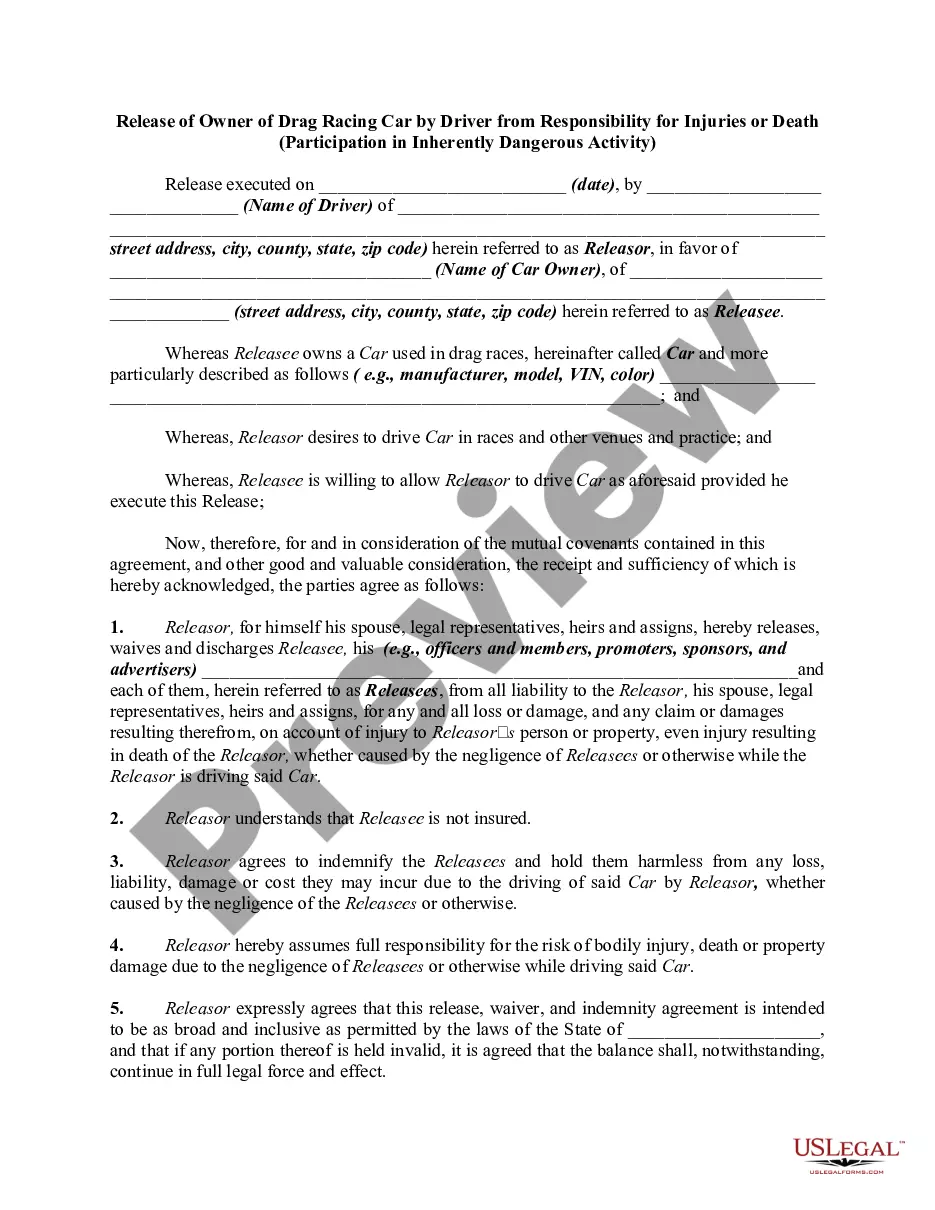
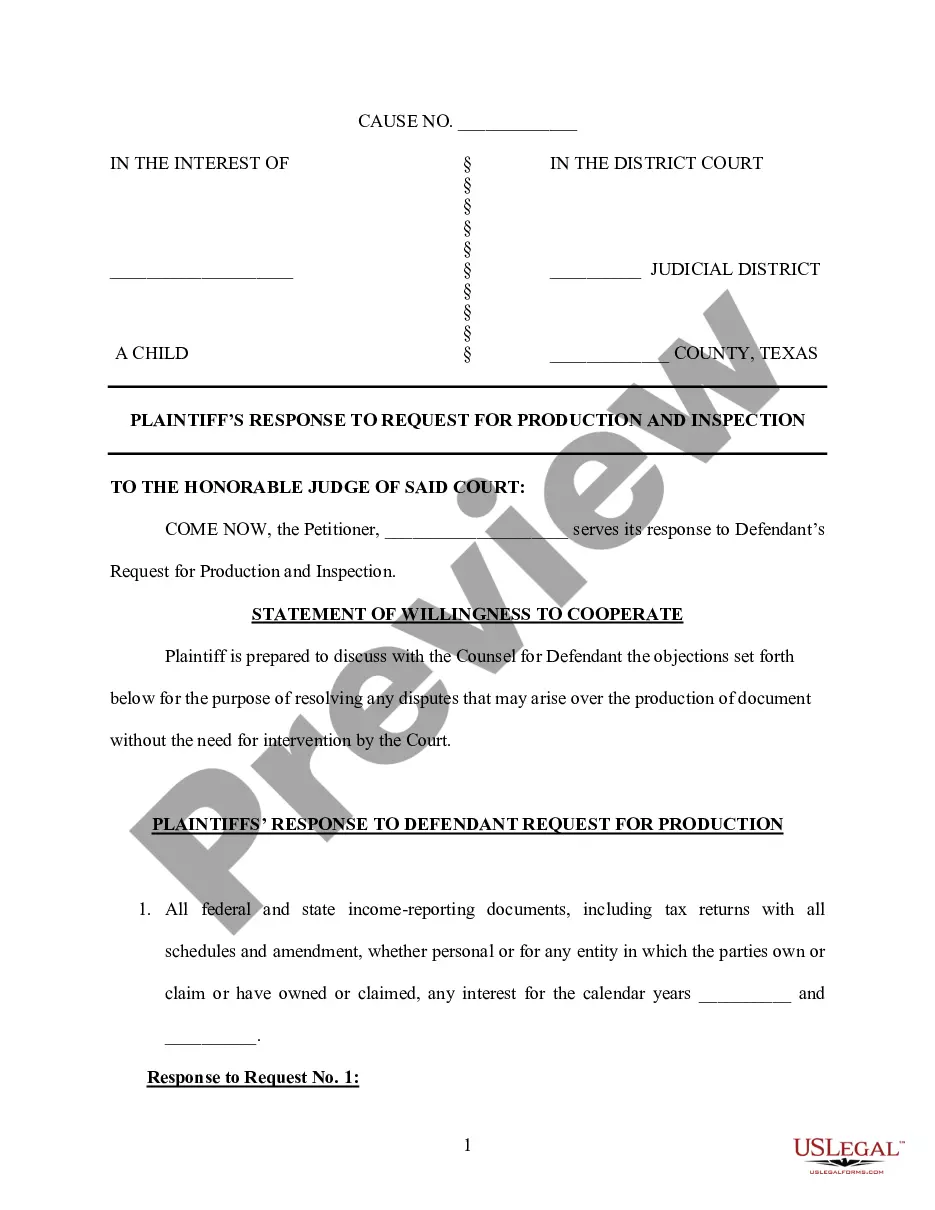
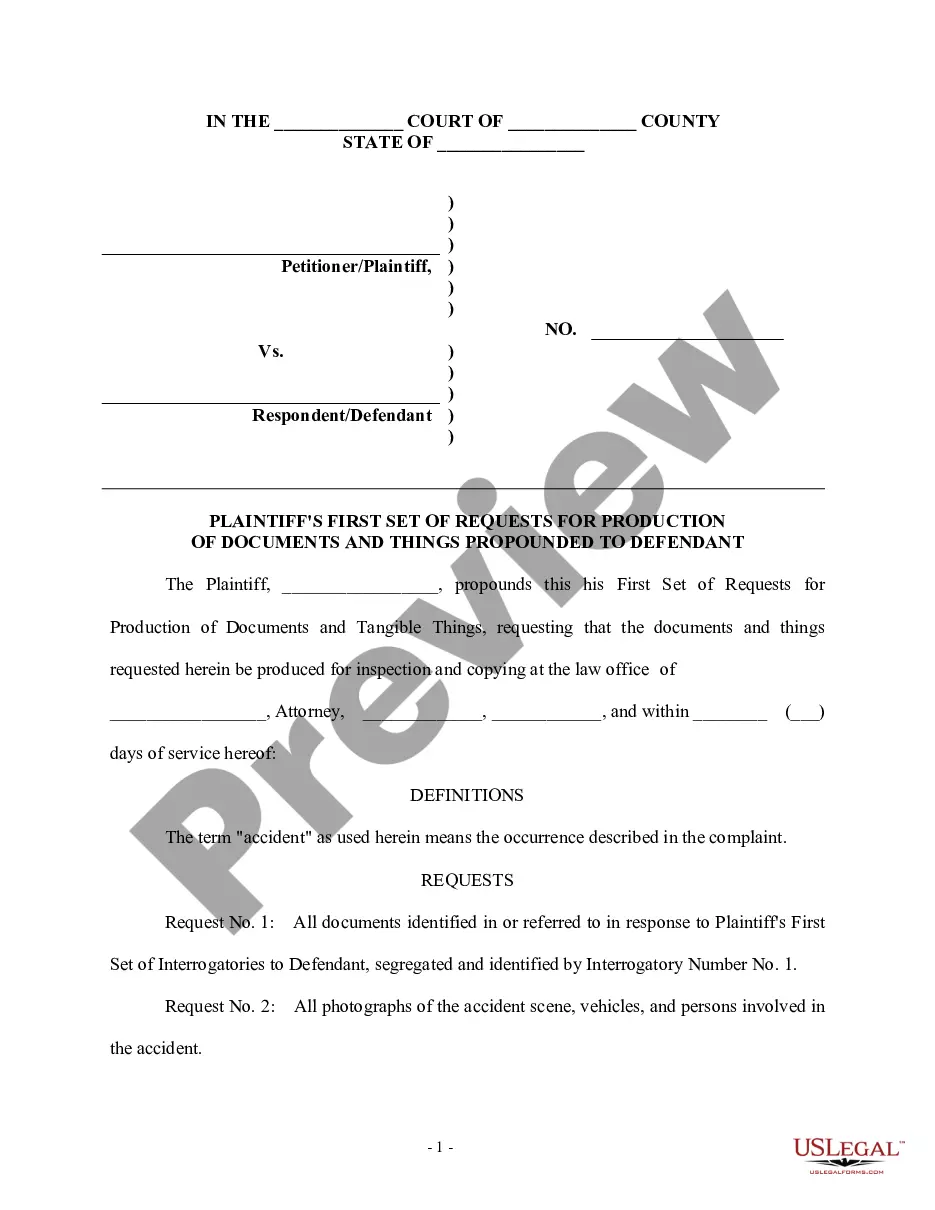
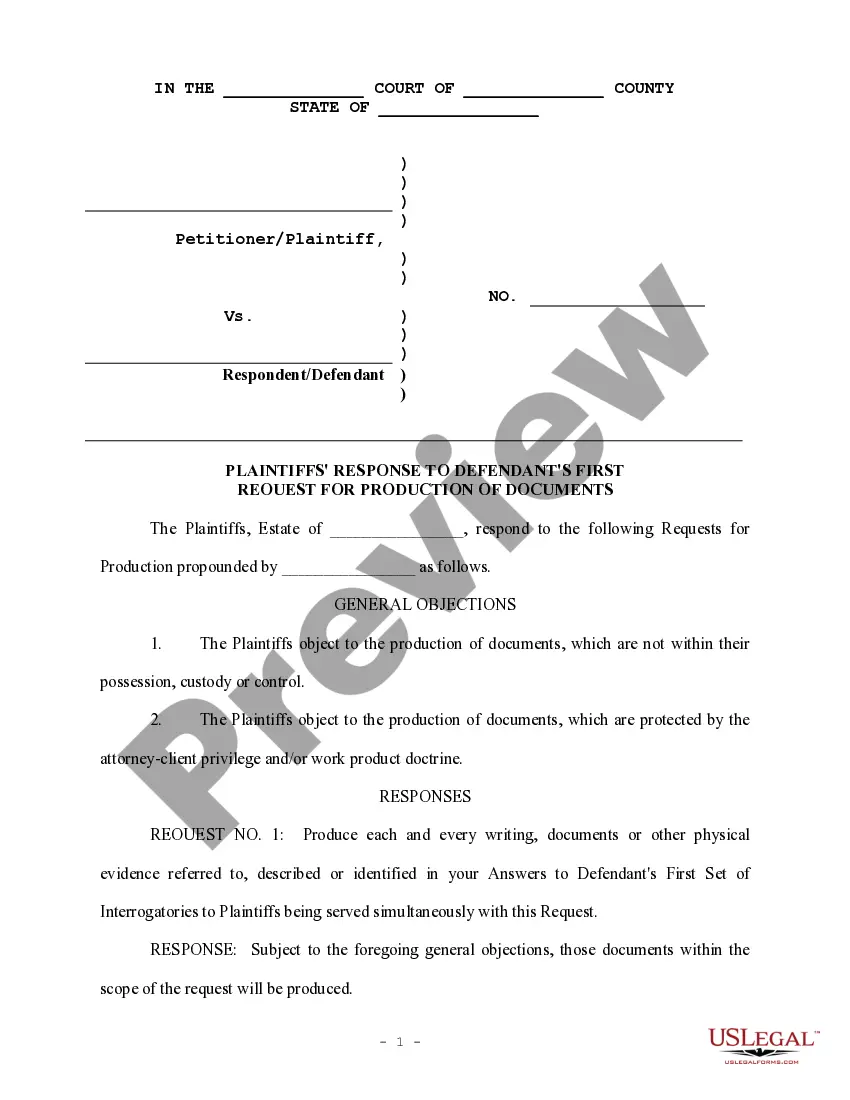
Texas Plaintiff's Response to Request for Production and Inspection
Overview of this form
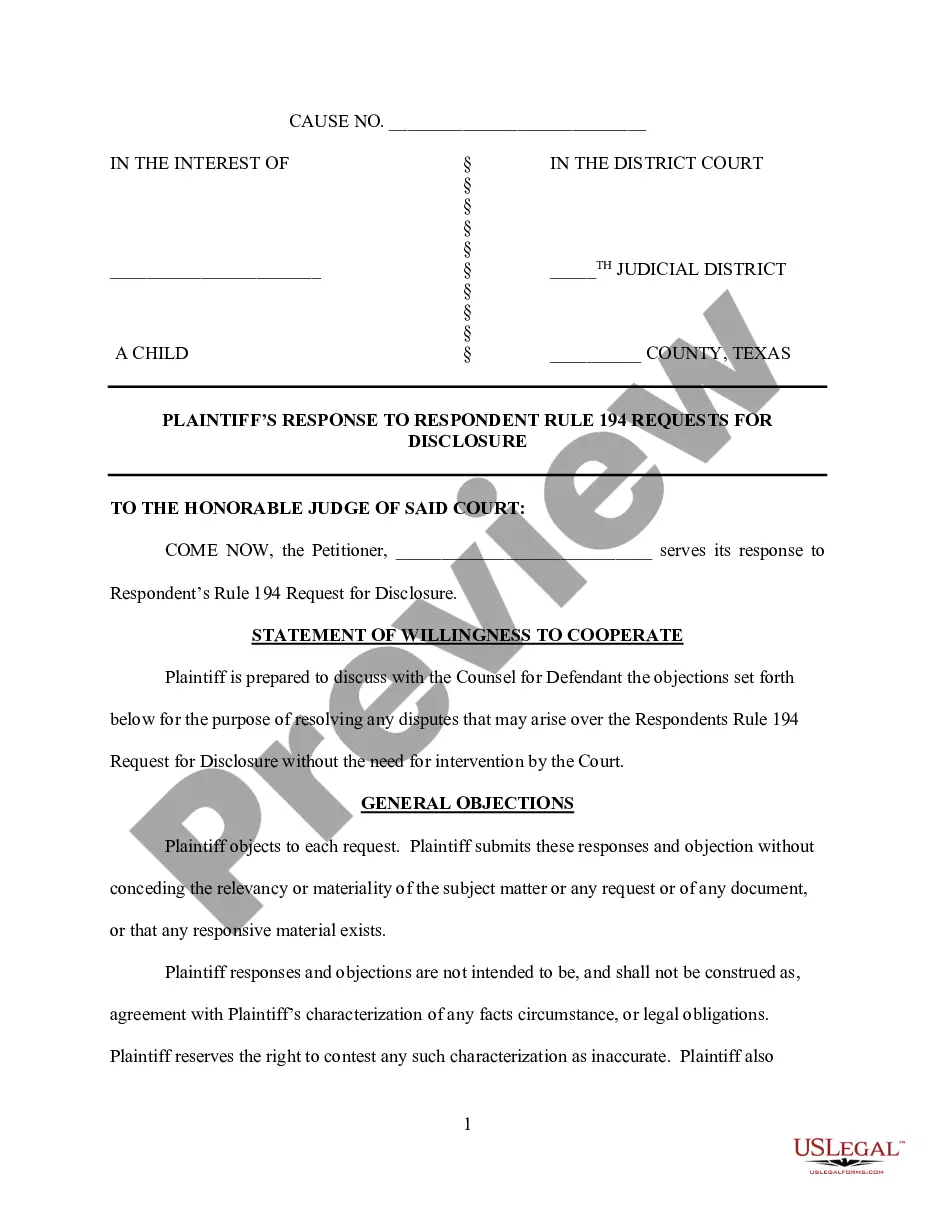
The Plaintiff's Response to Request for Production and Inspection is a legal document used in the context of modifying a parent-child relationship order. This form allows the plaintiff to respond to specific requests for documents and other evidence from the defendant, ensuring that both parties can present their cases effectively in court. By using this response, the plaintiff can detail their willingness to cooperate and outline objections to any requests they find inappropriate or burdensome.
What’s included in this form
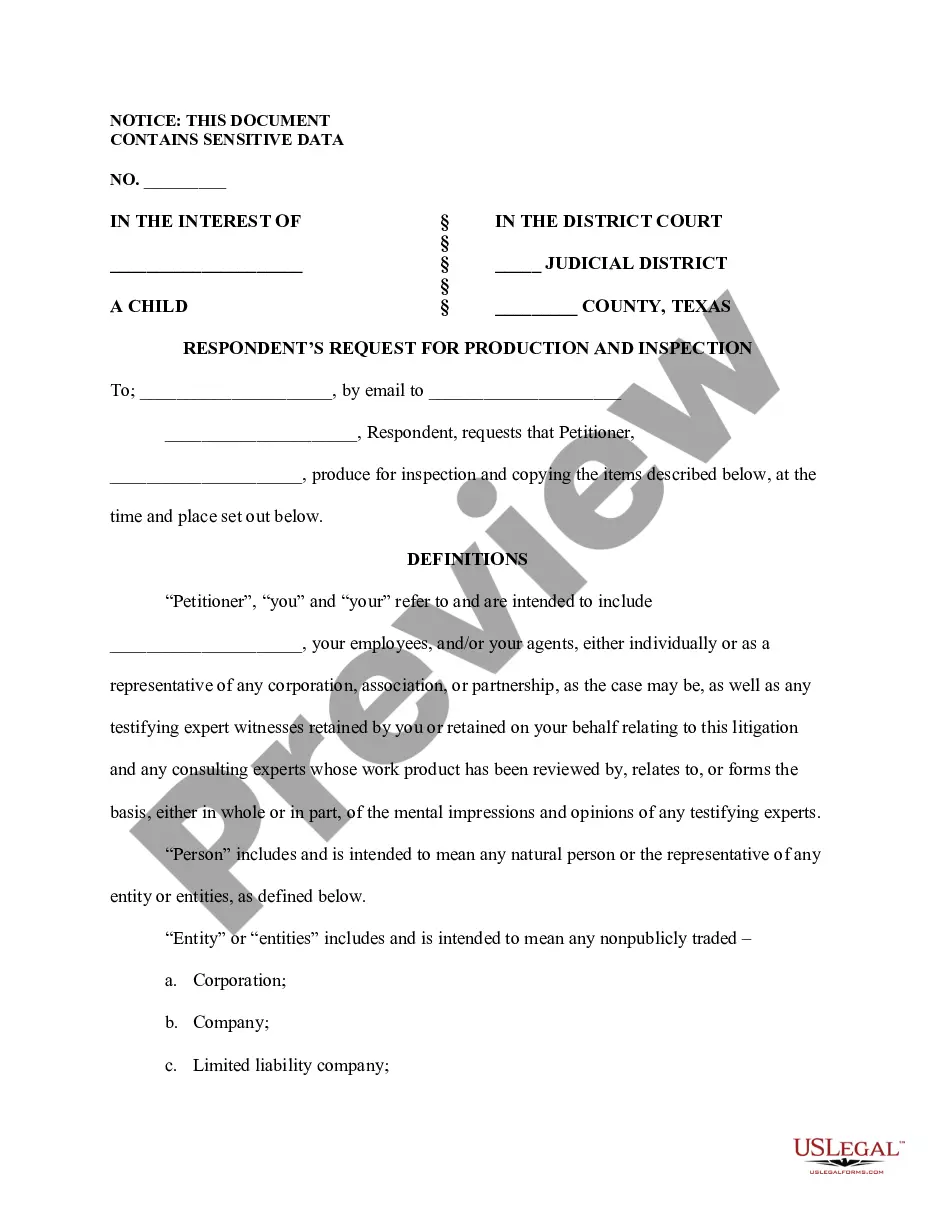
- Identification of the case and parties involved.
- Statement of willingness to cooperate with the defendant's counsel.
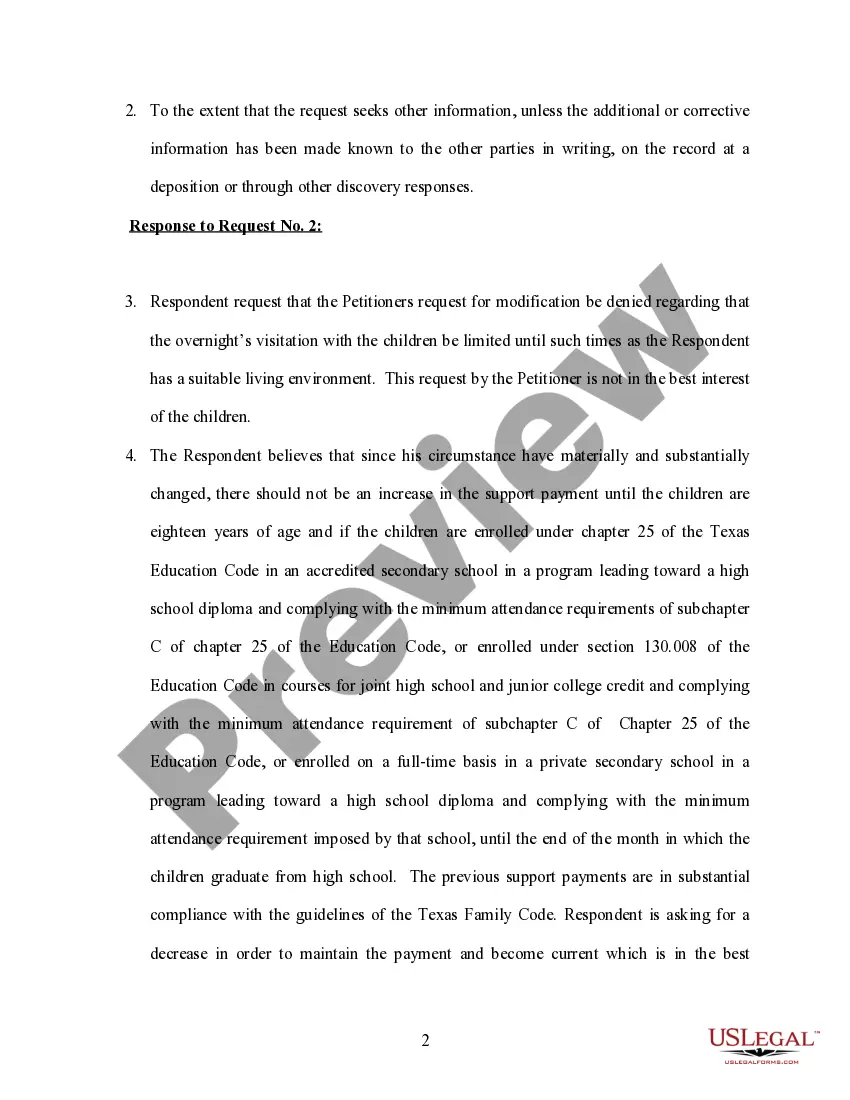
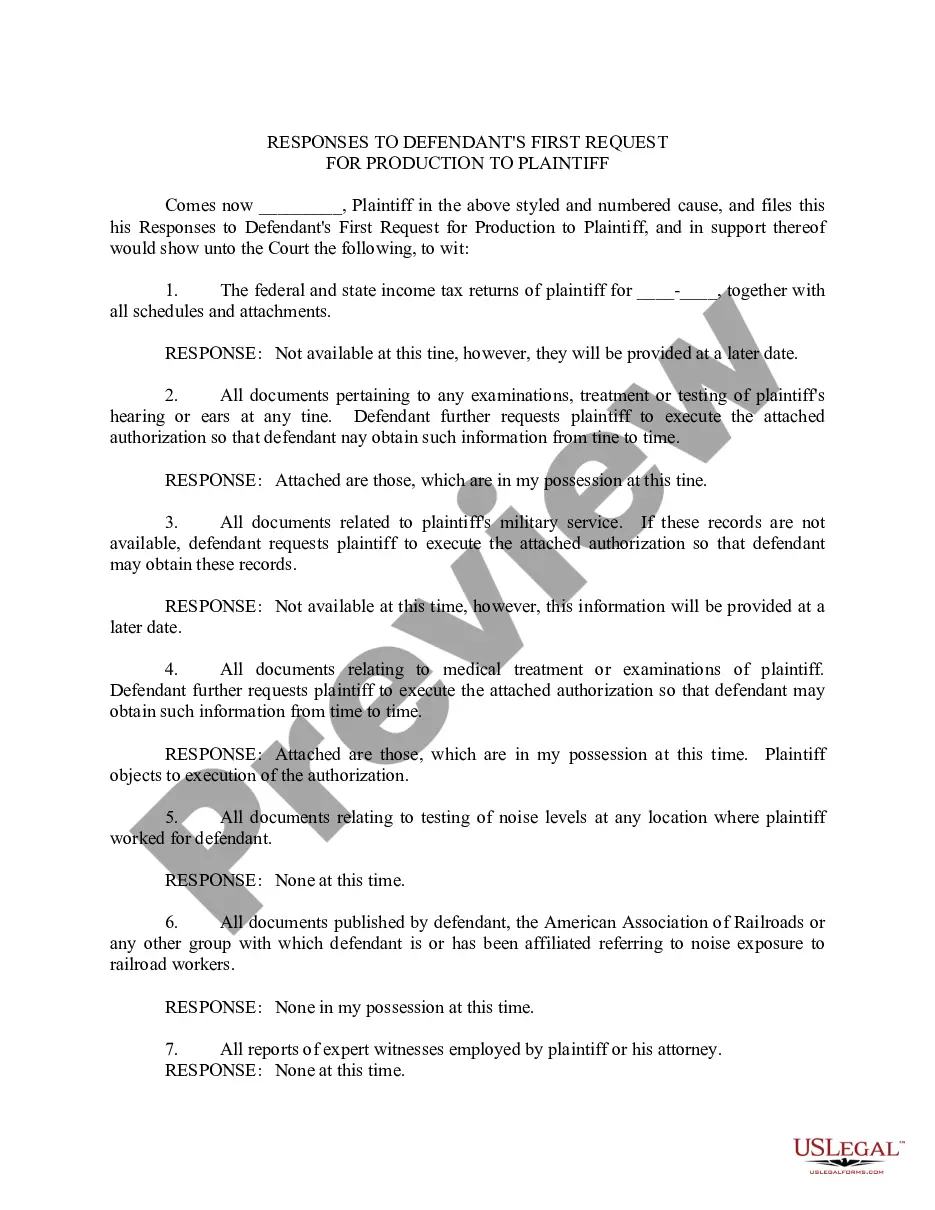
- Responses to specific requests for production, including conditions and objections.
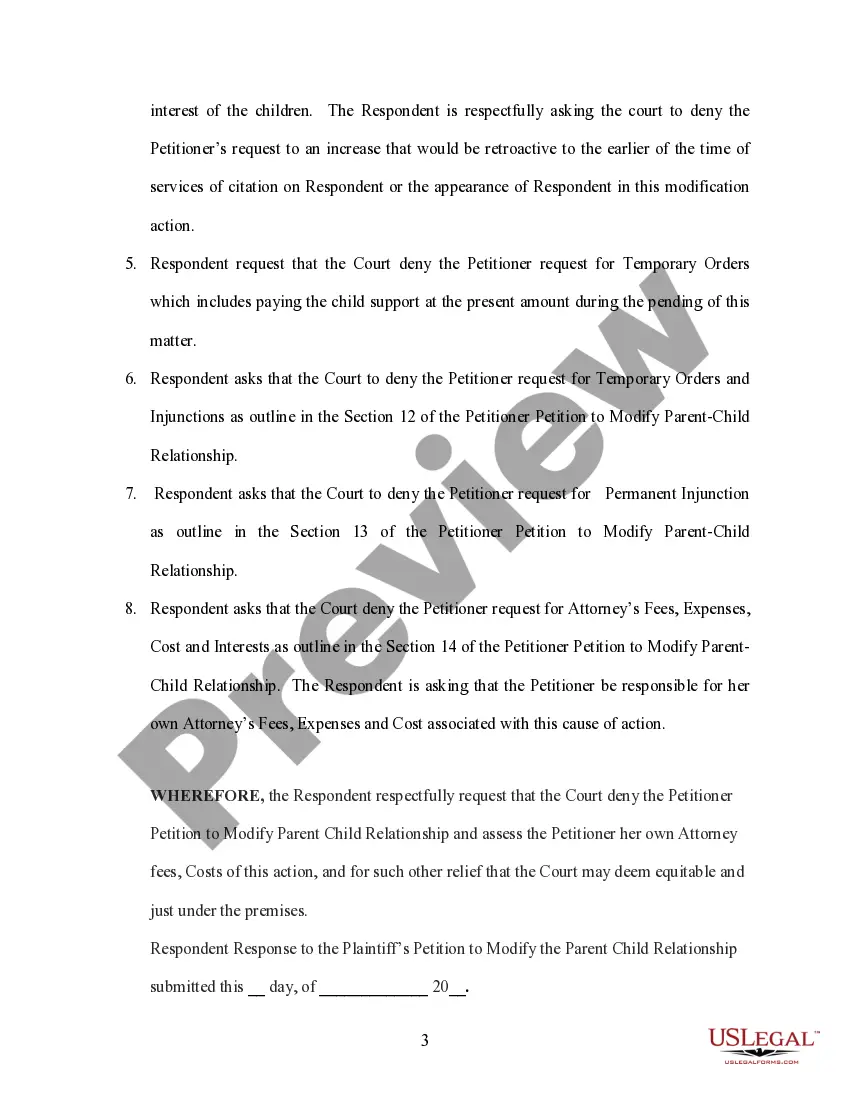
- Explanation of financial circumstances and requests related to child support modifications.
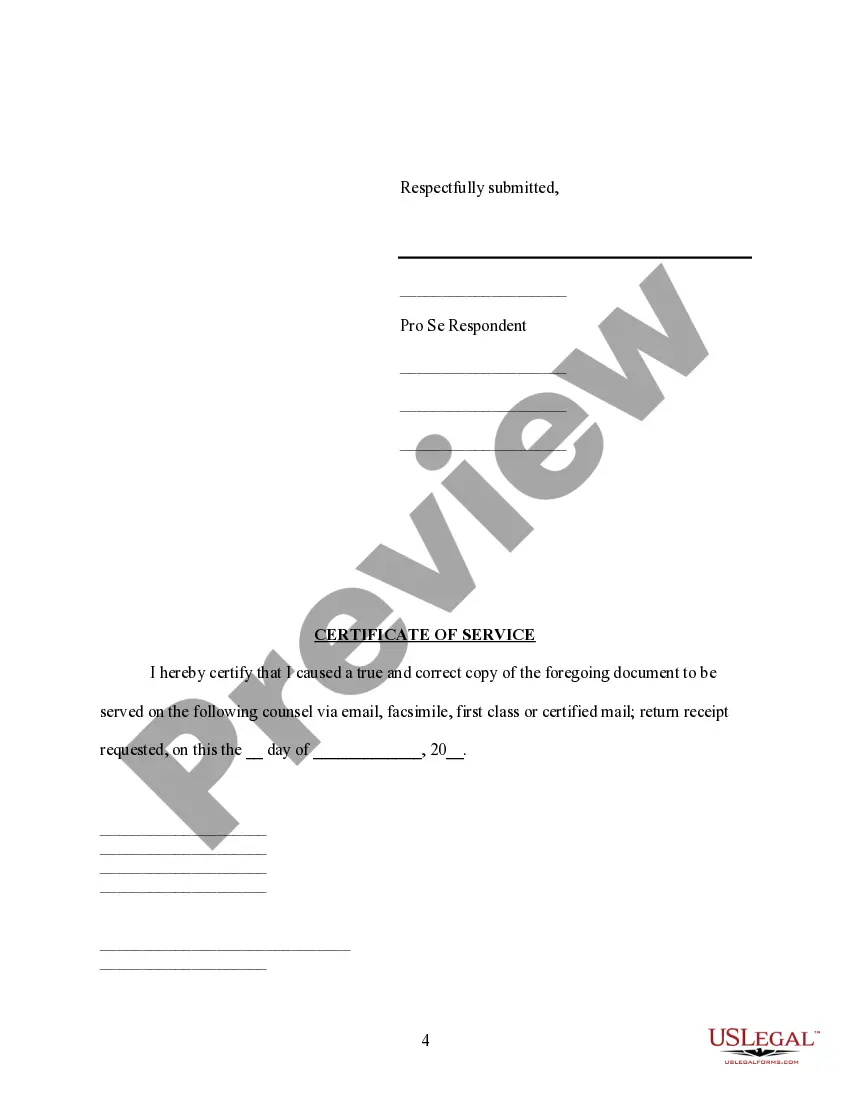
- Certification of service to confirm delivery of documents to the appropriate parties.

When to use this form
This form should be used when a plaintiff receives a request for production and inspection of documents in a modification action of a parent-child relationship order. It is essential in situations where the plaintiff needs to formally respond to the defendant's inquiries regarding financial documents or other relevant information necessary for the courtâs consideration.
Intended users of this form
- Any individual acting as a plaintiff in a modification of a parent-child relationship case.
- Parties involved in legal disputes concerning child custody or support.
- Individuals who have received a formal request for documentation from the opposing party.
Steps to complete this form
- Fill in the case number and the names of the parties involved at the top of the form.
- Clearly state your willingness to cooperate with the defendant in the outlined section.
- Provide detailed responses to each request for production, including any objections you may have.
- Include any relevant financial information as required by the request.
- Sign and date the form to confirm your responses are accurate and made in good faith.
Does this form need to be notarized?
This form does not typically require notarization unless specified by local law. Always check local regulations or consult legal counsel to confirm any specific requirements that may apply to your jurisdiction.
Get your form ready online
Our built-in tools help you complete, sign, share, and store your documents in one place.
Make edits, fill in missing information, and update formatting in US Legal Forms—just like you would in MS Word.
Download a copy, print it, send it by email, or mail it via USPS—whatever works best for your next step.
Sign and collect signatures with our SignNow integration. Send to multiple recipients, set reminders, and more. Go Premium to unlock E-Sign.
If this form requires notarization, complete it online through a secure video call—no need to meet a notary in person or wait for an appointment.
We protect your documents and personal data by following strict security and privacy standards.

Make edits, fill in missing information, and update formatting in US Legal Forms—just like you would in MS Word.

Download a copy, print it, send it by email, or mail it via USPS—whatever works best for your next step.

Sign and collect signatures with our SignNow integration. Send to multiple recipients, set reminders, and more. Go Premium to unlock E-Sign.

If this form requires notarization, complete it online through a secure video call—no need to meet a notary in person or wait for an appointment.

We protect your documents and personal data by following strict security and privacy standards.
Typical mistakes to avoid
- Failing to respond to each request adequately, which may lead to complications or sanctions in court.
- Omitting to include necessary financial documents or information that could strengthen the case.
- Not signing or dating the response, which could render it invalid.
Benefits of completing this form online
- Convenience of accessing and completing the form from anywhere at any time.
- Editability allows for quick adjustments in response to legal advice or changing circumstances.
- Ensures accuracy with attorney-drafted content tailored to legal standards.
Looking for another form?

Form popularity
FAQ
Like Federal Rule of Civil Procedure 26(b)(2), Rule 196.4 states that parties must comply with "reasonable" production requests, but are not forced to produce electronic information for discovery if it cannot be retrieved "through reasonable efforts." So, when it comes to unduly burdensome discovery requests, don't
Your response to a request for production consists of two parts: One part is a written response to the requests, in which you state under penalty of perjury that you will produce the requested items; that you will not produce and why; or that you object to a request on legal grounds.
The responding party must serve a written response on the requesting party within 30 days after service of the interrogatories. (b)Content of response. A response must include the party's answers to the interrogatories and may include objections and assertions of privilege as required under these rules.
196.6 Expenses of Production. Unless otherwise ordered by the court for good cause, the expense of producing items will be borne by the responding party and the expense of inspecting, sampling, testing, photographing, and copying items produced will be borne by the requesting party.
(a) Time for response. The responding party must serve a written response on the requesting party within 30 days after service of the request, except that a defendant served with a request before the defendant's answer is due need not respond until 50 days after service of the request.
Each party may have no more than six hours in total to examine and cross-examine all witnesses in oral depositions. The parties may agree to expand this limit up to ten hours in total, but not more except by court order. The court may modify the deposition hours so that no party is given unfair advantage.
Rule 190.4. Discovery Control Plan - By Order (Level 3) (1999) (a) Application. The court must, on a party's motion, and may, on its own initiative, order that discovery be conducted in ance with a discovery control plan tailored to the circumstances of the specific suit.
Requests for inspection or entry let you examine physical evidence like documents, emails, and property from the other side. These requests must be specific and relevant to your case (Rule 196.1(b)). Discovery requests must be specific. The request must identify the particular evidence you are looking for.