Texas Request for Production
About this form
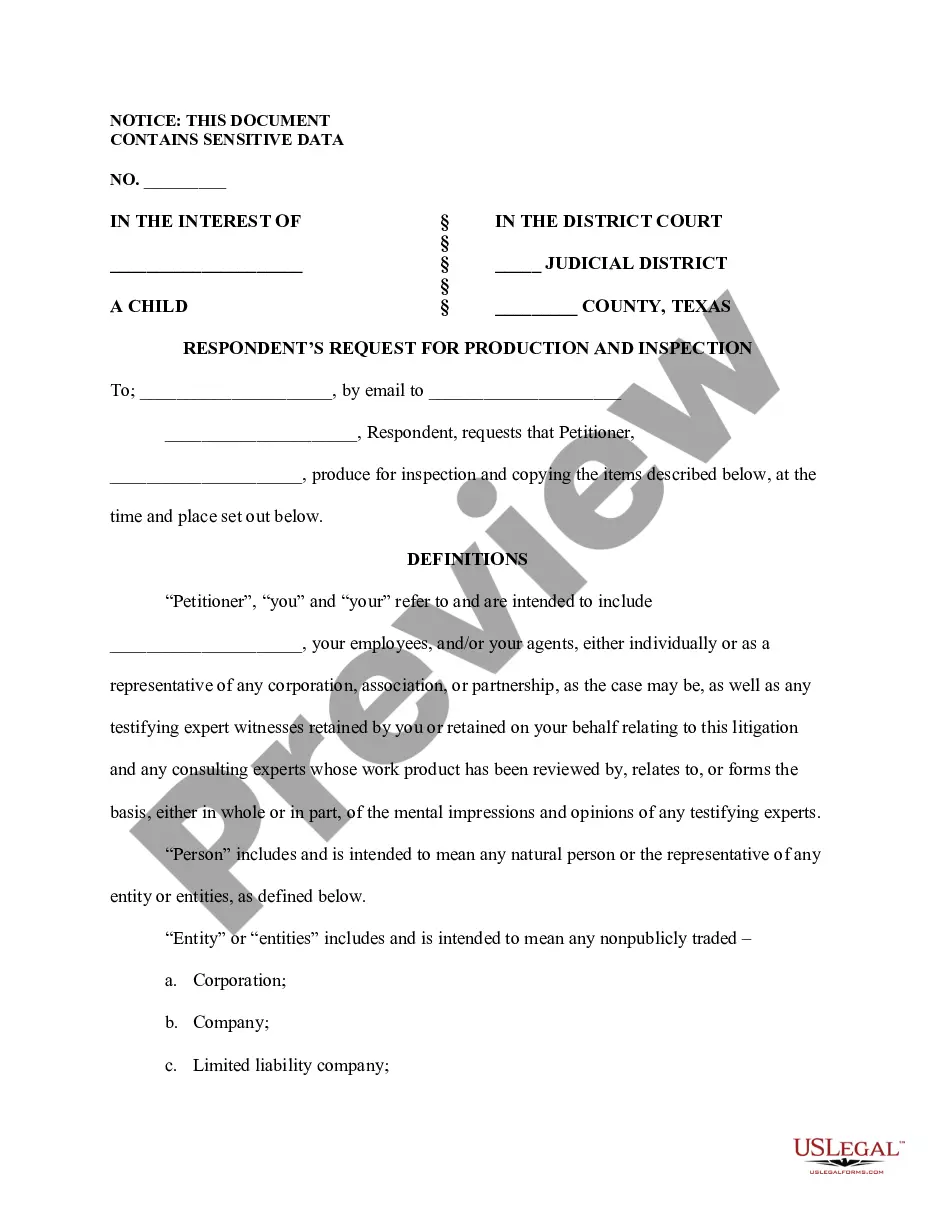
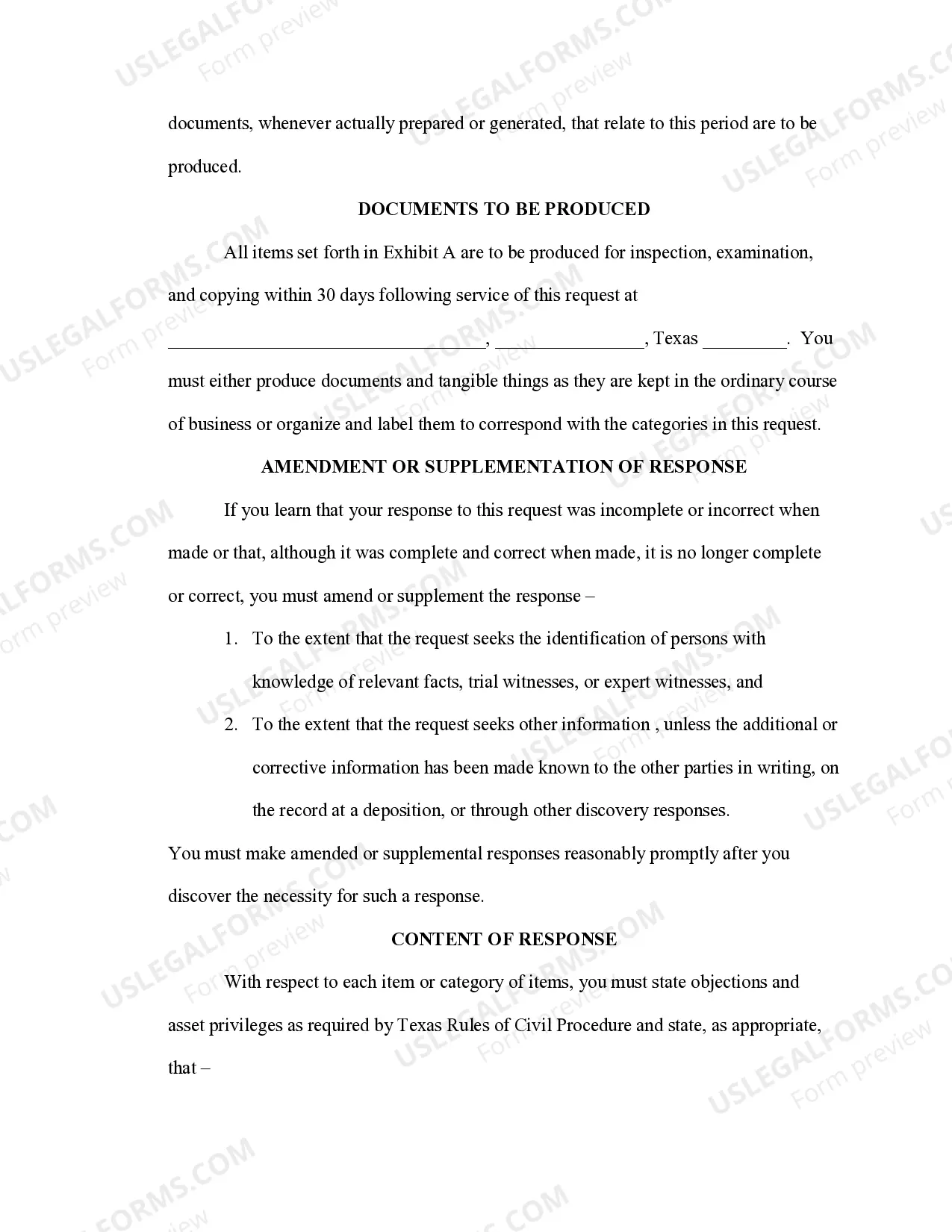
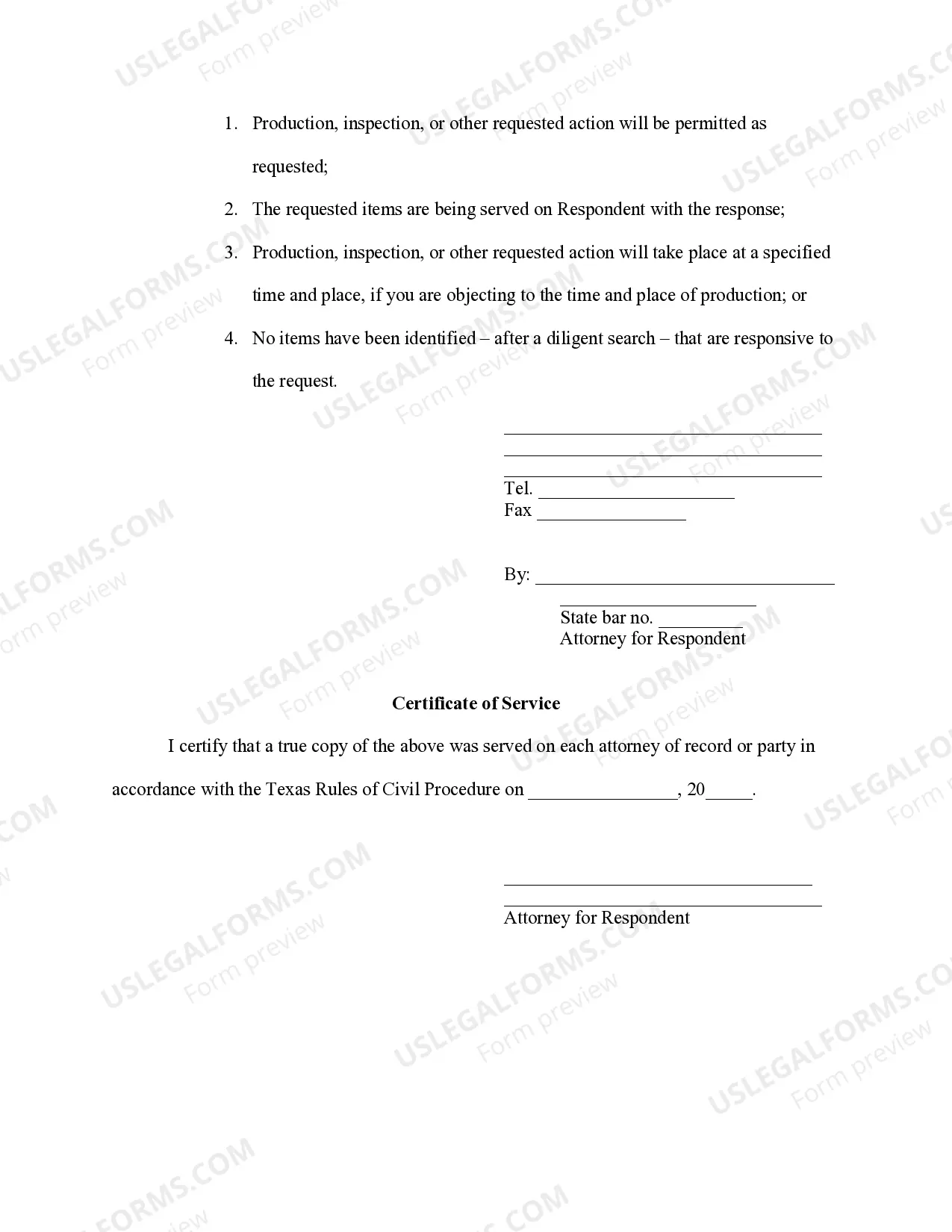
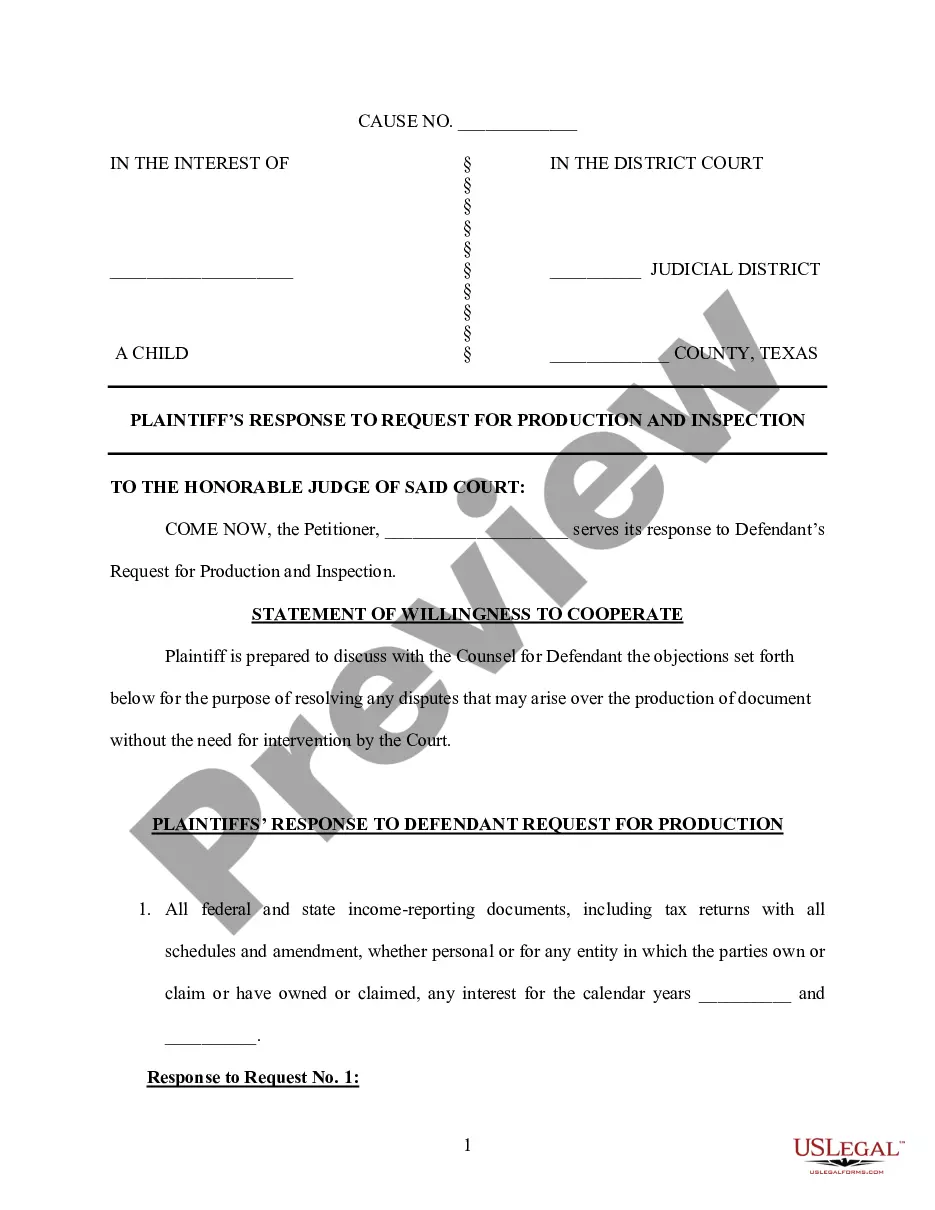
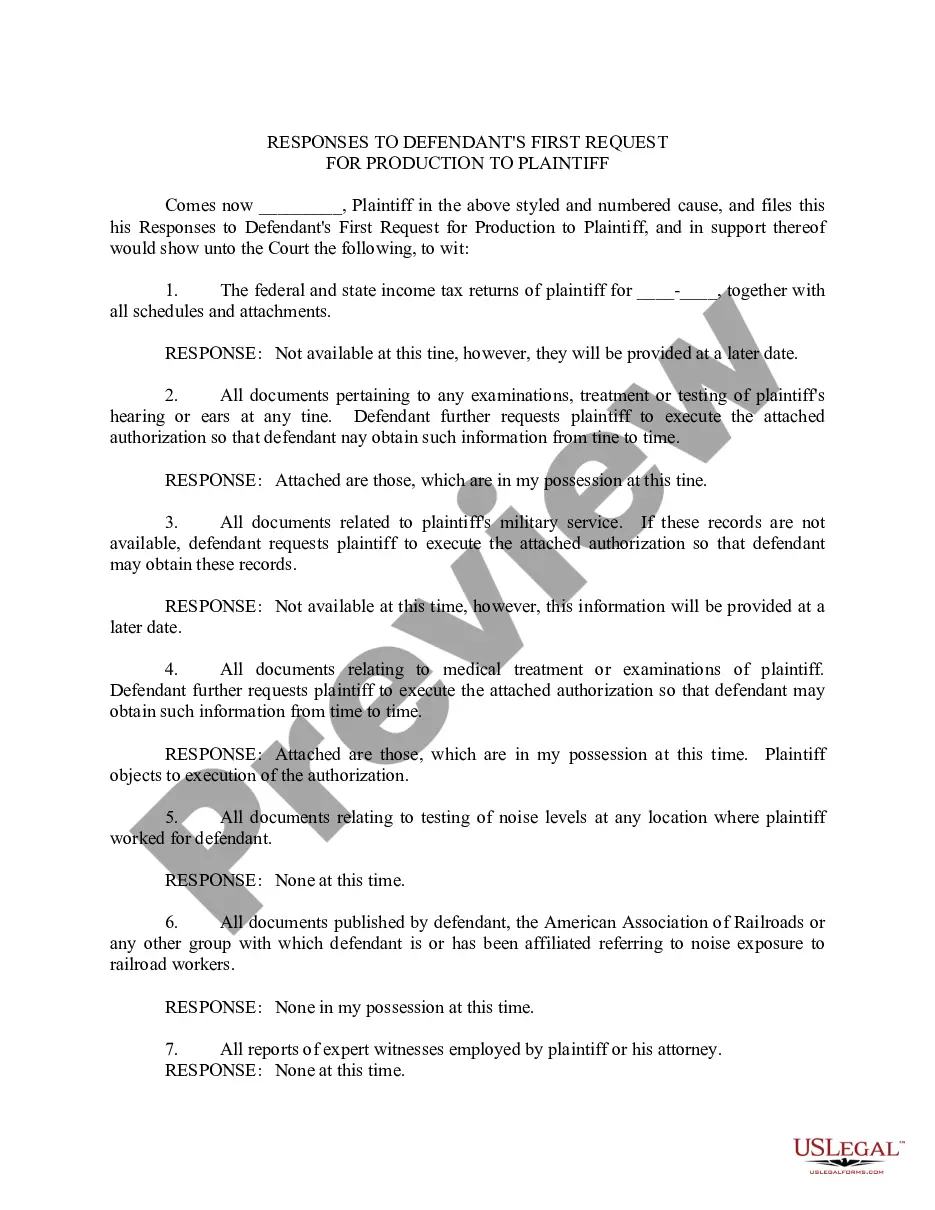
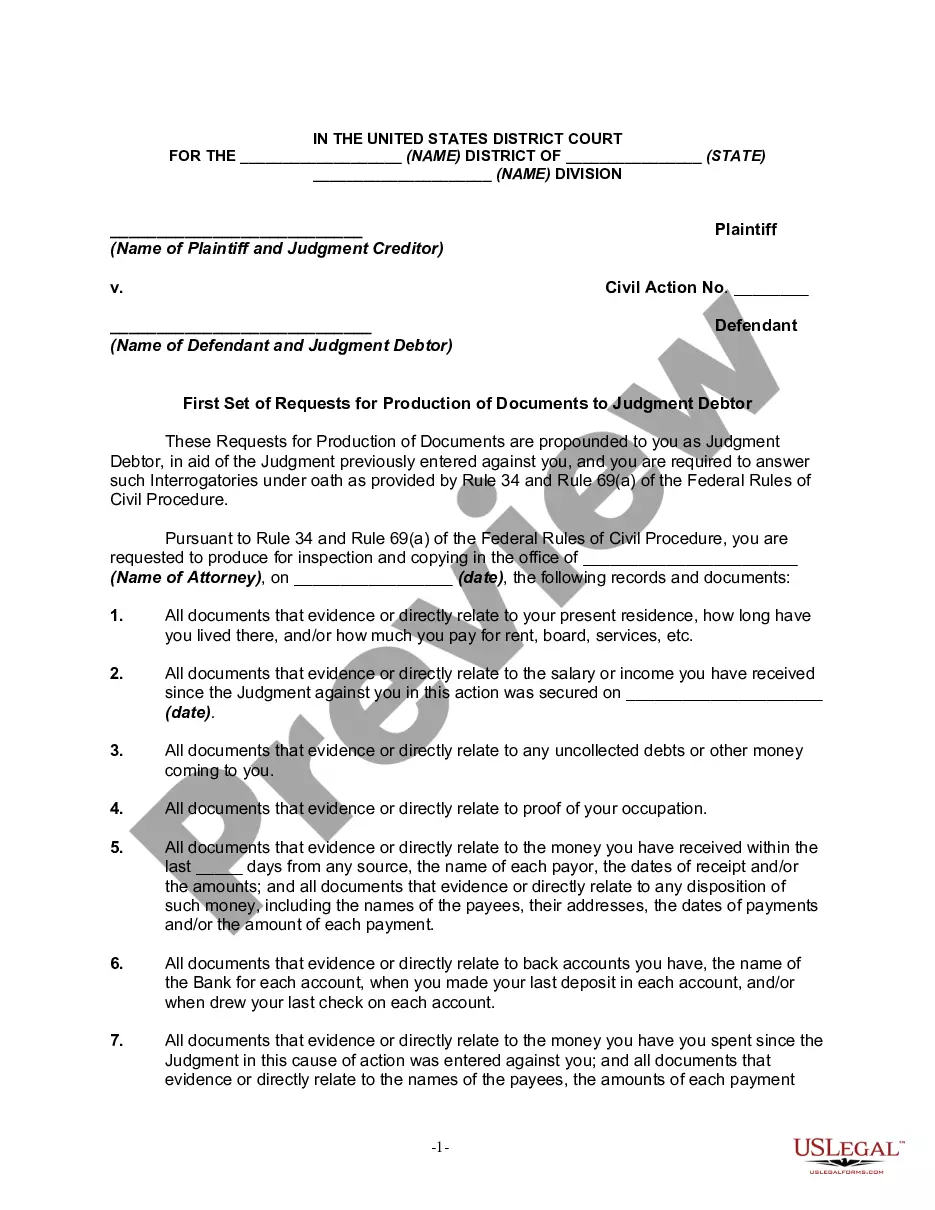
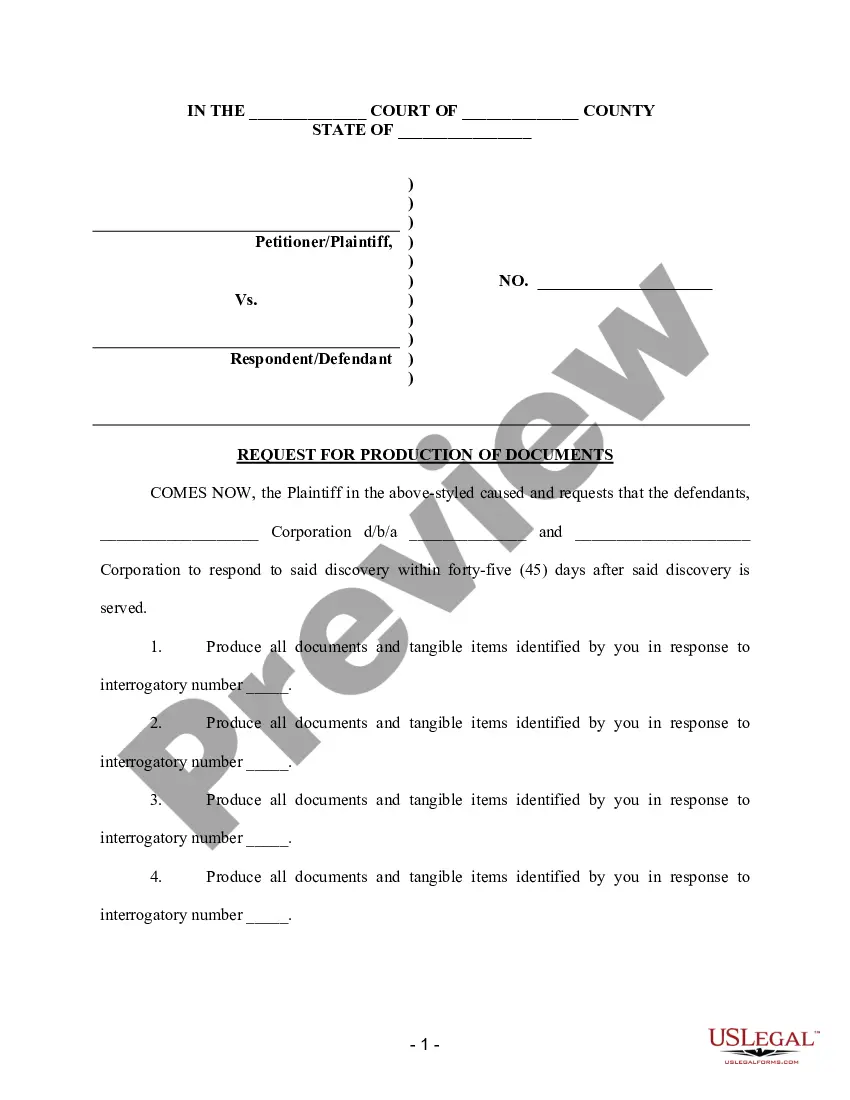
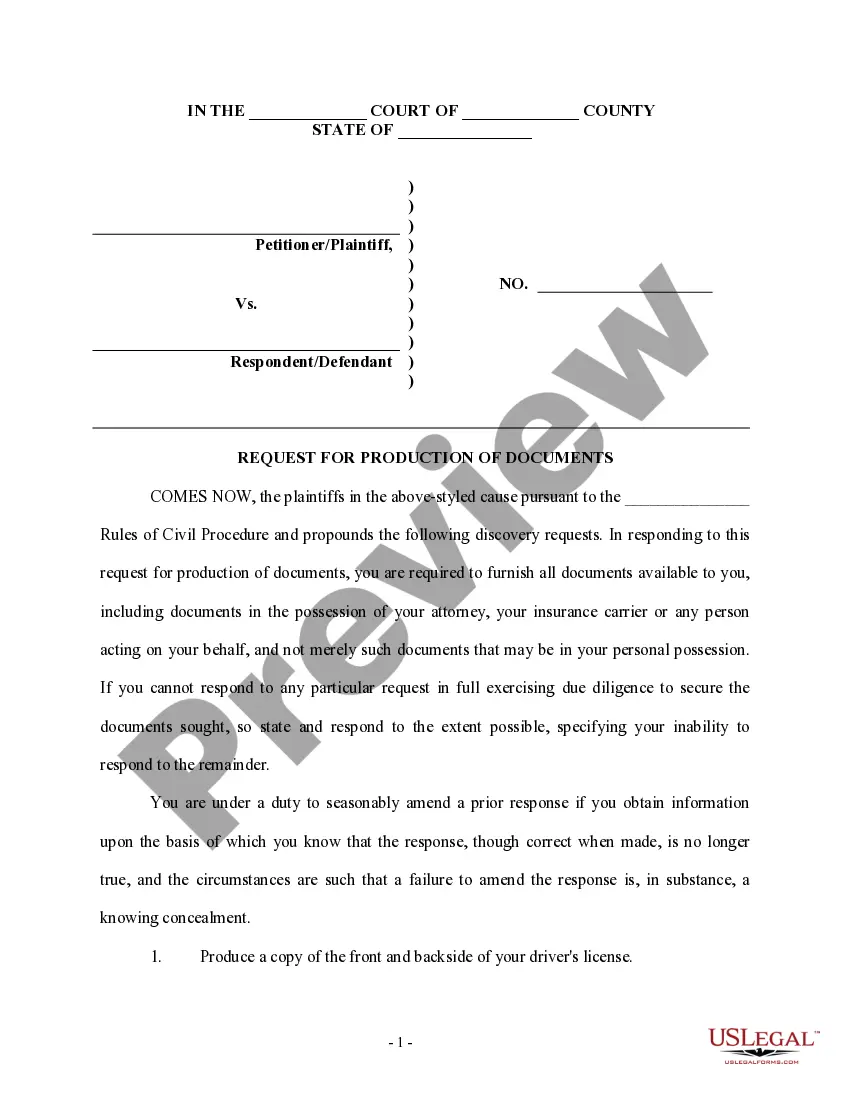
The Request for Production is a legal document that serves as a formal request by one party in a civil lawsuit to another party to provide specific documents and evidence. This request is part of the discovery process, which allows parties to gather necessary information before trial. Unlike interrogatories, which are questions that require written answers under oath, this form specifically requests the production of documents relevant to the case, such as financial records or correspondence. Utilizing this form ensures that you obtain essential information to support your position in the legal proceedings.
Key components of this form
- Identification of the parties involvedâclearly stating the respondent and petitioner.
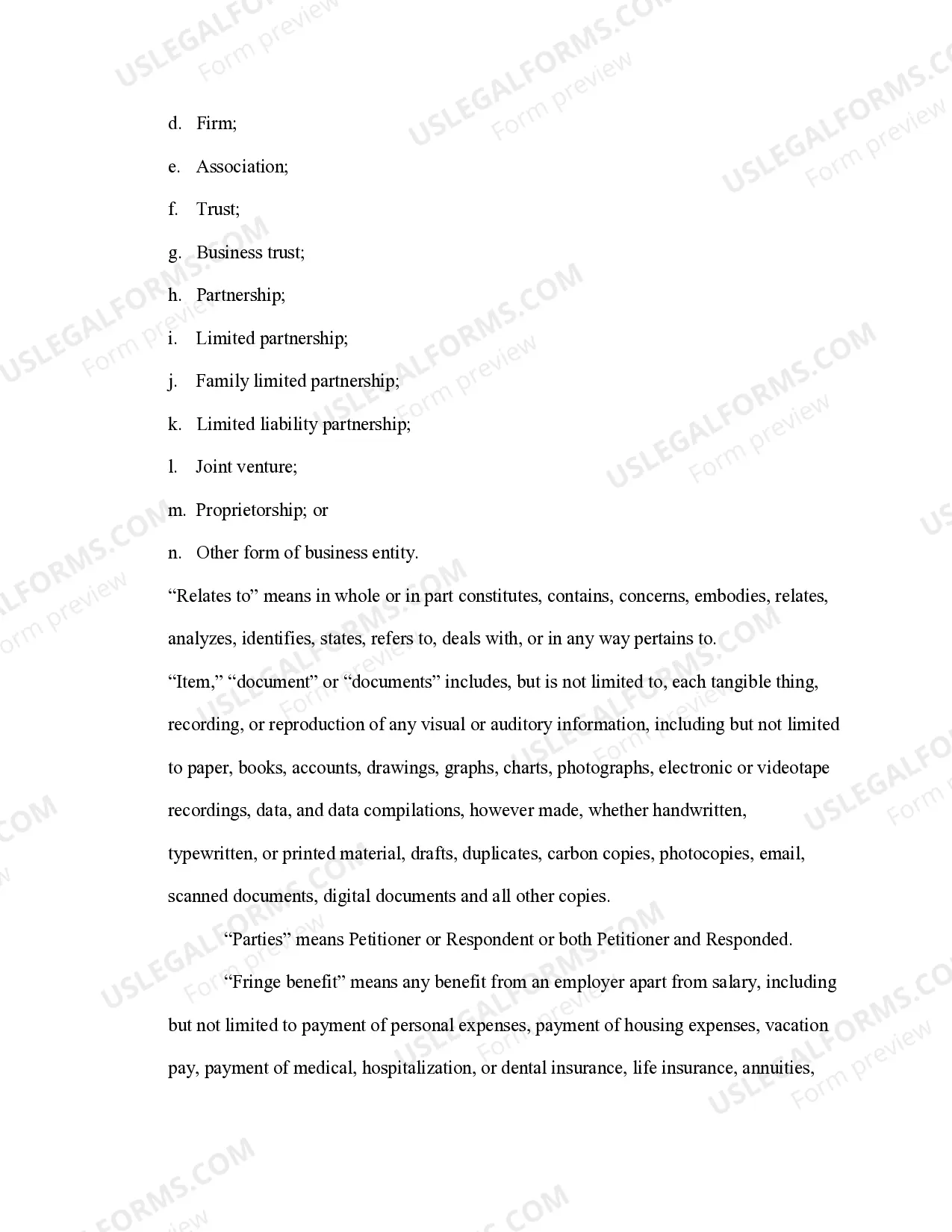
- Definitions of terms used, such as âdocument,â âperson,â and âentity,â to clarify the scope of the request.
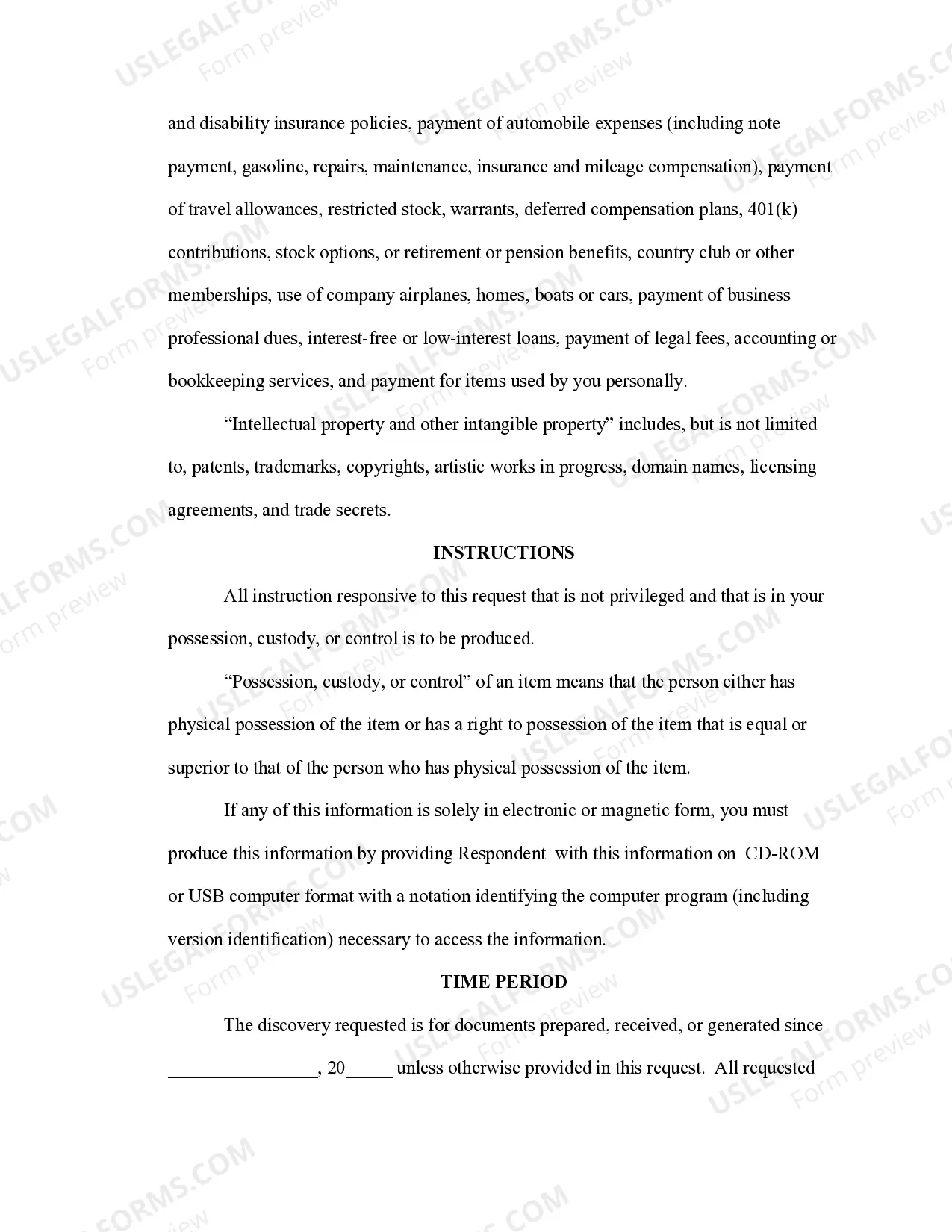
- Instructions outlining the obligations for document production, including timelines and formats.
- A specified time period for the requested documents, ensuring relevance to the case.
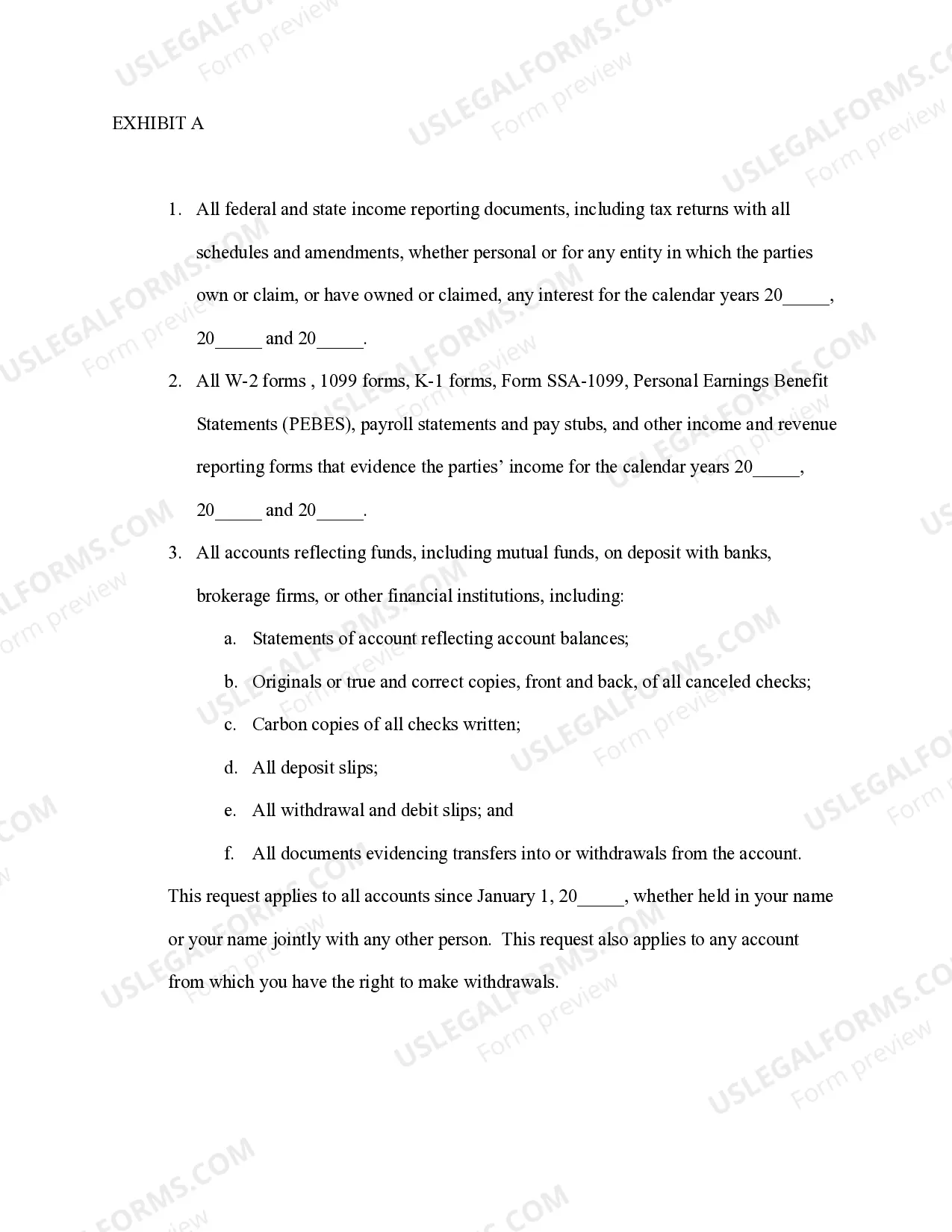
- A detailed list (Exhibit A) of specific documents required, such as tax filings and financial records.
When to use this form
This form should be used in civil litigation when one party needs to obtain important documents from the other party to build a case. For example, if you are a respondent in a divorce case and need to gather financial evidence from the petitioner, this form will formally request the necessary financial records, tax returns, and other relevant documents to support your claims or defenses.
Who can use this document
This form is intended for:
- Individuals involved in civil lawsuits seeking to request documents from another party.
- Attorneys representing clients in litigation who need to obtain evidence to substantiate their case.
- Respondents and petitioners in divorce or family law cases requiring financial documentation.
How to prepare this document
- Identify and list the names and addresses of all parties involved, including their legal representatives.
- Define key terms and ensure clarity in the language used to avoid ambiguity.
- Specify the time period for the documents being requested, detailing when the documents should be produced.
- Complete the list in Exhibit A with the exact documents you are requesting from the other party.
- Sign and date the document before serving it to the petitioner, ensuring compliance with service rules.
Does this form need to be notarized?
This form does not typically require notarization unless specified by local law. It is advisable to check with a legal professional to confirm any specific requirements applicable in your jurisdiction.
Get your form ready online
Our built-in tools help you complete, sign, share, and store your documents in one place.
Make edits, fill in missing information, and update formatting in US Legal Forms—just like you would in MS Word.
Download a copy, print it, send it by email, or mail it via USPS—whatever works best for your next step.
Sign and collect signatures with our SignNow integration. Send to multiple recipients, set reminders, and more. Go Premium to unlock E-Sign.
If this form requires notarization, complete it online through a secure video call—no need to meet a notary in person or wait for an appointment.
We protect your documents and personal data by following strict security and privacy standards.

Make edits, fill in missing information, and update formatting in US Legal Forms—just like you would in MS Word.

Download a copy, print it, send it by email, or mail it via USPS—whatever works best for your next step.

Sign and collect signatures with our SignNow integration. Send to multiple recipients, set reminders, and more. Go Premium to unlock E-Sign.

If this form requires notarization, complete it online through a secure video call—no need to meet a notary in person or wait for an appointment.

We protect your documents and personal data by following strict security and privacy standards.
Typical mistakes to avoid
- Not clearly identifying all relevant parties, which can lead to incomplete responses.
- Failing to properly specify the time frame for document production.
- Neglecting to sign and date the request before serving it.
- Using vague language that may confuse the recipient about what documents are needed.
Why complete this form online
- Immediate access to professionally drafted legal templates, ensuring reliability.
- Ability to customize the form according to your specific needs and case details.
- Convenient download options that allow for quick printing and submission.
Legal use & context
- Requests for production are essential for gathering evidence in civil litigation.
- Filing this request properly enhances the chances of receiving the required documentation timely.
- Failure to respond to a request for production may result in legal penalties or complications in court.
Main things to remember
- The Request for Production is essential for evidence collection in civil lawsuits.
- It is crucial to complete the form accurately to avoid delays and legal complications.
- Consulting with a legal professional may enhance the effectiveness of your request.
Looking for another form?
Form popularity
FAQ
The Texas Request for Production is a standard discovery tool used in Texas civil cases to obtain documents, electronically stored information, and other tangible items relevant to the dispute. It is served on the opposing party (and any required third parties) as part of discovery, with responses provided under Texas procedural rules and, where appropriate, with objections.
It means a formal demand to produce documents, electronically stored information, or tangible things relevant to the case. In Texas, a Texas Request for Production is a written discovery device used to obtain evidence from the other party, subject to timely responses, objections, and protective orders as permitted by the rules.
In Texas, requests for production are part of the discovery process governed by the Texas Rules of Civil Procedure. A party serves written requests on the opposing party, with responses or objections due within the period set by the rules, and the requester may seek court relief if a response is withheld improperly.
Texas governs requests for production under its civil procedure discovery framework, which emphasizes broad access to relevant information while protecting privileged material. The form can be used to request documents, electronically stored information, and other tangible items, subject to objections and protective orders.
The Texas request for production rule describes the procedural steps for serving, responding to, and enforcing written demands for documents, electronic data, and other tangible items needed in the case, all within the Texas Rules of Civil Procedure.
The Texas Request for Production is tailored to Texas procedure and governed by the Texas Rules of Civil Procedure, not the Federal Rules. It may entail different service methods, response timelines, objection standards, and formatting requirements, reflecting state-specific discovery practices.