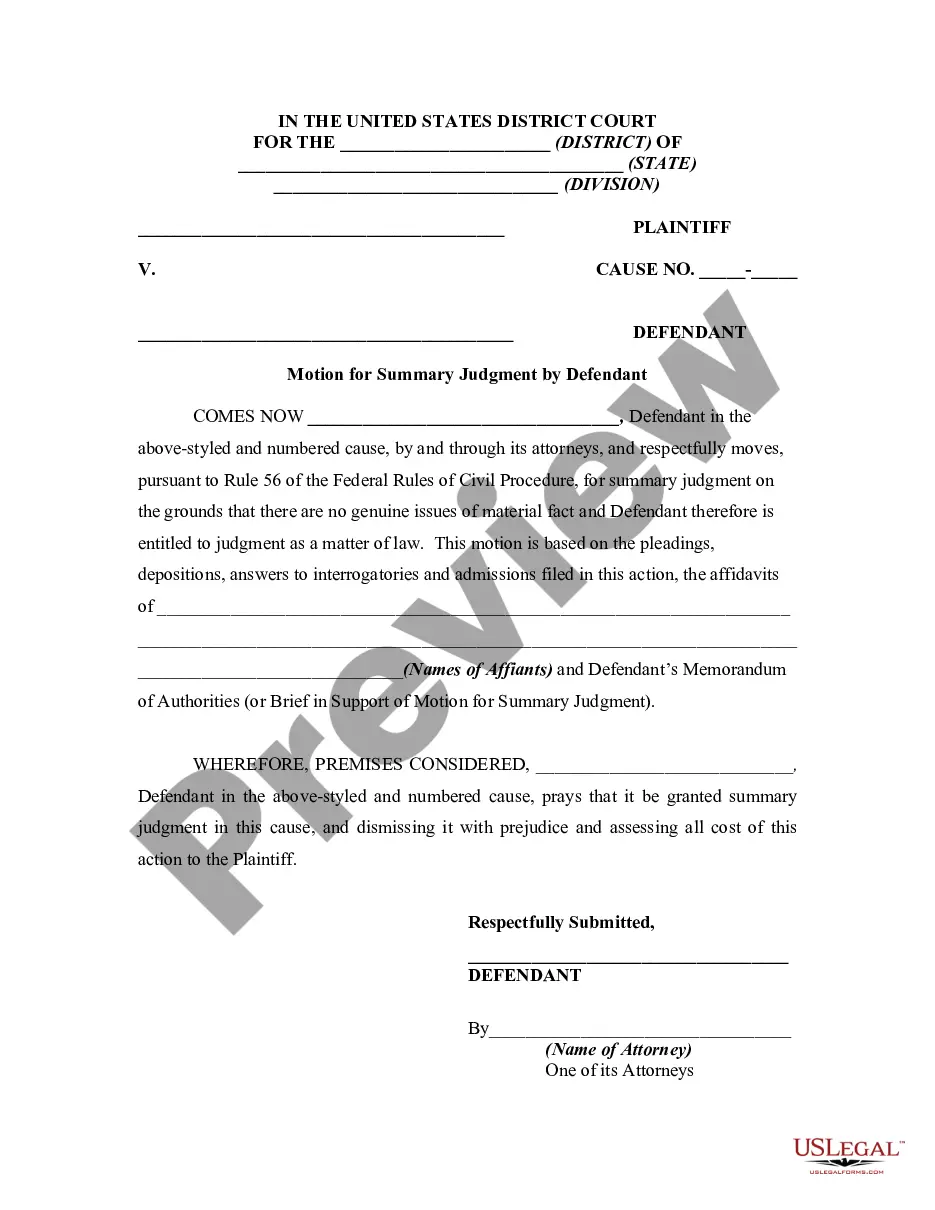
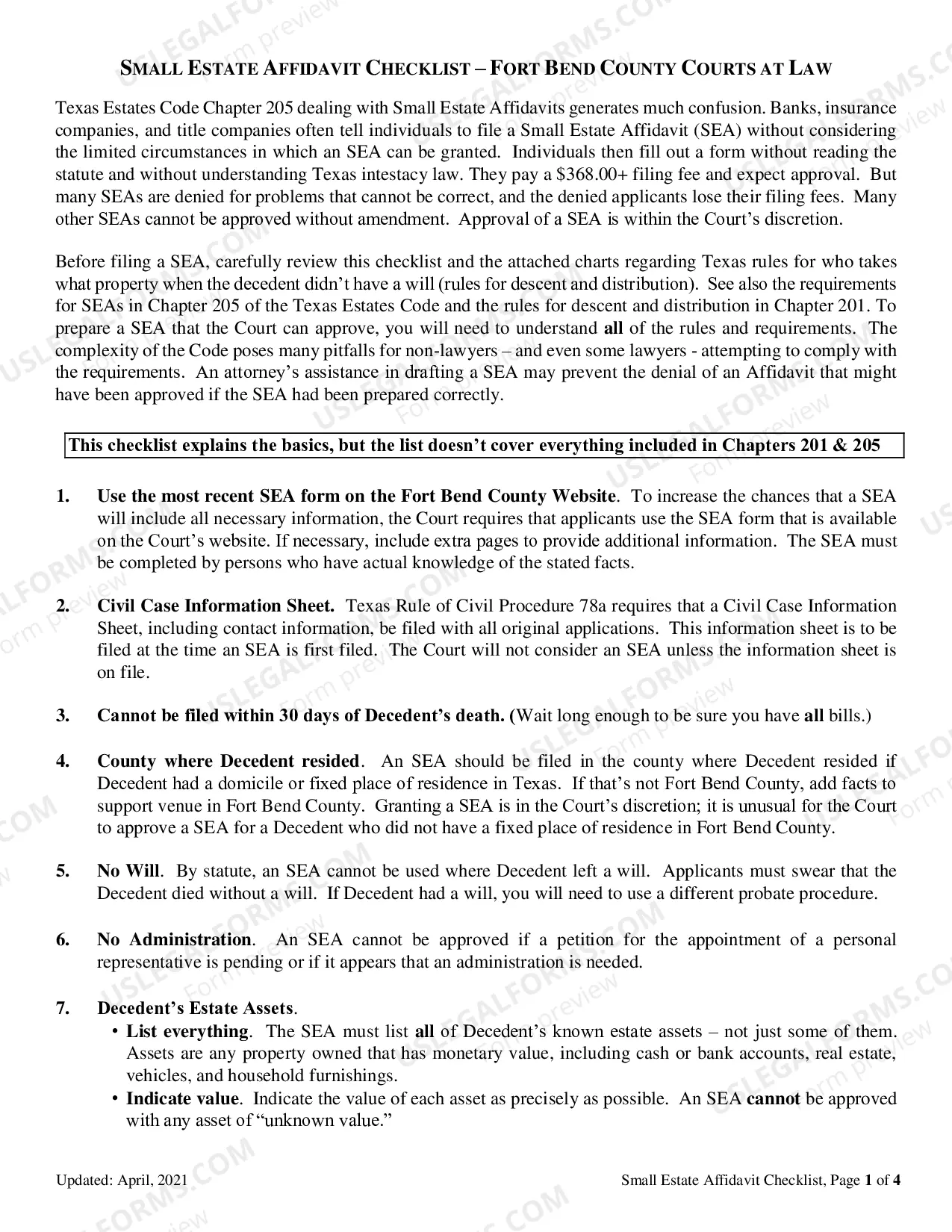
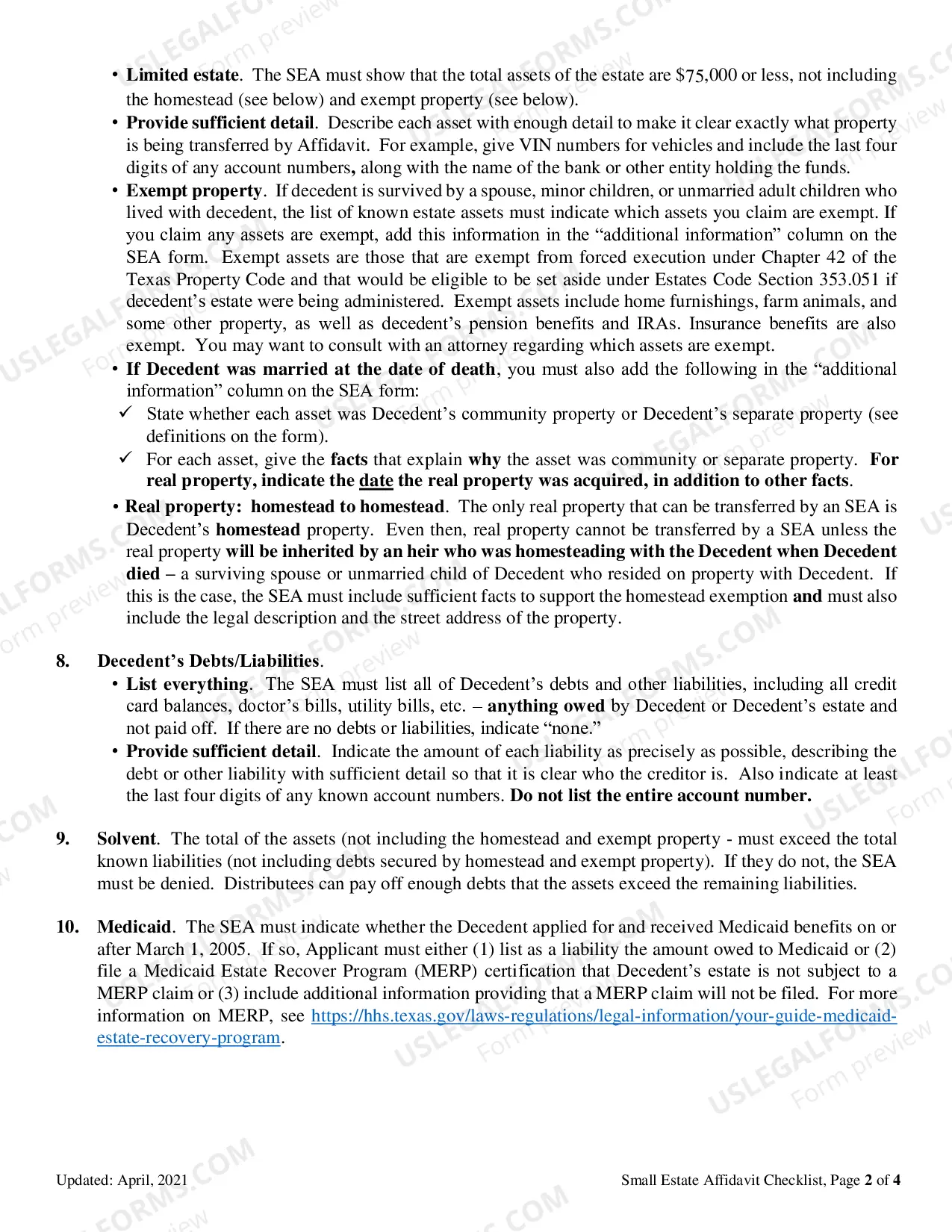
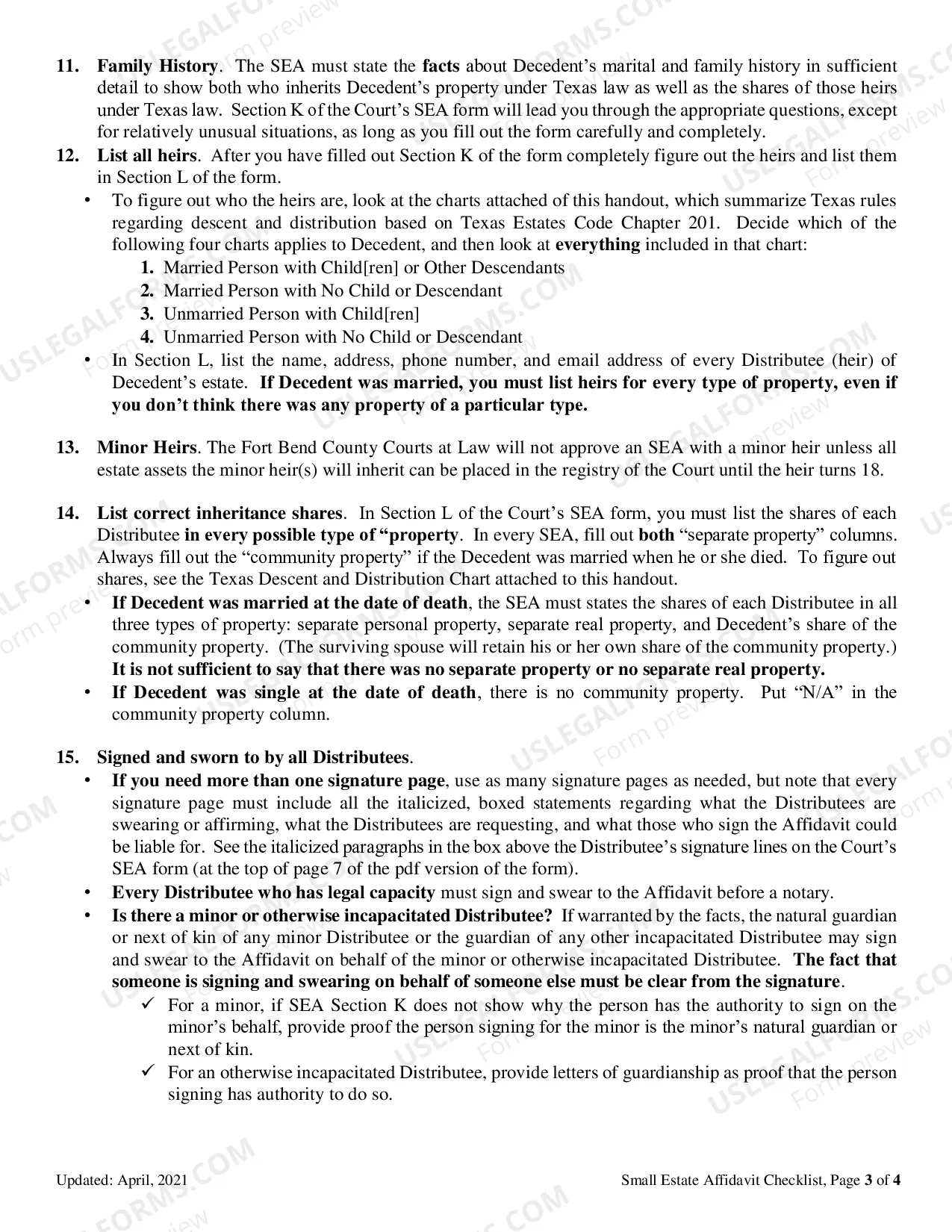
Texas Small Estate Affidavit Checklist
Description
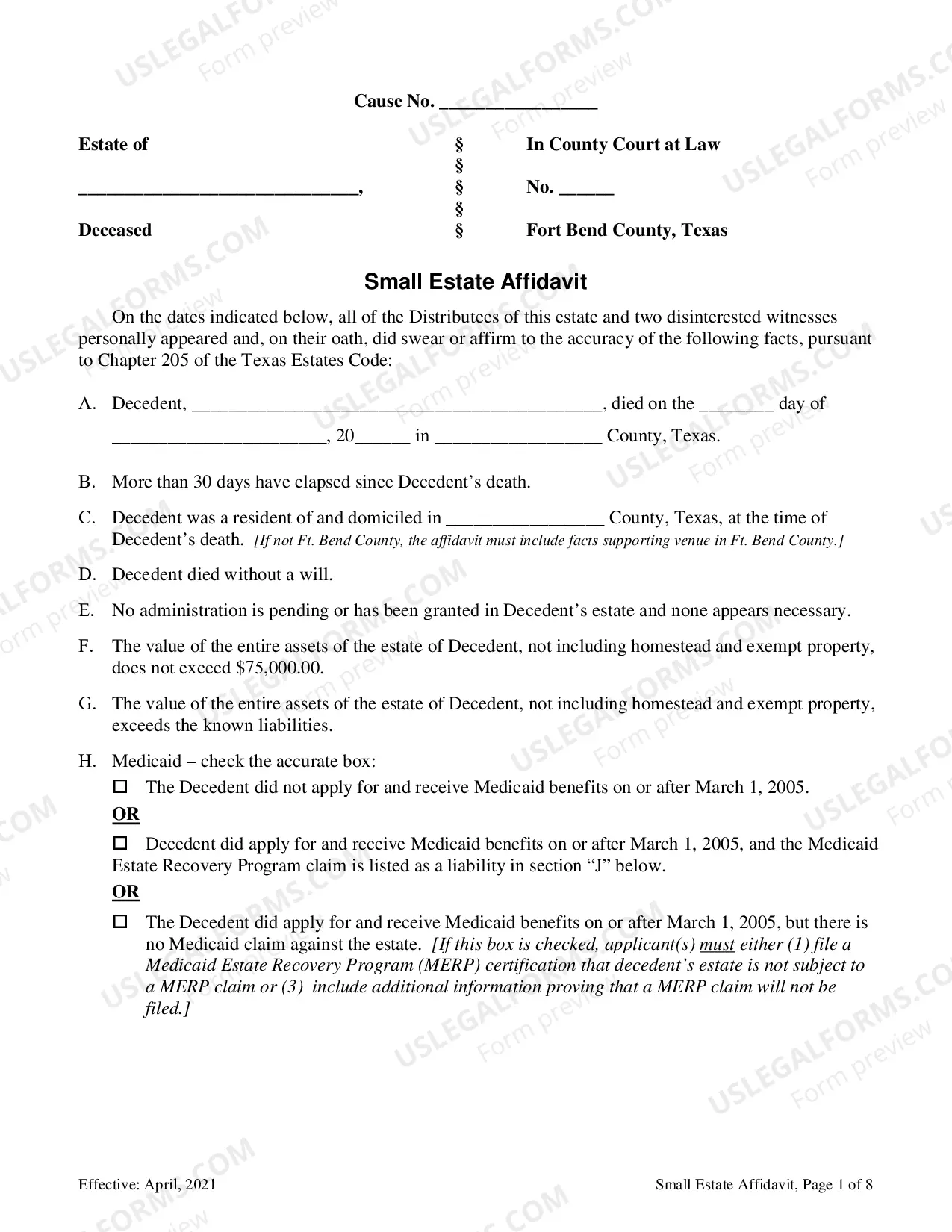
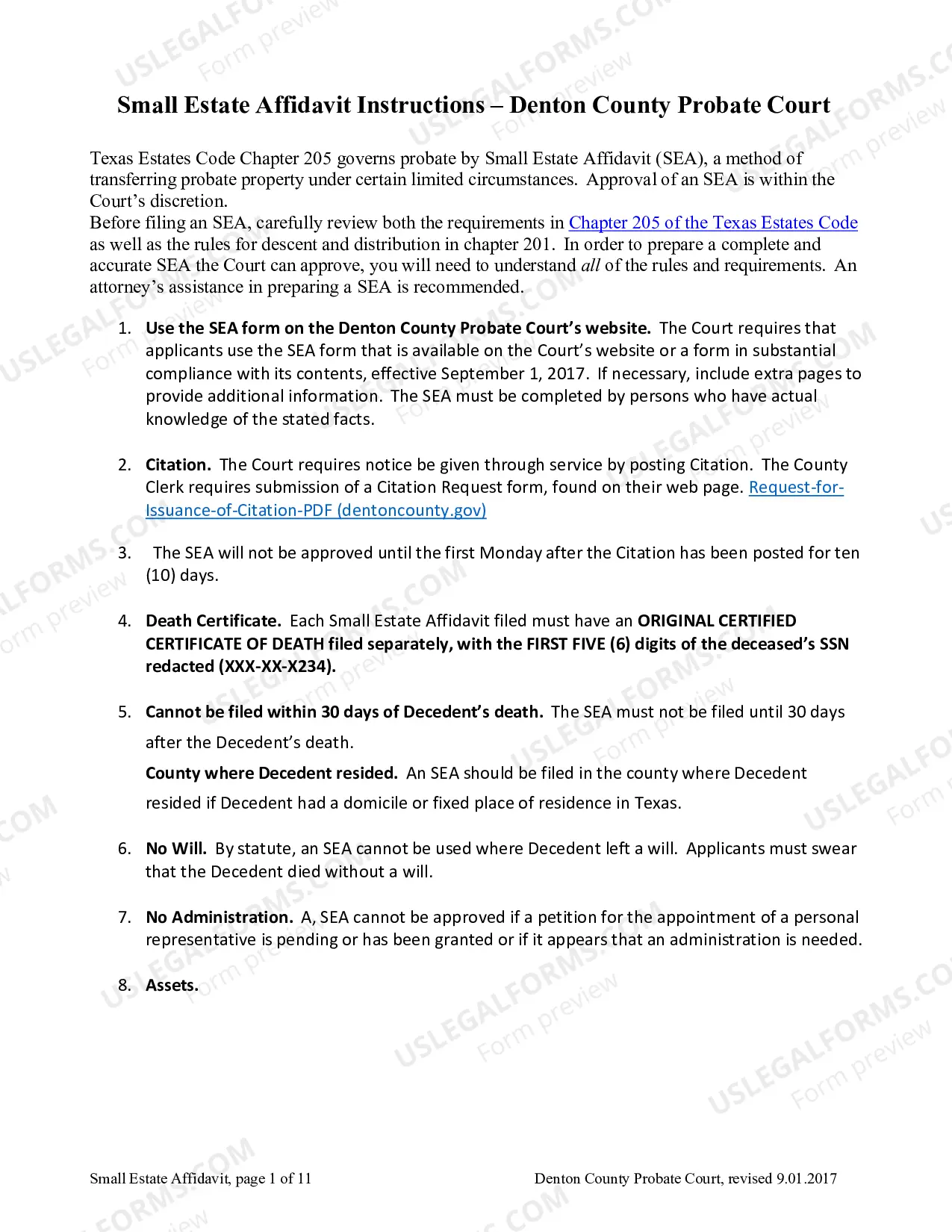
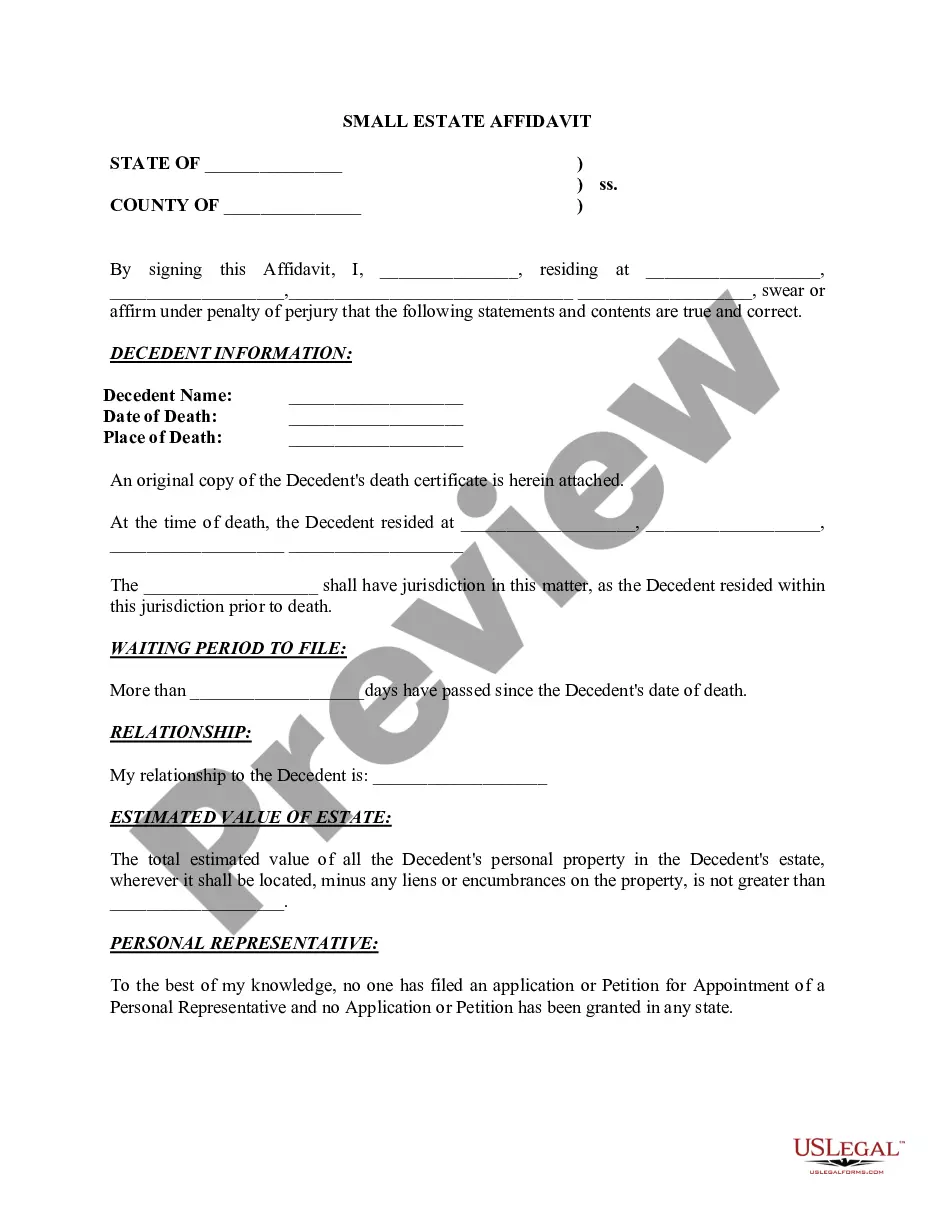
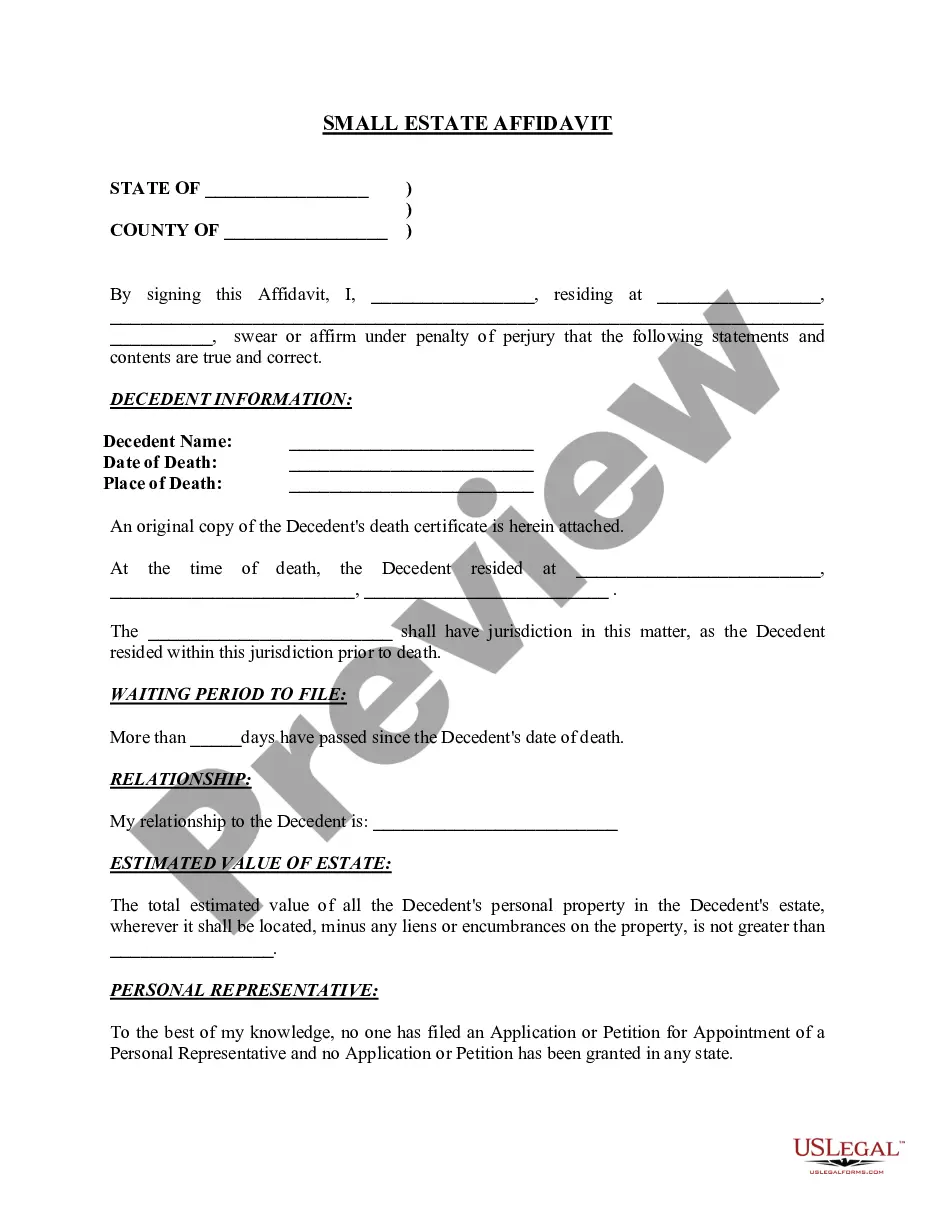
Get your form ready online
Our built-in tools help you complete, sign, share, and store your documents in one place.
Make edits, fill in missing information, and update formatting in US Legal Forms—just like you would in MS Word.
Download a copy, print it, send it by email, or mail it via USPS—whatever works best for your next step.
Sign and collect signatures with our SignNow integration. Send to multiple recipients, set reminders, and more. Go Premium to unlock E-Sign.
If this form requires notarization, complete it online through a secure video call—no need to meet a notary in person or wait for an appointment.
We protect your documents and personal data by following strict security and privacy standards.

Make edits, fill in missing information, and update formatting in US Legal Forms—just like you would in MS Word.

Download a copy, print it, send it by email, or mail it via USPS—whatever works best for your next step.

Sign and collect signatures with our SignNow integration. Send to multiple recipients, set reminders, and more. Go Premium to unlock E-Sign.

If this form requires notarization, complete it online through a secure video call—no need to meet a notary in person or wait for an appointment.

We protect your documents and personal data by following strict security and privacy standards.
Looking for another form?

How to fill out Texas Small Estate Affidavit Checklist?
How much time and resources do you typically spend on composing formal paperwork? There’s a greater way to get such forms than hiring legal specialists or wasting hours browsing the web for a suitable blank. US Legal Forms is the top online library that offers professionally designed and verified state-specific legal documents for any purpose, including the Texas Small Estate Affidavit Checklist.
To get and complete an appropriate Texas Small Estate Affidavit Checklist blank, follow these simple steps:
- Examine the form content to make sure it complies with your state regulations. To do so, check the form description or use the Preview option.
- If your legal template doesn’t meet your needs, locate a different one using the search bar at the top of the page.
- If you are already registered with our service, log in and download the Texas Small Estate Affidavit Checklist. Otherwise, proceed to the next steps.
- Click Buy now once you find the right blank. Choose the subscription plan that suits you best to access our library’s full opportunities.
- Sign up for an account and pay for your subscription. You can make a payment with your credit card or through PayPal - our service is totally safe for that.
- Download your Texas Small Estate Affidavit Checklist on your device and complete it on a printed-out hard copy or electronically.
Another advantage of our library is that you can access previously downloaded documents that you safely store in your profile in the My Forms tab. Get them at any moment and re-complete your paperwork as frequently as you need.
Save time and effort completing legal paperwork with US Legal Forms, one of the most trustworthy web services. Sign up for us today!
Form popularity
FAQ
It is not necessary to hire a lawyer to file a small estate affidavit. In fact, many probate courts provide forms on their website for the public's use.
The term ?personal property? is specifically defined in the Estates Code. And the courts in Texas have long held that this term includes all property other than real estate.
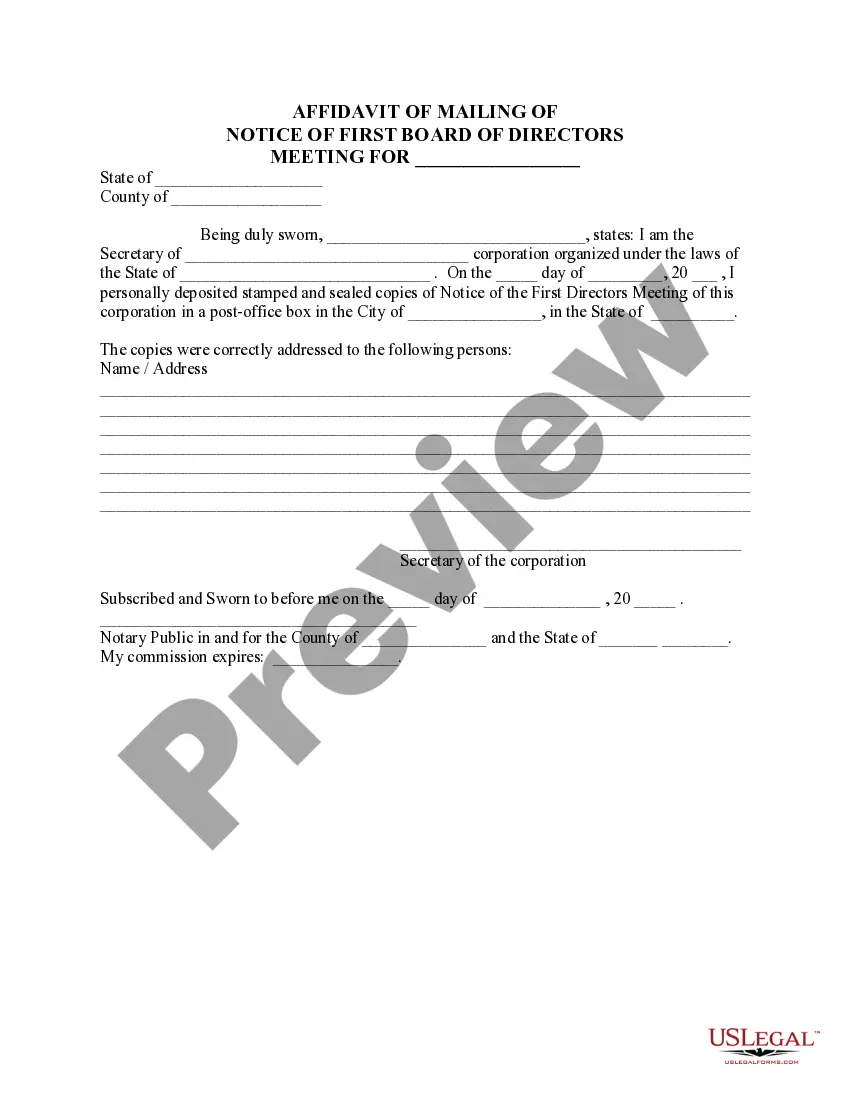
Small estate affidavit process in Texas Name and address of decedent. Date of death. Description of assets. Description of debts. Names and addresses of distributes. Signatures of distributees.
In Texas, a small estate is defined as an estate that has less than $75,000 of assets. These assets can include anything, from cash in bank accounts to cryptocurrency, to real estate and personal effects. The $75,000 amount is measured by the fair market value on the date of death.
If the decedent was single, personal property worth up to $50,000 is considered exempt property. Pension benefits, retirement assets and insurance benefits are also exempt.
The small estate affidavit must show that the deceased's estate is worth $75,000 or less, the estate's assets cover any outstanding debts, and a few other requirements.
Types of Property Exempt from Probate The asset is held in joint tenancy, such as a home where two people's names are on the deed; Community property with the right of survivorship; Payable-on-death bank accounts; Proceeds and benefits that are payable via a life insurance policy; and. Payments from a survivor annuity.