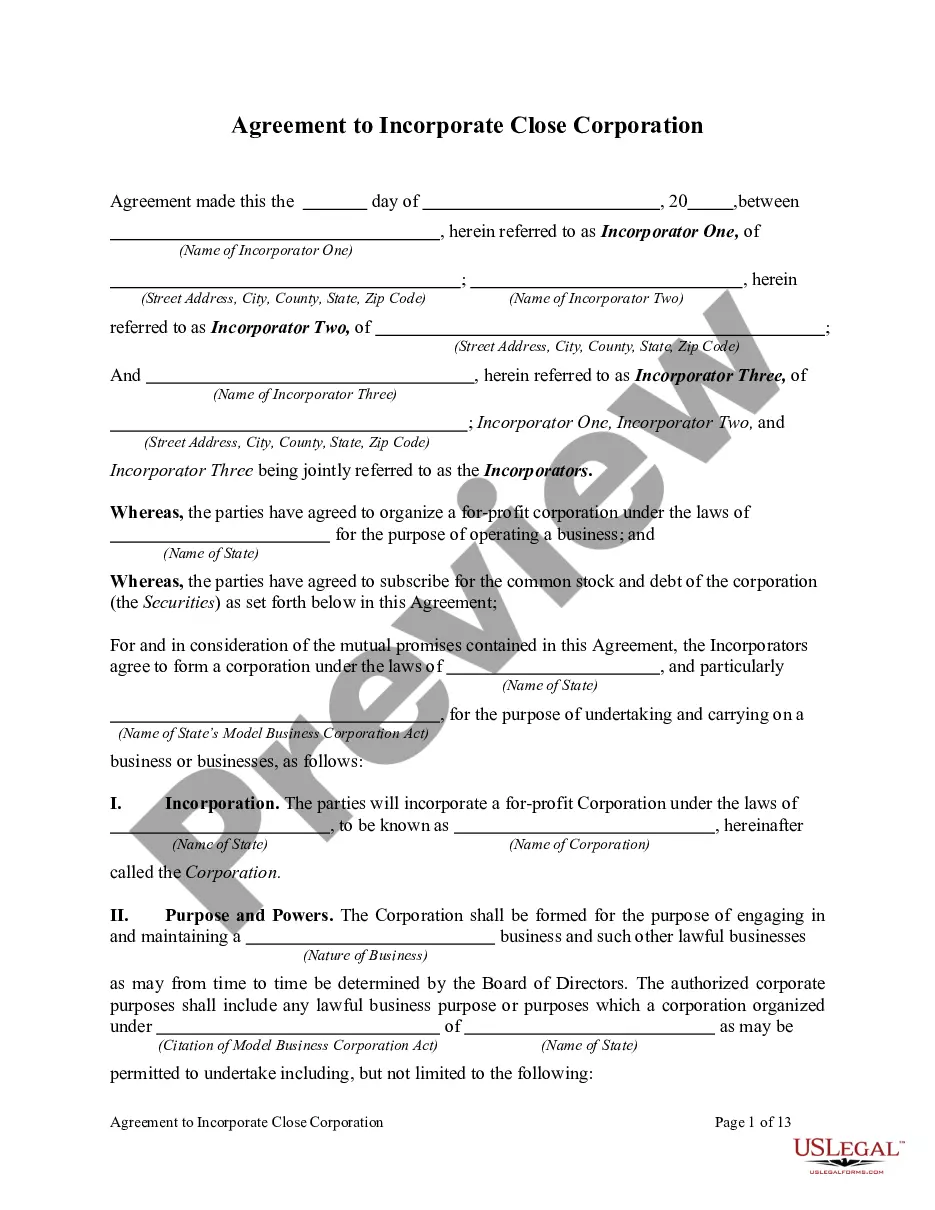
Texas Small Estate Affidavit Form - Order Included
Overview of this form
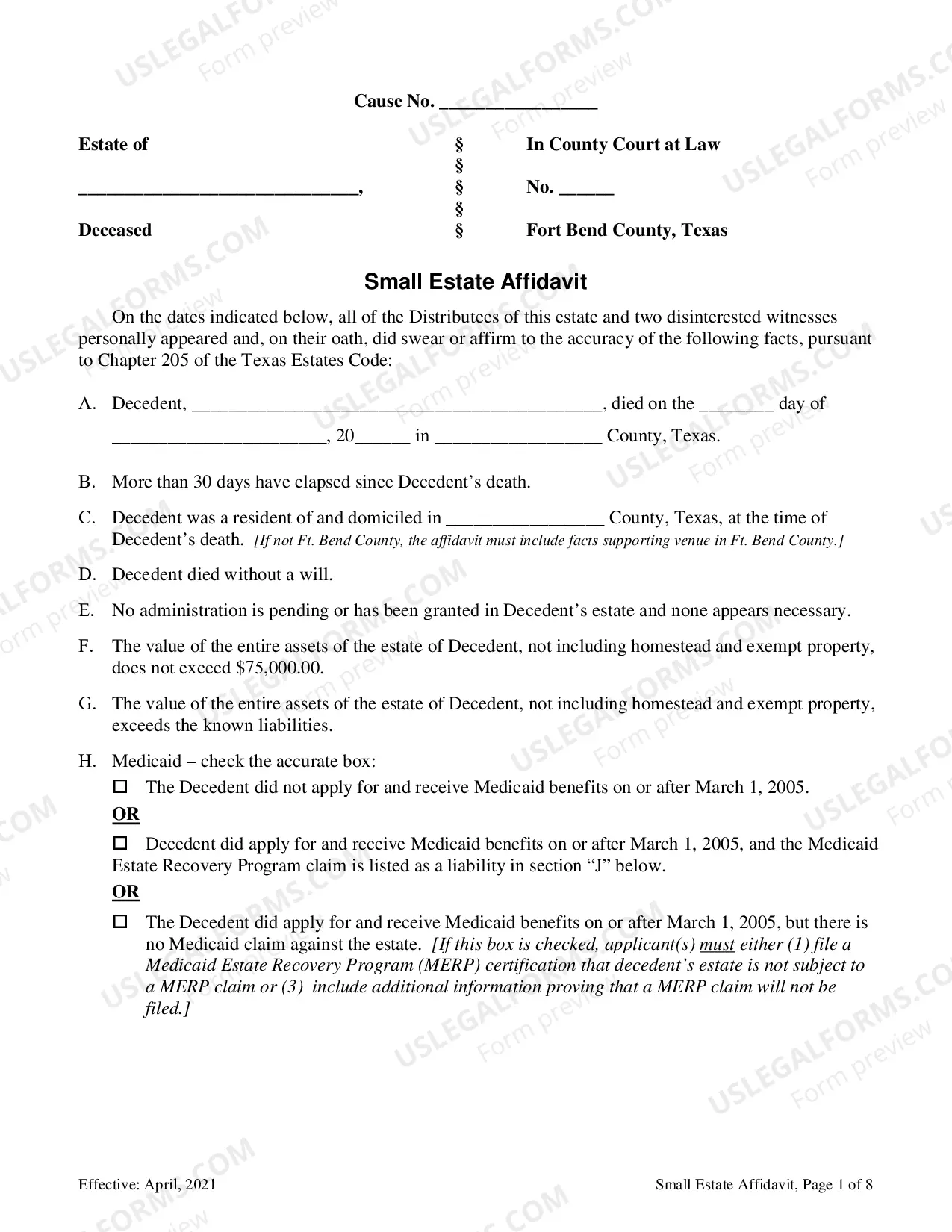
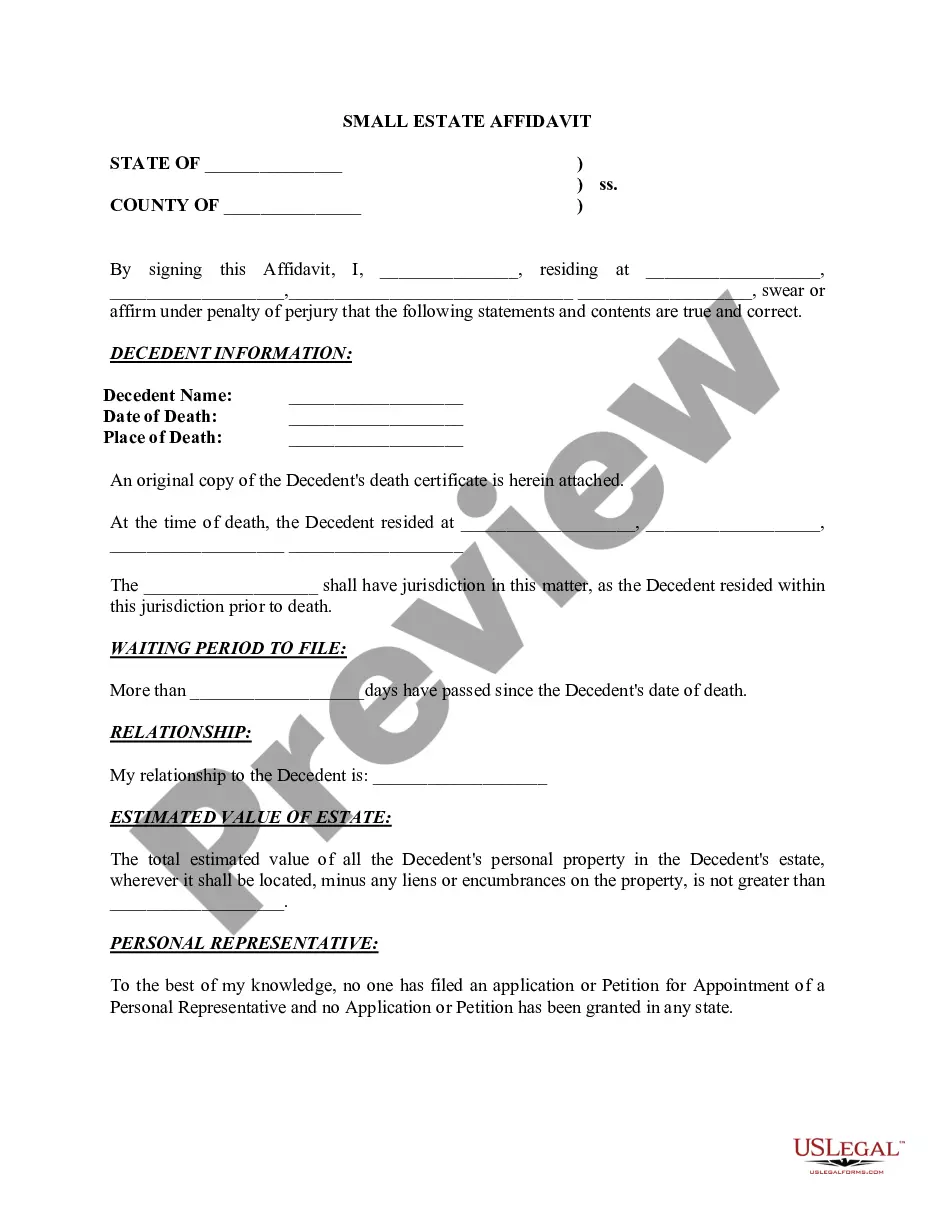
The Small Estate Affidavit Form is a legal document used in Texas for transferring assets of a deceased individual without a formal probate process. This form is particularly beneficial for estates where the total value of assets is less than $75,000, excluding homestead and exempt property. It allows heirs to claim their inheritance relatively simply and quickly, bypassing the complexity and costs of proving a will or initiating probate proceedings.
Main sections of this form
- Details about the deceased, including their name, date of death, and county of residence.
- Affirmation that the decedent died without a will and no administration is pending.
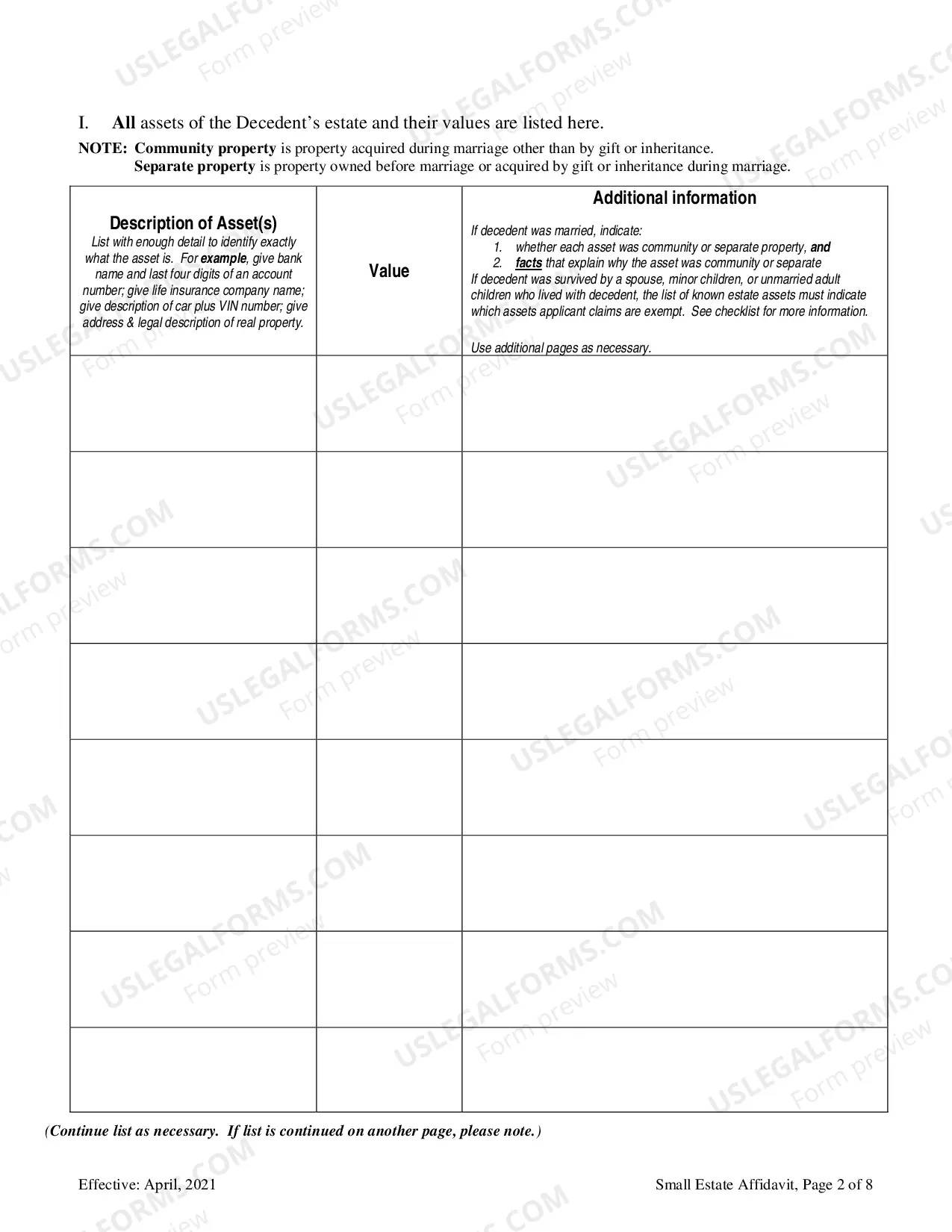
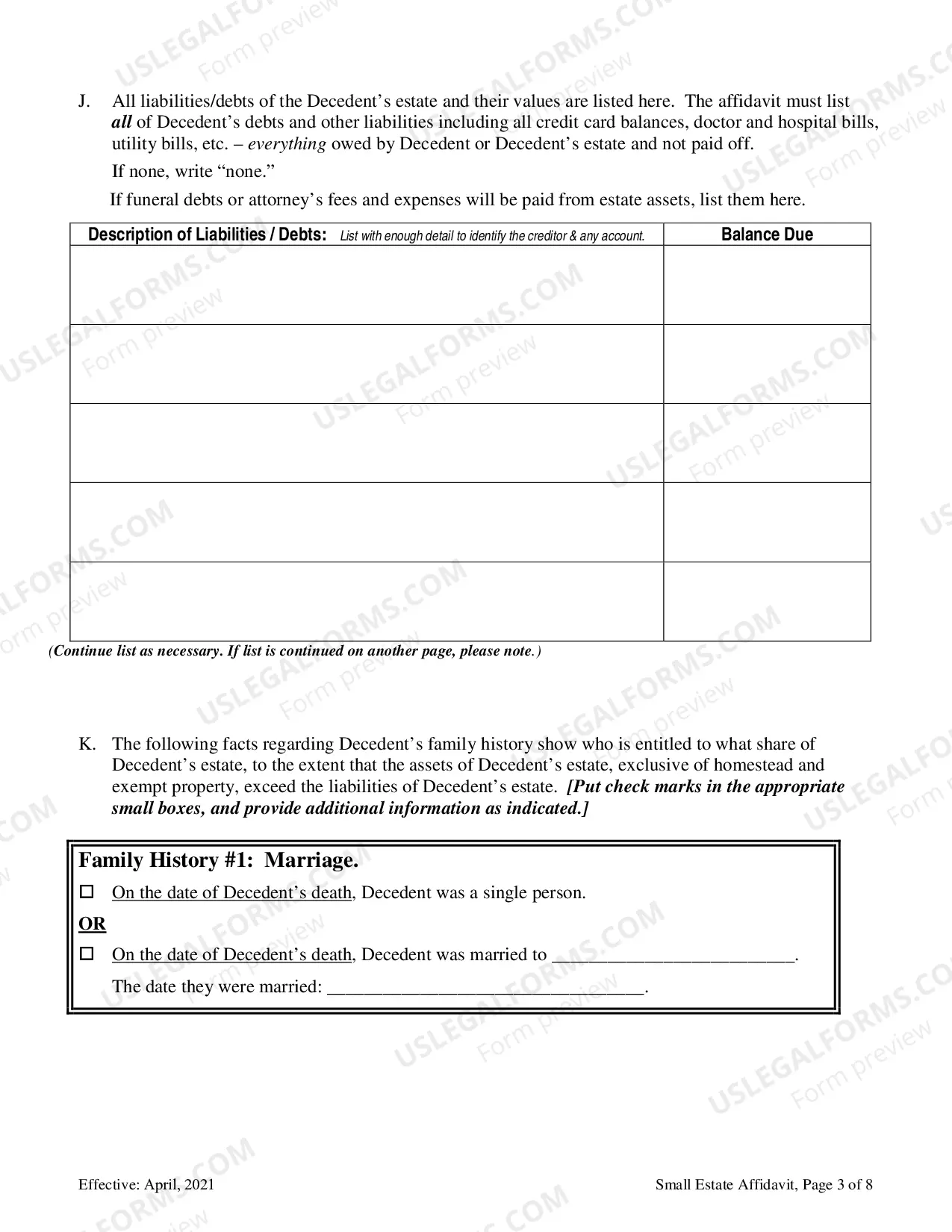
- A comprehensive list of the decedent's assets and liabilities.
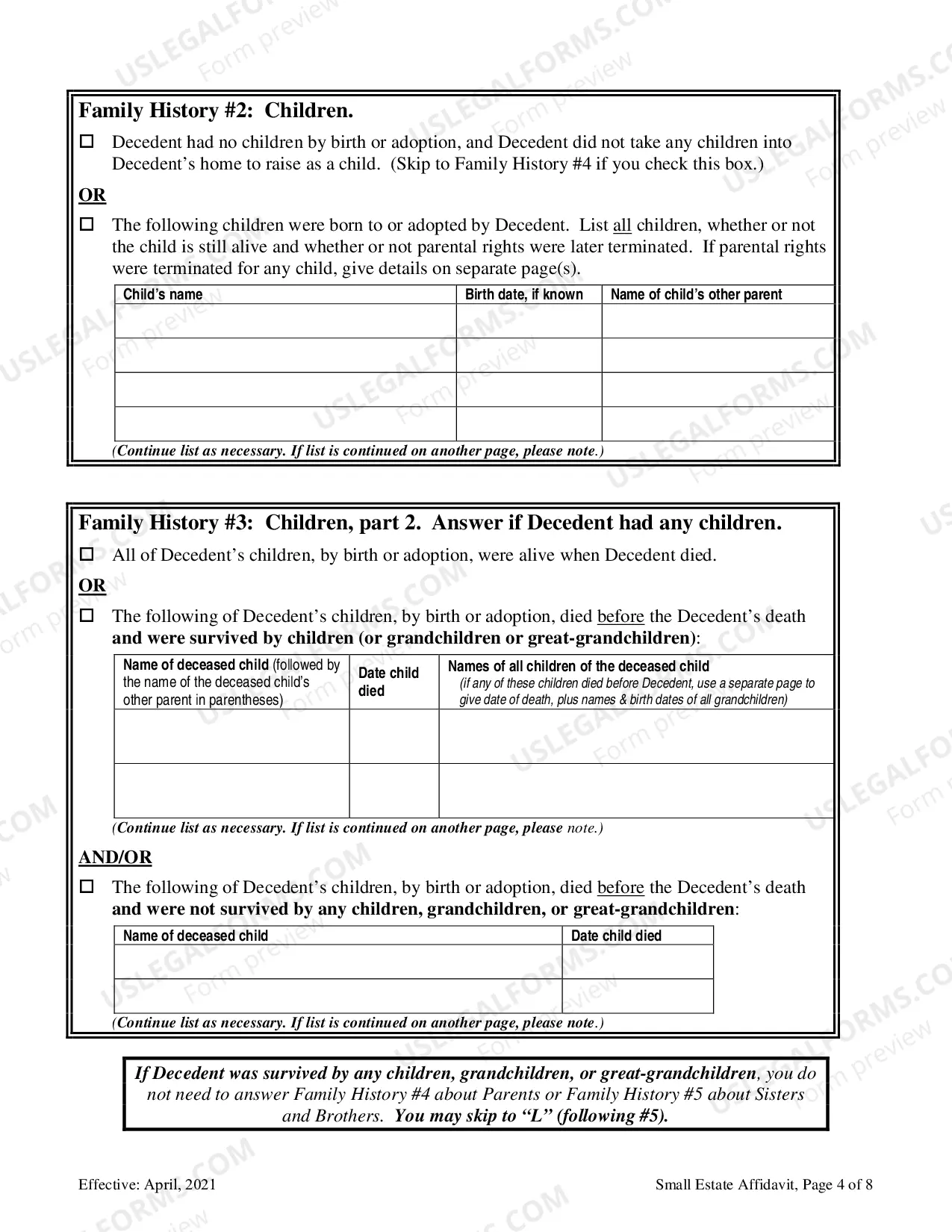
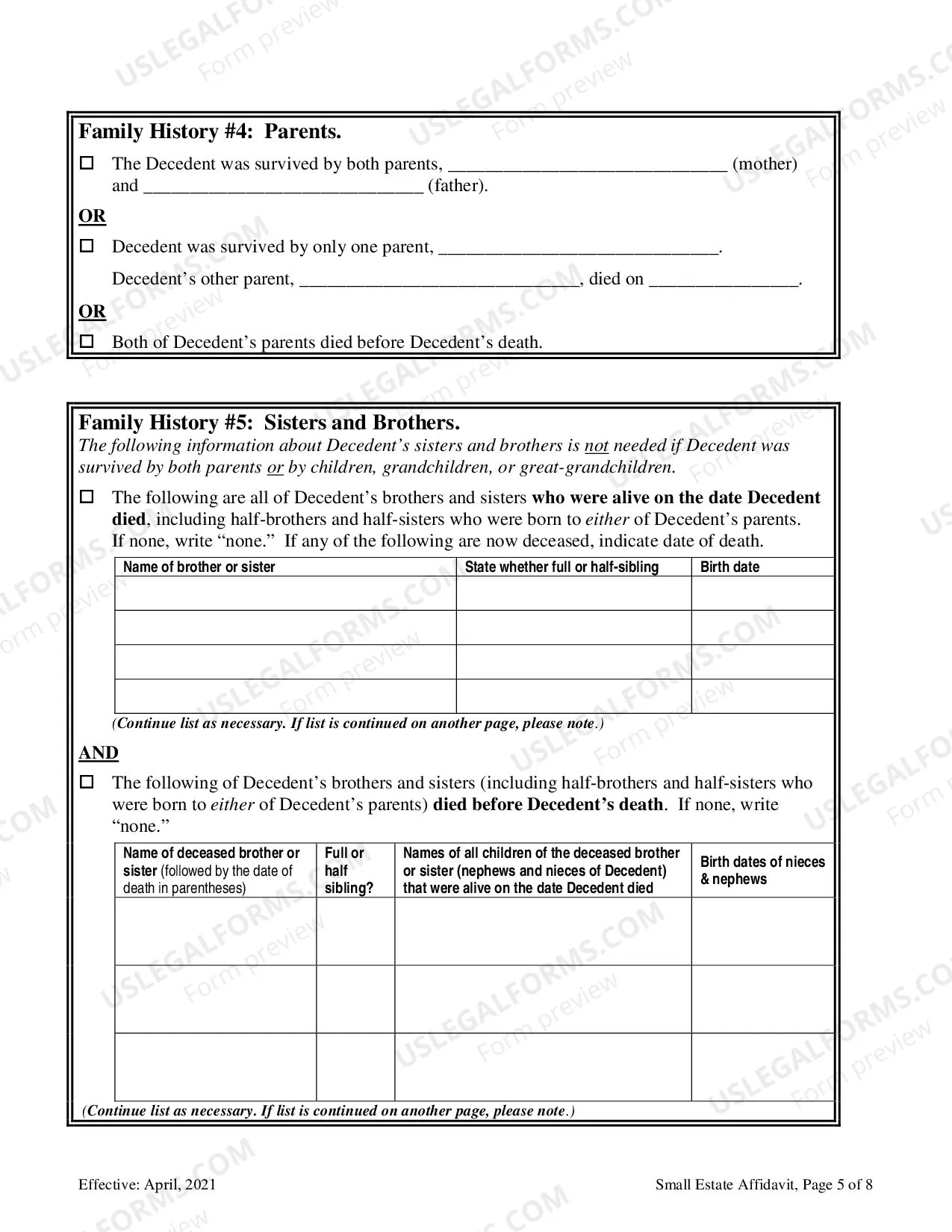
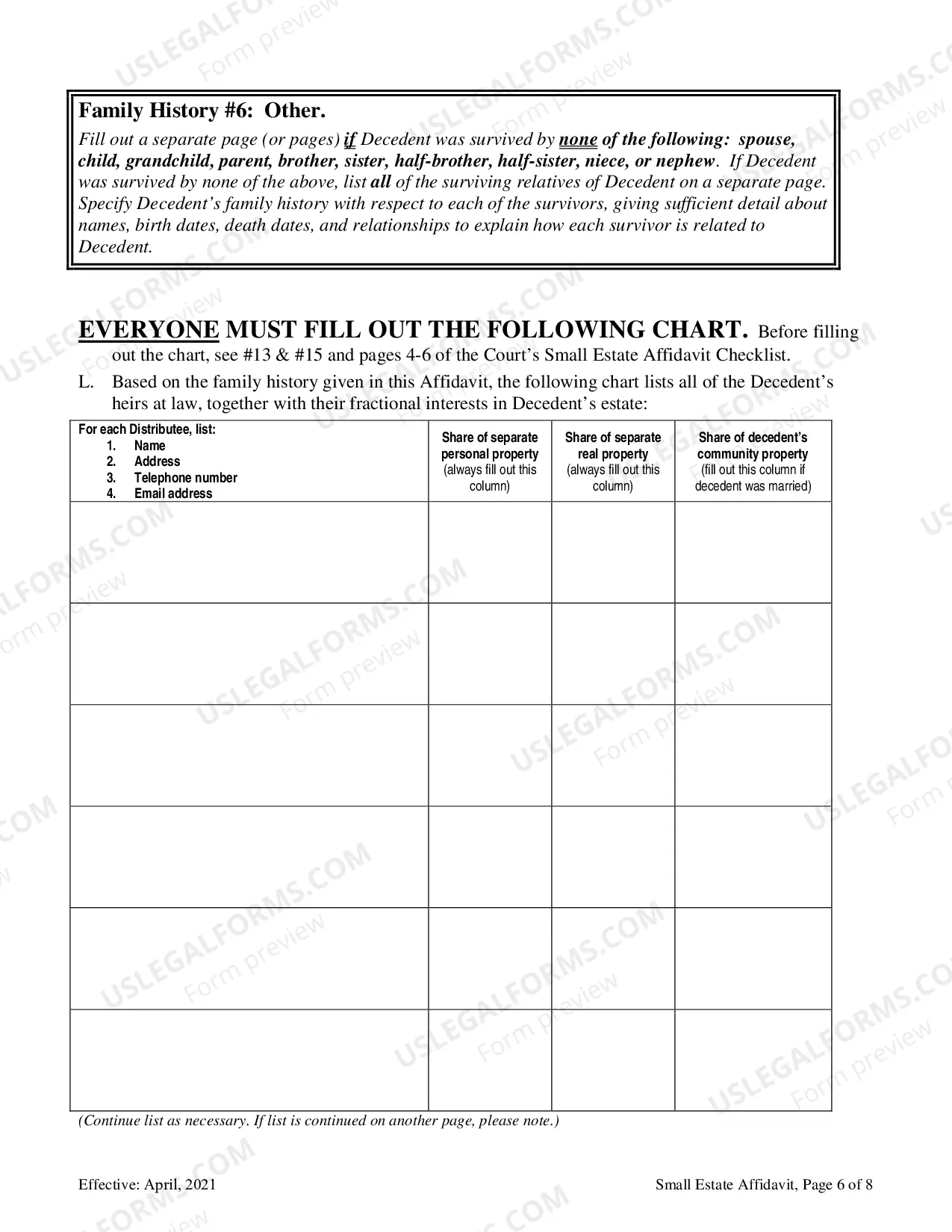
- Information about the decedentâs family history, including survivors entitled to the estate.
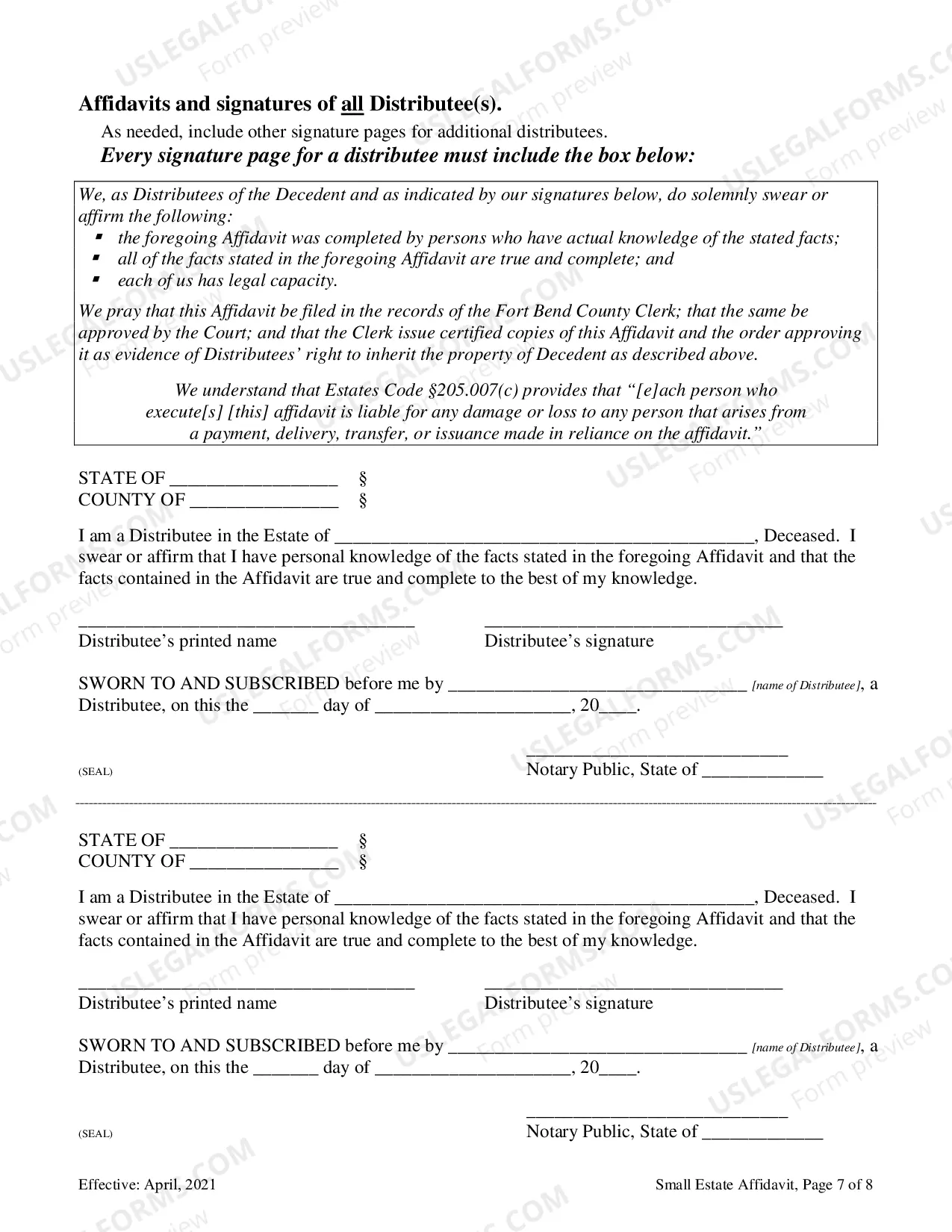
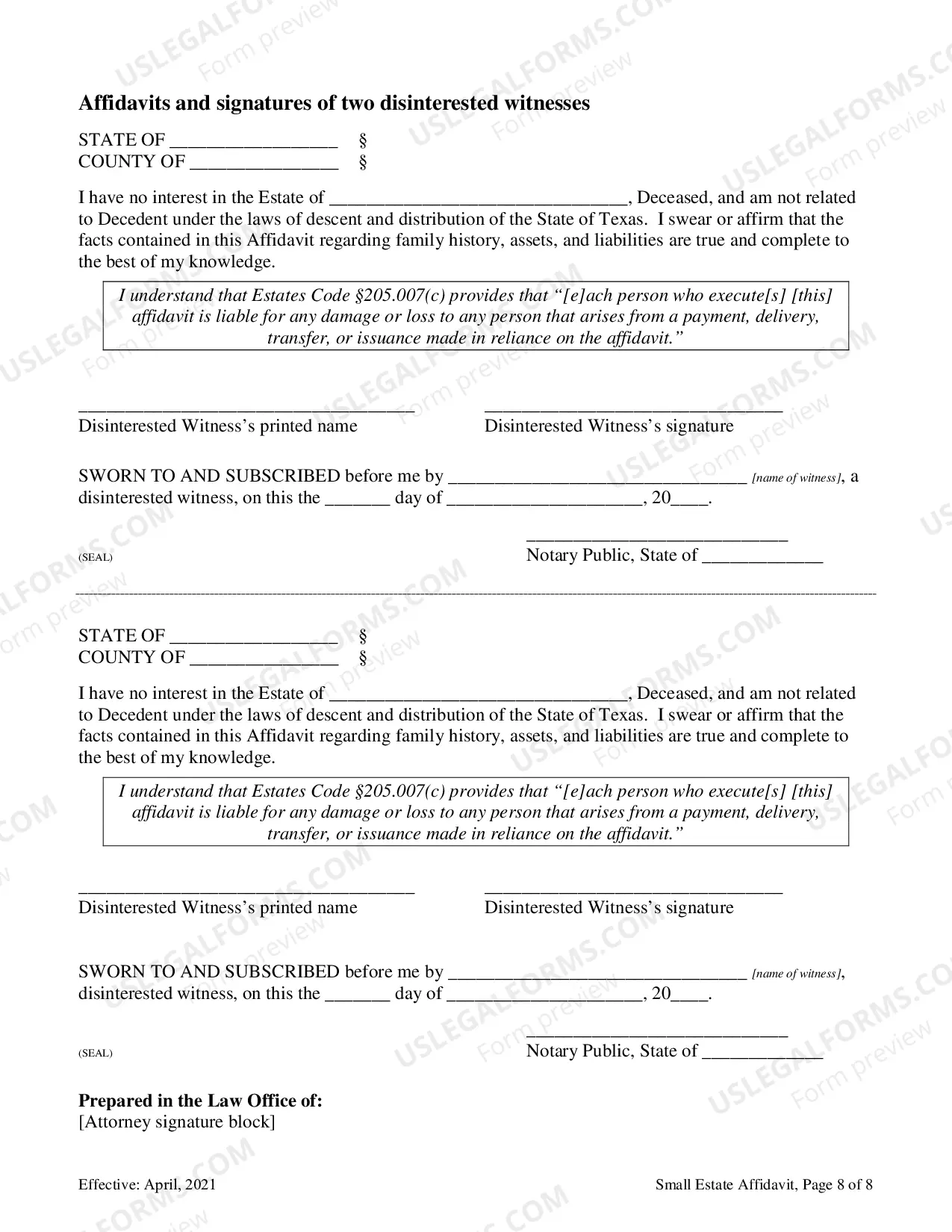
- Signatures of distributees and disinterested witnesses affirming the accuracy of the affidavit.
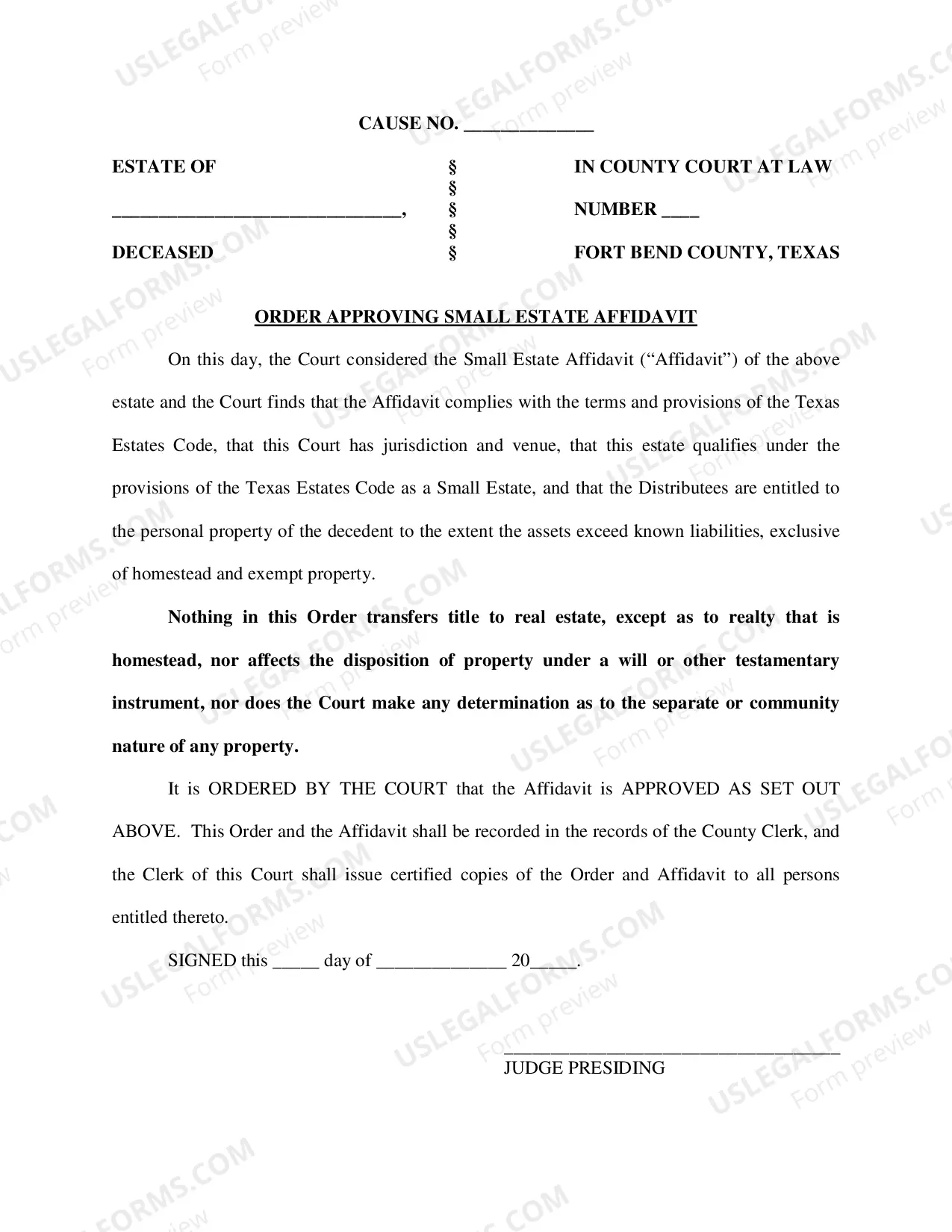
- An order from the court approving the Small Estate Affidavit.
When this form is needed
This form should be used when a person has passed away without a will and the estate's assets are valued under $75,000, excluding certain categories of property like a homestead. It is suitable for heirs who wish to claim their share of the estate without going through the lengthy probate process. Examples include situations where the decedent had minimal assets such as bank accounts, personal property, or a vehicle.
Intended users of this form
The Small Estate Affidavit Form is intended for:
- Heirs or distributees of a deceased person in Texas.
- Individuals seeking to transfer small estates without the need for probate.
- Family members who can provide necessary information about the deceased's assets and liabilities.
Instructions for completing this form
- Identify the deceased by entering their full name, date of death, and county of residence.
- Describe the assets of the estate, including details sufficient to identify each asset.
- List all debts and liabilities incurred by the decedent.
- Provide information about the family history to establish who is entitled to inherit.
- Collect signatures from all distributees and two disinterested witnesses.
- File the completed affidavit and the accompanying order with the County Clerk for approval.
Notarization requirements for this form
Yes, this form must be notarized to be legally valid. Signatures from the distributees and the disinterested witnesses need to be notarized to ensure authenticity. US Legal Forms offers integrated online notarization services, allowing you to get your form notarized through secure video calls without the need to travel.
Get your form ready online
Our built-in tools help you complete, sign, share, and store your documents in one place.
Make edits, fill in missing information, and update formatting in US Legal Forms—just like you would in MS Word.
Download a copy, print it, send it by email, or mail it via USPS—whatever works best for your next step.
Sign and collect signatures with our SignNow integration. Send to multiple recipients, set reminders, and more. Go Premium to unlock E-Sign.
If this form requires notarization, complete it online through a secure video call—no need to meet a notary in person or wait for an appointment.
We protect your documents and personal data by following strict security and privacy standards.

Make edits, fill in missing information, and update formatting in US Legal Forms—just like you would in MS Word.

Download a copy, print it, send it by email, or mail it via USPS—whatever works best for your next step.

Sign and collect signatures with our SignNow integration. Send to multiple recipients, set reminders, and more. Go Premium to unlock E-Sign.

If this form requires notarization, complete it online through a secure video call—no need to meet a notary in person or wait for an appointment.

We protect your documents and personal data by following strict security and privacy standards.
Common mistakes
- Failing to include all required witnesses and signatures.
- Omitting important details about the decedent's assets or liabilities.
- Not providing adequate identification for the assets listed.
- Submitting the form without verifying the total value of the estate.
- Using the form incorrectly if Medicaid benefits were involved without proper disclosures.
Advantages of online completion
- Ease of access: Downloadable forms can be filled out at your convenience.
- Editability: You can complete the form at your own pace and correct any mistakes easily.
- Professional drafting: Forms are prepared by licensed attorneys, ensuring legal compliance.
- Accessibility: Forms can be accessed anytime, avoiding the need for physical office visits.
Legal use & context
- The Small Estate Affidavit facilitates the transfer of property without formal probate, which can be time-consuming.
- It is limited to certain estates under Texas law, specifically those valued below $75,000.
- The affidavit can be challenged if not all relevant facts about assets, debts, or heirs are disclosed.
Key takeaways
- The Small Estate Affidavit provides a streamlined process for transferring assets in Texas.
- It is suitable for estates valued under $75,000, excluding exempt properties.
- Proper completion includes detailed asset and liability disclosures along with notarization for legal validity.
Looking for another form?

Form popularity
FAQ
How Much Does It Cost To Get A Small Estate Affidavit In Texas? Each county has its own filing fee schedule, so court costs can vary. If you prepare the document on your own, you should expect to pay between $250 and $400.00 in fees.
Since under Texas law, only a licensed attorney can represent the interests of others, preparing and filing pleadings in a probate matter without the assistance of counsel would, ing to caselaw, constitute the unauthorized practice of law.
Who files a small estate affidavit in Texas. To be able to file a small estate affidavit in Texas for a loved one, when no will was executed, you must be a person who would inherit under Texas intestacy law (this is generally the spouse and children, or other close relatives if there are no spouse or children).
A Texas Small Estate Affidavit can be used to expedite the distribution of the assets of a person who has died (known as a decedent) when the estate is worth $75,000 or less and lacks a will. A successor can use the form to claim assets without undergoing a complicated court proceeding.
Small estate affidavit process in Texas Name and address of decedent. Date of death. Description of assets. Description of debts. Names and addresses of distributes. Signatures of distributees.
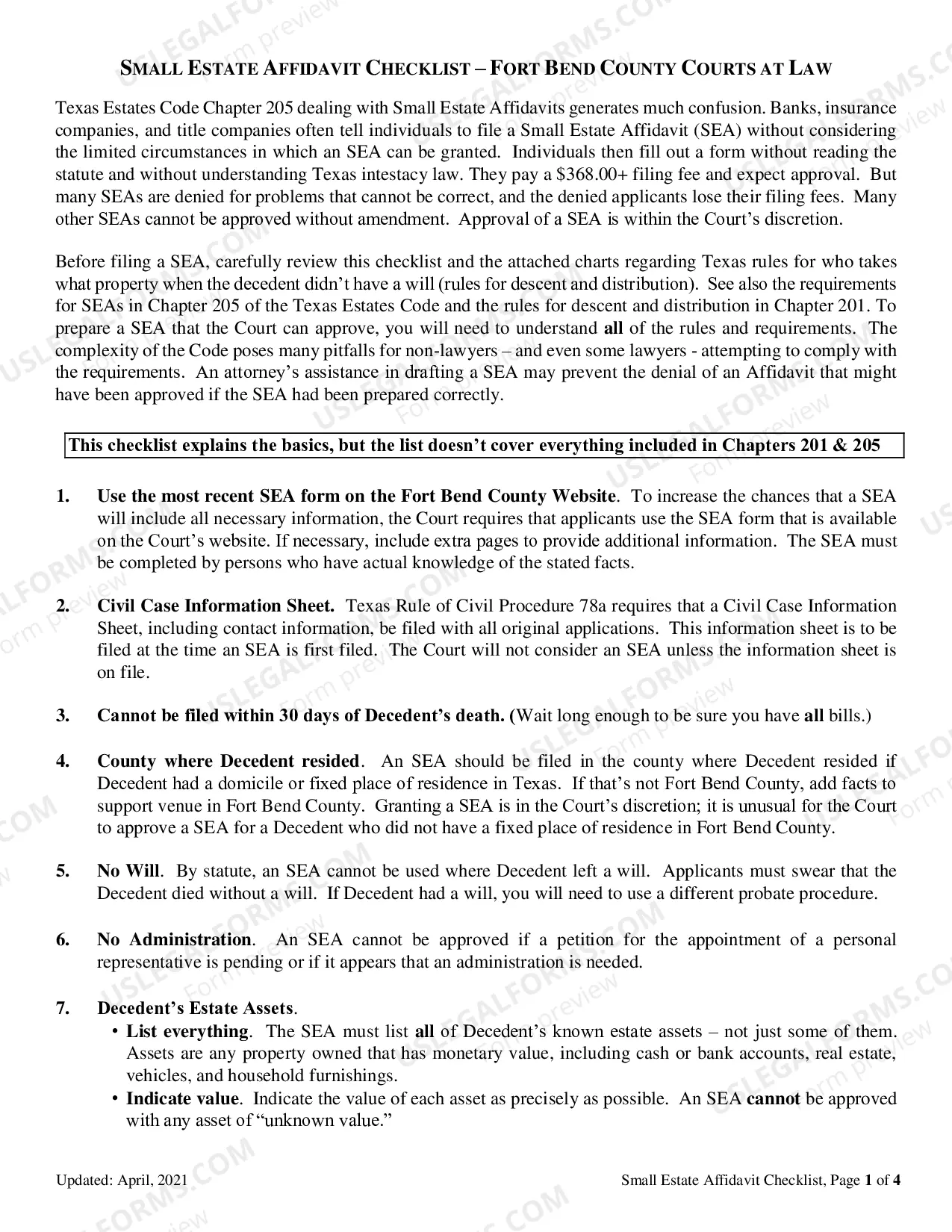
People then fill out a form without reading the statute and or understanding Texas intestacy law. They pay a $232 filing fee and expect approval.
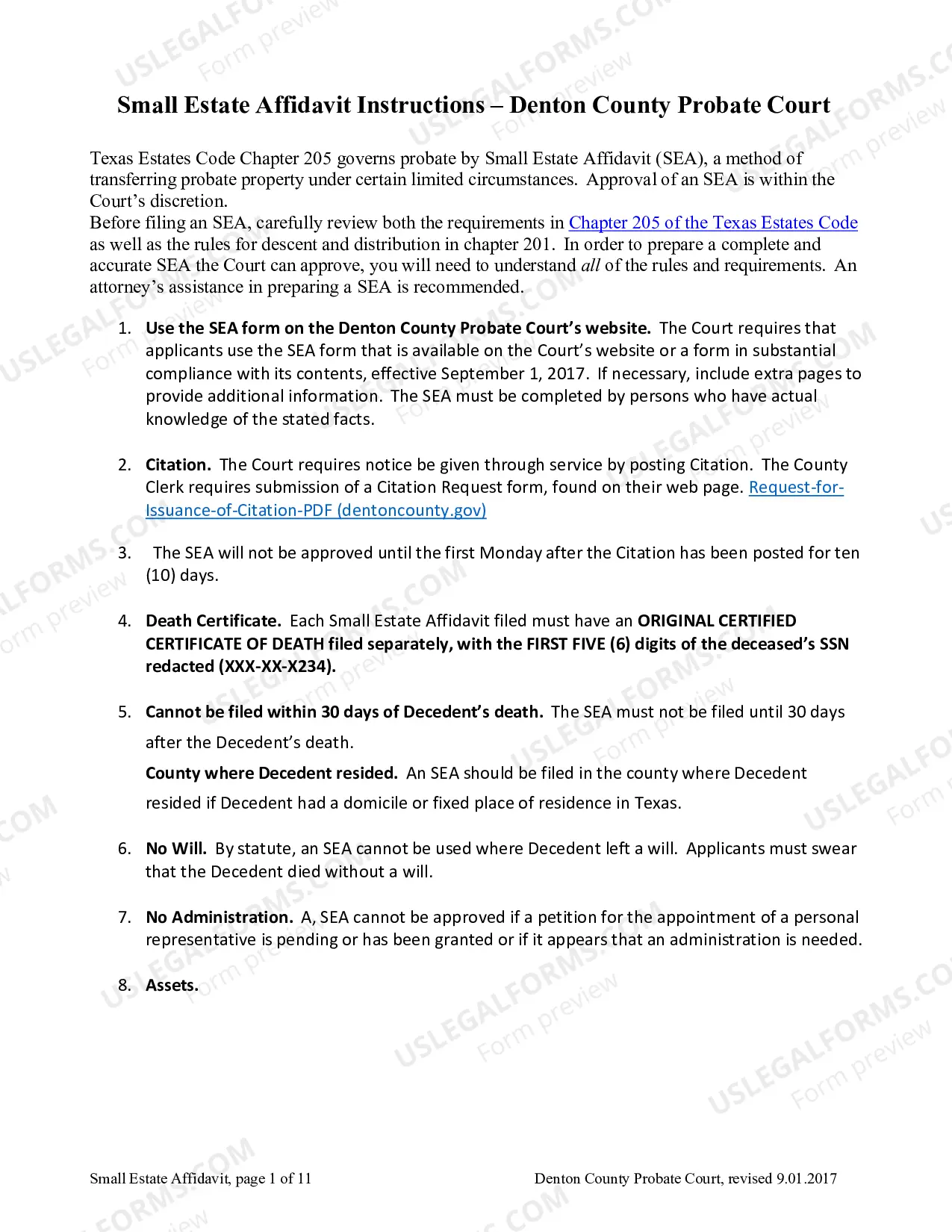
You must file the Small Estate Affidavit in the right county. Generally, you can file the affidavit in the county where the decedent lived (had a domicile or fixed place of residence) at the time of death.
It is not necessary to hire a lawyer to file a small estate affidavit. In fact, many probate courts provide forms on their website for the public's use.