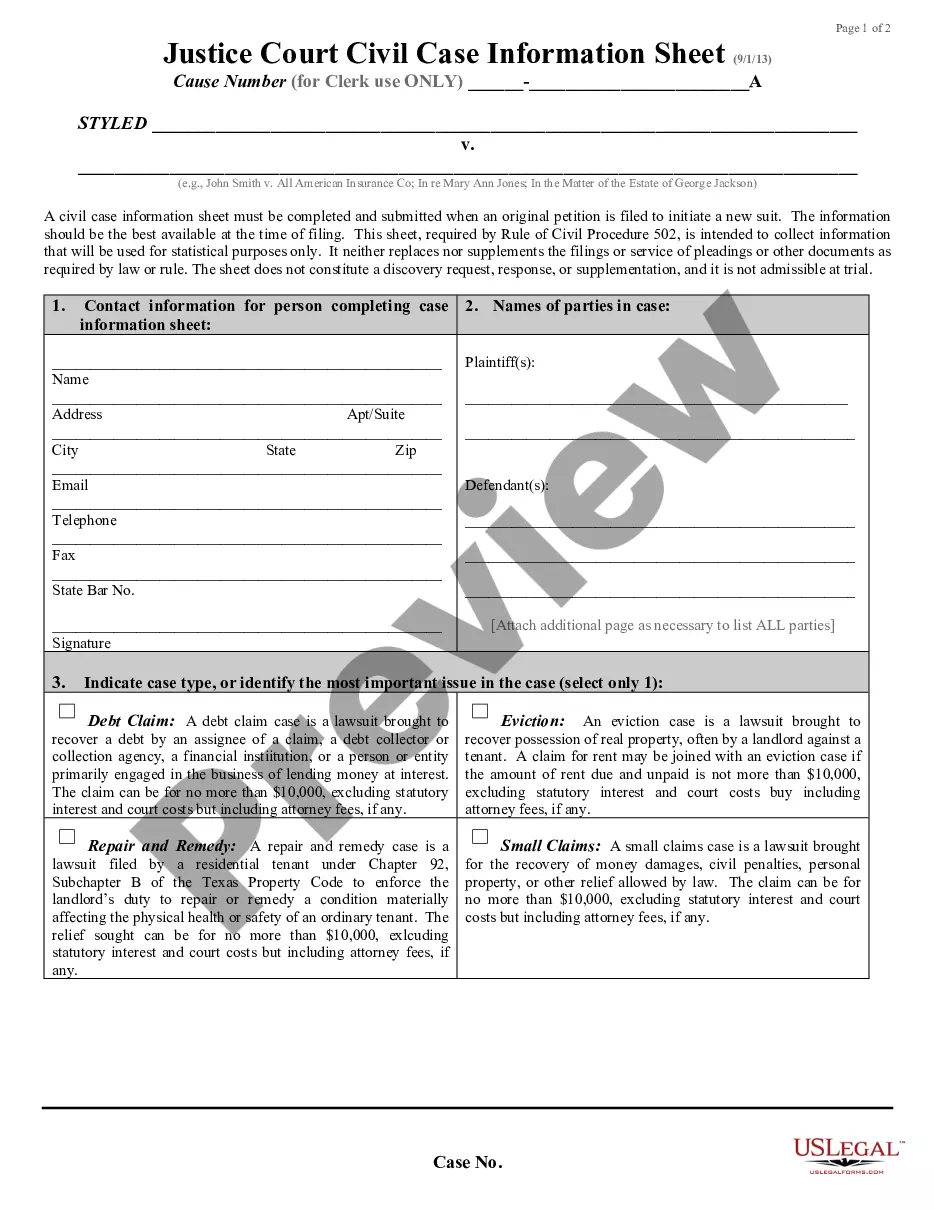
Texas Interrogatories to Plaintiff for Motor Vehicle Occurrence
What is this form?
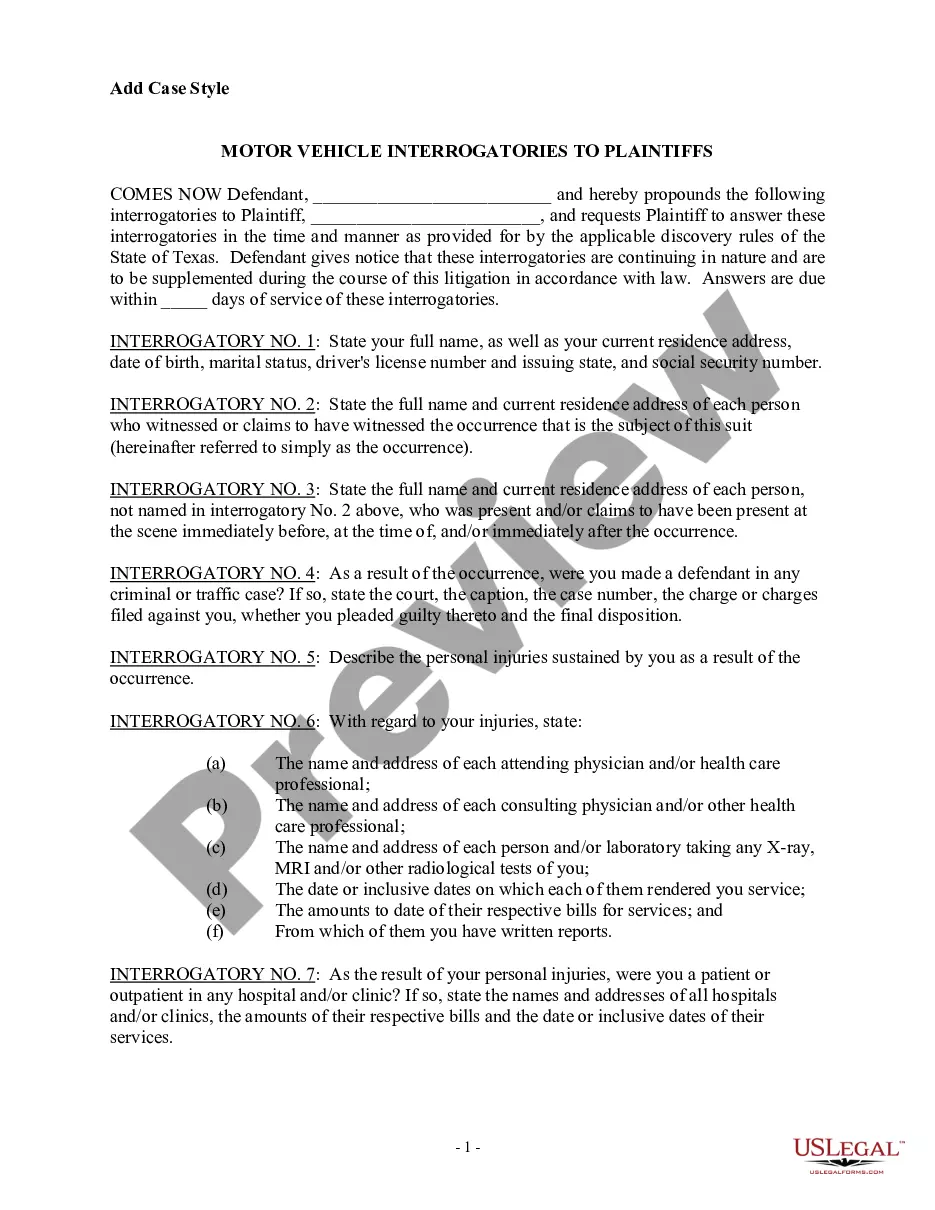
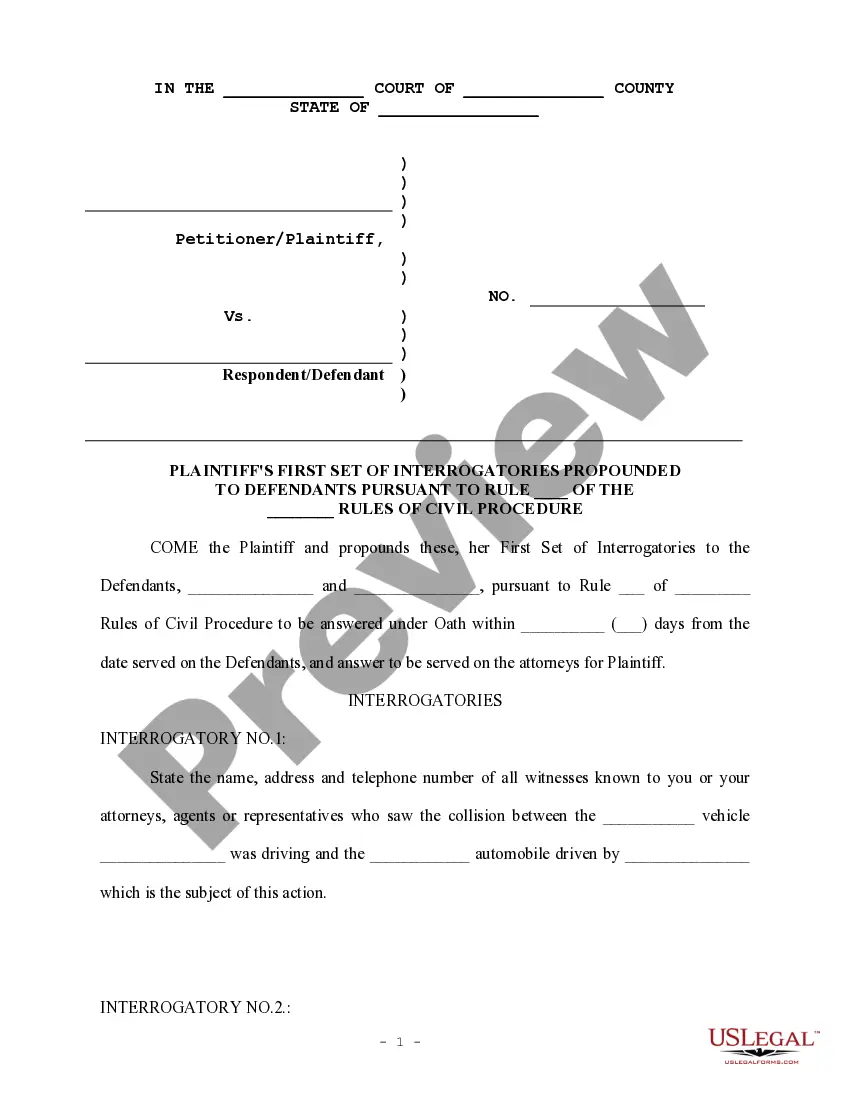
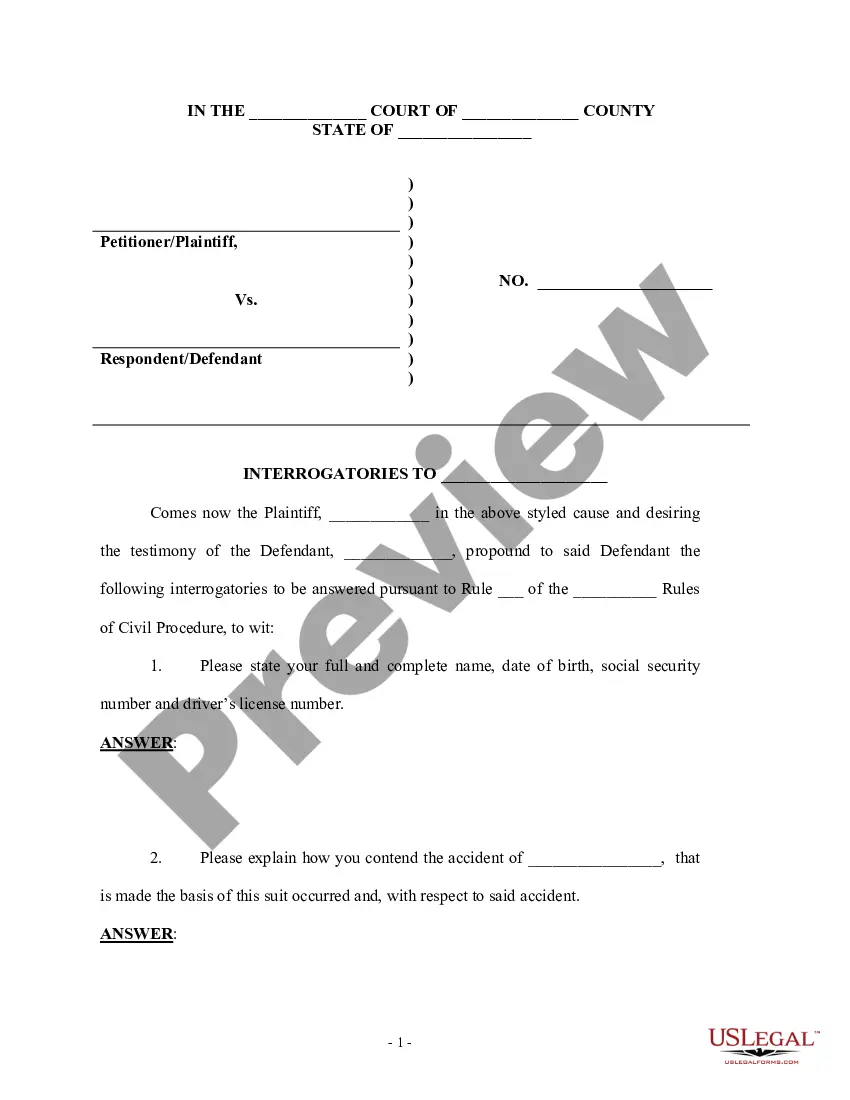
The Interrogatories to Plaintiff for Motor Vehicle Occurrence is a legal document used in the context of vehicle-related incidents, such as automobile accidents. This form consists of a set of questions that the defendant can send to the plaintiff, aimed at gathering detailed information pertinent to the case. Unlike other legal forms, this document specifically facilitates the discovery process, allowing both parties to clarify facts before litigation proceeds.
What’s included in this form
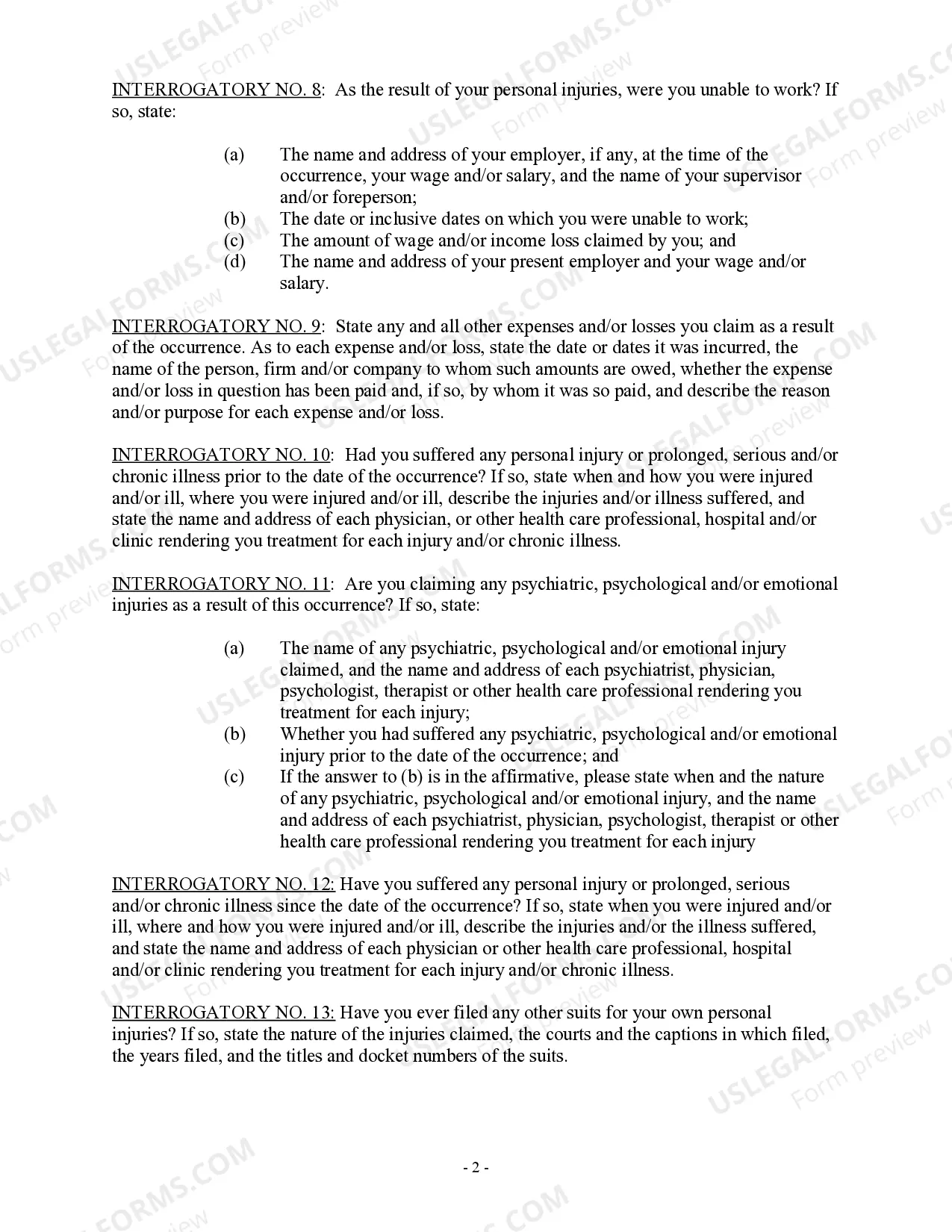
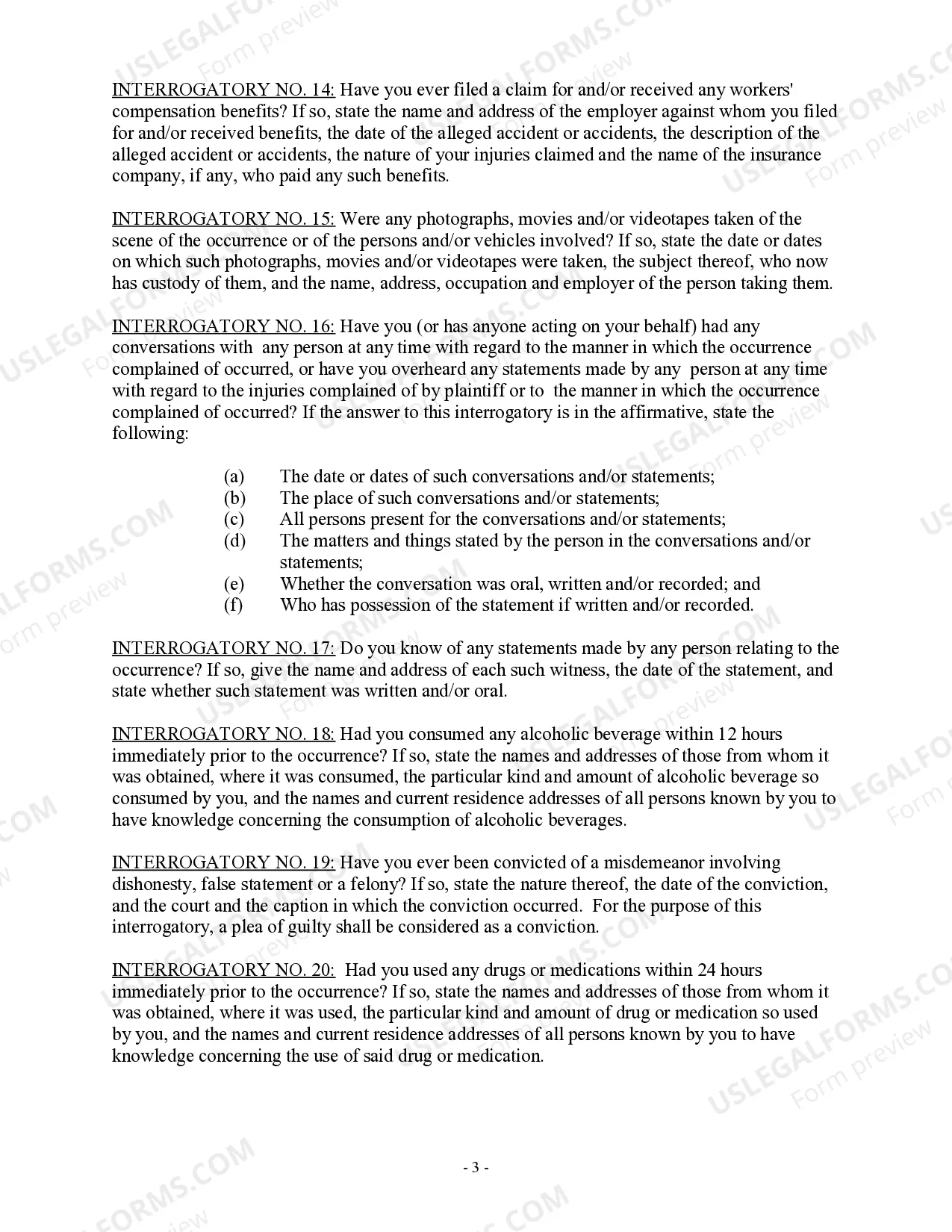
- Identifying information of the plaintiff, including name, address, and date of birth.
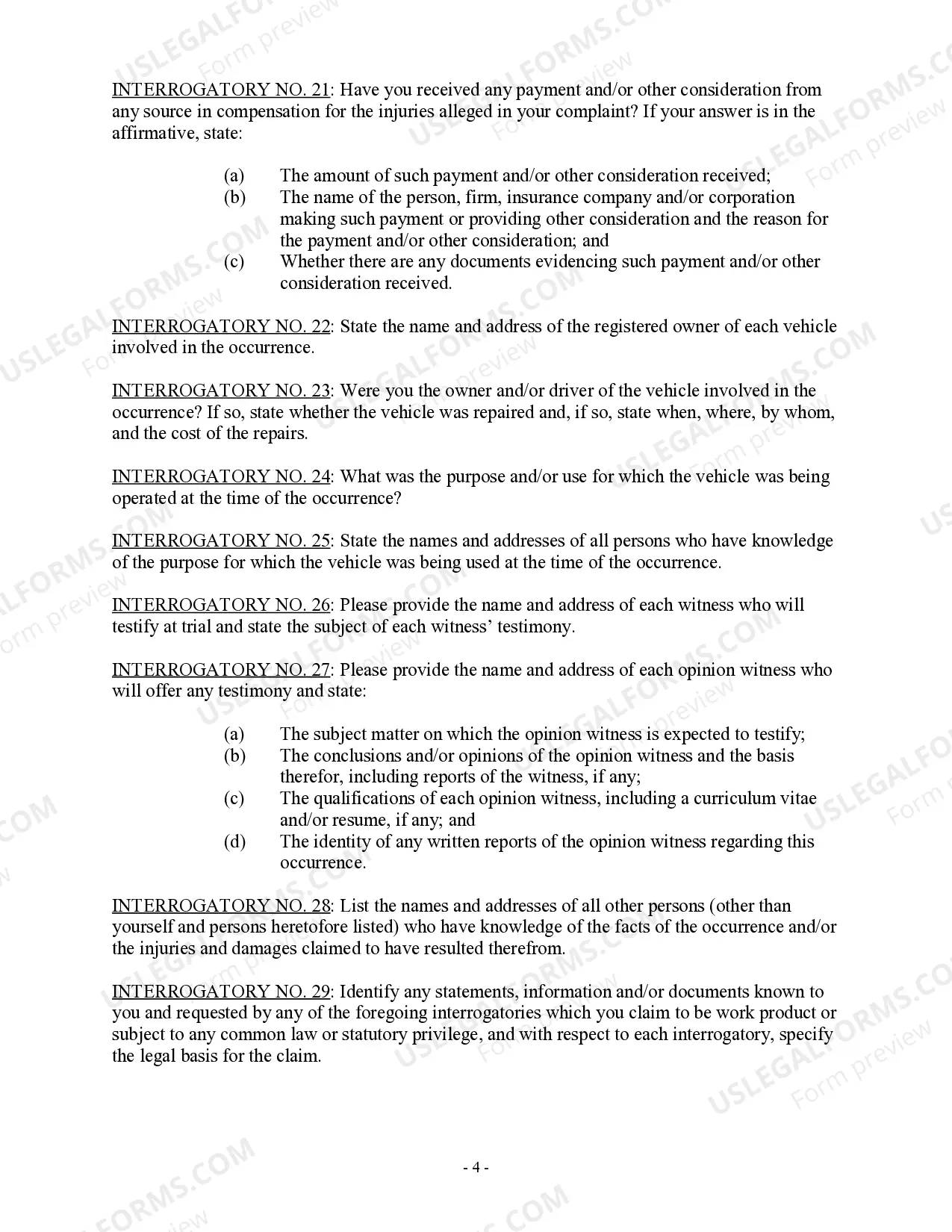
- Details about witnesses who observed the incident.
- Information regarding personal injuries and medical treatments received.
- Employment details and income loss claims due to the accident.
- Disclosure of previous injuries or claims related to personal injury.
When to use this document
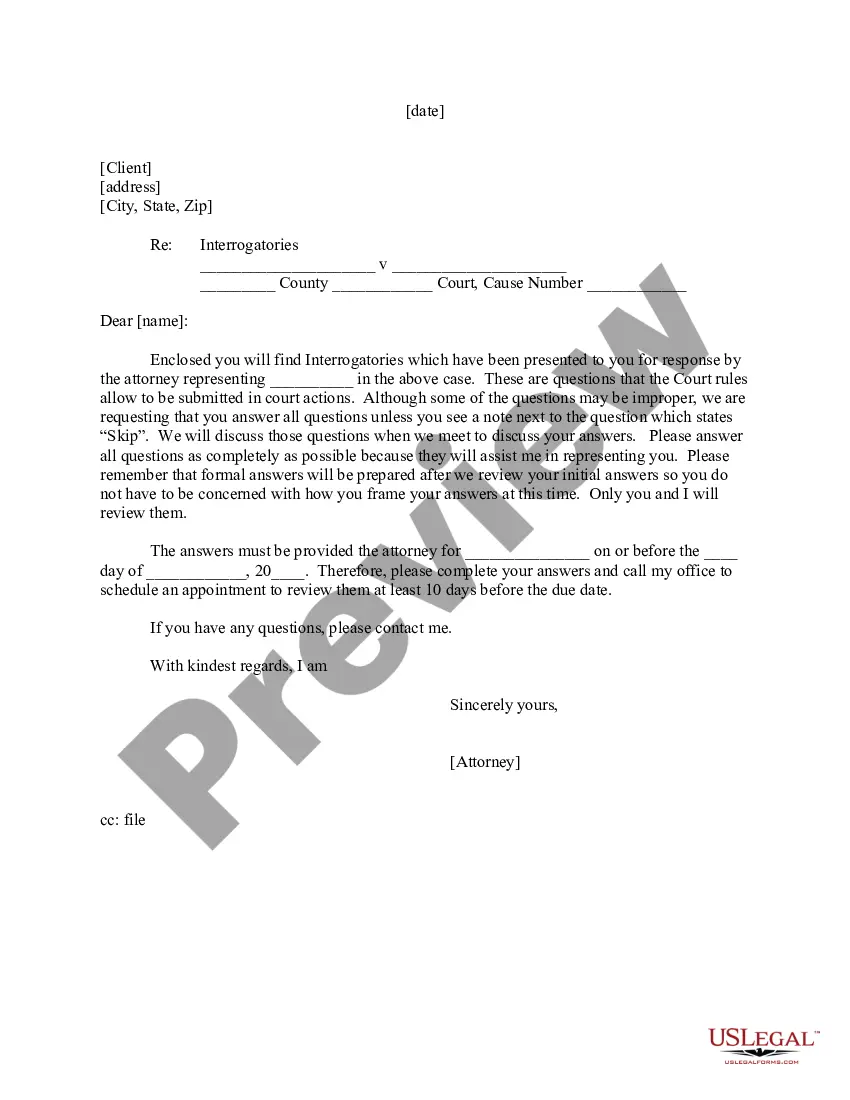
This form should be used when a defendant in a motor vehicle incident needs to gather specific information from the plaintiff. It is typically utilized in preparation for trial to ensure that the relevant facts are established and that any claims made by the plaintiff can be properly addressed. Situations may include automobile accidents, incidents involving commercial vehicles, or other vehicle-related legal disputes.
Who this form is for
- Defendants in motor vehicle accident cases seeking to collect information from the plaintiff.
- Legal professionals representing defendants who need to conduct thorough discovery.
- Insurance companies involved in the claims process related to motor vehicle occurrences.
Completing this form step by step
- Identify the parties: Fill in the names and addresses of the defendant and the plaintiff.
- Answer the interrogatories: Provide thorough, truthful responses to each question posed in the form.
- Collect supporting information: Gather documentation such as medical records and witness statements to support your answers.
- Submit the form: Ensure it is served to the plaintiff following the relevant discovery rules.
- Keep copies: Retain copies of the submitted form and any answers provided for your records.
Is notarization required?
This form does not typically require notarization to be legally valid. However, some jurisdictions or document types may still require it. US Legal Forms provides secure online notarization powered by Notarize, available 24/7 for added convenience.
Get your form ready online
Our built-in tools help you complete, sign, share, and store your documents in one place.
Make edits, fill in missing information, and update formatting in US Legal Forms—just like you would in MS Word.
Download a copy, print it, send it by email, or mail it via USPS—whatever works best for your next step.
Sign and collect signatures with our SignNow integration. Send to multiple recipients, set reminders, and more. Go Premium to unlock E-Sign.
If this form requires notarization, complete it online through a secure video call—no need to meet a notary in person or wait for an appointment.
We protect your documents and personal data by following strict security and privacy standards.

Make edits, fill in missing information, and update formatting in US Legal Forms—just like you would in MS Word.

Download a copy, print it, send it by email, or mail it via USPS—whatever works best for your next step.

Sign and collect signatures with our SignNow integration. Send to multiple recipients, set reminders, and more. Go Premium to unlock E-Sign.

If this form requires notarization, complete it online through a secure video call—no need to meet a notary in person or wait for an appointment.

We protect your documents and personal data by following strict security and privacy standards.
Avoid these common issues
- Failing to provide complete answers to each interrogatory.
- Missing the deadline for responding to the interrogatories.
- Not including necessary documentation to support claims made in the answers.
- Overlooking the need to update responses if new information becomes available.
Why complete this form online
- Convenience: Easily downloadable and printable for immediate use.
- Editability: Customize the questions as needed based on your case.
- Reliability: Forms are drafted by licensed attorneys to ensure legal compliance.
Legal use & context
- This form is vital in pre-trial discovery to ensure all parties can prepare adequately.
- Responses to interrogatories can be used as evidence in court, underscoring the importance of accuracy.
- Failure to respond adequately could lead to legal penalties or negatively impact the case outcome.
Quick recap
- The Interrogatories to Plaintiff for Motor Vehicle Occurrence is essential for defendants to gather information.
- It is important to adhere to state-specific rules when completing this form.
- Thorough and accurate information will support defense strategies in litigation.
Looking for another form?



Form popularity
FAQ
You must answer each interrogatory separately and fully in writing under oath, unless you object to it. You must explain why you object. You must sign your answers and objections.
You must answer each interrogatory separately and fully in writing under oath, unless you object to it. You must explain why you object. You must sign your answers and objections.
Your answers to the interrogatories should usually be short, clear, and direct and should answer only the question that is being asked. This is not the time to set out your entire case or defense to the other side. Take the time to make sure your answers are correct and truthful.
Written questions submitted to a party from his or her adversary to ascertain answers that are prepared in writing and signed under oath and that have relevance to the issues in a lawsuit.No party can be compelled to answer interrogatories that involve matters beyond the party's control.
In law, interrogatories (also known as requests for further information) are a formal set of written questions propounded by one litigant and required to be answered by an adversary in order to clarify matters of fact and help to determine in advance what facts will be presented at any trial in the case.
There are also form interrogatories for employment law cases that ask questions that arise in employment disputes. Special interrogatories are questions that are prepared by an attorney that ask specific questions about the case.
Motions to Compel If a party doesn't respond to interrogatories or requests for production, then the party seeking those answers must file a motion to compel with the court. If the court grants the motion to compel, then the party who objected or failed to answer must then do so.
Unless you have been a party in a lawsuit before, you probably do not know what interrogatories are.Interrogatories are written questions that you have to respond to in writing, under oath. A California personal injury attorney can guide you through the process of responding to interrogatories.
So, can you refuse to answer interrogatories? The answer is, no, you may not.That answer must either permit inspection of the requested information or object to the production of the information for a specific reason.