Texas Special Warranty Deed - Individual to Husband and Wife
What is this form?
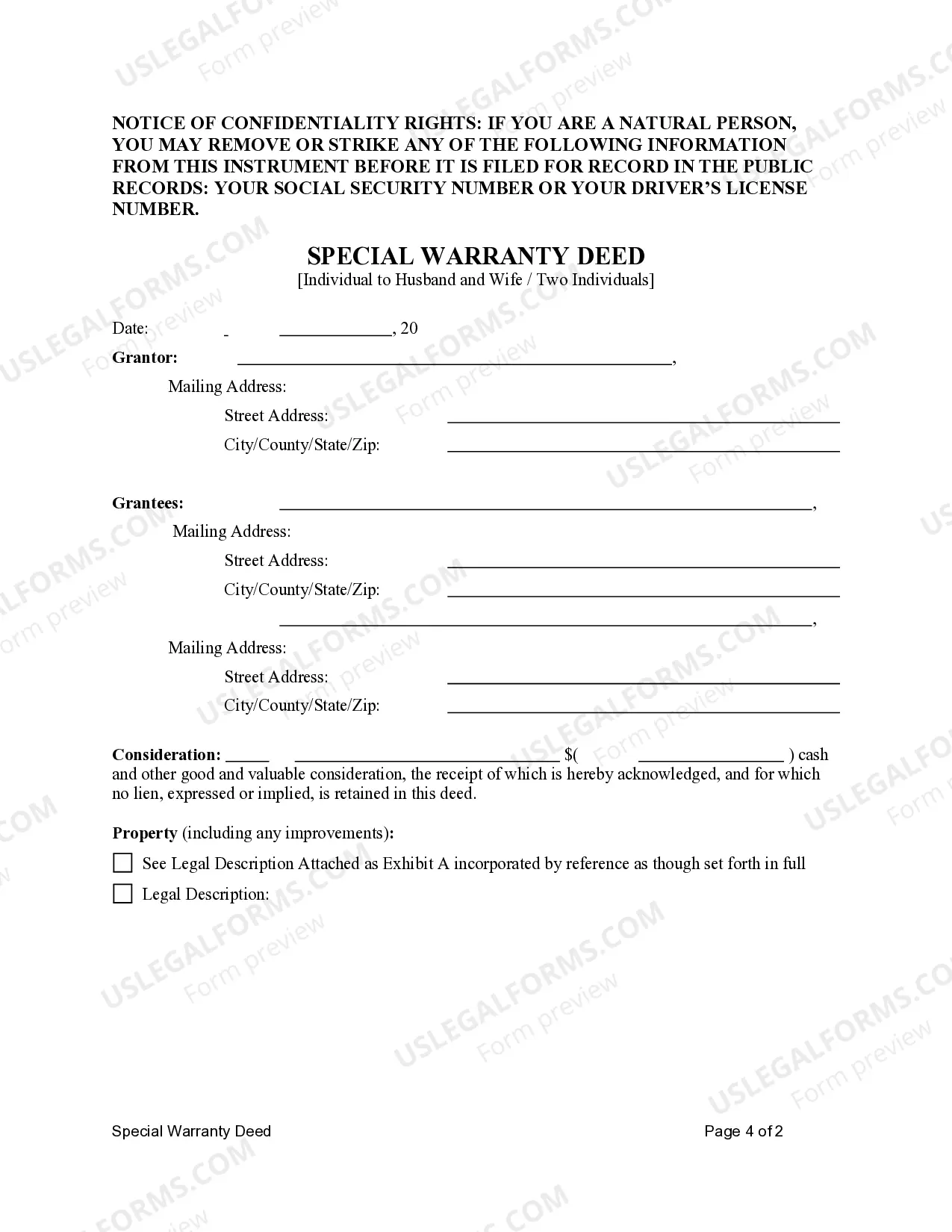
The Special Warranty Deed - Individual to Husband and Wife is a legal document that allows an individual (the Grantor) to transfer property to a married couple (the Grantees). This type of deed specifically includes a warranty from the Grantor regarding the property's title, protecting the Grantees against claims made by individuals who may assert rights through the Grantor. Unlike a general warranty deed, this form limits the Grantorâs liability to only those claims that arose during their ownership of the property, making it a unique option for property transfers between individuals and married couples.
Form components explained
- Identification of the Grantor and Grantees
- Description of the property being transferred
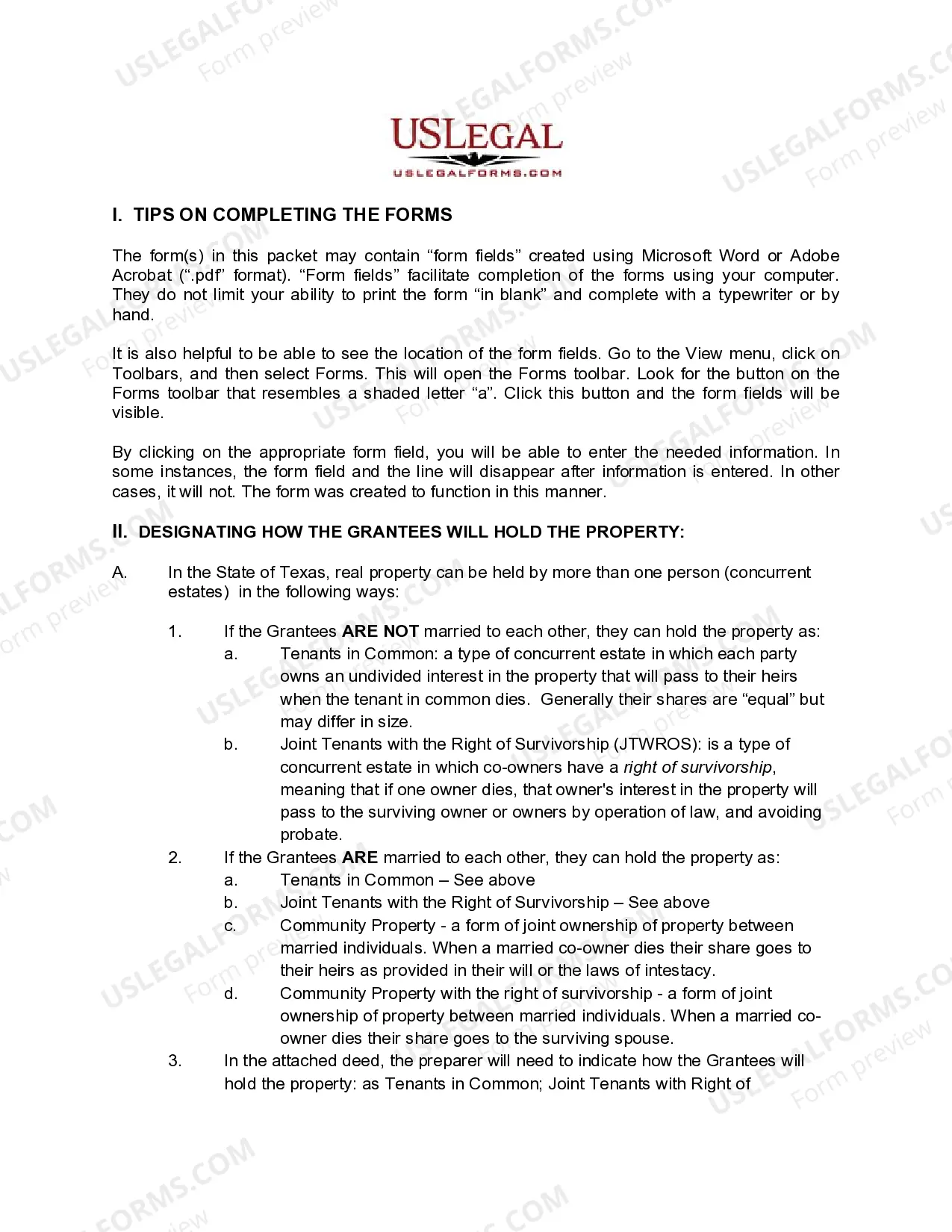
- Details about the type of property ownership (e.g., Tenants in Common, Joint Tenants with Right of Survivorship)
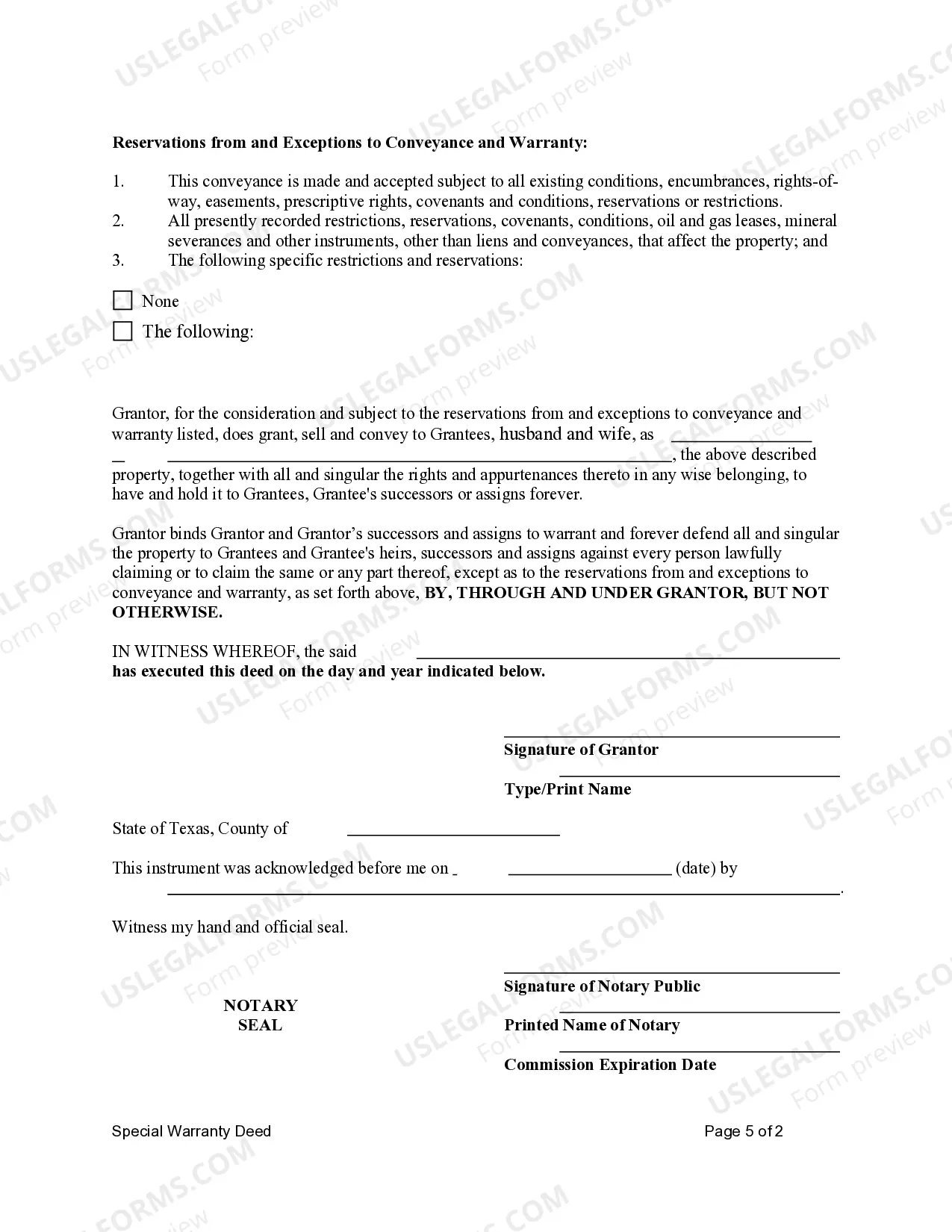
- Warranties made by the Grantor regarding the title
- Signatures and date of execution

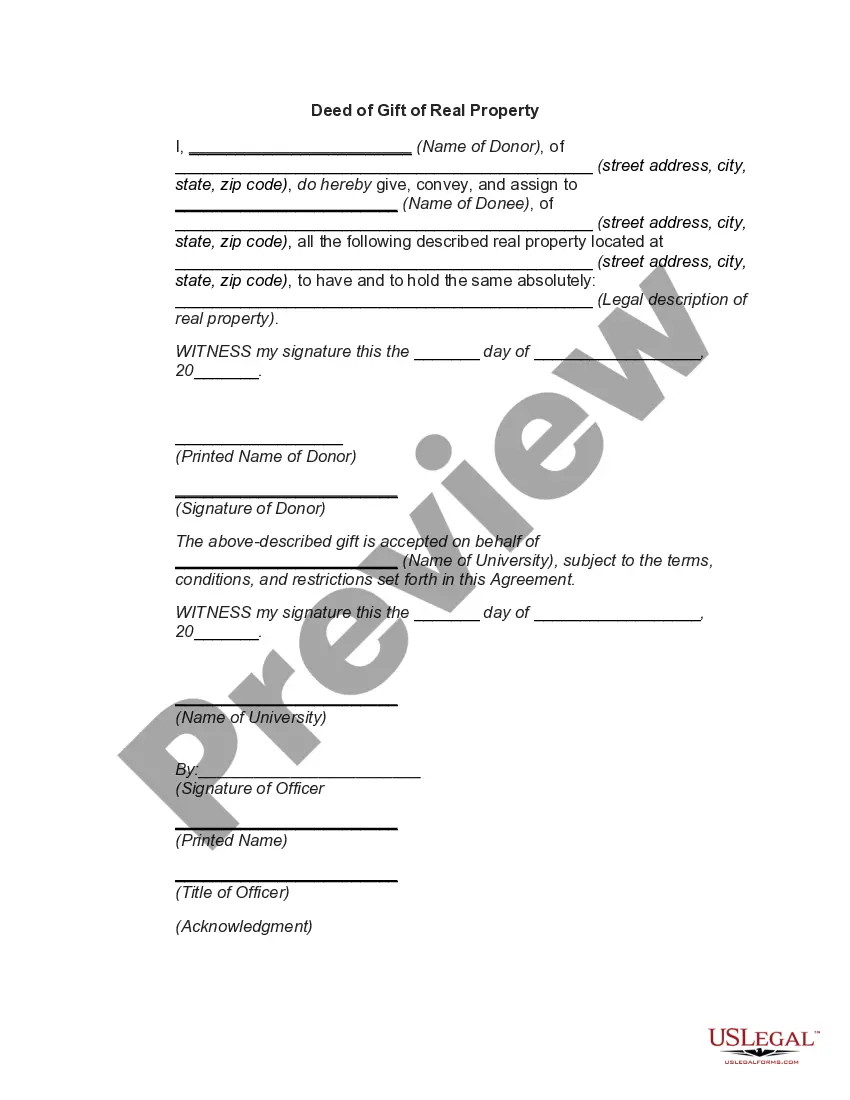
Situations where this form applies
This form is typically used when an individual wants to convey property to a married couple, especially when the Grantor wants to limit their liability regarding the title. It may be used during real estate transactions involving family transfers, estate planning, or when transferring property between spouses. When it is essential to establish clear ownership rights without extending warranties beyond the Grantor's period of ownership, this form is appropriate.
Who needs this form
- Individuals wishing to transfer property to a married couple
- Property owners looking to limit their liability regarding the title
- Real estate professionals assisting clients with property transactions
- Couples who are receiving property as part of a family arrangement or estate settlement
Steps to complete this form
- Identify the parties involved: Enter the full legal names of the Grantor and Grantees.
- Specify the property: Provide a detailed legal description of the property being transferred.
- Designate how the Grantees will hold the property: Choose from options such as Tenants in Common or Joint Tenants with Right of Survivorship.
- Include any warranties: Clearly state the scope of warranties offered by the Grantor.
- Sign and date the form: Ensure all parties sign the deed in the designated areas.
Notarization requirements for this form
This form does not typically require notarization unless specified by local law. However, it is always advisable to check state-specific rules regarding property transactions to ensure compliance.
Get your form ready online
Our built-in tools help you complete, sign, share, and store your documents in one place.
Make edits, fill in missing information, and update formatting in US Legal Forms—just like you would in MS Word.
Download a copy, print it, send it by email, or mail it via USPS—whatever works best for your next step.
Sign and collect signatures with our SignNow integration. Send to multiple recipients, set reminders, and more. Go Premium to unlock E-Sign.
If this form requires notarization, complete it online through a secure video call—no need to meet a notary in person or wait for an appointment.
We protect your documents and personal data by following strict security and privacy standards.

Make edits, fill in missing information, and update formatting in US Legal Forms—just like you would in MS Word.

Download a copy, print it, send it by email, or mail it via USPS—whatever works best for your next step.

Sign and collect signatures with our SignNow integration. Send to multiple recipients, set reminders, and more. Go Premium to unlock E-Sign.

If this form requires notarization, complete it online through a secure video call—no need to meet a notary in person or wait for an appointment.

We protect your documents and personal data by following strict security and privacy standards.
Common mistakes
- Failing to provide a complete and accurate legal description of the property.
- Not specifying how Grantees will hold the property.
- Overlooking the necessary signatures or date of execution.
- Assuming no legal advice is needed; itâs best to consult a legal professional.
Why complete this form online
- Convenient download and completion from any location.
- Editability allows for easy adjustments before final signing.
- Access to professionally drafted documents ensures compliance with state laws.
- Secure storage of completed forms for future reference.
Looking for another form?

Form popularity
FAQ
If you've recently married and already own a home or other real estate, you may want to add your new spouse to the deed for your property so the two of you own it jointly. To add a spouse to a deed, all you have to do is literally fill out, sign and record a new deed in your county recorder's office.
Special warranties allow the transfer of property title between seller and buyer. The purchase of title insurance can mitigate the risk of prior claims to the special warranty deed.
A In order to make your partner a joint owner you will need to add his name at the Land Registry, for which there is a fee of £280 (assuming you transfer half the house to him). You won't, however, have to pay capital gains tax, as gifts between civil partners (and spouses) are tax free.
If you live in a common-law state, you can keep your spouse's name off the title the document that says who owns the property.You can put your spouse on the title without putting them on the mortgage; this would mean that they share ownership of the home but aren't legally responsible for making mortgage payments.
Adding someone to your house deed requires the filing of a legal form known as a quitclaim deed. When executed and notarized, the quitclaim deed legally overrides the current deed to your home. By filing the quitclaim deed, you can add someone to the title of your home, in effect transferring a share of ownership.
In California, all property bought during the marriage with income that was earned during the marriage is deemed "community property." The law implies that both spouses own this property equally, regardless of which name is on the title deed.
Fill out the "grantor" section of the warranty deed. The grantors are the givers, or current owners, of the property. Use the legal name of each grantor and insert current addresses after each grantor's name.
Write the county where the property is located on line provided next to the words "County of" beneath the words "The State of Texas." Write the name and address of the grantor on the lines provided after the words "Know all men by these presents, That I."
How do I add my spouse to the deed? In Texas, you can't add your spouse's name to an existing deed, but you can create a new deed by transferring the property from yourself to you and your spouse jointly. You can do this by using either a deed without warranty or a quit claim deed.