• US Legal Forms

Texas Special Warranty Deed - Husband and Wife to Individual

State:
Texas
Control #:
TX-022-78
Format:
Word; 
Rich Text
Instant download

What is this form?

The Special Warranty Deed - Husband and Wife to Individual is a legal document used to transfer real estate ownership from a husband and wife (the grantors) to an individual (the grantee). This specific type of deed provides limited warranties, promising to defend against claims only arising from the grantors' ownership. It is designed for situations where the grantors want to convey their property while minimizing liability for any issues that might arise from previous ownership, making it distinct from other types of deeds like general warranty deeds, which offer broader protections.

Main sections of this form

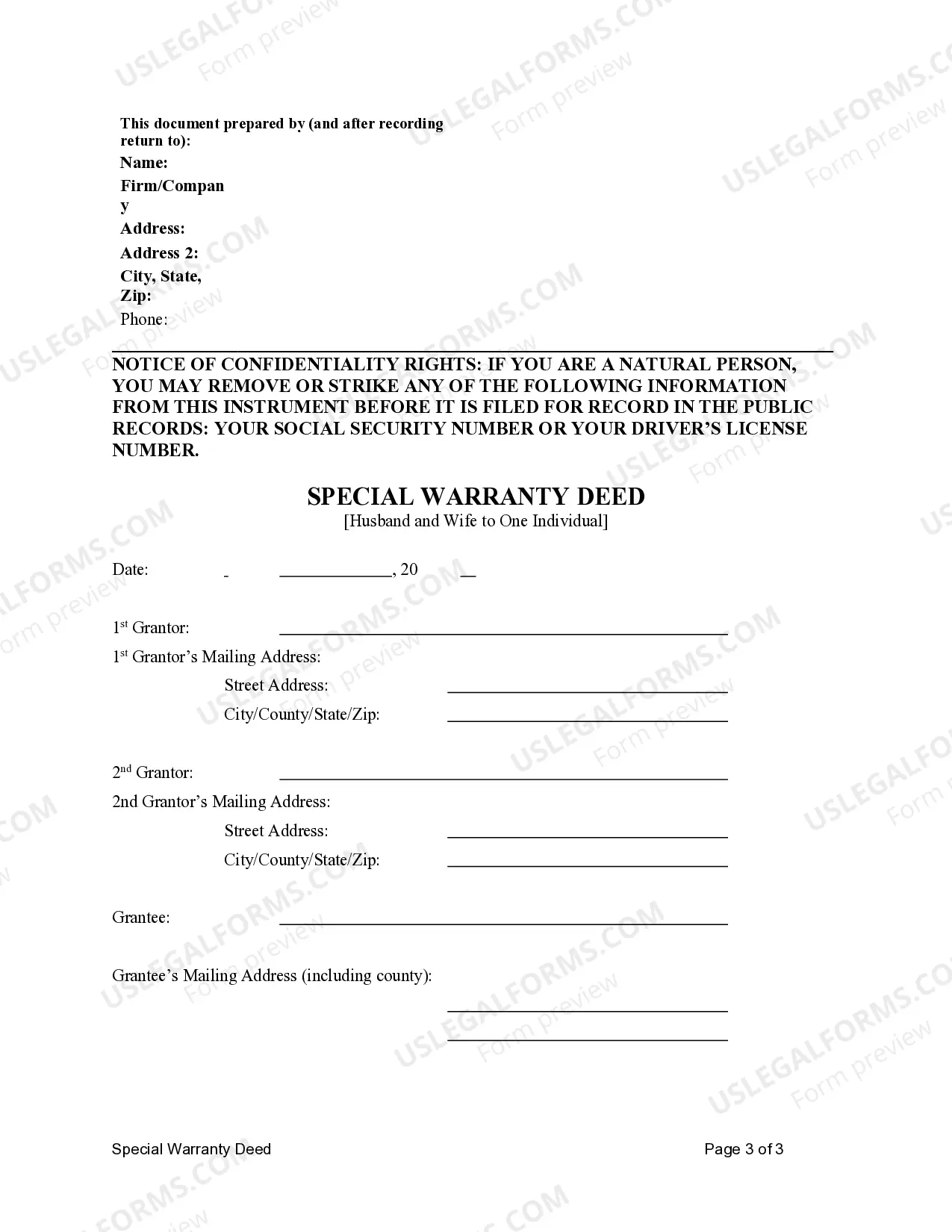
  • Identification of grantors (husband and wife) and grantee (individual).
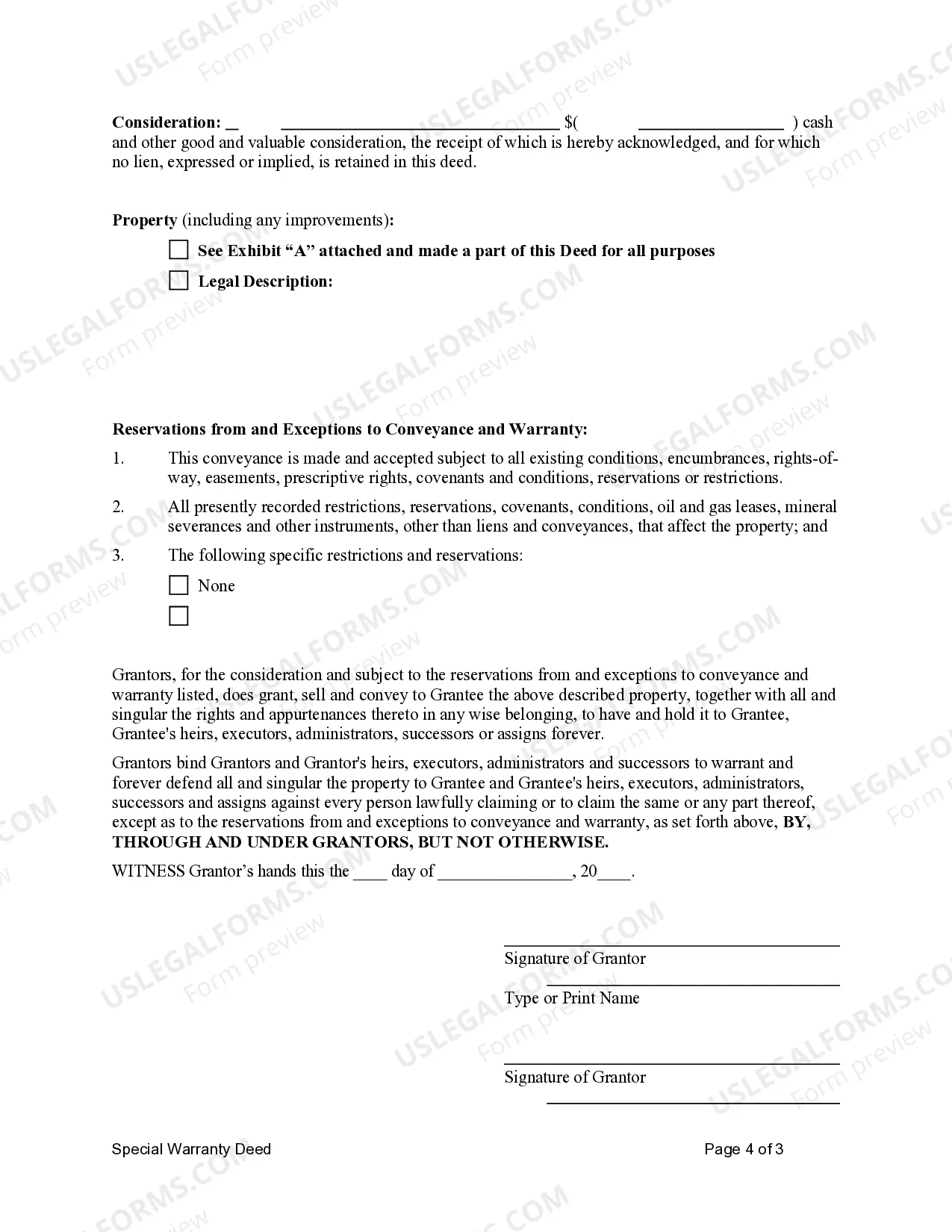
  • Description of the property being conveyed.
  • Specific wording that limits warranties to claims by those claiming through the grantors.
  • Space for the signatures of the grantors.
  • Date of the conveyance.
Free preview
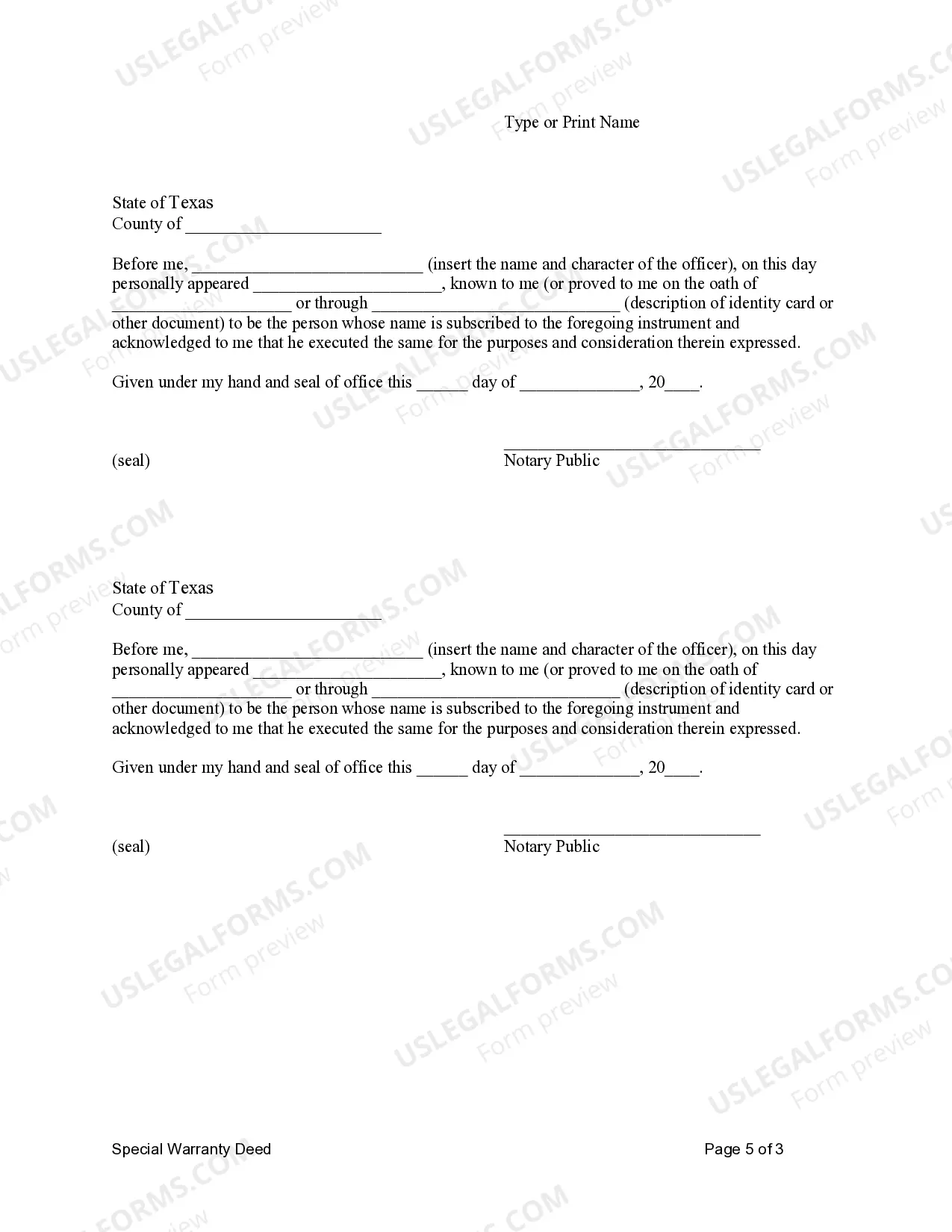
  • Preview Special Warranty Deed - Husband and Wife to Individual
  • Preview Special Warranty Deed - Husband and Wife to Individual
  • Preview Special Warranty Deed - Husband and Wife to Individual
  • Preview Special Warranty Deed - Husband and Wife to Individual
  • Preview Special Warranty Deed - Husband and Wife to Individual
  • Preview Special Warranty Deed - Husband and Wife to Individual

When to use this document

This form is applicable in scenarios where a husband and wife are transferring property to an individual and want to ensure the deed reflects limited liability for any claims against the title, except those arising directly from their ownership. It is often utilized in real estate transactions involving family members, friends, or in situations where previous encumbrances or issues related to the property exist.

Who this form is for

  • Married couples looking to transfer property to an individual.
  • Real estate agents facilitating a sale between spouses and a third party.
  • Individuals wanting to understand their responsibilities when receiving property through a special warranty deed.

How to prepare this document

  • Identify the parties involved: the husband and wife as grantors, and the individual as grantee.
  • Provide a clear and precise description of the property being transferred.
  • Enter the current date of the conveyance.
  • Sign the deed as a grantor, using the signature lines provided.
  • Store the completed deed securely after execution for future reference.

Is notarization required?

This form must be notarized to be legally valid. US Legal Forms provides secure online notarization powered by Notarize, allowing you to complete the process through a verified video call.

Common mistakes

  • Failing to accurately describe the property being transferred.
  • Not signing the deed, which can render it invalid.
  • Omitting the date of the transfer.
  • Using incorrect terminology if the form is adapted for a jurisdiction other than Texas.

Benefits of completing this form online

  • Convenience of completing the form digitally, allowing for easier corrections and edits.
  • Immediate access to the document without the need for in-person visits or appointments.
  • Secure storage and retrieval of forms through US Legal Forms platform.

Form popularity

FAQ

The answer is yes. Parties to a transaction are always free to prepare their own deeds. If you do so, be sure your deed measures up to your state's legal regulations, to help avert any legal challenge to the deed later.

Adding someone to your house deed requires the filing of a legal form known as a quitclaim deed. When executed and notarized, the quitclaim deed legally overrides the current deed to your home. By filing the quitclaim deed, you can add someone to the title of your home, in effect transferring a share of ownership.

If you've recently married and already own a home or other real estate, you may want to add your new spouse to the deed for your property so the two of you own it jointly. To add a spouse to a deed, all you have to do is literally fill out, sign and record a new deed in your county recorder's office.

Find the most recent deed to the property. It is best to begin with a copy of the most recent deed to the property (the deed that transferred the property to the current grantor). Create a new deed. Sign and notarize the deed. File the documents in the county land records.

Fill out the "grantor" section of the warranty deed. The grantors are the givers, or current owners, of the property. Use the legal name of each grantor and insert current addresses after each grantor's name.

How do I add my spouse to the deed? In Texas, you can't add your spouse's name to an existing deed, but you can create a new deed by transferring the property from yourself to you and your spouse jointly. You can do this by using either a deed without warranty or a quit claim deed.

It will not protect against title issues that arose prior to the time the seller took occupancy. Consequently, it offers less protection to buyers, and more protection to sellers, than a general warranty deed, which is the most common option for selling or buying a property.

Special warranties allow the transfer of property title between seller and buyer. The purchase of title insurance can mitigate the risk of prior claims to the special warranty deed.

A special warranty deed to real estate offers protection to the buyer through the seller's guarantee that the title has been free and clear of encumbrances during their ownership of the property. It does not guarantee clear title beyond their ownership.

Trusted and secure by over 3 million people of the world’s leading companies

Texas Special Warranty Deed - Husband and Wife to Individual