Tennessee Estate Planning Questionnaire and Worksheets
Overview of this form
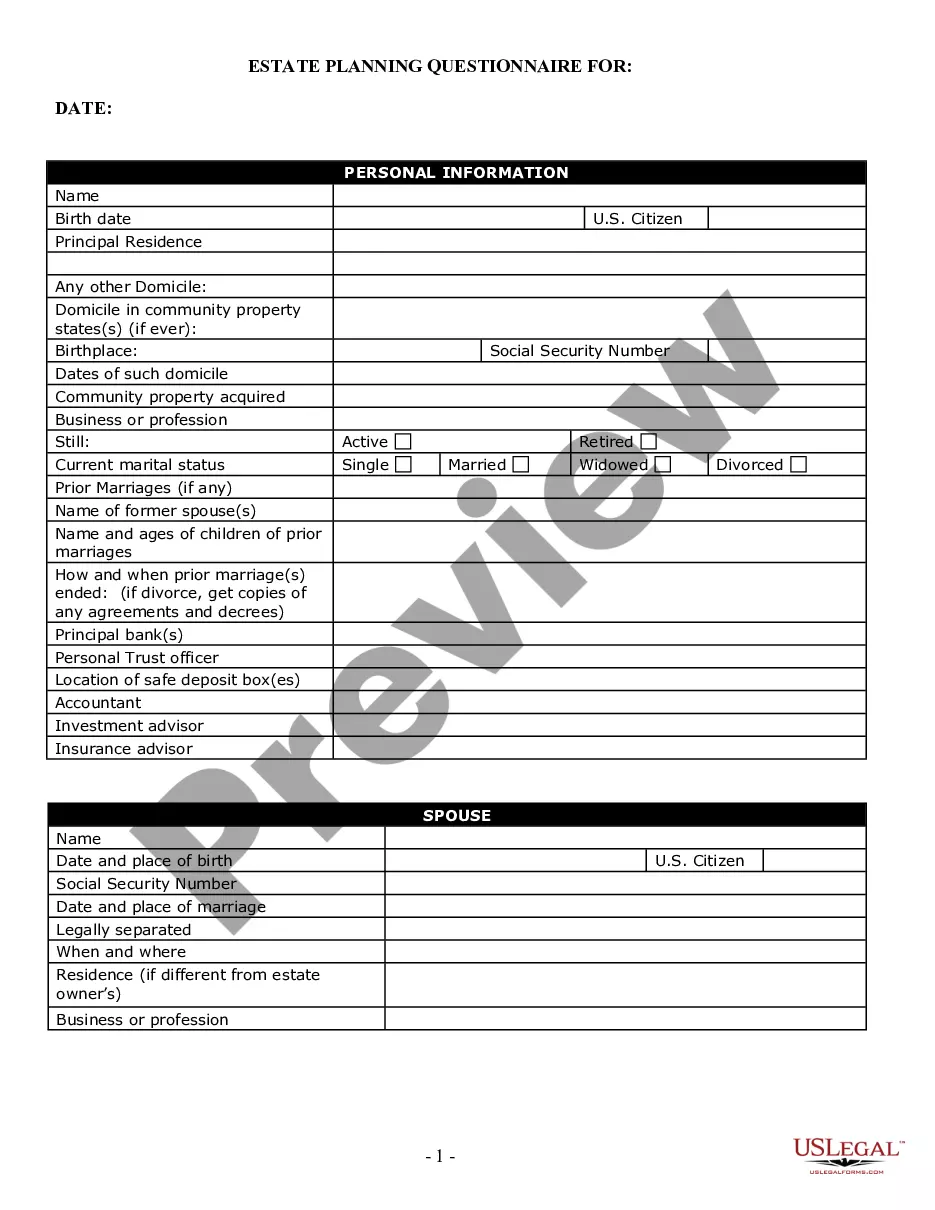
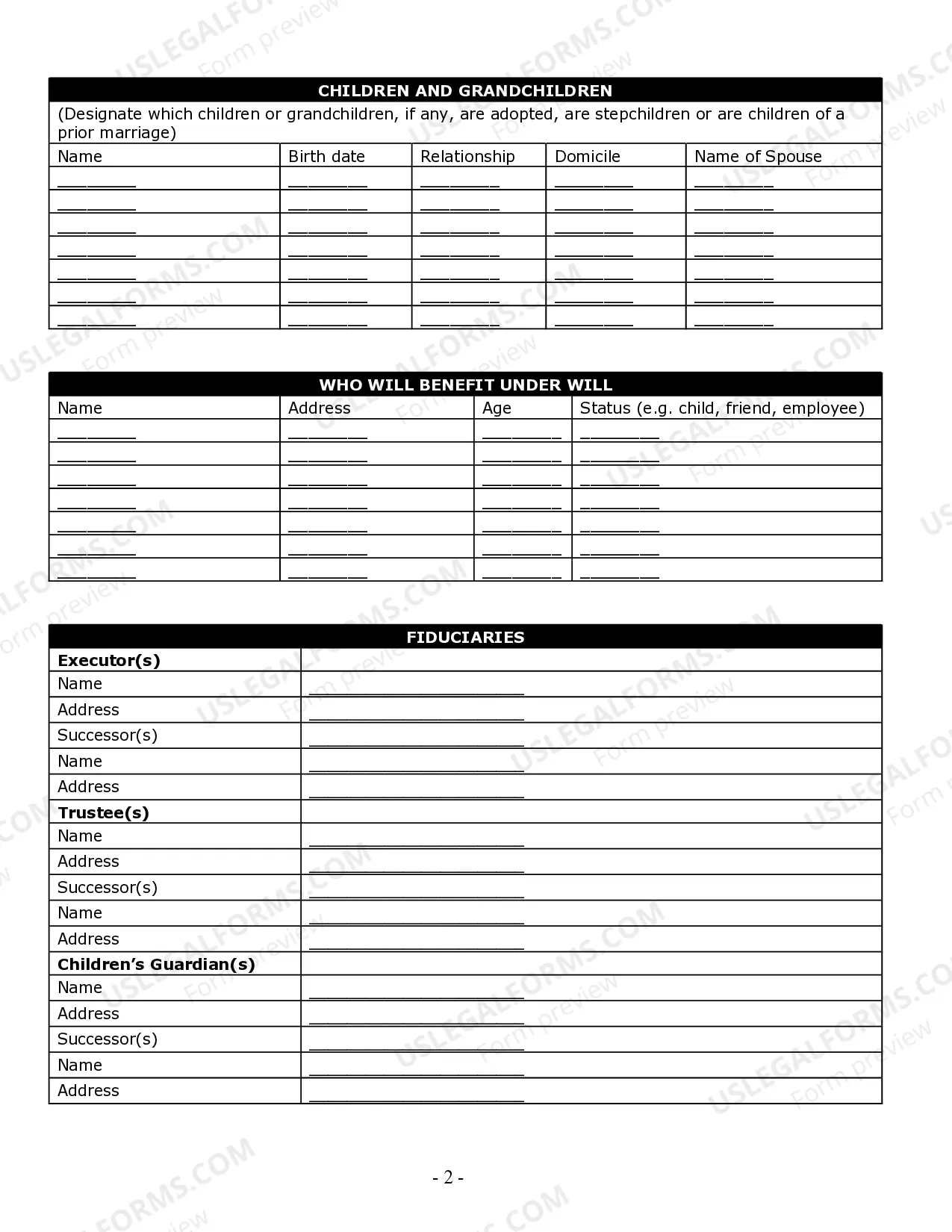
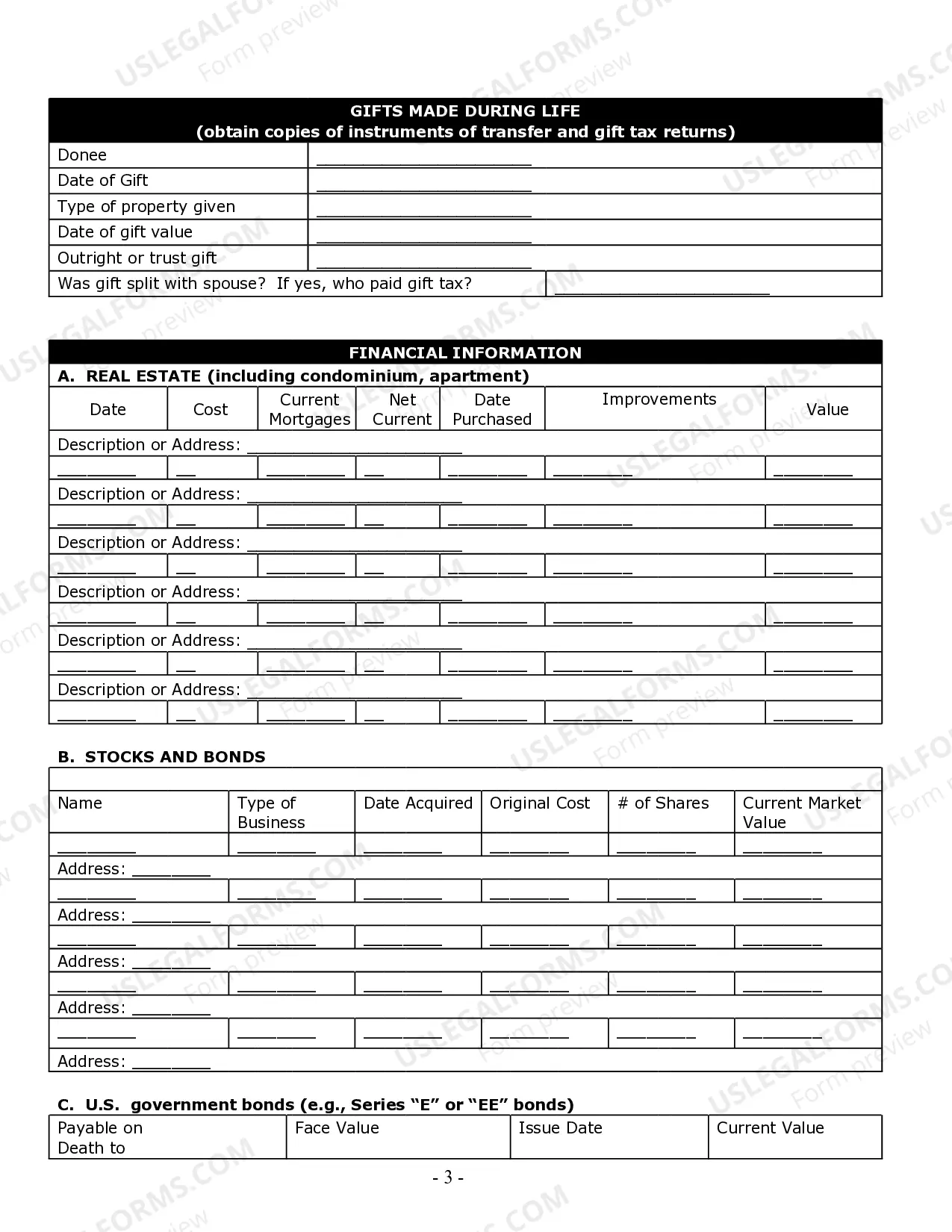
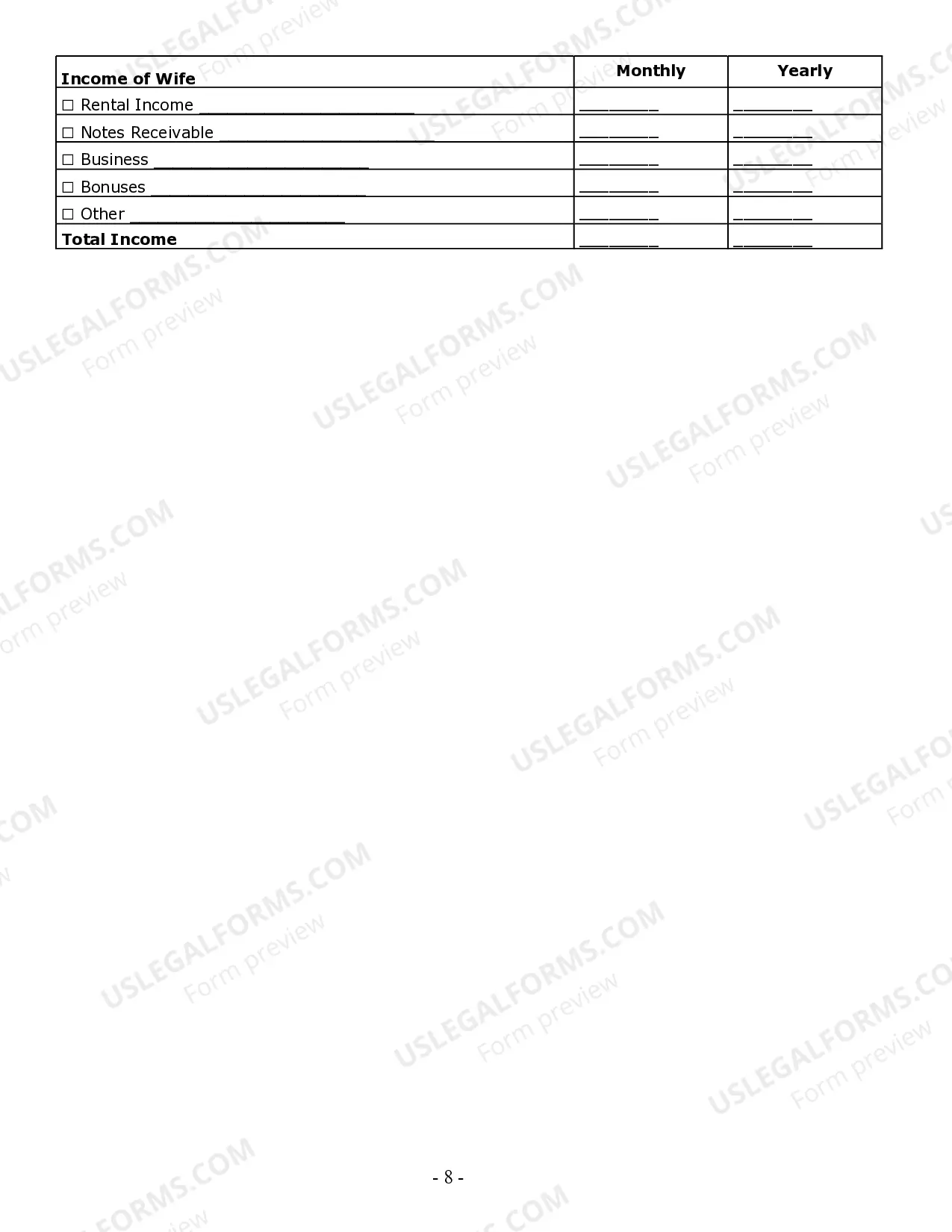
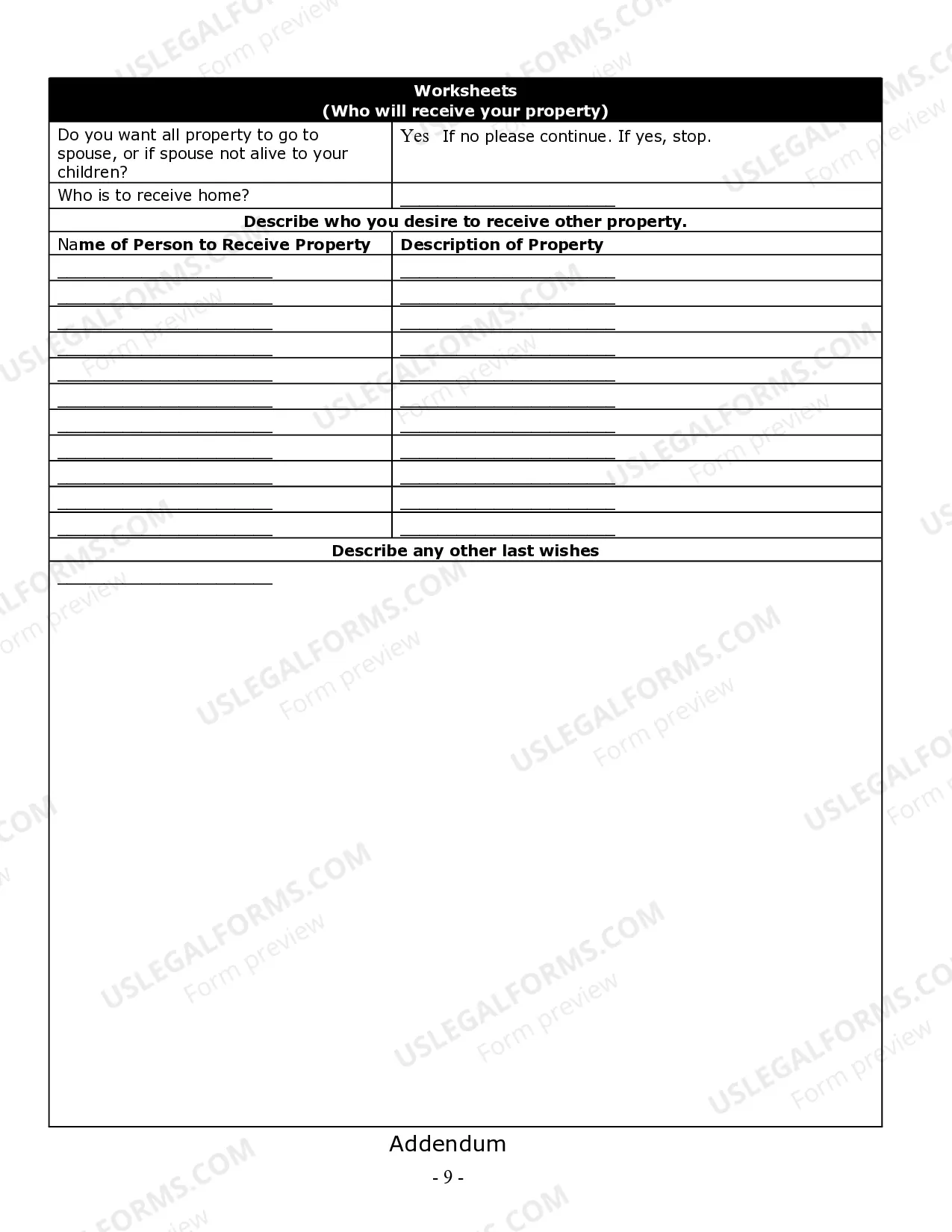
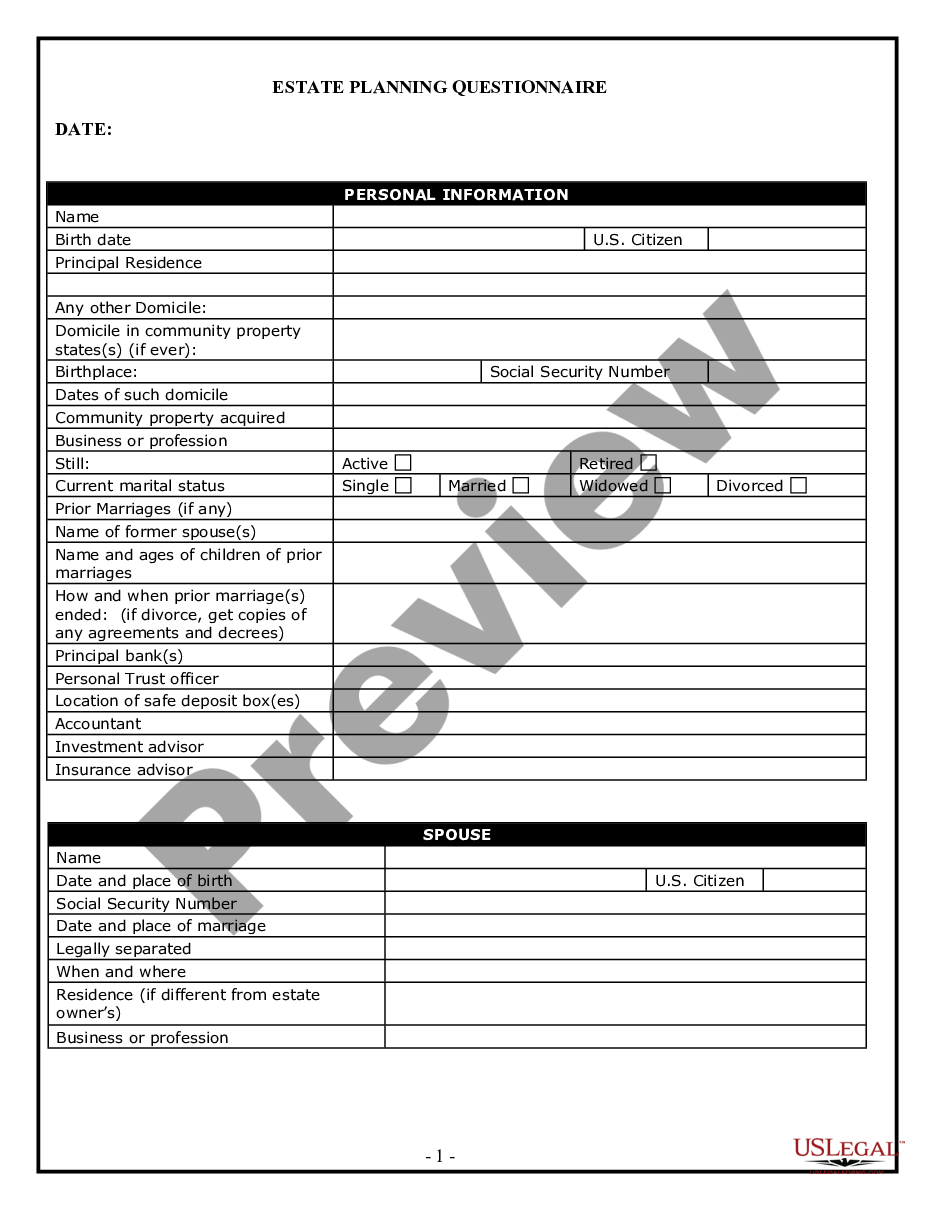
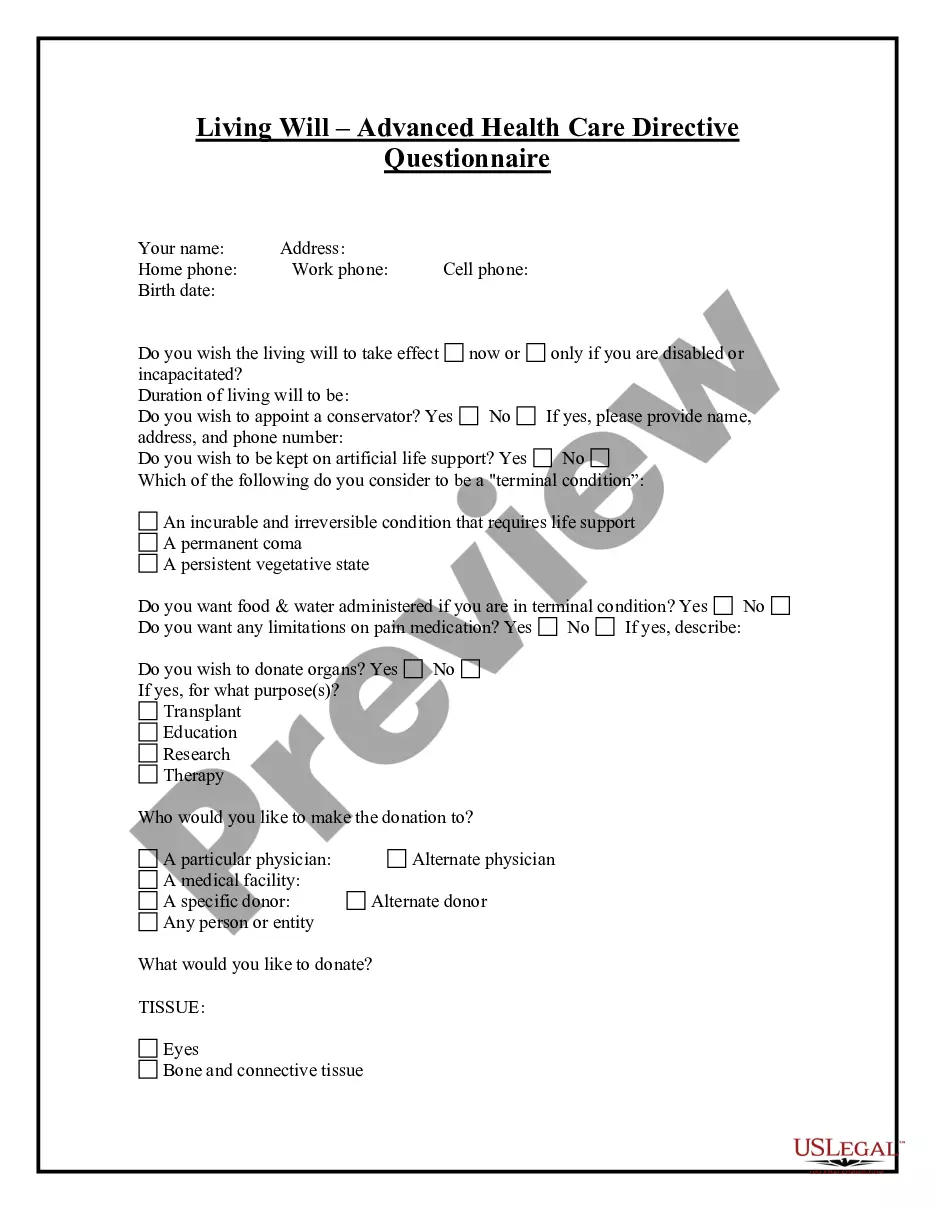
The Estate Planning Questionnaire and Worksheets is a comprehensive tool designed to gather essential personal and financial information for effective estate planning. This form distinguishes itself by serving both as a client interview guide for professionals and as a self-assessment tool for individuals looking to understand their financial situation. By utilizing this questionnaire, users can better prepare for their estate planning needs.
What’s included in this form
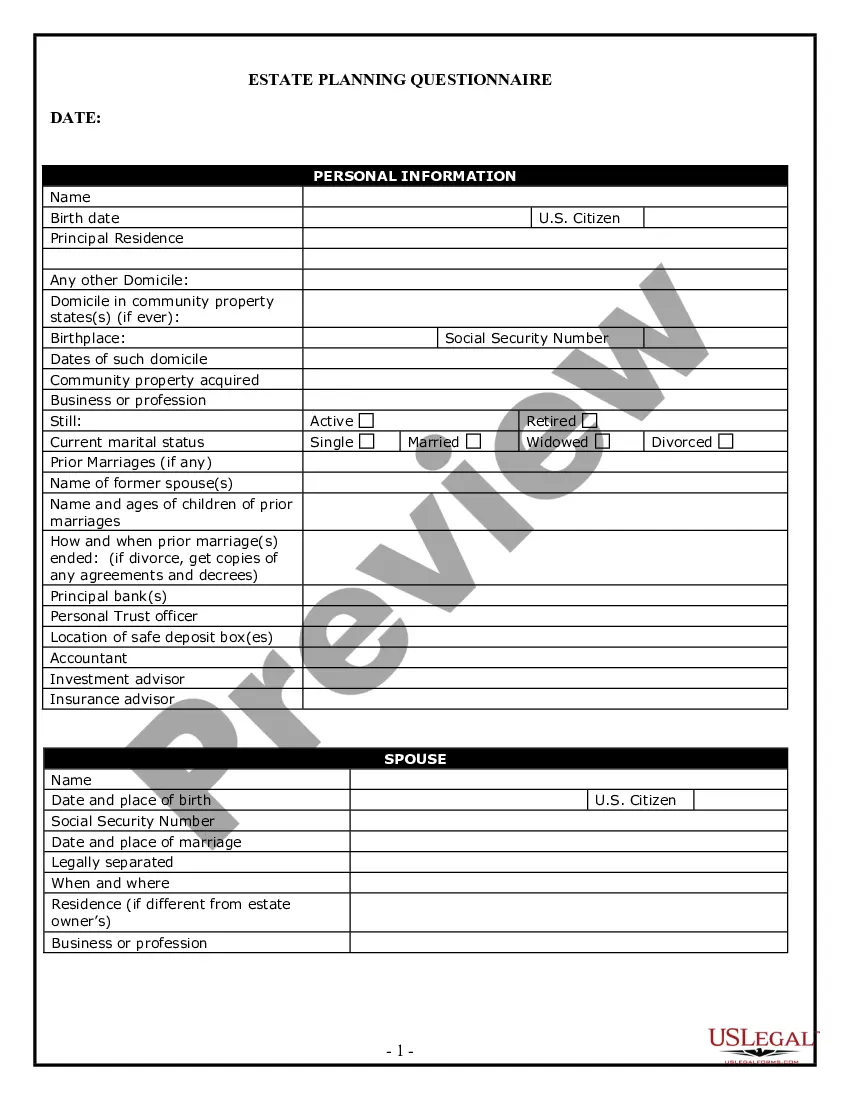
- Personal information section for details about the individualâs identity and relationship status.
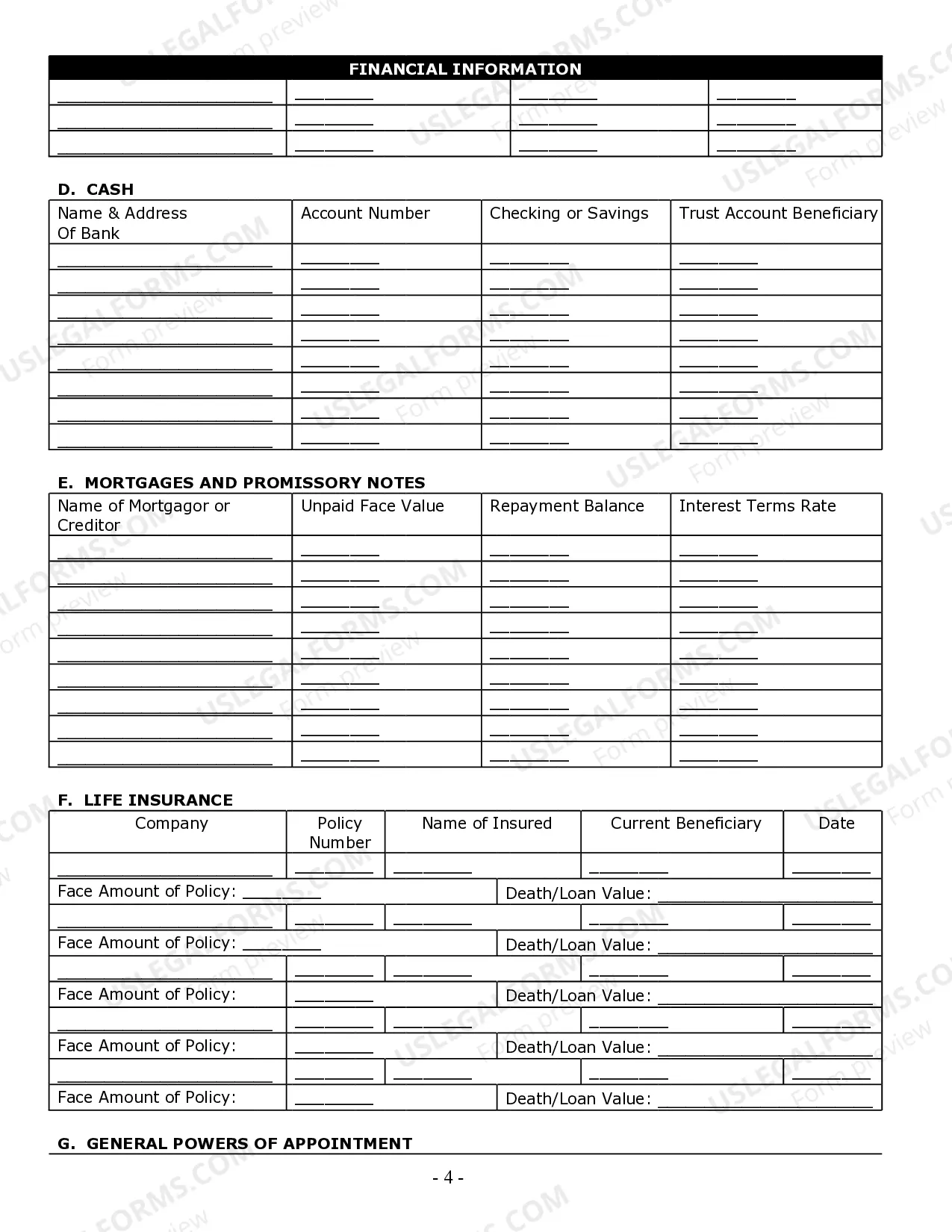
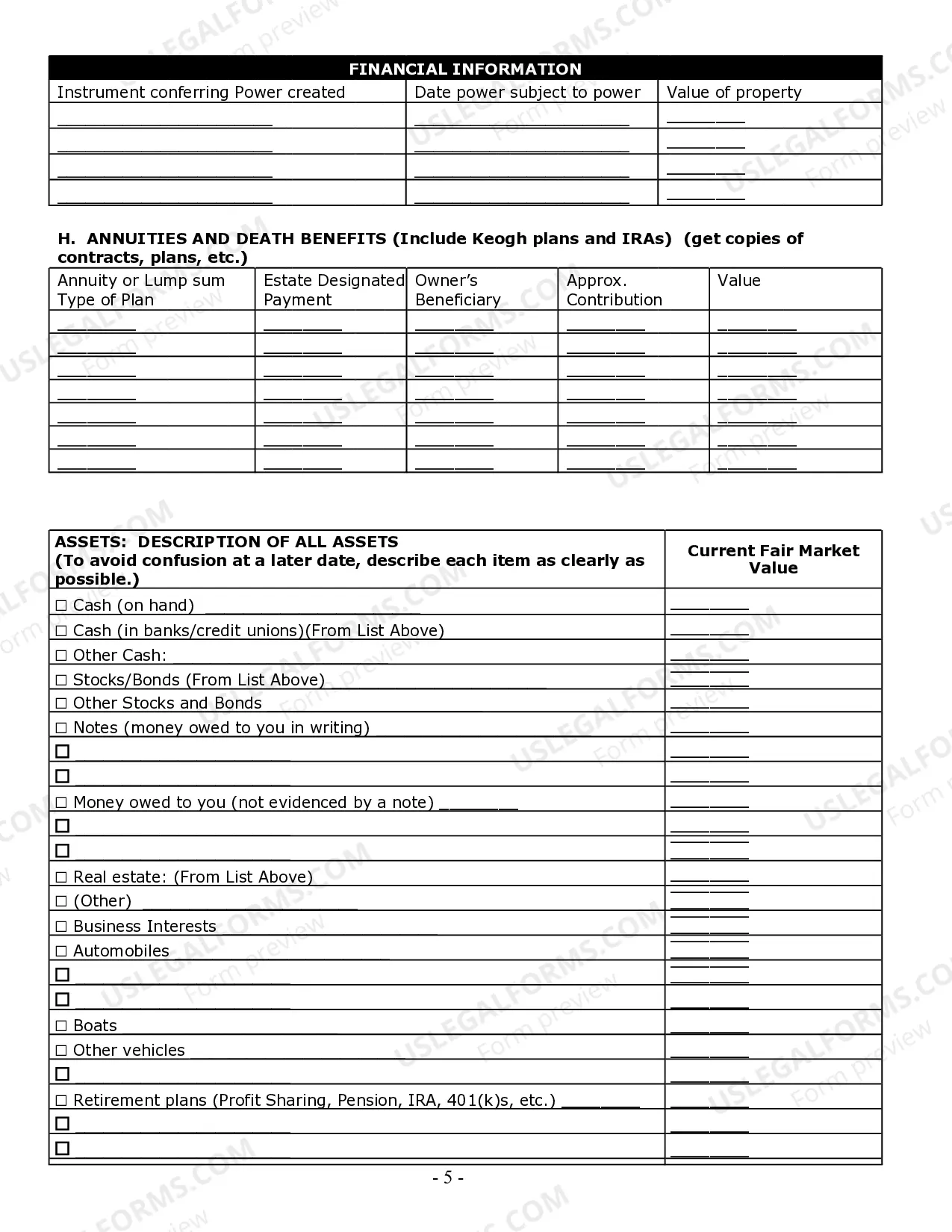
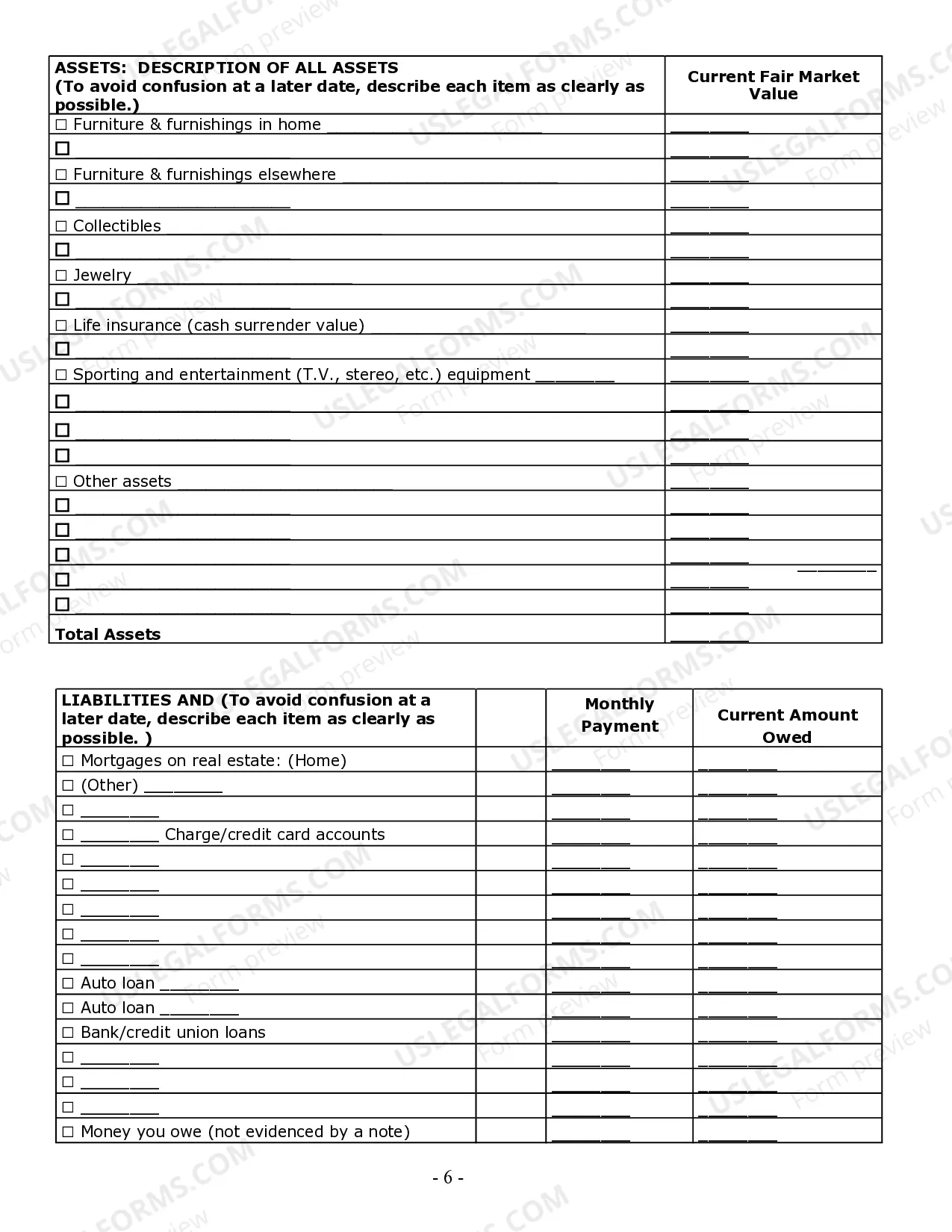
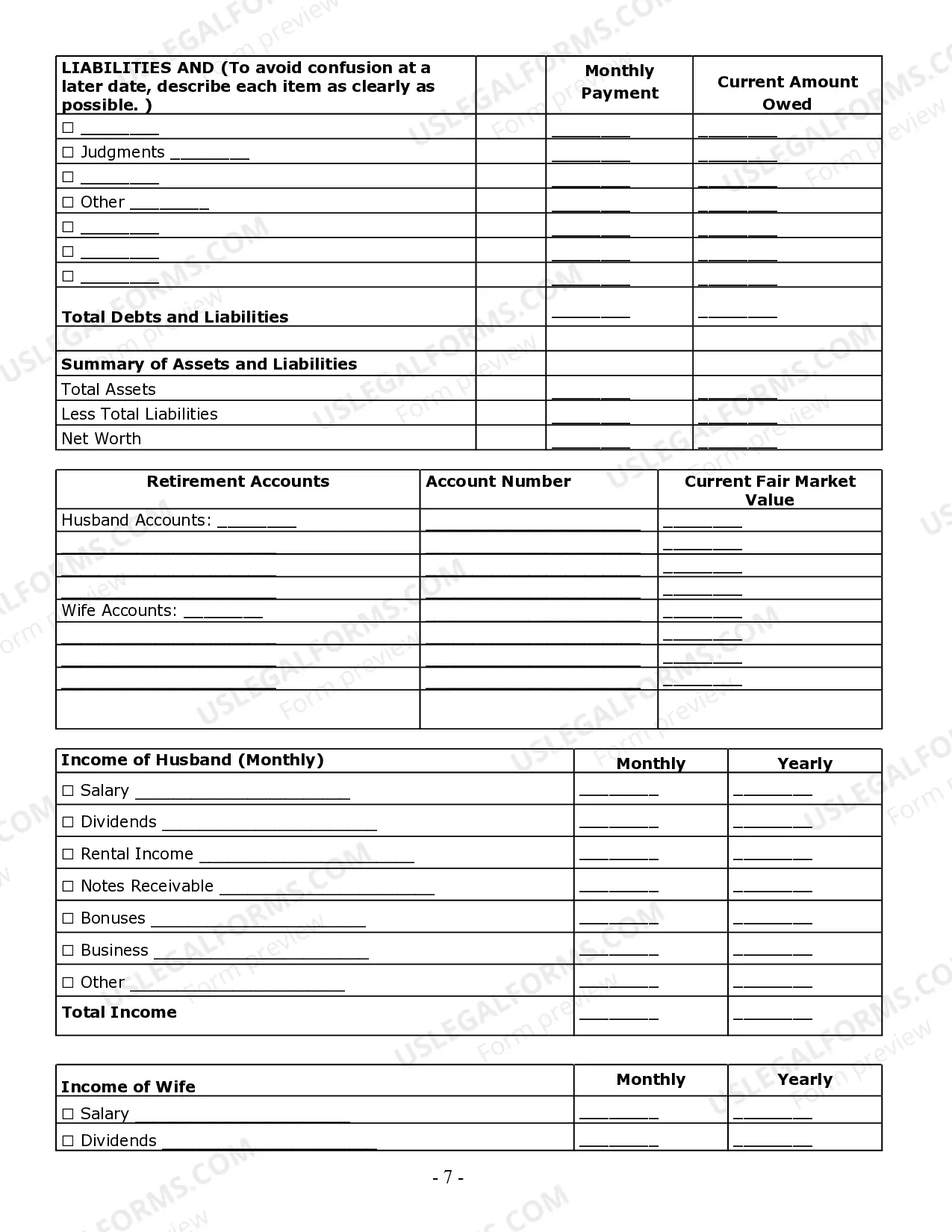
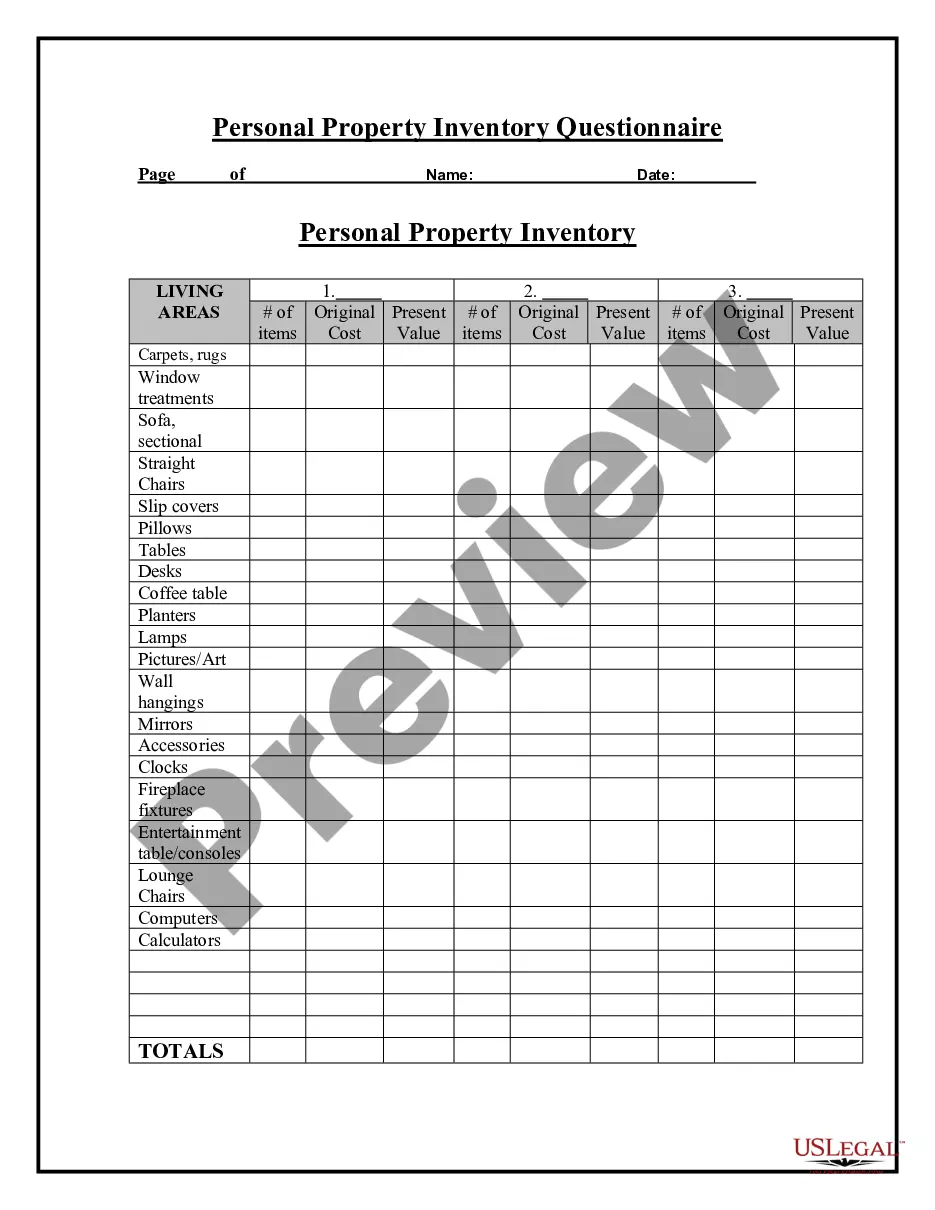
- Financial information section outlining assets, liabilities, and income sources.
- Questions designed to assess beneficiaries and their relationship to the estate owner.
- Checklist for gathering necessary documents and information for estate planning.


When to use this form
This form is particularly useful when an individual is beginning the estate planning process. It is beneficial during initial consultations with legal advisors or as a standalone tool for personal clarity. Users may need this form when evaluating their overall financial situation, planning for the distribution of their estate, or making preparations for future decisions regarding healthcare or asset management.
Who can use this document
This form is suitable for:
- Individuals seeking to create or update their estate plans.
- Legal professionals conducting client interviews.
- Anyone wanting to gain clarity on their financial status for estate planning purposes.
How to prepare this document
- Begin by filling out your personal information, including name, address, and contact details.
- List all financial assets, including real estate, bank accounts, and investments.
- Note any liabilities such as loans or mortgages that will affect your estate.
- Identify potential beneficiaries and their relationship to you.
- Review your completed questionnaire and gather supporting documents for your estate planning meeting.
Notarization requirements for this form
This form does not typically require notarization unless specified by local law.
Get your form ready online
Our built-in tools help you complete, sign, share, and store your documents in one place.
Make edits, fill in missing information, and update formatting in US Legal Forms—just like you would in MS Word.
Download a copy, print it, send it by email, or mail it via USPS—whatever works best for your next step.
Sign and collect signatures with our SignNow integration. Send to multiple recipients, set reminders, and more. Go Premium to unlock E-Sign.
If this form requires notarization, complete it online through a secure video call—no need to meet a notary in person or wait for an appointment.
We protect your documents and personal data by following strict security and privacy standards.

Make edits, fill in missing information, and update formatting in US Legal Forms—just like you would in MS Word.

Download a copy, print it, send it by email, or mail it via USPS—whatever works best for your next step.

Sign and collect signatures with our SignNow integration. Send to multiple recipients, set reminders, and more. Go Premium to unlock E-Sign.

If this form requires notarization, complete it online through a secure video call—no need to meet a notary in person or wait for an appointment.

We protect your documents and personal data by following strict security and privacy standards.
Typical mistakes to avoid
- Failing to provide complete information about assets and liabilities.
- Neglecting to update the form with changes in personal circumstances.
- Overlooking the importance of accurately identifying beneficiaries.
Why use this form online
- Convenience of downloading and filling out the form at your own pace.
- Editability allows for easy updates as your financial situation changes.
- Reliability of a form drafted by licensed attorneys ensuring legal accuracy.
Legal use & context
- This form facilitates clear communication of your estate wishes.
- It serves as a preliminary tool before creating legally binding documents.
- Using this form can help prevent disputes between beneficiaries and ensure your intentions are understood.
Key takeaways
- The Estate Planning Questionnaire and Worksheets is essential for organizing financial and personal information.
- It is valuable for both personal use and professional legal consultations.
- Completing this form is a proactive step towards effective estate planning.
Looking for another form?

Form popularity
FAQ
A Last Will and Testament. When it comes to estate planning, having a last will and testament is likely the first thing that will come to mind. A Document Granting Power of Attorney. An Advance Medical Directive. Revocable Living Trust.
Creating an estate plan is a lot like getting into better shape. Step 1: Sign a will. Step 2: Name beneficiaries. Step 3: Dodge estate taxes. Step 4: Leave a letter. Step 5: Draw up a durable power of attorney. Step 6: Create an advance health care directive.
Liquidity. This refers to assets that can be easily converted into cash, with minimum impact on the price. Sentiment. These are assets that have sentimental value, like personal properties and vacation homes. Tax Planning. Taxes come into play in estate planning as well, adding complications and expenses.
There are four main elements of an estate plan; these include a will, a living will and healthcare power of attorney, a financial power of attorney, and a trust.
More Than a Last Will. Itemize Your Inventory. Follow with Non-Physical Assets. Assemble a List of Debts. Make a Memberships List. Make Copies of Your Lists. Review Your Retirement Account. Update Your Insurance.
Estate planning is all about protecting your loved ones, which means in part giving them protection from the Internal Revenue Service (IRS). Essential to estate planning is transferring assets to heirs with an eye toward creating the smallest possible tax burden for them.
Proposal, directives, power of attorney, trusts.
Generally, yes. The Tennessee statute on Wills recognizes the validity of holographic or handwritten Wills. T.C.A. § 32-1-105.
For the vast majority of individuals, my cost to prepare an estate package including a Will, Power of Attorney, Healthcare Power of Attorney and Living is a flat rate of $450.00. I charge this same flat rate for both single individuals and married couples.