Arizona Commercial Contract for Contractor

Understanding this form
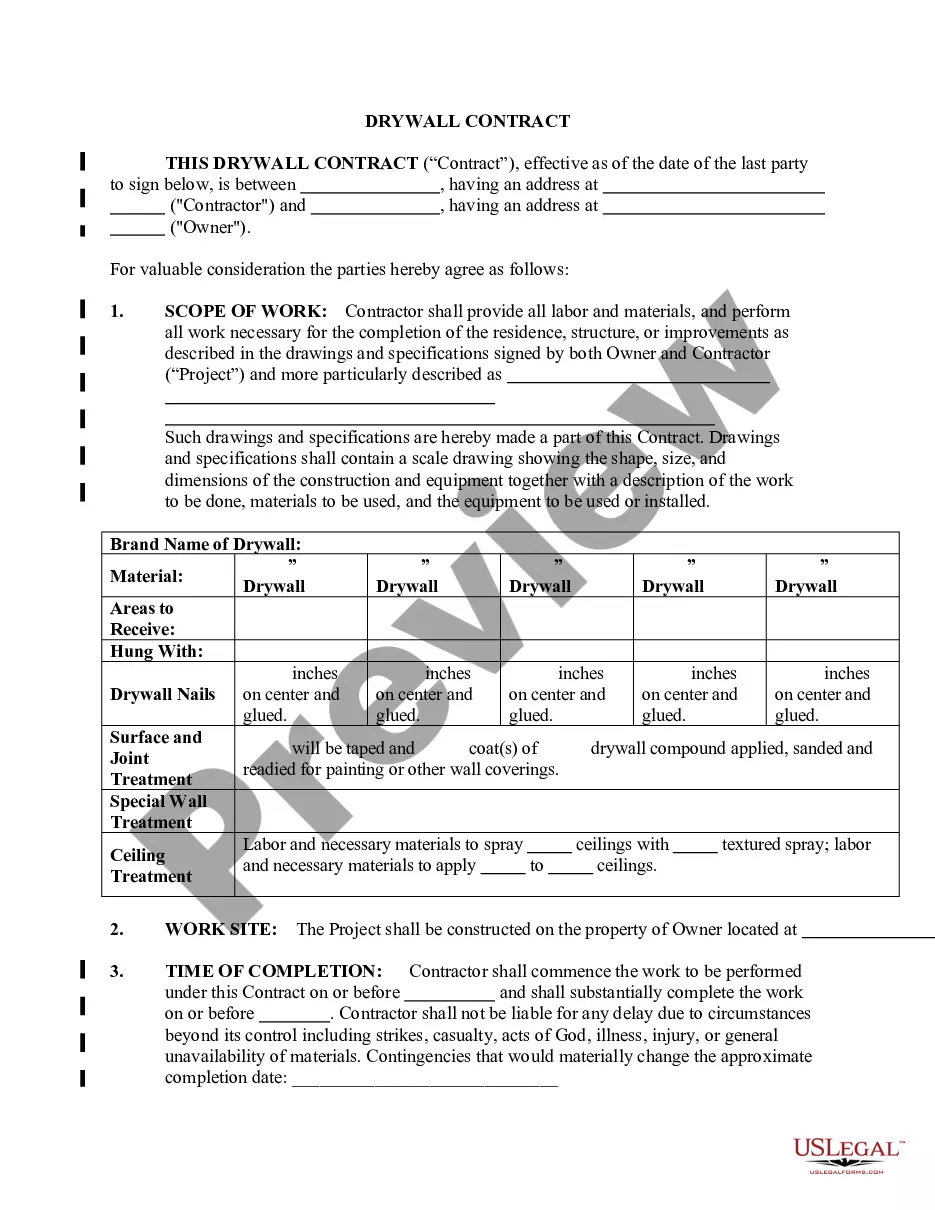
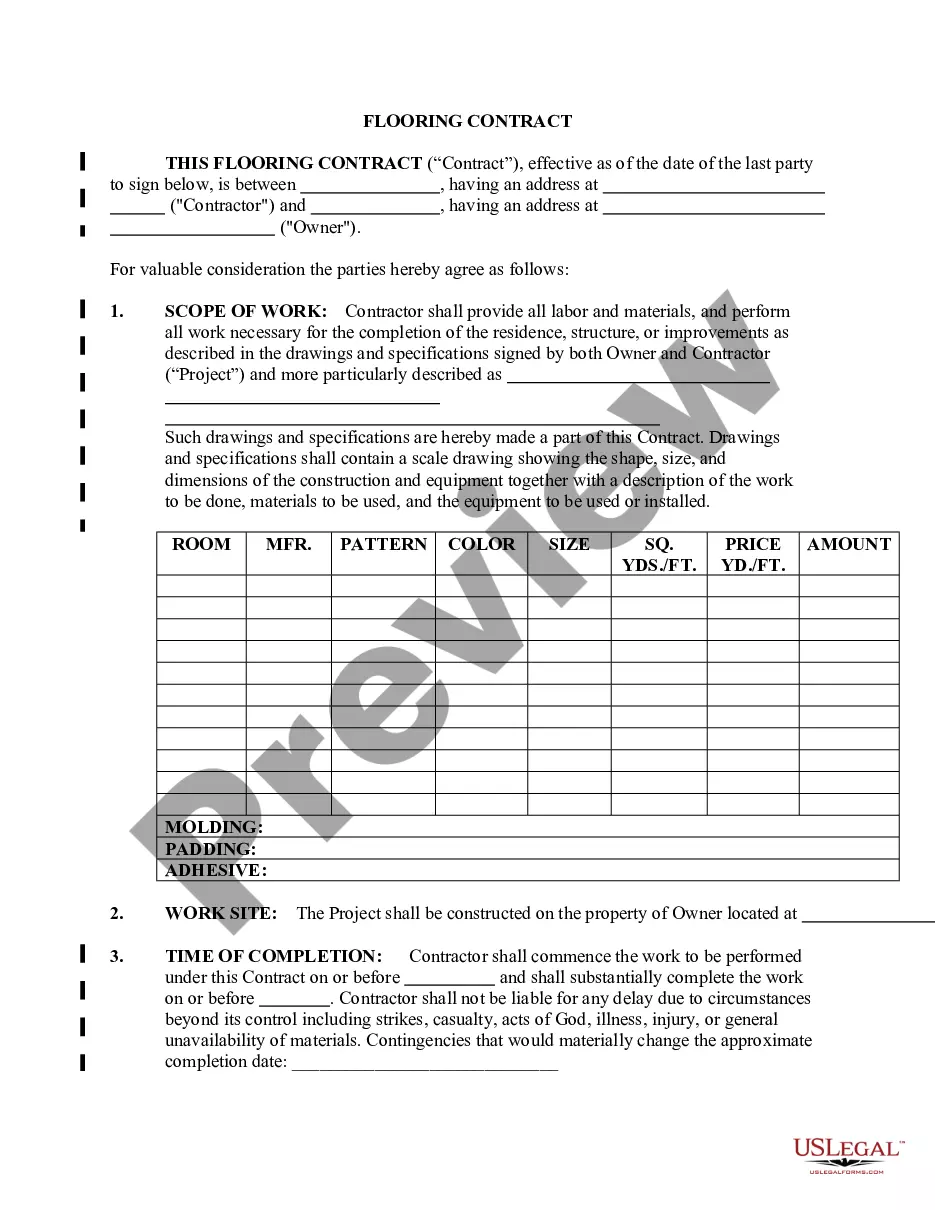
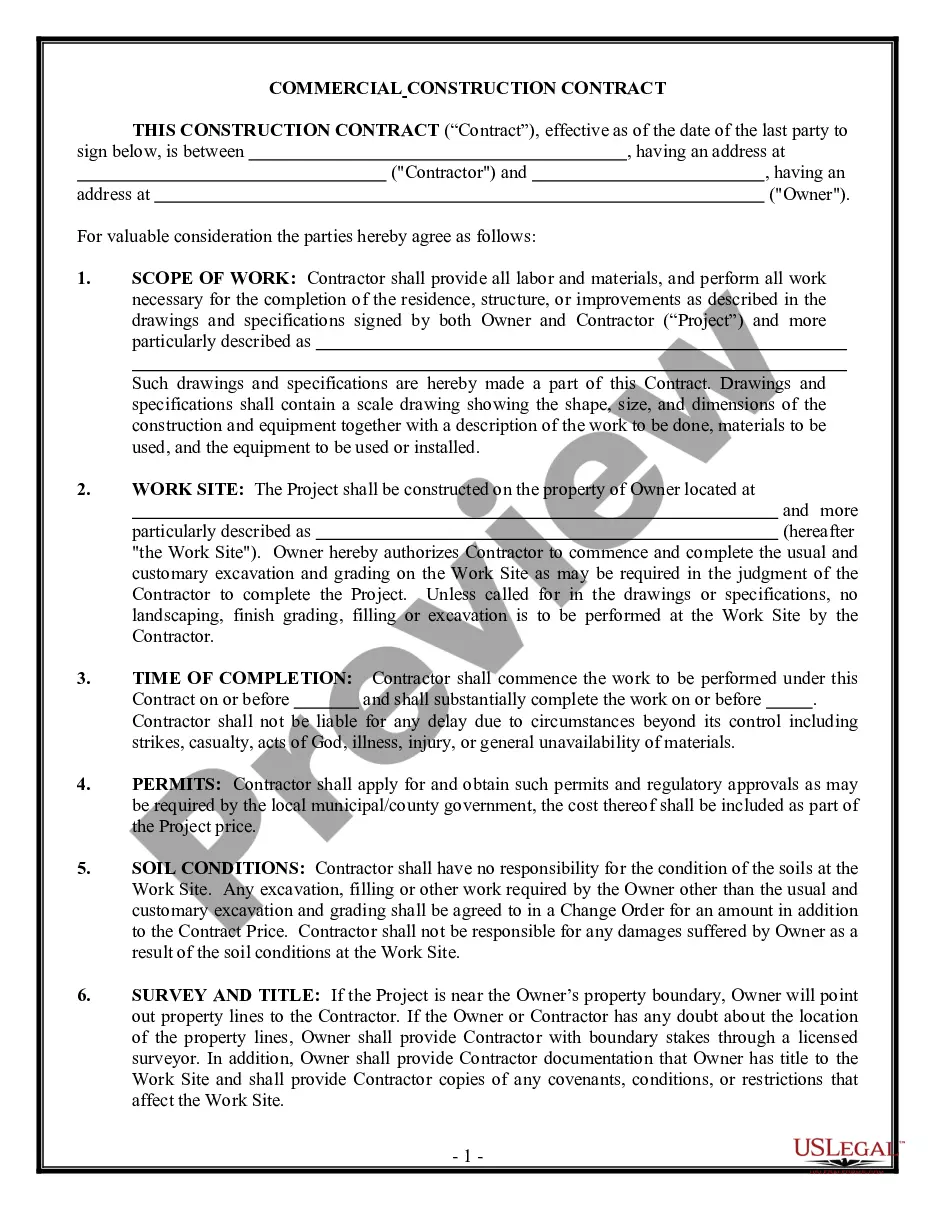
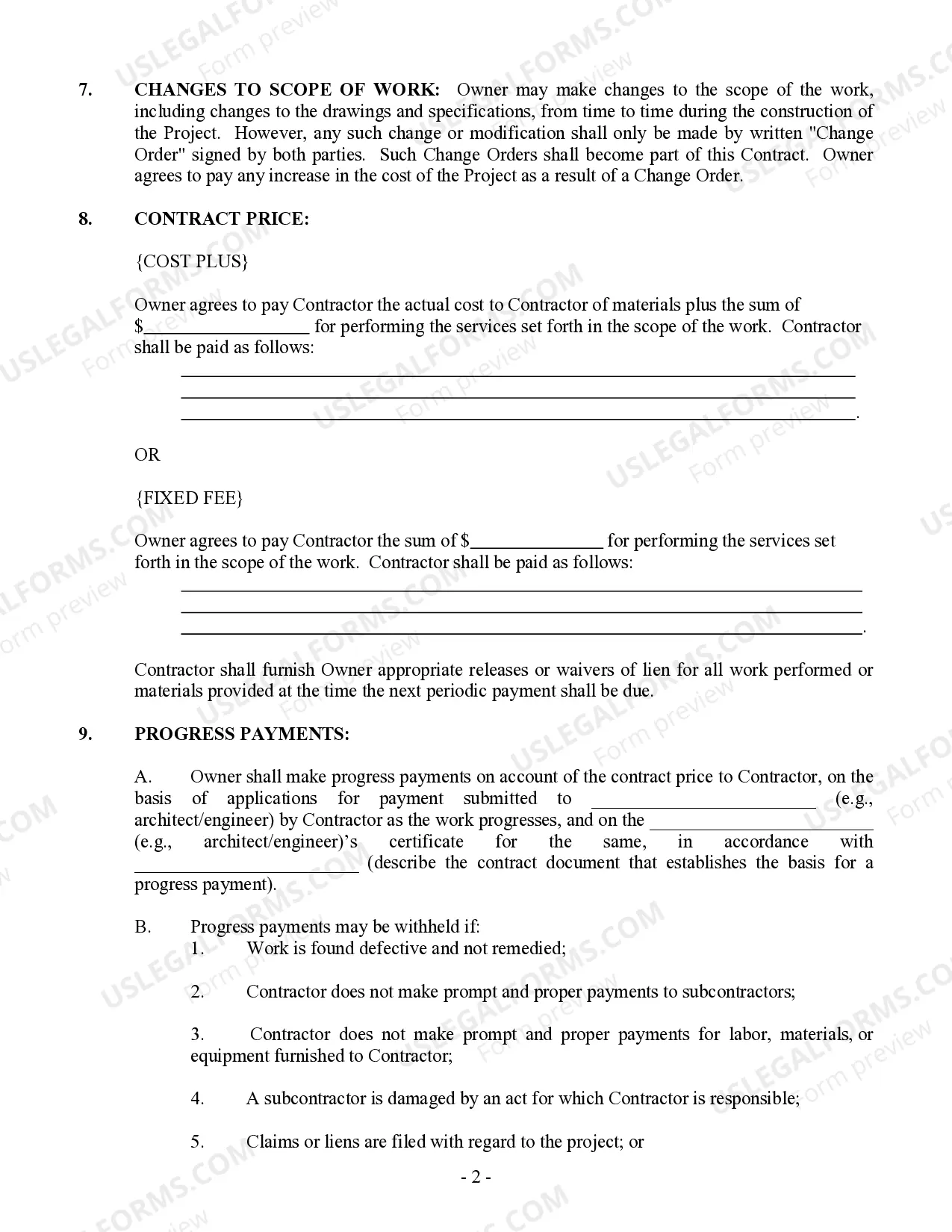
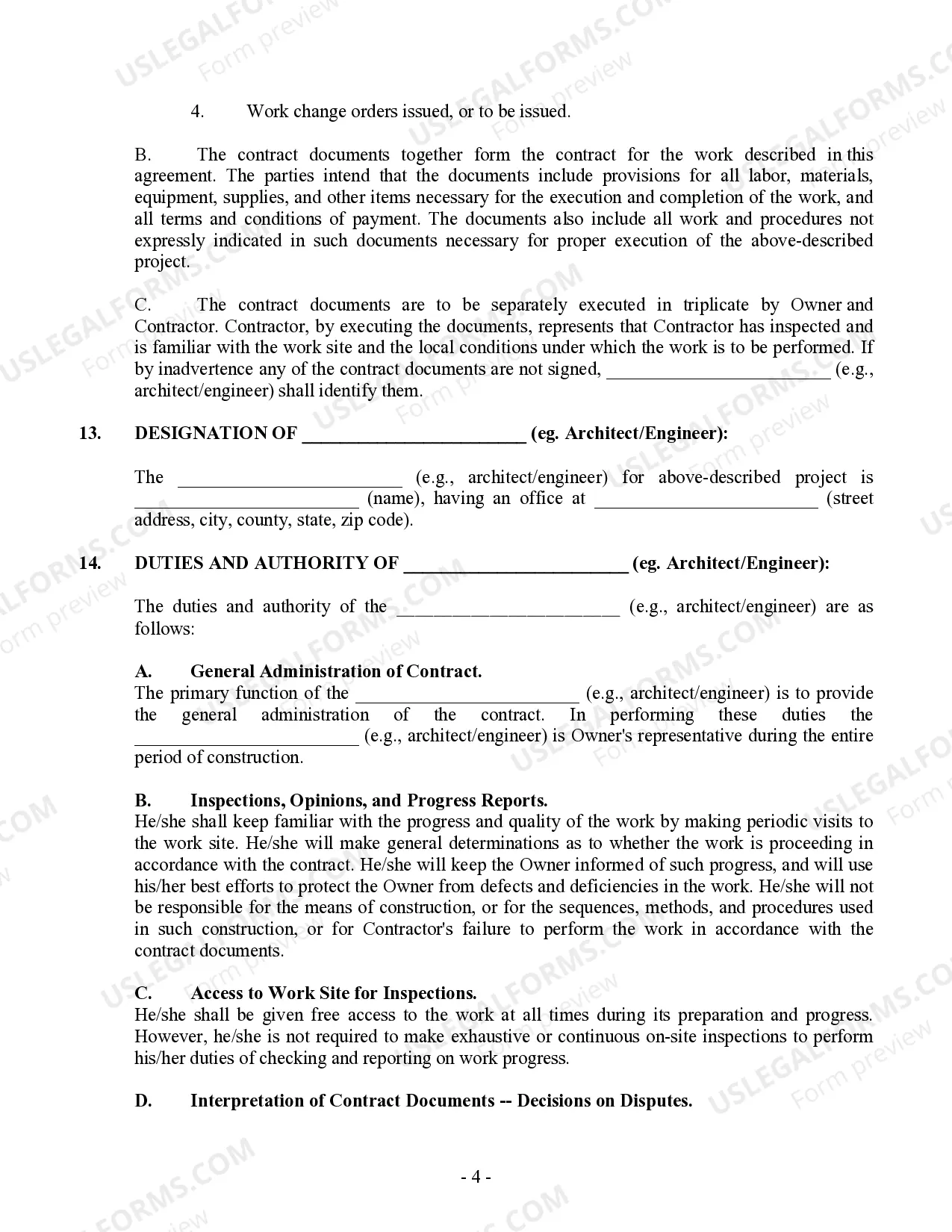
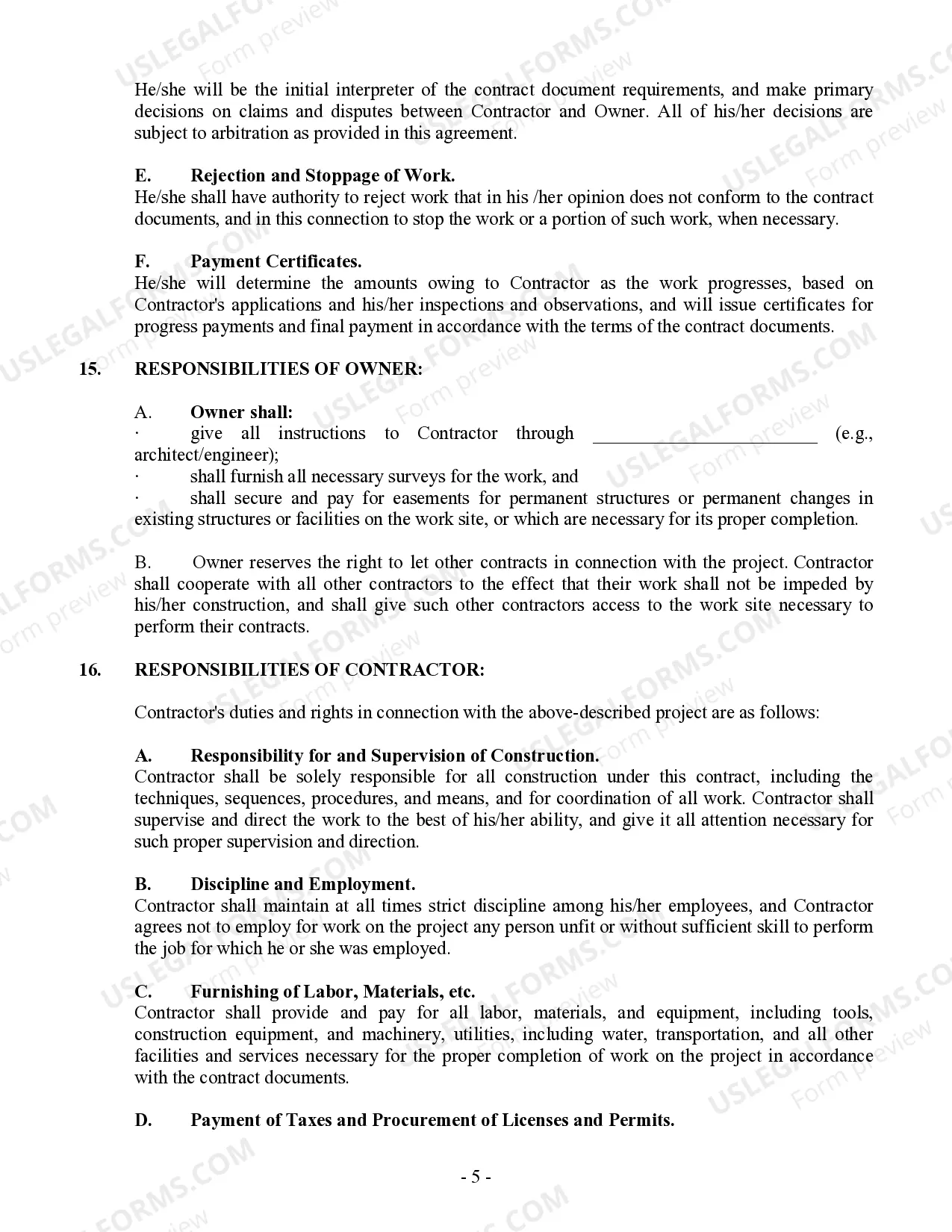
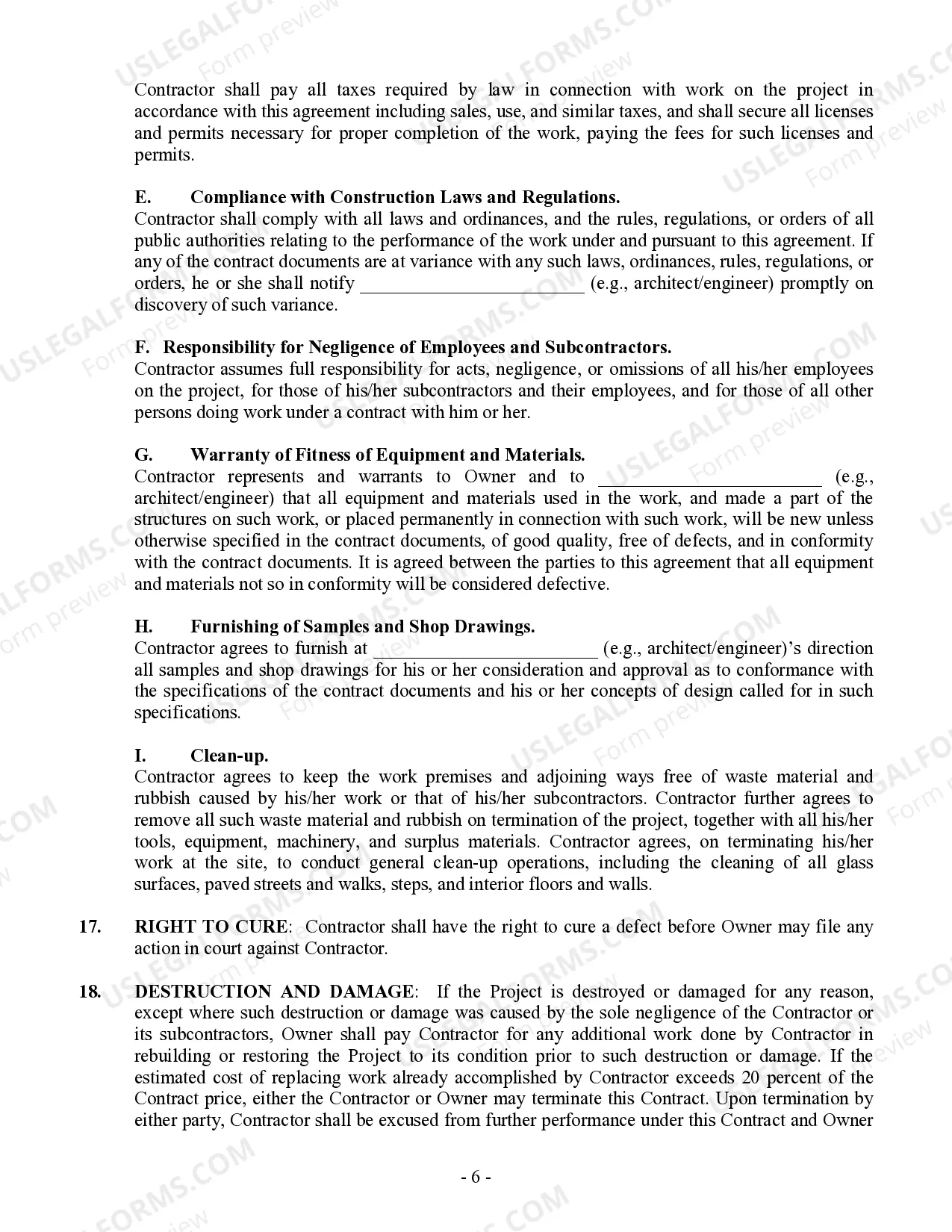
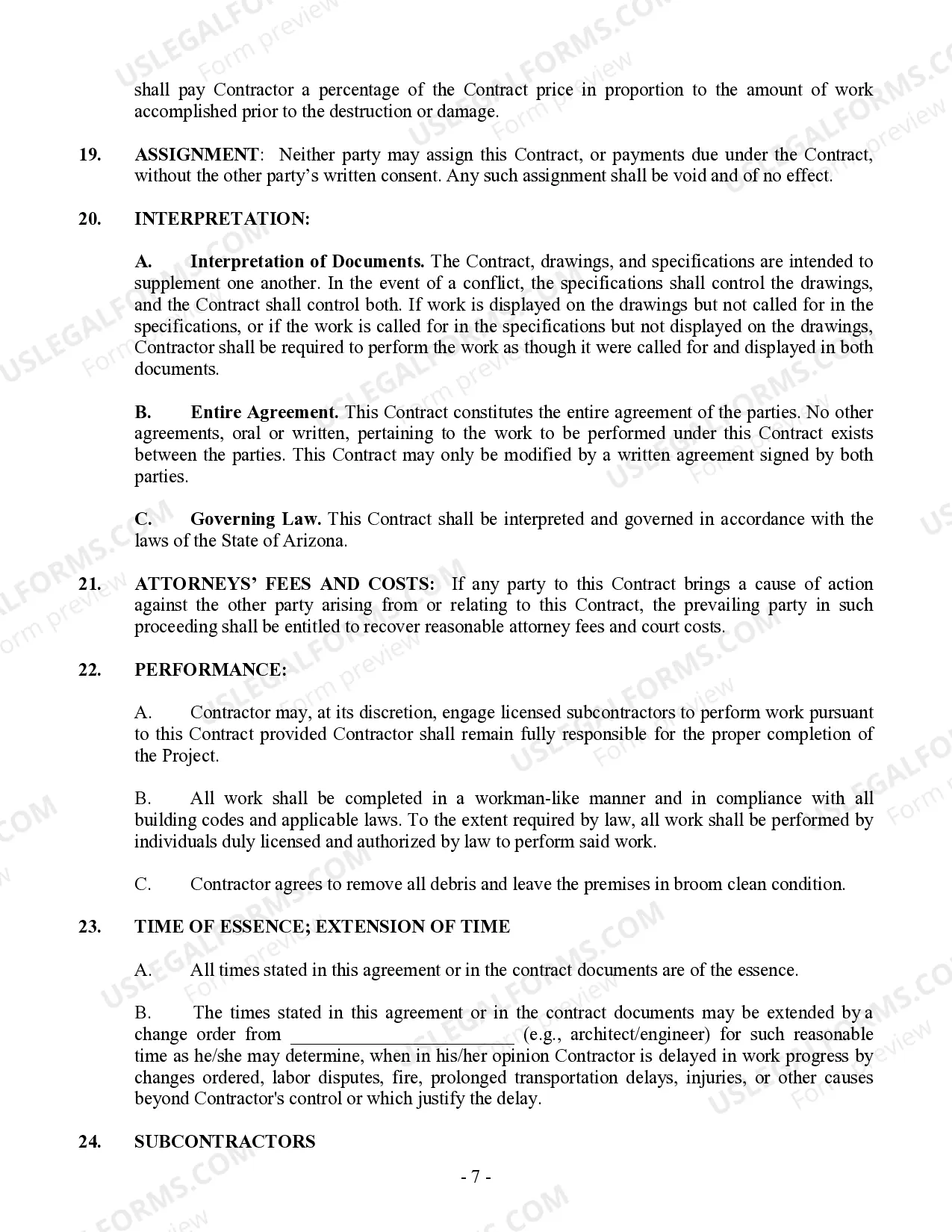
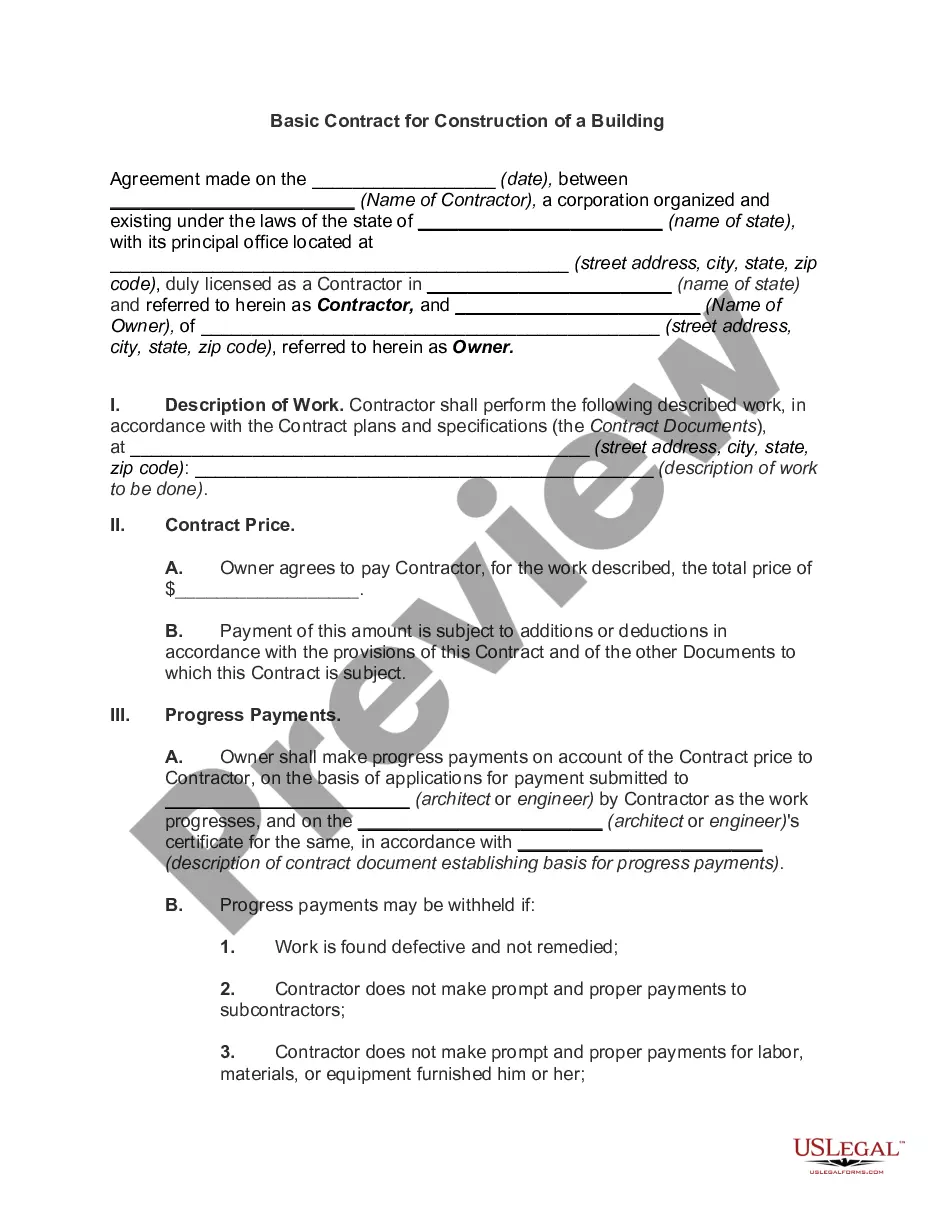
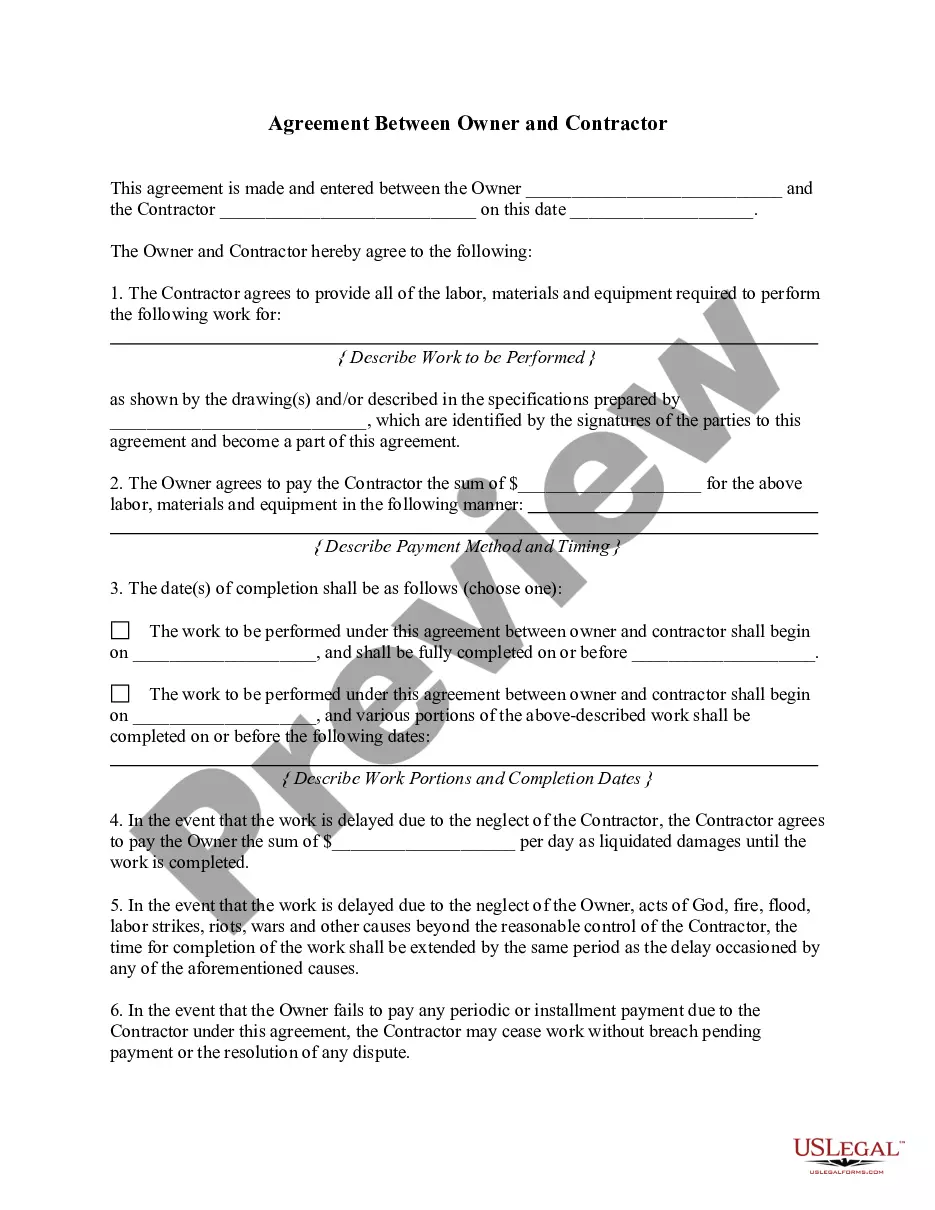
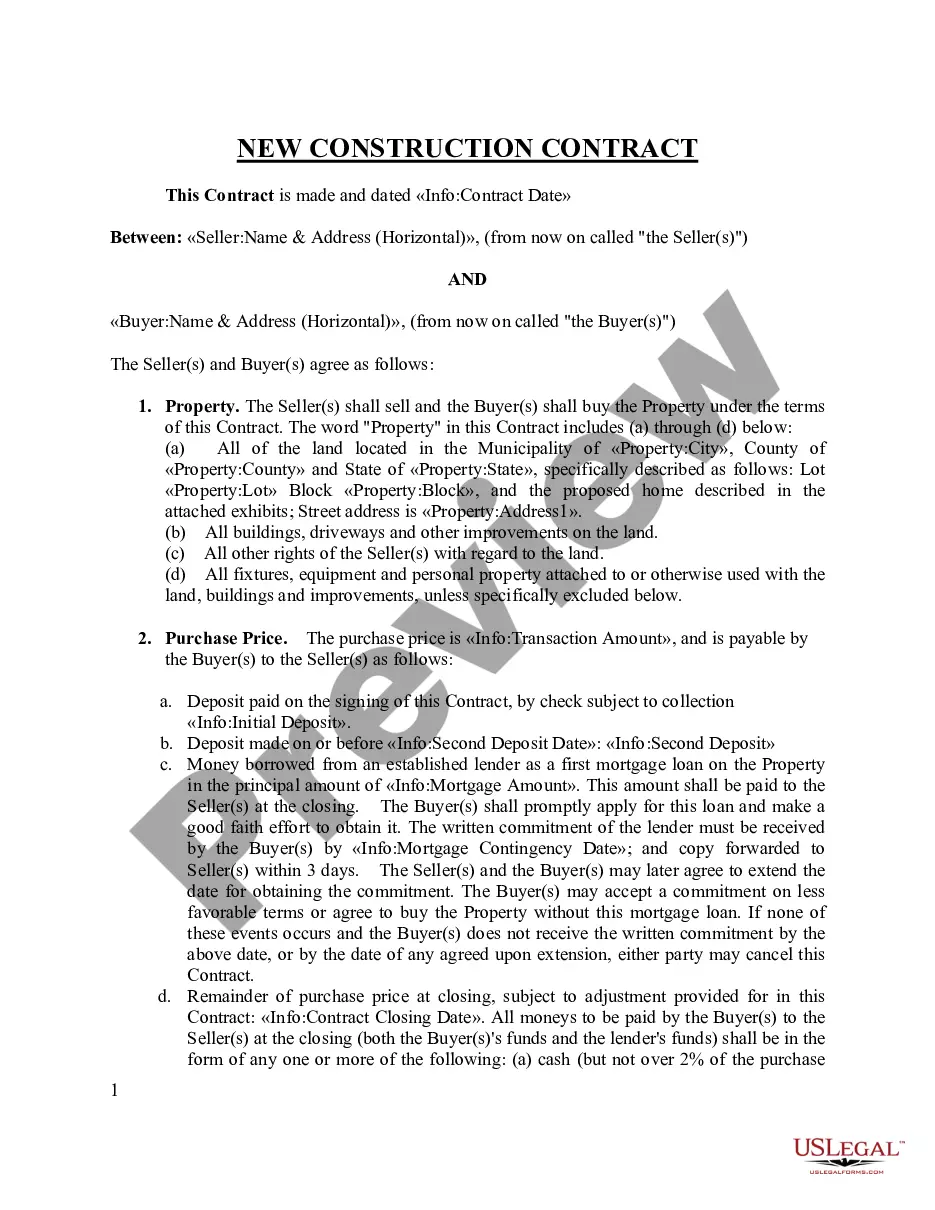
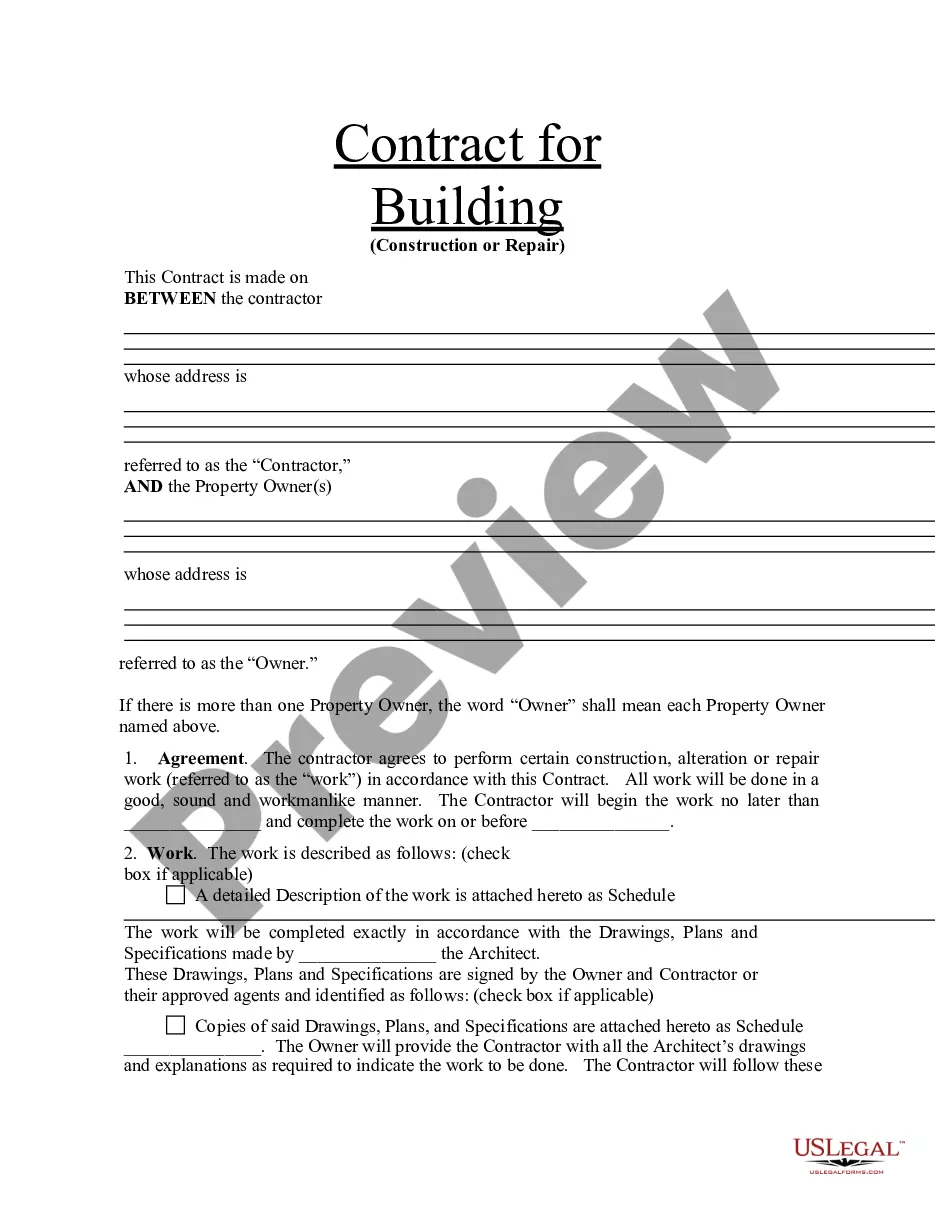
The Commercial Contract for Contractor is a legal document designed to formalize the agreement between commercial contractors and property owners. This contract outlines the terms of engagement, including payment arrangements, project specifications, and responsibilities related to permits, site conditions, and timelines. Unlike residential contracts, this form specifically caters to commercial projects, ensuring compliance with Arizona laws.
Form components explained
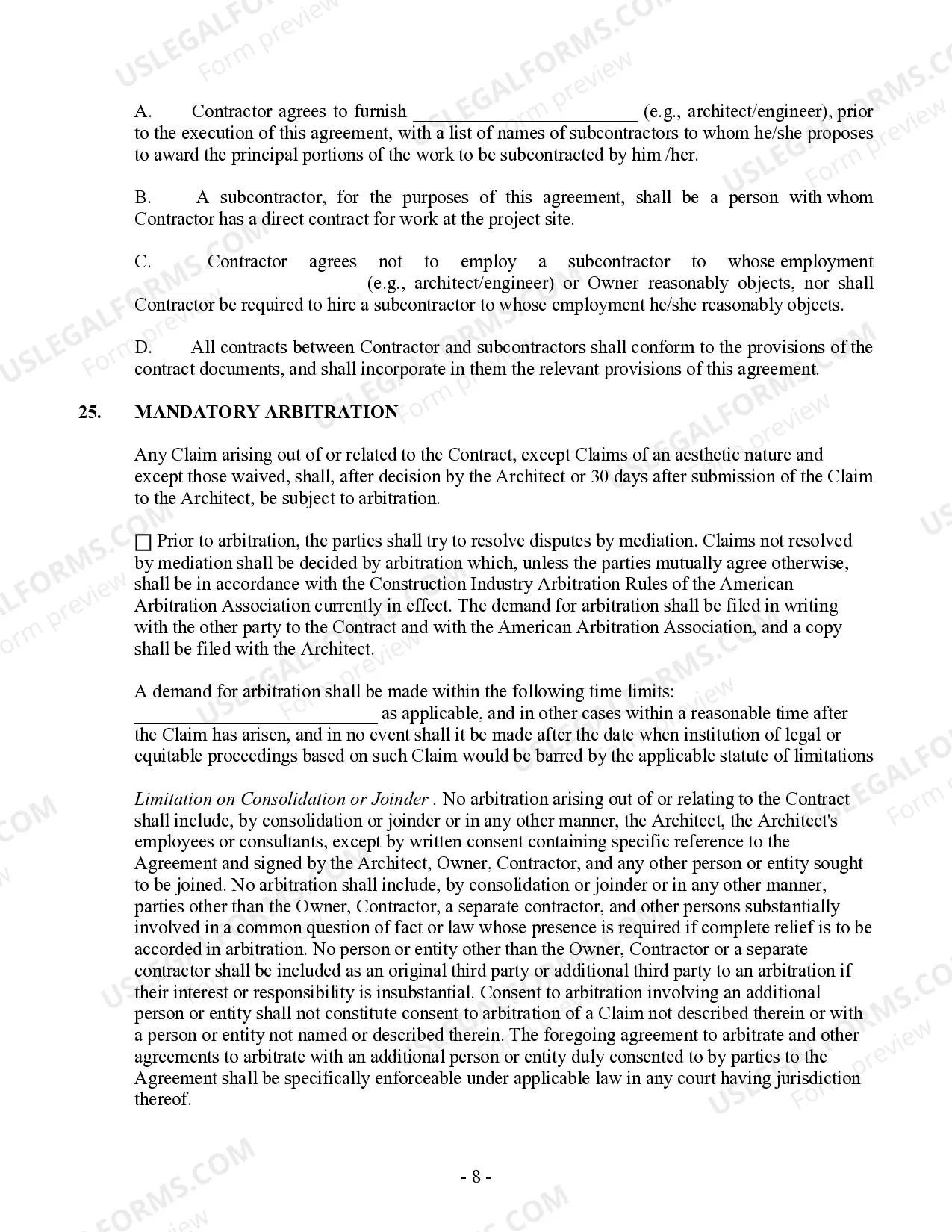
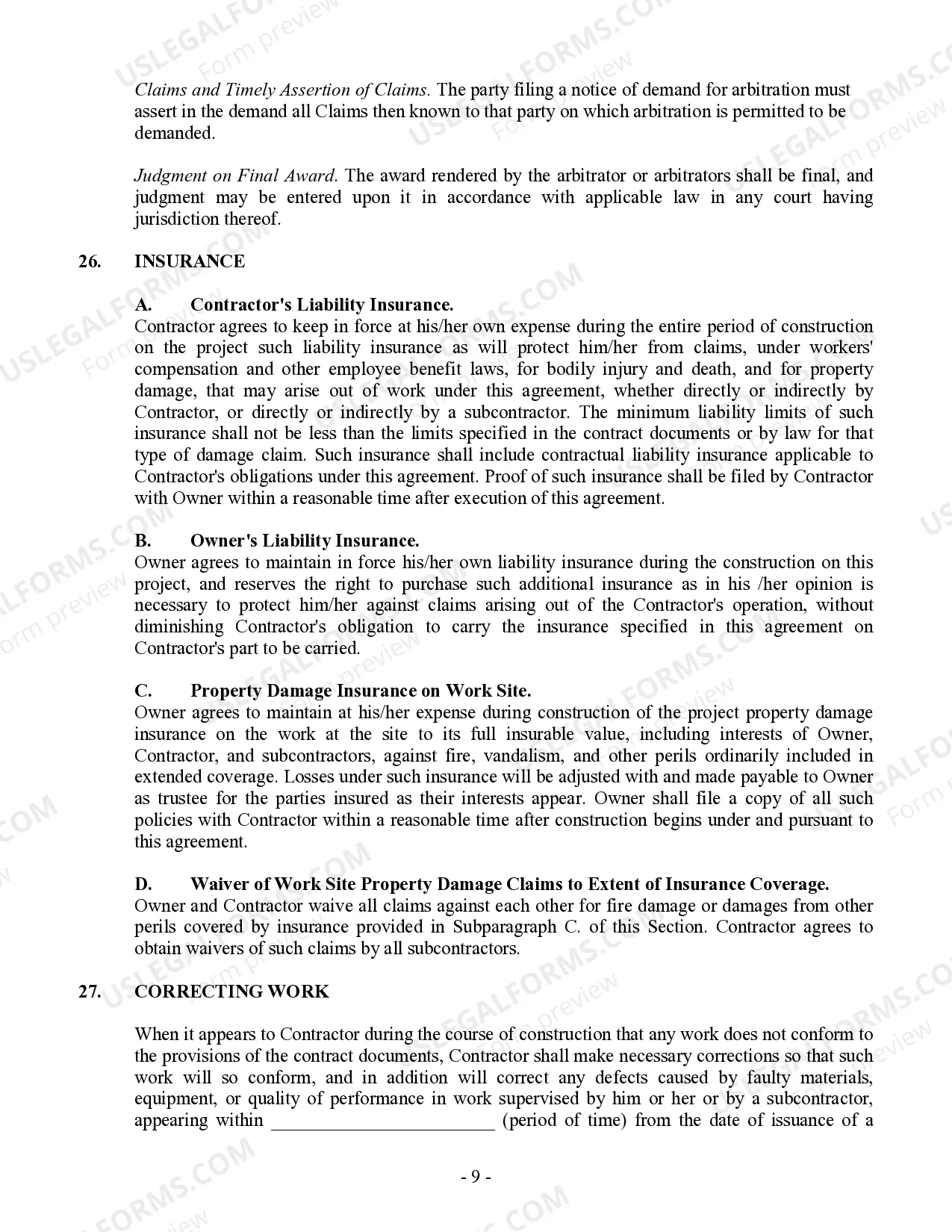
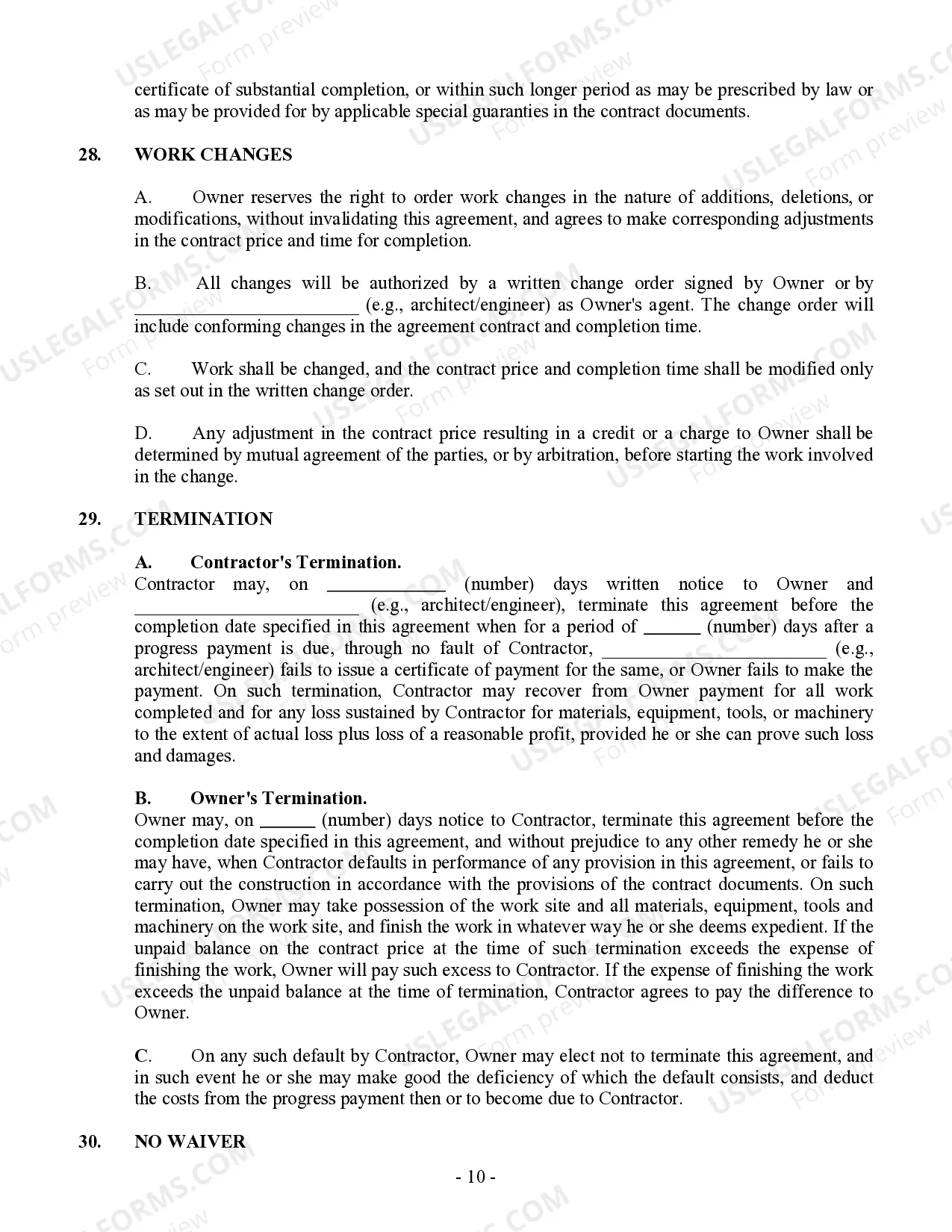
- Work site details, including project location and site inspections.
- Permit requirements and responsibilities for obtaining necessary approvals.
- Conditions regarding soil integrity and liability for soil-related issues.
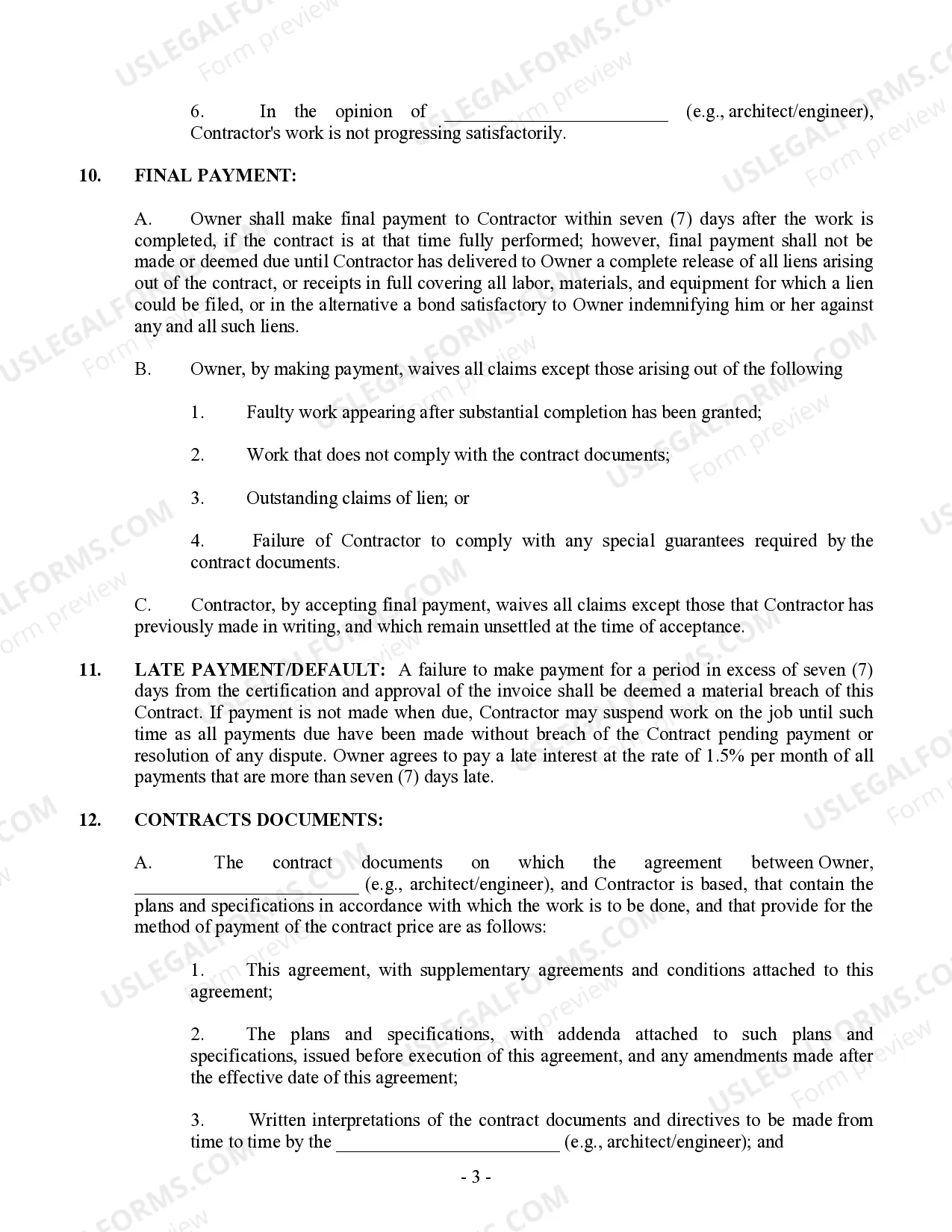
- Progress payment structure and conditions for withholding payments.
- Final payment terms, including lien releases and guarantees.
- Responsibilities of both the contractor and the property owner throughout the project.

Situations where this form applies
This form should be used when entering into a contract for commercial construction work. It is appropriate in scenarios such as building a commercial structure, renovating existing commercial properties, or any situation where a property owner needs to hire a contractor for construction-related tasks. Using this form helps clarify expectations and legal obligations, reducing the risk of disputes.
Who can use this document
- Commercial contractors looking to formalize agreements with property owners.
- Property owners seeking to hire licensed contractors for construction projects.
- Subcontractors needing clarity on their role in a larger commercial project.
How to prepare this document
- Identify the parties involved, including the contractor and property owner.
- Specify the project details, including the work site location and nature of the work.
- Outline payment terms, including progress payments and final payment conditions.
- Indicate any necessary permits required for the project.
- Include signatures from all parties to validate the contract.
Is notarization required?
This form usually doesn’t need to be notarized. However, local laws or specific transactions may require it. Our online notarization service, powered by Notarize, lets you complete it remotely through a secure video session, available 24/7.
Get your form ready online
Our built-in tools help you complete, sign, share, and store your documents in one place.
Make edits, fill in missing information, and update formatting in US Legal Forms—just like you would in MS Word.
Download a copy, print it, send it by email, or mail it via USPS—whatever works best for your next step.
Sign and collect signatures with our SignNow integration. Send to multiple recipients, set reminders, and more. Go Premium to unlock E-Sign.
If this form requires notarization, complete it online through a secure video call—no need to meet a notary in person or wait for an appointment.
We protect your documents and personal data by following strict security and privacy standards.

Make edits, fill in missing information, and update formatting in US Legal Forms—just like you would in MS Word.

Download a copy, print it, send it by email, or mail it via USPS—whatever works best for your next step.

Sign and collect signatures with our SignNow integration. Send to multiple recipients, set reminders, and more. Go Premium to unlock E-Sign.

If this form requires notarization, complete it online through a secure video call—no need to meet a notary in person or wait for an appointment.

We protect your documents and personal data by following strict security and privacy standards.
Typical mistakes to avoid
- Failing to specify the work site clearly, leading to misunderstandings.
- Not addressing changes in project scope or payment adjustments in writing.
- Neglecting to include terms regarding soil conditions and necessary permits.
Advantages of online completion
- Convenient access to essential legal agreements that can be downloaded instantly.
- Editability allows users to customize sections according to their specific project needs.
- Reliability of templates drafted by licensed attorneys to ensure legal compliance.
Looking for another form?



Form popularity
FAQ
Writing a contract for a contractor involves outlining the scope of work, payment terms, and deadlines. Start with clear definitions of the project, including materials and labor details. Utilizing an Arizona Commercial Contract for Contractor will guide you through necessary legal language and clauses, ensuring both parties understand their obligations and rights.
In Arizona, homeowners can undertake certain projects without a contractor's license, provided the work costs less than $1,000. However, larger projects require a licensed contractor to ensure that building codes and regulations are met. It is wise to consider using an Arizona Commercial Contract for Contractor, even for smaller jobs, to outline responsibilities and protect your interests.
In Arizona, anyone conducting business requires a business license, including freelance workers, small business owners, and contractors. If your work falls under areas regulated by the Arizona Commercial Contract for Contractor, securing a license is essential for legal operation. Assess your specific business needs, as compliance ensures protection for both you and your clients.
To obtain a contractor's license in Arizona, you must complete several steps, including submitting an application, passing exams, and providing proof of experience. The process also involves demonstrating financial responsibility, which is crucial when dealing with contracts like the Arizona Commercial Contract for Contractor. For assistance, consider the resources available on platforms like US Legal Forms to streamline your application.
Working as an unlicensed contractor in Arizona is generally not advisable, especially for jobs that require a contractor's license. Many construction and repair projects fall under the Arizona Commercial Contract for Contractor, which could bring penalties if done without the proper licensing. If you are unsure, it is best to consult with a legal expert to ensure compliance with state requirements.
Independent contractors in Arizona often need a business license to operate legally. Depending on the services you provide, you may also need to obtain specific permits or a contractor’s license, particularly if your work involves contracts governed by the Arizona Commercial Contract for Contractor. Always verify local and state regulations to save yourself from potential legal issues.
In Arizona, a handyman typically does not need a business license if they perform minor repairs and projects. However, if you plan to take on larger jobs that require a contractor’s license, such as those covered by the Arizona Commercial Contract for Contractor, you will need to obtain the proper licensing. It’s always a good idea to check local regulations to ensure compliance and protect your business.
Yes, subcontractors generally need a Transaction Privilege Tax (TPT) license in Arizona. This license is essential for anyone engaging in business activities that generate income within the state. It ensures compliance with state regulations and helps to avoid fines. To simplify your contracting process, consider using our Arizona Commercial Contract for Contractor, which can guide you through the requirements of doing business in Arizona.
In Arizona, contractors can typically ask for a deposit of 10-30% of the total contract value upfront. This payment structure helps cover initial costs and materials needed to start the project. When drafting an Arizona Commercial Contract for Contractor, it's crucial to clearly outline the deposit requirements and payment schedule to avoid any misunderstandings. Ensuring transparency in payments will build trust between the contractor and the client.
The best type of contract for a contractor often depends on project specifics, such as size and nature. Generally, an Arizona Commercial Contract for Contractor that offers flexibility, such as time and materials contracts, can be advantageous. This contract type allows for payment based on actual work performed, which can be beneficial for unpredictable projects. Understanding your project scope will help determine the most suitable contract.