Informed Consent for Online Dashboard Use for Research Participant
About this form
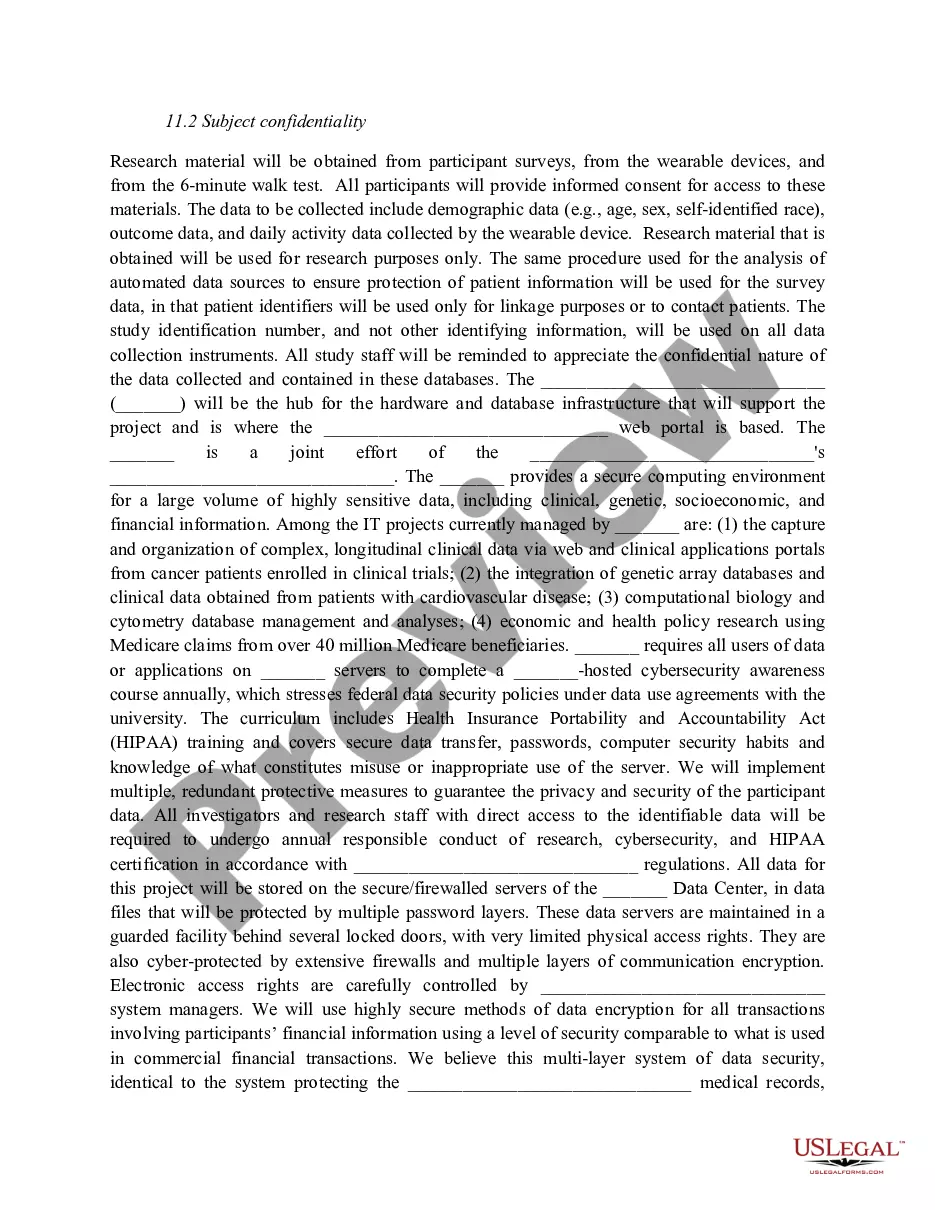
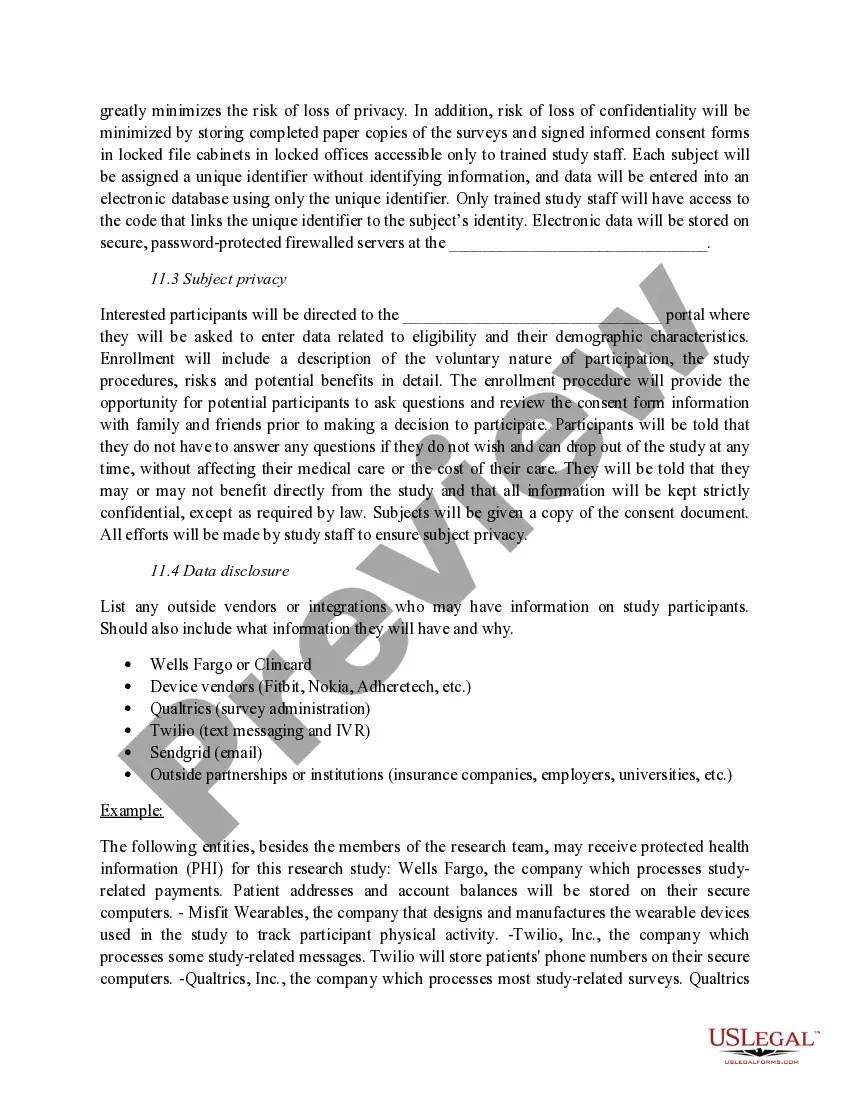
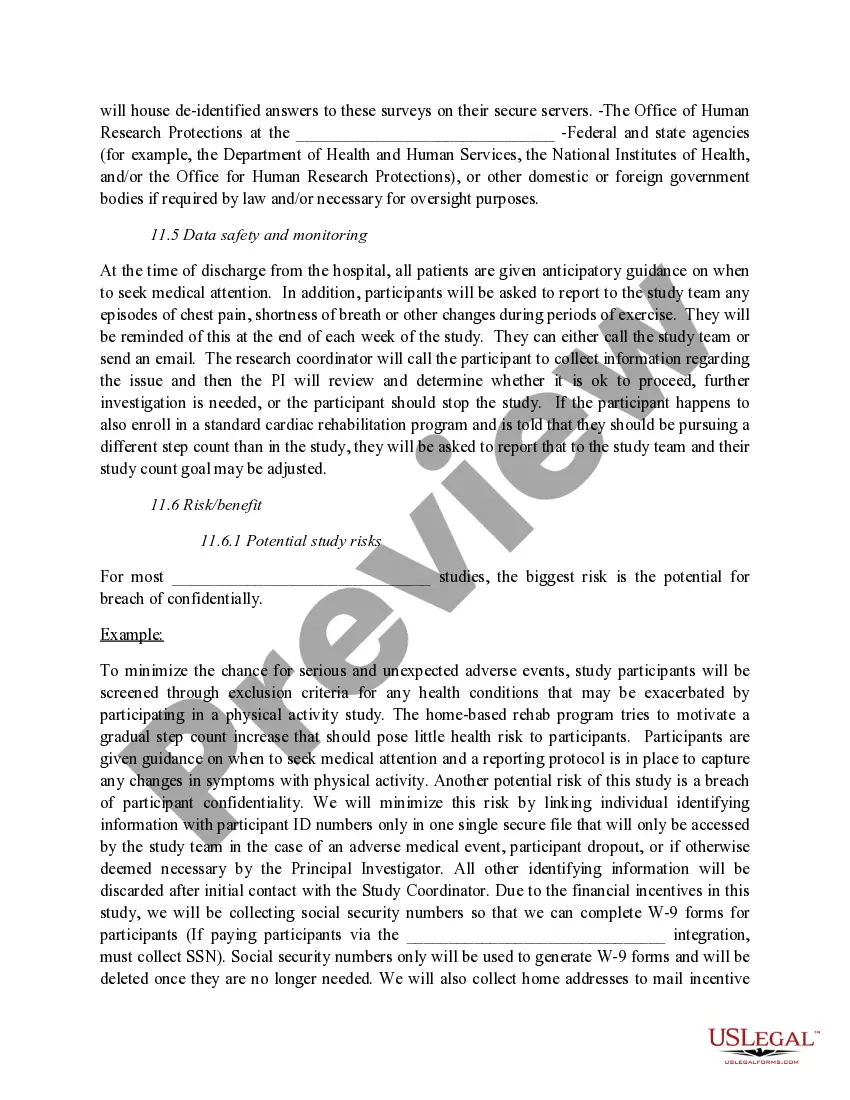
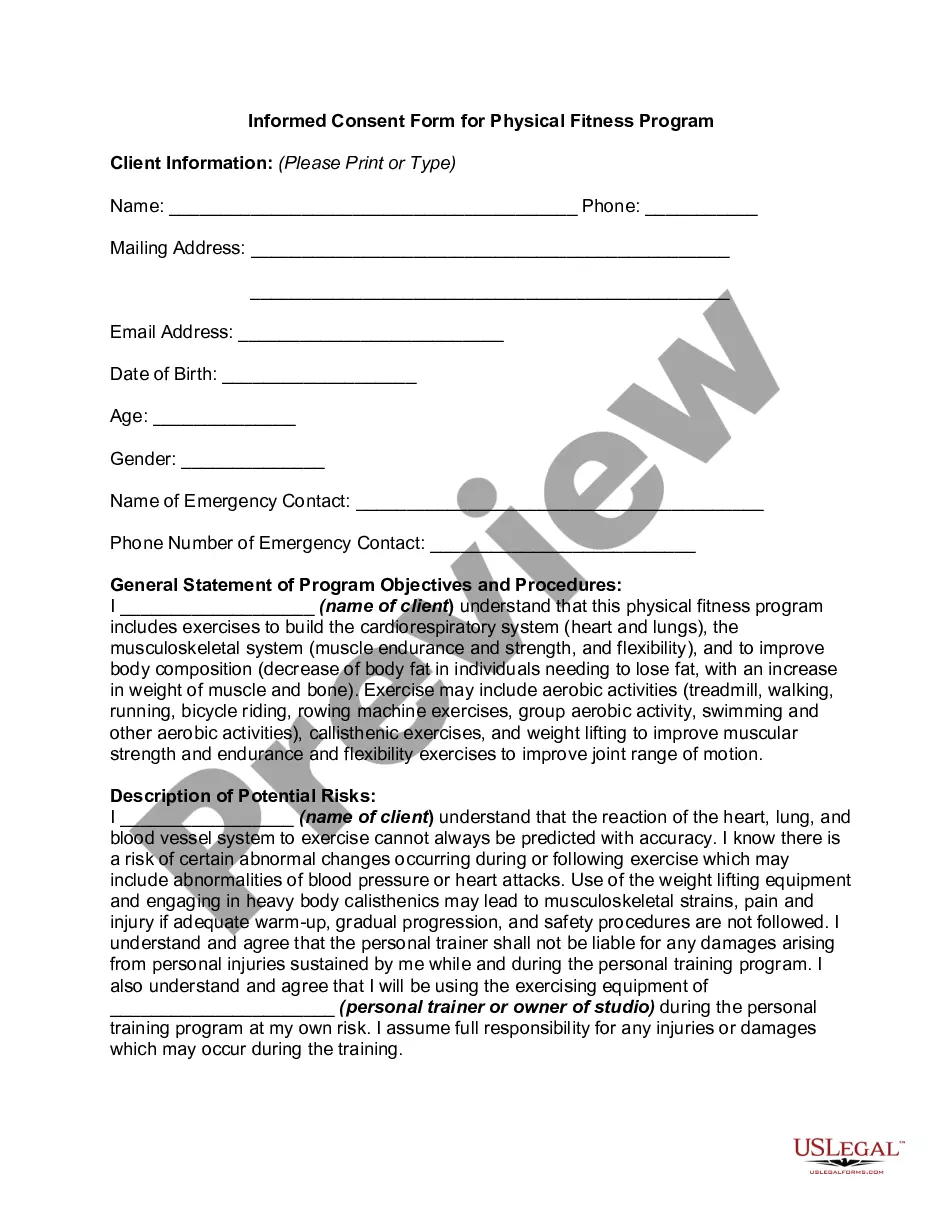
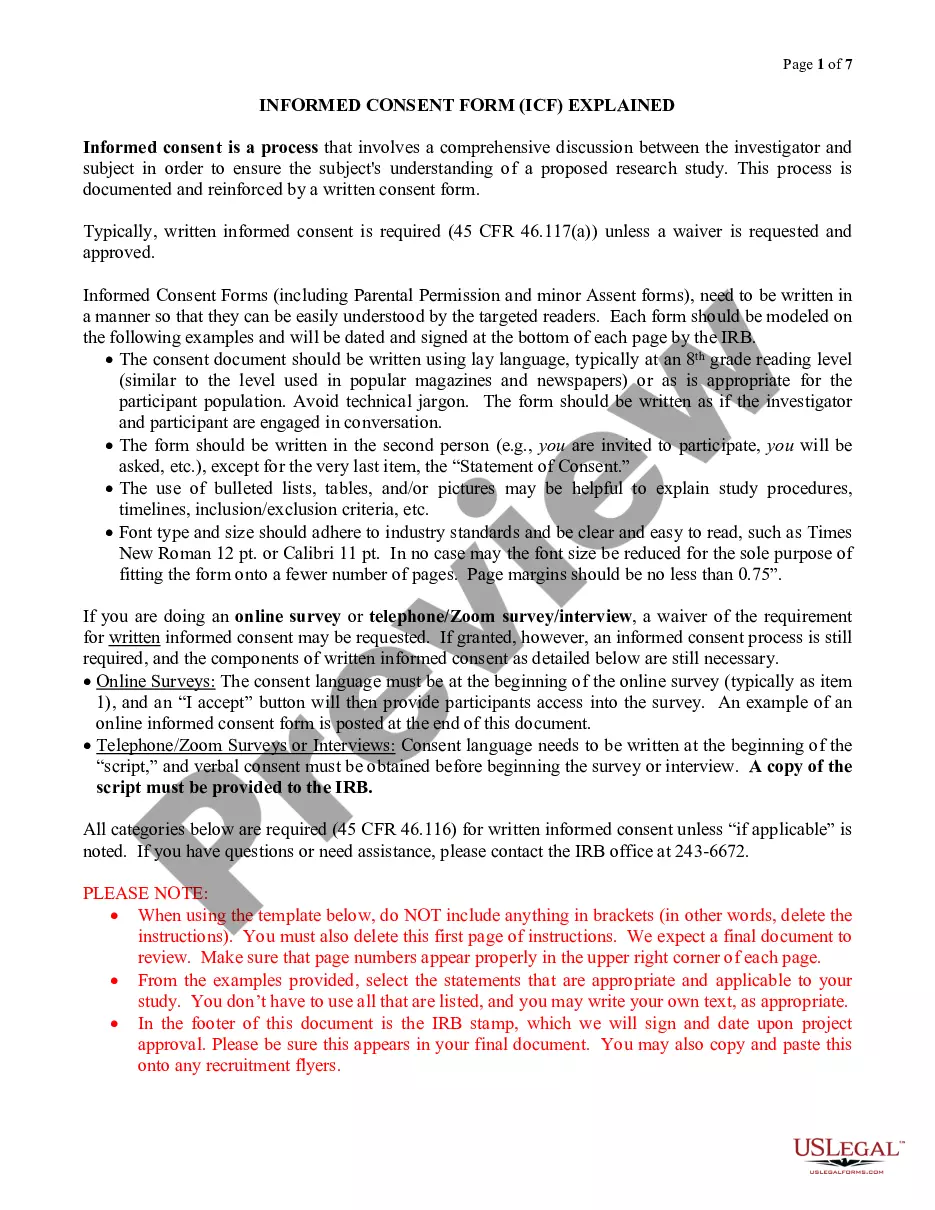
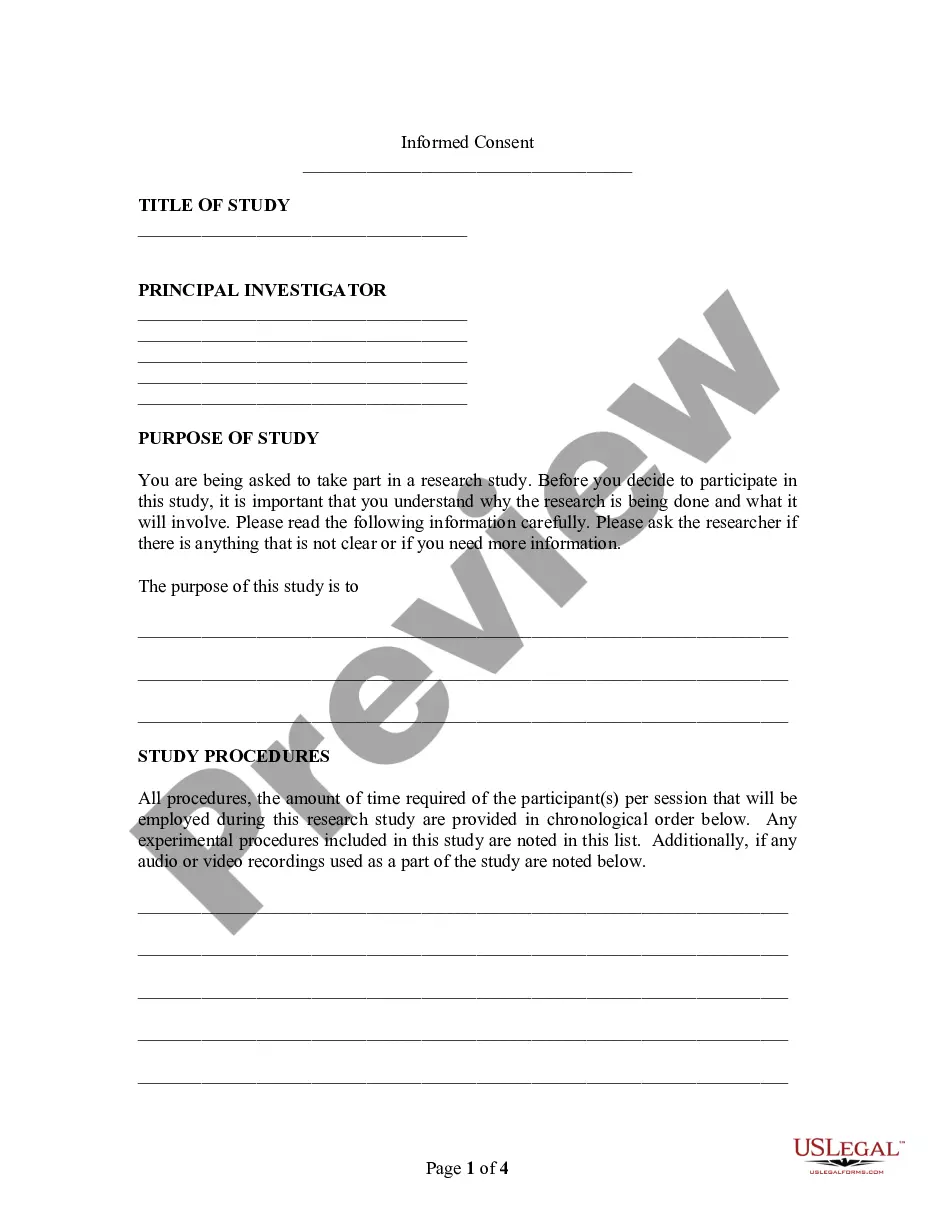
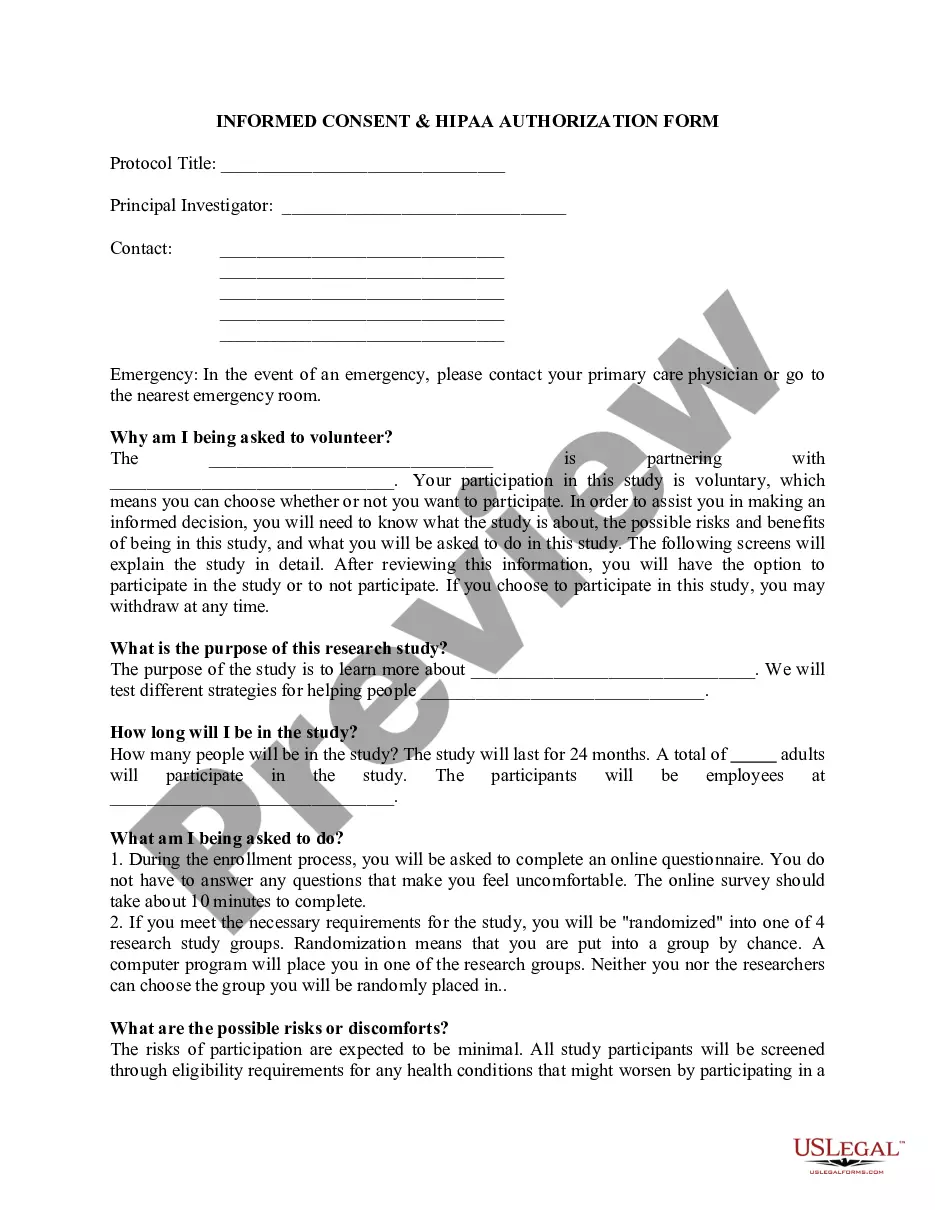
The Informed Consent for Online Dashboard Use for Research Participant is a crucial document that allows participants to grant permission for their data to be accessed and analyzed during a research study. This form ensures that all prospective participants understand their rights, the risks, and benefits associated with their involvement, while safeguarding their privacy and confidentiality. Unlike general consent forms, this document specifically addresses the use of an online dashboard for data collection and management in research settings.
What’s included in this form
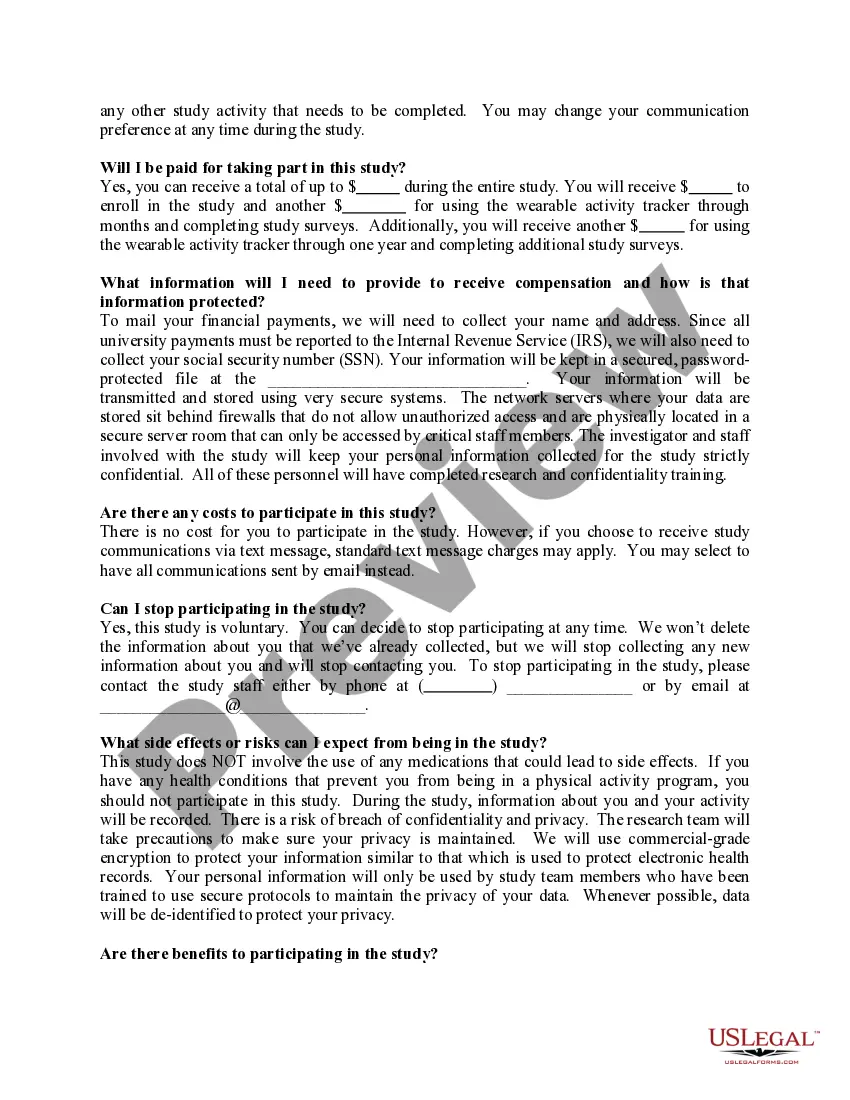
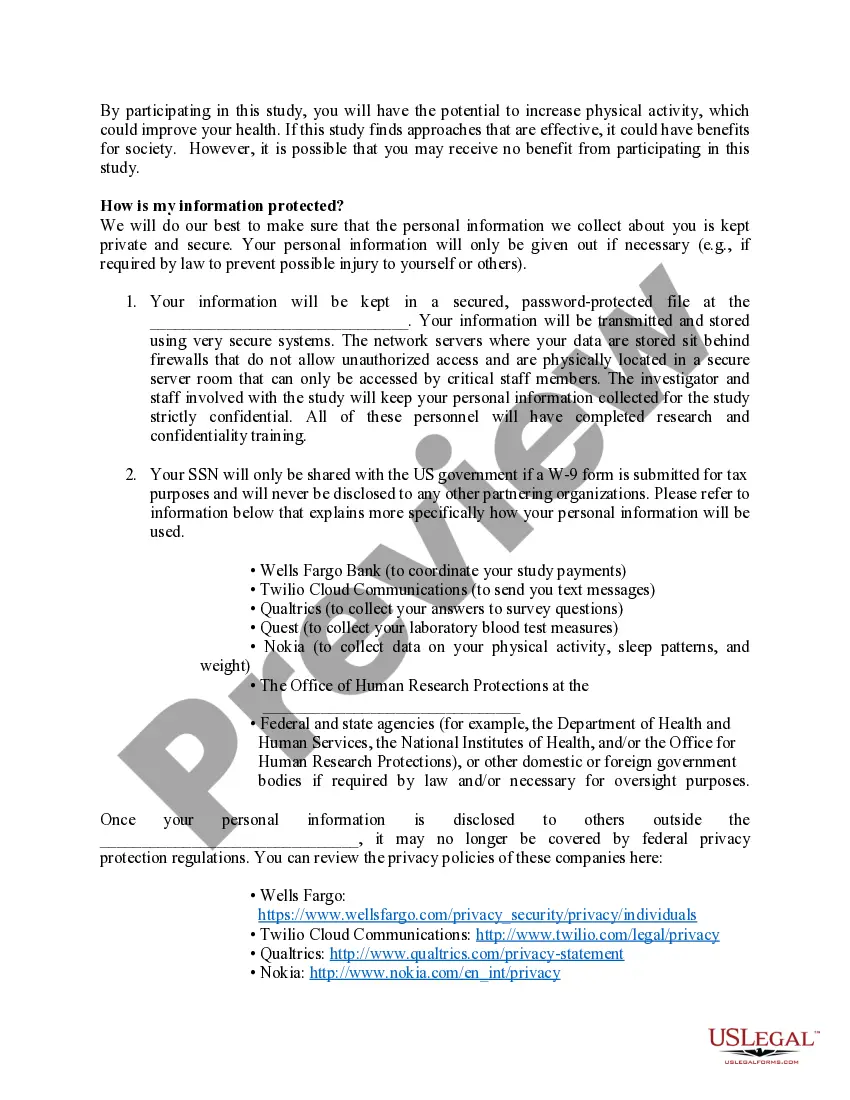
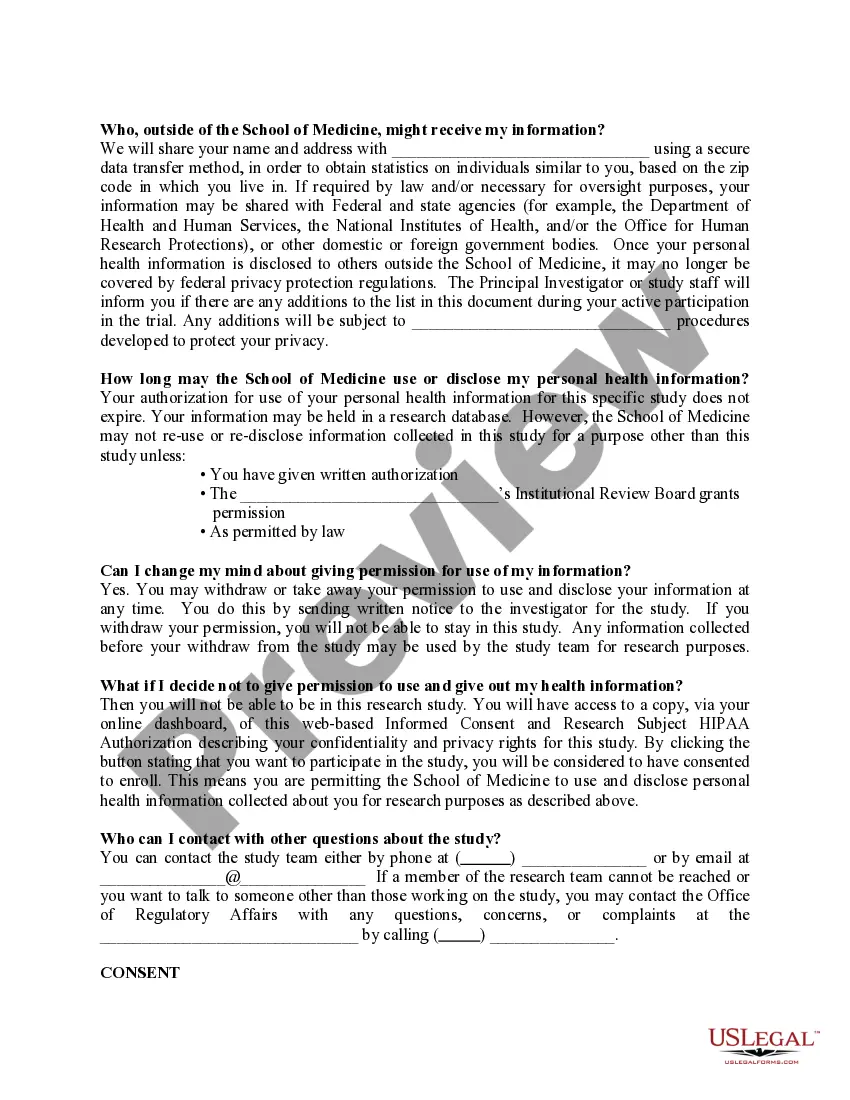
- The agreement on data confidentiality and privacy protections.
- Details on the types of data collected, including demographic and health information.
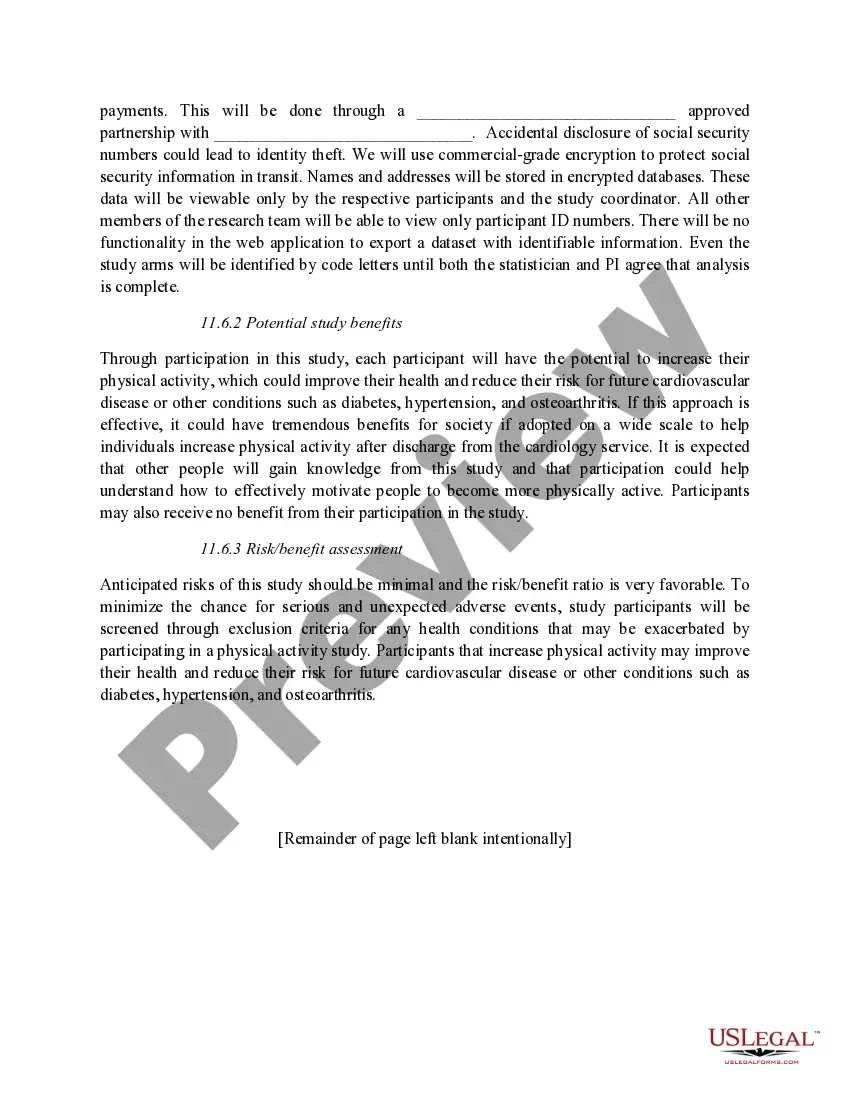
- Information regarding potential risks and benefits of participation.
- Instructions on how to withdraw from the study at any time.
- Authorization for the use and sharing of personal health information (PHI).

When to use this document
This form should be used when conducting research that requires participants to use an online dashboard to enter personal data or track information related to their health and physical activity. It is essential in studies where participant data will be used for analysis, ensuring informed consent is obtained effectively. Utilizing this form ensures that researchers comply with ethical research practices and legal requirements regarding participant information.
Intended users of this form
- Research teams conducting studies involving human participants.
- Institutions and organizations that require participant consent for data collection.
- Individuals overseeing clinical trials that utilize online data tracking.
Completing this form step by step
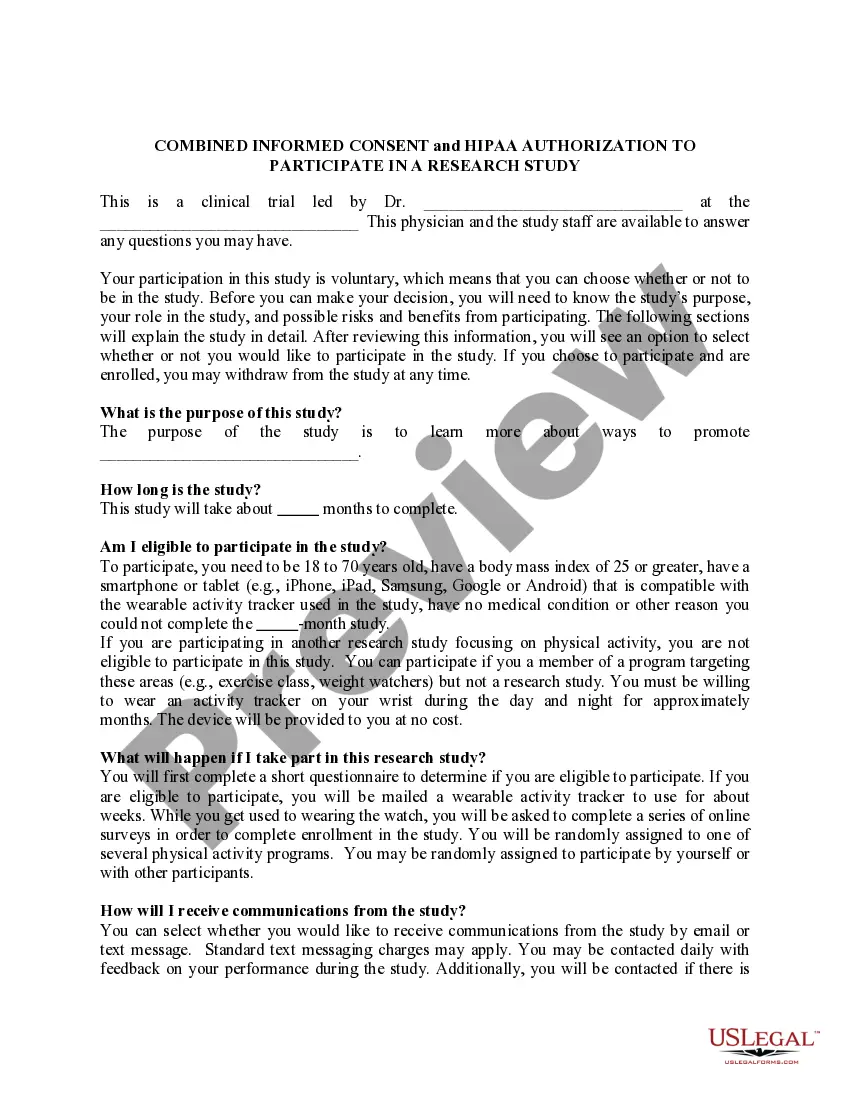
- Provide a detailed description of the study, its purpose, and the role of the participant.
- List the criteria for eligibility clearly, including age, health condition, and technology requirements.
- Explain how the data will be used and the confidentiality measures in place.
- Include a section where participants can ask questions before consenting.
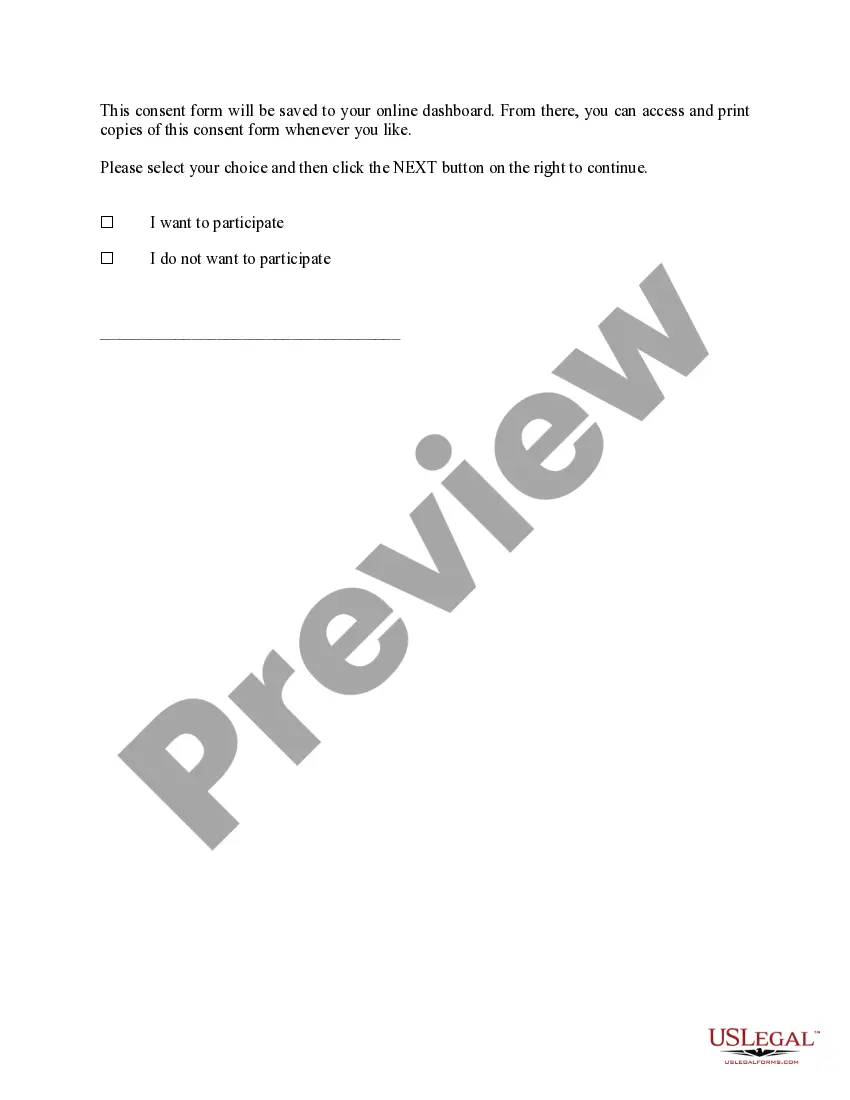
- Ensure that participants can select an option to consent or decline participation.
Does this form need to be notarized?
Notarization is not commonly needed for this form. However, certain documents or local rules may make it necessary. Our notarization service, powered by Notarize, allows you to finalize it securely online anytime, day or night.
Get your form ready online
Our built-in tools help you complete, sign, share, and store your documents in one place.
Make edits, fill in missing information, and update formatting in US Legal Forms—just like you would in MS Word.
Download a copy, print it, send it by email, or mail it via USPS—whatever works best for your next step.
Sign and collect signatures with our SignNow integration. Send to multiple recipients, set reminders, and more. Go Premium to unlock E-Sign.
If this form requires notarization, complete it online through a secure video call—no need to meet a notary in person or wait for an appointment.
We protect your documents and personal data by following strict security and privacy standards.

Make edits, fill in missing information, and update formatting in US Legal Forms—just like you would in MS Word.

Download a copy, print it, send it by email, or mail it via USPS—whatever works best for your next step.

Sign and collect signatures with our SignNow integration. Send to multiple recipients, set reminders, and more. Go Premium to unlock E-Sign.

If this form requires notarization, complete it online through a secure video call—no need to meet a notary in person or wait for an appointment.

We protect your documents and personal data by following strict security and privacy standards.
Common mistakes to avoid
- Failing to explain why personal data is being collected.
- Not providing a clear description of study risks and benefits.
- Neglecting to inform participants about their right to withdraw at any time.
- Not allowing sufficient time for participants to review the consent form.
Why complete this form online
- Convenient access for participants to review and complete the form at their own pace.
- Immediate feedback and clarification of study information can be provided.
- Easier management and tracking of consent documentation digitally.
- Enhanced security measures for safeguarding participant data.
What to keep in mind
- The informed consent form is vital for maintaining ethical standards in research.
- Participants must understand their rights, including confidentiality and the option to withdraw.
- Clarity in communication improves participant trust and engagement.
Looking for another form?

Form popularity
FAQ
Informed consent Both the participant and the researcher obtaining consent should sign the form. Two forms should be signed so that the participant can be provided with a signed copy to keep for their records. Clear evidence must be obtained that the participant has given informed consent to take part in the study.
Consent Process Models Provide the participant with all of the required information about the study.Give information in a language the participant understands.Give the participant an opportunity to ask questions before providing consent.Give the participant enough time to consider being in the study.
For a valid consent, information provided to a research subject should include, but not limited to, health condition for which the research is proposed; nature and purpose/reason of the study; study treatment or intervention and experimental procedures; probable risks and benefits associated with research participation
The informed consent document should succinctly describe the research as it has been presented in the IRB application. Use the second (you) or third person (he/she) to present the study details. Avoid use of the first person (I). Include a statement of agreement at the conclusion of the informed consent document.
Informed consent is an essential safeguard in research. The obligation to obtain informed consent arises out of respect for persons and a desire to respect the autonomy of the individual deciding whether to volunteer to participate in biomedical or health research.
Obtaining consent involves explaining the research and assessing participant comprehension using a consent document, usually a written consent form or information sheet, as a guide for the verbal explanation of the study.
How can consent agreements be verified online? When studies involving participants are conducted online, researchers may look for alternatives to the paper and pen form of agreement. In some Internet research ethics protocols, the click-if-you-agree type of online form is considered as an acceptable approach.