Infomed Consent and HIPAA Authorization Form for Research Partcipant
What is this form?
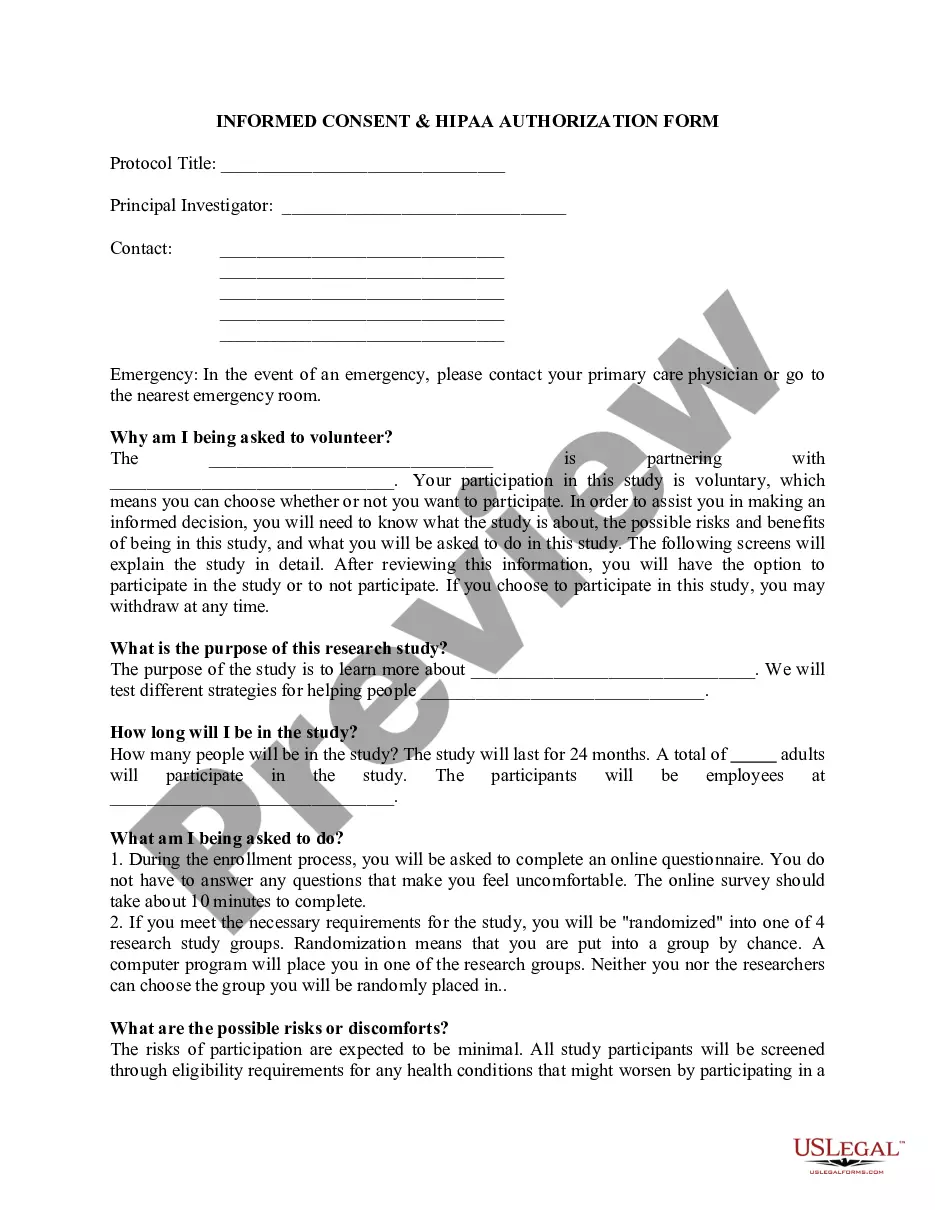
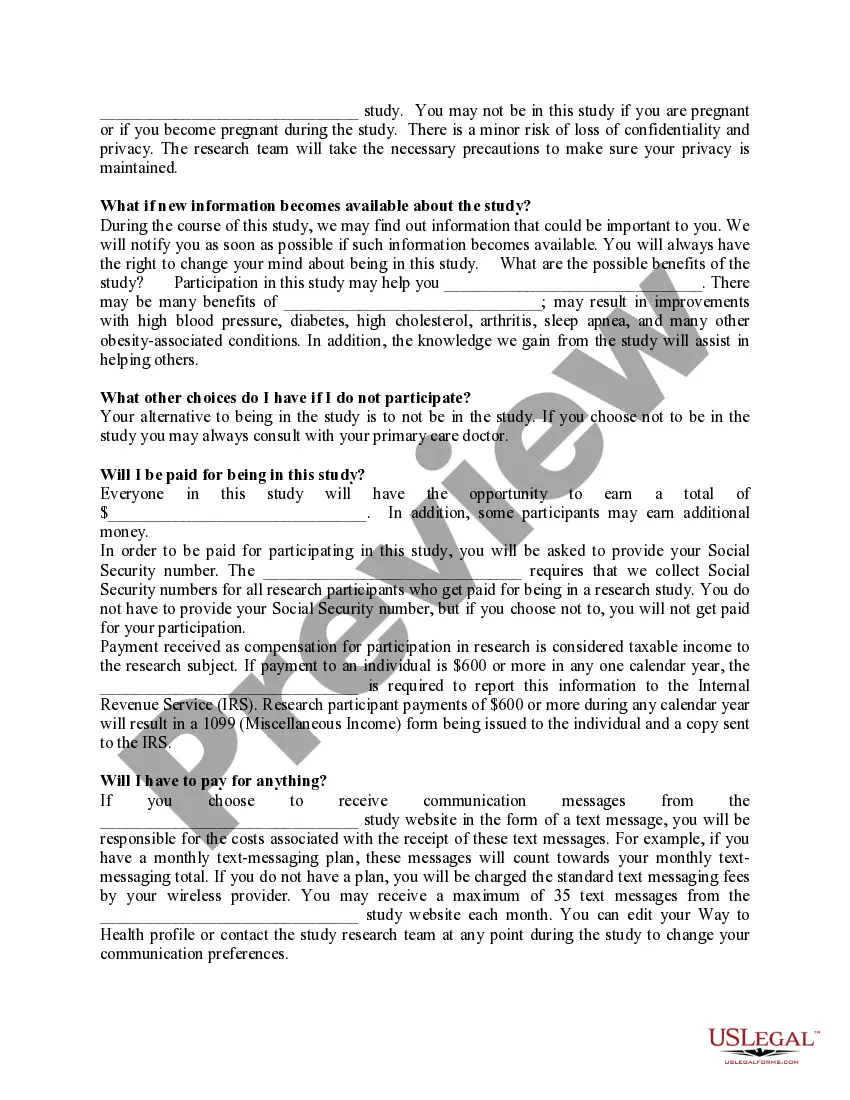
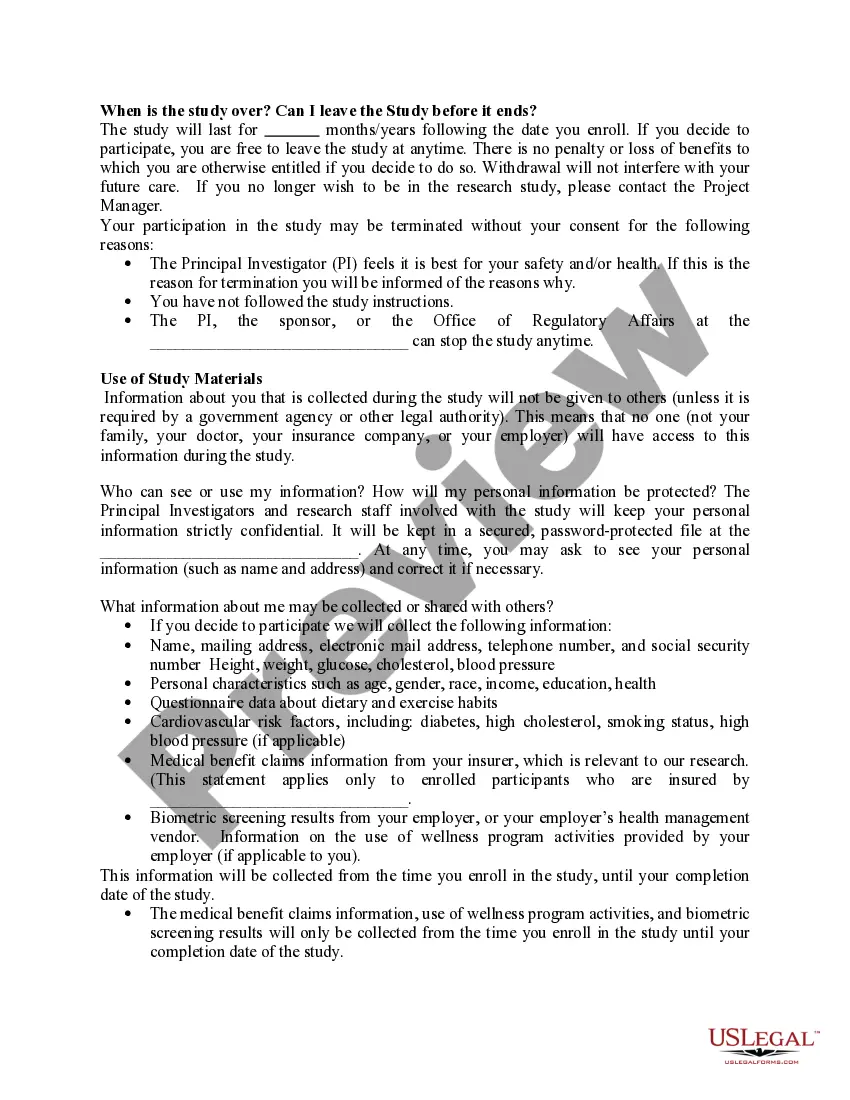
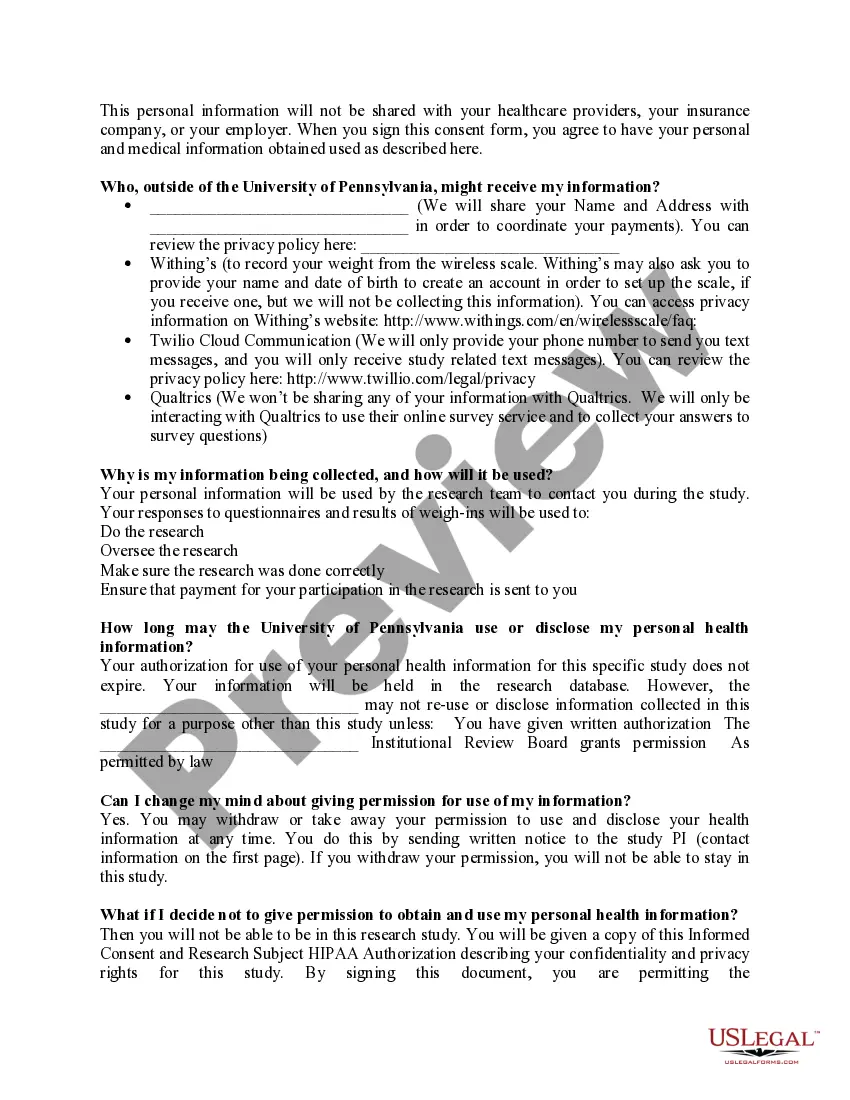
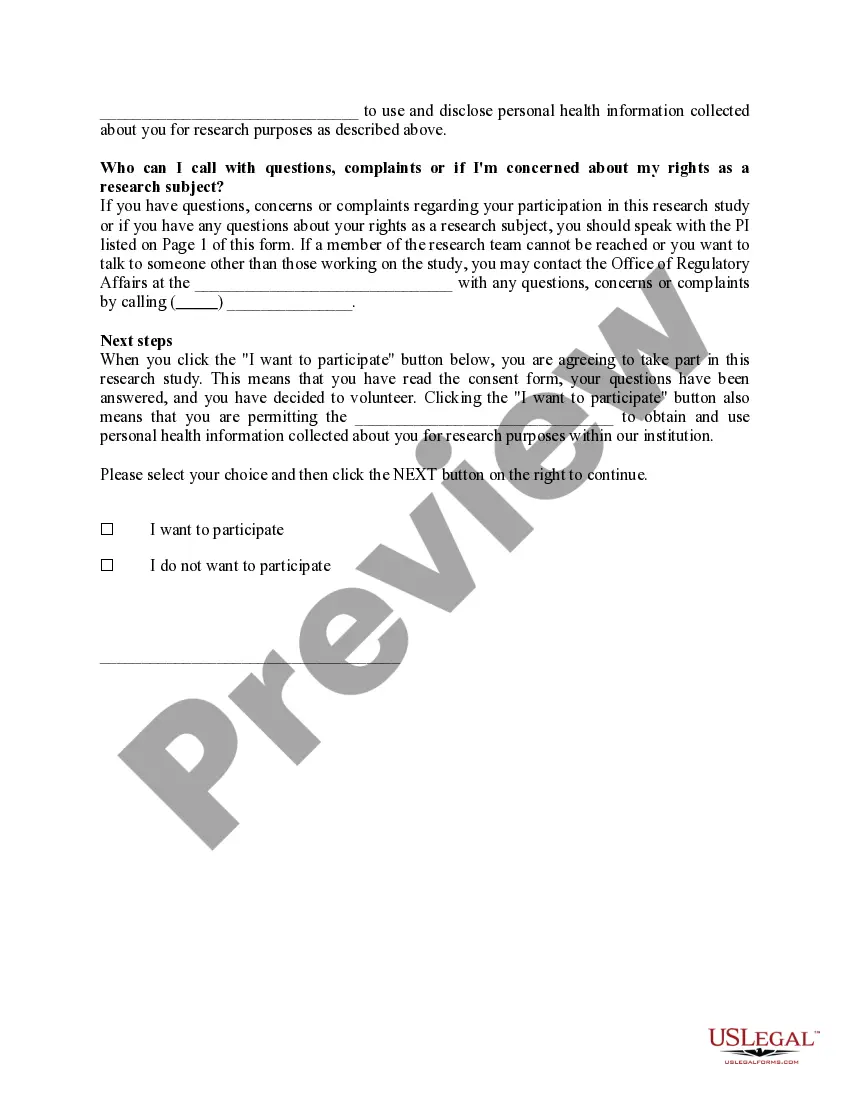
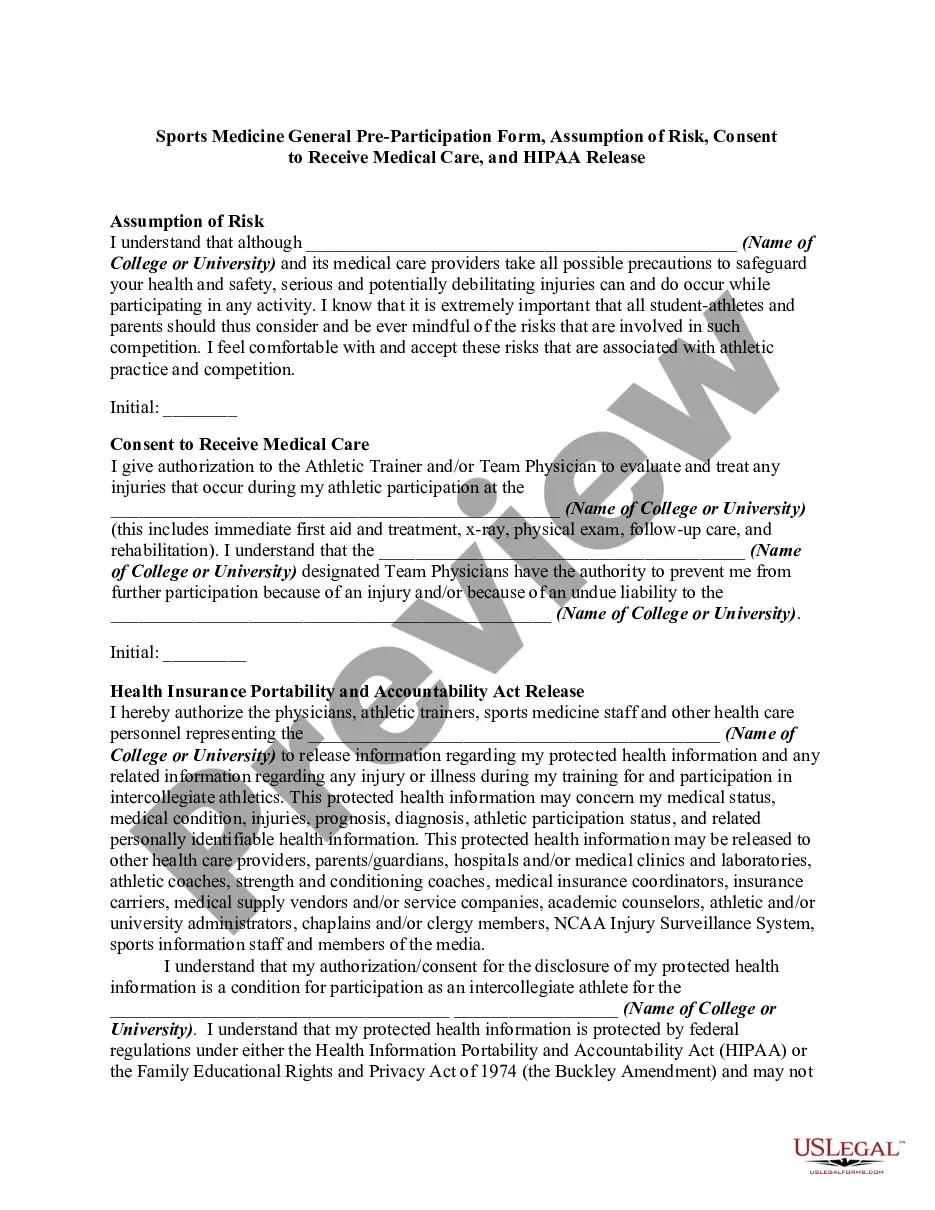
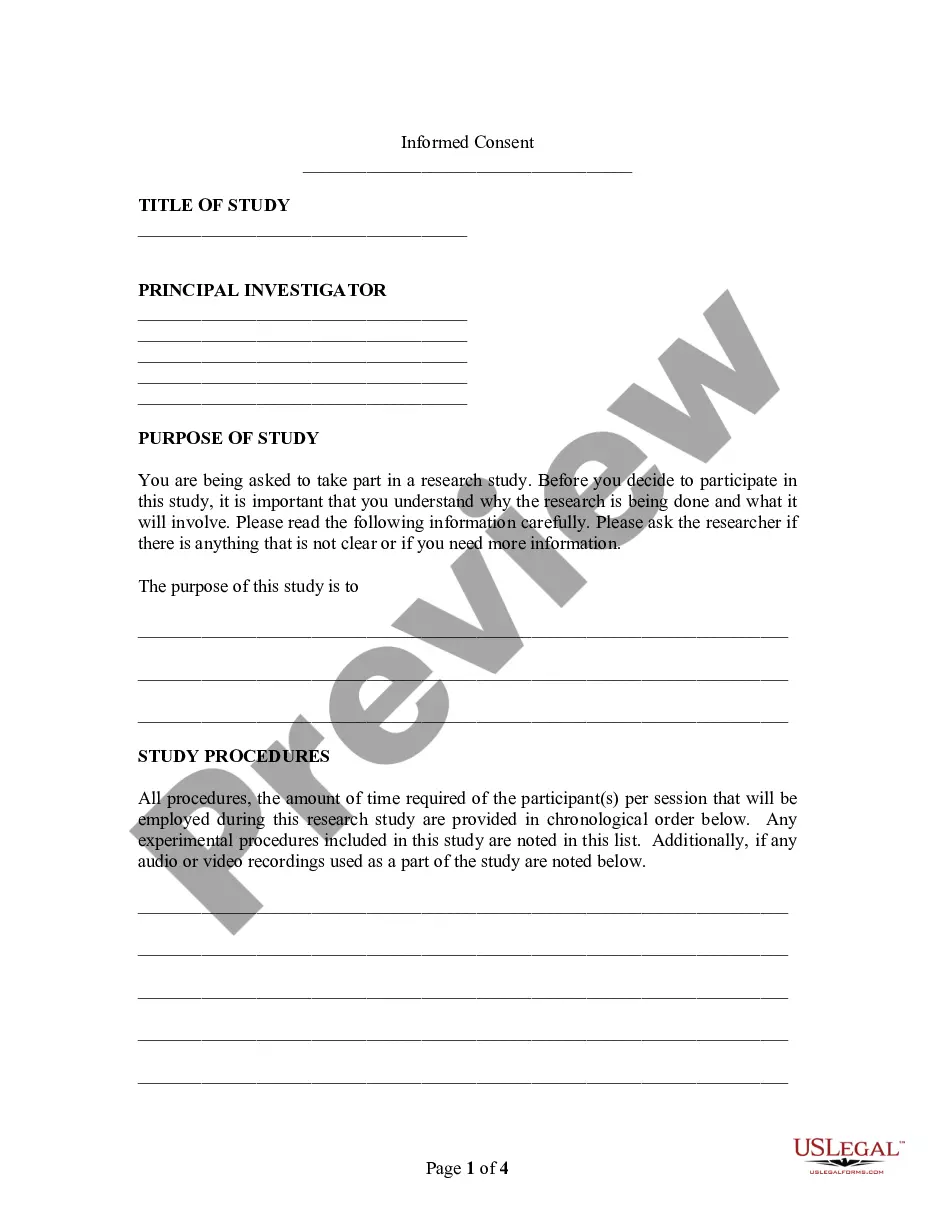
The Informed Consent and HIPAA Authorization Form for Research Participant is a legal document that ensures research participants understand the study they are involved in, the associated risks, and the confidentiality of their health information. This form is essential for obtaining informed consent while complying with HIPAA regulations, which protect patient privacy in the research context. It is crucial for any research study that gathers personal health information from volunteers.
Key parts of this document
- Protocol title: Identifies the specific research study.
- Principal investigator: The researcher in charge of the study.
- Purpose of the study: Explains the objectives and reasons for the research.
- Participation details: Outlines what is expected from participants, including any surveys and randomization into groups.
- Risks and benefits: Describes any potential risks involved and the benefits of participating in the study.
- Withdrawal rights: Clarifies that participants can leave the study at any point without penalty.
When this form is needed
This form should be used when recruiting participants for a research study involving personal health information. It is necessary to ensure participants are fully informed about the research's nature, what will be done with their data, and their rights regarding participation. This form is crucial for studies assessing new treatments, health behaviors, or personal health information collection, especially in clinical or community settings.
Who should use this form
The following individuals or entities should utilize this form:
- Researchers conducting studies that involve human participants.
- Research institutions or organizations that are required to comply with ethical standards for research.
- Ethics review boards overseeing research protocols to ensure compliance with laws and regulations.
- Participants in research studies who want to understand their rights regarding their participation and health information privacy.
Steps to complete this form
- Enter the protocol title and details regarding the research study.
- Fill in the principal investigator's name and contact details.
- Clearly outline the purpose of the study and the expected duration of participation.
- Describe any risks, benefits, and potential compensation for participation.
- Obtain the participant's signature to confirm their understanding and consent.
- Provide a copy of the completed form to the participant for their records.
Is notarization required?
This form usually doesn’t need to be notarized. However, local laws or specific transactions may require it. Our online notarization service, powered by Notarize, lets you complete it remotely through a secure video session, available 24/7.
Get your form ready online
Our built-in tools help you complete, sign, share, and store your documents in one place.
Make edits, fill in missing information, and update formatting in US Legal Forms—just like you would in MS Word.
Download a copy, print it, send it by email, or mail it via USPS—whatever works best for your next step.
Sign and collect signatures with our SignNow integration. Send to multiple recipients, set reminders, and more. Go Premium to unlock E-Sign.
If this form requires notarization, complete it online through a secure video call—no need to meet a notary in person or wait for an appointment.
We protect your documents and personal data by following strict security and privacy standards.

Make edits, fill in missing information, and update formatting in US Legal Forms—just like you would in MS Word.

Download a copy, print it, send it by email, or mail it via USPS—whatever works best for your next step.

Sign and collect signatures with our SignNow integration. Send to multiple recipients, set reminders, and more. Go Premium to unlock E-Sign.

If this form requires notarization, complete it online through a secure video call—no need to meet a notary in person or wait for an appointment.

We protect your documents and personal data by following strict security and privacy standards.
Typical mistakes to avoid
- Failing to provide a clear explanation of the study's purpose and risks.
- Not ensuring that participants understand their right to withdraw at any time.
- Omitting important contact information for participants to ask questions.
- Neglecting to explain the process for protecting participant confidentiality.
- Forgetting to keep a copy of the signed consent form for the participant.
Advantages of online completion
- Convenient access to the latest information and requirements.
- Editable format allows researchers to customize the form for their specific study.
- Reduces time spent on paperwork by enabling quick downloads and submissions.
- Ensures compliance with legal standards through professionally drafted templates.
What to keep in mind
- The Informed Consent and HIPAA Authorization Form is essential for research studies involving personal health information.
- Participants have the right to understand the research details and to withdraw at any time.
- This form helps protect the rights of participants and ensures compliance with regulations.
Looking for another form?


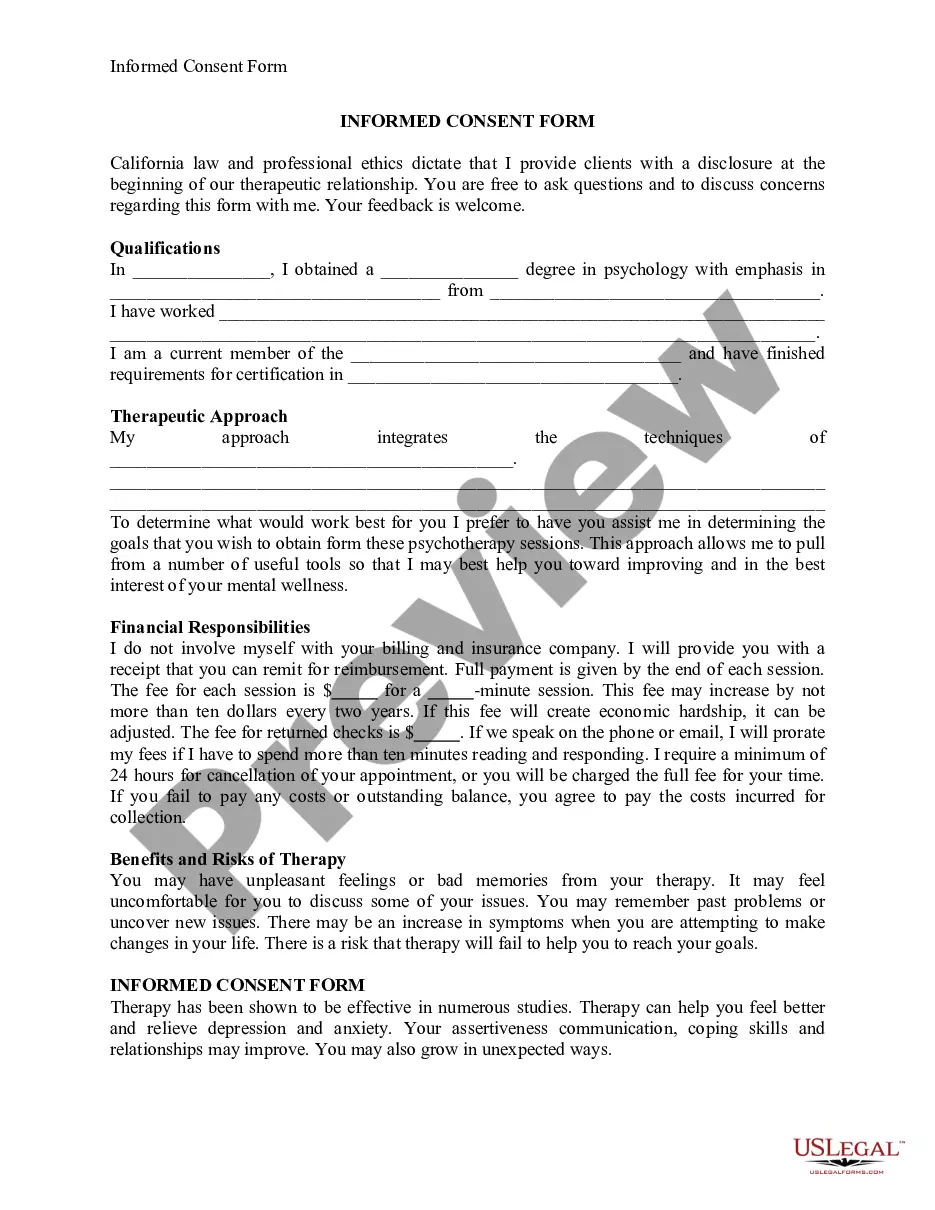


Form popularity
FAQ
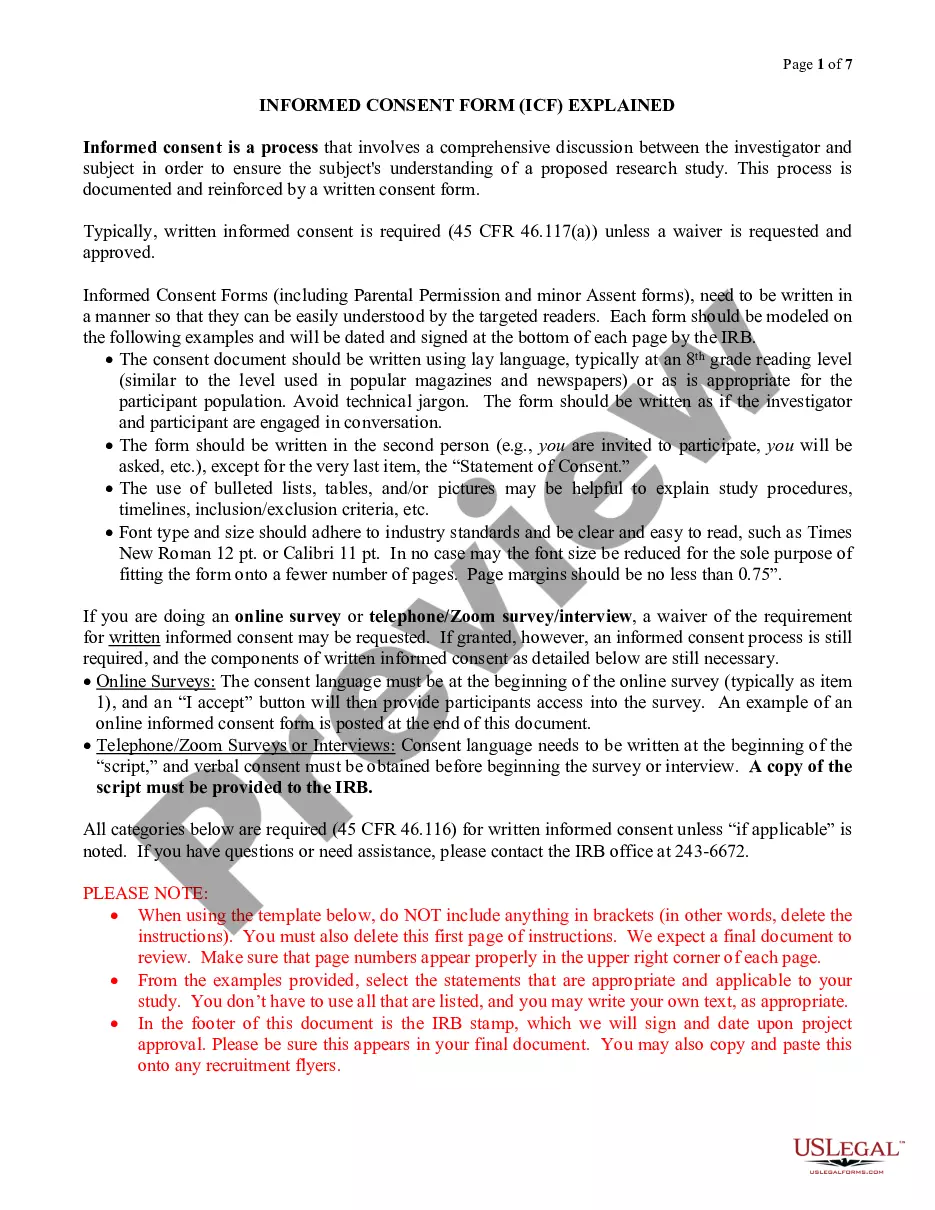
The informed consent process involves three key features: (1) disclosing to potential research subjects information needed to make an informed decision; (2) facilitating the understanding of what has been disclosed; and (3) promoting the voluntariness of the decision about whether or not to participate in the research.
An Authorization differs from an informed consent in that an Authorization is an individual's permission for a covered entity to use or disclose PHI for a certain purpose, such as a research study. An informed consent, on the other hand, is the individual's permission to participate in the research.
Considerations in preparing the informed consent document: Elements of consent present. Complete explanations. Lay language. Protection of confidentiality. No unproven claims of effectiveness. Device studies include a statement that the study includes an evaluation of the safety of the test article.
What Is Informed Consent? There are 4 components of informed consent including decision capacity, documentation of consent, disclosure, and competency. Doctors will give you information about a particular treatment or test in order for you to decide whether or not you wish to undergo a treatment or test.
The HIPAA Privacy Rule establishes the conditions under which protected health information may be used or disclosed by covered entities for research purposes.
Consent should be obtained before the participant enters the research (prospectively), and there must be no undue influence on participants to consent. The minimum requirements for consent to be informed are that the participant understands what the research is and what they are consenting to.
The Elements of Informed Consent. Literature of bioethics often analyzes informed consent in terms of the following elements: (1) disclosure; (2) comprehension; (3) voluntariness; (4) competence; and (5) consent (see U.S. National Commission, 1978, U.S. President's Commission, 1982; Meisel and Roth, 1981).