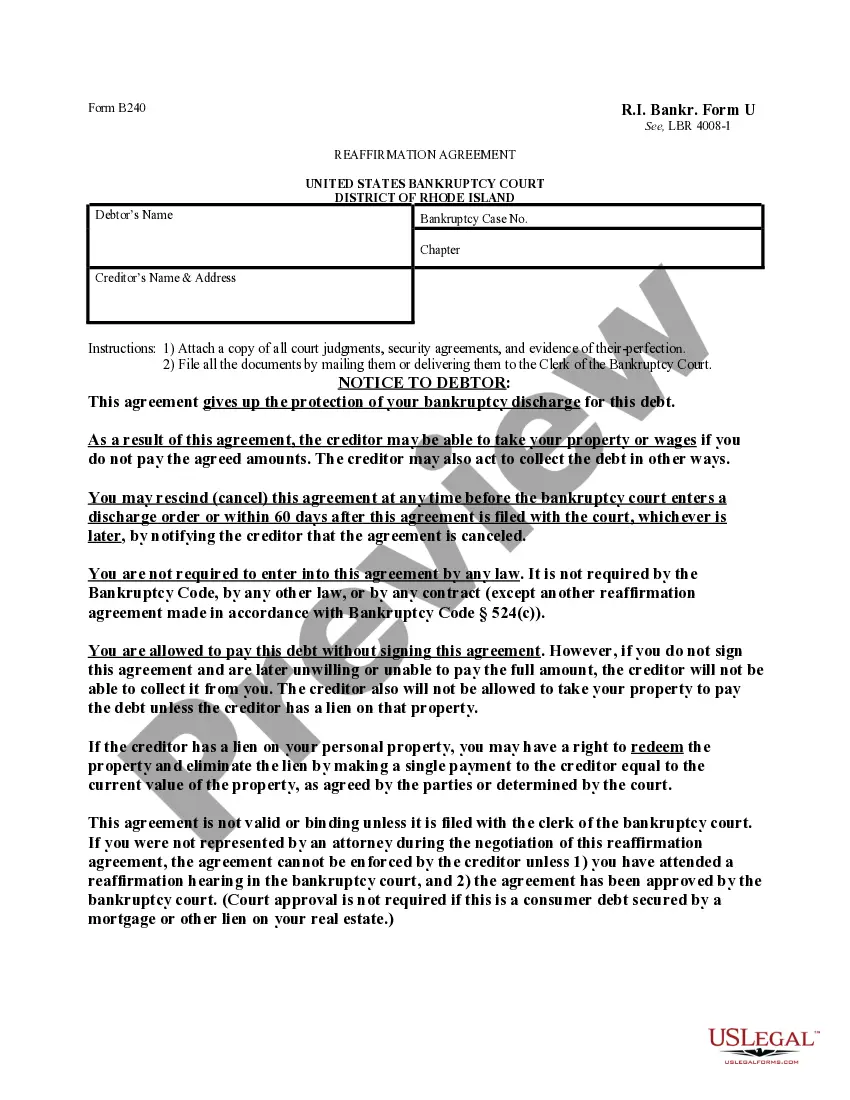
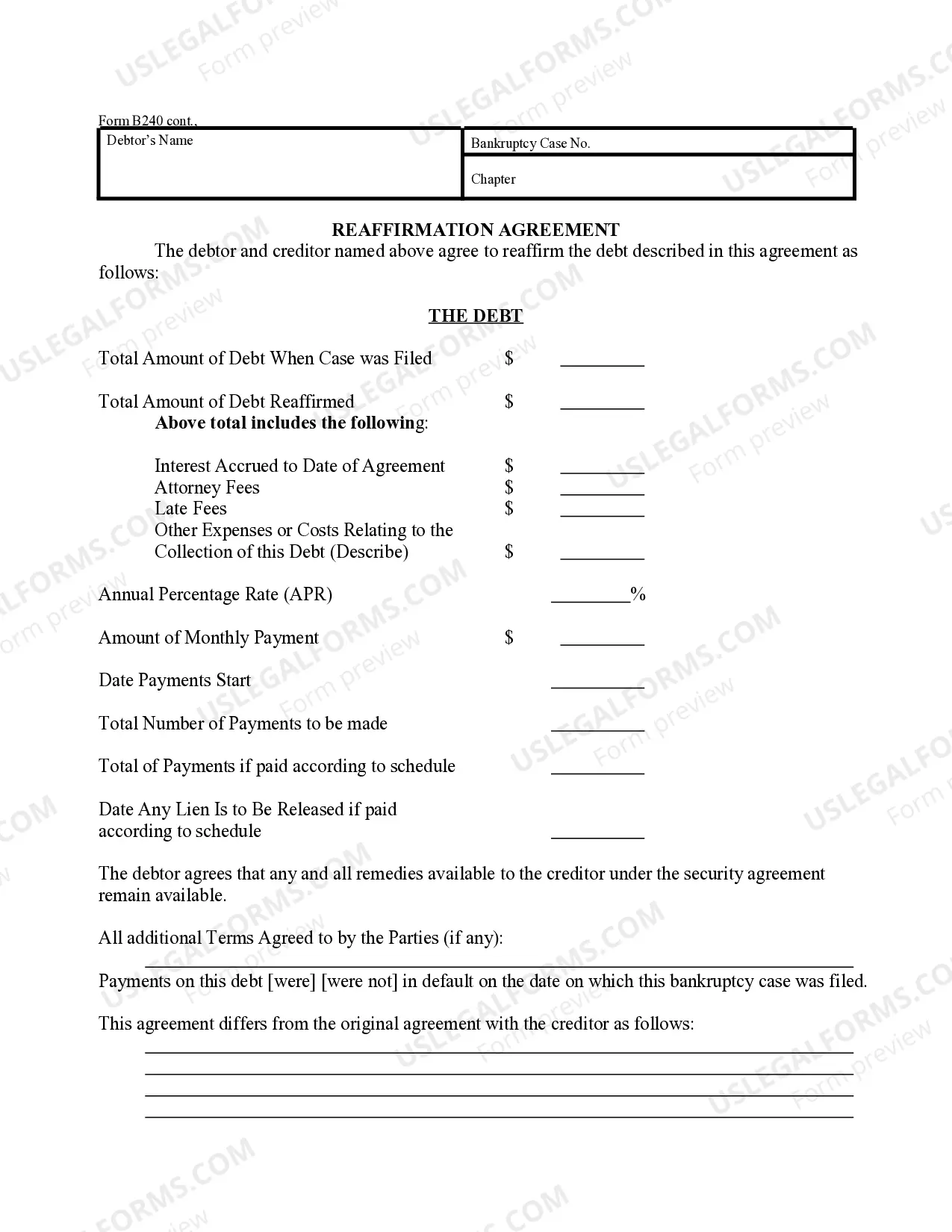
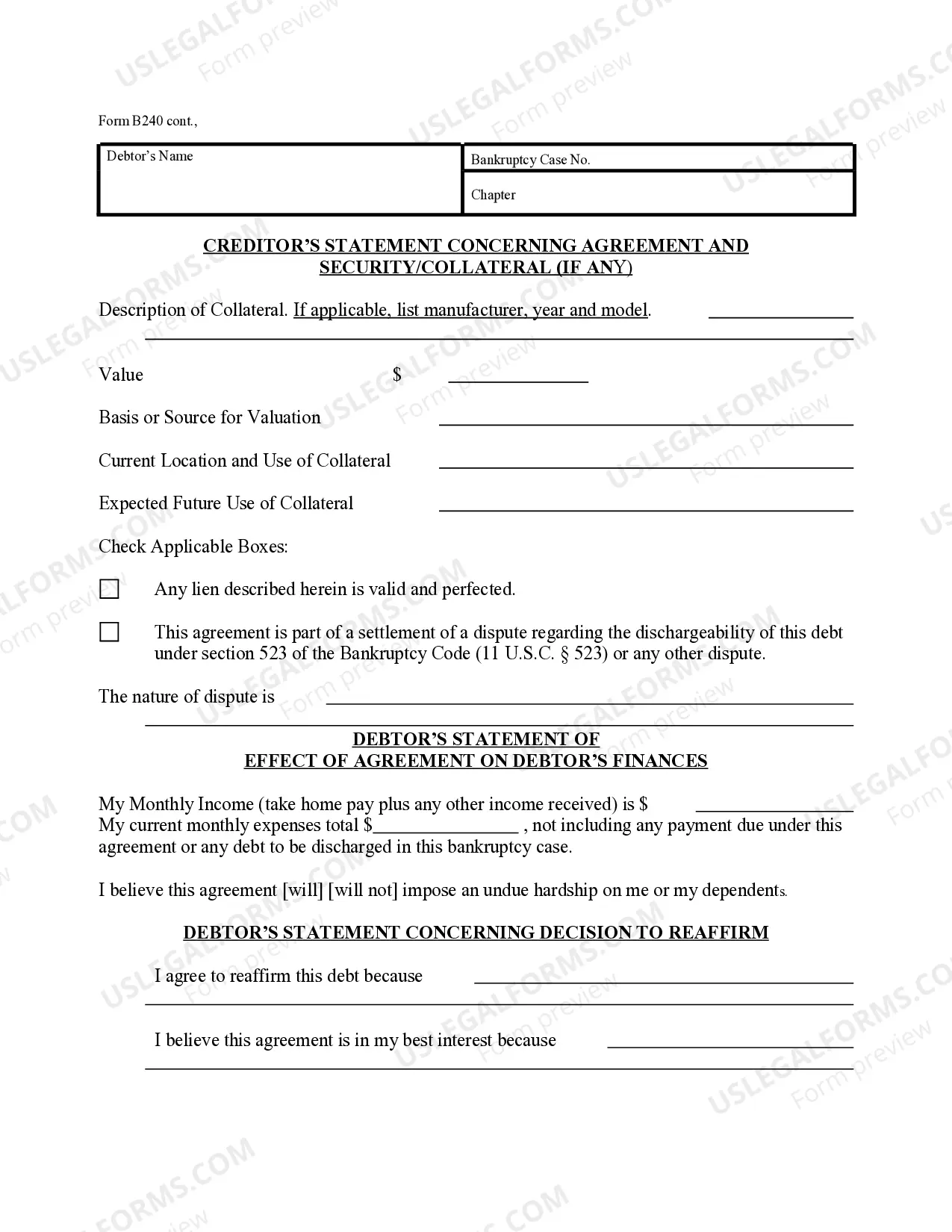
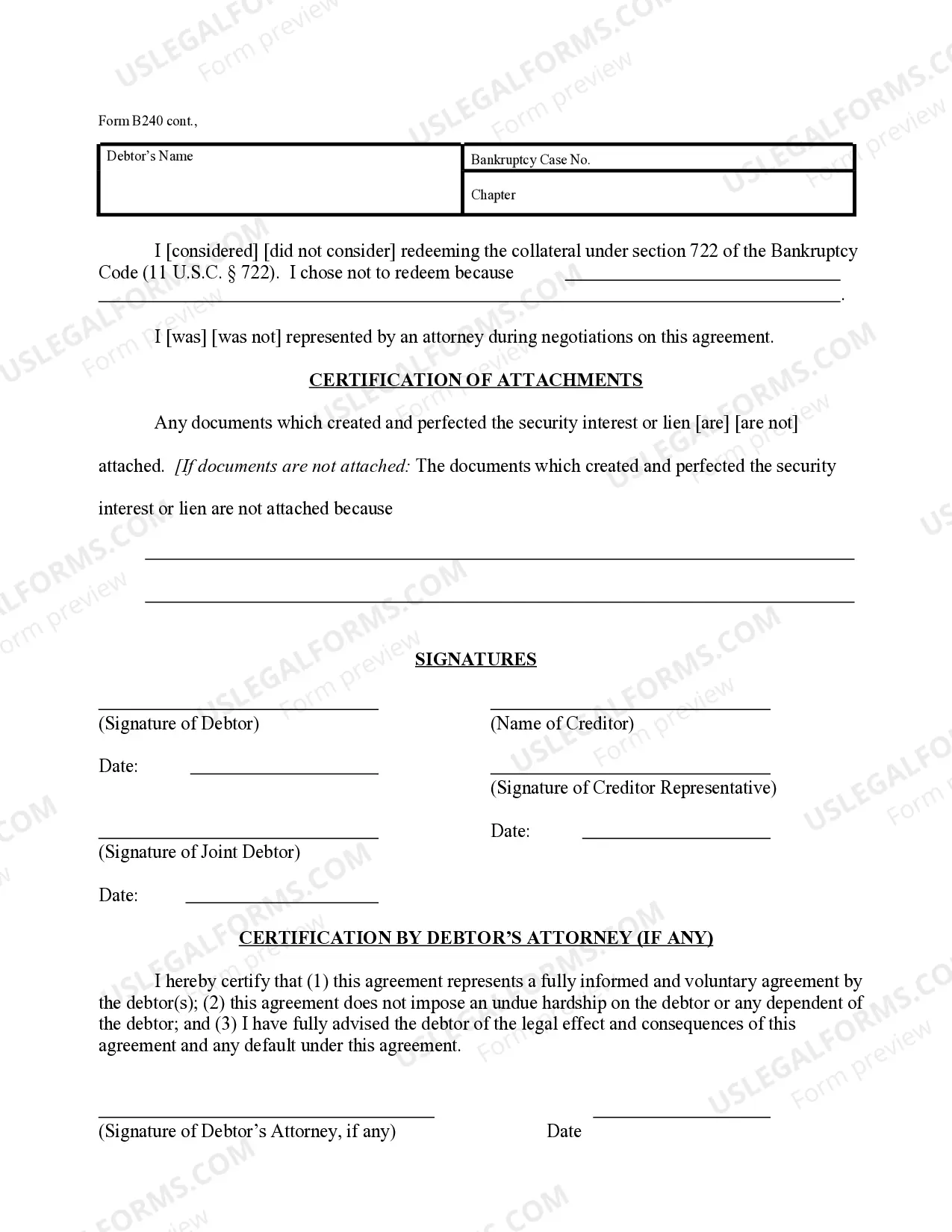
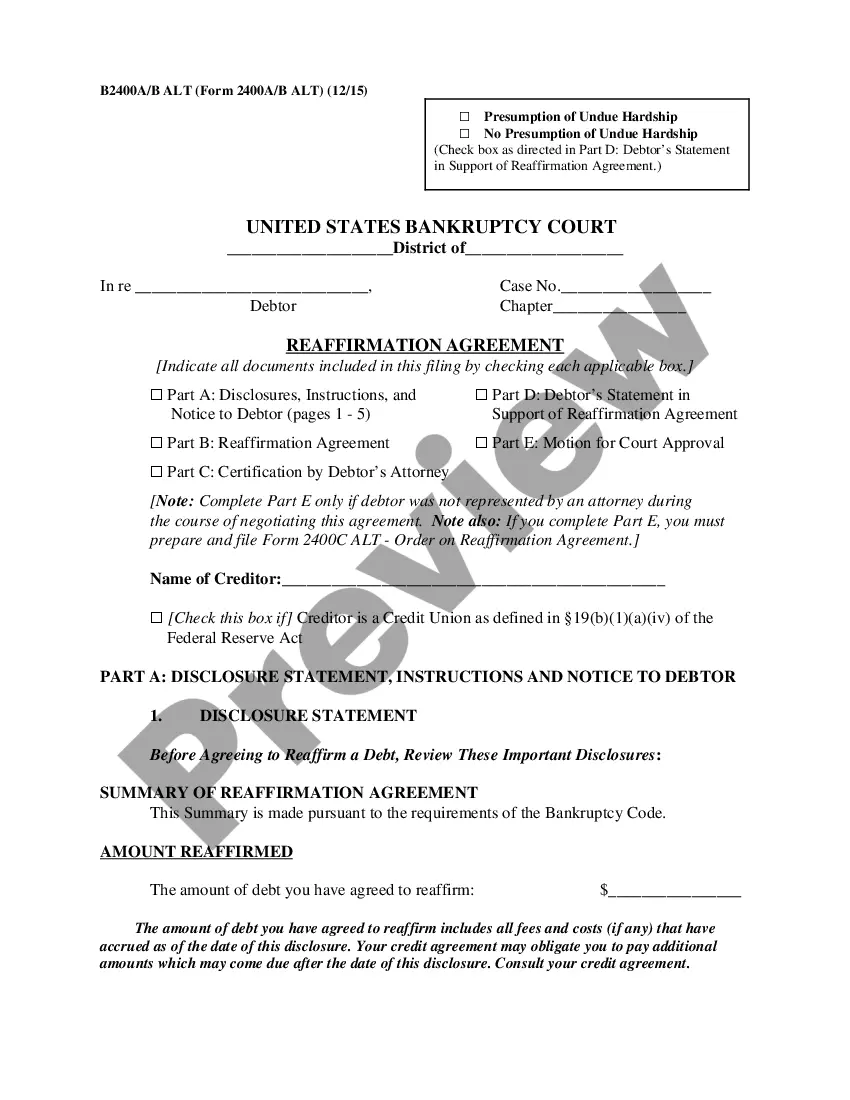
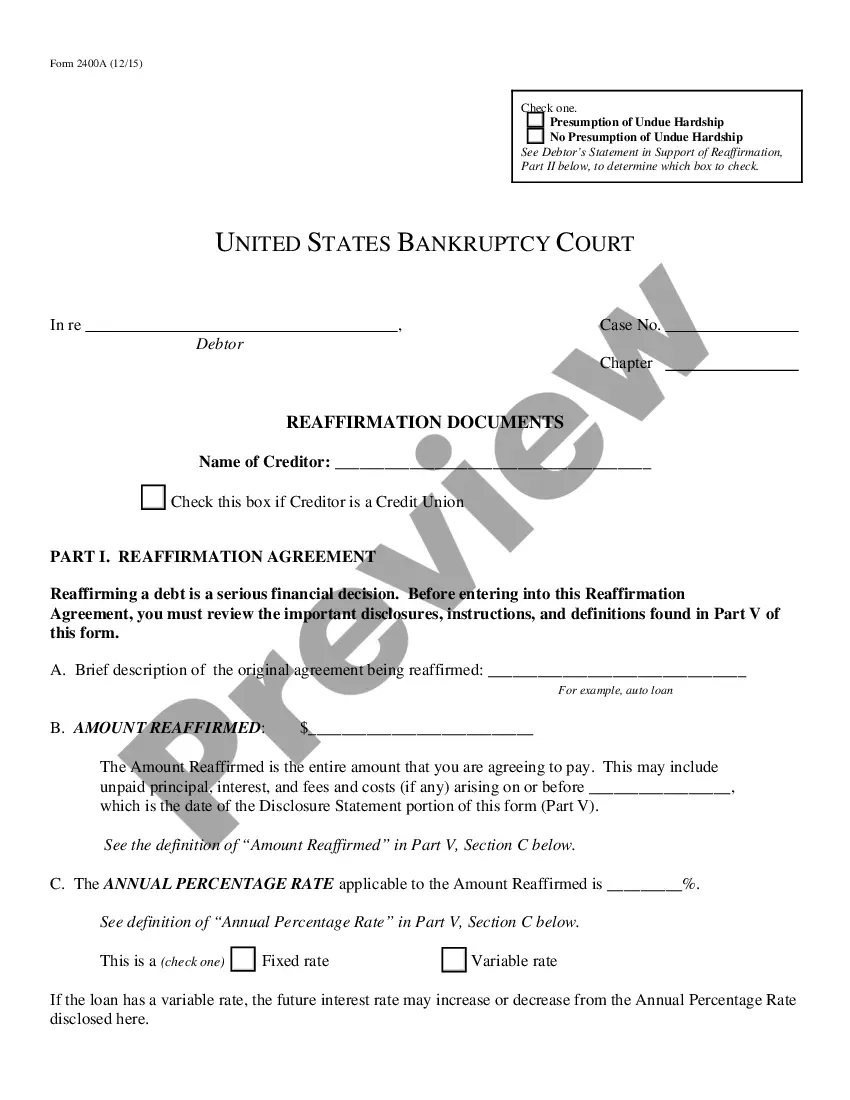
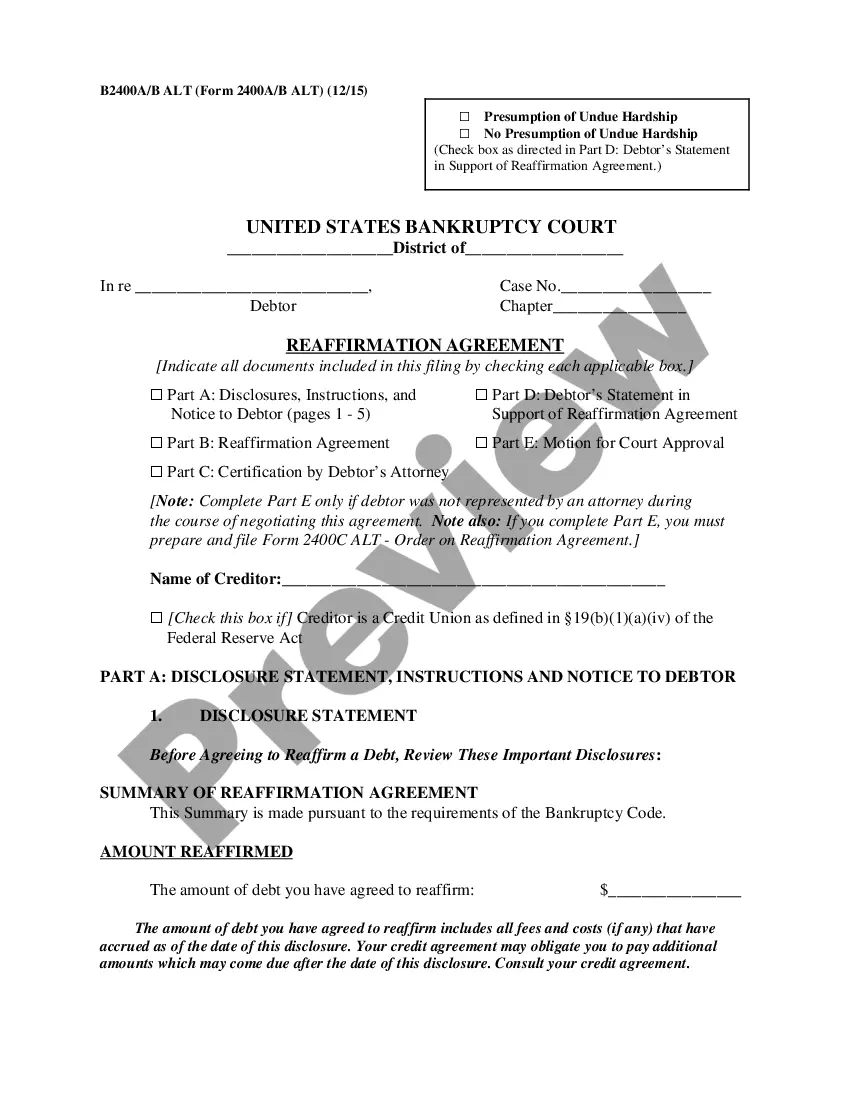
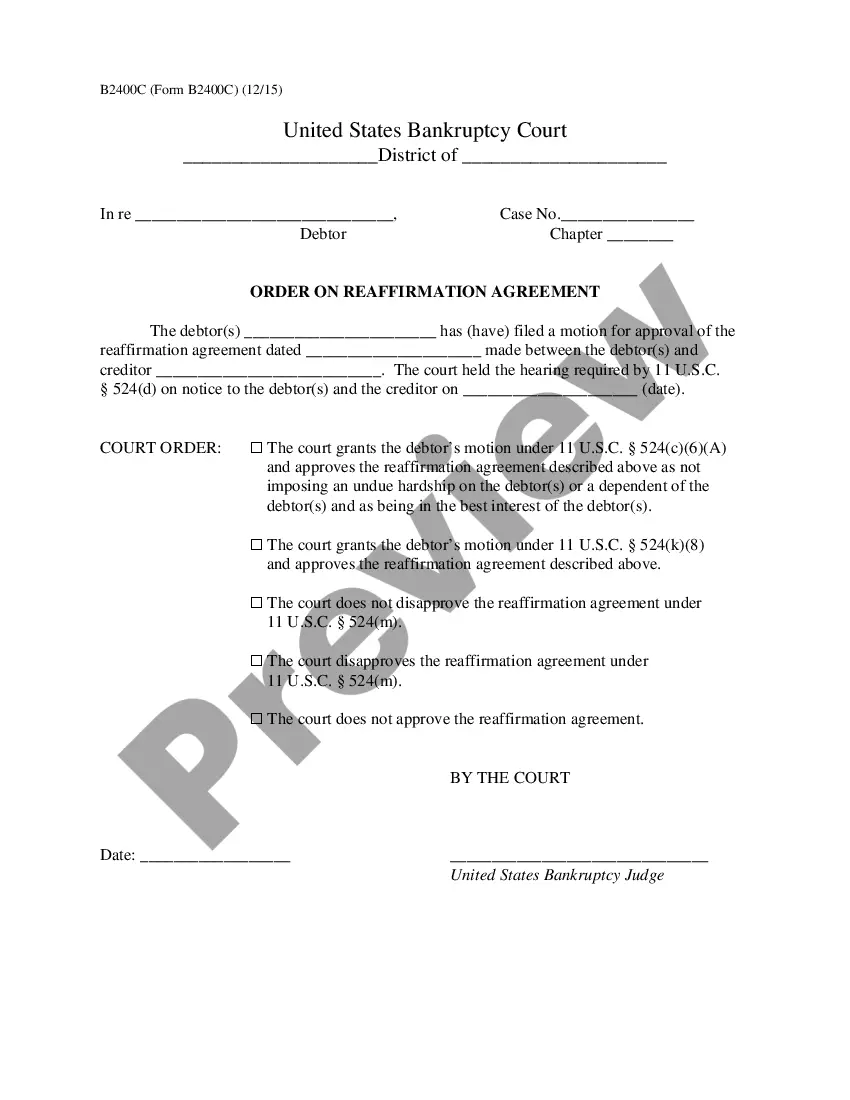
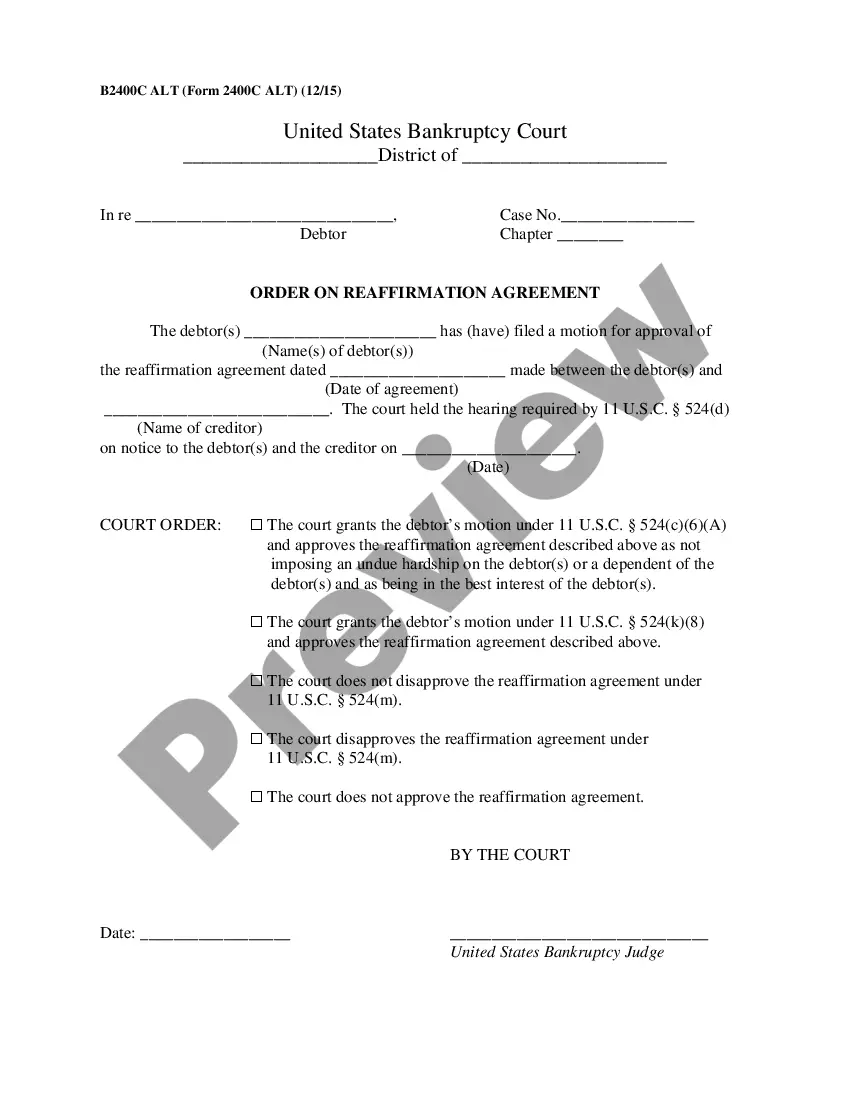
The reaffirmation agreement is used to reaffirm a particular debt. Once the debtor signs the agreement, the debtor gives up any protection of the bankruptcy discharge against the particular debt. The debtor is not required to enter into this agreement by any law.
Rhode Island Reaffirmation Agreement
State:
Rhode Island
Category:
Control #:
RI-BKR-801
Format:
Word;
PDF;
Rich Text
Instant download
This website is not affiliated with any governmental entity
Public form
Description
Free preview
Get your form ready online
Our built-in tools help you complete, sign, share, and store your documents in one place.
Built-in online Word editor
Make edits, fill in missing information, and update formatting in US Legal Forms—just like you would in MS Word.
Export easily
Download a copy, print it, send it by email, or mail it via USPS—whatever works best for your next step.
E-sign your document
Sign and collect signatures with our SignNow integration. Send to multiple recipients, set reminders, and more. Go Premium to unlock E-Sign.
Notarize online 24/7
If this form requires notarization, complete it online through a secure video call—no need to meet a notary in person or wait for an appointment.
Store your document securely
We protect your documents and personal data by following strict security and privacy standards.

Make edits, fill in missing information, and update formatting in US Legal Forms—just like you would in MS Word.

Download a copy, print it, send it by email, or mail it via USPS—whatever works best for your next step.

Sign and collect signatures with our SignNow integration. Send to multiple recipients, set reminders, and more. Go Premium to unlock E-Sign.

If this form requires notarization, complete it online through a secure video call—no need to meet a notary in person or wait for an appointment.

We protect your documents and personal data by following strict security and privacy standards.
Looking for another form?


How to fill out Rhode Island Reaffirmation Agreement?
Creating papers isn't the most uncomplicated job, especially for people who almost never deal with legal paperwork. That's why we recommend using accurate Rhode Island Reaffirmation Agreement samples made by professional attorneys. It gives you the ability to eliminate problems when in court or dealing with official institutions. Find the templates you require on our site for high-quality forms and accurate explanations.
If you’re a user having a US Legal Forms subscription, simply log in your account. Once you’re in, the Download button will automatically appear on the template web page. Soon after getting the sample, it will be saved in the My Forms menu.
Users with no an active subscription can quickly create an account. Utilize this short step-by-step help guide to get your Rhode Island Reaffirmation Agreement:
- Make sure that the document you found is eligible for use in the state it’s required in.
- Confirm the document. Use the Preview feature or read its description (if offered).
- Click Buy Now if this sample is the thing you need or return to the Search field to get a different one.
- Choose a suitable subscription and create your account.
- Make use of your PayPal or credit card to pay for the service.
- Download your document in a wanted format.
After doing these simple actions, you are able to fill out the form in an appropriate editor. Recheck filled in info and consider requesting a legal representative to examine your Rhode Island Reaffirmation Agreement for correctness. With US Legal Forms, everything gets easier. Try it out now!
Form popularity
FAQ
If you don't sign a reaffirmation agreement, the lender can repossess your car after your case closes and the automatic stay lifts. Some car lenders are known to repossess the car immediately, even if you are current on payments.
Yes, you can sell the home. The effect of no reaffirmation is that you do not have a personal obligation to pay the mortgage. You still are the titled owner and the mortgage is still a lien on the property so it must be paid in order to sell the property.
Reaffirmation is voluntary Surrender may be the best thing if the car is simply too expensive or isn't reliable. You can choose to keep the car and continue paying without reaffirming. You take your chances that the lender will repossess the car, but you also keep the benefits of the bankruptcy discharge.
Reaffirmation agreements are strictly voluntary. A debtor is not required to reaffirm any of his or her debts. If a debtor signs a reaffirmation agreement, the debtor agrees to pay a debt that otherwise might be discharged in his or her bankruptcy case.
If you do not reaffirm the mortgage, your personal liability for paying the debt represented by the promissory note is discharged in your bankruptcy case.The company can foreclose the mortgage and force a foreclosure sale if you stop making payments.
If you do not reaffirm the mortgage, your personal liability for paying the debt represented by the promissory note is discharged in your bankruptcy case.The company can foreclose the mortgage and force a foreclosure sale if you stop making payments.
Reaffirmation is the process wherein you agree to remain responsible for a debt so that you can keep the property securing the debt (collateral). You and the lender enter into a new contractusually on the same termsand submit it to the bankruptcy court.
Either way - if the reaffirmation agreement is not approved, your personal liability is discharged. And - just like when the court denies approval of the reaffirmation - most lenders will simply keep everything the same, as long as you make timely payments and keep the vehicle insured.
Reaffirmation agreements are strictly voluntary. A debtor is not required to reaffirm any of his or her debts. If a debtor signs a reaffirmation agreement, the debtor agrees to pay a debt that otherwise might be discharged in his or her bankruptcy case.