Ohio Roofing Contract for Contractor
Understanding this form
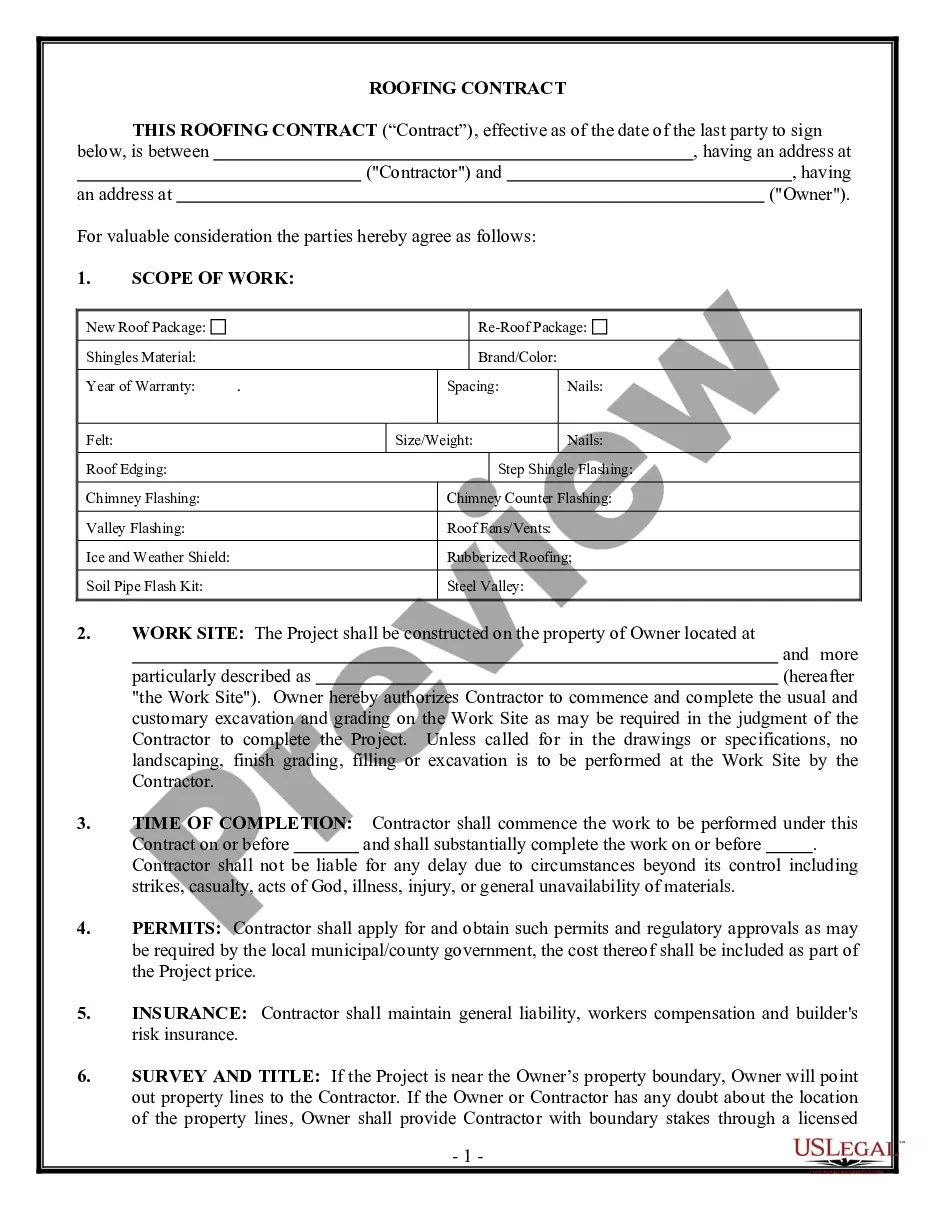
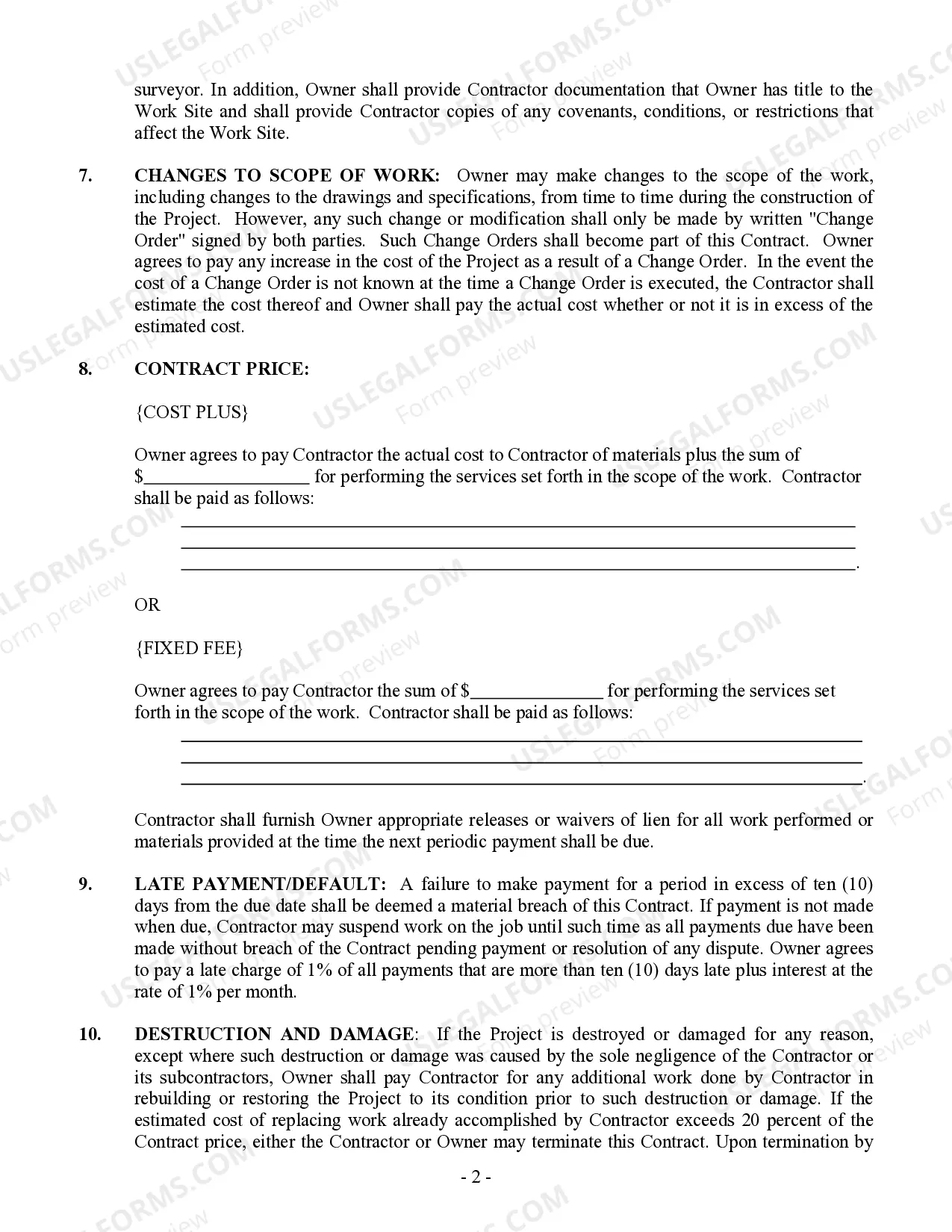
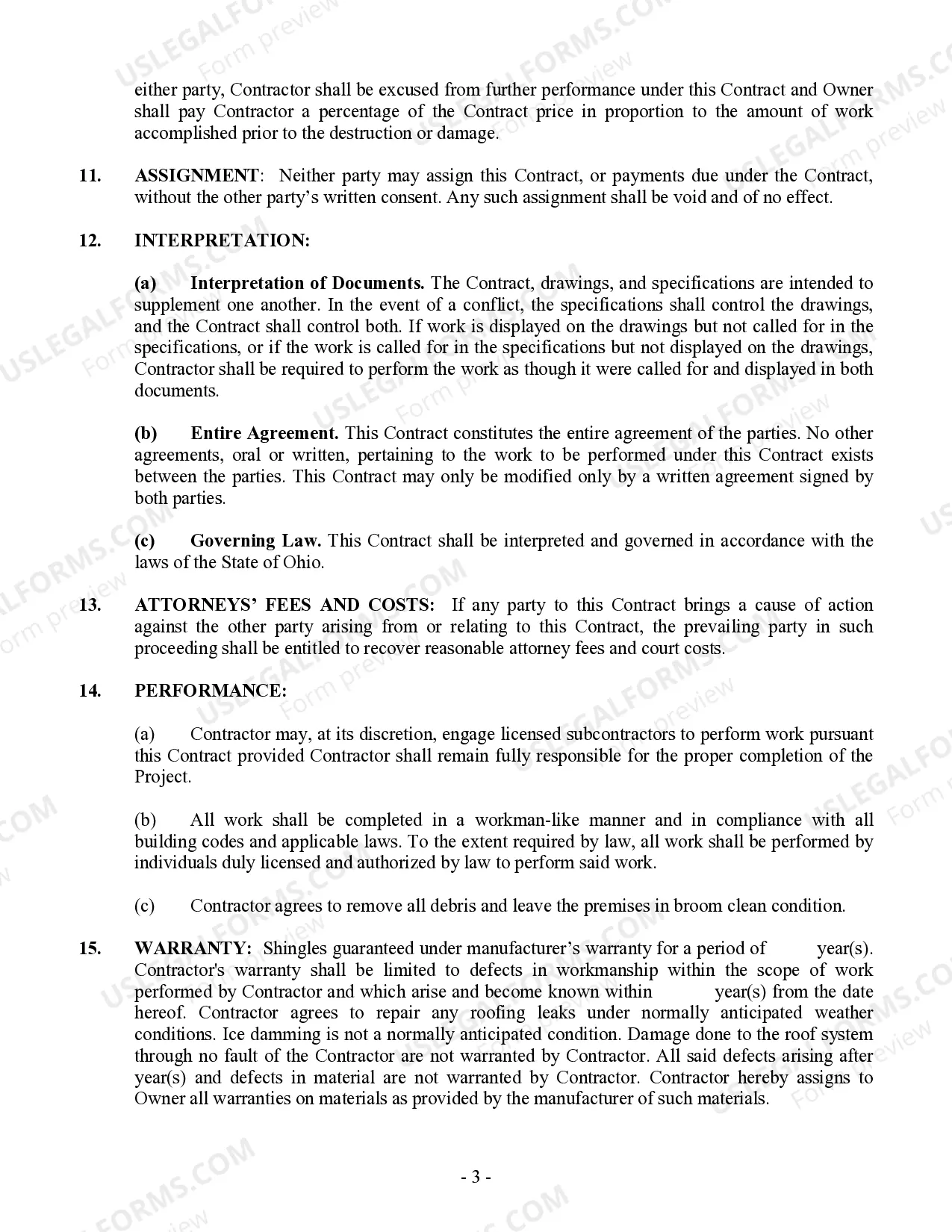
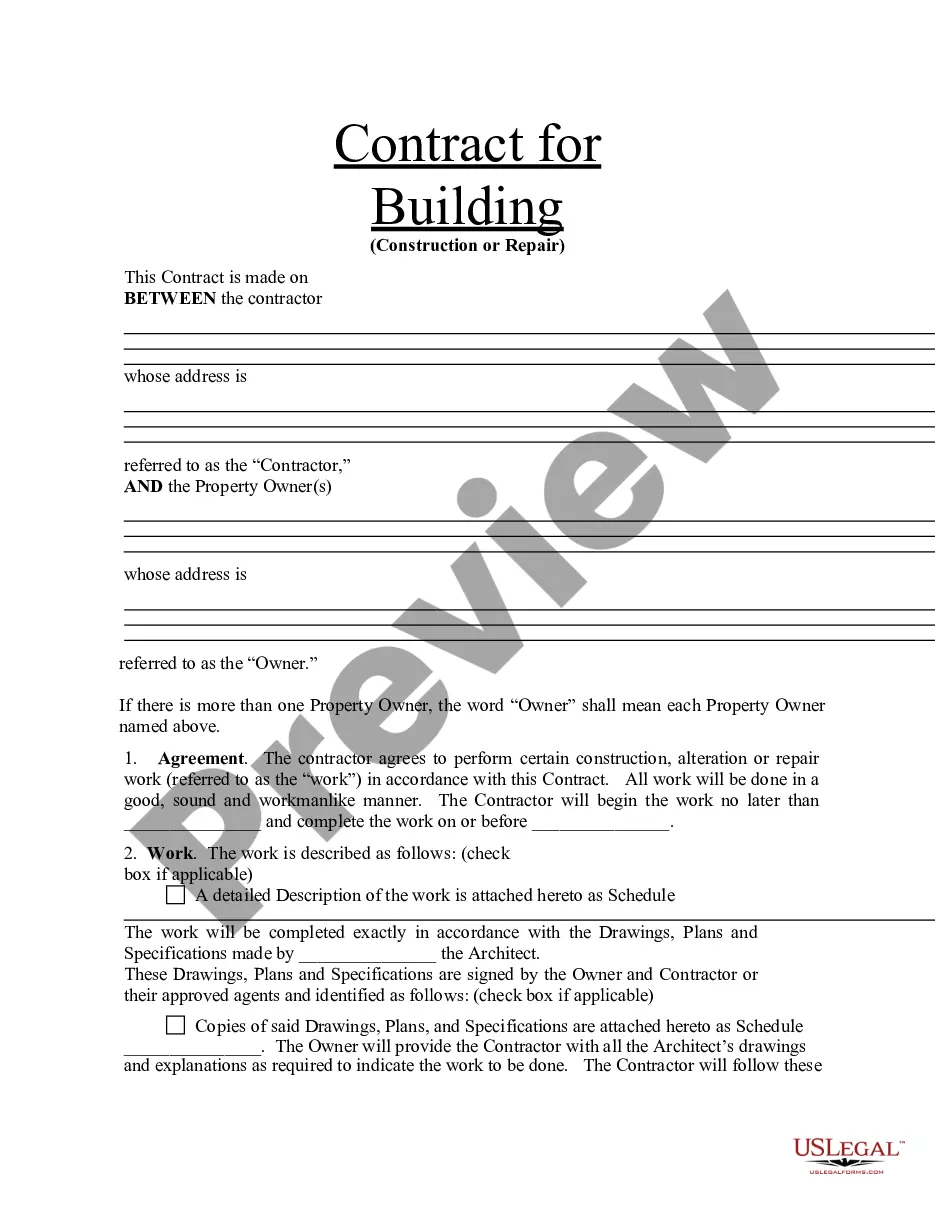
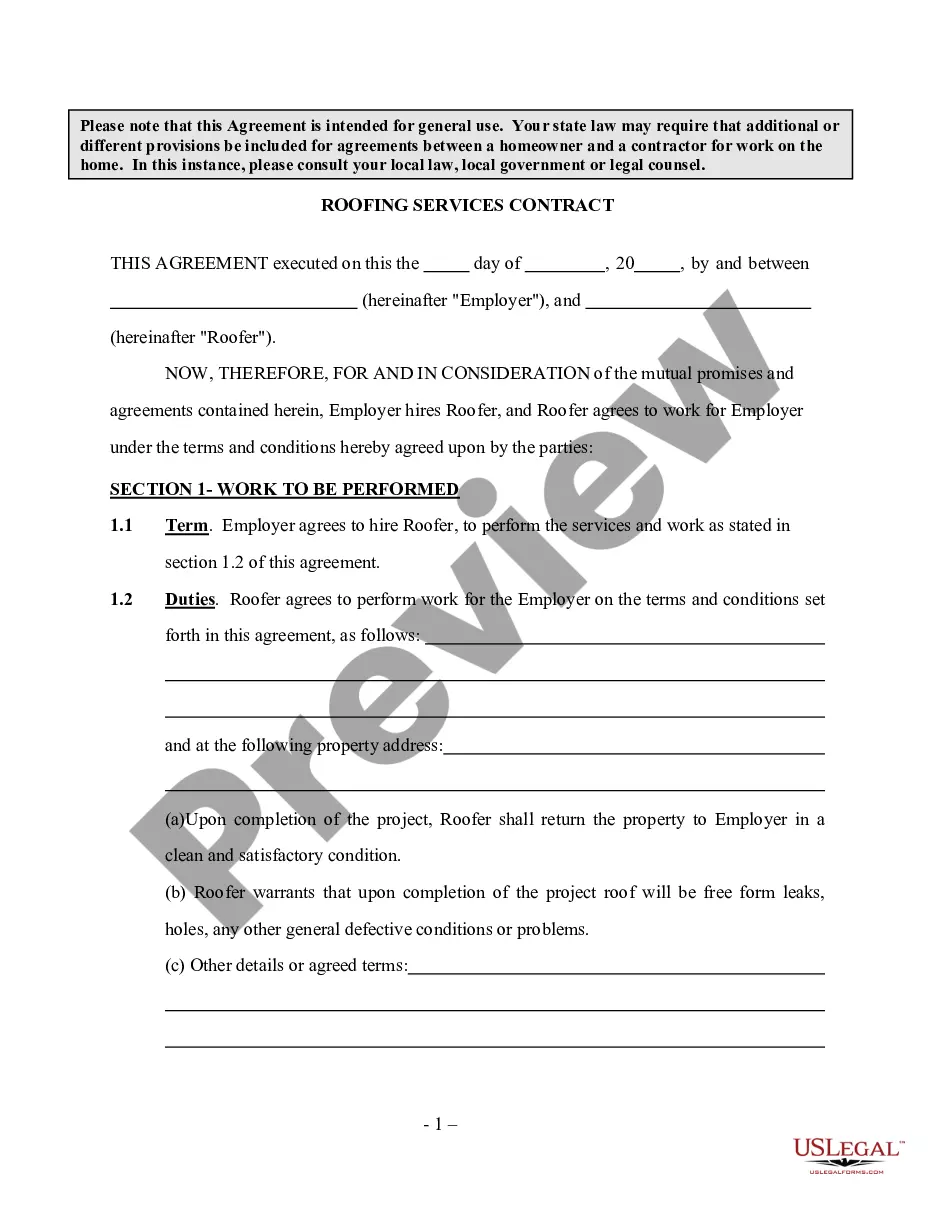
The Roofing Contract for Contractor is a legal document that establishes the terms and conditions between a roofing contractor and a property owner. This contract is designed for projects with either a cost-plus or fixed fee payment structure. It includes important provisions addressing change orders, warranties, insurance, and permits, ensuring compliance with Ohio laws.
Key components of this form
- Permits: The contractor is responsible for obtaining necessary permits and approvals from local authorities.
- Insurance: The contractor must maintain general liability, workers' compensation, and builders risk insurance.
- Change Orders: Any changes to the project scope require written change orders signed by both parties.
- Project Destruction and Damage: This section outlines the responsibilities related to project destruction or damage and potential contract termination.
- Assignment: Neither party can assign the contract without written consent from the other party.
- Entire Agreement: This clause states that the contract is the complete agreement between parties and can only be modified in writing.


When this form is needed
You should use this Roofing Contract for Contractor when engaging a roofing contractor for residential or commercial roofing projects. This contract is essential for defining the parameters of the work to be done, payment structures, and responsibilities of both parties. It helps to avoid misunderstandings and ensures that all legal aspects are covered throughout the project duration.
Who can use this document
Intended Users
- Property Owners: Those looking to hire a roofing contractor for their property.
- Roofing Contractors: Professionals seeking a formal agreement to define project scope and payment terms.
- Real Estate Investors: Individuals managing multiple properties who need clear contracts for roofing services.
Completing this form step by step
Steps to Complete the Roofing Contract for Contractor
- Identify the parties by providing the names and addresses of both the contractor and the property owner.
- Specify the property details where the roofing work will take place.
- Indicate the payment arrangement, choosing either a fixed fee or cost-plus structure.
- Include any necessary permits and insurance information required for the project.
- Ensure all change orders are documented and signed by both parties as modifications occur.
- Sign and date the contract to formalize the agreement.
Notarization guidance
This form does not typically require notarization unless specified by local law. However, having the contract notarized may provide additional legal security in certain situations.
Get your form ready online
Our built-in tools help you complete, sign, share, and store your documents in one place.
Make edits, fill in missing information, and update formatting in US Legal Forms—just like you would in MS Word.
Download a copy, print it, send it by email, or mail it via USPS—whatever works best for your next step.
Sign and collect signatures with our SignNow integration. Send to multiple recipients, set reminders, and more. Go Premium to unlock E-Sign.
If this form requires notarization, complete it online through a secure video call—no need to meet a notary in person or wait for an appointment.
We protect your documents and personal data by following strict security and privacy standards.

Make edits, fill in missing information, and update formatting in US Legal Forms—just like you would in MS Word.

Download a copy, print it, send it by email, or mail it via USPS—whatever works best for your next step.

Sign and collect signatures with our SignNow integration. Send to multiple recipients, set reminders, and more. Go Premium to unlock E-Sign.

If this form requires notarization, complete it online through a secure video call—no need to meet a notary in person or wait for an appointment.

We protect your documents and personal data by following strict security and privacy standards.
Common mistakes to avoid
Common Mistakes to Avoid
- Failing to specify the payment structure clearly, which can lead to disputes later.
- Neglecting to document change orders in writing, which may affect project scope and costs.
- Not verifying the contractor's insurance coverage before signing the contract.
- Overlooking the requirement for permits which could result in legal penalties.
Why use this form online
Benefits of Using This Form Online
- Convenience: Downloadable and easy to access from anywhere, allowing for quick preparation.
- Editability: Easily customizable to fit specific project needs and details.
- Reliability: Created by licensed attorneys to ensure compliance with current legal standards.
Key takeaways
Key Takeaways
- Always clearly define payment structure and responsibilities in the contract.
- Document all changes through signed change orders.
- Ensure you comply with local permit and insurance requirements.
Looking for another form?
Form popularity
FAQ
Get local referrals. Look for manufacturer designations. Research Better Business Bureau (BBB) ratings. Get an extensive warranty. Be concerned about safety. Check for proper licensing and insurance. Pay your deductible. Handle your own claim.
You have an absolute right to cancel within the three day period. After that, you can still cancel, but the contractor may be able to claim breach of contract and try to enforce the contract.
The consumer should call the roofing company and ask to speak to the owner or manager and nicely tell them they have changed their minds and would like to cancel the deal without paying a cancellation fee. If the company agrees, put it in writing and the homeowner is out of the deal.
In short, it is a legally binding contract in which you agree to work with a roofing company to do all of your insurance-approved work. Per the name, it's contingent on the insurance claim being approved for the contract to hold together.
You shouldn't pay more than 10 percent of the estimated contract price upfront, according to the Contractors State License Board.
For sales made in homes, such as when a roofing contractor knocks on your door, inspects your roof, and you sign the contract, the homeowner has three days in which to cancel the contract with no reason. The representative must tell you about your right to cancel at the time of the sale with a full refund.
Unless there are custom or specialty orders for materials, the contractor cannot ask for more than 10% upfront before work starts.
Both parties should sign the contract, and both should be bound by the terms and conditions spelled out in the agreement. In general that means the contractor will be obliged to provide specified materials and to perform certain services for you. In turn, you will be required to pay for those goods and that labor.
Ohio's written contract Statute of Limitations used to be fifteen (15) years, but has now been shortened to eight (8) years. Ohio's Statute of Repose requires certain claims be asserted within ten (10) years after substantial completion of the work.