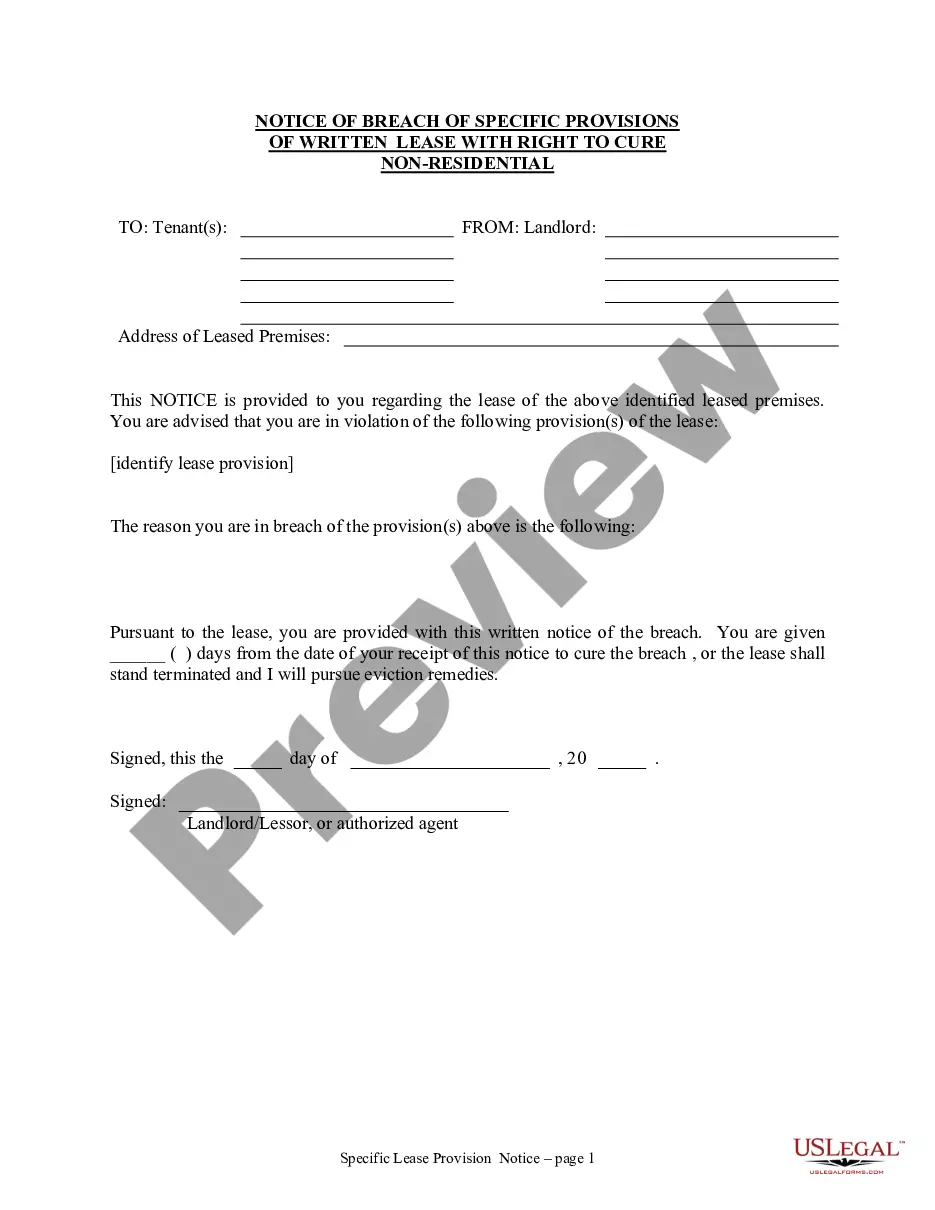
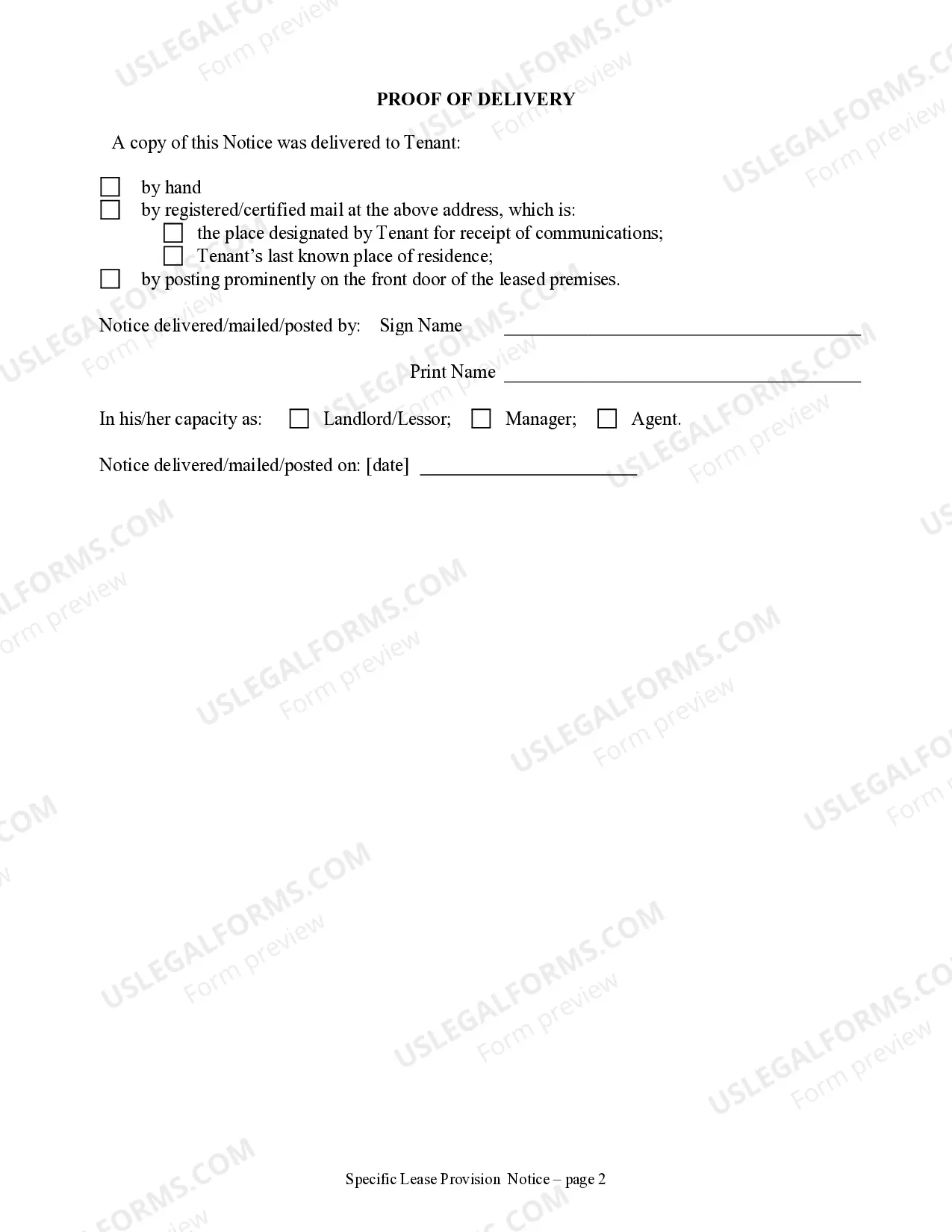
This Notice of Breach of Written Lease for Violating Specific Provisions of Lease with Right to Cure - Non-Residential - Landlord to Tenant form is to for a Landlord to provide notice of breach of a written lease for violating a specific provision of lease with the right to cure. It is for a Non-Residential lease. You insert the specific breach in the form. The lease should contain the specific provision which has been violated and provide the deadline to cure the breach. This form is for use when a form for your specific situation is not available.
Alaska Notice of Breach of Written Lease for Violating Specific Provisions of Lease with Right to Cure for Nonresidential Property from Landlord to Tenant
State:
Alaska
Control #:
AK-1501LT
Format:
Word;
Rich Text
Instant download
Description
Free preview
How to fill out Alaska Notice Of Breach Of Written Lease For Violating Specific Provisions Of Lease With Right To Cure For Nonresidential Property From Landlord To Tenant?
Employing the Alaska Notice of Breach of Written Lease for Breaching Specific Lease Provisions with Right to Cure for Nonresidential Property from Landlord to Tenant samples crafted by skilled attorneys allows you to avert complications when completing documents.
Just download the sample from our site, complete it, and request legal advice to verify it. This approach can save you significantly more time and effort compared to seeking legal counsel to create a document from the ground up for you.
If you possess a US Legal Forms subscription, simply Log In to your account and navigate back to the form webpage. Locate the Download button adjacent to the templates you are reviewing. After downloading a document, you will find all of your saved samples in the My documents section.
Begin with your credit card or PayPal. Choose a file format and download your document. Once you have completed all of the above steps, you will be able to fill out, print, and sign the Alaska Notice of Breach of Written Lease for Breaching Specific Lease Provisions with Right to Cure for Nonresidential Property from Landlord to Tenant template. Remember to double-check all entered data for accuracy prior to submitting it or sending it out. Minimize the time you invest in creating documents with US Legal Forms!
- If you lack a subscription, there's no need for concern.
- Follow the detailed guide below to register for an account online, obtain, and complete your Alaska Notice of Breach of Written Lease for Breaching Specific Lease Provisions with Right to Cure for Nonresidential Property from Landlord to Tenant template.
- Verify that you are downloading the correct state-specific document.
- Utilize the Preview feature and examine the description (if provided) to ascertain if you need this particular template, and if so, click Buy Now.
- Search for another sample using the Search field if necessary.
- Select a subscription that suits your requirements.
Form popularity
FAQ
The simple answer is yes, you can sell a property with a tenant still living in it. In fact, most states' laws give tenants the right to remain in a rental property after a sale until the lease or rental agreement expires. However, just because you can sell with a tenant doesn't necessarily mean you should.
A breach of lease occurs when one of the party breaks one of the agreements in the lease document. A breach of lease does not mean that the tenant and landlord waive their respective rights. Tenants enjoy the rights of safety, privacy, binding terms, and in some cases the right to withhold rent.
Sue the landlord and whoever for up to $10,000 in small claims court for trespassing, breach of contract, invasion of privacy, and breach of quiet enjoyment; if you are two or more tenants, each can separately sue them for up to $10,000, and a joint action is not required.
Alaska state law limits how much a landlord can charge for a security deposit (two months' rent, unless the monthly rent exceeds $2,000), when it must be returned (within 14 days after a tenant moves if the tenant has given proper notice to end the tenancy or 30 days if the tenant has not), and sets other restrictions
If the original lease includes a lease termination due to sale clause, the landlord has the right to end the lease early if the property sells. However, the tenant typically has 30 days to vacate the property in the event of a sale.
If a tenant breaches a tenancy agreement it is possible that their landlord will try and evict them from the property. The sort of breaches of tenancy which result in a landlord seeking a court order for possession include:Damage to the property (eg broken windows)
Your lease remains valid in case a rental property is sold, and your former landlord is obliged to provide you with a name and address of a new landlord.This means that tenants cannot be forced to leave or asked to pay a different rent until the current lease expires.
When there is no lease agreement (like in the case of weekly rentals), you can instead use the Alaska Notice to Vacate to inform the other party in advance that you wish to end the tenancy agreement and vacate the premises.
If a tenant breaches a tenancy agreement it is possible that their landlord will try and evict them from the property. The sort of breaches of tenancy which result in a landlord seeking a court order for possession include:Damage to the property (eg broken windows)