New York Living Trust for Individual Who is Single, Divorced or Widow or Widower with Children

Overview of this form
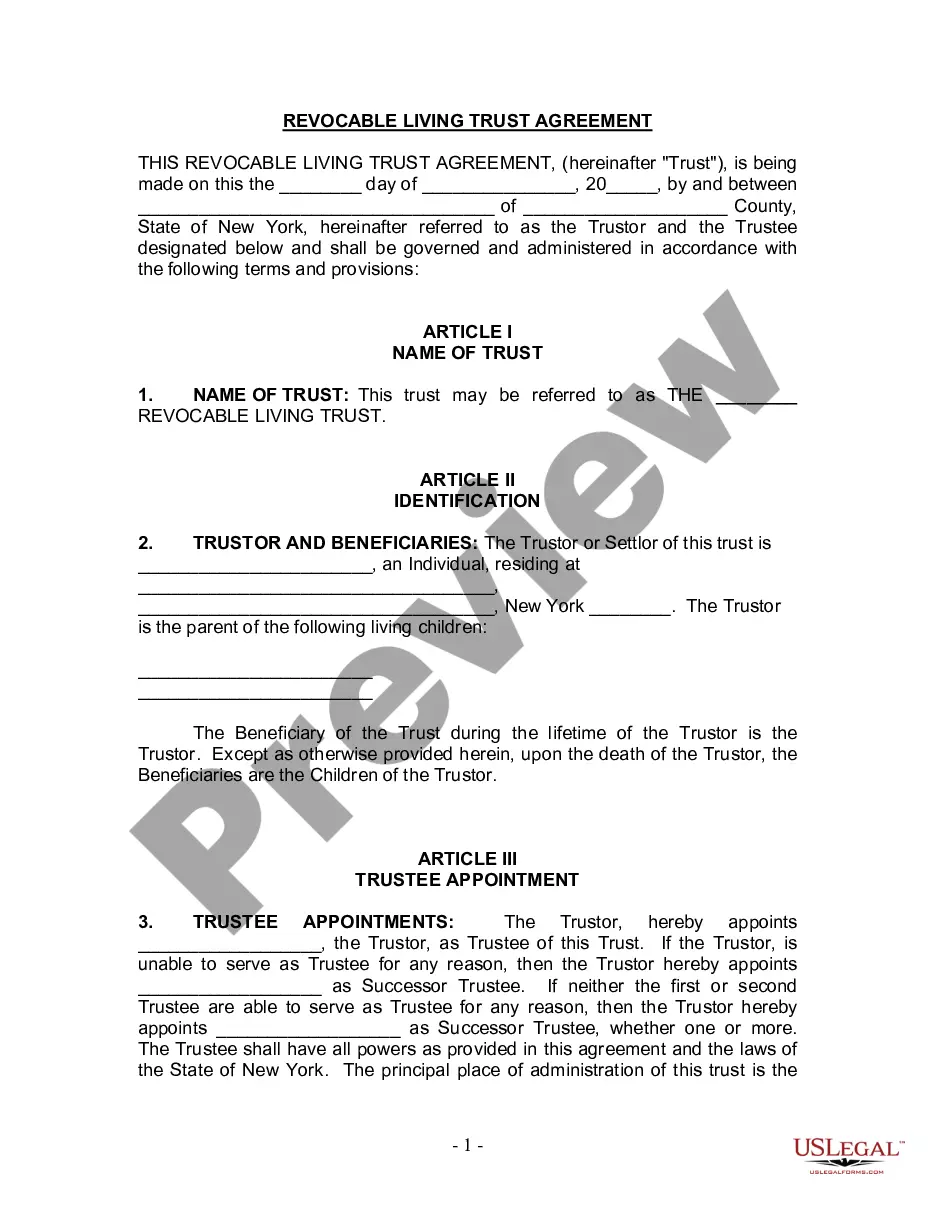
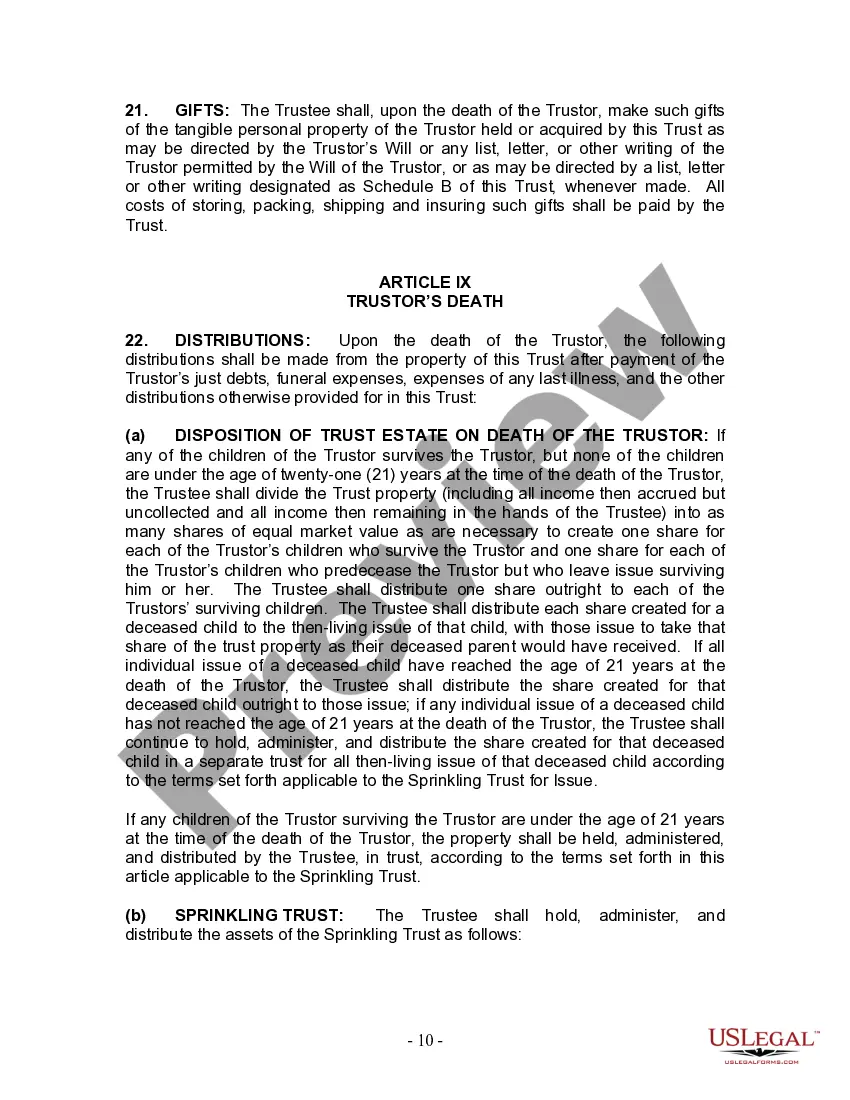
This Living Trust for Individuals Who Are Single, Divorced, or Widowed with Children is a legal document that establishes a trust during your lifetime. It allows you to manage your assets and property while designating beneficiaries, typically your children. Unlike wills, living trusts generally avoid probate, providing a smoother and more private transition of assets upon your death.
Main sections of this form
- Name of Trust: Designate the trust's name for reference.
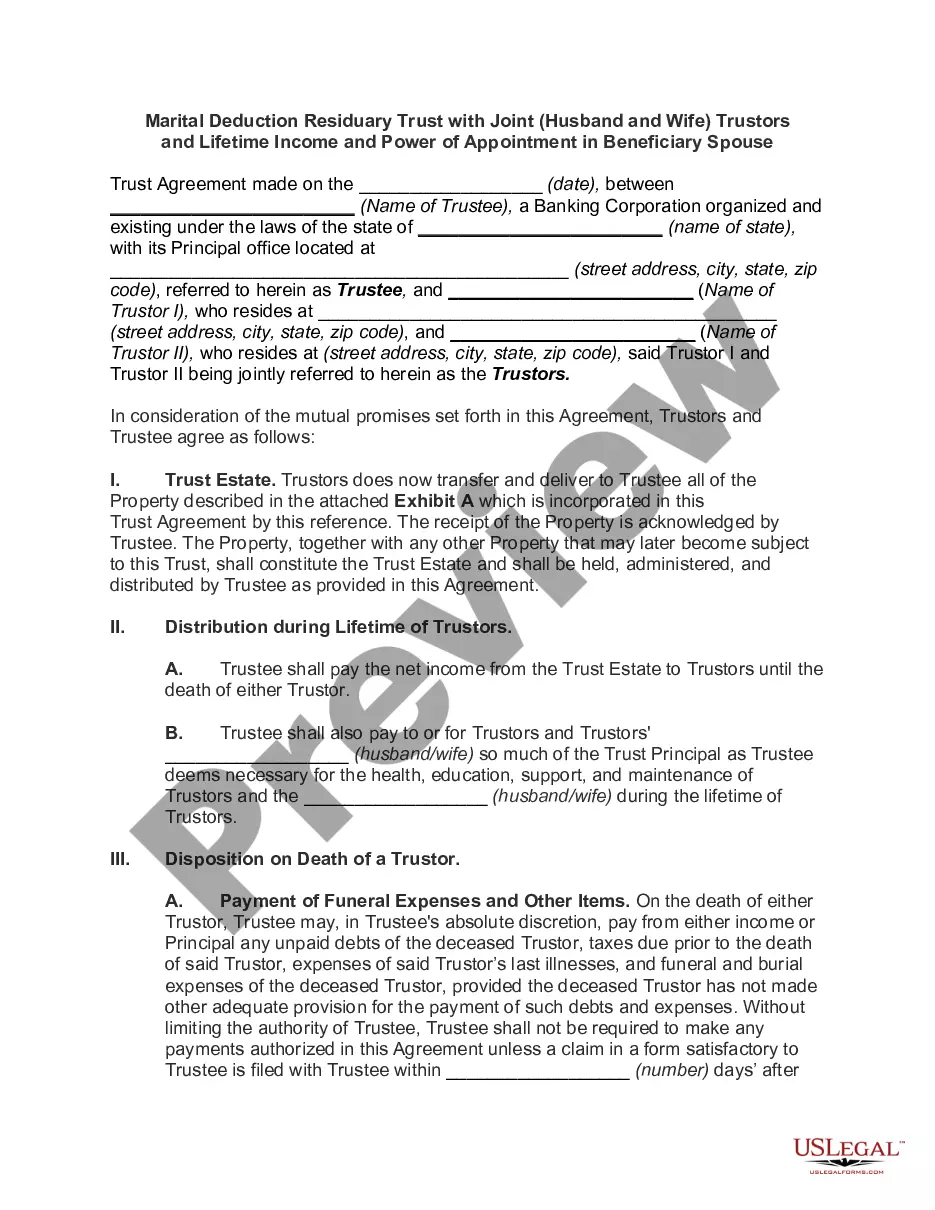
- Trustor and Beneficiaries: Identify the trust creator and beneficiaries, usually the trustorâs children.
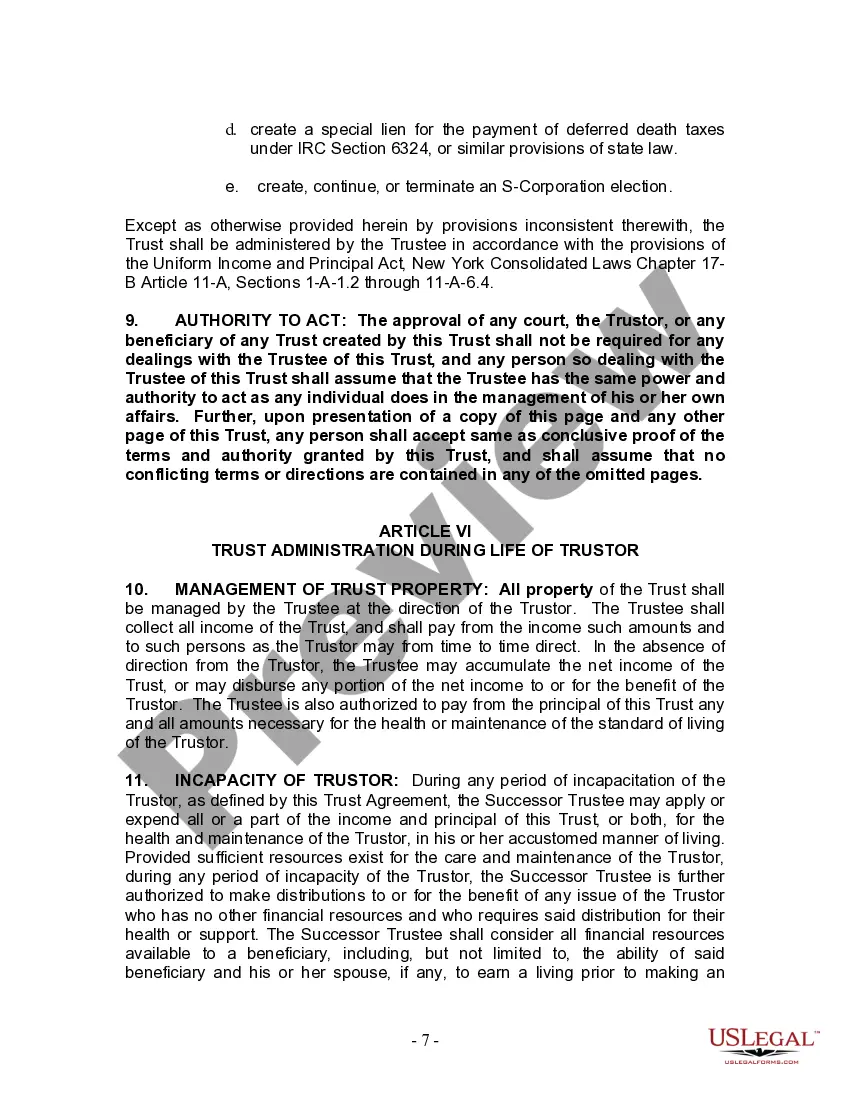
- Trustee Appointment: Specify who will manage the trust assets during the trustor's lifetime.
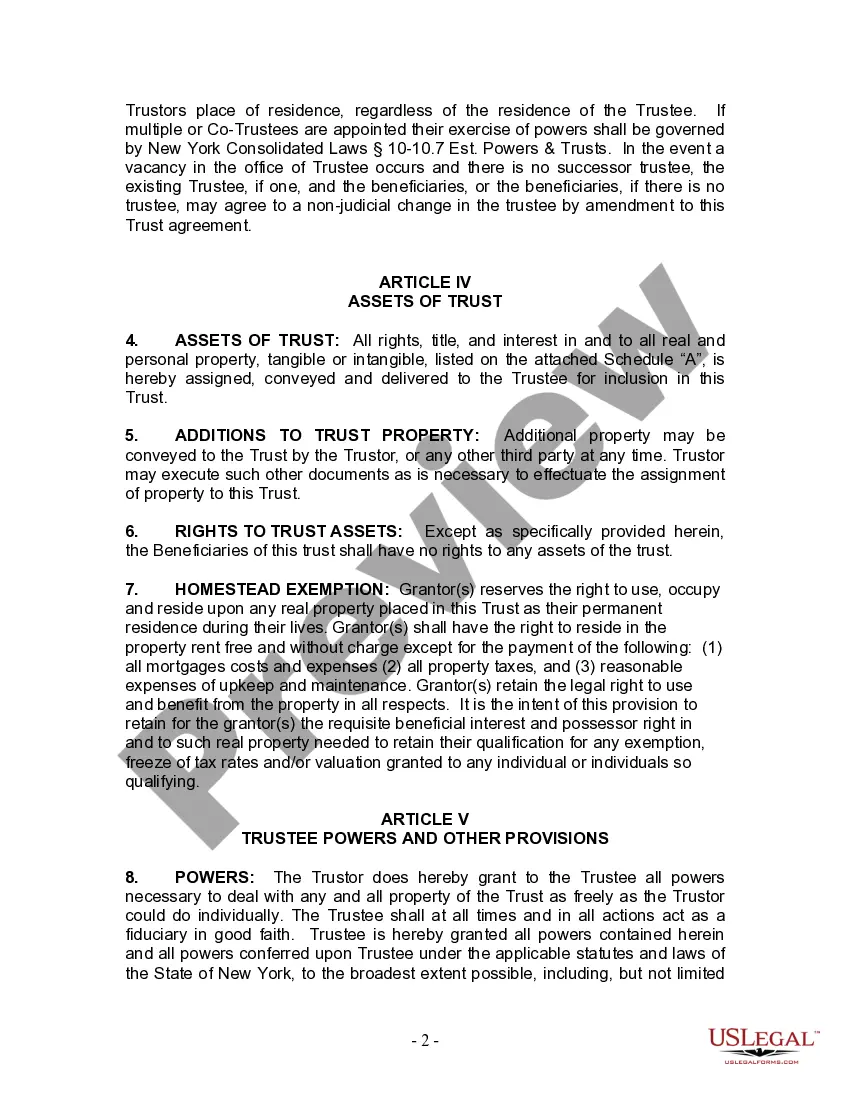
- Assets of Trust: Detail the property included in the trust and the rights to use it.
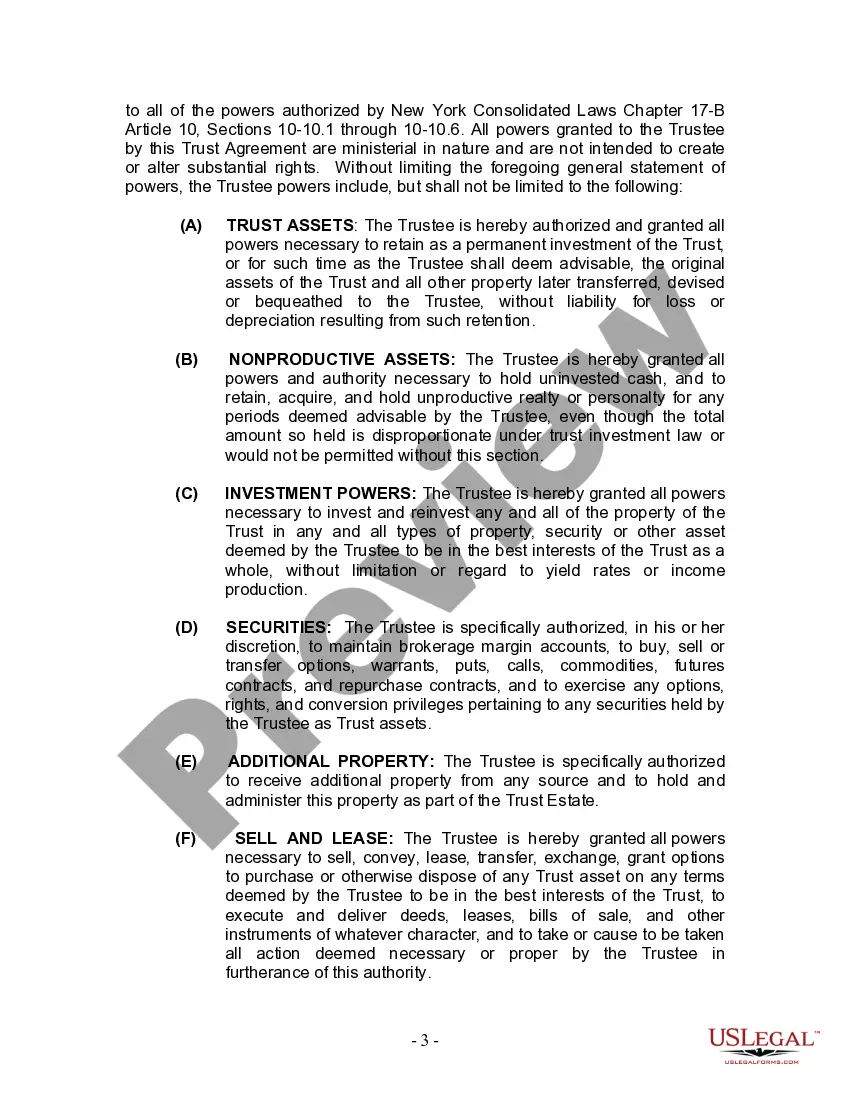
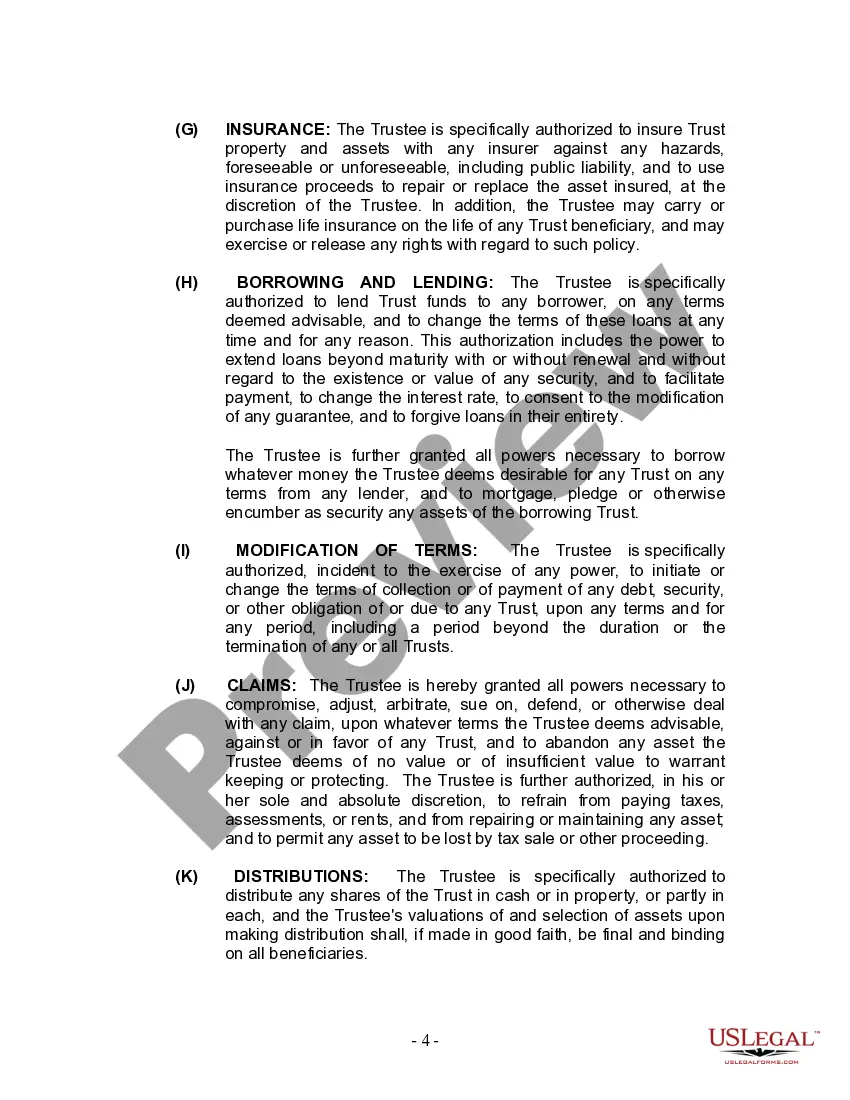
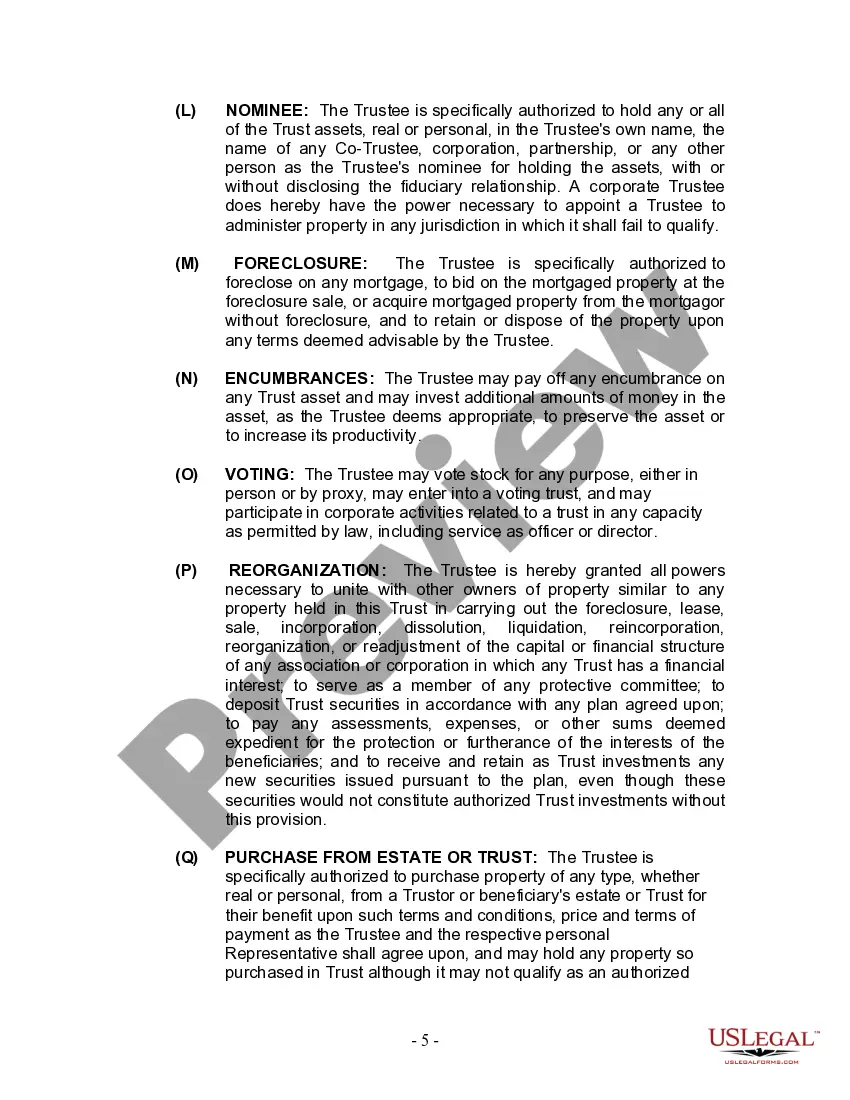
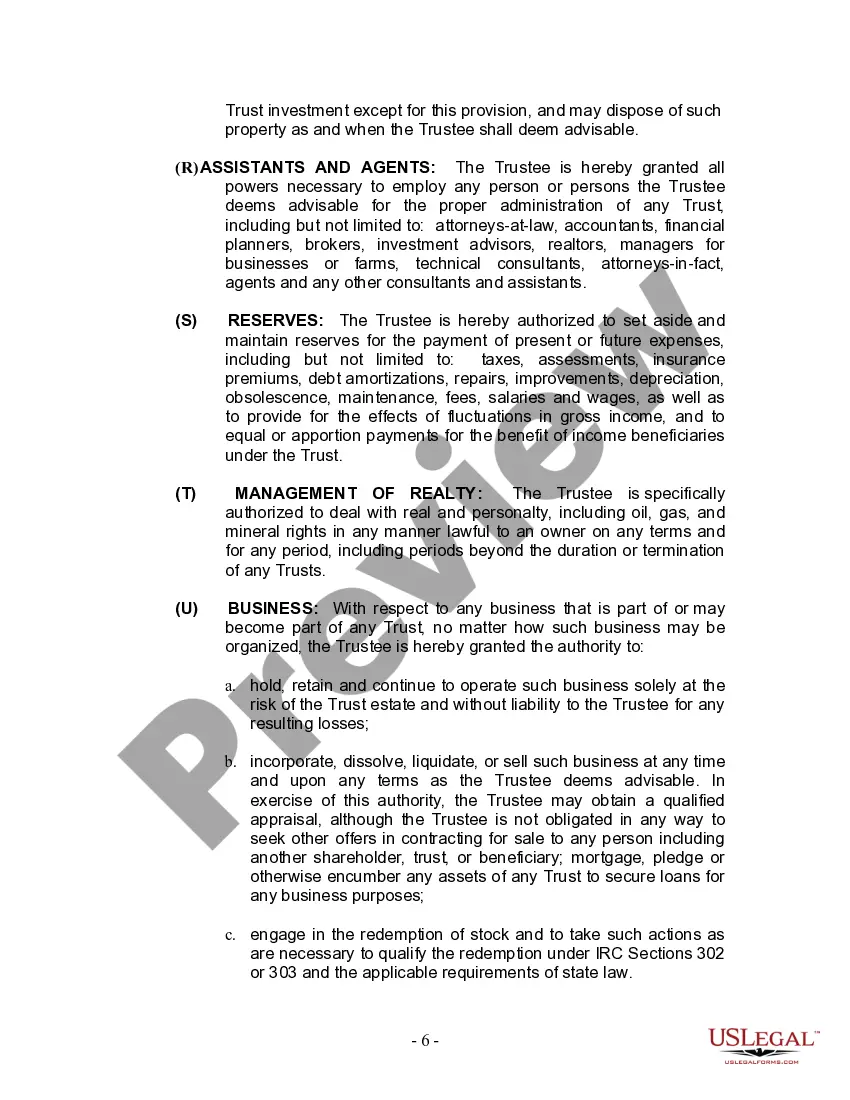
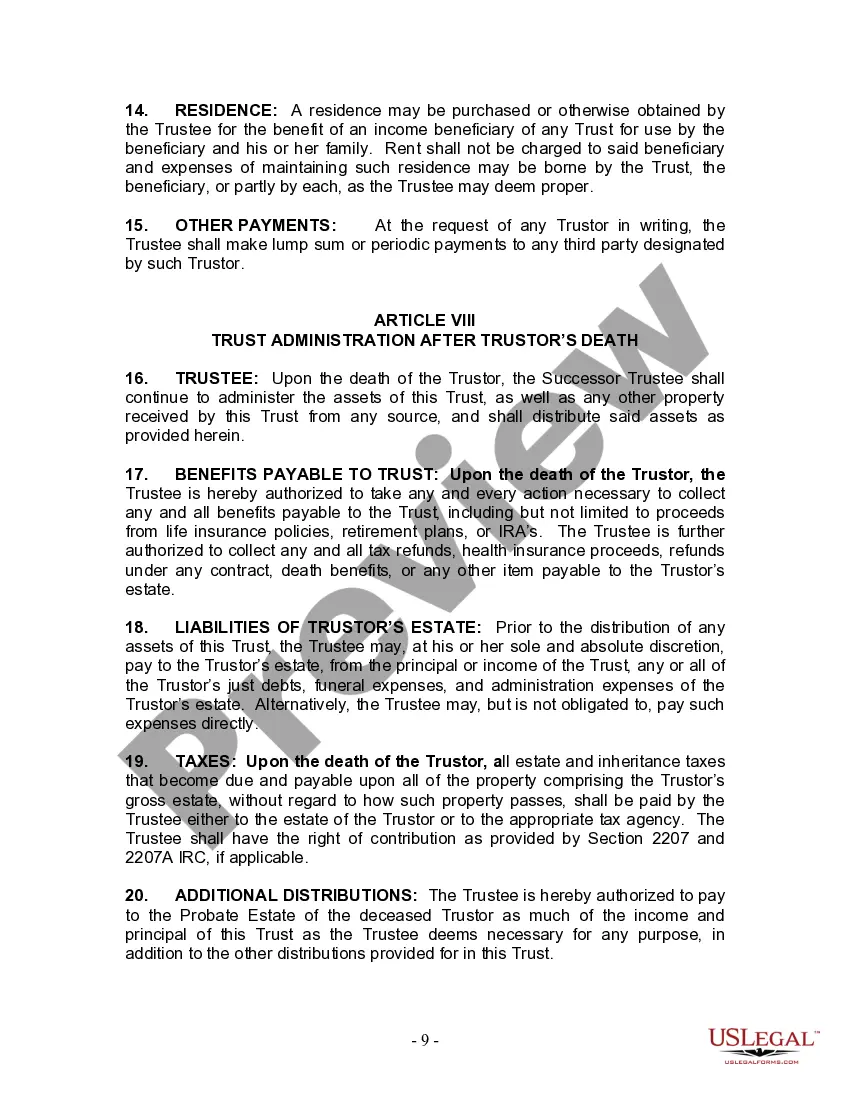
- Trustee Powers: Enumerate the authority granted to the trustee for managing the trust's assets.
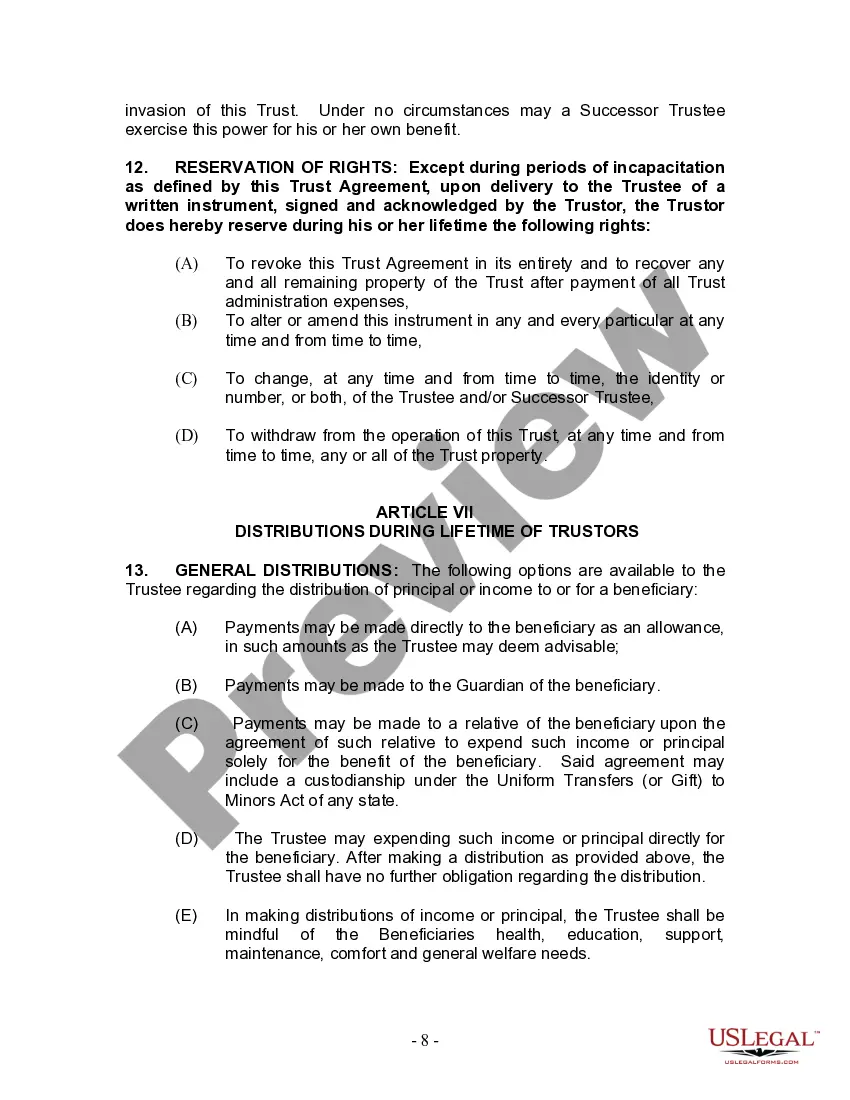
- Distribution After Death: Outline how assets will be distributed to beneficiaries upon the trustorâs death.





Common use cases
This form is used when an individual who is single, divorced, or a widow or widower wishes to set up a living trust for the management of their assets and to ensure their children inherit property without going through probate. It is particularly beneficial for those wanting to maintain control over their assets while providing for their children's future.
Intended users of this form
This form is suitable for:
- Individuals who are single, divorced, or widowed.
- Parents with one or more children who want to secure their assets.
- Individuals looking to simplify the transfer of property upon death.
Instructions for completing this form
To complete this form, follow these steps:
- Identify the trustor: Enter your full name as the trust creator.
- Name the trustee: Designate yourself or another individual as the trustee.
- Detail beneficiaries: List your children as beneficiaries of the trust.
- Specify trust assets: Include a detailed description of the property being transferred to the trust.
- Review and sign: Ensure all information is correct, then sign the document in front of a notary.
Does this document require notarization?
Yes, this form must be notarized to be legally valid. US Legal Forms offers integrated online notarization, allowing you to complete the notarization process securely via a video call at your convenience.
Get your form ready online
Our built-in tools help you complete, sign, share, and store your documents in one place.
Make edits, fill in missing information, and update formatting in US Legal Forms—just like you would in MS Word.
Download a copy, print it, send it by email, or mail it via USPS—whatever works best for your next step.
Sign and collect signatures with our SignNow integration. Send to multiple recipients, set reminders, and more. Go Premium to unlock E-Sign.
If this form requires notarization, complete it online through a secure video call—no need to meet a notary in person or wait for an appointment.
We protect your documents and personal data by following strict security and privacy standards.

Make edits, fill in missing information, and update formatting in US Legal Forms—just like you would in MS Word.

Download a copy, print it, send it by email, or mail it via USPS—whatever works best for your next step.

Sign and collect signatures with our SignNow integration. Send to multiple recipients, set reminders, and more. Go Premium to unlock E-Sign.

If this form requires notarization, complete it online through a secure video call—no need to meet a notary in person or wait for an appointment.

We protect your documents and personal data by following strict security and privacy standards.
Typical mistakes to avoid
- Neglecting to name a successor trustee, which can lead to complications if the primary trustee is unable to serve.
- Failing to include all relevant assets in the trust, which may cause those assets to go through probate.
- Not updating the trust after significant life changes, such as divorce or the birth of additional children.
Benefits of using this form online
- Convenience: Easily complete the form online for immediate use.
- Editability: Download and modify the template to fit your specific needs.
- Reliability: Access professionally prepared legal forms to ensure compliance with state laws.
What to keep in mind
- This living trust enables individuals to control their assets during their lifetime and effectively distribute them after death.
- It is particularly beneficial for single, divorced, or widowed parents with children.
- Completion of the form requires careful attention to detail, especially regarding beneficiaries and assets.
Looking for another form?

Form popularity
FAQ
A New York Living Trust for Individuals Who Are Single, Divorced, or Widowed with Children is a living trust created during the trustor’s lifetime to manage assets and designate beneficiaries, typically the trustor’s children. It names a Trustee, lists Assets of the Trust, defines Trustee Powers, and explains how Distributions After Death will occur. The arrangement is designed to avoid probate and provide for your children's future.
Yes. For someone who is single, including divorced or widowed individuals with children, this living trust helps manage assets during life and directs how they will pass to children after death. The form designates the Trustor and Beneficiaries, appoints a Trustee, lists the Assets of the Trust, specifies Trustee Powers, and outlines the Distribution After Death, often avoiding probate and preserving privacy.
Generally, a living trust stays in effect after a divorce, but the divorce can affect who benefits from it or who administers it. You may want to review or amend beneficiary designations, trustee appointments, or distributions. This form is designed for single, divorced, or widowed individuals with children to control asset transfers for heirs.
In a revocable living trust, the surviving spouse typically continues to manage the trust assets according to the trust terms, and assets pass to beneficiaries as outlined in the Distribution After Death. The form's provisions for Trustee Powers and Assets of the Trust support ongoing management and a private transfer of property to the trustor’s children.
A trust is not typically lost in a divorce, but its terms may be updated. Divorce can affect who inherits and who administers the trust, so amendments to beneficiary designations or trustee appointments may be needed. This form is structured to designate beneficiaries (usually the trustor’s children) and control distributions.
Compared to a trust without children, this form explicitly names the trustor’s children as beneficiaries and defines distributions after death to those children. It emphasizes a trustee appointment, asset listing, and the internal powers needed to manage assets for the heirs, aligning with the 'with Children' focus.